Quick route summary
This 5-day route starts in Mérida, uses Madrid as a practical hinge for Segovia, and ends in Granada. The main ancient-history arc runs from Roman Hispania at the Mérida Roman Ruins to the engineering confidence of the Segovia Aqueduct, then south to the Nasrid palace world of the Alhambra.
The pace is realistic, but not slow. Mérida deserves two nights because the Roman city is spread through the modern one. Segovia works as a focused day from Madrid. Granada needs advance planning because the Alhambra is not a site you can treat casually and hope for the best.
Who this itinerary is for
Use this itinerary if you want Spain’s ancient and medieval layers without trying to cover the whole country. It suits travelers who are comfortable with trains, a few hotel changes, and days that mix walking with timed entries.
It is not ideal if you want one relaxed base, beach time, or a Spain route built around food and nightlife first. Those can fit around the edges, especially in Granada, but the spine here is archaeology, Roman infrastructure, and palace politics.
Route at a glance
- Day 1: Overnight in Mérida. Arrive and visit the Roman theatre and amphitheatre with an easy walking route.
- Day 2: Overnight in Mérida. Use a full day for Mérida’s museum, bridge, aqueduct remains, and scattered Roman city fabric.
- Day 3: Overnight in Madrid. Travel north, then visit Segovia’s aqueduct by fast train or as a structured Madrid day trip.
- Day 4: Overnight in Granada. Transfer to Granada and keep the day light for Albaicín views, ticket checks, and orientation.
- Day 5: Overnight in Granada. Visit the Alhambra with timed Nasrid Palaces entry, then leave space for gardens and quieter corners.
Practical logistics before you go
Mérida, Madrid, and Granada are the cleanest bases for this route. Mérida gives you walkable access to Spain’s richest Roman urban ensemble. Madrid is not ancient Spain’s star here, but it is the rail hub that makes Segovia practical. Granada is the right base for the Alhambra because timed entry and hilltop walking make day-tripping feel rushed.
Book Alhambra tickets before you build the rest of the trip. The Nasrid Palaces have timed entry, and missing that slot can wreck the day. Mérida is easier, but a combined ticket and a rough route plan help because the monuments are not all in one fenced archaeological park.
Trains can handle most of this route, though schedules matter. Mérida to Madrid is slower than the map suggests. Madrid to Segovia is easy. Madrid to Granada is straightforward by train when timings line up, with flights also possible depending on your broader Spain plans.
Guides are useful at the Alhambra and helpful in Mérida if you want the Roman city explained as a working provincial capital rather than a set of isolated ruins. Segovia’s aqueduct can be visited independently, but a guide adds value if you want the water system, masonry, and Roman road context.
Day 1: Mérida Roman theatre and amphitheatre
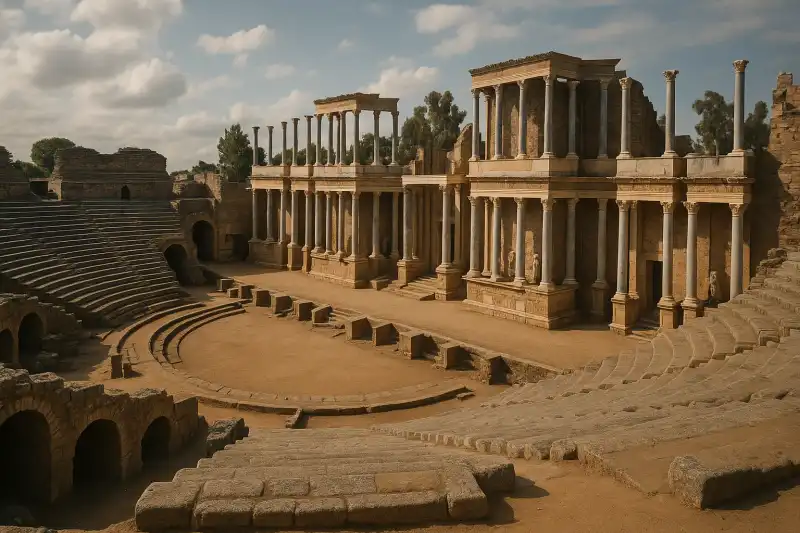
Start in Mérida and keep the first day tight. Go straight for the Mérida Roman Ruins, especially the theatre and amphitheatre complex. Mérida was founded as Augusta Emerita in 25 BCE for veteran soldiers from Rome’s Cantabrian Wars. That origin story matters. This was not a sleepy outpost. It was a planned Roman colony with status, money, and public buildings meant to say exactly that.
The theatre is the emotional center of the first day. Its stage front, columns, and sculptural setting are partly restored, but the shape of Roman civic life is still easy to read: performance, hierarchy, public ritual, and the city watching itself watch Rome. Next door, the amphitheatre gives you a rougher kind of spectacle. It is lower, heavier, and less elegant, which feels appropriate.
Do not try to see every Mérida monument today if you arrive after lunch. The site rewards slower attention, and the stone can feel punishing in heat. Walk the core, get your bearings, and save the museum and outlying pieces for Day 2. Mérida is compact by regional standards, but ancient Augusta Emerita was not built as a modern visitor loop.
Day 2: Mérida’s Roman city layers
Use the second day to let Mérida become a city instead of a monument list. Return to the Mérida Roman Ruins with the National Museum of Roman Art near the top of the day. The museum helps connect the theatre, temples, houses, mosaics, funerary material, and inscriptions into one urban system. It is also a good heat break, which is not a minor detail in Extremadura.
Then walk to the Roman bridge over the Guadiana and the aqueduct remains. The bridge is a reminder that Roman power was often most persuasive when it looked practical. Roads, water, bridges, and drains made imperial rule feel permanent in daily life. The big theatre may be prettier, but the infrastructure is where the city’s confidence really shows.
Pace this day carefully. Mérida’s smaller remains sit inside the modern town, so you will be crossing streets, doubling back, and making choices. That is part of the appeal, but it can also tire you out. If energy drops, cut one smaller stop and keep the museum plus bridge. Better to understand a few pieces well than shuffle through all of them overheated.
Day 3: Train north and Segovia aqueduct
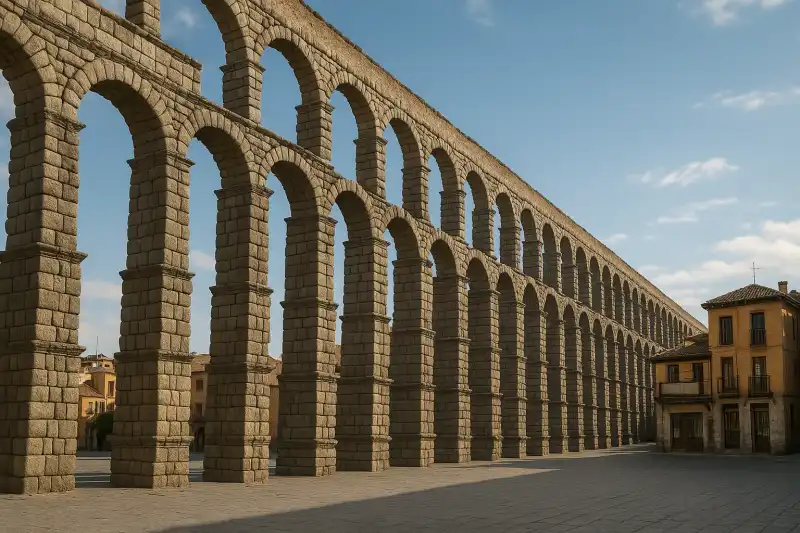
This is the most awkward logistics day, so treat it with respect. Travel from Mérida toward Madrid, then visit the Segovia Aqueduct either the same afternoon or as a cleaner day trip if your train schedule forces a late arrival. Madrid is the practical overnight base because it keeps the next Granada transfer manageable.
Segovia’s aqueduct is worth the detour because it changes the Roman story from urban entertainment to engineering discipline. The visible arcade is the famous part, but the better detail is how little mortar the granite blocks need. The structure depends on careful cutting, weight, and geometry. It is Roman confidence rendered as plumbing.
Give yourself time to view it from below and from the upper streets. The aqueduct was built to move water from the mountains into the city, not to decorate a square, and the route makes more sense when you climb around it. If you are tired from the Mérida transfer, do not overpack Segovia with every later medieval sight. The aqueduct is the reason this day exists.
Return to Madrid for the night unless you deliberately want a Segovia overnight. Staying in Madrid is less romantic, but it keeps the route sane.
Day 4: Granada arrival and Alhambra orientation
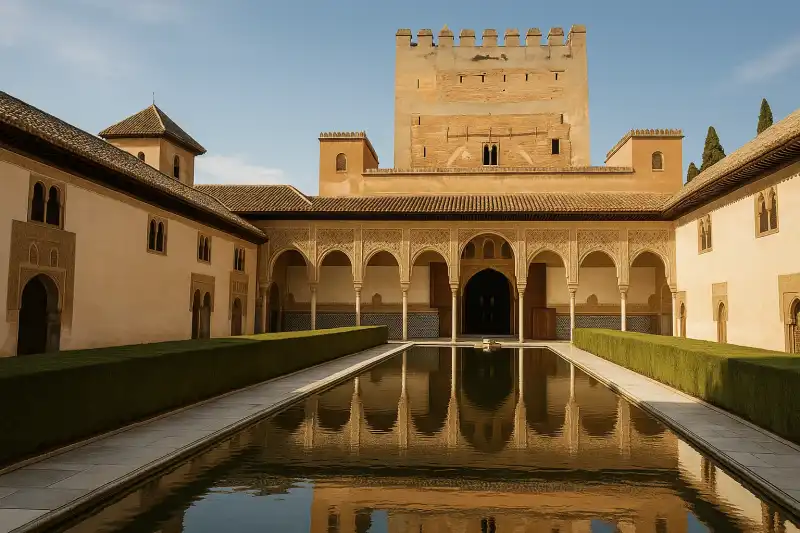
Transfer from Madrid to Granada by train or flight and keep the day deliberately lighter. The Alhambra should not be squeezed into a tired arrival afternoon unless your timed ticket leaves no alternative. Use this day to check your entry slot, understand the site layout, and see the palace from outside, especially from the Albaicín viewpoints if time and weather cooperate.
Granada changes the historical language of the route. After Roman colonies and aqueducts, you are now in the world of the Nasrid dynasty, the last Muslim rulers of Granada before the Castilian conquest in 1492. The Alhambra is often described as delicate, but do not mistake refinement for softness. This was a courtly stronghold, a diplomatic stage, and a place where architecture made authority feel controlled and intelligent.
Keep the evening easy. Granada’s hills are real, and Day 5 will involve a lot of standing and walking. If you have not booked the Alhambra yet, stop reading and fix that before planning dinner.
Day 5: Alhambra palaces, gardens, and Nasrid Granada
Build the whole day around your timed Nasrid Palaces entry at the Alhambra. Arrive early, not right on the edge of the slot. The site is large, security and ticket checks take time, and the walk between areas is longer than some visitors expect.
The Nasrid Palaces are the main event, but they work best when you notice the political messages inside the beauty. Inscriptions, water channels, courtyards, muqarnas vaulting, and controlled views all shape how power is seen and heard. The Court of the Lions is famous, but smaller transitions between rooms can be just as revealing. The palace keeps making you move from compression to release, shade to light, plain wall to carved surface.
Leave time for the Alcazaba and Generalife. The Alcazaba gives the fortress logic. The Generalife gives the garden logic. Together they stop the Alhambra from becoming only a palace interior in your memory. If context matters and tickets are scarce, this is the best place in the route for an Alhambra guided visit with Nasrid Palaces.
Do not schedule a late train out unless you have to. The Alhambra is not just a two-hour stop, and rushing it is a bad trade.
The historical thread: Rome’s cities, engineered water, and Nasrid palace power
This route works because it does not pretend ancient Spain was one story. Mérida shows Roman colonization as urban planning: theatre, amphitheatre, bridge, aqueducts, roads, and public identity. Segovia narrows the focus to infrastructure, where Roman engineering solved a practical problem so elegantly that the solution became the city’s emblem.
Granada then shifts the frame by more than a millennium. The Alhambra belongs to medieval Islamic Spain, not Rome, but it belongs in the same itinerary because it shows another way rulers used architecture to organize power. Mérida speaks in civic monuments. Segovia speaks in water and stone. The Alhambra speaks in courts, inscriptions, controlled movement, and carefully framed views.
The stones are quiet now, but the ambition was not subtle.
Transportation notes
This route is easiest without a car. Use trains where possible, with Madrid as the hinge between western Spain, Segovia, and Granada. Mérida’s rail connections can be slower than expected, so check schedules before locking hotel nights.
Madrid to Segovia is the simplest movement. Fast trains run to Segovia-Guiomar, though the station sits outside the old town, so allow time for the local bus or taxi. Madrid to Granada is usually straightforward by train, but flight options may make sense if your wider trip starts or ends elsewhere.
Do not self-drive just to reach these three sites unless you are already planning a broader road trip. Parking, city access, and one-way logistics add friction. If you want one private-transfer splurge, use it where schedules are weak, not for Segovia, which is easy from Madrid.
The main compression warning is Day 3. Mérida to Madrid plus Segovia can work, but only with sensible train times and a willingness to keep Segovia focused. If the connection looks ugly, sleep in Madrid and visit Segovia early the next morning, then push Granada later that day.
Optional add-ons and swaps
If Roman Spain is your priority, add a third Mérida day and remove the rushed Segovia transfer pattern. Use the extra time for a slower pass through the Mérida Roman Ruins, especially the museum, bridge, aqueduct remains, and smaller urban sites.
If engineering is your favorite thread, give Segovia a full overnight instead of treating it as a day trip. That lets you see the Segovia Aqueduct in morning and evening light. To make room, cut one night from Mérida only if you are comfortable seeing the Roman city at a brisk pace.
If the Alhambra is the reason for the trip, add a second full Granada day after Day 5. Keep the Alhambra day intact, then use the extra time for Granada’s Islamic and early modern layers around the Albaicín, cathedral area, and historic center. Remove Segovia if you need the route to stay at five days.
Shorter and longer itinerary options
For a shorter 3-day version, choose either Mérida plus Segovia or Granada plus the Alhambra. Do not try to do all three in three days. The transfers would eat the trip.
For a tighter 4-day version, spend one full day in Mérida, one Segovia day from Madrid, and two nights in Granada. This works, but Mérida loses the breathing room that makes the Roman city click.
For a longer 7-day version, add one more day in Mérida and one more day in Granada. That gives you time to understand the Roman city as a whole and to visit the Alhambra without making Granada feel like a ticket appointment.
Related ancient sites
FAQ
The most common planning questions for this route are answered below.