
The shape of three good days
Three days at Angkor works when each day has a different geographical job. Day 1 gives you the famous core without treating it as a photo queue. Day 2 concentrates on Angkor Thom and the larger royal landscape. Day 3 reaches outward, then leaves room to revisit a site that deserves more than a drive-by.
Before you enter the park
Base yourself in Siem Reap for all three nights. Arrange a licensed driver, bicycle, or other legal local transport according to your confidence and the weather, and confirm pass rules, temple restrictions, dress expectations, and current openings with the APSARA National Authority. The authority manages conservation and visitor guidance in the Angkor area. Do not assume a staircase, tower, or temple sector will be open simply because it was open in an old blog post.
Day 1: Angkor Wat, Ta Prohm, and the eastern temples

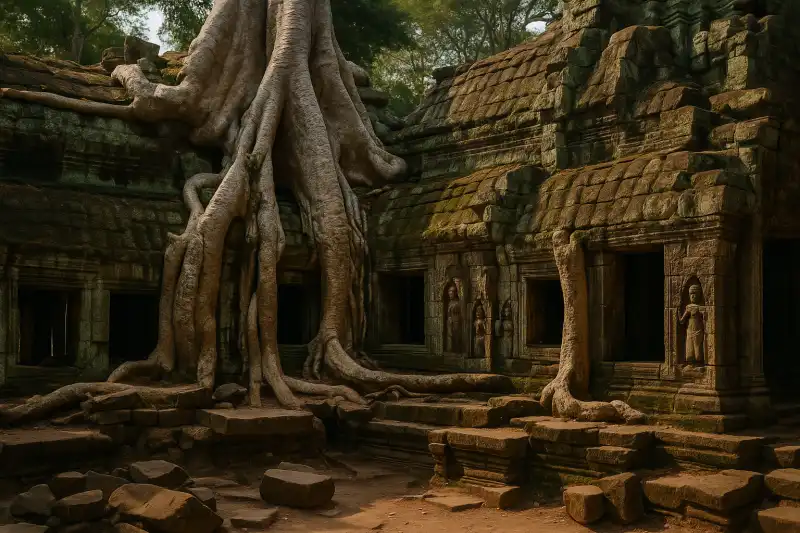

Begin at Angkor Wat early enough to have actual time after the sunrise crowd disperses. Read the temple as a complex with enclosure walls, galleries, water, and a mountain-like central sanctuary, not merely a silhouette. Continue to Ta Prohm later in the morning, then use Ta Keo or Banteay Kdei as a lower-pressure afternoon choice. The sequence limits backtracking and gives you a mixture of monumental architecture and conservation landscape.
Day 2: Angkor Thom and the grand circuit
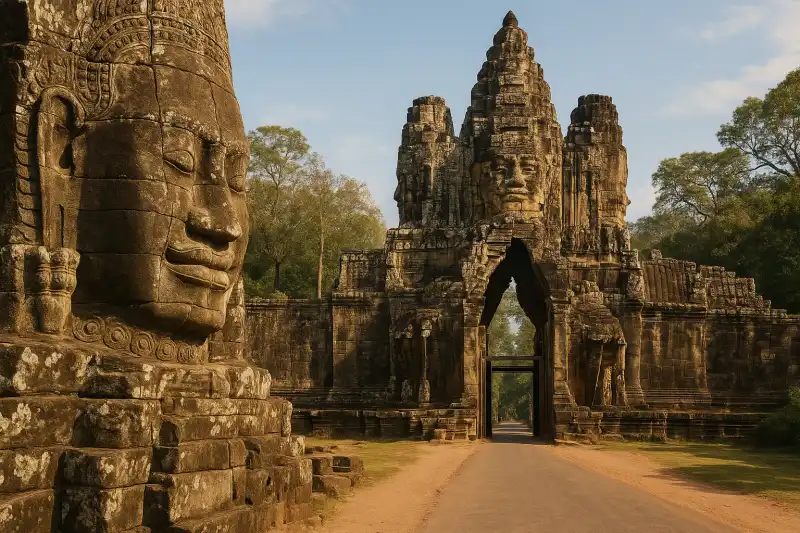
Enter Angkor Thom through a gate rather than treating the city as a parking lot between monuments. The Bayon is dense with towers and carved faces, while the Terrace of the Elephants and Terrace of the Leper King make more sense when you walk the royal enclosure around them. APSARA notes that the South Gate is the busiest route between Angkor Wat and Bayon, so an alternate gate can be a calmer approach when access permits.
In the afternoon, pick two or three sites such as Pre Rup, East Mebon, or Banteay Kdei. Heat and stairs turn quantity into nonsense quickly. A shorter route with pauses is better than six temples remembered as a blur of sandstone.
Day 3: Banteay Srei and a return visit
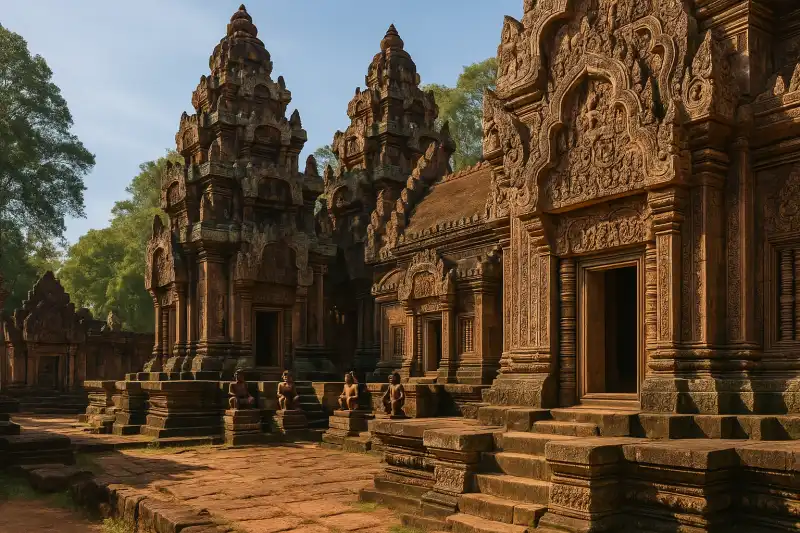
Use the final day for Banteay Srei, whose smaller scale and fine carving give the itinerary a different visual register. Because it lies outside the central cluster, agree on the transport plan in advance. On the way back, choose Preah Khan or return to Angkor Wat, Bayon, or Ta Prohm according to what you rushed earlier. Returning is not wasted time. It is how a three-day visit becomes a route rather than a scavenger hunt.
Practical pacing
Carry water, use sun protection, and dress respectfully for an active religious and heritage landscape. Build in rest at Siem Reap midday if the weather is punishing. The official visitor code is the authority for current conduct requirements, including respectful clothing and behavior. This page avoids fixed pass prices and hours because both are operational facts worth checking directly before travel.
Planning questions
Quick route summary
This itinerary uses practical overnight bases and one main archaeological priority each day. Recheck official access and transport information immediately before travel.
Who this itinerary is for
Travelers who want archaeological context, realistic transfers, and room to slow down at the major sites.
Route at a glance
- Day 1: Angkor Wat and small circuit. Overnight: Siem Reap.
- Day 2: Angkor Thom and grand circuit. Overnight: Siem Reap.
- Day 3: Banteay Srei and a flexible finish. Overnight: Siem Reap.
Practical logistics before you go
Confirm tickets, local transport, weather, and any closure notices with the relevant official authority. No fixed fares, timetable times, capacity, or ticket availability are promised here.
The historical thread
The route connects individual monuments to the civic, religious, domestic, and landscape systems that made them meaningful.
Transportation notes
Protect each transfer day and choose the current rail, road, or local-transport option that best fits your dates.
Optional add-ons and swaps
Extend the trip or replace a day rather than stacking an extra major site onto a full archaeological visit.
Shorter and longer itinerary options
Shorten from the outermost excursion; lengthen with a museum or rest day, not a larger daily checklist.
Related ancient sites
FAQ
Use current official site and transport information close to departure; the route is a planning framework rather than a guarantee of access.