Quick Info
Curated Experiences
Abu Simbel Day Trip from Aswan
Private Tour to Abu Simbel Temples from Aswan
Flight and Guided Tour to Abu Simbel from Cairo or Aswan
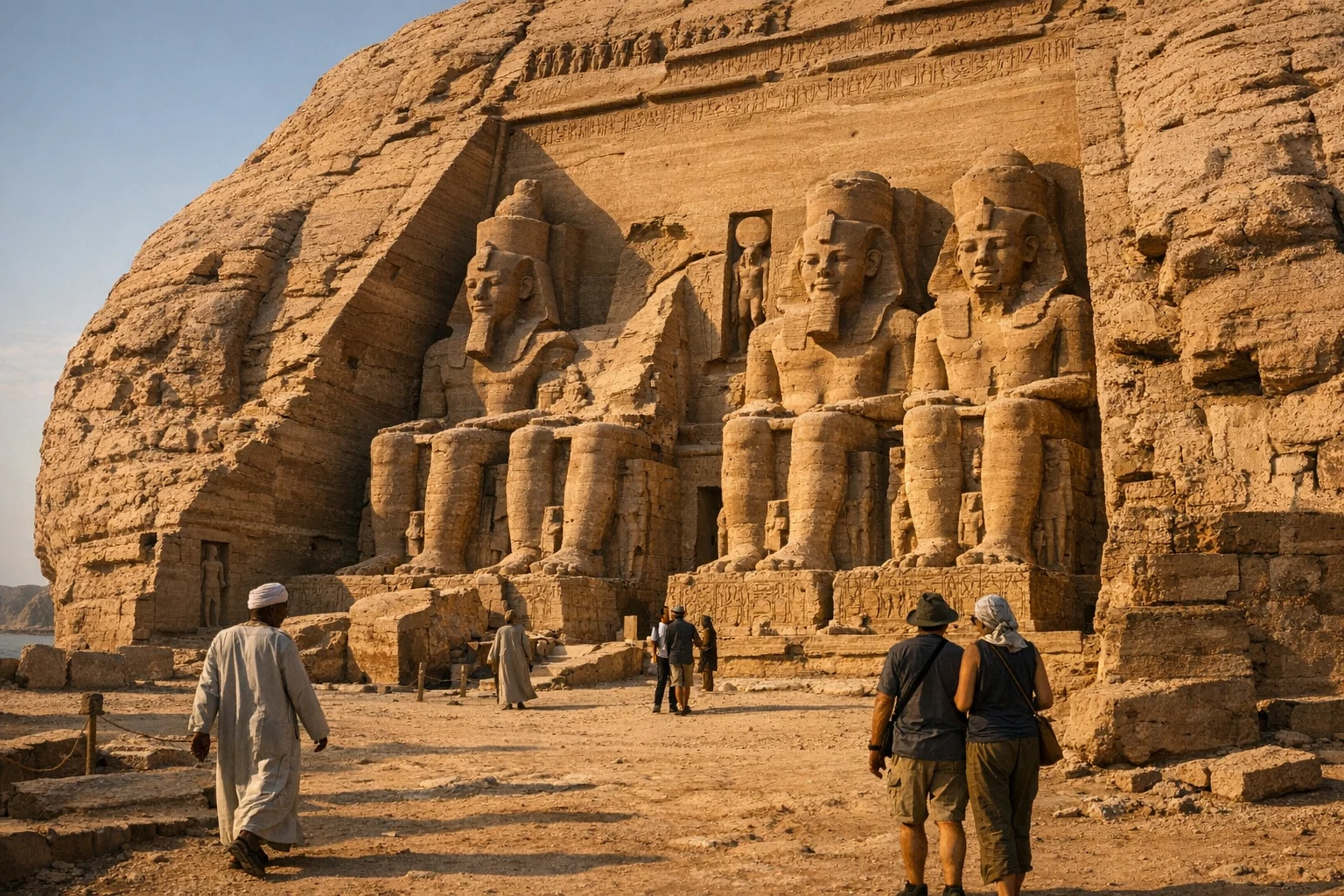
Abu Simbel in Egypt is one of those places that somehow exceeds even its own legend. Far south in Upper Egypt, near the modern border with Sudan, the twin rock-cut temples of Ramses II rise from the desert edge above Lake Nasser with a confidence that still feels theatrical after more than three thousand years. Most visitors know the image in advance: four colossal seated figures of the king staring across the landscape, carved directly into the cliff face with overwhelming calm. But the reality of arriving here is richer than the postcard. The setting is stark, wide, and luminous, with desert light flattening distance and emphasizing scale. The temples do not appear tucked into a busy archaeological zone or hemmed in by modern settlement. They stand almost alone, which makes their original political and symbolic purpose much easier to understand.
Abu Simbel was built to project royal power in Nubia and to bind divine kingship to the southern frontier. It still does that, though now it also tells a second story: one of international rescue, engineering ingenuity, and the preservation of world heritage against the rising waters of the twentieth century. The site is famous both for what ancient Egyptians carved here and for the astonishing modern campaign that dismantled and reassembled the temples on higher ground when Lake Nasser threatened to drown them. That double significance gives Abu Simbel unusual emotional force. It is a masterpiece of New Kingdom propaganda and a monument to global conservation at the same time. For travelers, that means the visit is not just about grandeur. It is about survival, intention, and the enduring ability of stone to carry power across radically different ages.
History
Ramses II and Egypt’s Southern Frontier
Abu Simbel was created during the reign of Ramses II, one of the most prolific and image-conscious rulers of ancient Egypt’s New Kingdom. He ruled in the 13th century BCE and left monuments across the Nile valley, but Abu Simbel occupies a special place in his building program because of its location deep in Nubia. This was not a casual or purely devotional choice. Nubia was strategically vital to Egypt, connected to trade, mineral wealth, military control, and the projection of imperial power. By carving monumental temples into the sandstone cliffs here, Ramses was making a statement to both local populations and anyone moving along the Nile corridor: Egypt’s king was present, victorious, and divinely sanctioned even at the far southern reaches of his realm.
The Great Temple was dedicated primarily to Ramses II himself in association with major deities such as Amun-Ra, Ra-Horakhty, and Ptah. The nearby smaller temple was dedicated to Queen Nefertari and the goddess Hathor. This pairing is important. It shows that Abu Simbel was not merely a single monument of brute royal self-glorification, though it certainly contains plenty of that. It was also a carefully staged sacred and dynastic landscape. The temples expressed military dominance, divine legitimacy, and the prestige of the royal household all at once.
Monumentality, Theology, and Propaganda
The colossal statues on the facade of the Great Temple are among the clearest declarations of royal self-fashioning in ancient Egypt. Four seated images of Ramses II dominate the entrance, each enormous enough to reduce approaching visitors to insignificance. This was deliberate. Scale was political. By monumentalizing the king to such an extent, the temple translated state ideology into physical experience. Inside, reliefs celebrated Ramses’s victories, most famously including scenes related to the Battle of Kadesh, where the king is shown as the supreme warrior defeating foreign enemies. Modern historians read these scenes with due skepticism as political art rather than straightforward reportage, but that only sharpens their interest. Abu Simbel is one of the finest surviving examples of how pharaonic power was staged.
At the same time, the temples were deeply religious. They were designed as places where divine presence, cosmic order, and kingship were linked through architecture and ritual. The internal halls, columns, statues, and sanctuary spaces drew visitors inward from the blinding desert light into a more controlled and sacred environment. Abu Simbel’s famous solar alignment, in which sunlight reaches the sanctuary on particular dates, further reveals the temple’s fusion of architecture, ritual timing, and royal theology. Whether or not every popular claim about exact dates is presented consistently in modern tourism, the broader fact remains: this was a monument designed with cosmic drama in mind.
Decline, Burial, and Rediscovery
Like many ancient Egyptian monuments, Abu Simbel’s active religious life faded with the end of pharaonic civilization and the transformations of later eras. Over centuries, drifting sand gradually buried much of the temple facades, helping preserve some elements even as the site slipped from broad public awareness. Local knowledge of the temples persisted, but Abu Simbel entered modern European consciousness in the nineteenth century during the great age of exploration, excavation, and imperial curiosity about ancient Egypt.
Its rediscovery was dramatic enough to become part of the site’s legend. Early travelers encountered the upper portions of the colossal figures still emerging from the sand, an image that perfectly suited romantic ideas of lost civilizations waiting to be revealed. Excavation and clearing eventually exposed the temples more fully, and Abu Simbel became one of the iconic destinations of Egyptology. Yet this phase also belongs to the history of archaeology’s more extractive era, when monuments were often approached as objects of spectacle and study rather than as heritage requiring collaborative protection.
The UNESCO Rescue and Modern Rebirth
The most extraordinary modern chapter in Abu Simbel’s history came in the 1960s, after the construction of the Aswan High Dam created the vast reservoir now known as Lake Nasser. Rising waters threatened to submerge Abu Simbel and many other Nubian monuments. In response, UNESCO coordinated one of the most ambitious heritage rescue campaigns ever undertaken. Between 1964 and 1968, the Abu Simbel temples were carefully cut into large blocks, moved to higher ground, and reassembled inside an artificial hill designed to preserve their visual appearance and approximate orientation.
This rescue transformed Abu Simbel into something more than an ancient masterpiece. It became a symbol of international cooperation in preservation and helped establish the modern idea of world heritage as a shared responsibility. The relocation was a technical marvel, but it was also an ethical milestone. It declared that the loss of such monuments would matter globally. Today, every visit to Abu Simbel includes that second layer of meaning. You are looking at temples that survived both antiquity and modern development through human determination on an international scale.
Key Features
The first and most obvious feature of Abu Simbel is the facade of the Great Temple, one of the most unforgettable sights in Egypt. Four colossal seated statues of Ramses II flank the entrance, each carved from the rock with a commanding stillness that feels almost inhuman in scale. The king’s features repeat across the facade with only subtle differences, reinforcing the impression of endless authority. Smaller figures of royal family members stand near the legs, emphasizing the gigantic proportions. Even the broken upper section of one statue, damaged in antiquity, adds rather than diminishes the monument’s force. The facade is not simply decorative. It is a manifesto in stone, announcing the king’s power before a visitor takes a single step inside.
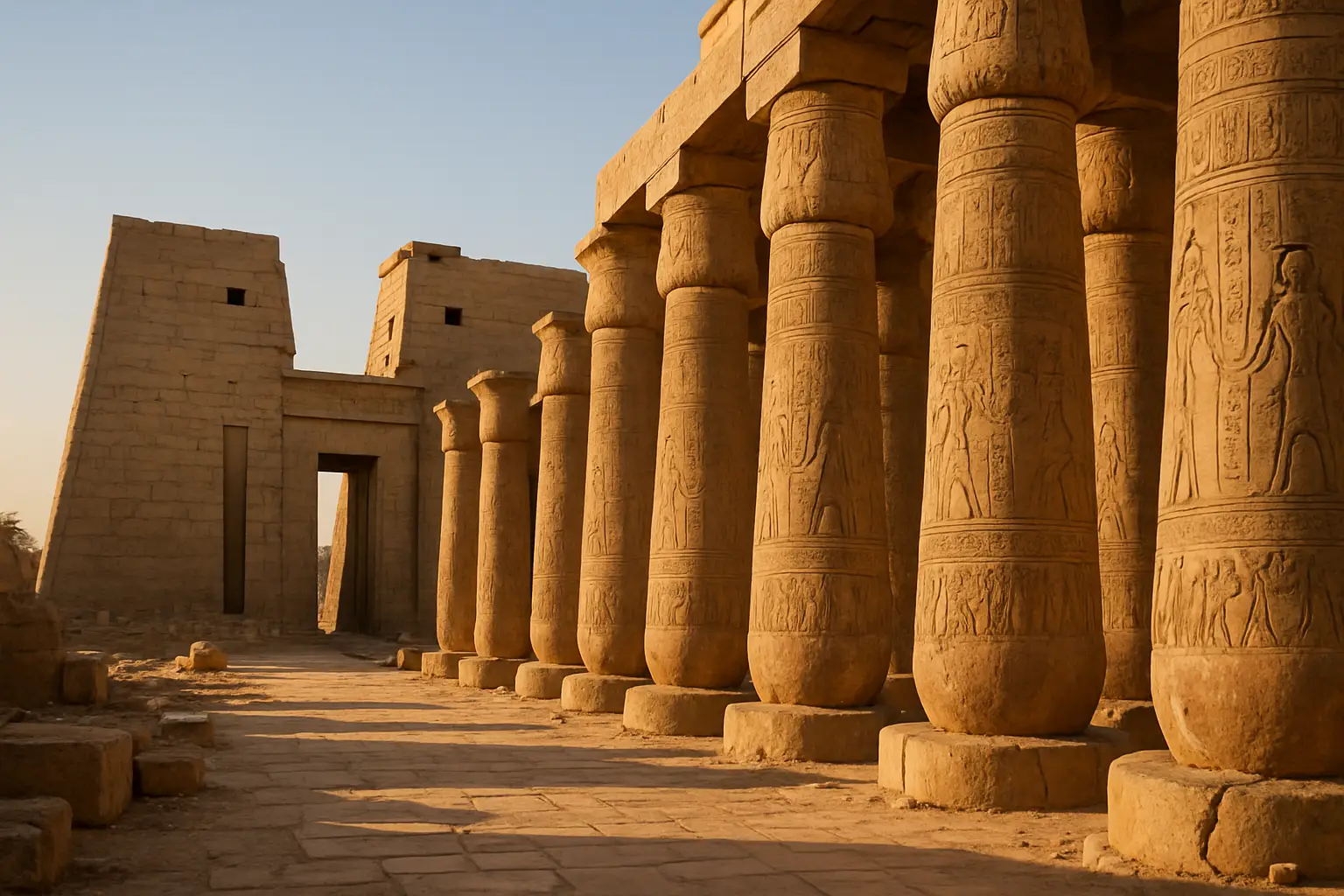
The interior of the Great Temple extends that drama. A grand hall supported by massive Osiride figures of Ramses leads inward through a sequence of increasingly sacred spaces. Reliefs on the walls depict military triumph, ritual activity, and the king’s relationship with the gods. Among the most famous are scenes associated with the Battle of Kadesh, where Ramses is shown charging against enemies with supernatural composure. These carvings are historically significant, but they are also emotionally effective. They turn the temple into a controlled narrative of kingship: victorious, ordained, and eternal. The deeper you move inside, the more the emphasis shifts from royal spectacle to sacred intimacy, culminating in the sanctuary.
That sanctuary is one of Abu Simbel’s most discussed features because of its solar alignment. Sunlight reaches the inner statues on specific mornings of the year, illuminating figures associated with divine and royal power while leaving Ptah, a god linked with the underworld, in darkness. Whether encountered through direct observation or through explanation on site, the alignment underscores the temple’s sophistication. Abu Simbel was not only designed to impress human audiences; it was designed to work with the cosmos.
The smaller temple of Nefertari is another essential feature, and one of the most remarkable queen-centered monuments in Egypt. Dedicated to Hathor and Queen Nefertari, it is fronted by six large statues, including unusually prominent representations of the queen at nearly equal scale to the king. That alone makes the temple notable. Inside, the decoration shifts in tone from overt military triumph to a more graceful sacred register, emphasizing divine femininity, music, ritual, and royal partnership. The smaller temple offers an important counterpoint to the Great Temple’s masculine imperial emphasis and gives Abu Simbel a richer dynastic balance.
The setting also matters enormously. Today the temples stand above Lake Nasser, and while the current surroundings are partly the result of relocation, the broad desert-lake horizon still gives Abu Simbel a sense of remoteness and frontier monumentality. There is space around the temples, and that space helps the eye understand why they were built here in the first place. Unlike dense temple zones such as Luxor or Karnak, Abu Simbel feels isolated by design. That isolation is part of its power.
Getting There
Most visitors reach Abu Simbel from Aswan, the main gateway city for travel in southern Egypt. The site lies about 280 kilometers southwest of Aswan, and the road journey usually takes around 3 to 4 hours each way. By far the most common option is an organized road trip, often with a very early morning departure. Shared coach-style tours and private cars are both widely available. Group road tours can be cost-effective, while private transfers or guided excursions offer more flexibility and usually more comfort. Prices vary by season and style, but travelers should expect road-based day trips to cost significantly more than local sightseeing around Aswan due to the distance involved.
Flights between Aswan and Abu Simbel are another popular option, especially for travelers short on time or wary of the long drive. Flight schedules can change seasonally, and costs are higher, but the time savings are substantial. Some travelers also reach Abu Simbel as part of a Lake Nasser cruise, though that is a more specialized itinerary. Independent self-driving is uncommon for most international visitors compared with hiring transport.
If visiting as a day trip, expect a long day regardless of transport choice. Bring water, sun protection, and snacks, especially if traveling by road. If your schedule allows, an overnight stay near Abu Simbel can be worth it. It lets you see the temples in softer light, avoid some of the rush of day-tour schedules, and attend the evening sound and light show if that interests you.
When to Visit
The best time to visit Abu Simbel is from October through April, when temperatures in southern Egypt are far more manageable. This part of the country gets intensely hot in late spring and summer, and the open setting around the temples offers very little shade. Winter and shoulder-season mornings are much more comfortable for walking, photographing, and spending time inside the temples without feeling rushed by the heat.
Early morning is the most common and often the best time to arrive, partly because many tours leave Aswan before dawn and partly because the lower angle of the sun flatters the facade beautifully. The colossal statues are especially striking in the first strong light of the day. Late afternoon can also be atmospheric for overnight visitors, when day-trippers thin out and the site feels calmer. If you are interested in the famous solar alignment festival, February and October are the months most commonly associated with it, though those dates also bring extra crowds.
Summer visits are possible, but they require serious preparation. Temperatures can be extreme, and the desert brightness adds to fatigue. If traveling in hot months, prioritize hydration, a hat, high-SPF sunscreen, and light but protective clothing. However you time it, Abu Simbel is a site that benefits from patience. If you can avoid treating it as a rushed checkbox excursion, the experience becomes much more powerful.
| Quick Facts | Details |
|---|---|
| Location | Near Lake Nasser, Aswan Governorate, Egypt |
| Best Known For | Colossal rock-cut temples of Ramses II and Nefertari |
| Main Builder | Ramses II |
| Historical Period | New Kingdom, 19th Dynasty |
| UNESCO Status | Part of the Nubian Monuments World Heritage listing |
| Modern Significance | Famous for its 1960s UNESCO-led relocation rescue |
| Recommended Visit Length | 2 to 3 hours on site |
| Common Access Base | Aswan |
| Best Season | October to April |
| Practical Tip | Consider an overnight stay to avoid a rushed day trip and enjoy better light |
Frequently Asked Questions
What is Abu Simbel best known for?
Abu Simbel is best known for the colossal rock-cut temples built by Ramses II, including the Great Temple with four gigantic seated statues and the smaller temple dedicated to Nefertari.
How far is Abu Simbel from Aswan?
Abu Simbel lies about 280 kilometers south of Aswan, and the journey by road usually takes around 3 to 4 hours each way.
Can you visit Abu Simbel on a day trip?
Yes, most travelers visit Abu Simbel as a day trip from Aswan by road or air, though staying overnight allows a calmer experience and access to the sound and light show.
Why was Abu Simbel moved?
The temples were relocated in the 1960s to save them from submersion during the creation of Lake Nasser after the construction of the Aswan High Dam.
Is Abu Simbel worth visiting if you already saw Luxor temples?
Absolutely. Abu Simbel feels very different from the Nile temples around Luxor, with its dramatic Nubian setting, colossal facade, and extraordinary modern rescue story.
How much time should you spend at Abu Simbel?
Most visitors spend 2 to 3 hours on site, though an overnight stay gives you more time to appreciate the temples without rushing.
Nearby Ancient Sites
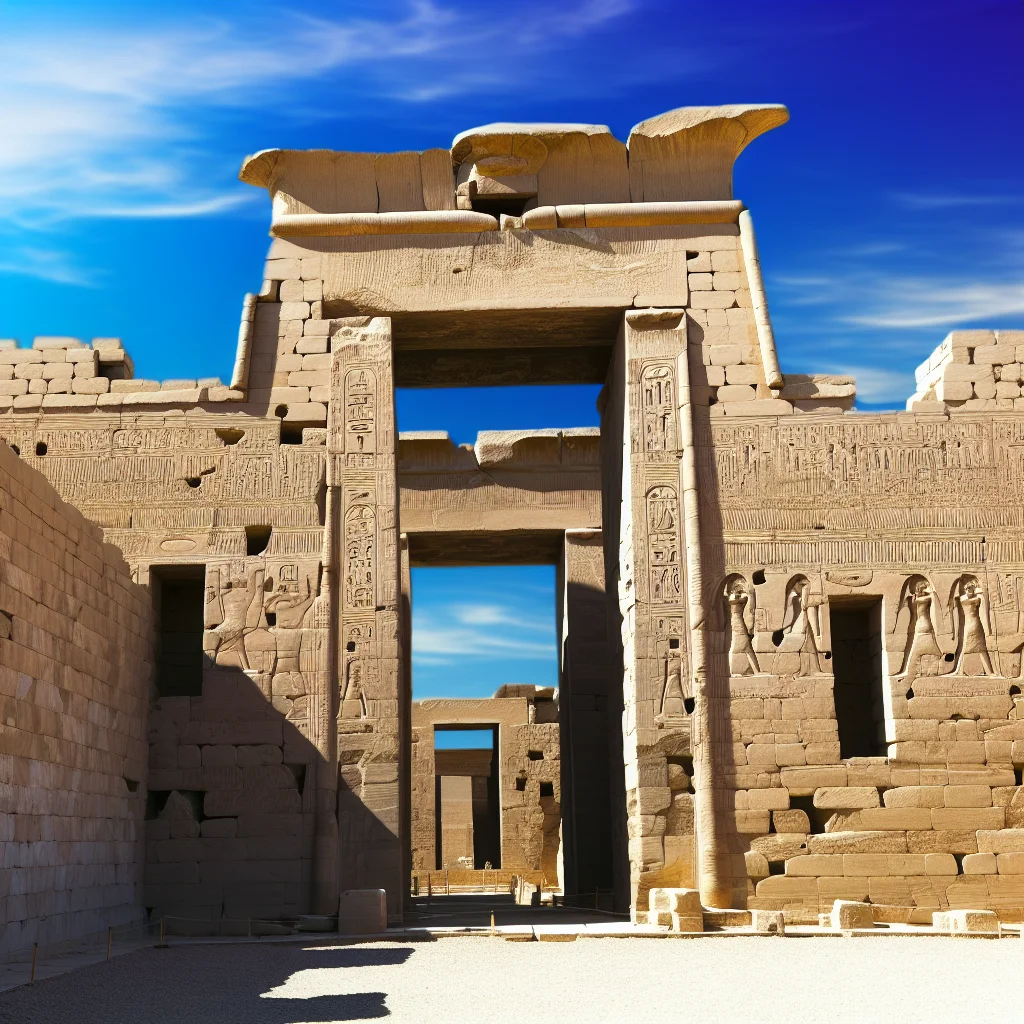
Edfu Temple Egypt Guide 2026: Temple of Horus & Dramatic Battle Reliefs
PtolemaicEdfu Temple near Aswan: Temple of Horus with stunning battle scenes, ritual texts, and the best-pres...
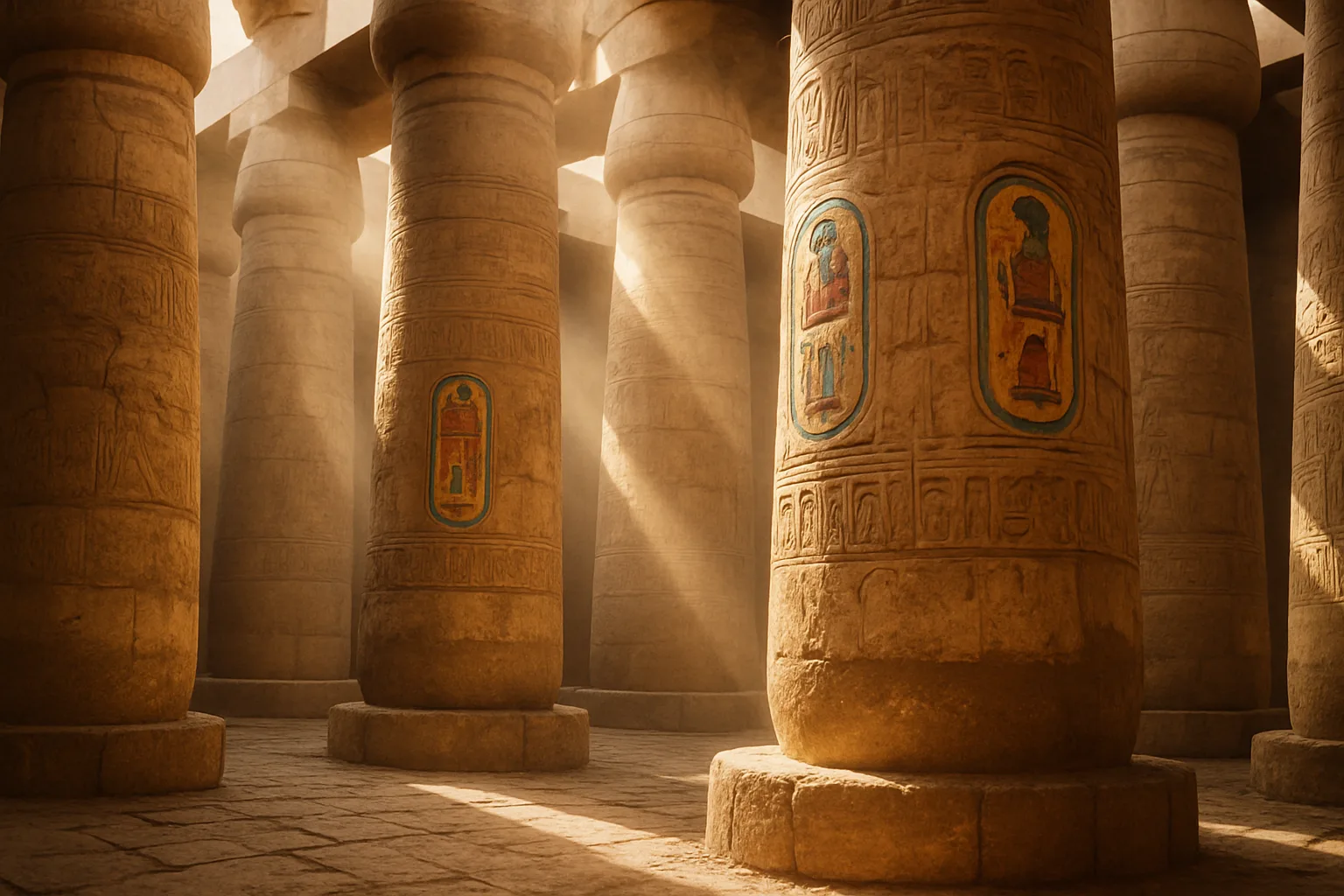
Luxor Egypt Travel Guide 2026: Valley of Kings, Karnak
Ancient Egyptian (New Kingdom)Luxor stands as the world's greatest open-air museum, spanning both banks of the Nile with temples, ...
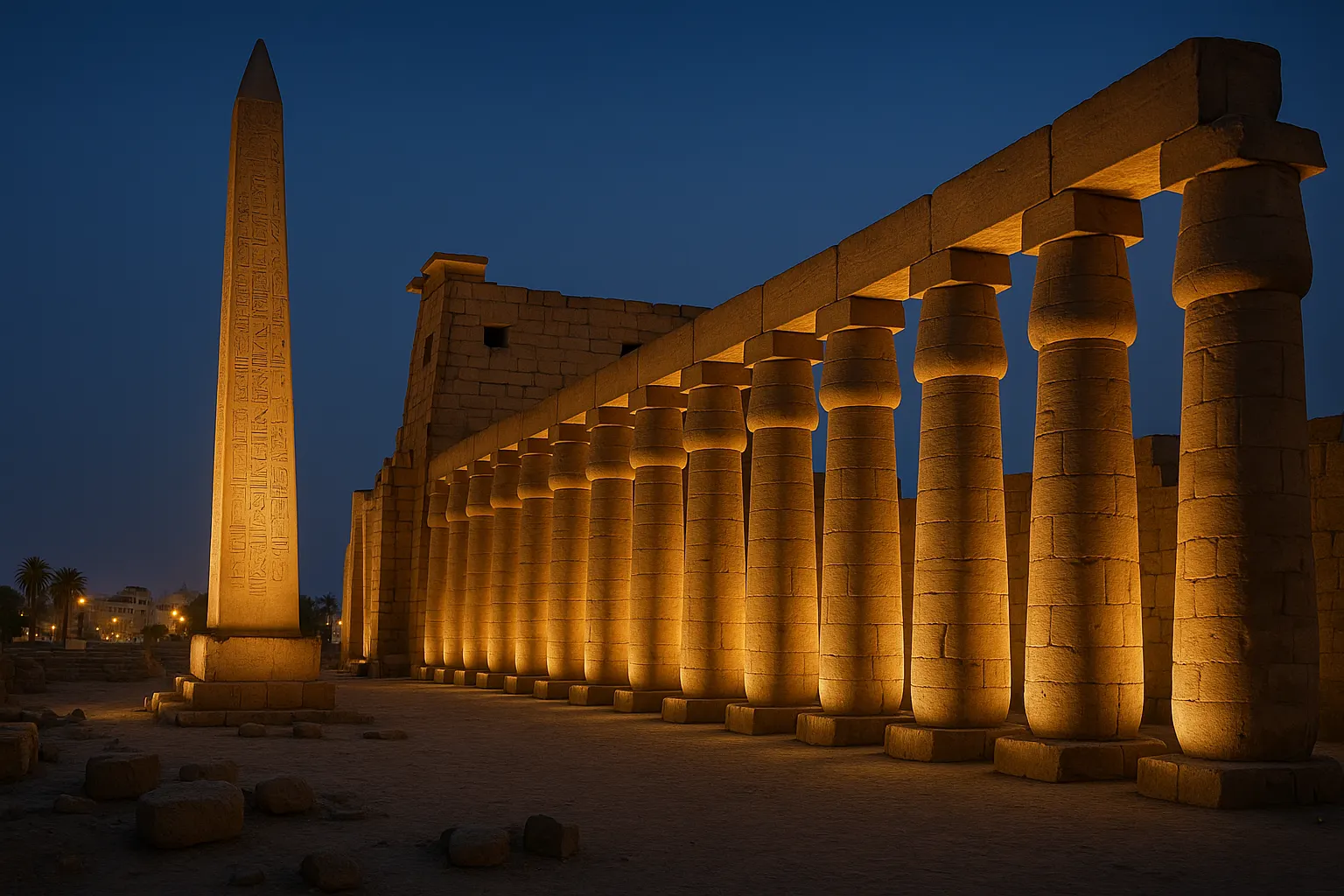
Luxor Temple Egypt Travel Guide 2026: The Elegant Temple of Luxor
Ancient EgyptianVisit Luxor Temple, the most elegant temple in Egypt. Discover the Avenue of Sphinxes, Colonnade of ...
Karnak Temple Complex Egypt Travel Guide 2026: Egypt's Greatest Temple
Ancient EgyptianExplore Karnak, the world's largest ancient religious complex. Discover the Hypostyle Hall, Sacred L...