Quick Info
Curated Experiences
Lindos Acropolis and Village Guided Tour
Best of Rhodes: Full-Day Lindos and Island Tour
Private Tour: Lindos Acropolis with Archaeologist Guide
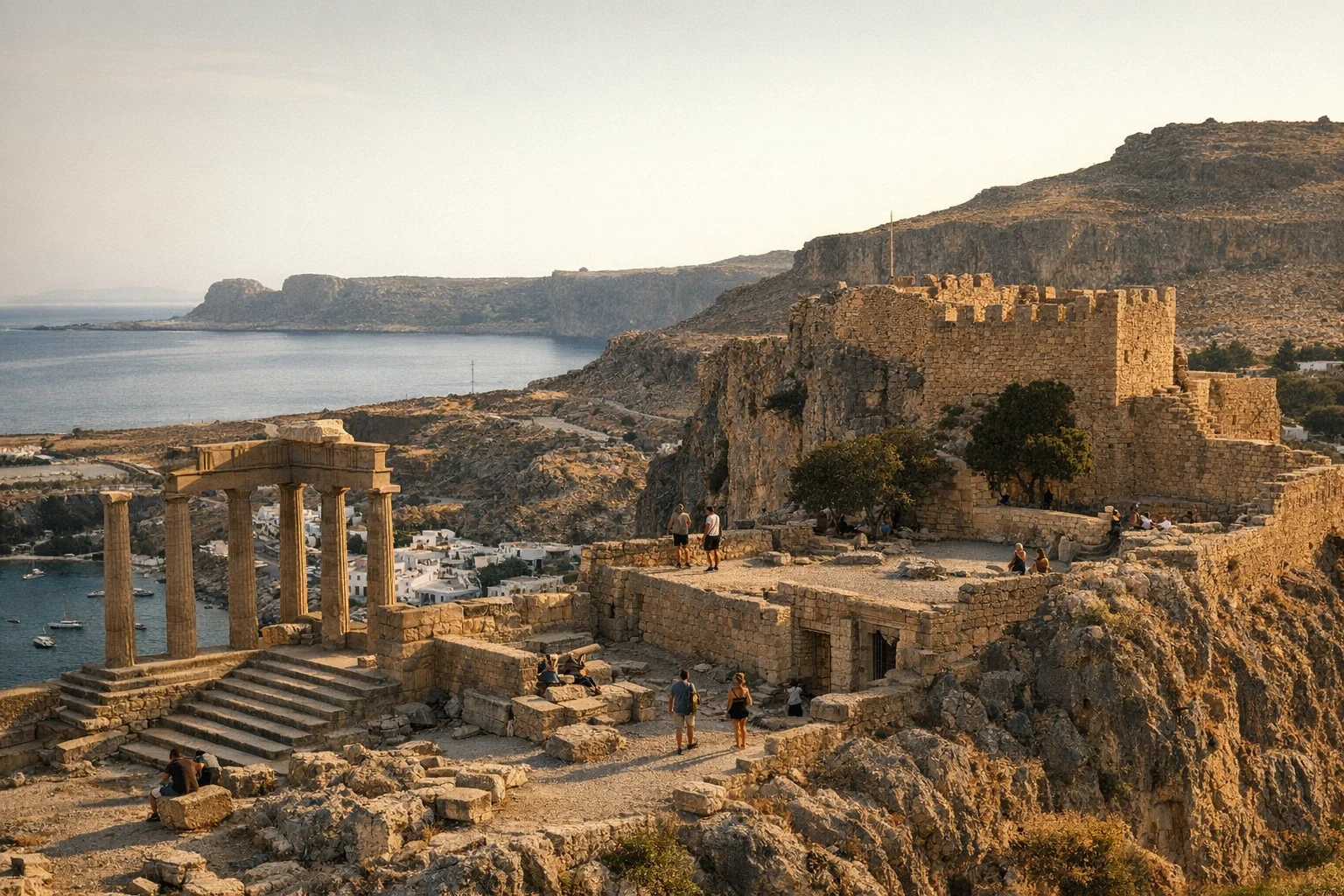
Perched high on a dramatic clifftop overlooking the sparkling turquoise waters of the Aegean Sea, the Acropolis of Lindos is one of Greece’s most breathtaking ancient treasures. Located on the island of Rhodes in the heart of the Dodecanese, the acropolis rises above the picturesque whitewashed village of Lindos on the island’s southeastern coast. In the warm glow of the Mediterranean sun, the imposing ancient walls and the columned remains of its temples create an unforgettable sight—one that has captivated travelers, conquerors, and worshippers for millennia. The Acropolis of Lindos is a unique blend of natural grandeur and layers of architectural heritage, bearing witness to Greece’s Classical brilliance, Hellenistic artistry, and the strategic importance of Rhodes through the ages.
The journey up to the citadel alone feels like a step through time. As you ascend the winding stone path from the village, the sharp scent of wild herbs drifts through the air and the horizon unfolds with panoramic views over the bay and distant mountains. It is easy to see why ancient Greeks chose this dramatic setting for their sacred site—a place where nature itself seemed to reach up to meet the divine. Today, the Acropolis of Lindos is a living museum, an open-air testament to the achievements and tumult of civilizations past. From the soaring columns of the Temple of Athena Lindia to medieval battlements built by the Knights of St. John, every stone tells a story. For modern visitors, the Acropolis of Lindos offers not just remarkable ruins, but an experience of awe—a living connection to the ancient world, the glory of Hellenism, and the enduring spirit of exploration that defines the island of Rhodes.
History
Early Settlements and the Rise of Lindos
The history of Lindos stretches back to at least the 10th century BCE, when Dorian Greeks established the first permanent settlement on Rhodes. Lindos quickly became one of the island’s three great city-states—alongside Ialysos and Kamiros—dominating maritime trade in the eastern Mediterranean. From its earliest days, Lindos was recognized for its natural harbor, fertile land, and strategic position along seafaring routes connecting the Aegean with the wider world. Its early prosperity enabled local rulers to commission impressive temples and civic buildings, transforming the rocky acropolis into a center of religious and political life by the 7th century BCE.
Archaic and Classical Greatness
By the 6th century BCE, Lindos flourished as a major cultural and religious sanctuary, with the construction of the first grand temple dedicated to Athena Lindia, the city’s patron deity. The fame of the temple grew rapidly throughout the Greek world, attracting pilgrims and visitors who came bearing votive offerings. According to ancient sources—including Herodotus and Pindar—Lindos also became a literary center, with great poets and historians visiting the city. The prominence of the acropolis was such that myths sprung up about its foundations and legendary protectors. The site’s fortifications were repeatedly expanded to meet the growing threats posed by rival city-states and foreign invaders, and by the Classical period, Lindos had cemented its place as both a religious and military stronghold.
Hellenistic and Roman Transformations
With the unification of Rhodes’ city-states in 408 BCE and the founding of the city of Rhodes itself, Lindos eventually lost some of its political status, but the acropolis retained enormous religious significance. The Hellenistic era brought renewed investment, with the expansion of the Sanctuary of Athena and the addition of grand staircases, stoa (covered walkways), and monumental gates. Roman rule, beginning in 164 BCE, left its mark in the form of further architectural embellishments and the construction of an early Christian basilica atop the acropolis. Romans valued Lindos not only for its sanctity but also for its scenic beauty, as evidenced by the writings of ancient travelers and geographers.
Byzantine, Medieval, and Ottoman Eras
The decline of pagan worship in late antiquity saw the conversion of the acropolis into a Christian stronghold. During the Byzantine period, the site was refortified, and religious structures adapted to the new faith. However, the single most striking transformation came during the medieval period, when the Knights Hospitaller (or Knights of St. John) fortified the acropolis in their fight against the Ottoman Turks. Massive new walls and towers were constructed in the 14th and 15th centuries, enclosing the ancient sanctuaries and altering the skyline of Lindos forever. After the Ottoman conquest in 1522, the acropolis’ military significance waned, and local traditions once again came to define the hill’s character. Through every period, the acropolis remained steeped in myth and memory—a symbol of Lindos’ enduring connection to the sacred and the strategic.
Key Features
Ascending to the Acropolis of Lindos is both a physical and emotional journey, rewarded by the wonder of its remarkably preserved remains and the grandeur of its setting. Upon reaching the southern entrance, visitors are greeted by a dramatic flight of Hellenistic steps, carved into the living rock and flanked by the evocative ruins of a monumental gateway (the Propylaea). This grand approach, once lined with offerings and inscriptions, immediately sets the tone for the site’s ceremonial importance and offers dramatic first vistas over the shimmering bays below.
The centerpiece of the acropolis is undoubtedly the Temple of Athena Lindia. Originally constructed in the 6th century BCE and rebuilt in the Hellenistic period, the temple stands in partial ruin, but several Doric columns and robust foundations remain. These remnants evoke the temple’s former majesty—legend has it the sanctuary housed sacred relics, priceless art, and the soul of Lindos itself. Behind the temple, the exposed platform reveals a cut-stone altar and commanding panoramic views of the Aegean, adding to the sense of timeless sanctity.
To the west of the temple, a series of ancient stoa—roofed porticoes that once sheltered pilgrims and dignitaries—trace the flanks of the hilltop. Their column bases and weathered paving stones hint at the large crowds that once converged here for festivals, processions, and political gatherings. Between these historic thoroughfares, fragments of public buildings and inscribed stones offer glimpses into Lindos’ civic past.
Perhaps the most astonishing feature of the site is its medieval fortifications. Built by the Knights Hospitaller during Rhodes’ embattled Middle Ages, thick stone walls and towers now enclose the ancient sanctuaries, melding Hellenistic elegance with the rugged utility of fortress architecture. Here, visitors can walk atop the ramparts, peer through arrow slits, and imagine the desperate sieges faced by defenders centuries ago. Descending from the acropolis, you’ll find the ancient theater of Lindos—carved directly into the western slope of the hill. Though only traces remain, its semicircular form and panoramic outlook convey the scale and sophistication of classical Lindian society.
All around the acropolis, the setting itself is a marvel. The blinding white of the surrounding village, the brilliant blue waters of St. Paul’s Bay, and the ever-present wind from the Aegean all conspire to make Lindos a place both epic and intimate—a microcosm of Rhodes’ unique blend of heritage, nature, and myth.
Getting There
The Acropolis of Lindos is situated above the village of Lindos, about 50 kilometers (31 miles) south of Rhodes Town, the capital of the island. Reaching it from Rhodes Town or the island’s main airport (Diagoras Airport) is straightforward, though the journey becomes part of the adventure. Regular public buses operate year-round between Rhodes Town and Lindos, departing several times daily and taking roughly 90 minutes. A one-way fare typically costs between €5 and €7, making the bus a budget-friendly option for solo travelers and backpackers.
If you are short on time or prefer convenience and comfort, taxis and private transfers are readily available from any major town or hotel. Expect to pay approximately €65–€80 each way for a taxi from Rhodes Town to Lindos, with the journey lasting around an hour. Many visitors opt to rent a car for greater flexibility, allowing stops at beaches and other sites along the scenic east coast road—car rentals can be found for as little as €30 per day in the low season, but prices rise during summer. Parking is available on the outskirts of Lindos village, as cars are not permitted within the historic village center itself. From the parking area, you’ll enjoy a picturesque (if occasionally steep) walk through white-washed alleyways to the base of the acropolis.
For a more leisurely arrival, some opt to visit Lindos by boat—day cruises depart from Mandraki Harbor in Rhodes Town and often include swimming stops along the coast. These excursions provide a unique perspective of the acropolis and cost between €35 and €60, often including snacks and time to explore the village before the return sail. However you arrive, the final approach to the Acropolis of Lindos involves a steep walk via stone paths—those with limited mobility should allow extra time and consider sturdy footwear.
When to Visit
The Acropolis of Lindos is open to visitors year-round, but timing your visit can make a world of difference in comfort and crowd levels. The sun-soaked island of Rhodes enjoys a typically Mediterranean climate, with hot, dry summers and mild, occasionally wet winters. Peak visitor season runs from late June through early September, when the weather is reliably sunny and the island buzzes with energy. During these months, temperatures often soar above 30°C (86°F), and the acropolis can become crowded, particularly from late morning through early afternoon. If visiting in summer, plan to arrive as early as possible—gates open around 8:00 AM—both to beat the heat and to savor quieter moments atop the citadel.
Spring (April to early June) and autumn (late September to October) are arguably the best times to experience Lindos. During these shoulder seasons, temperatures remain pleasant (18–26°C / 65–78°F), the sea is warm enough for swimming, and both the paths to the acropolis and the village lanes below are less congested. Longer daylight hours allow for unhurried exploration and spectacular sunsets from the ramparts or the village rooftop cafés.
Winter brings a different atmosphere entirely. Though some businesses in Lindos close, the acropolis itself is typically open, and you may find near-solitude among the ruins. Occasional rain showers and cooler temperatures (10–18°C / 50–64°F) are possible, so bring a light jacket and proper footwear. Whenever you visit, remember that the walk to the top is exposed to sun and wind—pack water, sunscreen, and a hat for year-round comfort.
| Quick Facts | Details |
|---|---|
| Location | Lindos, Rhodes, South Aegean, Greece |
| Coordinates | 36.0914° N, 28.0842° E |
| Established | Circa 6th century BCE |
| Main Highlights | Temple of Athena Lindia, medieval fortifications, panoramic views |
| Admission Fee | €12 (reduced for students and children) |
| Opening Hours | 8:00 AM – 8:00 PM (summer), shorter in winter |
| Access Difficulty | Moderate to steep climb, many steps, uneven surfaces |
| Nearby Attractions | Lindos village, St. Paul’s Bay, ancient theater |
| Public Transport | Bus from Rhodes Town (€5–€7 one-way, 90 mins) |
| Parking | Available outside village, 10-15 min walk |
| Guided Tours | Frequently available, see recommended tours above |
| Best Season to Visit | Spring and autumn for comfort and fewer crowds |
| UNESCO Status | Not individually listed, part of Rhodes tentative list |
Frequently Asked Questions
What are the opening hours of the Acropolis of Lindos?
The site is typically open daily from 8:00 AM to 8:00 PM during summer months, and reduced hours in winter. Always check ahead for seasonal changes.
How much does it cost to visit the Acropolis of Lindos?
Admission is usually €12 for adults. Reduced rates may apply for students, children, and EU seniors. Prices are subject to change.
Is the climb to the Acropolis of Lindos difficult?
The ascent involves a steep path and many steps, some uneven. Visitors with mobility issues may find the climb challenging but can ascend at their own pace.
Can I buy tickets at the entrance or should I book in advance?
Tickets can be purchased at the entrance, but buying in advance or joining a guided tour is recommended during the busy summer season.
Are guided tours available at the Acropolis of Lindos?
Yes, both private guides and group tours are available, offering deep insights into the site's fascinating history and unique features.
Nearby Ancient Sites
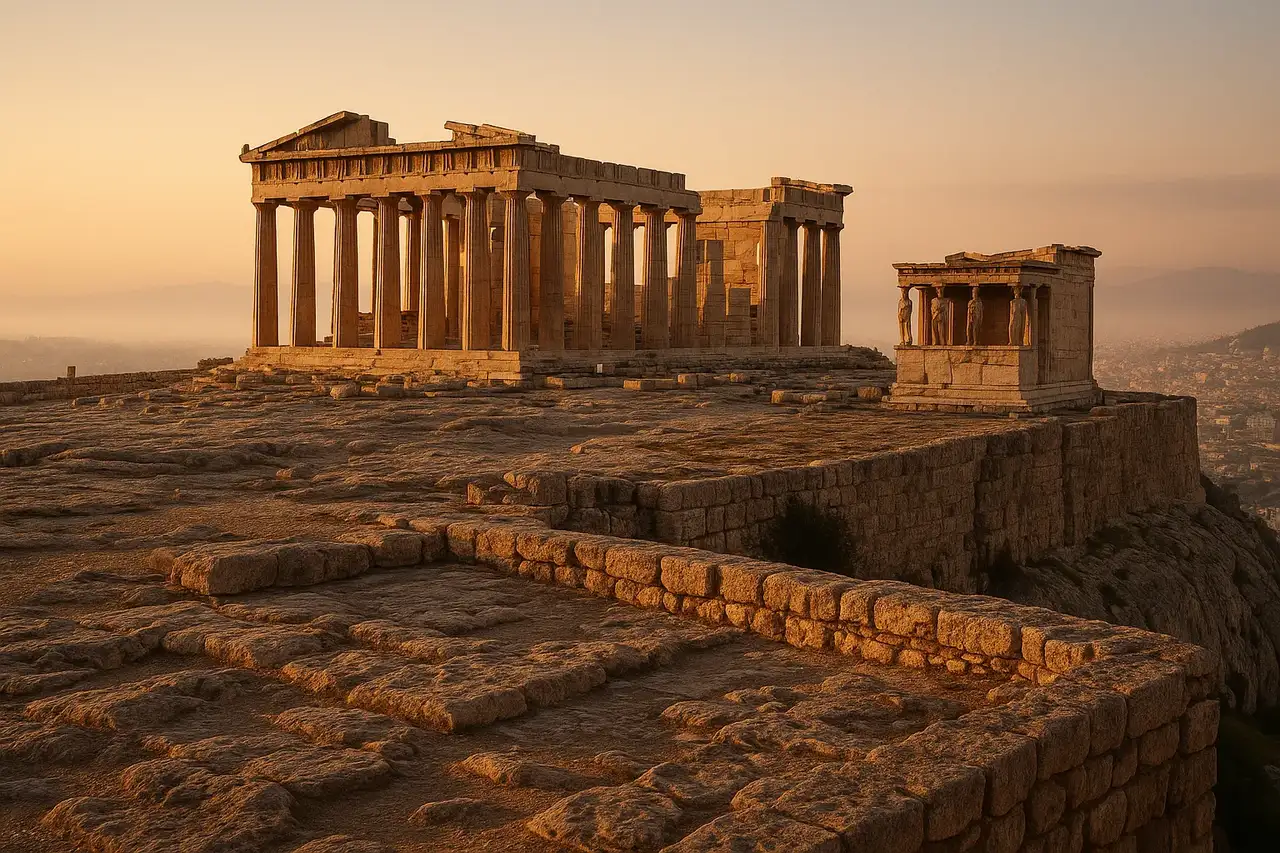
The Complete Acropolis Athens Travel Guide: Temples
Ancient GreecePlan the perfect visit to the Acropolis of Athens with our 2026 guide. Discover the Parthenon, best ...
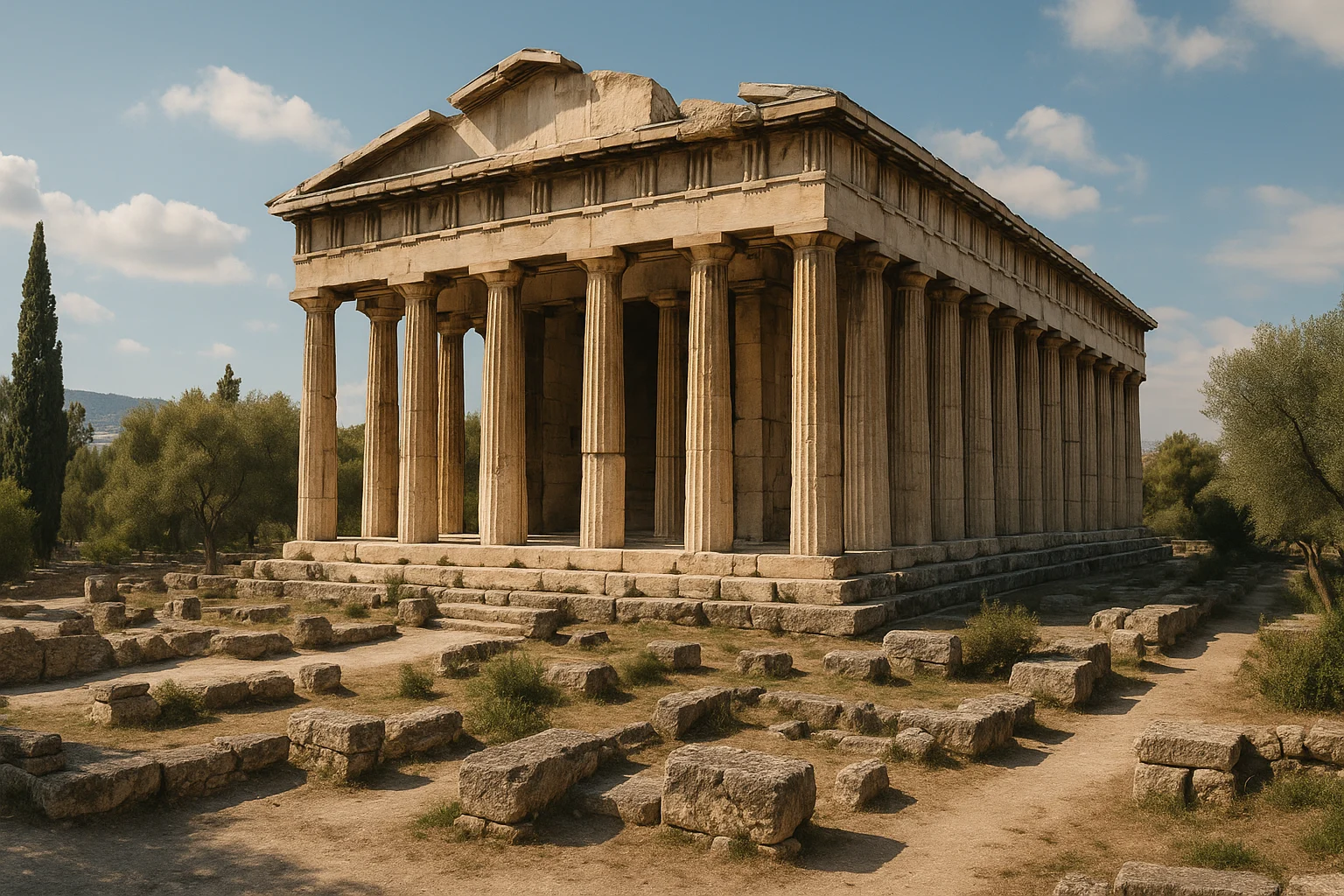
Ancient Agora of Athens Travel Guide 2026: Route, Tickets, and Context
Classical GreekPlan a better Ancient Agora visit with practical timing, monument priorities, and clear historical c...
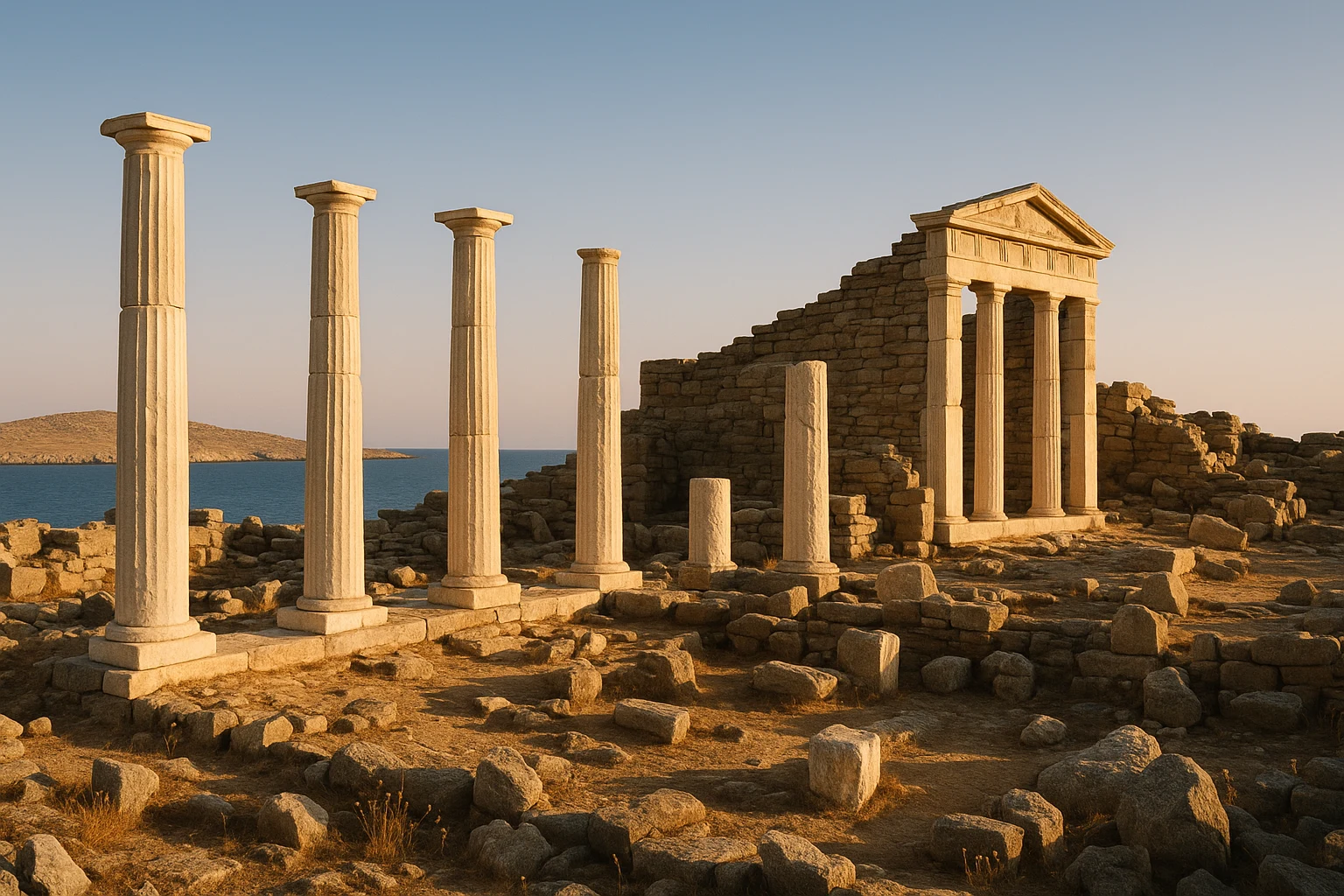
Delos: Sacred Island of Apollo at the Heart of the Aegean
Ancient GreekExplore Delos, the mythological birthplace of Apollo and Artemis, now an uninhabited open-air museum...