Quick Info
At a glance
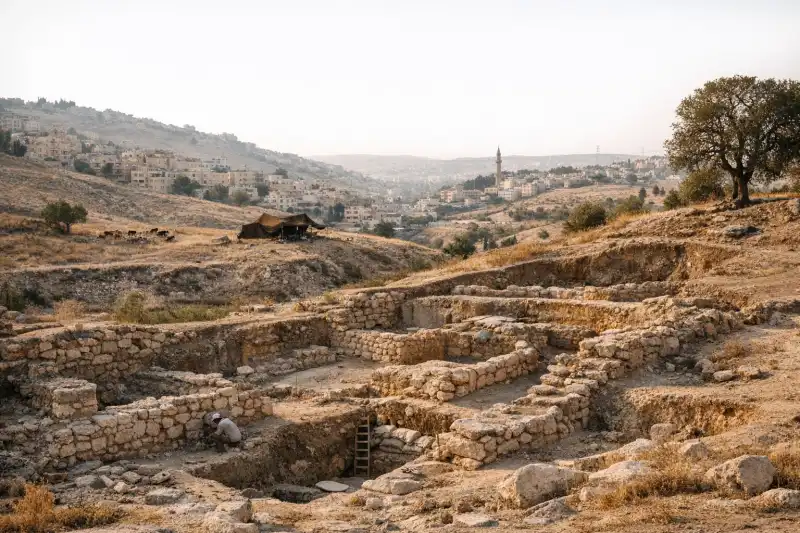
Ain Ghazal in Jordan is one of those archaeological places that quietly reshapes how you think about the ancient world. On the outskirts of modern Amman, amid roads, expanding neighborhoods, and the ordinary rhythms of contemporary city life, this Neolithic settlement preserves traces of a community that thrived roughly nine millennia ago. Long before classical temples, Islamic citadels, or Roman colonnades came to define the region in travelers’ imaginations, the people of Ain Ghazal were building homes, tending animals, cultivating crops, and creating some of the earliest large-scale human images ever found.
What makes the site so compelling is not monumental grandeur in the later sense. You do not come to Ain Ghazal expecting towering columns or intact fortification walls. Instead, its significance lies in deep time and human beginnings. Here, archaeologists uncovered evidence for one of the largest known early farming villages in the Near East, along with extraordinary lime-plaster statues whose haunting eyes and stylized forms still feel startlingly modern. The site offers a rare window into the shift from mobile lifeways to settled community life, when architecture, ritual, subsistence, and social organization were all being reinvented.
For travelers exploring Jordan beyond Petra and the desert castles, Ain Ghazal offers a different kind of wonder: a place where prehistory becomes tangible. Visited thoughtfully, especially alongside museum collections in Amman, it reveals how important Jordan was to the story of early civilization in southwest Asia.
History
Early settlement and the rise of village life
Ain Ghazal was first occupied around 7200 BCE, during the Pre-Pottery Neolithic B period, a transformative era in the Levant. By this time, some communities in the region had already begun experimenting with agriculture and more permanent settlement, but Ain Ghazal stands out for both its scale and longevity. Situated near a reliable water source in the Zarqa River basin, the site offered attractive conditions for early farmers and herders. Its position gave access to arable land, pasture, and regional exchange networks that likely linked communities across what is now Jordan, Israel-Palestine, Syria, and beyond.
As the village expanded, its inhabitants built rectangular houses of mudbrick, often with plastered floors and carefully organized interior spaces. These were not temporary shelters but durable homes, indicating a population committed to settled life. Archaeological evidence suggests residents cultivated cereals and legumes and relied increasingly on domesticated animals, especially goats, while still hunting wild species. This combination reflects a world in transition, where older practices remained important even as food production became more central.
Ain Ghazal’s size was unusual for its time. At its peak, it may have covered more than a dozen hectares and supported a population in the thousands, making it one of the largest Neolithic settlements known in the region. Such scale implies social coordination, shared traditions, and possibly emerging forms of communal identity.
Ritual life and the plaster statues
One of the most remarkable chapters in the history of Ain Ghazal concerns ritual practice and symbolic expression. During excavations in the 1980s, archaeologists discovered caches of human-shaped statues and busts fashioned from lime plaster over reed frameworks. These figures, with broad faces, emphasized eyes, and simplified bodies, are among the most famous prehistoric artworks ever found in Jordan.
The statues were not casual household objects. They had been carefully made, used or displayed for some time, and then deliberately buried in pits. Their purpose remains debated, but many scholars see them as connected to ritual, ancestor veneration, community memory, or social identity. Whatever their precise meaning, they reveal a society capable of major collective effort. Producing lime plaster required considerable labor and technical knowledge, since limestone had to be heated at high temperatures and then processed into workable material.
Ain Ghazal also yielded evidence of complex mortuary practices. Burials were often placed beneath house floors, a pattern seen at other Neolithic sites in the Levant. In some cases, skulls were removed after decomposition, recalling wider regional traditions that may have linked the dead to household continuity or communal ancestry. These practices suggest that domestic life, ritual, and memory were deeply intertwined.
Change, adaptation, and decline
Like many long-lived settlements, Ain Ghazal did not remain static. Over the centuries, the community adapted to shifting environmental and social conditions. Archaeological layers show changes in architecture, subsistence, and material culture. The transition into the later Neolithic saw modified settlement patterns and increasing pressures that may have affected daily life.
Scholars have proposed several factors in the site’s eventual decline. Population growth may have strained local resources, especially woodlands needed for fuel and plaster production. Overgrazing, soil stress, and climatic fluctuations could also have contributed. At the same time, broader regional transformations likely altered exchange systems and patterns of settlement. By around 5000 BCE, Ain Ghazal had largely ceased to function as the major community it once was.
Its disappearance was not a dramatic collapse in the cinematic sense, but rather part of the long and uneven reshaping of prehistoric landscapes. Even so, its archaeological record preserves an unusually rich account of early village life over many centuries.
Rediscovery in the modern era
Ain Ghazal came to modern attention in 1974, when development work associated with road construction exposed part of the site. Subsequent excavations revealed its exceptional importance. Archaeologists from Jordan and international institutions documented houses, burials, figurines, tools, animal remains, and the now-famous plaster statues.
These discoveries fundamentally changed scholarly understanding of Neolithic Jordan. Ain Ghazal showed that the region was not peripheral to early agricultural and social developments, but central to them. Today the site remains a key reference point for studying the origins of settled life, ritual behavior, and community organization in the ancient Near East.
Key Features
Ain Ghazal’s greatest appeal lies in the way its features illuminate everyday life in a very distant past. The settlement itself was extensive, and even where the architecture survives only in low remains, the underlying plan tells an important story. Houses were built of mudbrick on stone foundations, with plastered surfaces and carefully maintained interiors. These were spaces of cooking, storage, sleeping, craft activity, and ritual. Rather than a simple camp, Ain Ghazal was a structured village landscape, one that reflects planning, labor investment, and continuity over generations.
The domestic architecture helps visitors imagine the social world of the site. The clustered buildings imply neighborhoods and households, while buried floors and repeated rebuilding show how families remained attached to particular places. In many early farming communities, the house was more than a shelter; it was also a center of memory, identity, and ancestry. At Ain Ghazal, where burials were tied to domestic space, that relationship becomes especially vivid.
The most celebrated feature associated with the site is, of course, the group of lime-plaster statues. Although visitors will usually encounter the finest examples in museum collections rather than in situ, they are inseparable from any understanding of Ain Ghazal. These statues are extraordinary not simply because they are old, but because they reveal abstraction, symbolism, and craftsmanship at a surprisingly sophisticated level. Their large eyes, often highlighted with bitumen, create an intense gaze that many viewers find unforgettable. Some are full figures, others busts, and a few have two heads, adding to their mystery. They do not fit neatly into later categories of portraiture, deity, or ancestor image, which is part of what makes them so powerful.
Another important feature is the evidence for subsistence and environment. Excavations recovered plant remains, animal bones, and tools that help reconstruct what people ate and how they managed the land. Residents cultivated crops such as wheat and barley and made growing use of domesticated goats, while still supplementing their diet with hunted game. This mixed economy places Ain Ghazal at the heart of one of humanity’s most consequential transitions: the move toward farming and animal husbandry. For visitors interested in the origins of food systems and sedentary life, the site offers rare depth.
Craft production is also visible in the archaeological record. Stone tools, bone implements, figurines, plastered surfaces, and architectural materials all speak to a community with specialized skills and established traditions. The technical achievement represented by lime plaster deserves special attention. Producing it required sourcing raw materials, collecting fuel, maintaining controlled fires, and applying the finished substance effectively in floors, statues, and perhaps other contexts. In prehistoric terms, this was a major technological accomplishment.
The landscape around Ain Ghazal matters as much as the excavated remains themselves. The site developed near a spring and within a valley system that would have supported agriculture and grazing. Today, modern urban growth has changed the surroundings dramatically, but understanding the original environmental setting helps explain why this location became so important. Water, fertile zones, and connectivity to wider regions all contributed to its success.
For many travelers, Ain Ghazal is best appreciated as a layered archaeological story rather than a visually complete monument. The site rewards those willing to look beyond surface grandeur and engage with interpretation. Pairing a visit with the Jordan Museum in Amman is particularly valuable, since museum displays provide context for the statues and other finds. Together, the site and museum collections allow you to grasp both the physical footprint of the settlement and the artistic, ritual, and social imagination of its people.
Getting There
Ain Ghazal is located in the greater Amman area, making it one of Jordan’s more accessible prehistoric sites in geographic terms, even if it is less frequently visited than the capital’s headline attractions. If you are staying in central Amman, the easiest option is usually a taxi or ride-hailing service. Depending on traffic and your starting point, the journey may take around 20 to 35 minutes. Typical fares are often in the range of 4 to 8 Jordanian dinars for a one-way trip, though prices can rise during heavy traffic or if you arrange waiting time.
Renting a car is another practical choice, especially if you plan to combine Ain Ghazal with the Amman Citadel, the Jordan Museum, or sites in the Jordan Valley. Driving in Amman can be busy, but the flexibility is useful. Daily rental rates in Jordan often start around 25 to 40 dinars, excluding fuel. Parking conditions near archaeological areas vary, so it is wise to check recent local guidance before setting out.
Public buses and service taxis may get you into the broader northeastern Amman area at a lower cost, sometimes for under 1 dinar, but they are less convenient for exact site access and can be confusing for short-term visitors unfamiliar with local routes. If you prefer a smoother experience, booking a half-day driver or guided Amman archaeology tour is often worth the extra cost.
Because Ain Ghazal is an archaeological site rather than a heavily touristed complex, always confirm current visitor access before going. Some travelers choose to focus on viewing its finds in the Jordan Museum if entry conditions at the site itself are limited.
When to Visit
The best times to visit Ain Ghazal are generally spring, from March to May, and autumn, from September to November. During these months, temperatures in Amman are usually mild and pleasant, making it easier to spend time outdoors reading the landscape and walking around exposed remains. Spring can be especially appealing, as the surrounding region often feels fresher after winter rains, while autumn offers stable weather and softer light for photography.
Summer, particularly June through August, can be hot and dry. Although Amman’s elevation sometimes moderates temperatures compared with lower-lying parts of Jordan, midday heat can still make archaeological visits tiring. If you do go in summer, aim for early morning or late afternoon, carry plenty of water, and wear sun protection. The exposed nature of the site means there may be limited shade.
Winter visits are possible and can be rewarding for travelers who prefer quieter conditions and cooler air. Daytime temperatures are often manageable, but rain, wind, and occasional cold snaps can make the experience less comfortable. Surfaces may also be muddy after wet weather, depending on conditions at the site.
Whenever you visit, it helps to pair Ain Ghazal with indoor museum time. Seeing the plaster statues and related finds in Amman provides crucial context, and museums are especially useful on hot afternoons or rainy days. For the most balanced experience, choose a clear spring or autumn day and combine the site with other nearby cultural stops.
| Quick Facts | Details |
|---|---|
| Location | Northeastern Amman, Jordan |
| Region | Amman Governorate |
| Period | Neolithic |
| Earliest occupation | c. 7200 BCE |
| Historical significance | Major early farming settlement in the Levant |
| Best known for | Lime-plaster statues and large village remains |
| Nearest city | Amman |
| Time needed | 1–2 hours at the site, longer with museum visit |
| Best season | Spring and autumn |
| Combined visit | Jordan Museum and Amman Citadel |
Guided tours: worth it?
Most travelers can visit Ain Ghazal independently. Compare a tour only if you want a tighter history-focused visit, easier logistics, or a guide who can answer questions on the spot.
Best for
- Short visits where a planned route saves time
When to go self-guided
Go independently if you prefer setting your own pace, reading as you go, and checking official hours or ticket rules directly before you arrive.
What I’d avoid
Skip paid tours that bundle unrelated stops you do not actually want. The best option should either save meaningful planning time or add historical context you would miss on your own.
Amman archaeology and city tours
Useful when: you want to compare guided formats before deciding
Jordan prehistoric and cultural heritage tours
Useful when: you want to compare guided formats before deciding
Amman day tours from Jordan
Useful when: transport or pickup logistics matter
Some tour links are affiliate links, which may earn Ancient Travel a small commission at no extra cost to you. I try to surface options that make practical sense for the site—not just anything bookable.
Frequently Asked Questions
What is Ain Ghazal famous for?
Ain Ghazal is best known as one of the most important Neolithic sites in the Near East, especially for its rare lime-plaster human statues dating back around 9,000 years.
Where is Ain Ghazal located?
Ain Ghazal lies on the northeastern side of Amman in Jordan, in the Zarqa River basin, making it relatively close to the modern capital.
Can visitors see the original statues at Ain Ghazal?
Some original Ain Ghazal statues are preserved in museums, including the Jordan Museum in Amman, rather than displayed outdoors at the excavation site.
How much time should I allow for visiting Ain Ghazal?
Most travelers should allow 1 to 2 hours for the site itself, though many combine it with museums in Amman for fuller context.
Is Ain Ghazal suitable for casual tourists?
Yes, but it especially rewards visitors interested in archaeology, prehistory, and the origins of settled life in Jordan.
When is the best time to visit Ain Ghazal?
Spring and autumn are usually the most comfortable seasons, with mild temperatures and better conditions for exploring outdoor archaeological areas.
Nearby Ancient Sites
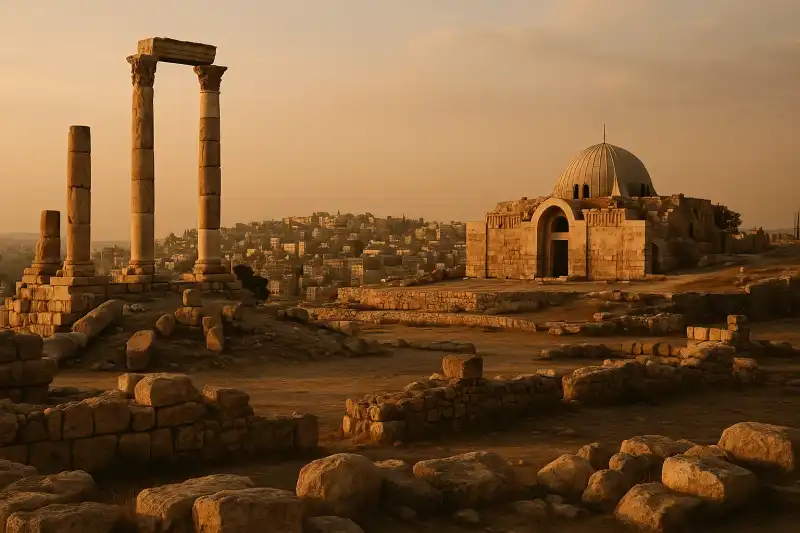
Amman Citadel Jordan Guide 2026: Temple of Hercules & Ancient Rabbah
Ammonite-Roman-UmayyadExplore Jordan's ancient citadel overlooking modern Amman. Discover the Temple of Hercules, Umayyad ...
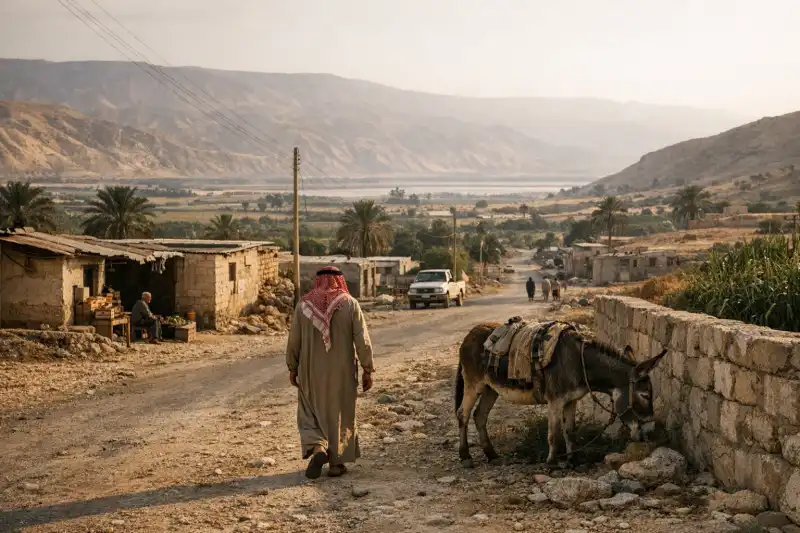
Deir Alla
Canaanite, Israelite-era, and regional Levantine culturesExplore Deir Alla in Jordan, an important Jordan Valley archaeological mound linked to Bronze and Ir...
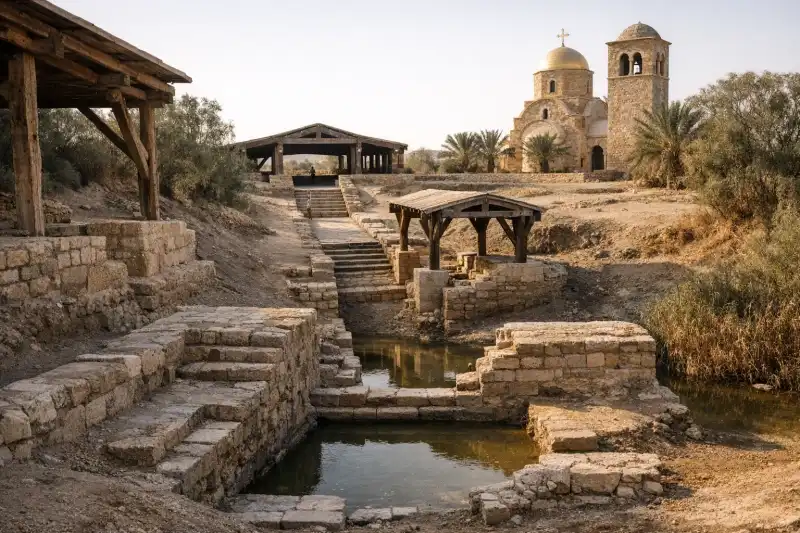
Bethany Beyond the Jordan
Bethany Beyond the Jordan in Jordan is an archaeological and religiously significant site believed t...