Quick Info
Curated Experiences
Aizanoi Temple of Zeus Full Day Tour from Ankara
Kütahya Region Ancient Sites Day Trip
Central Anatolia Phrygian Archaeology Tour
Quick Facts
- Location: Çavdarhisar district, central Anatolia, about 240km from Ankara
- Best for: Archaeology enthusiasts, quiet ruins, photography
- When to visit: April-June, September-October
- Entry fee: Around 100 Turkish Lira ($3-4)
- Crowds: Very low - one of Turkey’s least-visited major sites
- What to see: Temple of Zeus, 9,300-seat stadium, agora, theater remnants
The Hidden Wonder of Anatolia
You stand on a hillside in central Turkey, surrounded by pine forests and rolling mountains, gazing at something most tourists never see: a nearly perfect ancient sanctuary frozen in time. Aizanoi is not on the typical Turkish archaeology circuit. It competes for attention with Ephesus, Troy, and Pergamon. Yet for those who find it, Aizanoi offers something rarer—an entire sacred city where you can walk among marble columns without crowds, where excavations continue slowly beneath your feet, and where the scale of ancient ambition still astonishes.
The site dates to the 4th century BCE, when the city served as a major religious and commercial center in ancient Phrygia. What makes Aizanoi extraordinary is what survived: the Temple of Zeus remains one of the best-preserved ancient temples in the Mediterranean world. Not a reconstruction. Not a theory. An actual standing building you can touch, circumnavigate, and understand as ancient people experienced it.
The Temple of Zeus: An Architectural Miracle
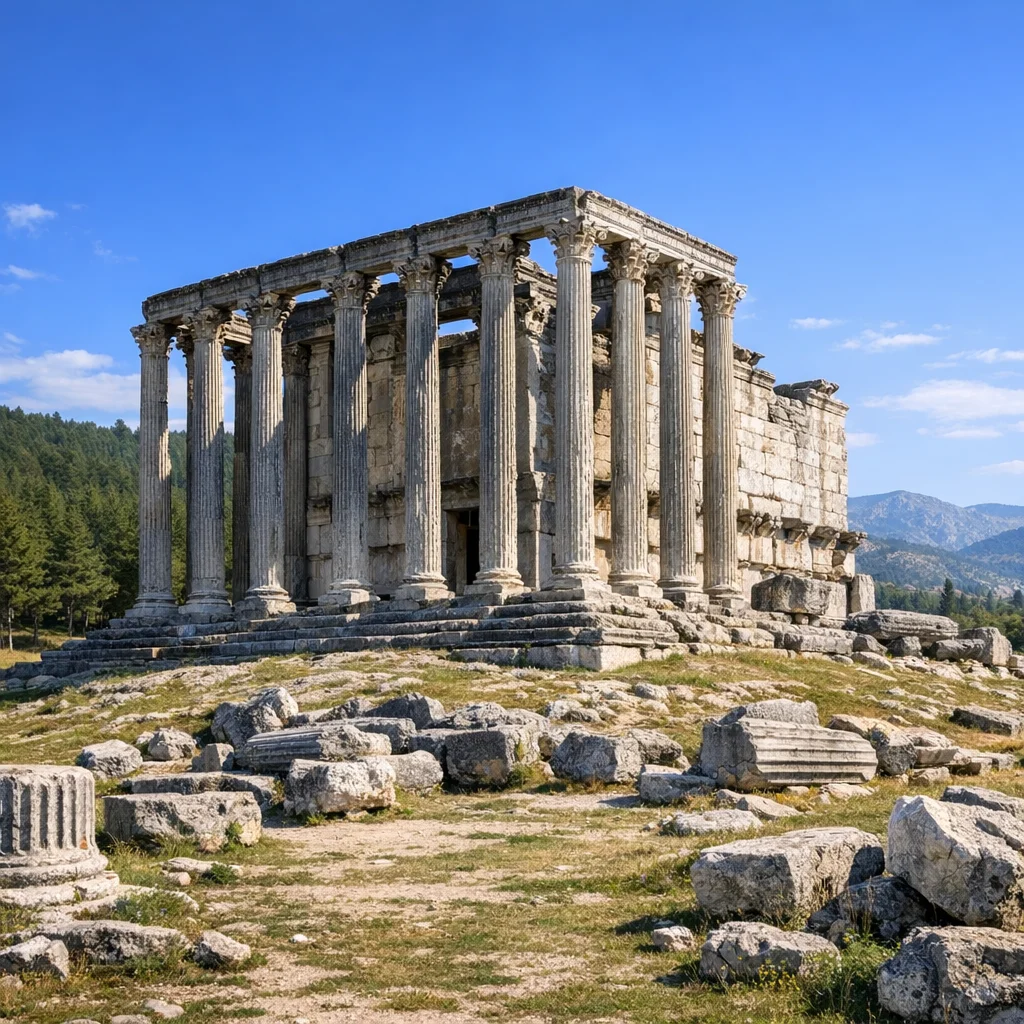
Walk toward the temple and prepare for a moment of genuine awe. Rising from the hillside is a structure of such architectural refinement that you’ll understand immediately why archaeologists rank it among the finest temple remains anywhere. The Corinthian columns stand upright. The entablature is readable. The proportions are perfect.
The temple was built in the 2nd century CE during the Roman period, when Aizanoi flourished under imperial patronage. It’s dedicated to Zeus Sosipolis (“Zeus the Preserver of the City”), and its scale reflects the prosperity of a city that mattered deeply to the broader ancient world. The columns are fluted marble, quarried locally. The cella (inner chamber) once housed a chryselephantine statue—gold and ivory—that would have glowed in candlelit ceremonies you can barely imagine.
What you see today is the western colonnade intact, rising above the landscape. Engineers have reinforced the structure with modern supports, but these are subtle. The temple reads as ancient first. You’re not looking at a museum piece or a reconstruction—you’re standing before something that has endured nearly two thousand years, asking the same questions: How did they achieve such precision? What did it feel like to worship here?
The Stadium: Where Crowds Once Gathered
Beyond the temple lies one of the most remarkable athletic facilities of the ancient world. The stadium at Aizanoi is carved directly into the hillside, a 9,300-seat arena designed for athletic competitions and festival gatherings. Thirty-two meters wide, three hundred meters long, the stadium rises in tiers of limestone seating.
Descend into the stadium floor and you’re in an acoustic chamber of extraordinary precision. A whisper carries. An ancient herald’s voice would have reached every seat. Imagine the scene: athletes sprinting down the sandy track while thousands watched from above, the temple of Zeus visible from every angle, the surrounding mountains framing the scene. This was a place of civic pride, religious significance, and athletic competition all at once.
The northern end features a decorated gate where competitors would have entered. Channel stones carved into the stone mark where water ran—for cleaning, for ritual, for the fundamental Roman obsession with hydraulic engineering. The stadium is partially excavated. Sections remain under dirt and vegetation, a reminder that much of Aizanoi’s story is still being uncovered.
The Agora and Town Plan
Below the temple and stadium lies the agora, the commercial heart of Aizanoi. Unlike many ancient sites, you can still read the town plan here. Shops line the edges. Columns suggest covered porticos. A fountain or small temple occupied the center. The scale suggests a city of real economic importance—not a small rural shrine, but a destination that drew merchants, pilgrims, and athletes from across the Mediterranean and Central Asia.
The agora also contained markets where goods moved in both directions: wine, oil, and grain heading west toward the Aegean coast; goods from the Silk Road heading toward the Mediterranean. Aizanoi sat at a crossroads of ancient trade networks, and the archaeology shows it clearly—pottery from Egypt, glass from the Levantine coast, inscriptions in Greek and Latin.
Theater and Thermal Complex
Up the hillside from the temple, you’ll find remnants of a small theater, partially reconstructed. It seated perhaps 2,000—intimate compared to the stadium, but built to the same precision and aesthetic standards. The theater’s stage buildings are gone, but the seating areas are visible, and the sightlines still work perfectly.
Nearby stands the remains of a elaborate thermal complex (Roman baths). These are typical for a prosperous city, but the engineering speaks to Aizanoi’s resources: hypocaust heating systems carved into the bedrock, water channels from distant springs, marble wall veneers that still glimmer when you catch them in sunlight. Bathing was central to Roman civic life, and Aizanoi invested in world-class facilities.
The Museum and Ongoing Excavations
The site museum, small but well-curated, holds sculptures, inscriptions, and artifacts that contextualize what you’re seeing. Marble heads of emperors, votive objects left by pilgrims, coins stamped with the city’s symbols. The inscriptions are particularly valuable—they tell stories of ordinary citizens: a merchant’s widow dedicating a statue, a priest recording a festival, soldiers wintering at the base.
Excavations continue under Turkish and international teams. Each season reveals new structures, repairs, and surprises. The site is not locked in time—it’s an active archaeological project where you might see teams carefully exposing walls, sifting earth, recording every fragment.
Visiting Aizanoi
Access: Aizanoi is reached from the town of Çavdarhisar, about a 45-minute drive from Kütahya. Your own vehicle is recommended, though local guides can arrange transport from larger towns. The site is poorly signposted, so detailed directions are essential.
Best time: April through June or September through October. Summers are hot; winters can bring heavy snow to these highlands.
What to bring: Comfortable walking shoes (uneven terrain, stone steps), sun protection, water. There are no facilities on-site.
Duration: Plan 2-3 hours minimum to explore the temple, stadium, and agora. A full day allows you to study the theater, baths, and museum without rushing.
Guides: Hiring a local guide in Çavdarhisar enriches the experience considerably. They can explain the ongoing excavations and provide context for what you’re seeing.
Photography: The light is exceptional in early morning and late afternoon. The temple’s proportions photograph beautifully from multiple angles. The stadium offers dramatic wide shots from the upper seating areas.
Connecting to Other Sites
Aizanoi sits in a region rich with ancient remains. The city of Pergamon lies to the west (5-6 hour drive), with its famous library and acropolis. Laodikeia (Laodicea ad Lycum), another major site, is a few hours south. Consider Aizanoi as part of a broader tour of Anatolia’s ancient heritage—it adds unexpected depth to any understanding of Roman provincial cities.
The Experience of Solitude
What strikes most visitors to Aizanoi is not what they see, but what they feel. You are alone with antiquity. You are not competing for viewpoint access, not navigating tour bus crowds, not racing to photograph before the light fades. You have time.
This solitude is rare in archaeological tourism. Spend an hour sitting on the stadium steps. Watch the light change on the temple columns. Consider the merchants, athletes, priests, and ordinary citizens who walked this same ground for three centuries. Read the inscriptions. Listen to the wind through the pines.
This is what Aizanoi offers: proximity to the ancient world without mediation. For that, the journey from the tourist circuits is worthwhile.
Viator & Tour Options
A dedicated day trip to Aizanoi is difficult to arrange through major tour operators, as most groups focus on Ephesus, Troy, or Pergamon. Your best options:
- Hire a private driver from Kütahya or Ankara
- Book a car rental and drive independently
- Contact local guides in Çavdarhisar for on-site expertise
The solitude is worth the logistical effort.
Nearby Ancient Sites
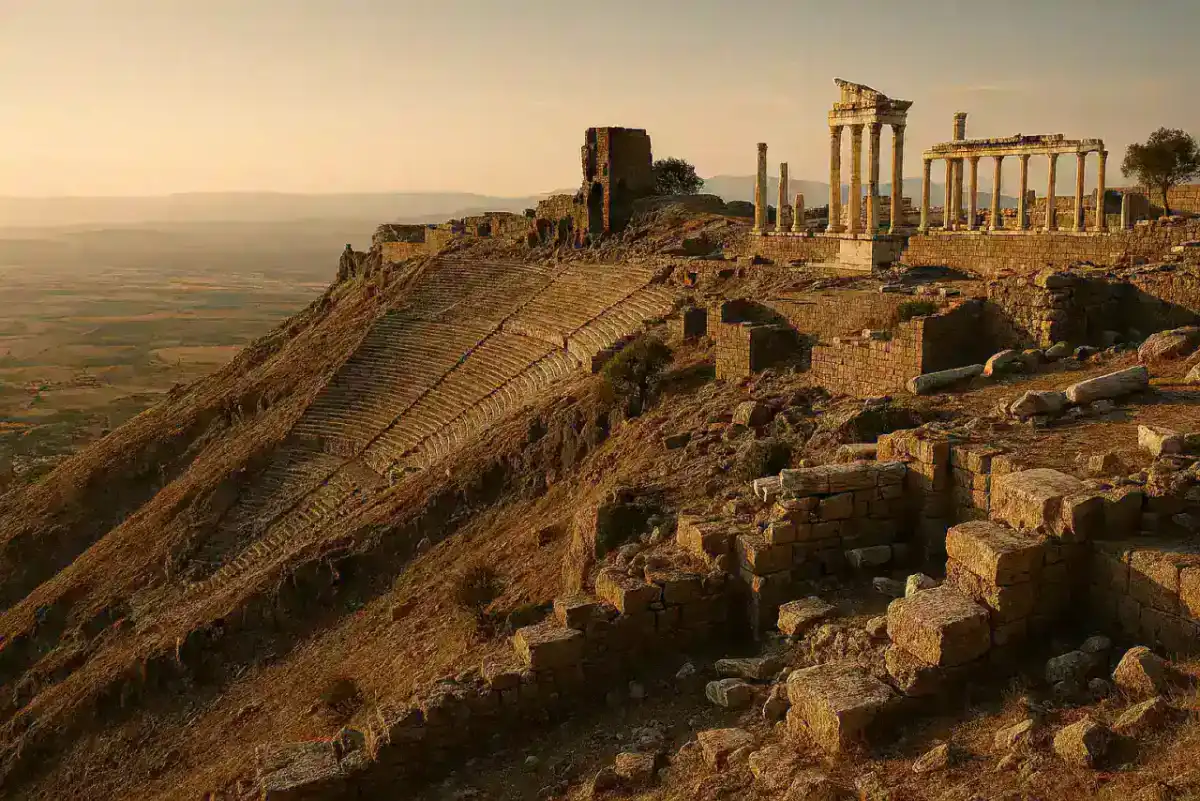
Pergamon Turkey Travel Guide: Ancient Acropolis & Library
Explore Pergamon, one of Turkey's greatest ancient cities. A hilltop acropolis with temples, theater...
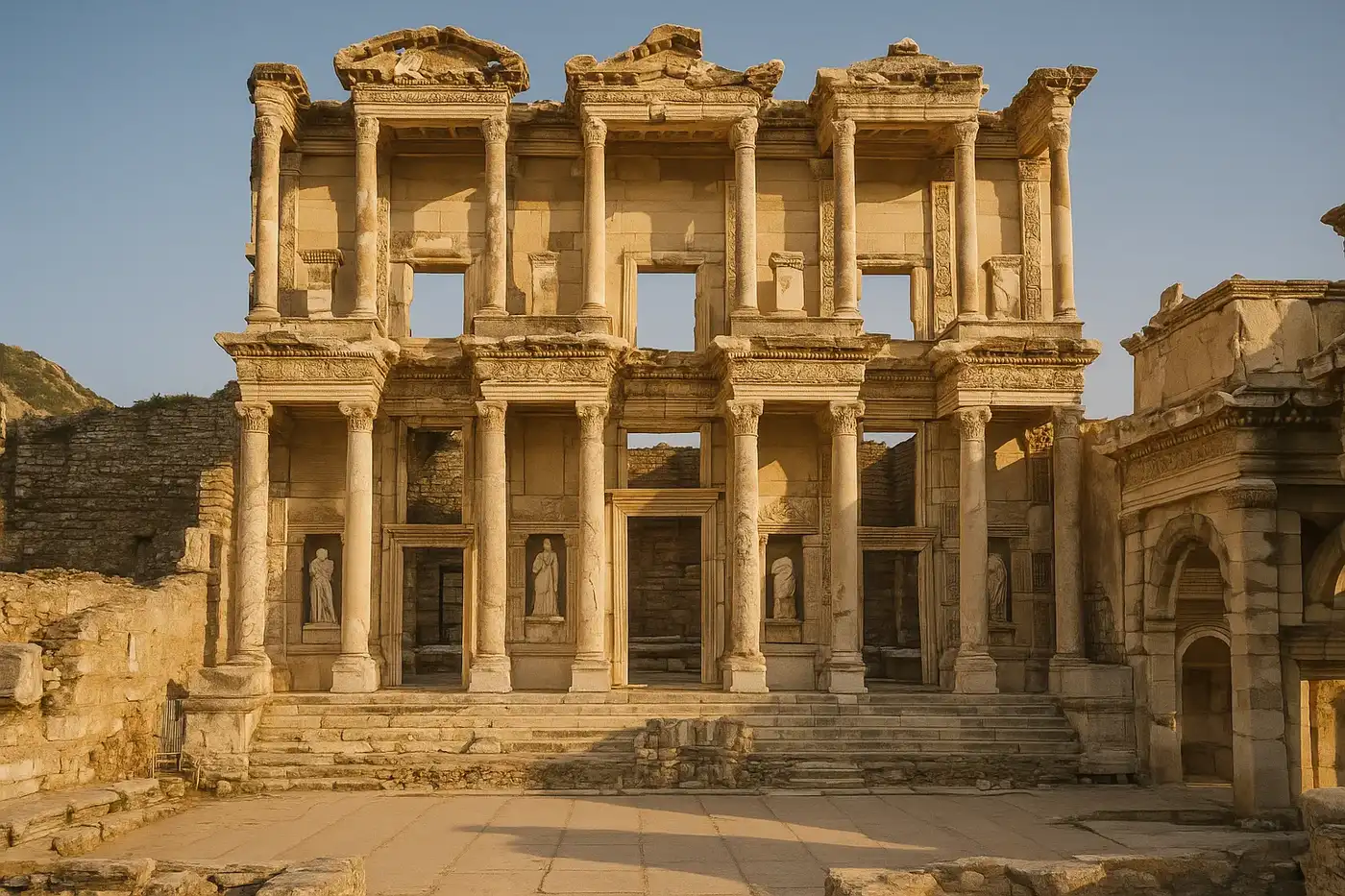
Ephesus Turkey Travel Guide: Library of Celsus & Terrace Houses
Greco-RomanDiscover Ephesus, the best-preserved ancient city in the Mediterranean. Our complete guide covers th...
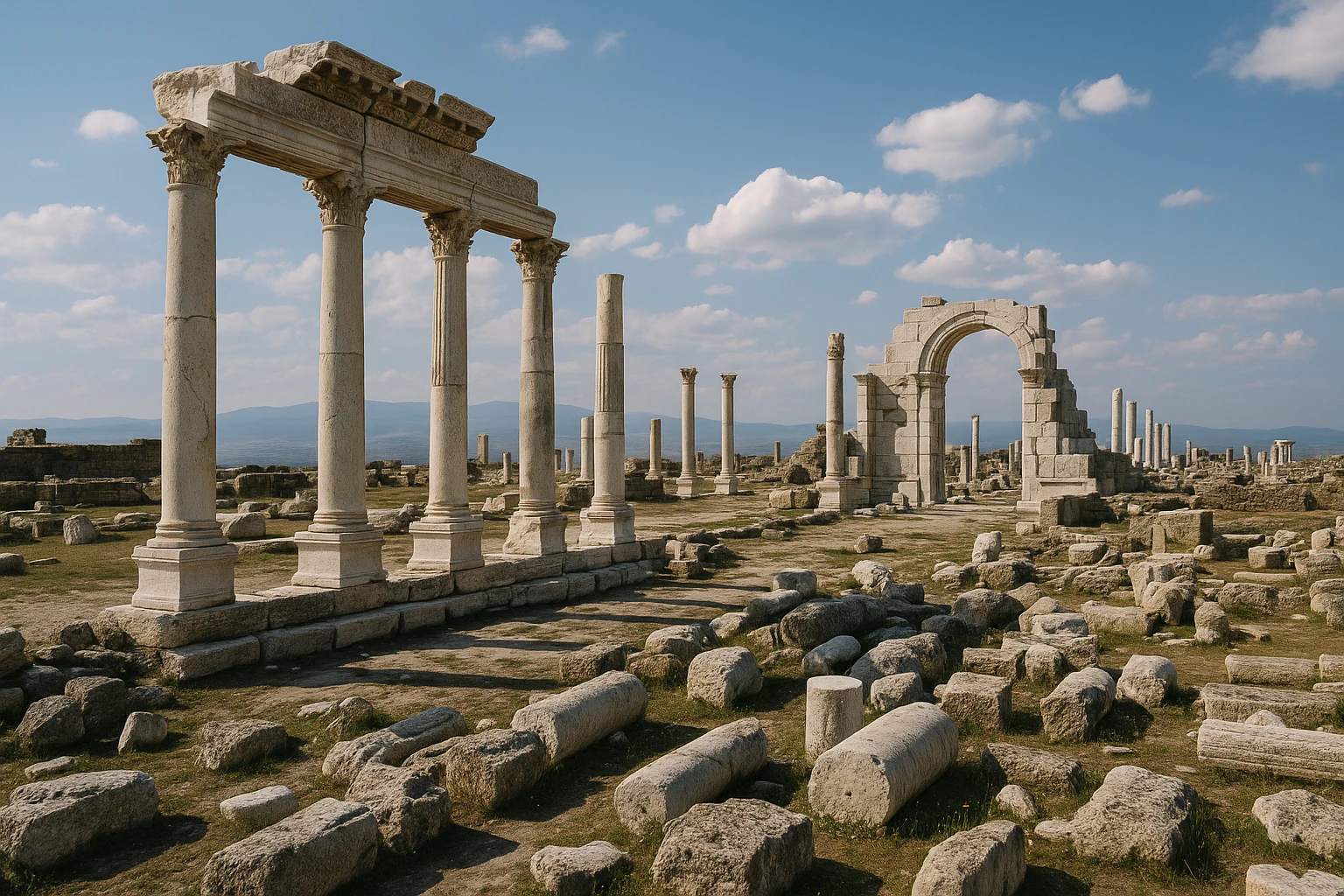
Laodikeia Turkey Guide 2026: Syrian Street & Ancient Churches
Hellenistic-Roman-Byzantine-Seljuk-OttomanPlan Laodikeia in Turkey: Roman avenues, churches, tickets, hours, and transport from Denizli or Pam...