Quick Info
Curated Experiences
Ajanta Caves Day Tour from Aurangabad
Private Ajanta and Ellora Heritage Tour
Ajanta Caves Buddhist Art Guided Excursion
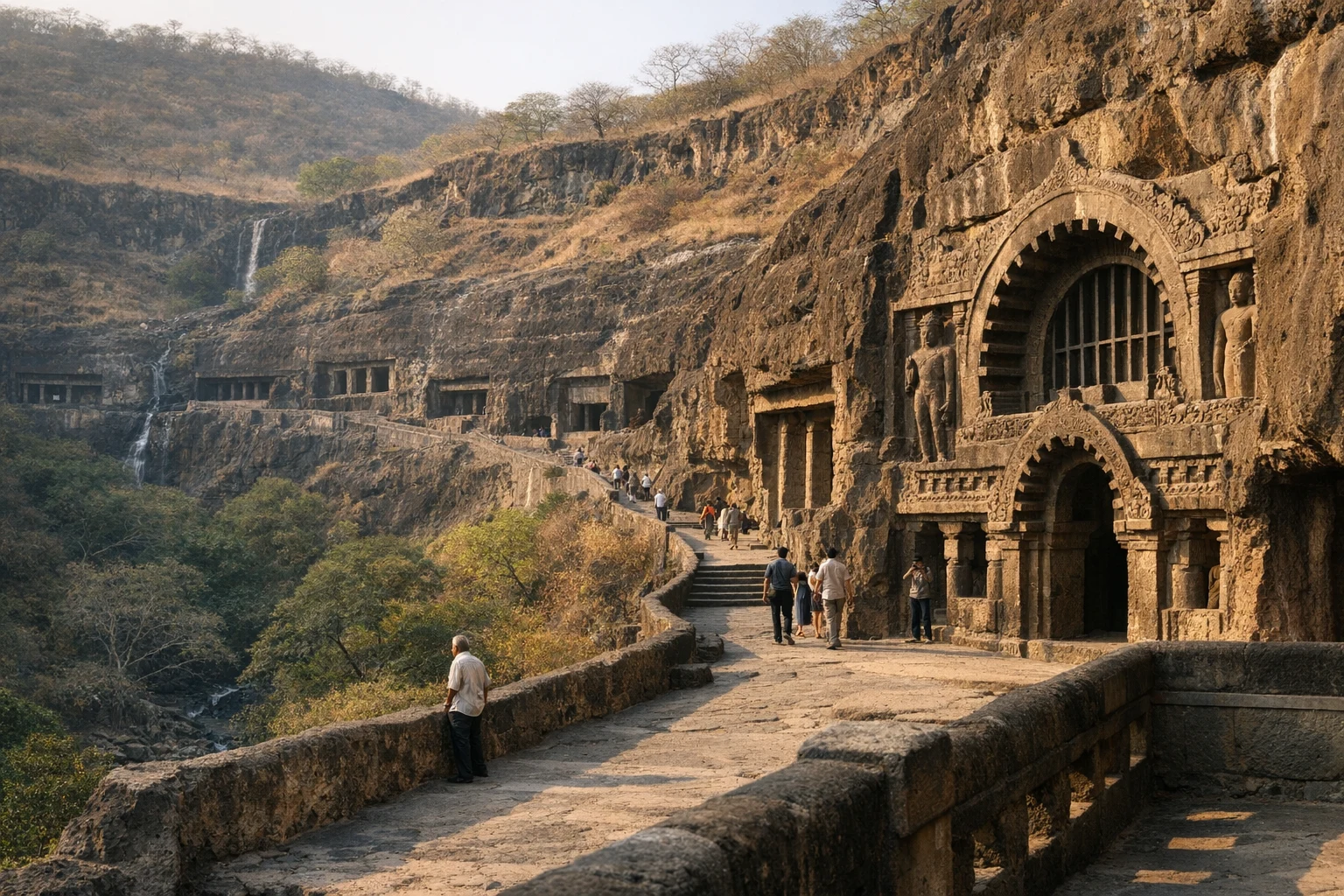
Ajanta Caves in India are among the most extraordinary artistic and religious monuments in Asia, a place where rock, paint, narrative, and devotion come together with astonishing confidence. Set in a horseshoe-shaped escarpment above the Waghora River valley in Maharashtra, the caves appear gradually as you approach, their entrances cut into a sweeping cliff face that seems both hidden and perfectly composed. The surrounding landscape matters. Trees, stone, and the curving ravine create a sense of seclusion that feels entirely appropriate for a Buddhist monastic complex. Then the caves themselves begin to work their effect. From the outside they are powerful enough; from within, they become overwhelming in a quieter, more intimate way. Murals flicker out of the dimness, carved pillars advance in careful rhythm, and spaces made for meditation and worship suddenly reveal some of the greatest surviving paintings of the ancient world.
What makes Ajanta so memorable is not simply that it is old or visually rich. It is the completeness of the artistic world preserved here. The caves are not isolated decorated chambers. They are fully conceived monastic and liturgical environments where architecture, painting, and sculpture were designed to work together. Some caves are prayer halls with stupas and vaulted forms; others are monasteries with cells, shrines, and richly painted interiors. Across them, the Buddha’s life, jātaka tales, courtly scenes, celestial figures, and devotional imagery unfold with emotional depth and technical brilliance. Ajanta is one of the rare places where ancient art still feels psychologically alive. Faces turn, eyes lower, bodies gesture, and entire stories seem suspended in the half-light. For any traveler interested in Buddhist art, Indian history, or the possibilities of rock-cut architecture, this site is indispensable.
History
Early Buddhist Foundations
The Ajanta Caves were created in two major phases, and understanding that long development is essential to appreciating the site. The earliest caves date to around the 2nd century BCE, during a period associated with early Buddhist monastic activity in the Deccan. These initial excavations belong broadly to the Hinayana phase of Buddhist architecture, when aniconic worship and stupa-centered devotional forms were more prominent. The early caves include chaitya halls and viharas, showing that Ajanta was already conceived as a monastic and ritual complex in a secluded but connected landscape.
This early phase reveals important features of Buddhist movement in ancient India. Cave monasteries were not accidental rural retreats. They often stood near trade routes and benefited from patronage by merchants, local elites, and rulers. Ajanta’s location in the Waghora valley gave it relative quiet, but it was not cut off from wider circulation. The site belonged to a network of monastic and artistic patronage that linked sacred life to economic routes across the subcontinent.
The Great Vakataka Flowering
Ajanta’s most famous and artistically significant phase came much later, especially in the 5th century CE, under the patronage environment associated with the Vakataka dynasty. During this period, many of the site’s grandest caves were excavated or transformed, and the extraordinary mural cycles for which Ajanta is world-famous were created. This second phase is what gives the site its astonishing visual richness. The older monastic complex was not abandoned and replaced so much as reimagined on a grander scale.
The Vakataka era brought elite support, courtly resources, and a high level of artistic ambition to Ajanta. Monks, patrons, painters, sculptors, and craftsmen worked together to create caves that were simultaneously places of worship, residence, storytelling, and visual devotion. The paintings from this period are among the most important surviving examples of ancient Indian mural art. They show not only Buddhist narratives and sacred figures, but also refined court life, textiles, jewelry, architecture, gesture, and emotional expression. Ajanta thus serves as both a Buddhist site and a priceless source for the study of ancient Indian visual culture more broadly.
Monastic Life, Decline, and Abandonment
For centuries, Ajanta functioned as a monastic landscape. The caves were not merely carved and decorated as static monuments; they were inhabited, used for worship, and integrated into the rhythms of Buddhist practice. Monks lived in the viharas, devotees gathered in chaitya halls, and the painted surfaces would have been activated by chant, ritual, movement, and changing light. This lived dimension matters because it prevents the caves from being reduced to art objects. They were part of a functioning religious environment.
Eventually, however, patronage shifted and the site declined. Political changes, altered trade routes, and transformations in religious geography likely contributed to Ajanta’s abandonment. By the late first millennium, the caves had fallen out of regular use and gradually slipped into obscurity. The forested ravine helped conceal them, and over time they became a place known more to local memory than to wider public awareness. This long period of abandonment, though it removed the site from active religious life, also contributed to the survival of the paintings and carved spaces that later generations would rediscover.
Modern Rediscovery and Conservation
Ajanta re-entered broader historical consciousness in the early 19th century when British officers encountered the caves during a hunting expedition, a discovery story often retold as part of the site’s modern legend. From that point onward, Ajanta drew the attention of scholars, artists, antiquarians, and conservators. The caves became central to modern understandings of ancient Indian art and deeply influenced the rediscovery of classical Indian painting traditions.
The modern era also brought conservation challenges. Murals in dark cave environments are fragile, especially when exposed to changing humidity, lighting, and tourism. Conservation at Ajanta has therefore involved balancing access with protection. UNESCO recognition affirmed the caves’ global significance, but the site’s real enduring power lies in the way it still preserves the full ambition of ancient Buddhist art in India. Ajanta is not famous because it is merely old. It is famous because it remains one of the greatest surviving total works of religious art in the world.
Key Features
The first and most obvious feature of Ajanta is the cliffside arrangement of the caves themselves. The horseshoe-shaped escarpment above the river creates a natural architectural frame that makes the site feel both secluded and monumental. Walking along the path from cave to cave, you gradually perceive the rhythm of openings, facades, verandas, and columns cut directly into the rock. The setting is not incidental. It creates the dramatic tension between wild landscape and highly ordered sacred interiors that defines the Ajanta experience.
The mural paintings are the site’s greatest treasure. Their fame is entirely deserved. These paintings preserve scenes from the Buddha’s life, jātaka tales of previous births, bodhisattvas, courtly figures, musicians, attendants, and richly adorned worlds rendered with emotional subtlety and visual intelligence. Some of the most famous figures, such as the serene bodhisattvas with lowered eyes and elegant posture, have become icons of ancient Indian painting. Yet what matters most is not a single image but the overall effect. In cave after cave, walls and ceilings become animated surfaces, turning architecture into visual narrative and devotion into atmosphere.
The chaitya halls are another major feature. These prayer spaces, with their apsidal ends, vaulted ceilings, and stupas, preserve an architectural type fundamental to early Buddhist worship. Cave 19 and Cave 26 are especially admired for their sculptural richness and the dramatic way carved surfaces amplify the sacred focus of the hall. These are not merely rooms cut into stone. They are spaces designed for ritual procession, reverence, and controlled spiritual encounter. The rock-cut ribs, facades, and stupa-centered plans show how architecture could imitate and transform earlier wooden forms into enduring stone.
The viharas, or monastic halls, add another dimension. With their cells, columns, shrines, and often richly painted interiors, they reveal that Ajanta was also a residential and scholastic environment. Here, daily monastic life would have unfolded alongside artistic production and devotional practice. The combination of residential organization with such sophisticated painting is one of the most remarkable things about the site. It means Ajanta was both practical and transcendent, lived in and exalted.
Finally, the play of light is itself a feature. Ajanta is not best experienced as a brightly lit gallery. The caves retain something of their intended darkness, and the paintings emerge gradually rather than all at once. This slow revelation is part of their emotional power. Ajanta rewards patience, stillness, and looking closely.
Getting There
Ajanta Caves are most commonly visited from Aurangabad, which remains the main base for exploring the site along with Ellora. The caves lie roughly 100 kilometers from Aurangabad, and the journey by car usually takes around 2 to 3 hours each way depending on traffic and road conditions. Private cars, taxis, and organized tours are the most convenient options, especially for travelers who want to combine Ajanta with other regional heritage sites over multiple days. Day tours from Aurangabad are common and practical, though they make for a fairly full day because of the distance.
Budget travelers can also use public buses, which connect Aurangabad and nearby areas to the Ajanta visitor zone, though these require more time and less flexibility. Once at the site, visitors typically use shuttle transport from the main parking area to the caves, helping reduce traffic and environmental strain near the monument itself. Costs vary, but transport and site entry are straightforward enough if planned in advance.
Because Ajanta rewards time and attention, it is best not to arrive too late in the day. The site is not something you want to compress into a quick stop. Bring water, comfortable shoes, and a willingness to walk uphill and through multiple cave interiors. If you are serious about the murals, hiring a knowledgeable guide can make a major difference.
When to Visit
The best time to visit Ajanta Caves is usually from October to March, when the weather in Maharashtra is cooler and more comfortable for a long outdoor-and-indoor heritage day. These months are the most popular for good reason. The approach paths, viewpoints, and cave visits are simply easier to enjoy without the oppressive heat that can build later in the year. Morning starts are especially worthwhile because they allow more time on site and often a calmer experience before busier hours.
The monsoon season can make the surrounding ravine especially beautiful and green, and some travelers love the dramatic contrast between lush cliffs and ancient caves. However, humidity, rainfall, and slippery conditions can complicate the visit, and the murals themselves are best appreciated in more stable conditions. Summer can be very hot, making the long transit and outdoor movement more tiring than many visitors expect.
Whenever you go, try to allow a full enough day that you are not rushing from cave to cave. Ajanta is one of those sites where visual fatigue is real. The paintings and carved spaces deserve concentration, and the best experience comes from pacing yourself. Cooler months and an early arrival make that much easier.
| Quick Facts | Details |
|---|---|
| Location | Maharashtra, India |
| Best Known For | Buddhist murals, rock-cut monasteries, and chaitya halls |
| UNESCO Status | World Heritage Site |
| Main Phases | c. 2nd century BCE and 5th-6th century CE |
| Cultural Tradition | Buddhist monastic and devotional complex |
| Signature Highlights | Painted caves, chaitya halls, viharas, and bodhisattva murals |
| Recommended Visit Length | Half day minimum, full day ideal |
| Best Nearby Base | Aurangabad |
| Best Season | October to March |
| Practical Tip | Go early and pace your visit, since Ajanta rewards slow looking much more than quick sightseeing |
Frequently Asked Questions
What are the Ajanta Caves best known for?
The Ajanta Caves are best known for their extraordinary Buddhist murals, rock-cut monasteries, prayer halls, and some of the finest surviving paintings of the ancient world.
Where are the Ajanta Caves located?
They are located in Maharashtra, India, in a horseshoe-shaped cliff above the Waghora River valley.
How old are the Ajanta Caves?
The caves were excavated in two major phases, beginning around the 2nd century BCE and flourishing again between the 5th and 6th centuries CE.
How much time should you spend at Ajanta Caves?
Most visitors should allow at least half a day, and ideally a full day, to appreciate the paintings, architecture, and wider cliffside layout without rushing.
Why are the Ajanta Caves important?
They are important because they preserve an exceptional combination of Buddhist architecture, sculpture, and painting that illuminates religious life and artistic achievement across centuries in ancient India.
When is the best time to visit the Ajanta Caves?
The cooler months from October to March are usually best, with more comfortable weather for walking and better conditions for a full site visit.
Nearby Ancient Sites
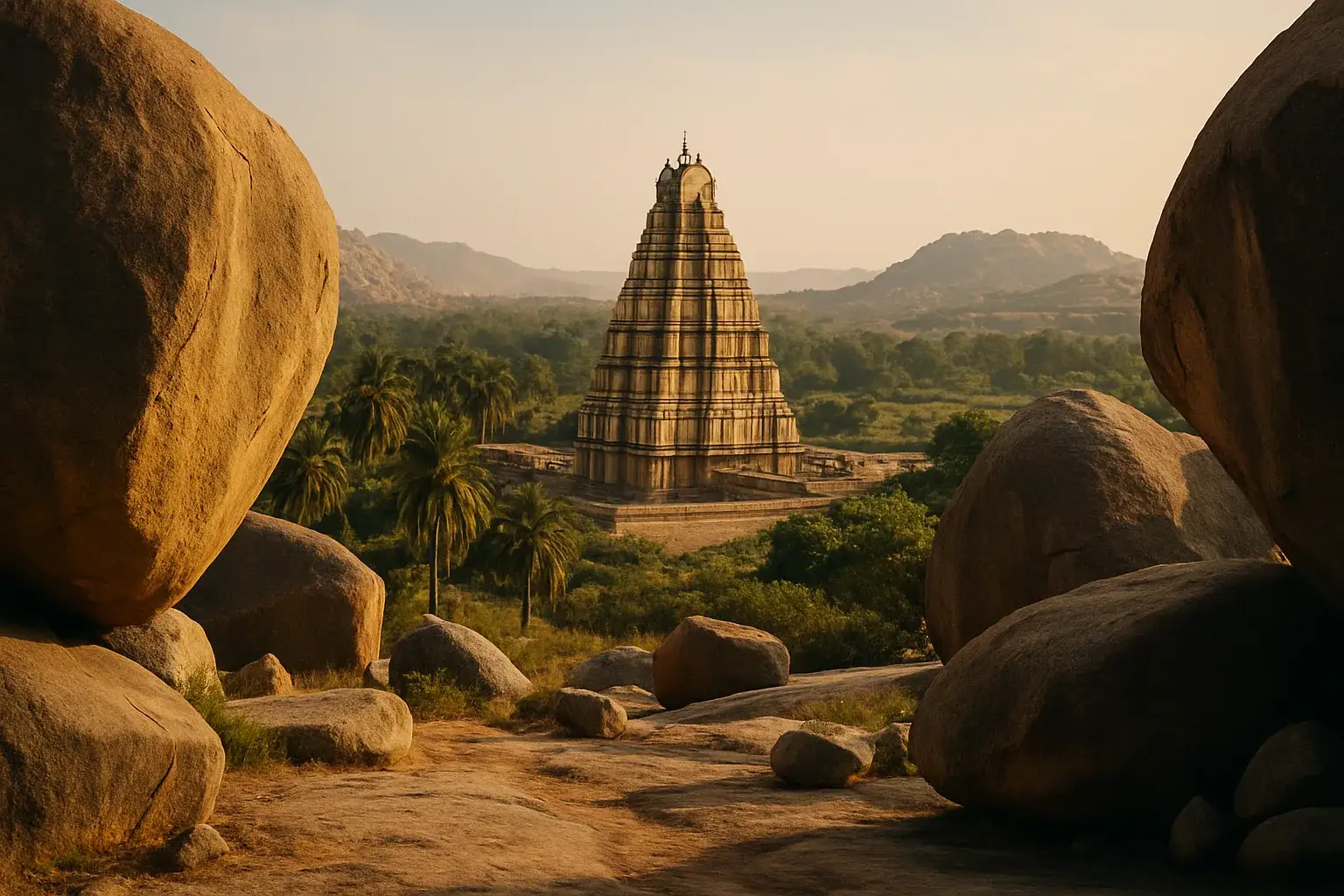
Hampi: The Bouldering Paradise Hiding Ancient India's
Vijayanagara EmpireDiscover Hampi, where Vijayanagara Empire ruins meet world-class bouldering among surreal granite la...
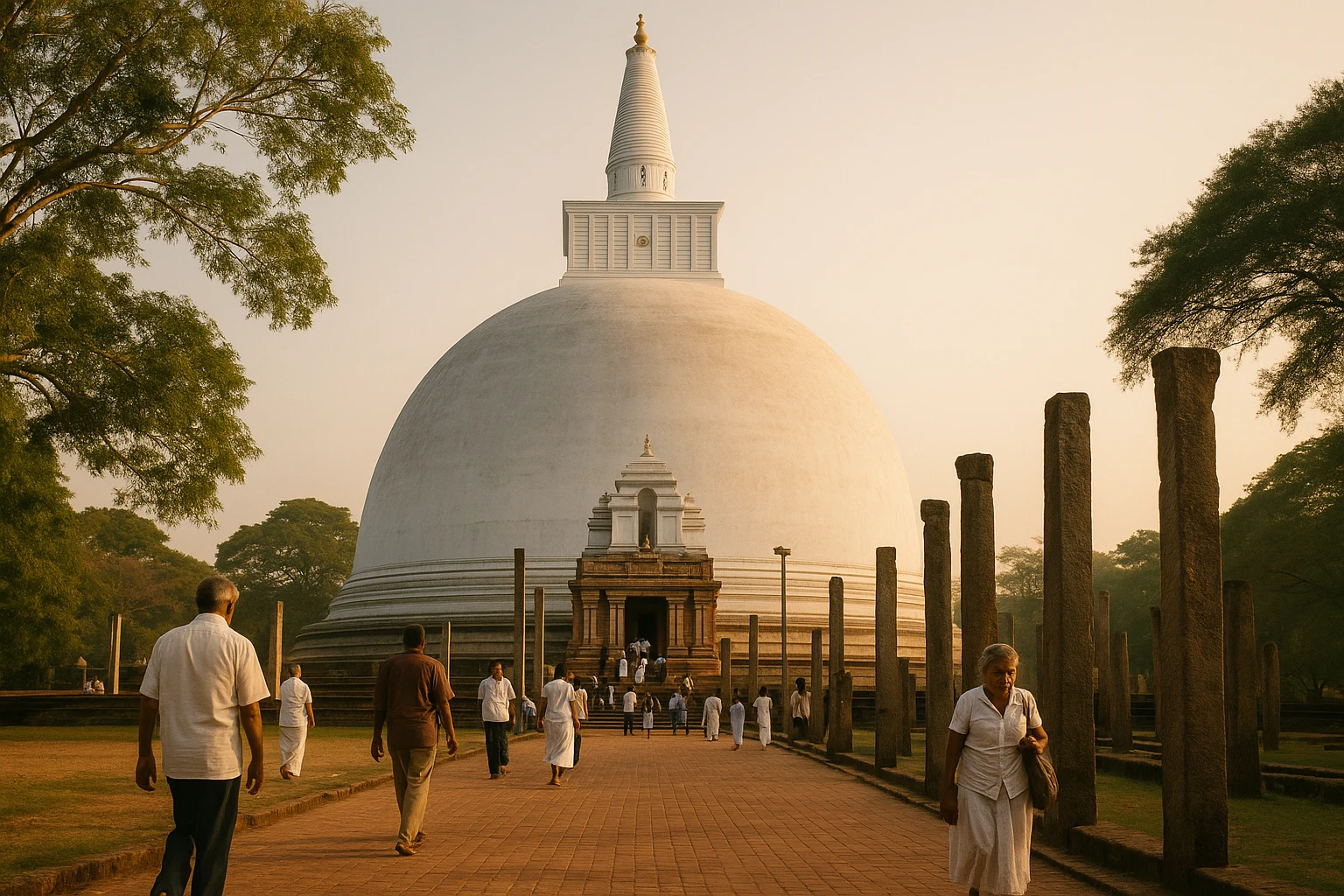
Anuradhapura
SinhaleseSacred ancient capital of Sri Lanka, Anuradhapura preserves towering Buddhist stupas, the world's ol...
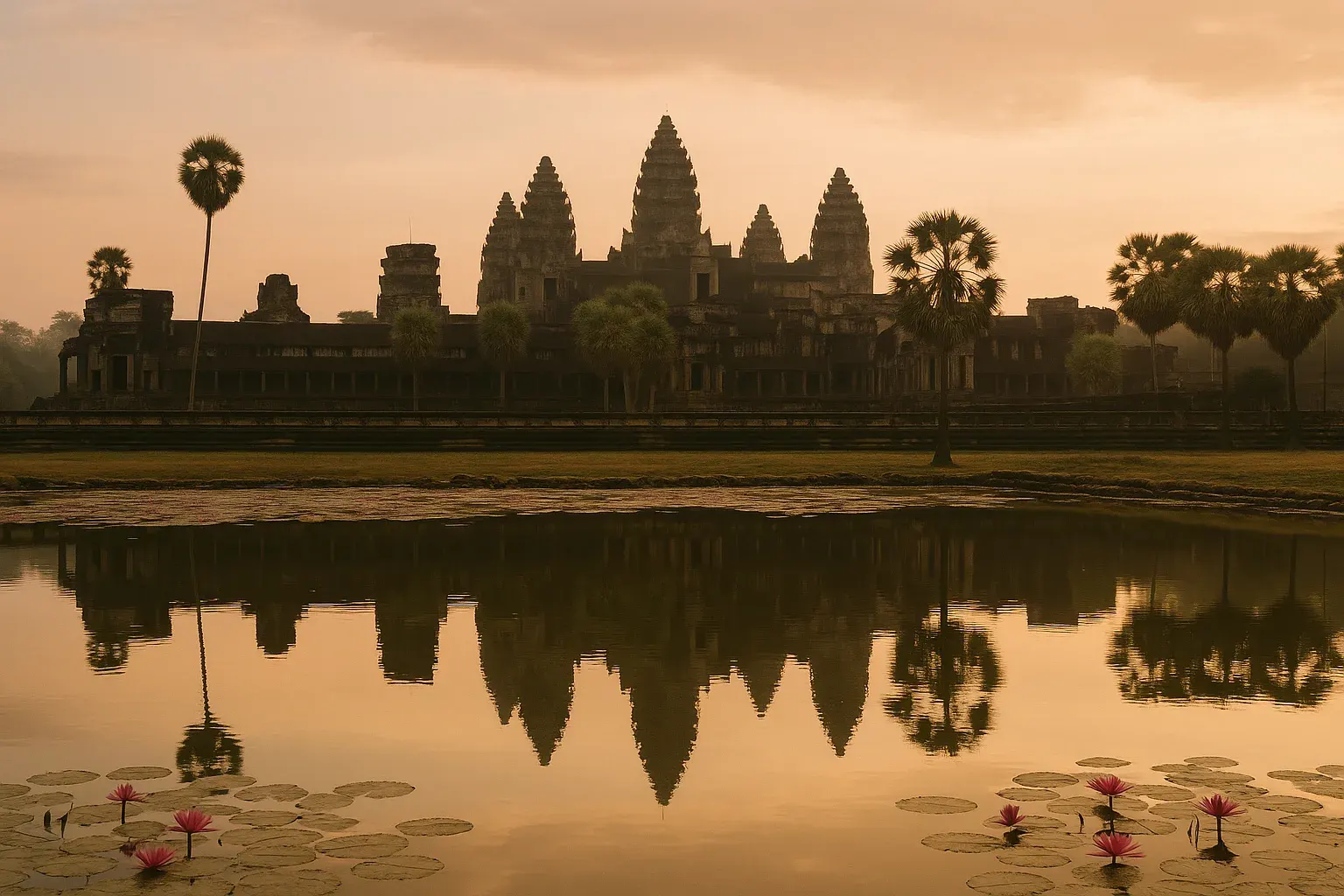
Angkor Wat Travel Guide 2026: Everything You Need to Know
KhmerAngkor Wat, the world's largest religious monument, spans over 400 acres in the heart of Cambodia. T...
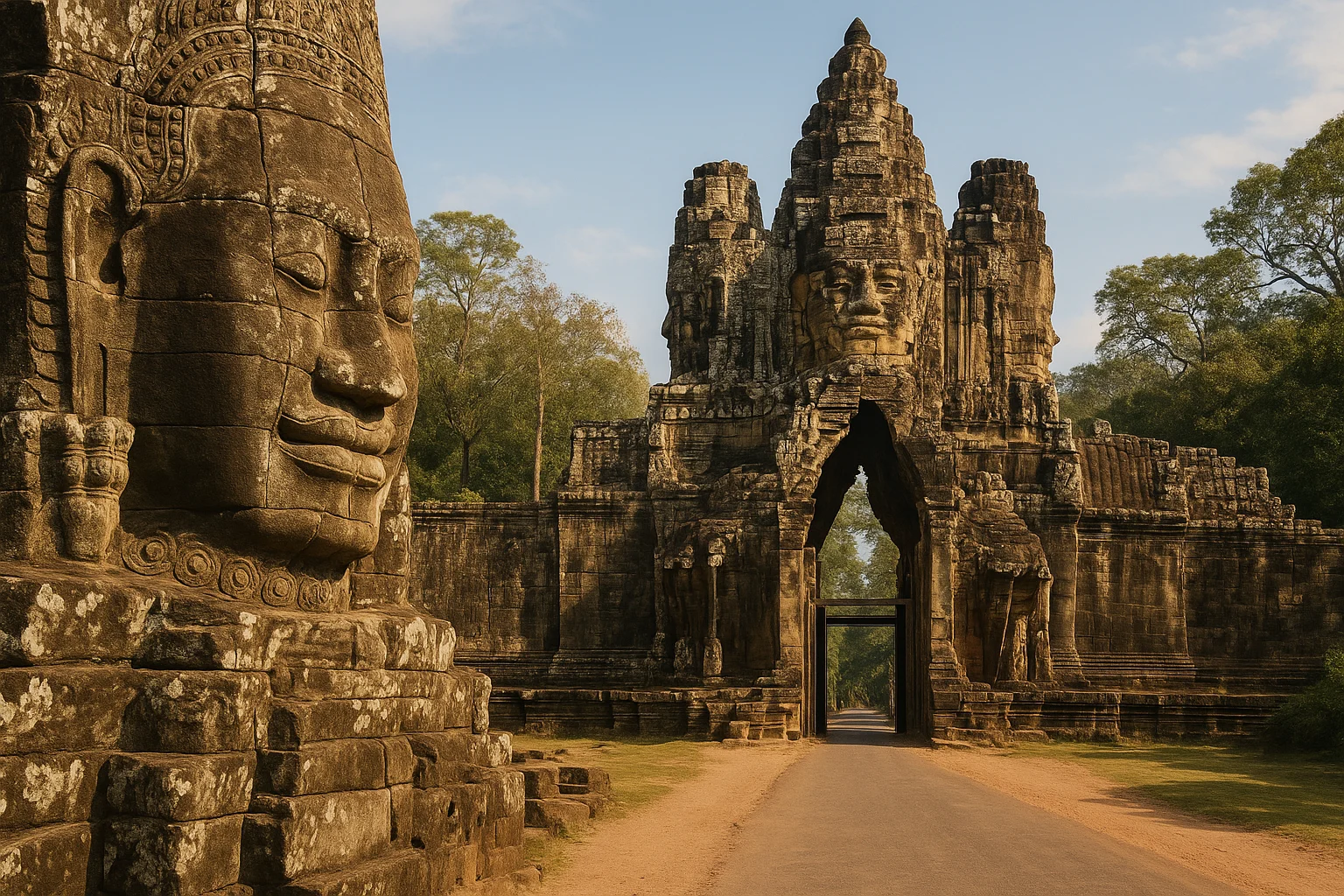
Angkor Thom Travel Guide 2026: Bayon Faces, Gates, and the Khmer Royal City
KhmerAngkor Thom was the last great capital of the Khmer Empire. This guide covers how to visit Bayon, th...