Quick Info
Curated Experiences
Akita Historical Walking Tour
Akita Cultural Heritage Experience
Akita Castle and City Highlights
Set on the tranquil northern plains of Japan’s Tōhoku region, the Akita Castle Site (秋田城跡, Akita-jō ato) quietly marks the historical edge between imperial authority and indigenous cultures in ancient Japan. Located in Akita Prefecture along the Sea of Japan, this evocative ruin tells the layered story of the country’s attempts to govern its distant frontiers during the Nara (710–794) and early Heian (794–1185) periods. When you walk the grassy grounds framed by mountains and rivers, it’s easy to imagine the centuries-old boundary between Yamato rule and the Emishi people, who once inhabited these northern territories. What remains is not a towering fortress as in central Japan, but the outlines and partial reconstructions of an administrative, military, and cultural center—one that influenced the evolution of the region for generations.
Visitors to Akita Castle Site today are greeted with serene walking trails, archeological reconstructions, and a palpable connection to the complex cultural exchanges that shaped Japan’s early history. This site is a testament to both the ambitions of the imperial government and the resilience of local peoples, revealing through its layered ruins how Japan’s northern periphery was woven into the fabric of a unified nation. Whether you’re a history enthusiast, an architecture buff, or someone seeking a contemplative escape beyond Japan’s well-trodden tourist routes, the Akita Castle Site offers a rare glimpse into the intersection of politics, military engineering, and everyday life on an ancient frontier.
History
The Birth of Akita Castle: The Imperial Outpost in the North
Akita Castle was constructed in 733 CE by imperial authorities during the Nara period, at a time when the Yamato Court in Kyoto sought to extend its control far beyond Japan’s traditional central heartlands. This expansive ambition was largely driven by the desire to subdue and integrate the Emishi, the indigenous people of the north, who had for centuries resisted direct imperial governance. The imperial government’s strategy for consolidation included the construction of a series of fortified local centers, with Akita Castle (originally named “Akita-jō”) emerging as a vital base of military, administrative, and diplomatic activities.
Built on a strategic, relatively flat area near the present-day city of Akita, the castle’s original structure was defined more by practical design than defensive grandeur. Akita Castle consisted of earthen ramparts topped with wooden palisades, gated enclosures, and inner administrative buildings constructed following Chinese and Korean architectural influence. As with other jōsaku-style fortifications such as Dazaifu and Taga Castle, Akita Castle’s primary function was to project imperial power, serve as a launch point for military expeditions, manage taxation, and oversee newly settled agricultural land. It also protected immigrants, officials, and artisans sent from the central government, who tried to establish new towns and foster cultural assimilation.
Development, Function, and Societal Role
During its heyday in the 8th and early 9th centuries, Akita Castle witnessed continuous cycles of construction, destruction, and rebuilding, reflecting both the ongoing conflict with resistant Emishi groups and the dynamism of early frontier society. Archaeological evidence indicates the fort featured granaries, barracks, administrative headquarters, and ritual spaces. Within these walls, bureaucrats and soldiers lived, worked, and interacted with local communities, often negotiating precarious peace through tribute, treaties, or military pressure. Diplomats, Buddhist monks, and supply caravans frequently passed through, cementing the site’s reputation as a multicultural hub on the ragged edge of imperial influence.
The region around Akita Castle saw deliberate agricultural development, with wet-rice cultivation and paddy fields replacing earlier patterns of hunting and gathering. This not only supported the growing non-indigenous population but also dramatically changed the local environment. The castle served as a node for the Yamato state’s attempts to “civilize” its periphery, with Confucian and Buddhist rituals enacted to demonstrate authority and legitimacy.
Decline, Rediscovery, and Modern Preservation
By the late Heian period (12th century), the importance of Akita Castle declined as central control weakened and local samurai clans asserted autonomy. The seat of regional administration gradually shifted southward, and the castle itself was eventually abandoned. Over the centuries, structures decayed and the site disappeared beneath fields and houses, its memory surviving only in historical documents and scattered lore.
It was not until postwar archaeological investigations in the 20th century that the true scope and sophistication of Akita Castle were rediscovered. Systematic excavations revealed foundation stones, pottery, roof tiles, wooden inscriptions (mokkan), and traces of palisades, permitting careful reconstructions and scholarly analysis. Since the 1970s and 1980s, portions of the site—especially the iconic South Gate—have been partially restored using traditional techniques. Today, the Akita Castle Site is a protected historic park, offering visitors the chance to appreciate both the endurance and transformation of this vital frontier outpost.
Key Features
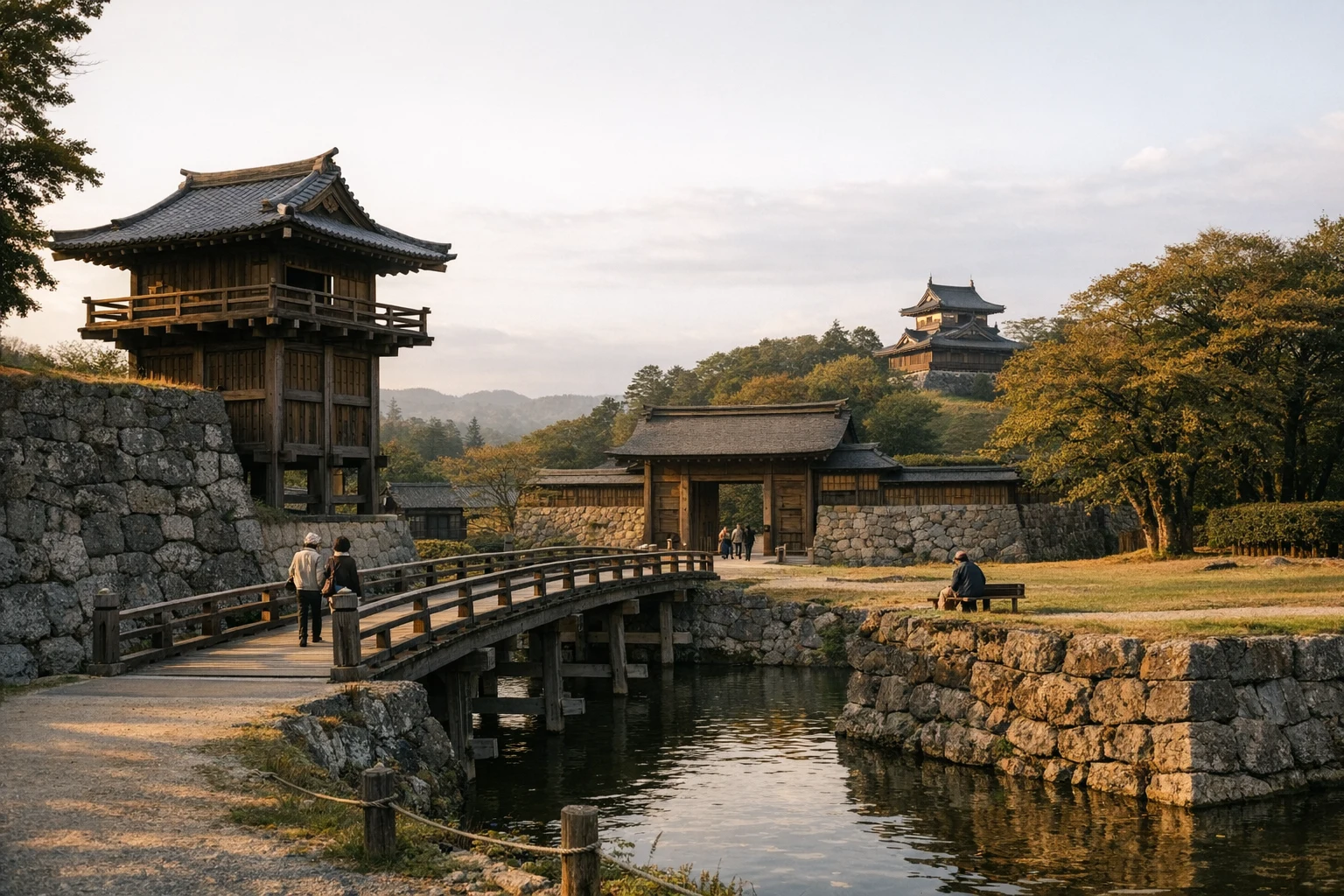
One of the most striking features of the Akita Castle Site is the reconstructed South Gate (Minami-mon), whose imposing yet restrained wooden form invites visitors to contemplate the architectural fusion of Chinese, Korean, and native Japanese influences that characterized the Nara-heian frontier. The gate provides a tangible point of entry not just into the physical space, but into the layered histories that unfolded within the castle walls. Flanking the entrance are remnants of earthen ramparts, carefully rebuilt to suggest the scale and contour of the original defenses, which would have been both formidable and practical in an era when control over the northern borderlands was far from assured.
Moving through the site, visitors can trace the outlines of the inner compounds where administrative and residential buildings once stood. Stone foundation blocks hint at the placement of government offices, granaries, and residential quarters that supported the staff and soldiers of the Yamato state. These open spaces, now marked by interpretive placards and low wooden fences, challenge the imagination to recreate the bustle of an ancient, multi-ethnic administrative hub. Notably, some reconstructions include raised-floor storehouses modeled after archaeological evidence, illustrating how rice tribute and resources were collected and protected.
At the center of the park sits the Akita Castle Guidance Room, a compact but informative museum that showcases finds from decades of excavations. Here, pottery shards, roof tiles inscribed with historical calligraphy, fragments of daily tools, and preserved mokkan wooden tablets reveal the interactions, regulations, and routines of both settlers and indigenous peoples. Text panels—available with English translation—help visitors understand the significance of these artifacts, which date from the 8th to 11th centuries.
The site’s walking paths are thoughtfully designed to lead visitors along the remnants of defensive ditches and up short rises, where broad views of Akita’s modern cityscape contrast strikingly with the ancient landscape. Seasonal plantings—cherry blossoms in spring, lush green in summer, vibrant maples in autumn—create a living connection to the rhythms of the historical inhabitants. Benches, shaded pavilions, and wide grassy spaces make the castle ruins inviting for picnics, casual strolls, or guided tours.
Unlike many of Japan’s stone-castle reconstructions, Akita Castle Site stands out for its careful archaeological authenticity and minimalism. There are no soaring keeps or elaborate moats; instead, the emphasis is on the relationship between humans, land, and fortifications. This subtle approach amplifies the site’s historical importance, allowing visitors to appreciate the original scale and social function of a frontier castle designed as both a center of governance and a locus for cultural exchange.
Getting There
Reaching the Akita Castle Site is straightforward due to its proximity to the city of Akita, a coastal urban center with good rail and road connections. Akita Station is served by the JR Akita Shinkansen, offering comfortable and rapid bullet train access from Tokyo (journey time: around 4 hours; standard fare one-way: ~18,000 JPY). For travelers already in the Tōhoku region, regular JR express and local trains offer cost-effective connections from cities like Morioka, Sendai, or Aomori.
From Akita Station, the castle site is approximately 4 km to the west. The most convenient option is to take a local Akita City bus from Akita-ekimae bound for Terauchikokyo line, Tsuchizaki line, or any service heading to the Terauchi district, alighting at the “Akita-jōato” bus stop. Typical fare is 210–260 JPY, and buses run every 15–30 minutes during most of the day. Signage and recorded announcements in English make the journey easy for international visitors. Alternatively, taxis are readily available outside Akita Station, with a 10-minute ride to the site costing approximately 1,200 JPY each way.
For those driving, parking lots are available adjacent to the park and are usually free of charge. Rental bicycles, available from Akita Station or various hotels, provide a pleasant, eco-friendly option—especially in fair weather—allowing visitors to enjoy the city’s parks and river views en route. The flat terrain and well-maintained cycling paths make this approach especially enjoyable during spring or autumn.
International travelers flying into Akita can use Akita Airport (serving direct flights from Tokyo, Osaka, and Sapporo), then transfer via airport limousine bus to Akita Station, from which local transport as described above is recommended.
When to Visit
The Akita Castle Site is open to visitors year-round, but each season brings distinct advantages and atmosphere, making timing a key part of the experience. Spring (April–May) is perhaps the most celebrated season, when the park comes alive with cherry blossom trees in full bloom, drawing photographers and picnickers alike to the serene grounds. Mild temperatures and clear skies make this an ideal time for walking tours, with crowds typically lighter than at Japan’s major castles or gardens.
Summer (June–August) is characterized by lush greenery and warm, sometimes humid, weather. This is a quieter period to visit, with longer daylight hours perfect for leisurely exploration. However, visitors should note that the rainy season (tsuyu) can bring occasional showers—an umbrella or rain jacket is advisable. Summer is also festival season throughout Akita, so visitors may be able to combine their trip with vibrant local events.
Autumn (September–November) is renowned for its spectacular fall foliage, as maples and ginkgo trees around the site explode into bright reds and golds. Comfortable temperatures and crisp air attract walkers, artists, and history buffs, and the site’s minimal infrastructure means that the natural scenery takes center stage. Early mornings often provide the best light for photography and the greatest tranquility.
Winter (December–March) brings deep, powdery snow to Akita, transforming the castle grounds into a stark, pristine landscape. While outdoor exploration is possible—especially for those who enjoy winter walks—the cold can be intense, and facilities like the Guidance Room may keep shorter hours. Nonetheless, snow-blanketed ramparts and gates offer a rare, beautiful glimpse into the region’s northern character, and visitor numbers are at their lowest.
In summary, the best time to visit is from late April to early November. Always check local event calendars and museum schedules ahead of time for possible holiday closures or special exhibits.
| Quick Facts | |
|---|---|
| Country | Japan |
| Region | Akita Prefecture |
| Coordinates | 39.7645° N, 140.0543° E |
| Established | 733 CE (Nara Period) |
| Main Structure Style | Jōsaku (earthwork fort with wooden palisade) |
| Function | Military, administrative, cultural hub |
| Entry Fee | Free (some museum exhibits may charge) |
| Opening Hours | Park: 24/7; Museum: 9:00–16:30 (closed Mon) |
| Nearby City | Akita |
| Notable Reconstruction | South Gate (Minami-mon) |
| Site Size | Approx. 60,000 m² (15 acres) |
| UNESCO Status | Not inscribed |
Frequently Asked Questions
What are the opening hours of Akita Castle Site?
Akita Castle Site Park is accessible 24 hours, though museum exhibits and visitor centers usually operate from 9:00am to 4:30pm.
Is there an entrance fee to visit the Akita Castle Site?
Entry to the site and park grounds is free. Fees may apply for guided tours or special exhibitions.
How do I get from Akita Station to Akita Castle Site?
The site is about 4 km from Akita Station. Use local buses (fare ~210-260 JPY) or a taxi (about 1,200 JPY).
Are there English language displays at Akita Castle Site?
Yes, key displays provide English explanations and brochures. Guided visits in English may be available seasonally.
What facilities are available at the castle site?
Restrooms, shaded seating, walking paths, and a small museum are available. Vending machines are onsite; cafés are nearby.
Nearby Ancient Sites
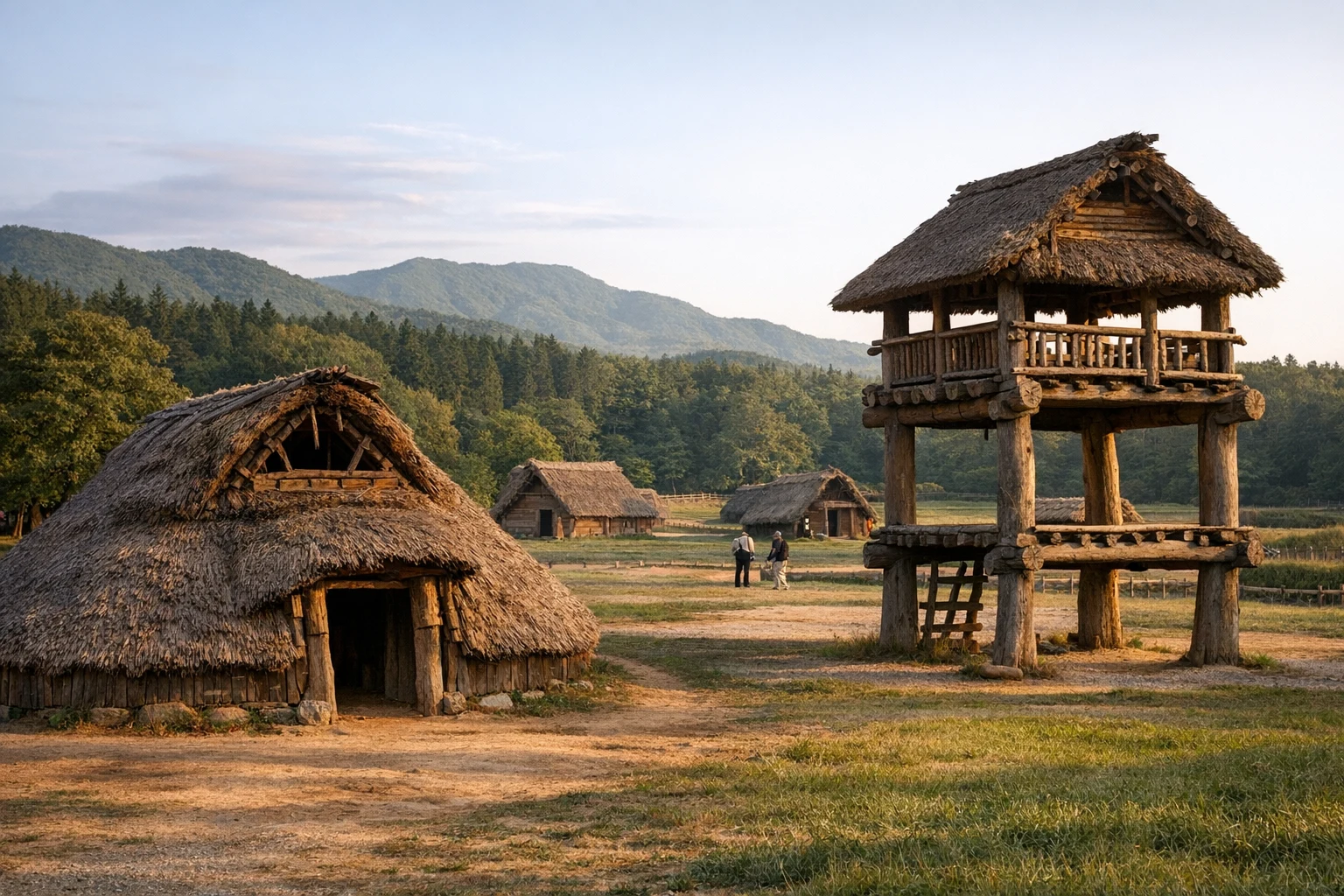
Goshono Jomon Site
Goshono Jomon Site in Japan is a remarkable archaeological park preserving a mid-Jomon period settle...
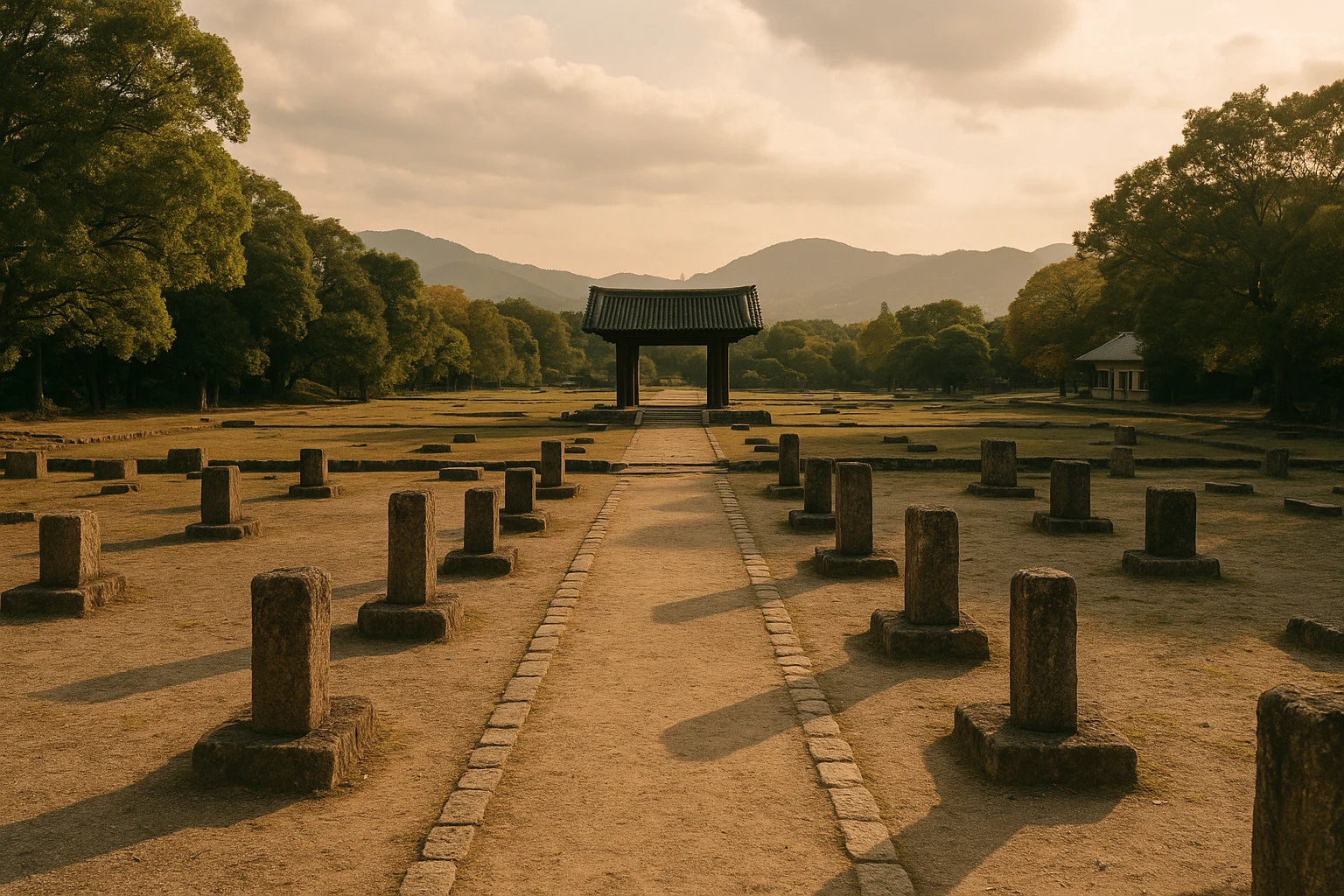
Dazaifu Government Office Ruins
Yamato Japan / Nara–Heian StateAncient administrative heart of Kyushu, the Dazaifu Government Office Ruins preserve Japan's 7th-cen...
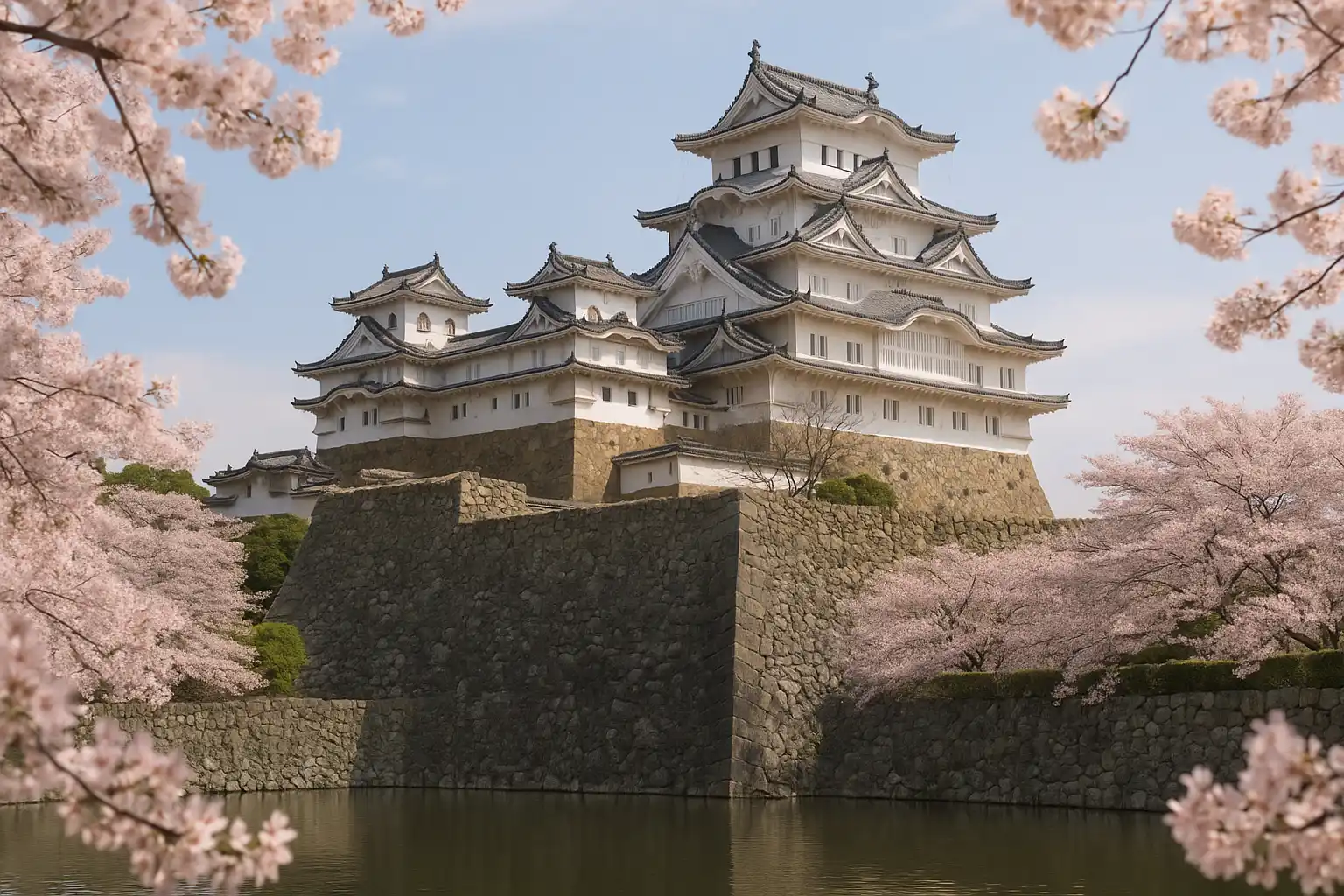
Himeji Castle Japan Travel Guide 2026: The White Heron Castle
Japanese FeudalVisit Himeji Castle, Japan's most beautiful original castle. Explore the White Heron keep, defensive...