Quick Info
Curated Experiences
Amman City Tour including Citadel and Roman Theatre
Private Amman City Sightseeing Tour with Optional Cooking Class
Jordan Pass: 40+ Attractions including Petra and Citadel
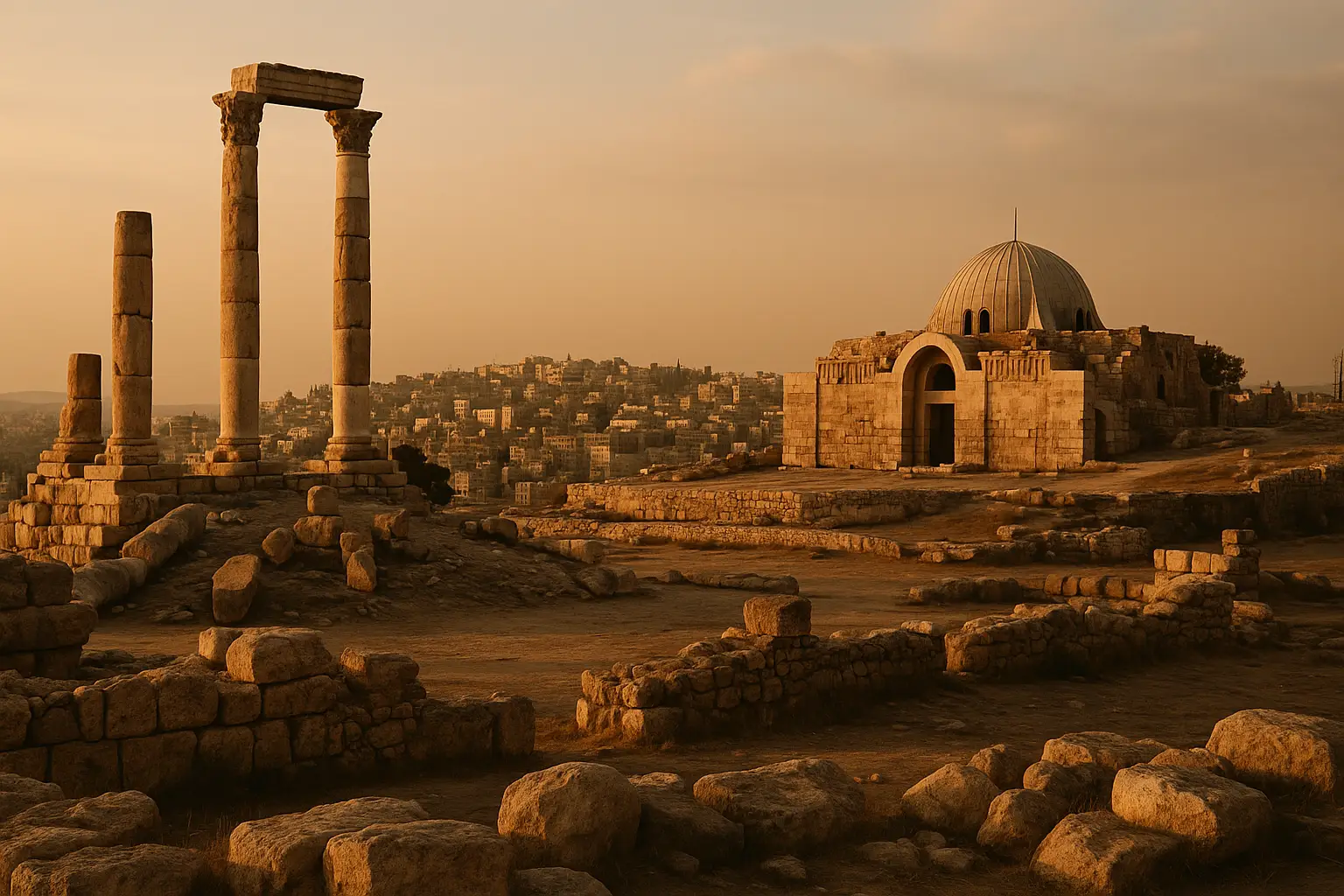
From the summit of Jebel al-Qala’a, the highest of Amman’s seven hills, two pale Roman columns rise against a skyline of apartment blocks and minarets as though they have always been there — because they have. Beside them, six enormous stone fingers lie in the grass, each larger than a human torso, severed from a colossal statue that once towered thirteen meters above this windswept plateau. A few hundred meters away, a reconstructed stone dome marks the audience hall where Umayyad caliphs received petitioners from across the early Islamic world. And somewhere beneath the compacted earth, sealed in layered strata below millennia of successive rebuilding, lie the foundations of the Ammonite fortress that guarded this hilltop when King David’s armies besieged the city the Hebrew Bible calls Rabbah.
The Amman Citadel does not offer a single monument or a single civilization. It offers seven thousand years of unbroken human occupation compressed into a single exposed plateau, each era’s builders constructing directly atop the ruins of their predecessors. In an hour’s walk across windswept stone, you move from Bronze Age foundations through Iron Age capitals, Hellenistic plazas, Roman imperial temples, Byzantine devotion, and the geometric elegance of early Islamic architecture — all within a site small enough to cross in fifteen minutes. No other place in Jordan explains the country’s layered identity as completely as this hilltop above the capital.
The panoramic view from the summit takes in the Roman Theatre directly below, the white city sprawling across hills in every direction, and on clear days, the Jordan Valley and the distant ridgeline of the West Bank. It is a view that has been watched from this exact position for three millennia, by rulers speaking a dozen languages, worshipping a dozen gods, and building in every style the ancient Mediterranean and Near East produced.
Historical Context
Long before Roman legions reached the Levant, this hilltop served as the capital of the Ammonite Kingdom — a sophisticated Iron Age civilization that archaeological evidence traces to approximately 1800 BCE. The Ammonites called their city Rabbah, meaning “the Great City,” and by the first millennium BCE it had grown into a prosperous regional power with its own written script, its own national deity Milcom, and trade networks stretching across the ancient Near East. The hilltop formed the royal and religious core of this capital, the acropolis from which Ammonite kings surveyed their territory.
The Old Testament preserves Rabbah’s most dramatic historical moment. King David dispatched his general Joab to besiege the city while remaining in Jerusalem himself — where he saw Bathsheba bathing from his palace roof and set in motion one of the Bible’s most famous narratives of desire and betrayal. Joab eventually reported the capture of Rabbah’s water supply, and David arrived to claim the Ammonite king’s crown. The hill you walk today is where that crown was won. Whatever the precise historicity of the biblical account, the Ammonites were real, their city was powerful, and the archaeological record at the Citadel confirms occupation consistent with the period described.
Alexander the Great’s sweep through the Levant in 332 BCE brought Greek language and culture to the region. The Ptolemaic dynasty renamed the city Philadelphia, and when the Roman general Pompey reorganized the eastern provinces in 63 BCE, Philadelphia was grouped into the Decapolis — a league of Hellenistic cities with special administrative privileges. Decapolis cities sat astride trade routes connecting the Mediterranean coast with Arabia and Mesopotamia, and Philadelphia’s Roman-period prosperity is reflected in the monumental construction program that transformed the hilltop into a showcase of imperial architecture.
The Umayyad Caliphate (661-750 CE) added the final major construction phase, building a palatial administrative complex that remains one of the best-preserved Umayyad structures in Jordan. The audience hall’s innovative dome — bridging a square base to a circular crown through a cruciform plan with semi-circular exedras — represents early Islamic architecture working at the frontier of structural technique, borrowing from Byzantine and Roman traditions while developing something unmistakably new.
What to See
Temple of Hercules
The most ambitious structure the Romans built on this hilltop was the Temple of Hercules, constructed during the reign of Marcus Aurelius between 161 and 180 CE. Only two columns remain standing from the original colonnade, each reaching approximately ten meters in height, but the fallen drums scattered across the plateau trace the temple’s outline clearly enough to reconstruct the original scale. What arrests every visitor, however, is not the columns but what lies beside them: six enormous stone fingers, each larger than a human torso, resting in the grass where they have lain since the statue’s collapse in antiquity. These fragments are all that survive of a cult image that stood approximately thirteen meters tall, placing it among the largest produced anywhere in the Roman world. Whether it depicted Hercules himself or a deified emperor remains debated. The temple platform, measuring roughly 30 by 24 meters, required leveling the hill’s natural summit — an engineering effort that inadvertently sealed earlier Ammonite and Hellenistic material in protected deposits beneath the platform, preserving them for modern excavators.
The Umayyad Palace
The reconstructed audience hall is the architectural centerpiece of the Citadel’s Islamic-period remains. The builders faced a structural problem that the early Islamic tradition had not yet solved: how to cover a large square space with a dome without Roman concrete technology. Their solution was ingenious — a cruciform plan with semi-circular exedras at each arm creating graceful transition zones between the square ground plan and the circular dome above. The dome visible today is a 20th-century reconstruction from original fallen stones, but the carved decorative friezes around the entrance portal are authentic. Beyond the audience hall, palace foundations indicate residential wings arranged around internal courtyards in the standard Umayyad plan, plus an enormous underground cistern that collected rainwater from the palace rooftops with capacity sufficient to sustain the complex through extended dry periods.
The Jordan Archaeological Museum
This compact museum near the entrance is easy to overlook and a serious mistake to miss. Its collection spans the full chronological range represented on the hilltop. The most extraordinary objects are the Ain Ghazal statues: plaster human figures modeled over reed armatures, dating to approximately 7200 BCE and among the oldest large-scale sculptures ever discovered on earth. Their wide-eyed, frontal forms convey a quality that no reproduction captures. The same gallery holds fragments of Dead Sea Scrolls discovered before the major Qumran finds, Ammonite inscriptions in their partially-deciphered script, and ceramics spanning every period of occupation from the Bronze Age through the Islamic era. Budget at least 30 minutes.
The Byzantine Church
Between the Roman temple platform and the Umayyad palace foundations, mosaic fragments and building outlines mark a Byzantine church constructed in the 5th or 6th century CE. The geometric mosaic patterns surviving in the exposed floor sections are fragmentary but indicate a substantial religious structure that served Amman’s Christian community during the two centuries before the Umayyad conquests of the 630s transformed the region. The church ruins are often walked past quickly, but they represent the middle chapter of the Citadel’s story — the bridge between Roman imperial religion and early Islamic governance.
The Panoramic Viewpoints
The Citadel’s hilltop position is itself an attraction. The south-facing overlook takes in the Roman Theatre directly below (6,000 seats, 2nd century CE) and the downtown souk district spreading around it. The north and east viewpoints reveal the modern city climbing across its other six hills, white limestone buildings stacked against the plateau sky. On clear days, the view extends to the Jordan Valley and beyond. Come at sunset to watch the city’s lights emerge as the call to prayer rises from the minarets below — the most atmospheric moment available at any site in Amman.
Timing and Seasons
Summer hours (May through September) run 8:00 AM to 7:00 PM. Winter hours (October through April) close earlier at 4:00 PM. The museum closes on Tuesdays. Late afternoon, arriving 1 to 2 hours before closing, is the most rewarding time for golden light on the pale limestone and the transition to evening views over the city. Morning visits (8:00 to 10:00 AM) offer cooler temperatures, which matters significantly in summer when the exposed plateau reaches 95°F (35°C) by midday.
Spring (March through May) and autumn (October through November) offer the most pleasant overall conditions, with temperatures between 59-77°F (15-25°C) and clear skies that extend visibility to the Jordan Valley. Summer afternoons are genuinely hot with minimal shade. Winter brings occasional rain and cool winds but remains entirely manageable in layers. Budget 2 to 3 hours for the ruins, museum, and viewpoints.
Tickets, Logistics, and Getting There
Individual entry is 3 JOD (approximately $4 USD), paid in cash at the gate. The Jordan Pass (JordanPass.jo, starting at $99 for the Jericho Wanderer tier) includes Citadel entry among 40+ attractions and — crucially — waives the 40 JOD tourist visa fee. If you are visiting Petra and Jerash in addition to the Citadel, the Pass pays for itself before reaching the second site. Purchase it online before arriving in Jordan.
Walking from the Roman Theatre directly below the hill takes 15-20 minutes uphill — steep but rewarding, passing through traditional Amman neighborhoods with unrepeatable street-level atmosphere. Taxi from anywhere in Amman costs 2-5 JOD ($3-7 USD); tell the driver “Jabal al-Qal’a” or “Citadel” and they will drive directly to the entrance. No regular public bus serves the entrance. Rideshare apps (Careem, Uber) work in Amman and are often cheaper than street taxis.
Practical Tips
- Sun protection is essential year-round on the exposed plateau. Hat, sunscreen, and sunglasses are non-negotiable.
- Bring at least one liter of water per person. A small snack shop near the entrance has limited hours and limited stock.
- Wear sturdy shoes for uneven stone surfaces and gravel paths between ruins. The Umayyad Palace area has particularly rough terrain.
- Modest dress (shoulders and knees covered) is respectful and practically comfortable in the exposed sun. The site is popular with local Jordanian families and modest dress will be appreciated.
- If you plan to walk down to the Roman Theatre after your Citadel visit, go via the steep staircase on the south side of the hill. The descent takes 10 minutes and the Theatre entrance is at the bottom. The Theatre ticket is separate (2 JOD) unless covered by the Jordan Pass.
- For photographers, the late-afternoon light hitting the Temple of Hercules columns is the best single shot available at the Citadel. A wide-angle lens captures the columns against the modern city skyline.
Suggested Itinerary
Focused visit (2 hours):
Arrive by taxi at 4:00 PM (summer) or 2:00 PM (winter) for the best light. Start at the Jordan Archaeological Museum for the Ain Ghazal statues and chronological context (30 minutes). Walk to the Temple of Hercules and the giant hand fragments (20 minutes). Continue to the Umayyad Palace and audience hall (20 minutes). Spend the final 30 minutes at the southern viewpoint as the light shifts, watching the city transition toward evening.
Half-day combined visit (4 to 5 hours):
Begin at the Citadel in the afternoon as above. After exiting, walk downhill to the Roman Theatre (15 minutes). Explore the Theatre and the adjacent Odeon (45 minutes). Continue into downtown Amman’s souk district for the Gold Souk and spice markets. Finish with dinner at Hashem Restaurant near the Theatre, a legendary Amman institution serving hummus, falafel, and fuul to a mix of locals and travelers at communal tables — excellent food at minimal cost.
Nearby Sites
The Roman Theatre directly below the Citadel is the obvious pairing and can be reached on foot in 15 minutes. Built in the 2nd century CE during the reign of Antoninus Pius, it seats 6,000 and is the most impressive Roman monument in Amman outside the Citadel itself.
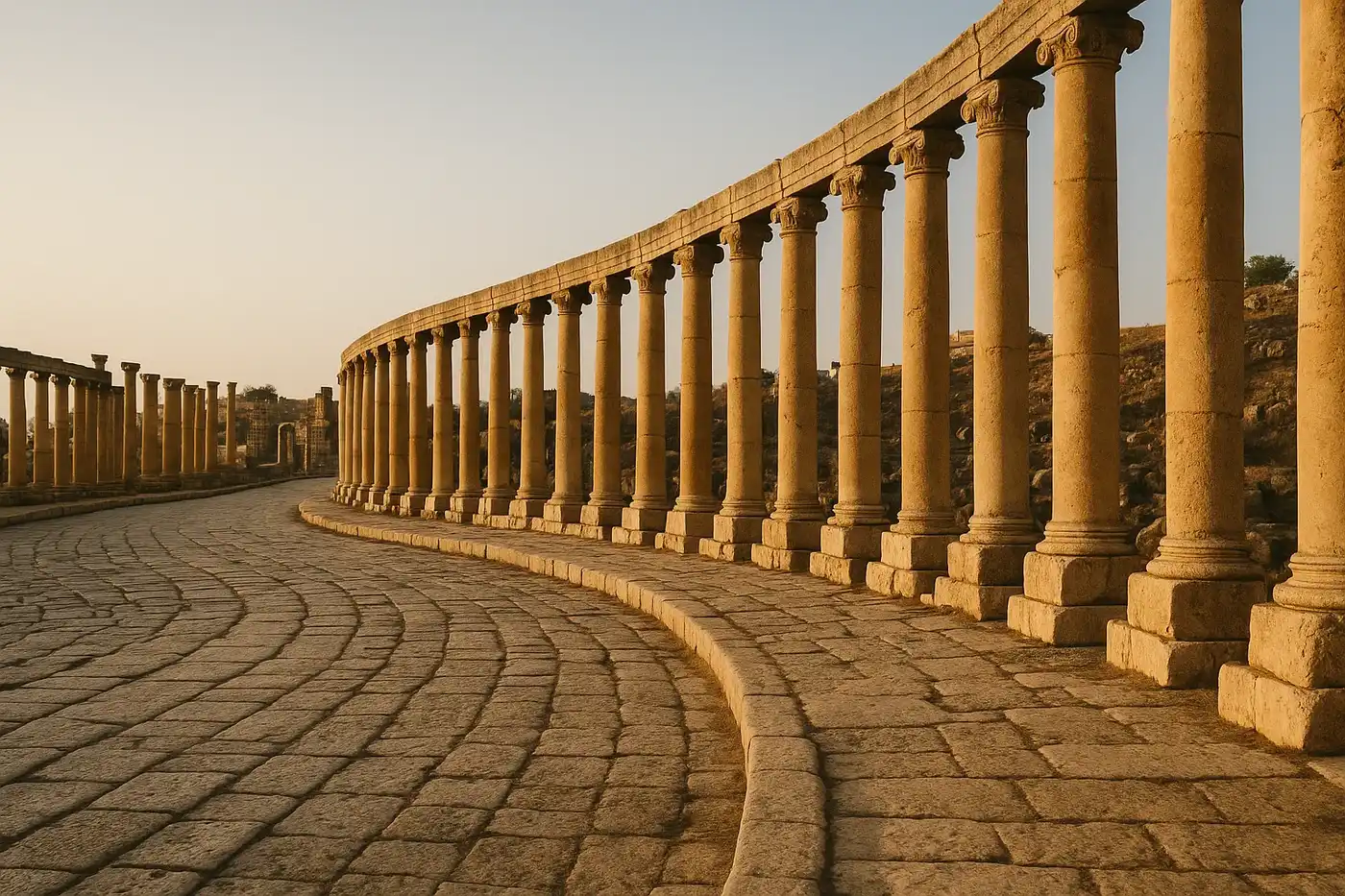
Jerash, one hour north by car, is the best-preserved Roman provincial city in the Middle East — colonnaded streets, temples, a hippodrome, and two theatres in a state of preservation that rivals Pompeii for civic legibility. Jerash and the Citadel together form the essential Roman Jordan pairing.
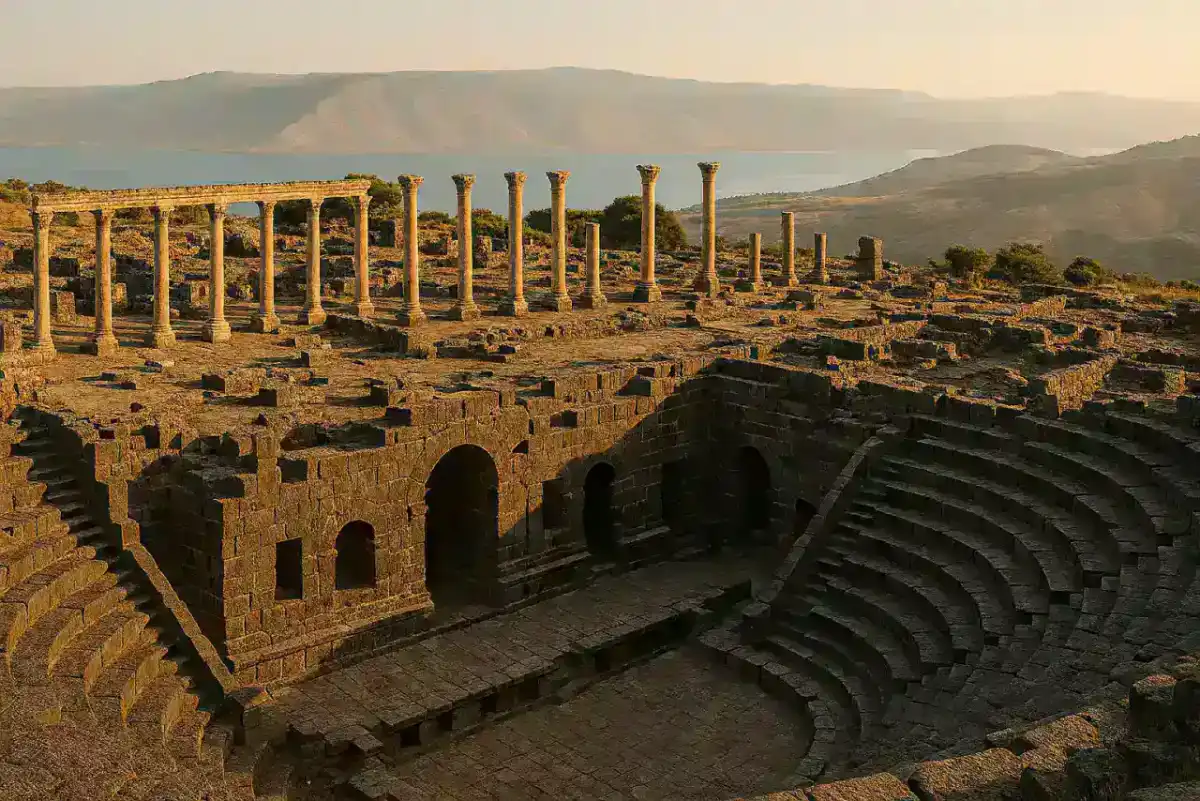
Umm Qais, ancient Gadara of the Decapolis, sits on a dramatic hilltop in northern Jordan with views across the Sea of Galilee, the Golan Heights, and the Yarmouk Gorge. It is reachable as a day trip from Amman (2 hours north) and combines naturally with Jerash.
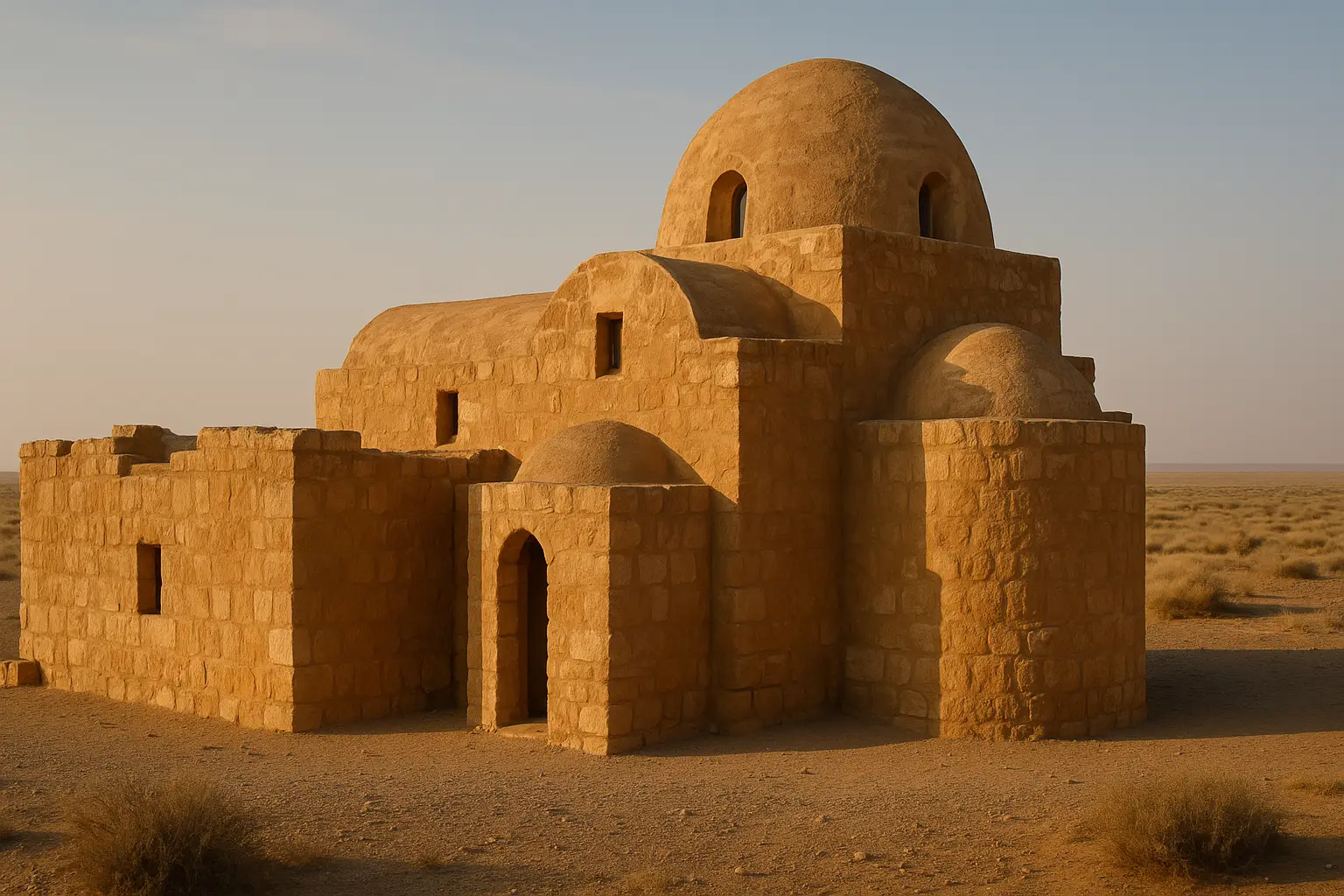
Qasr Amra, the UNESCO-listed Umayyad desert castle with extraordinary 8th-century frescoes, lies 80 kilometers east of Amman. The desert castles loop (Qasr Amra, Qasr Kharana, Qasr Azraq) makes a compelling half-day excursion from the capital and extends the Umayyad story that begins at the Citadel’s palace complex.
Final Take
The Amman Citadel is not Jordan’s most famous site — Petra and Jerash claim that distinction — but it may be its most layered. In two hours of walking across a windswept hilltop, you traverse seven thousand years of continuous human presence: Ammonite kings, Roman engineers, Byzantine priests, and Umayyad caliphs, each building on the ruins of the last, each drawn to this same high ground above the Jordanian plateau. The giant stone fingers of Hercules lying in the grass are worth the visit alone. But the real value is the panorama — not just the view across modern Amman, but the temporal view down through the strata beneath your feet, where every layer tells a story about power, faith, and the persistent human impulse to build on the highest ground available.
Discover More Ancient Jordan
- Jerash: The best-preserved Roman city in the Middle East, one hour north
- Umm Qais: Ancient Gadara’s hilltop ruins with views to the Sea of Galilee
- Qasr Amra: Umayyad desert castle with extraordinary 8th-century frescoes
- Plan your complete journey with our Jordan Ancient Sites Guide
Quick Facts
| Attribute | Details |
|---|---|
| Location | Amman, Amman, Jordan |
| Country | Jordan |
| Region | Amman |
| Civilization | Ammonite-Roman-Umayyad |
| Historical Period | Iron Age-Umayyad era |
| Established | c. 1800 BCE settlement |
| Admission | 3 JOD (~$4 USD); included with Jordan Pass |
| Hours | Summer 8 AM-7 PM; Winter 8 AM-4 PM |
| Time Needed | 2 - 3 hours |
| Coordinates | 31.9566, 35.9347 |
Frequently Asked Questions
How much time should I plan at Amman Citadel?
Allow 2-3 hours for a thorough visit covering the ruins, museum, and panoramic views. Combine with the nearby Roman Theatre (15-minute walk downhill) and downtown souks for a half-day Amman experience.
What is the best time to visit Amman Citadel?
Visit 1-2 hours before sunset for golden light on the stone ruins and spectacular views over Amman's white hills as the city lights emerge. Morning visits (8-10 AM) offer cooler temperatures, especially May through September.
Do I need the Jordan Pass for Amman Citadel?
The Jordan Pass (JordanPass.jo) includes Amman Citadel entry and is excellent value if visiting Petra and Jerash. Without the Pass, individual entry is 3 JOD ($4 USD). The Pass pays for itself with just Petra and one other major site.
How do I get to Amman Citadel from downtown?
Walk uphill from the Roman Theatre (15-20 minutes, steep) or take a taxi from anywhere in Amman (2-5 JOD/$3-7 USD). There's no public bus directly to the citadel entrance, but it's a standard taxi destination.
What will I see at Amman Citadel?
Key highlights include the Roman Temple of Hercules (giant hand sculpture remains), the Umayyad Palace complex with its domed audience hall, the Archaeological Museum with Dead Sea Scroll fragments, a Byzantine church, and panoramic views over seven hills of Amman.
Is Amman Citadel safe for tourists?
Yes, the Citadel is safe and actively patrolled. Standard Middle East precautions apply: modest dress (shoulders covered), respect for local customs, and awareness of your surroundings. The site is popular with local families and tourists alike.
Nearby Ancient Sites
Jerash: The Pompeii of the East and Jordan's Best-Preserved
Roman / NabataeanDiscover Jerash, Jordan's remarkable Roman ruins. Walk the colonnaded streets of ancient Gerasa, exp...
Umm Qais Jordan Travel Guide 2026: Gadara & Views to Galilee
Greco-Roman (Decapolis)Visit Umm Qais, ancient Gadara, for dramatic views over the Sea of Galilee, Golan Heights, and Jorda...
Qasr Amra Jordan Travel Guide 2026: Desert Castle Frescoes
UmayyadDiscover Qasr Amra's extraordinary 8th-century frescoes in Jordan's eastern desert. Our guide covers...