Quick Info
At a glance
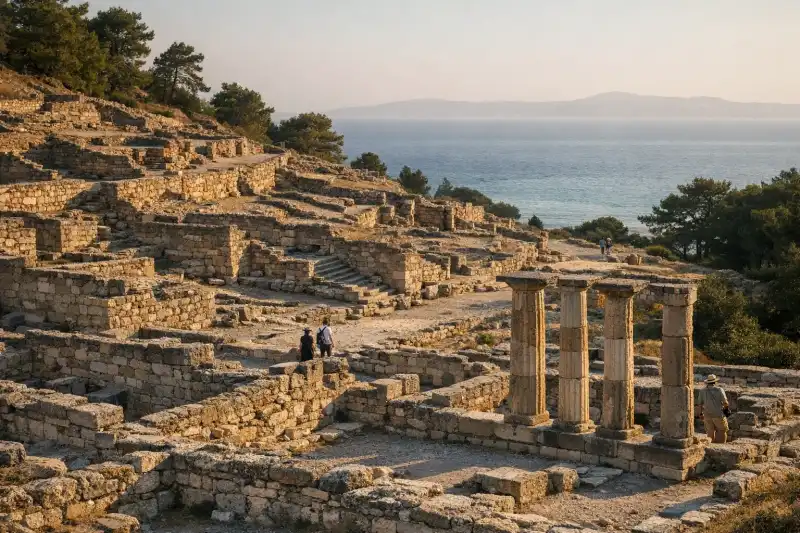
Ancient Kamiros in Greece sits quietly above the Aegean on the western side of Rhodes, where sunlit terraces descend toward the sea and broken columns hint at a city that once thrived on trade, religion, and careful planning. Unlike some ancient sites that feel crowded by later construction, Kamiros still gives the impression of a complete urban landscape paused in time. The slope, the lines of the streets, the remains of homes and public buildings, and the open horizon all work together to create a powerful sense of place. It is not simply a collection of ruins, but the outline of a community that once woke each morning to sea breezes, market activity, and sacred rituals.
For visitors to Rhodes, Kamiros offers a different mood from the island’s better-known medieval monuments or beach resorts. Here the attraction lies in clarity. The plan of the ancient city is legible even to non-specialists, making it easy to imagine how people moved through public squares, climbed to sanctuaries, stored water, and lived among neighbors. The site’s elevated position adds to its appeal, with wide views over the coast that explain why this settlement mattered. Ancient Kamiros rewards slow exploration. Its beauty is understated, shaped less by monumental grandeur than by the calm intelligence of an ancient city built in harmony with the land.
History
Early foundations and the rise of Kamiros
Kamiros was one of the three principal ancient city-states of Rhodes, alongside Ialysos and Lindos. Its origins go back deep into the early first millennium BCE, and the area may have been inhabited even earlier. Ancient literary tradition linked the city with the Dorians, who settled parts of the Aegean after the upheavals at the end of the Bronze Age. By the Archaic period, Kamiros had become an established polis with its own political identity, religious life, and economic networks.
Its position on the western side of Rhodes was important. The city had access to agricultural land and maritime routes across the eastern Mediterranean. This combination of inland resources and sea connections helped sustain local prosperity. Rhodes as a whole developed a reputation for seafaring, craft production, and trade, and Kamiros shared in that wider island economy. Archaeological evidence suggests a community with both local traditions and broad external contacts, visible in architecture, pottery, and funerary customs.
The city seems to have flourished particularly in the Archaic and Classical periods. Sanctuaries, civic spaces, and domestic quarters began to take recognizable form, and Kamiros emerged as both a religious and commercial center for its district. While it never overshadowed all of Rhodes, it was significant enough to stand as one of the island’s key urban powers.
Earthquake, rebuilding, and Hellenistic planning
Like many settlements in the Aegean, Kamiros was shaped by natural disaster as well as human ambition. A major earthquake in the 3rd century BCE appears to have damaged the city severely. Rather than abandon the site entirely, its inhabitants rebuilt substantial parts of it, and much of what visitors see today belongs to this Hellenistic reorganization. The rebuilt city followed a remarkably ordered plan, with terraces stepping down the hillside and major zones arranged according to function.
This phase gave Kamiros its distinctive character. The upper level included sacred and public areas, while residential quarters spread across lower terraces. Streets and stairways connected the different sections of the town in a coherent way. The urban layout shows a concern for both practicality and appearance, using the natural slope to structure civic life. Water management was especially important, and a large reservoir or cistern system became one of the site’s defining features.
The Hellenistic age was a period of intense change in the Greek world, marked by new kingdoms, wider networks, and larger-scale urban development. Although Kamiros was not among the great capitals of the era, its reconstruction reflects these broader trends. It became a carefully planned town, adapted to local geography but sharing in the architectural language of Hellenistic civic order.
Integration into the Rhodian state and later decline
In 408 BCE, the island’s three major cities united politically to found the new city of Rhodes at the northern tip of the island. This was a major turning point in Rhodian history. The establishment of Rhodes city concentrated political power and maritime activity in a single center, which gradually reduced the independent prominence of older poleis such as Kamiros. Even so, Kamiros continued to be inhabited and remained relevant as a local settlement.
Under Hellenistic and later Roman influence, the city seems to have persisted, though no longer as one of the island’s primary political forces. Trade patterns shifted, urban priorities changed, and over time Kamiros lost the vitality it had once enjoyed. Earthquakes likely continued to affect the site, and the practical challenges of maintaining a hillside city may have encouraged gradual abandonment.
By the late antique period, the ancient urban fabric had largely fallen silent. Buildings collapsed, stone was reused, and the memory of the city survived beneath layers of earth and vegetation. Yet because later settlement did not entirely erase the old plan, much of the city remained recoverable.
Rediscovery and archaeology
Modern archaeological work at Kamiros began in earnest under Italian administration in the early 20th century, when Rhodes and the Dodecanese were under Italian control. Excavators cleared large areas of the site and revealed the terraces, streets, houses, stoas, and hydraulic systems that define Kamiros today. Some restoration and anastylosis were carried out to make the layout easier to understand, though these interventions also reflect the archaeological practices of their time.
The result is one of the clearest ancient urban sites in the Aegean. While not every structure survives to a great height, the overall organization of the city is unusually readable. For historians and travelers alike, Kamiros is valuable not only for individual monuments but for the way it preserves the shape of everyday ancient life. It remains one of Rhodes’ most important archaeological destinations, offering insight into civic planning, domestic architecture, and the long history of one of the island’s earliest communities.
Key Features
What makes Ancient Kamiros so memorable is the coherence of the whole site. Many classical ruins impress through isolated masterpieces, but Kamiros stands out because the city itself remains visible as a system. As you look across the hillside, you can trace roads, stairways, platforms, and building lines in relation to one another. The plan is intelligible at a glance yet rewarding in detail. This is especially striking from the upper levels, where the terraces unfold toward the coast and the sea beyond.
One of the most notable elements is the acropolis area at the top of the site. This upper zone held important public and sacred buildings, reinforcing the close relationship between religion, civic identity, and landscape in Greek urbanism. Though much has been lost, the surviving foundations and columns still suggest the former prominence of temples and formal gathering spaces. The elevated position also gave these structures visual authority, allowing them to overlook the city below.
Descending from the upper terrace, visitors encounter the broad stoa and public areas that formed part of Kamiros’ communal life. Stoas in the Greek world were multifunctional spaces, used for shelter, conversation, administration, and commerce. At Kamiros, these architectural remains help define the city’s public core. Even in ruin, their arrangement conveys a sense of planned social interaction. This was not a random settlement but a place deliberately organized around movement, visibility, and hierarchy.
Perhaps the most fascinating technical feature is the water system. The large cistern or reservoir, fed and managed through an intelligent hydraulic design, points to one of the central challenges of life on a Mediterranean island. Rainwater collection and storage were essential, and the system at Kamiros was both practical and impressive. The engineering here reminds visitors that ancient urban success depended as much on managing resources as on building temples or walls. In a climate of dry summers, secure water access would have shaped every aspect of daily life.
The residential quarter is equally compelling. The houses of Kamiros are not preserved as complete interiors, but their outlines are clear enough to reveal neighborhood organization and domestic scale. Rooms cluster around courtyards, walls define private and semi-private zones, and the stepping arrangement of the terraces shows how architecture adapted to the slope. Walking through these remains creates a strong sense of intimacy. You are no longer only considering kings, generals, or official decrees; you are imagining families, storage jars, workshops, cooking spaces, and the routines of ordinary urban residents.
The setting itself is one of Kamiros’ greatest assets. The site faces the sea, and the broad western light gives the stones a warm, almost honey-colored quality, especially in the late afternoon. The surrounding landscape remains relatively open, which strengthens the atmosphere of antiquity. The wind moving through the ruins, the sound of insects in summer, and the distant blue horizon all contribute to the experience. Kamiros is visually dramatic without being overwhelming. It invites quiet observation.
Another key feature is interpretive clarity. Even visitors without specialist knowledge can understand what they are seeing. The divisions between sacred, civic, and residential areas are legible enough to make the site educational as well as beautiful. For students of archaeology and history, Kamiros is a valuable example of Hellenistic urban planning. For general travelers, it is simply one of the easiest ancient cities to read with the eye.
Finally, Kamiros offers a welcome contrast to more crowded sites in Greece. It tends to feel calmer than major mainland landmarks, allowing visitors to move at their own pace. That relative tranquility is part of its appeal. Here, the ruin and the landscape remain in conversation, and the absence of urban noise helps preserve the sense of stepping into another age.
Getting There
Ancient Kamiros is on the northwest side of Rhodes, roughly 30 to 35 kilometers from Rhodes Town, and it is easiest to reach by rental car, taxi, or organized tour. Driving is the most flexible option. From Rhodes Town, the trip usually takes around 40 to 50 minutes depending on traffic and your route. Daily car rental on Rhodes often starts at about €30 to €50 in shoulder season and can rise higher in peak summer. Parking near the site is usually straightforward compared with busier island attractions.
Taxis are convenient for travelers who do not want to drive. A one-way ride from Rhodes Town to Ancient Kamiros commonly costs around €45 to €65, depending on time of day, season, and exact pickup point. It is wise to agree on the fare in advance or ask the driver to use the meter if applicable. For cruise passengers or short-stay visitors, a taxi can save time.
Public transport is possible but usually less direct. Local buses from Rhodes Town serve villages in the western part of the island, though schedules vary by season. A bus fare may be around €3 to €6 one way, but you may need to combine bus travel with a short taxi ride or a walk depending on the route and stop location. Check current timetables locally, especially outside summer.
Many visitors choose guided day tours that combine Ancient Kamiros with other Rhodes highlights. These often include hotel pickup and cost roughly €40 to €90 per person depending on group size and inclusions. If you want historical context without logistical hassle, this is often the easiest option.
When to Visit
The best times to visit Ancient Kamiros are spring and autumn, when Rhodes is warm but not excessively hot. From April to early June, the landscape is at its freshest, with clearer air, gentler sunlight, and more comfortable walking conditions. Temperatures often range from the high teens to the mid-20s Celsius, ideal for exploring an exposed hillside site. This is one of the most rewarding seasons for photography, especially in the morning.
Autumn, particularly September and October, is another excellent period. The sea remains warm, the island is still lively, and the extreme heat of midsummer begins to ease. Light can be especially beautiful in late afternoon, when the stones of Kamiros take on deeper golden tones. For travelers combining archaeology with beaches or village visits, autumn offers a balanced experience.
Summer is the busiest and hottest season. In July and August, midday temperatures can climb above 30°C, and the site has limited shade. If you visit then, aim for early morning soon after opening or the final part of the afternoon. Bring water, sun protection, and sturdy footwear, as the ground can be uneven and reflective heat from the stone can be intense.
Winter is quieter and cooler, with fewer tourists and a more contemplative atmosphere. Some days are excellent for visiting, especially under clear skies, but weather can be more changeable and opening arrangements may vary. If your priority is solitude rather than beach weather, winter can still be rewarding. In every season, the most pleasant visits usually happen outside the strongest midday sun.
| Quick Facts | Details |
|---|---|
| Location | Northwest Rhodes, South Aegean, Greece |
| Ancient role | One of the three major ancient city-states of Rhodes |
| Best known for | Terraced Hellenistic urban layout, houses, stoa, and water system |
| Best visit length | 1.5 to 2.5 hours |
| Nearest major hub | Rhodes Town |
| Best seasons | Spring and autumn |
| Terrain | Exposed hillside with stone paths and steps |
| Ideal for | History lovers, archaeology enthusiasts, photographers, scenic day trips |
Ancient Kamiros rewards travelers who appreciate places where history can still be read in the ground itself. It is not a site of overwhelming monumental scale, but of urban intelligence, strong atmosphere, and lasting clarity. You see how a Greek city adapted to terrain, organized public and private life, and made survival possible through careful water management. You also experience something harder to define: the stillness that settles over ruins when the original pattern of the place remains visible.
For anyone exploring Rhodes beyond its beaches and medieval walls, Kamiros provides one of the island’s most satisfying encounters with antiquity. It can be visited in a few hours, yet it lingers in memory because of its balance between archaeology and landscape. The sea below, the terraces underfoot, and the quiet geometry of the city all make Ancient Kamiros feel unusually complete. Even in fragmentary form, it continues to tell the story of how people once built, worshipped, traded, and endured on this Aegean hillside.
Guided tours: worth it?
Self-guided works here, but a guide can add real value if you want the ruins explained as a living place rather than just a sequence of monuments.
Best for
- First-time visitors who want context, not just photos
- Short visits where a planned route saves time
When to go self-guided
Go independently if you prefer setting your own pace, reading as you go, and checking official hours or ticket rules directly before you arrive.
What I’d avoid
Skip paid tours that bundle unrelated stops you do not actually want. The best option should either save meaningful planning time or add historical context you would miss on your own.
Rhodes Ancient Kamiros Tours
Useful when: you want to compare guided formats before deciding
Rhodes Archaeological Sites Tours
Useful when: you want to compare guided formats before deciding
Rhodes Shore Excursions Ancient Kamiros
Useful when: you want to compare guided formats before deciding
Some tour links are affiliate links, which may earn Ancient Travel a small commission at no extra cost to you. I try to surface options that make practical sense for the site—not just anything bookable.
Frequently Asked Questions
What is Ancient Kamiros?
Ancient Kamiros is one of the three great ancient city-states of Rhodes, known today for its excavated Hellenistic streets, houses, cisterns, and sanctuaries.
Where is Ancient Kamiros located?
Ancient Kamiros is on the northwest side of the island of Rhodes in Greece, in the South Aegean region, overlooking the sea near the modern village of Kalavarda.
How do you get to Ancient Kamiros from Rhodes Town?
Most visitors drive or take a local bus from Rhodes Town toward Kamiros/Salakos or nearby villages, then continue by taxi, rental car, or organized tour to the archaeological site.
How much time do you need at Ancient Kamiros?
A typical visit takes 1.5 to 2.5 hours, though history enthusiasts may want longer to explore the terraces, inscriptions, water system, and scenic viewpoints.
When is the best time to visit Ancient Kamiros?
Spring and autumn are the most comfortable seasons, with milder temperatures and softer light, while summer is best visited early in the morning or late in the afternoon.
Is Ancient Kamiros worth visiting?
Yes, Ancient Kamiros is one of Rhodes' most rewarding archaeological sites, especially for travelers interested in urban planning, Greek history, and panoramic coastal scenery.
Nearby Ancient Sites
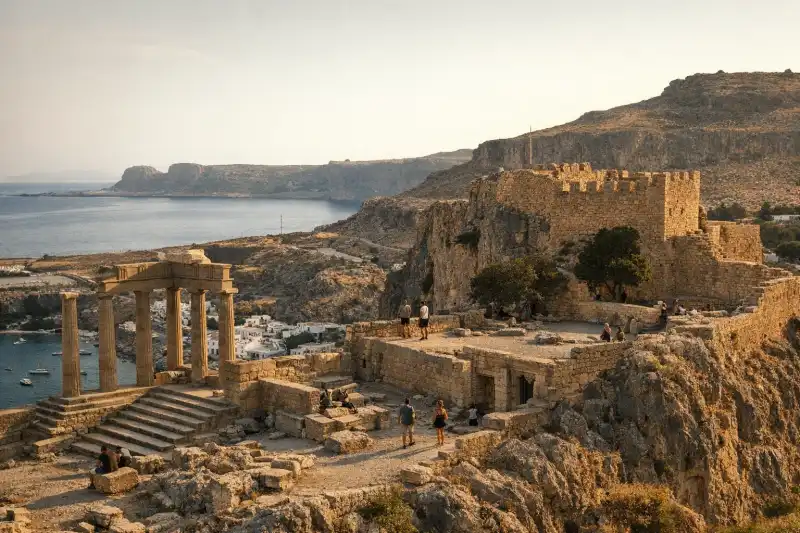
Acropolis of Lindos
Ancient Greek, Hellenistic, Roman, Byzantine, Knights HospitallerThe Acropolis of Lindos on Rhodes, Greece, is a spectacular ancient citadel blending Classical and m...
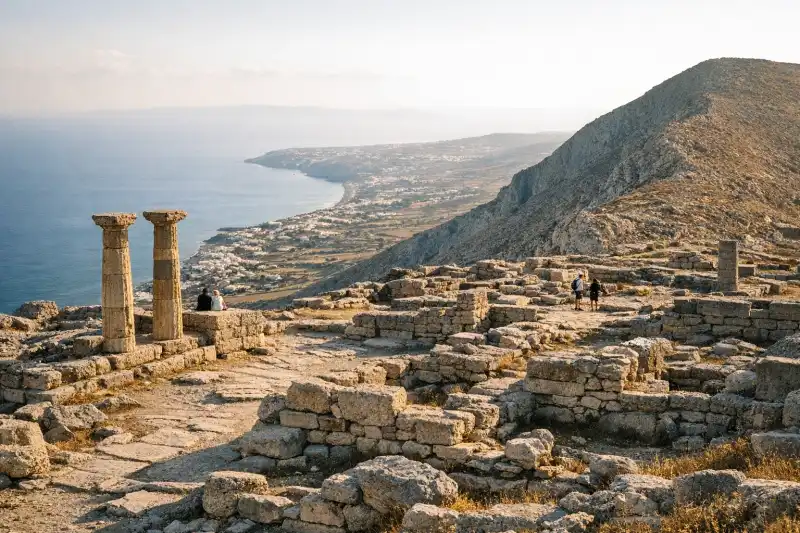
Ancient Thera
Ancient Greek, Roman, ByzantineExplore Ancient Thera in Greece, a dramatic mountaintop city on Santorini with Hellenistic, Roman, a...
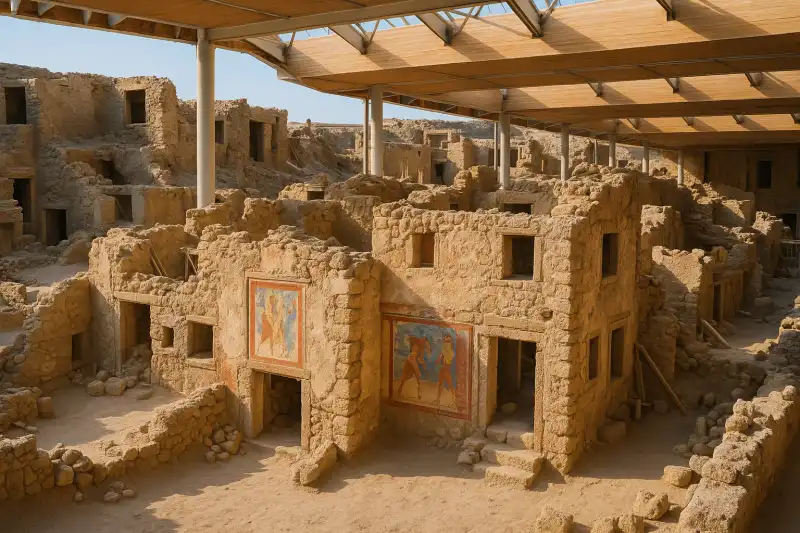
Akrotiri
Minoan / CycladicExplore Akrotiri, the Bronze Age Minoan city buried under volcanic ash on Santorini around 1613 BCE ...