Quick Info
Curated Experiences
Private Kars and Ani Ruins Day Tour
Kars Highlights with Ani Archaeological Site
Eastern Turkey Heritage Tour: Kars, Ani and Lake Cildir
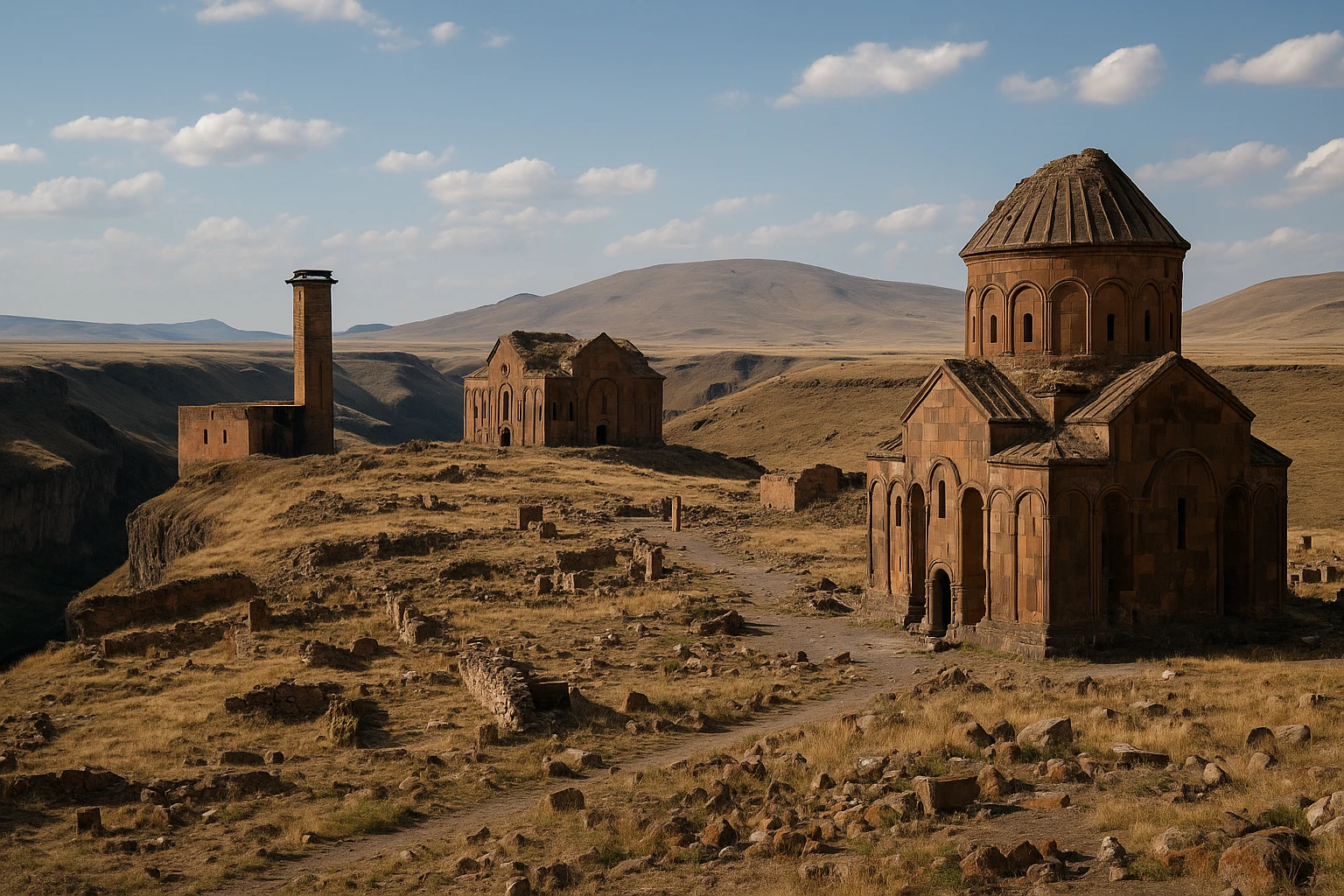
On a high, wind-cut plateau above the Arpaçay gorge, the ruined city of Ani, Turkey appears all at once: broken ramparts, red-black tuff churches, and a cathedral shell still powerful enough to silence a busload of visitors as soon as they step through the gate. You do not approach Ani through dense urban sprawl or souvenir strips. You approach through open steppe, where the horizon is broad and the weather feels bigger than you. Then the city rises from the grass like a memory of empire. In the 10th and 11th centuries, Ani was the Bagratid Armenian capital and one of the great Silk Road centers of the medieval world, a place of merchants, scholars, craftsmen, and rival faiths living inside monumental walls. Today, it stands on Turkey’s eastern frontier, facing Armenia across a gorge that is at once beautiful and politically charged.
What makes Ani exceptional is not one perfect monument. It is the whole urban landscape: gates, fortifications, liturgical architecture, royal ambition, and the visible scars of conquest, earthquake, neglect, and rediscovery. This guide covers the city’s layered history, the key monuments you should not miss, practical transport from Kars, admission details, seasonal strategy, and how to combine Ani with a wider eastern Turkey itinerary. If you want a site that feels both grand and fragile, Ani delivers one of the most affecting archaeological experiences in the region.
History: A Silk Road Capital on a Fractured Frontier
Early settlement and frontier foundations (c. 3000 BCE–9th century CE)
The plateau at Ani was occupied long before it became famous. Archaeological evidence suggests settlement in the Bronze Age, with the site’s defensible position and access to river routes making it attractive across centuries. By late antiquity, this borderland sat within shifting spheres of Persian, Byzantine, and local Armenian power. What mattered most was geography: Ani controlled movement through the Akhurian basin and stood near trade arteries linking the Caucasus, Anatolia, and northern Mesopotamia. Even before its political zenith, it functioned as a strategic hinge between worlds. Those layers matter because the Bagratid rulers did not build from nothing; they inherited a place already conditioned by military logic, agricultural hinterland, and cross-cultural exchange.
Bagratid ascent and the golden age of Ani (961–1045)
Ani’s defining chapter began when Ashot III Bagratuni moved the Armenian royal seat there in 961 CE. Under the Bagratid Kingdom of Armenia, the city expanded rapidly, with new walls, ceremonial avenues, monasteries, palaces, and an extraordinary burst of ecclesiastical building. Medieval sources celebrated Ani as the “city of 1001 churches,” a phrase that may be poetic exaggeration but captures the scale of sacred architecture concentrated in and around the capital. Trade wealth from Silk Road circuits fed this building program, while court patronage drew architects, masons, painters, and theologians into one urban center. The Cathedral, commissioned under King Smbat II and associated with architect Trdat, symbolized a confident political project: an Armenian capital speaking in monumental stone to both neighbors and rivals.
Byzantine control, Seljuk conquest, and shifting sovereignties (1045–13th century)
In 1045, Byzantium annexed Ani, ending Bagratid royal independence. The city remained wealthy but politically vulnerable. Barely two decades later, in 1064, Alp Arslan’s Seljuk forces captured Ani after siege and assault, an event remembered for both violence and symbolic rupture. Over subsequent generations, Ani passed through multiple regimes, including Kurdish Shaddadid rulers, Georgian influence, and periodic contestation by regional powers. Despite upheaval, the city did not vanish overnight. Churches were reused or adapted, Muslim monuments were added, and trade continued, though never with the same stability as the Bagratid peak. Ani’s architecture records this continuity through change: inscriptions in multiple languages, altered liturgical spaces, and defensive works repeatedly repaired after conflict.
Mongol era, decline, and environmental shocks (13th–17th century)
Mongol pressure in the 13th century intensified broader regional disruptions. Trade routes shifted, warfare damaged infrastructure, and political fragmentation weakened urban maintenance. A major earthquake in 1319 compounded decline, collapsing structures and accelerating depopulation. Ani survived as a reduced settlement for some time, but by the early modern era it had largely lost its metropolitan function. This is a common pattern in medieval frontier cities: once trade geometry and state backing disappear, monumental stone outlives urban systems. Ani’s churches and walls remained visible, but the civic organism that sustained them was gone.
Modern rediscovery and archaeology (19th century–present)
Systematic modern study began under Russian imperial administration in the late 19th century, especially through excavations led by Nikolai Marr and contemporaries. Their campaigns documented monuments, recovered inscriptions, and created foundational plans of the site, though early methods sometimes prioritized clearance over stratigraphic precision by modern standards. The 20th century brought interrupted research, geopolitical tensions, and periods of restricted access due to Ani’s sensitive border position. In recent decades, conservation efforts by Turkish authorities and international partners have improved stabilization and visitor infrastructure. Ani’s UNESCO inscription in 2016 marked formal global recognition of what travelers have long felt on the ground: this is one of the great medieval urban archaeological landscapes of Eurasia.
The Key Monuments: What to See at Ani
Cathedral of Ani
The Cathedral of Ani is the emotional and architectural center of the site. Begun in the late 10th century and completed in the early 11th, it is attributed to architect Trdat, whose structural intelligence is visible in the pointed arches, clustered supports, and balanced interior volumes that feel strikingly advanced for the period. Although the dome is gone, the surviving shell still conveys height, rhythm, and ceremonial gravity. Stand near the nave center and look upward: even in ruin, the building organizes light with precision, turning broken masonry into composition. Exterior carvings are restrained compared to later ornament-heavy traditions, but that restraint is part of its force. It reads as imperial confidence in stone. Photographers should visit early or late in the day when low sun reveals the tuff’s warm-red tones and surface texture.
Church of Saint Gregory of Tigran Honents
Near the gorge edge, the Church of Saint Gregory of Tigran Honents offers one of Ani’s most intimate and rewarding interiors. Built in 1215 by a wealthy merchant patron, it preserves remarkable fresco cycles depicting biblical scenes and saintly narratives in layered color fields that still carry emotional punch despite damage. The plan is compact compared with the cathedral, but the visual density is high: inscriptions, painted figures, and architectural framing interact in a way that makes the church feel both devotional and mercantile, fitting for a donor tied to trade wealth. Its position near the cliff also reinforces Ani’s urban drama, where sacred architecture is never far from defensive topography. Visit with enough time to let your eyes adjust; details emerge slowly from the dim interior.
Church of the Redeemer
The Church of the Redeemer is one of Ani’s most iconic silhouettes because half of it is missing, split by structural failure and earthquakes. What remains, however, is not merely picturesque ruin. You can read the sophistication of its original circular exterior articulation and the engineering ambition of a church meant to house a revered relic of the True Cross. The surviving half opens like a cutaway model, exposing wall thickness, niches, and vault logic usually hidden in intact buildings. That accidental transparency turns catastrophe into pedagogy. It is also a stark reminder of Ani’s environmental vulnerability in a seismic zone where centuries of tremors did as much long-term damage as armies. In windy weather, this monument feels especially haunting; the open section amplifies sound from the steppe.
City walls and the Lion Gate
Ani’s double fortification system and monumental gates are essential to understanding the city as more than a cluster of churches. The walls, heavily developed under King Smbat II and successors, used towers, bastions, and layered approaches to project strength toward exposed approaches on the plateau. The Lion Gate (Aslanlı Kapı), with carved relief elements and commanding massing, served both practical defense and ceremonial messaging. Passing through it today gives you the best sense of medieval urban threshold: outside was uncertainty; inside was royal order, commerce, and sacred authority. Walk sections of the wall line to appreciate how terrain and architecture work together. Ani is readable as a planned capital because these defensive envelopes still structure your movement through the ruins.
Manuchihr Mosque and the gorge viewpoints
The Manuchihr Mosque, often cited as one of Anatolia’s earliest mosques, reflects Ani’s post-Bagratid transformations under Muslim rule. Its surviving minaret and prayer hall remains show adaptation rather than erasure: a new religious-political layer inserted into an already monumental Christian urban fabric. Whether you approach it through religious history, architectural chronology, or political narrative, it anchors the city’s multi-confessional reality. Nearby gorge viewpoints looking toward Armenia are equally significant. They reveal why Ani mattered militarily and economically: steep natural defenses, river corridors, and visual control over frontier terrain. At sunset, the gorge light can be extraordinary, but wind can be severe, so keep gear secured and respect barriers.
Getting There: Transportation and Access
Ani is straightforward to visit from Kars, but logistics are easiest when you plan transport in advance, especially outside summer.
From central Kars
Kars is the main base for almost everyone visiting Ani. The road journey is typically 45 to 60 minutes each way, crossing open highland terrain with minimal services once you leave town.
- Taxi (round trip with waiting): Most convenient option; commonly negotiated as a return package. Typical range is 1,500-2,500 TRY ($47-78 USD), depending on season, waiting time, and your bargaining.
- Private driver or guided tour: Easier if you want historical interpretation on site. Usually 2,500-4,500 TRY ($78-140 USD) per day depending on inclusions.
- Rental car: Offers flexibility for combining Ani with nearby villages or viewpoints. Expect roughly 1,200-2,000 TRY/day ($37-62 USD) plus fuel; roads are generally manageable in clear weather.
From Kars Airport (KSY)
If you land the same day you plan to visit Ani, build in buffer time. Airport traffic is light, but weather can alter schedules in winter.
- Airport taxi to Ani directly: Usually 2,000-3,000 TRY ($62-93 USD), around 1 to 1.5 hours depending on stopovers.
- Airport transfer to Kars, then onward taxi: Often cheaper and easier to arrange. Airport to city center is typically 300-500 TRY ($9-16 USD), then standard Kars-Ani pricing applies.
- Pre-booked tour pickup: Best for same-day arrivals when you want guaranteed scheduling and minimal negotiation.
Admission and hours
Entry is generally paid at the gate, with pricing for foreign visitors typically in the mid-range for Turkish archaeological sites (check current posted tariff on arrival, as rates can change seasonally). The site usually opens in the morning and closes in late afternoon or early evening depending on season. Card payment is often available, but carry cash in Turkish lira as backup. Plan your visit for early morning or late afternoon; midday light is harsh, and wind exposure increases fatigue faster than many travelers expect.
When to Visit: Seasonal Considerations
Spring (March-May)
Spring is one of the best seasons at Ani, with daytime temperatures often around 8-18°C (46-64°F). Grasslands green up, skies are frequently clear, and the red tuff architecture contrasts beautifully with fresh terrain. Crowds are moderate, with weekends busier than weekdays. Bring layers because wind remains strong.
Summer (June-August)
Summer brings long daylight and stable road access, but afternoon heat and sun exposure can be intense, often 20-32°C (68-90°F) and occasionally higher. Shade is limited across most of the site, so crowd flow clusters around interior monuments. Start as early as possible, carry extra water, and plan breaks between major structures.
Autumn (September-November)
Autumn is arguably the ideal compromise: typically 10-22°C (50-72°F) in early season, crisp visibility, and fewer school-holiday crowds after September. The steppe tones shift to gold and brown, which makes wide-angle photography especially strong. Late October and November can turn sharply colder, so monitor forecasts.
Winter (December-February)
Winter at Ani can be stunning but demanding, often -12 to 4°C (10-39°F), with snow, ice, and powerful winds. Visitor numbers are low, and the cathedral in snow is unforgettable. However, paths may be slippery and conditions can change quickly. Insulated boots, gloves, and windproof layers are essential, and you should allow extra travel time from Kars.
Combining Ani with Kars and the Eastern Highlands
Ani works best as the anchor of a half-day or full-day plan based in Kars. The most rewarding sequence starts with an early departure, aiming to enter the site around 8:30 AM when light is soft and tour traffic is still thin. Spend your first hour at the Cathedral and nearby walls, then continue toward Saint Gregory and the gorge edge by 10:00 AM, when interior details are still easy to read before stronger noon contrast. By 11:30 AM, complete the loop via the Lion Gate and Manuchihr Mosque area, then return to Kars for lunch around 1:00 PM.
For lunch, central Kars offers strong regional cuisine, especially goose in season and hearty soups in colder months. Eat near the old stone district, then visit Kars Castle and the 19th-century Russian-era grid around 3:00 PM. The pairing creates a clear historical bridge: Ani as medieval frontier capital, Kars as imperial-modern border city.
If you have a full day and a car, add Lake Çıldır toward late afternoon, arriving around 5:00 PM for open highland views. Total combined duration is usually 9 to 11 hours, including driving and meal stops. If you are short on time, Ani alone is still worth the trip from Kars and can be done comfortably in about 5 hours door to door.
Practical Information
What to bring
- Wind protection: A shell jacket is essential year-round; Ani’s plateau can feel much colder than Kars.
- Water and snacks: Bring at least 1 liter of water per person; on-site services are limited.
- Footwear: Sturdy shoes with grip for uneven stone, dirt paths, and occasional mud.
- Sun gear: Hat, sunscreen, and sunglasses are critical in summer and bright winter conditions.
- Cash backup: Keep Turkish lira on hand for tickets, parking, or roadside purchases.
Dress code and etiquette
Ani is an archaeological zone rather than an active worship complex, but respectful dress remains wise, especially when entering preserved church interiors and in conservative rural contexts nearby. Avoid climbing on fragile masonry or crossing barriers for photos. The border setting is sensitive, so follow signage and staff instructions without exception.
Accessibility
Parts of Ani are accessible via broad paths near major monuments, but full exploration involves uneven terrain, inclines, and surfaces that can be rough for wheelchairs or limited mobility travelers. Visitors who need lower-strain routing should focus on the Cathedral, nearby walls, and selected viewpoints close to primary paths. In wet or snowy weather, accessibility becomes significantly more difficult.
Why Ani Matters
Ani matters because it preserves a rare scale of medieval urban imagination in a place where geography never stopped shaping politics. At many archaeological sites, you see one dynasty at full volume. At Ani, you see succession itself: Armenian royal ambition, Byzantine strategy, Seljuk adaptation, later decline, modern archaeology, and contemporary border reality all present in one walkable landscape. The city is not frozen in a single identity, and that is exactly why it feels modern as well as ancient.
Standing inside the Cathedral, then looking across the gorge toward another state border, you feel history as continuity rather than nostalgia. Trade routes become fault lines; sacred buildings become archives; ruined walls become evidence of how power tries to outlast time and climate. Ani asks for patience, not speed. If you give it a few hours and real attention, it gives you one of the clearest lessons in the archaeology of frontier civilizations anywhere in Asia.
Quick Facts
| Attribute | Details |
|---|---|
| Location | Ocaklı (Ani), Kars Province, Turkey |
| Ancient Name | Ani (medieval Armenian capital) |
| UNESCO Status | UNESCO World Heritage Site (2016) |
| Established | c. 3000 BCE settlement |
| Distance from nearest hub | ~45 km from Kars (45-60 min by road) |
| Entry Fee | Paid on-site; check current TRY tariff at gate |
| Hours | Seasonal opening; typically morning to late afternoon |
| Best Time | Spring and autumn; early morning or late afternoon |
| Suggested Stay | 2.5-4 hours on site |
| Main Highlights | Cathedral, Tigran Honents Church, Lion Gate, gorge views |
Explore More Turkey
- Göbekli Tepe: The world’s oldest known monumental ritual complex, reshaping the story of early civilization.
- Zeugma: Roman frontier city famous for extraordinary mosaics and Euphrates-edge archaeology.
- Aspendos: One of the best-preserved Roman theaters anywhere in the Mediterranean.
Plan your full journey with our Turkey Ancient Sites Guide. For route planning tips, see our Beginner’s Guide to Visiting Ancient Sites.
Frequently Asked Questions
How much time should I plan for Ani?
Most travelers need 2.5 to 4 hours to see Ani's main monuments at a relaxed pace. If you want to photograph interiors, walk the full walls, and visit smaller chapels near the gorge, plan closer to half a day.
What is the best time to visit Ani?
Late spring and early autumn are ideal because temperatures are mild, skies are clear, and the grasslands are most photogenic. Summer afternoons can be very hot and windy, while winter visits are beautiful but require serious cold-weather preparation.
Do I need to book tickets in advance for Ani?
Ani tickets are usually purchased at the gate on arrival, and lines are generally short outside peak holiday periods. Carry a bank card and some cash in Turkish lira in case card systems are slow or temporarily offline.
How do I get to Ani from Kars?
The easiest option is a taxi or private driver from Kars, with one-way travel typically around 45 to 60 minutes depending on road and weather conditions. Some local agencies also run organized day tours that include transport and a guide.
What are the main highlights inside Ani?
The Cathedral of Ani, the Church of Saint Gregory of Tigran Honents, the Church of the Redeemer, the city walls and Lion Gate, and gorge-side viewpoints are the core highlights. Together they show why Ani was once called the city of a thousand and one churches.
Is Ani safe to visit given its border location?
Yes, Ani is a formal archaeological zone open to visitors and regularly patrolled by Turkish authorities. Stay within marked paths, follow posted rules near the border fence, and avoid drone use unless you have explicit permission.
Nearby Ancient Sites
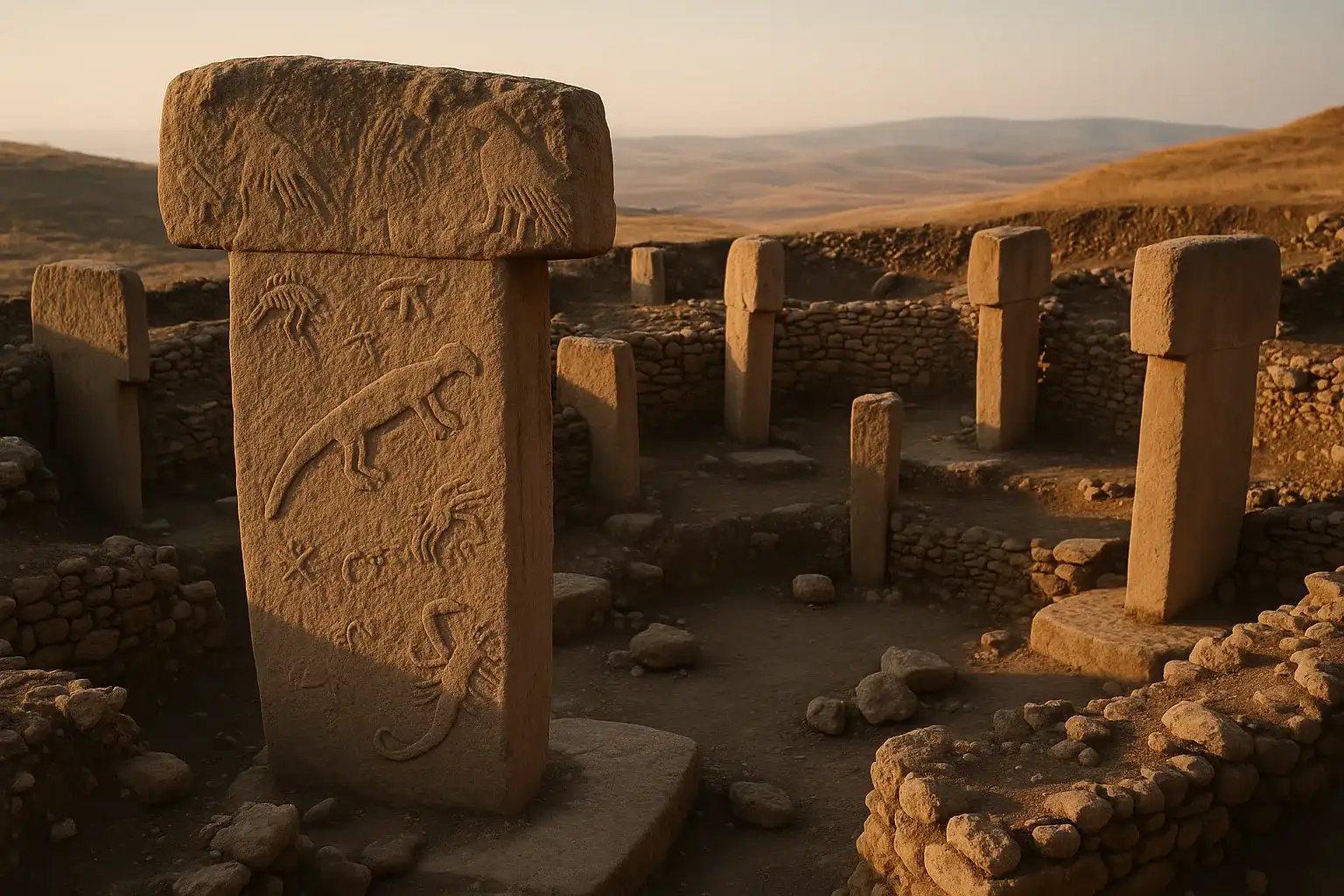
Göbekli Tepe, Turkey: The World's Oldest Temple Complex
Pre-Pottery NeolithicDiscover Göbekli Tepe, the 12,000-year-old archaeological wonder in Turkey that rewrites human histo...
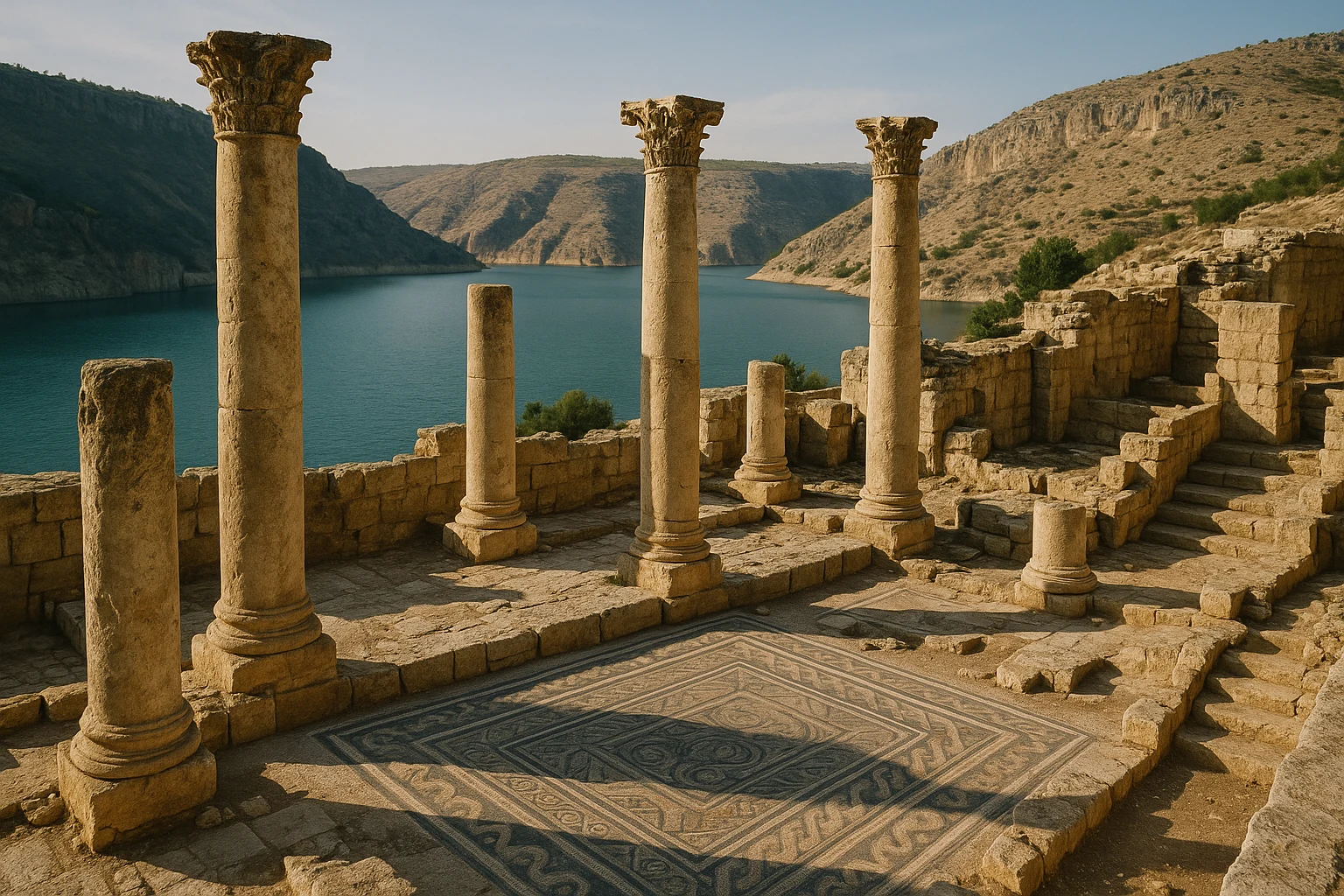
Zeugma Turkey Guide 2026: Roman Mosaics & Euphrates Legacy
Hellenistic-Roman-Byzantine-IslamicPlan your Zeugma visit in Turkey with what to see, tickets, transport from Gaziantep, and how to pai...
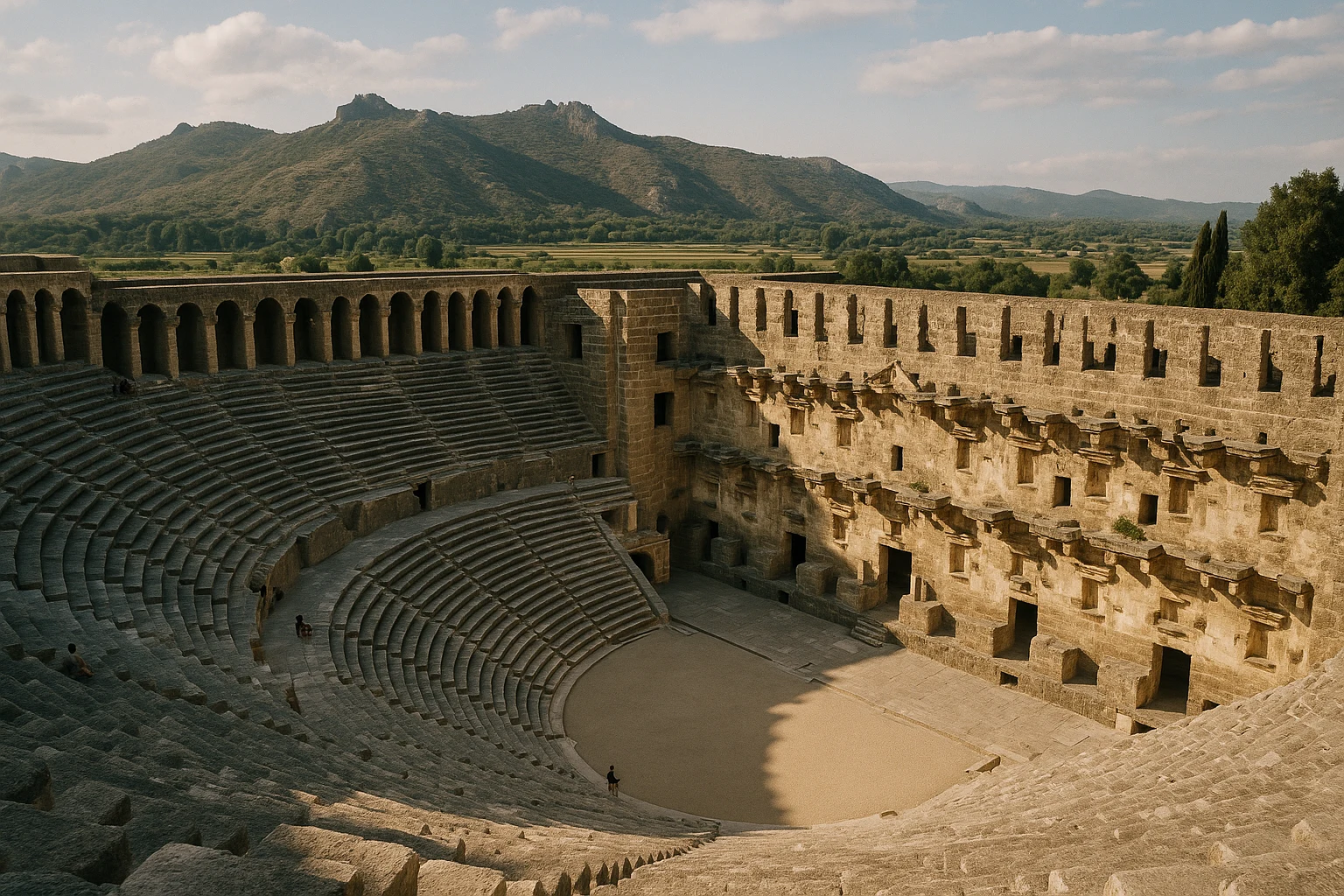
Aspendos Turkey Guide 2026: Roman Theatre & Pamphylian Aqueduct
Pamphylian-Greek-Roman-Byzantine-SeljukPlan your Aspendos visit in Turkey with practical tips on tickets, transport from Antalya, and what ...