Quick Info
Curated Experiences
Full-Day Anuradhapura Sacred City Tour from Colombo
Anuradhapura & Sigiriya Combo Day Trip
Ancient Kingdoms of Sri Lanka: Anuradhapura Private Tour
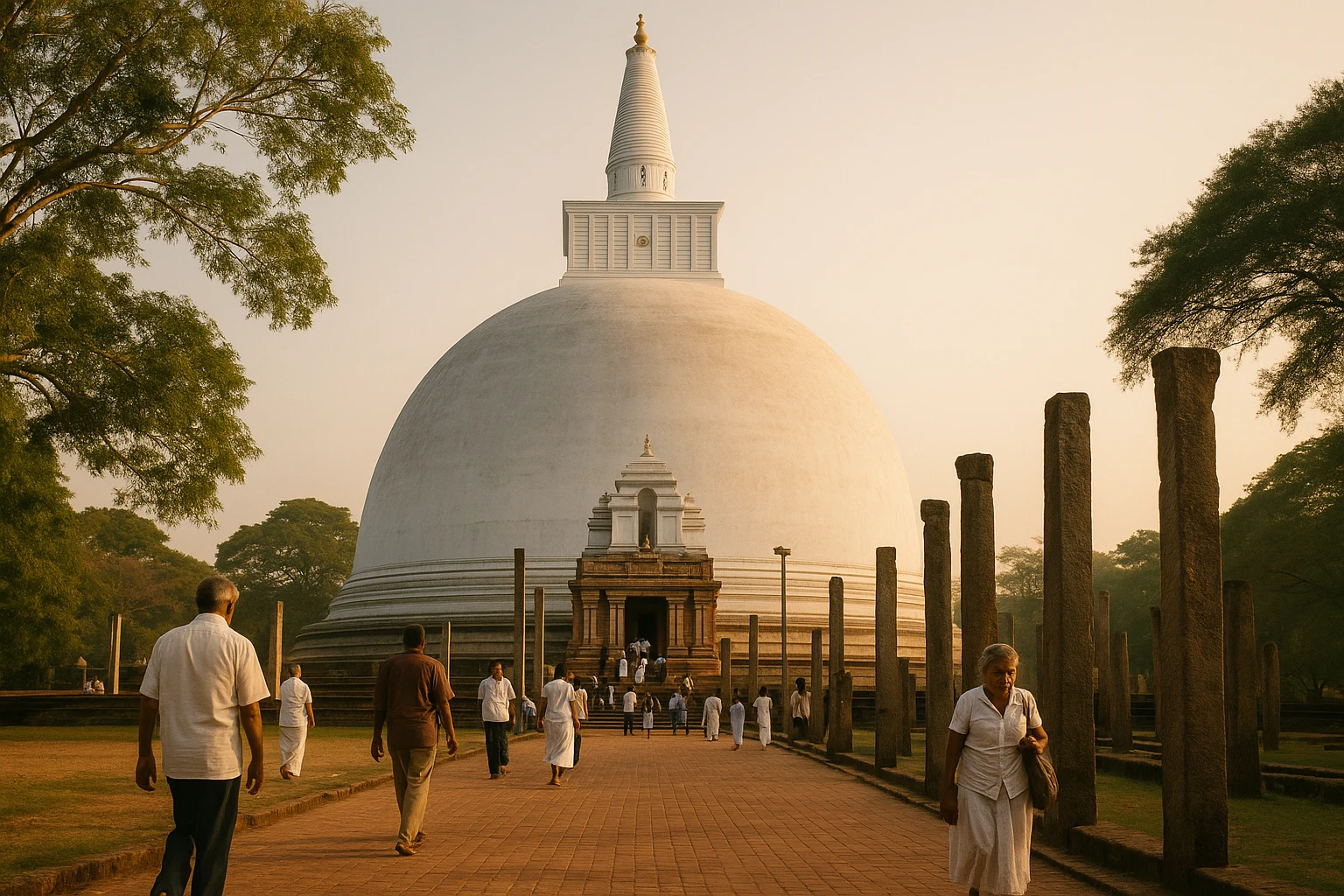
The white dome appears long before you reach it. Ruwanwelisaya, the Great Stupa of Anuradhapura, rises 103 metres above the flat northern plains of Sri Lanka, its bell-shaped silhouette visible across kilometres of jungle and paddy field. It was already ancient when medieval pilgrims first recorded their astonishment at its scale, and standing at its base today — beneath the elephant frieze that rings its lower terrace, amid the sound of temple bells and murmured prayer — it is impossible not to feel the pull of the centuries pressing down on you. Anuradhapura, in Sri Lanka’s North Central Province, was one of the world’s great cities for more than a thousand years. At its height it housed hundreds of thousands of inhabitants, supported a network of irrigation reservoirs that transformed an arid landscape into a garden, and drew Buddhist scholars and pilgrims from across Asia. It was abandoned in the eleventh century CE after a devastating invasion and swallowed by jungle, its stupas slowly subsiding into overgrown mounds, its palaces returning to the earth. When excavation and restoration began in earnest in the nineteenth and twentieth centuries, what emerged was one of the most extensive and best-preserved ancient urban complexes in South Asia — a place where antiquity is not a metaphor but a living, breathing, worshipped fact.
History
The Founding and the First Kings
The city’s origins are anchored in the fourth century BCE. According to the Mahavamsa — the great Pali chronicle of Sri Lankan history composed in the fifth and sixth centuries CE — Anuradhapura was formally established as a capital around 380 BCE by King Pandukabhaya, who organized the city’s layout, dug reservoirs to supply its population, and built the royal palace complex at its centre. The name is traditionally linked to an earlier settler named Anuradha, though the city as a political entity took shape under Pandukabhaya’s reign.
The Arrival of Buddhism
The event that would permanently define Anuradhapura came in the third century BCE. Around 250 BCE, during the reign of King Devanampiya Tissa, the Indian emperor Ashoka sent his son Mahinda to Sri Lanka as a Buddhist missionary. Mahinda converted the king, and Buddhism took root with extraordinary speed. Devanampiya Tissa built Thuparamaya — the first Buddhist stupa on the island — to house a collarbone relic of the Buddha. Shortly after, Ashoka’s daughter Sanghamitta arrived carrying a sapling grown from the original Bodhi Tree in Bodh Gaya. That sapling was planted in the royal park in 288 BCE. It is still alive.
The Age of the Great Monuments
The third through sixth centuries CE represent Anuradhapura’s architectural peak. King Dutugamunu, who reunified Sri Lanka after a period of South Indian rule and reigned from approximately 161 to 137 BCE, commissioned Ruwanwelisaya, the most celebrated of the city’s stupas, and the Mirisavatiya Dagoba. Later rulers added Jetavanaramaya — at the time of its construction one of the tallest brick structures on earth — and Abhayagiri Dagoba, whose monastery became a major centre of Mahayana Buddhist learning and hosted scholars from as far as China. By the fourth century CE, the Chinese pilgrim Faxian visited and described a city of immense wealth and spiritual vitality, with thousands of monks resident in its monasteries.
Decline and Abandonment
Anuradhapura’s dominance was periodically challenged by invasions from South India. The city changed hands multiple times before the Chola king Rajaraja I’s armies pushed the Sinhalese court permanently south in 993 CE. The capital relocated to Polonnaruwa. Without royal patronage, the great monasteries emptied, the irrigation systems fell into disrepair, and the jungle advanced. By the time European colonists arrived, the city’s ruins were known to local communities but largely inaccessible. British survey teams mapped the site in the 1820s and systematic archaeological work began in the 1870s. Designation as a UNESCO World Heritage Site in 1982 accelerated conservation and drove modern Anuradhapura’s development as a centre of Buddhist pilgrimage and historical tourism.
Key Features
Sri Maha Bodhi
No monument in Anuradhapura commands reverence quite like a tree. The Sri Maha Bodhi — the sacred fig grown from a cutting of the original Bodhi Tree — stands in a walled enclosure in the southern part of the old city and is tended by monks as it has been continuously for more than 2,300 years. The tree itself, supported now by a network of golden props and braces as its ancient branches spread wide, is the oldest living organism in the world with a documented and verified planting date. Pilgrims arrive in a near-constant stream, draping the surrounding railings with flowers and prayer flags, lighting oil lamps, and sitting in meditation beneath the branches. For practising Buddhists this is among the holiest places on earth. For visitors of any background, the presence of something genuinely, verifiably ancient — not a ruin, not a reconstruction, but a living being that was already old when the Roman Empire was young — is profoundly affecting.
Ruwanwelisaya
The Great Stupa is Anuradhapura’s most iconic structure and deserves the time to be properly absorbed. Its gleaming white dome — a form known in Sri Lanka as a dagoba — sits atop a vast square terrace ringed by a frieze of painted elephants, their grey haunches and swaying trunks proceeding endlessly around the base. The stupa was commissioned by King Dutugamunu in the second century BCE and, according to tradition, contains relics of the Buddha including a measure of his ashes. The interior cannot be entered, but the circumambulation path around the base is itself a meditative experience, busy with monks in saffron robes and lay worshippers carrying flowers and incense. In the late afternoon, when the sun drops low and the dome turns gold, Ruwanwelisaya is one of the most spectacular sights in South Asia.
Jetavanaramaya
Once the third-tallest structure on earth after the two great Egyptian pyramids at Giza, Jetavanaramaya is today partially restored — its brick dome rising to approximately 70 metres, roughly half its original height — but still massive enough to make the scale of Anuradhapura’s ambition comprehensible. Built in the third century CE under King Mahasena, the stupa served as the centrepiece of the Jetavana Monastery, whose ruins spread across an enormous walled precinct. A small but excellent museum at the site displays artefacts recovered during excavation, including jewellery, ivory carvings, and a gold plate inscribed with a Buddhist text.
Abhayagiri Dagoba and Monastery Complex
The Abhayagiri Monastery was founded in the first century BCE and grew into one of the largest Buddhist institutions in the ancient world, hosting at its peak some five thousand monks and maintaining close scholarly ties with India, China, and Southeast Asia. The dagoba at its centre stands 75 metres tall and is currently undergoing careful restoration, its freshly whitewashed sections gleaming against the weathered brick of the rest of the structure. The surrounding monastery ruins — refectories, image houses, bathing pools, meditation platforms — extend across a wide area and reward slow exploration on foot or by bicycle.
Thuparamaya and the Moonstone
Anuradhapura’s oldest stupa, Thuparamaya, was built in the third century BCE to house the collarbone relic of the Buddha and is considered one of the holiest sites on the island. Its squat, cylindrical form is quite different from the great bell-shaped dagobas of later centuries, reflecting an earlier architectural vocabulary. Equally remarkable is the carved limestone moonstone set into the entrance threshold of a nearby image house — an intricate semicircular slab depicting concentric bands of flame, animals, flowering vines, and geese, rendered with a fineness of execution that still astonishes.
Getting There
Anuradhapura sits approximately 205 kilometres north of Colombo and is well connected by both rail and road.
By Train: The most scenic and comfortable option. Direct trains depart Colombo Fort station several times daily and the journey takes roughly four to five hours, terminating at Anuradhapura railway station near the new town. Second-class reserved seats cost around LKR 400–600 (approximately USD 1–2); first-class air-conditioned carriages run LKR 1,000–1,500. Book ahead, especially for weekend and public-holiday travel.
By Bus: Frequent express buses depart from Colombo’s Bastian Mawatha bus terminal. The journey takes four to five hours on a good day and fares are LKR 300–450 for an air-conditioned service. Private long-distance coaches from major Colombo hotels are also available. Buses drop passengers in the new town, from which tuk-tuks to the archaeological zone cost LKR 300–600 depending on your destination.
By Private Transfer or Car: A private car from Colombo takes roughly three and a half hours via the A9 highway. Drivers can be arranged through Colombo hotels and guesthouses; expect to pay USD 80–120 for a day trip including waiting time. Many travellers combine Anuradhapura with Sigiriya on a two-day itinerary, hiring a car or joining a guided tour that covers both sites.
Within the Site: The sacred city is too large to cover on foot. Bicycle rental is available from multiple shops near the main entrance for around LKR 300–500 per day. Tuk-tuks can be hired for the day for LKR 2,000–3,500.
When to Visit
Sri Lanka’s North Central Province has a distinct climate pattern that differs from the coast. The region receives the bulk of its rain from the northeast monsoon, which runs roughly from October through January.
January to April is the driest and most comfortable period. Temperatures hover around 30–34°C, humidity is relatively low, and the roads and pathways around the ruins are dry underfoot. This is peak tourist season — expect more visitors at the major monuments, though the sheer size of the site means it rarely feels crowded.
May to September is hot and mostly dry, with daytime temperatures climbing above 35°C. Early morning visits — arriving at the Sri Maha Bodhi or Ruwanwelisaya before 8 a.m. — allow you to experience the site in cooler conditions and at the hour when pilgrimage activity is most intense. Carry plenty of water and wear a hat.
June brings the Poson Poya full-moon festival, which commemorates the arrival of Buddhism in Sri Lanka. Anuradhapura is the focal point of national celebrations, and hundreds of thousands of pilgrims descend on the city over several days. The atmosphere is extraordinary — processions, oil lamps, chanting — but accommodation fills completely months in advance.
October to December sees intermittent rainfall. Showers are usually brief and the green landscape after the rains has its own appeal. Prices are lower and the site is quieter.
| Quick Facts | |
|---|---|
| Country | Sri Lanka |
| Region | North Central Province |
| Established | c. 380 BCE |
| UNESCO Status | World Heritage Site (1982) |
| Civilization | Sinhalese / Early Sri Lankan |
| Period | 4th century BCE – 11th century CE |
| Key Monument | Ruwanwelisaya (Great Stupa) |
| Coordinates | 8.3114° N, 80.4037° E |
| Nearest City | Anuradhapura (new town) |
| Distance to Colombo | ~205 km (4–5 hours by train or road) |
| Entry Fee | USD 25 (archaeological zone ticket, 2024) |
| Opening Hours | Sacred sites open daily from dawn to dusk |
| Best Season | January – April; June for Poson Poya |
Frequently Asked Questions
Is Anuradhapura a UNESCO World Heritage Site?
Yes. The Sacred City of Anuradhapura was inscribed on the UNESCO World Heritage List in 1982, recognized for its outstanding universal value as the political and religious capital of early Sri Lankan civilization.
What is the Sri Maha Bodhi and why is it significant?
The Sri Maha Bodhi is a sacred fig tree (Ficus religiosa) grown from a cutting of the original Bodhi Tree in Bodh Gaya, India, under which the Buddha attained enlightenment. Planted in 288 BCE, it is considered the oldest living tree in the world with a documented planting date and is one of the holiest sites in Buddhism.
How long does it take to tour Anuradhapura?
The sacred city is large — roughly 40 square kilometres of protected ruins. A thorough visit requires at least one full day, though two days allows you to explore at a comfortable pace. Many visitors combine it with an overnight stay rather than treating it as a day trip.
Do visitors need to dress modestly at Anuradhapura?
Yes. Anuradhapura remains an active place of worship, and covered shoulders and knees are required at all sacred sites. You will also need to remove shoes before entering stupa compounds and temple precincts. Carrying a sarong or light scarf is recommended.
What is the best way to get around the sacred city?
Renting a bicycle is the most popular and practical option — the flat terrain makes cycling easy and the distances between monuments are significant. Tuk-tuks are widely available for those who prefer a driver. Some guided tours use a minibus for transport between the main clusters of ruins.
When is the best time to visit Anuradhapura?
The dry season from January to April and again from July to September offers the most comfortable visiting conditions. The Poson Poya full-moon festival in June draws enormous pilgrimage crowds and is a remarkable cultural spectacle, though accommodation should be booked well in advance.
Is Anuradhapura safe to visit?
Yes, Anuradhapura is a safe and well-touristed destination. The region was historically affected by Sri Lanka's civil conflict, but the area has been peaceful and stable for well over a decade. Standard travel precautions apply.
Nearby Ancient Sites
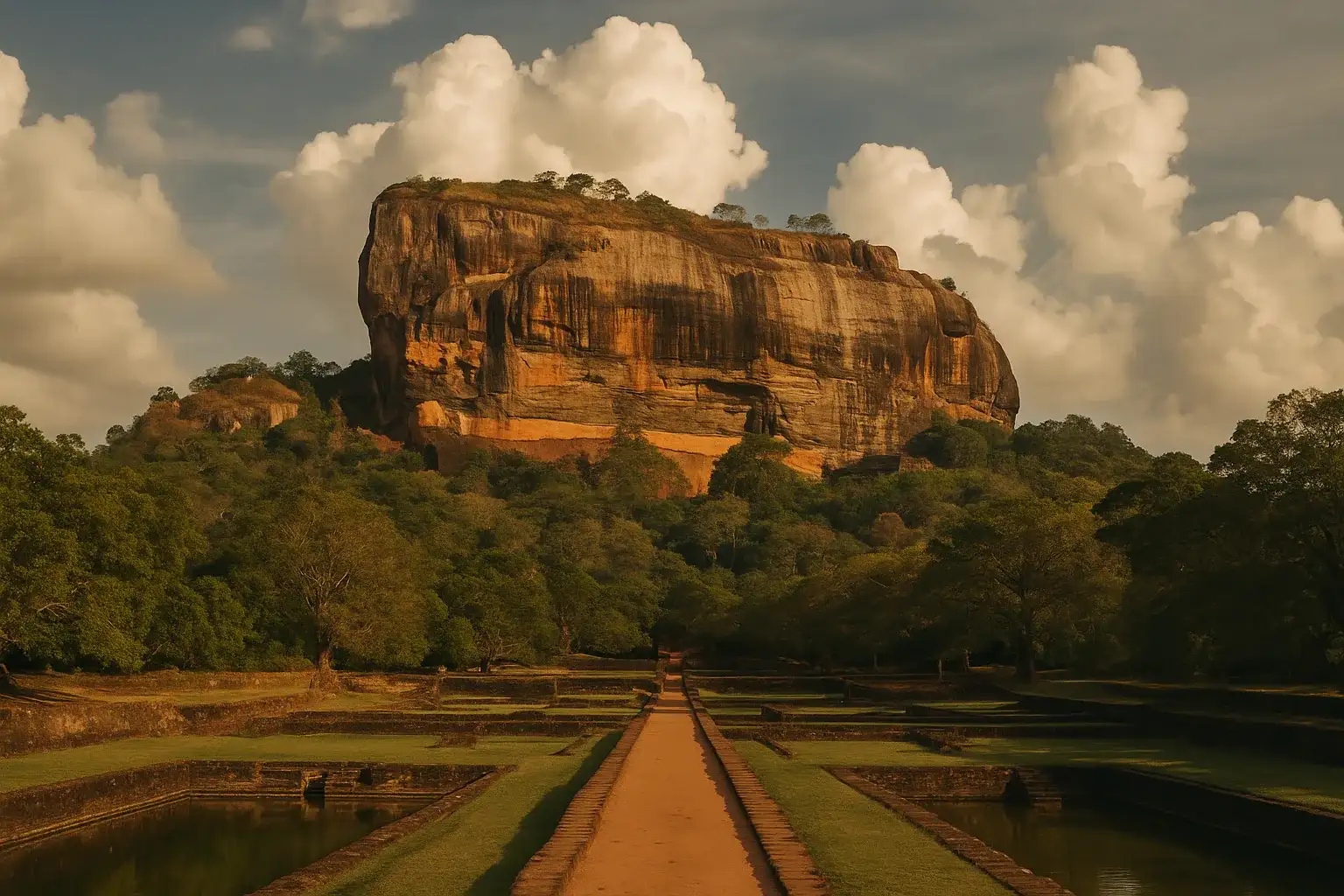
Sigiriya, Sri Lanka: Climbing the Lion Rock Fortress
SinhaleseComplete guide to Sigiriya, Sri Lanka's iconic Lion Rock fortress. Discover the dramatic history of ...
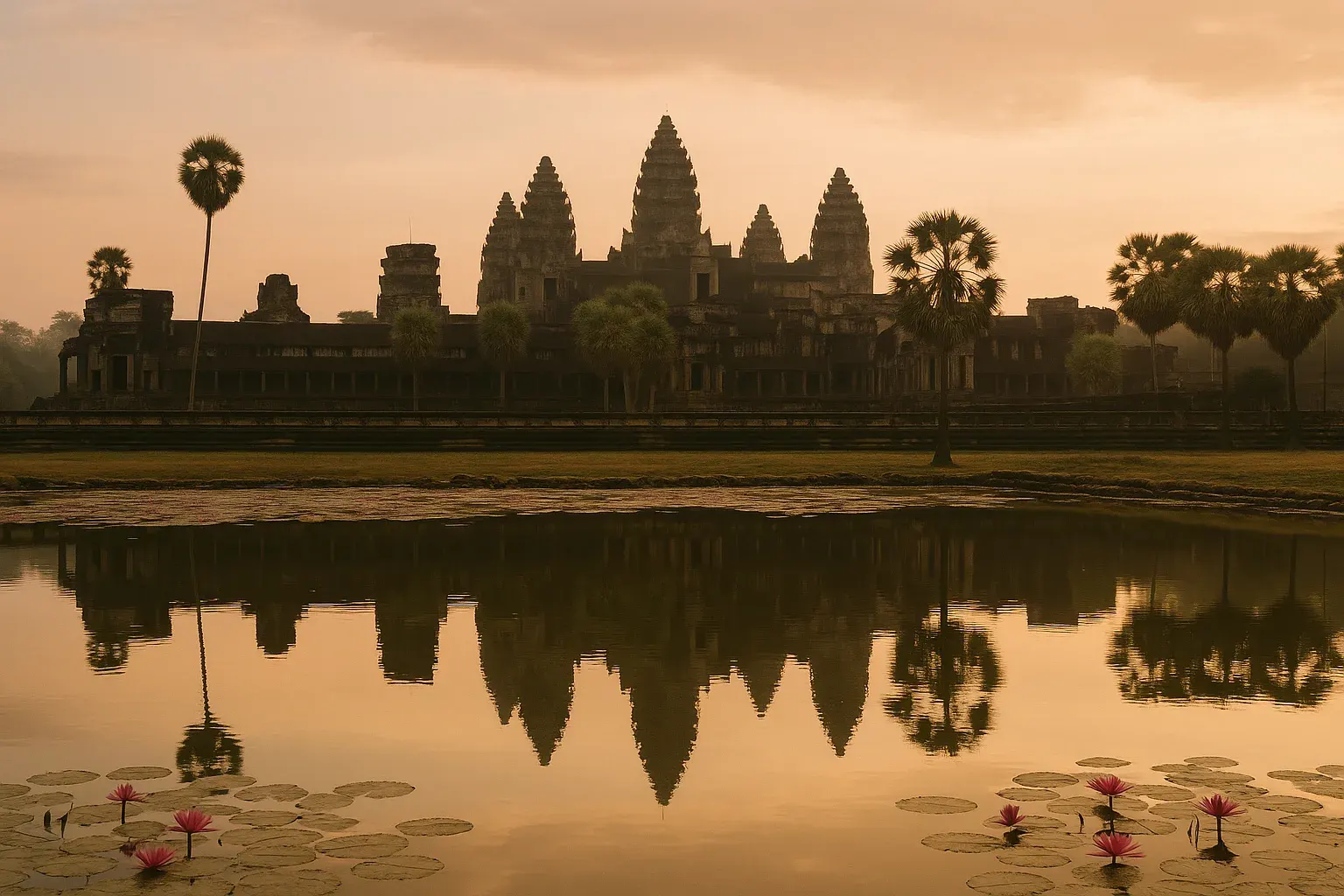
Angkor Wat Travel Guide 2026: Everything You Need to Know
KhmerAngkor Wat, the world's largest religious monument, spans over 400 acres in the heart of Cambodia. T...
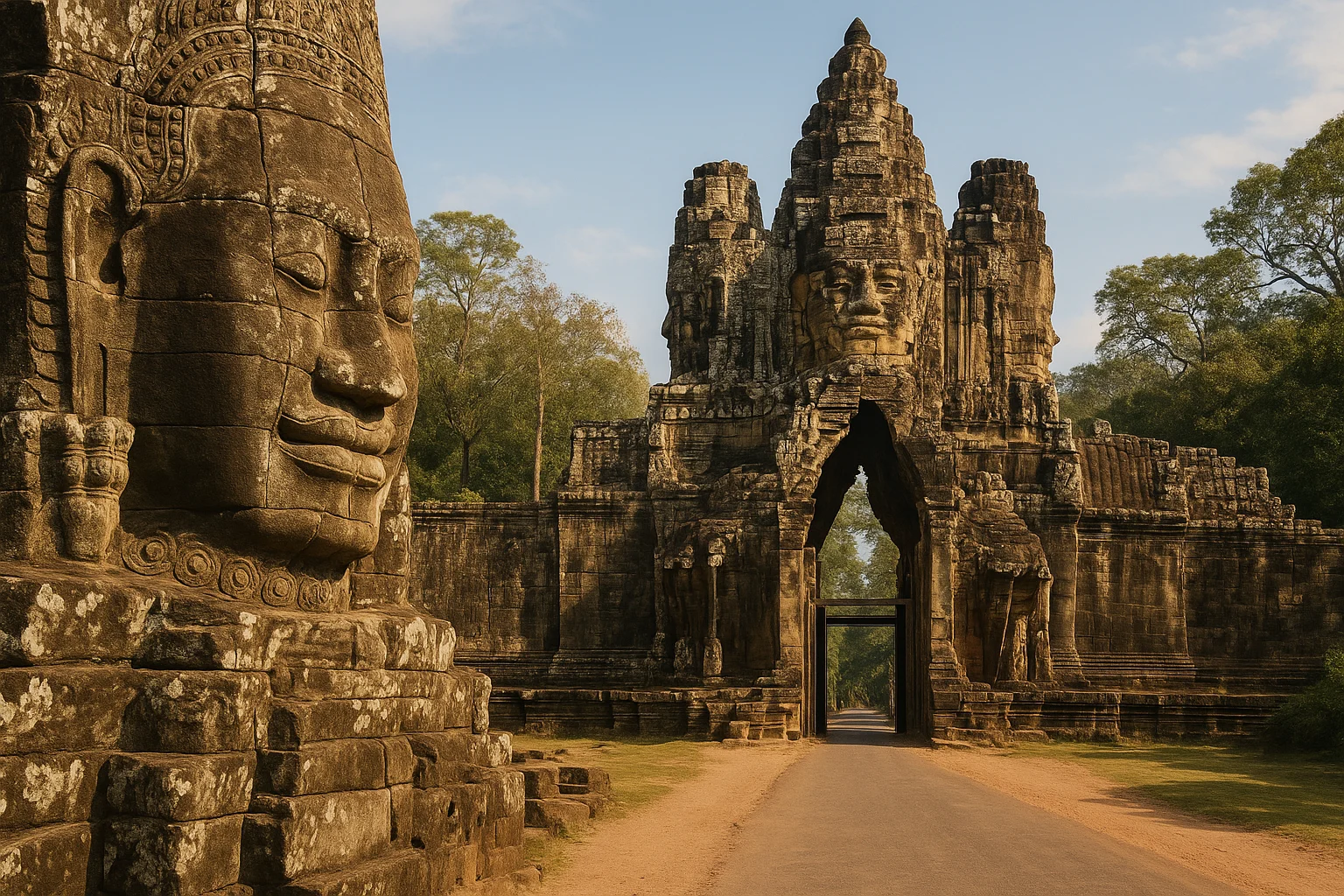
Angkor Thom Travel Guide 2026: Bayon Faces, Gates, and the Khmer Royal City
KhmerAngkor Thom was the last great capital of the Khmer Empire. This guide covers how to visit Bayon, th...