Quick Info
At a glance
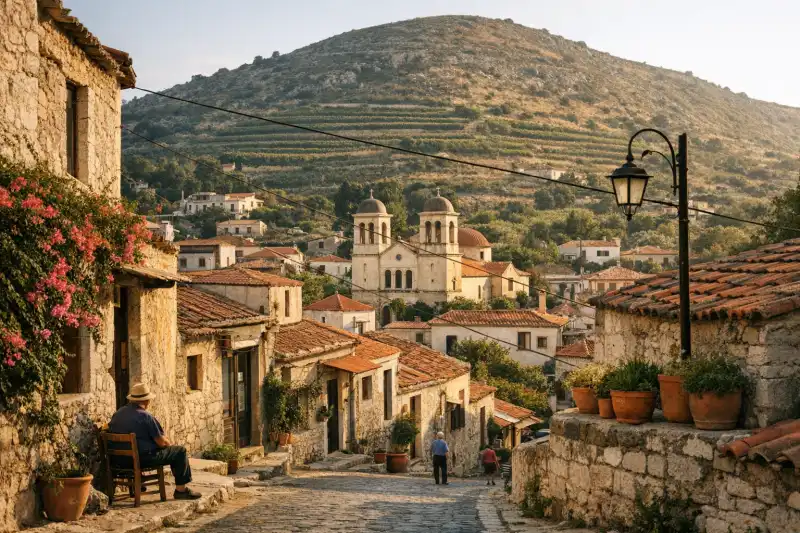
Archanes, Greece, sits in the rolling interior of Crete, where vineyards, olive groves, and the outline of Mount Juktas shape one of the island’s most rewarding historical landscapes. Often overshadowed by nearby Knossos and the coastal attractions around Heraklion, Archanes offers something rarer: a place where ancient remains, village life, and the agricultural rhythms of Crete still feel closely connected. Rather than encountering the past as an isolated ruin, visitors here move through a living setting that has been important for thousands of years.
The appeal of Archanes lies in this layered character. You can wander elegant lanes lined with restored stone houses, stop in a small square for coffee under the trees, and then continue to sites linked to the Minoan world, one of Europe’s earliest advanced civilizations. The broader area includes significant tombs, settlement remains, and sacred landscapes associated with Bronze Age religion and power. At the same time, Archanes remains distinctly Cretan: warm, hospitable, rooted in wine production, and close to mountain paths that open onto sweeping views of the island. For travelers interested in archaeology but not eager for crowds, or for anyone who wants to combine ancient history with local food, scenery, and village atmosphere, Archanes is one of the most satisfying destinations in Crete.
History
Early settlement and the rise of Minoan Archanes
The history of Archanes reaches back into the Bronze Age, when central Crete was dotted with prosperous communities connected to agriculture, trade, and religion. Archaeological discoveries in and around the modern town suggest that the area was already significant by the early 3rd millennium BCE. Its location was ideal: close enough to the north coast and the later center at Knossos to be politically and economically important, but also tied to fertile inland land suited to vineyards, olives, and grain cultivation.
By the Middle and Late Minoan periods, Archanes had become one of the most notable settlements in the Knossos hinterland. Excavations have uncovered substantial buildings and evidence of elite life, indicating that this was no isolated rural village. The community appears to have been integrated into the power structure of Minoan Crete, possibly functioning as an important satellite center associated with administration, production, and ceremonial activity. The nearby mountain of Juktas, long regarded as sacred, likely strengthened Archanes’ role within the religious geography of the island.
Sacred landscapes, tombs, and elite power
One of the most important archaeological discoveries connected with Archanes is the cemetery complex at Fourni, just outside the village. This is among the most significant burial grounds in the Aegean Bronze Age. Used over centuries, the cemetery includes a variety of tomb types, from tholos tombs to built funerary structures, reflecting changing customs and the presence of a socially stratified community. Rich finds from Fourni have revealed how the elites of Archanes expressed identity, authority, and belief through burial practices.
The area has also produced evidence of ceremonial architecture and cult activity. Scholars have long linked Archanes with the sacred summit sanctuary on Mount Juktas, one of the key religious sites of Minoan Crete. This relationship between settlement, cemetery, and mountain shrine suggests that Archanes occupied a special place in both the political and sacred map of the Bronze Age island. Rather than being simply a farming town, it may have served as a center where power, ritual, and memory converged.
Decline, transformation, and later antiquity
Like the rest of Minoan Crete, Archanes experienced major changes during the later 2nd millennium BCE. The causes remain debated, but earthquakes, internal political shifts, and the growing influence of Mycenaean Greeks all affected Cretan centers. Some Minoan sites declined suddenly; others changed in function or persisted under new regimes. Archanes appears to have remained inhabited, though its role evolved as the wider Minoan palatial system fragmented.
In the centuries that followed, the region continued to be occupied through the Greek, Hellenistic, and Roman periods. While Archanes did not become as famous in classical antiquity as some mainland Greek cities, inland Crete remained economically active, and long-established settlement patterns often endured. Rural sanctuaries, agricultural estates, and village communities helped preserve continuity across political transitions.
Byzantine, Venetian, Ottoman, and modern Archanes
The medieval and early modern history of Archanes reflects the wider history of Crete. Under Byzantine control, then Venetian rule from the 13th century onward, and later Ottoman administration, the settlement remained part of a productive agricultural region. Vineyards and olive cultivation continued to define local life. Churches, manor-like houses, and changing architectural forms reveal how each era left its mark on the village fabric.
In the modern period, Archanes became known not only for agriculture and wine but also for its exceptionally careful restoration and preservation. Unlike some villages altered by unplanned development, Archanes retained and revived much of its traditional character. This has made it especially appealing to visitors who want to experience a Cretan town that still feels coherent and lived-in. Archaeological work in the 20th century brought wider recognition to the importance of nearby Minoan sites, deepening Archanes’ reputation as one of the most historically rich destinations in central Crete.
Key Features
Archanes is best appreciated not as a single monument but as a historical landscape. The modern village itself is one of its chief attractions. Many houses have been restored in a way that respects local materials and proportions, with colorful facades, wooden balconies, courtyards, and narrow streets that invite slow exploration. The village squares are lively without feeling overrun, and the atmosphere is markedly different from the larger tourist centers on the coast. This setting gives context to the archaeology: the ancient world here feels embedded in a place that never stopped being inhabited.
Among the most important archaeological features linked to Archanes is the Fourni cemetery. For travelers interested in Minoan burial customs, social hierarchy, and long-term ritual continuity, Fourni is essential. The site demonstrates the sophistication of Bronze Age funerary architecture and provides insight into how local elites projected status. Even when viewed with only limited visible remains compared with grand palaces, its significance is immense. The cemetery helps explain why Archanes was more than a peripheral village; it was a place of wealth, ritual, and memory.
Another defining feature is the relationship between Archanes and Mount Juktas. Rising dramatically above the surrounding countryside, Juktas dominates the horizon and has been sacred since antiquity. In Minoan religion, summit sanctuaries often served as places of offering and contact with divine forces associated with landscape and weather. The mountain’s presence gives Archanes a powerful sense of place. Hikes and viewpoints in the area reveal why ancient communities attached spiritual meaning to this peak: it commands broad vistas over central Crete and visually ties together plains, valleys, and routes toward the sea.
The archaeological museum collections and interpretive material associated with Archanes also add depth to a visit. Finds from local excavations help transform the visible remains from stone outlines into human stories. Pottery, jewelry, tools, seals, and burial goods illuminate daily life and ceremonial practice in Minoan Crete. These objects show that Archanes was part of a sophisticated world linked by trade, artistry, and administration to larger Cretan centers.
Yet Archanes is not only about antiquity. The village is also a stronghold of Cretan food and wine culture. The surrounding area is known for vineyards, and tasting local wines is one of the most enjoyable ways to connect the ancient and modern identities of the place. Viticulture here has deep roots, and while today’s wineries are modern enterprises, they continue a landscape tradition that stretches back thousands of years. Taverns serving local dishes, seasonal produce, cheeses, and olive oil make the village especially rewarding for travelers who want cultural immersion rather than a quick archaeological stop.
Finally, Archanes stands out for its walkability and sense of proportion. Unlike a monumental site that can be “done” in an hour, it invites lingering. Visitors can pair archaeological interests with church visits, hillside walks, a long lunch, or a drive through the inland villages of central Crete. That combination of heritage, scenery, and authentic village rhythm is what makes Archanes memorable. It is not dramatic in the same way as a clifftop acropolis or a vast ruined city, but it offers something arguably more intimate: a chance to see how ancient importance can survive within a living community.
Getting There
Archanes is easiest to reach from Heraklion, the main city of central Crete and the island’s principal transport hub. By car, the drive usually takes around 20 to 30 minutes depending on traffic. Rental cars are widely available in Heraklion, including at the airport and ferry port, and this is the most convenient option if you want to combine Archanes with Knossos, Mount Juktas, wineries, or smaller inland villages. Fuel costs for the short trip are low, and parking in or near the village is generally manageable outside peak weekends.
Taxis from Heraklion to Archanes are straightforward and typically cost around €25 to €35 one way, though late-night or holiday fares may be slightly higher. This is a good option for travelers who want flexibility without driving on unfamiliar roads. Guided tours are another practical choice, especially for visitors interested in archaeology or wine. Combined day tours that include Knossos, Heraklion, and Archanes can save time and provide useful interpretation.
Public transport is possible but less direct. Regional bus services from Heraklion may involve a transfer or limited schedules depending on the season and day of the week. Expect fares generally in the €2 to €5 range each way, making the bus the cheapest option, though not always the most efficient for tight itineraries. If you are staying in Heraklion and prefer not to rent a car, ask your accommodation to confirm the latest KTEL schedules before setting out. For most travelers, Archanes works best as a half-day or full-day excursion from Heraklion.
When to Visit
Spring and autumn are the best times to visit Archanes. From April to early June, the countryside is green, wildflowers brighten the hills, and temperatures are comfortable for walking through the village or heading up toward Mount Juktas. September and October are equally attractive, with warm days, softer light, and the added appeal of the harvest season in wine country. These shoulder months combine pleasant weather with a relatively calm atmosphere, making them ideal for travelers who value both archaeology and local life.
Summer is still a good time to visit, especially if you are already based in Heraklion or exploring Crete more broadly, but inland temperatures can be hot from late June through August. Midday sightseeing can feel tiring, particularly if you plan to combine village walking with outdoor archaeological stops. In summer, it is best to arrive early in the morning or later in the afternoon, when the streets are gentler and outdoor cafés are more enjoyable.
Winter has a quieter charm. While you may not get beach weather, Archanes remains appealing as a lived-in village rather than a purely seasonal destination. Cooler temperatures are comfortable for walking, and the inland scenery can be atmospheric after rain. However, some tourism-related businesses may have shorter hours, and rural transport options can be more limited. If your priority is photography, village atmosphere, and avoiding crowds, winter can still be rewarding. For the broadest mix of access, scenery, and comfort, aim for late spring or early autumn.
| Quick Facts | Details |
|---|---|
| Location | Central Crete, Greece |
| Nearest major city | Heraklion |
| Best known for | Minoan archaeology, Fourni cemetery, wine, traditional village character |
| Historical significance | Important Bronze Age settlement linked to the Minoan world and Mount Juktas |
| Time needed | Half a day to one full day |
| Best season | Spring and autumn |
| Family friendly | Yes, especially for relaxed cultural day trips |
| Transport | Car, taxi, guided tour, limited regional bus options |
| Nearby highlights | Knossos area, Mount Juktas, Heraklion museums, inland wineries |
| Ideal traveler | Visitors interested in archaeology, village life, food, and inland Crete |
Guided tours: worth it?
A guide can be genuinely useful at Archanes, especially if you want help with transport, timing, tickets, or understanding a large site without losing half the day to logistics.
Best for
- First-time visitors who want context, not just photos
- Travelers who want transport, timing, or entry logistics handled
- Trips where tickets, circuits, or timed entry can shape the day
- Short visits where a planned route saves time
When to go self-guided
Go independently if you already have transport and tickets sorted, enjoy moving at your own pace, and are comfortable checking the latest official rules before you arrive.
What I’d avoid
Skip paid tours that bundle unrelated stops you do not actually want. The best option should either save meaningful planning time or add historical context you would miss on your own.
Archanes and Knossos Day Tours
Useful when: you want to compare guided formats before deciding
Heraklion and Archanes Cultural Tours
Useful when: you want to compare guided formats before deciding
Crete Archaeology Tours
Useful when: you want to compare guided formats before deciding
Some tour links are affiliate links, which may earn Ancient Travel a small commission at no extra cost to you. I try to surface options that make practical sense for the site—not just anything bookable.
Frequently Asked Questions
Where is Archanes located?
Archanes is a historic town in central Crete, Greece, a short drive south of Heraklion and not far from Knossos.
Is Archanes an archaeological site or a village?
It is both: Archanes is a living Cretan village with important nearby Minoan archaeological remains and museum collections.
How much time do you need to visit Archanes?
Most travelers spend half a day to a full day exploring the village, local archaeology, churches, wineries, and nearby walking routes.
Can you visit Archanes from Heraklion?
Yes, Archanes is an easy day trip from Heraklion by car, taxi, guided tour, or regional bus with a transfer depending on the route.
What is Archanes best known for?
Archanes is best known for its connection to Minoan Crete, elegant restored architecture, wine culture, and access to Mount Juktas.
Is Archanes worth visiting if you are already going to Knossos?
Yes, Archanes offers a quieter and more local perspective on Minoan heritage, making it an excellent complement to the more famous palace of Knossos.
Nearby Ancient Sites
Akrotiri
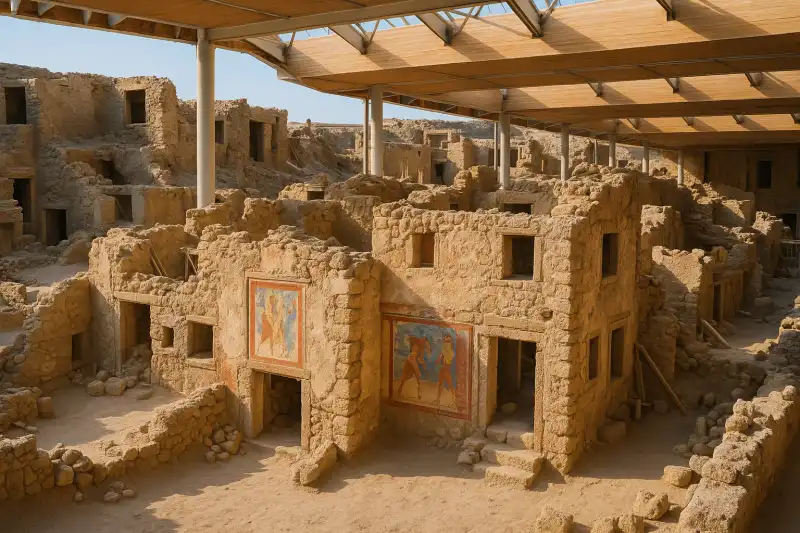
Minoan / CycladicExplore Akrotiri, the Bronze Age Minoan city buried under volcanic ash on Santorini around 1613 BCE ...
Ancient Akrotiri (Santorini)
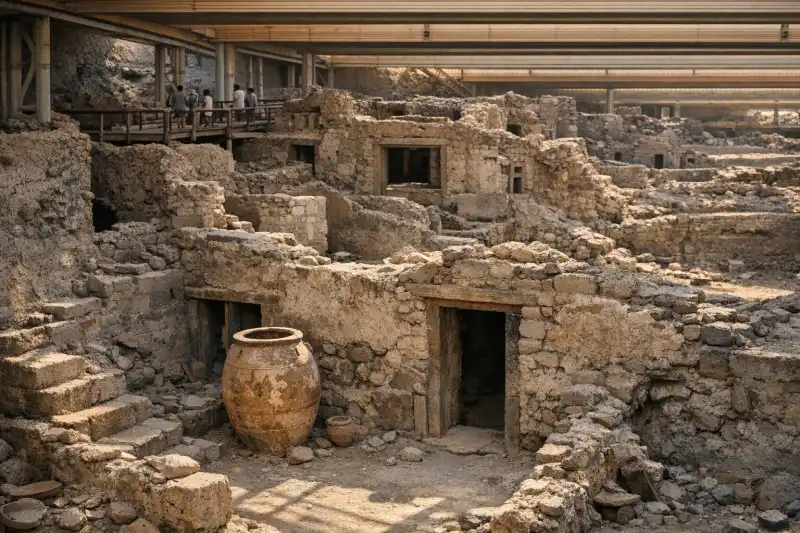
Explore Ancient Akrotiri, the breathtaking Bronze Age settlement preserved in volcanic ash on Santor...
Acropolis Travel Guide 2026: Parthenon, Tickets, and Best Time
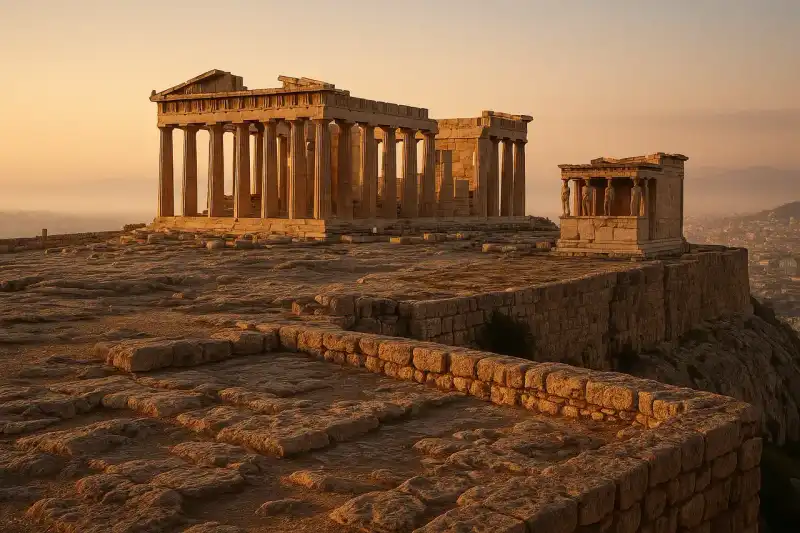
Ancient GreecePlan an efficient Acropolis visit with practical ticket timing, key monuments, and museum pairing ti...