Quick Info
At a glance
The Acropolis is the single most important archaeological site in Athens and one of the defining landmarks of Western civilization. Rising 150 meters above the modern city on a flat-topped limestone outcrop, it concentrates over two thousand years of religious, political, and architectural history into a site you can walk in under three hours. For travelers interested in the ancient world, this is bedrock - the place where classical Greek ambitions took physical form and where the visible remains still justify the reputation.
Why It Matters
The Acropolis is not just another ruin on a hill. It represents the concentrated output of Athens at its peak - the decades after the Persian Wars when the city had wealth, confidence, and a deliberate program to build monuments that would outlast everything else. The Parthenon alone influenced two millennia of architecture across Europe, the Americas, and beyond. Standing on the rock, you are looking at the template for how Western cultures have built their most important civic and religious structures ever since.
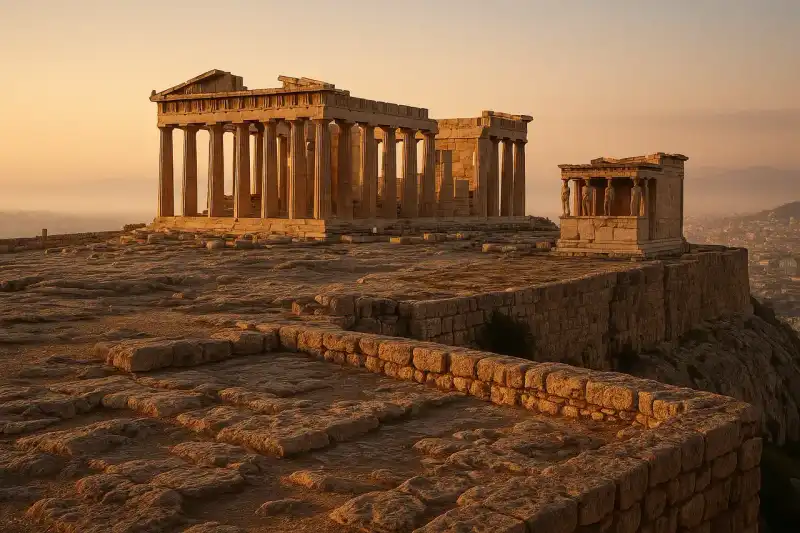
Beyond symbolism, the Acropolis delivers something practical: density. Unlike sprawling archaeological parks where you walk kilometers between scattered foundations, nearly everything here sits within a few hundred meters. The Parthenon, the Erechtheion, the Propylaea, and the Temple of Athena Nike are all visible from a single vantage point. That compression makes the site unusually readable, even for visitors without deep background in Greek history.
Historical Context
The hilltop was sacred long before the classical buildings went up. Mycenaean-era fortification walls dating to the 13th century BCE still survive in sections, and the site served as both citadel and sanctuary during Athens’ early centuries. The first major stone temples appeared in the 6th century BCE under the Peisistratid tyrants, but the Persians destroyed nearly everything when they sacked Athens in 480 BCE.
What visitors see today is largely the product of the Periclean building program, launched around 447 BCE. Pericles redirected funds from the Delian League - an alliance treasury meant to defend against Persia - into a massive construction campaign. The architect Iktinos and the sculptor Phidias oversaw the Parthenon’s construction, completing the main structure by 432 BCE. The Propylaea gateway, the Temple of Athena Nike, and the Erechtheion followed within the next two decades.
The buildings survived relatively intact for centuries, serving successively as a Christian church complex, a mosque under Ottoman rule, and a Venetian ammunition dump - a role that ended catastrophically in 1687 when a mortar round detonated the powder stored inside the Parthenon, blowing out its center. The damage from that single explosion is the primary reason the Parthenon looks the way it does today. Ongoing restoration work, which has continued in phases since the 1970s, aims to stabilize the structures using original materials where possible.
What to Prioritize Onsite
The Parthenon
This is the centerpiece. Even in its damaged state, the scale and proportions are immediately striking. Look for the subtle optical refinements - the columns bulge slightly at the center (entasis) and lean inward, and the stylobate curves upward - all designed to counteract visual distortion at this scale. You cannot enter the building, but circling it gives you different angles on the surviving sculpture and the ongoing restoration scaffolding.
The Propylaea
The monumental gateway at the western approach is where most visitors enter the summit. It was designed by the architect Mnesicles and originally included a picture gallery (pinakotheke) in its north wing. The scale of the marble ceiling beams here was a genuine engineering achievement for the 5th century BCE.
The Erechtheion
The asymmetrical temple on the north side houses the famous Caryatid porch - six female figures serving as structural columns. The ones on display are replicas; five originals are in the Acropolis Museum and one is in the British Museum. The building’s irregular plan reflects its role as a multi-cult sanctuary covering several sacred spots, including the supposed mark of Poseidon’s trident.
Temple of Athena Nike
The small Ionic temple perched on the southwest bastion is easy to overlook but worth a pause. Its frieze depicted battle scenes, and the site offers one of the best views toward the Saronic Gulf.
The Acropolis Museum
Technically not on the rock itself, the museum at the base of the south slope is essential context. The top-floor Parthenon Gallery aligns with the temple’s orientation and displays the surviving metopes, frieze sections, and pediment sculptures at their original scale. Budget at least 90 minutes here, ideally before or after the hilltop visit rather than trying to squeeze both into one rushed session.
Practical Visit Strategy
Timing
Choose an available early or late entry slot if you want to avoid the midday heat, and check the operator’s current opening hours and visitor notices before setting your day’s schedule. The exposed rock offers little shade; allow a break between the hilltop visit and the museum rather than treating them as one continuous stop. Do not assume winter admission is discounted: check the current ticket category and eligibility when booking.
Book the Acropolis and Museum Separately
For the archaeological site: use the official Hellenic Heritage Acropolis ticket page. It specifies timed admission with a single entry on your selected date and time. Choose that slot before arranging the rest of your day, and read the current change and cancellation terms before paying. Bring your ticket digitally or printed; reduced or free admission requires valid identification or eligibility documents.
For the Acropolis Museum: book a separate museum ticket. The museum’s official visitor page explicitly says its ticket is independent from the Acropolis and other archaeological sites, and links to its own e-ticketing service. A visit to the Parthenon on the hill does not by itself include the museum below it.
For a guided tour or a wider Athens route: check whether admission is included, which attractions it covers, and how the meeting time relates to the site’s entry slot. Do not assume a tour title or a multi-attraction package includes both the hill and museum. If adding the Ancient Agora of Athens, check its admission separately rather than planning around an assumed five-day Acropolis pass. Direct official admission is the simpler alternative if you do not want a guide.
Official ticket and museum references checked 14 September 2026. This check covers the booking guidance above, not live ticket availability or every visitor detail in this guide.
What to Bring
Wear shoes with solid grip. The marble and limestone surfaces are polished smooth by millions of visitors and become genuinely slippery, especially when wet. Bring at least a liter of water, sunscreen, and a hat. There is no drinking water available on the summit. A small pair of binoculars helps for examining upper-level sculpture detail.
Getting There
The Acropoli metro station (Line 2) drops you within a five-minute walk of the main entrance. The south slope entrance via the Acropolis Museum is less crowded than the main west entrance. Both routes involve steep uphill walking on uneven stone - allow 15 to 20 minutes from street level to the summit.
Route Pairing and Nearby Sites
Athens alone can fill several days of archaeological visiting. The Ancient Agora of Athens sits directly below the Acropolis’ north slope and pairs naturally - you can walk between them in ten minutes. The Agora’s Stoa of Attalos houses an excellent small museum, and the Temple of Hephaestus there is the best-preserved Greek temple in existence.
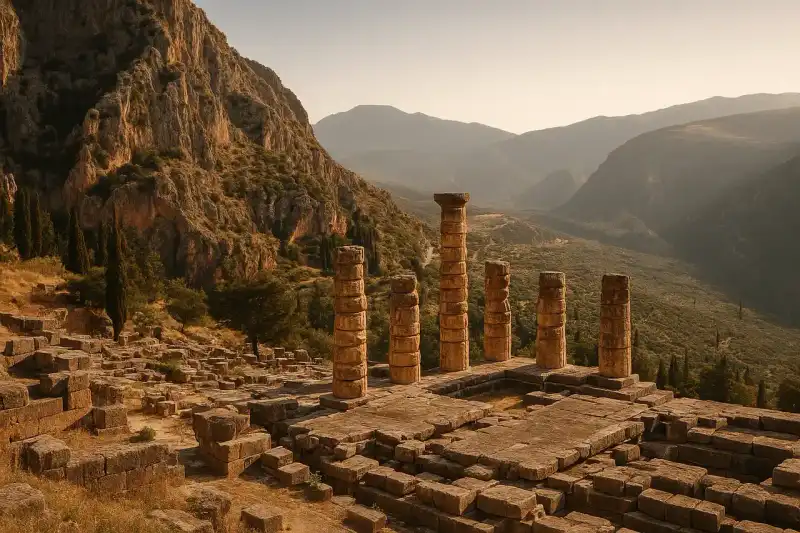
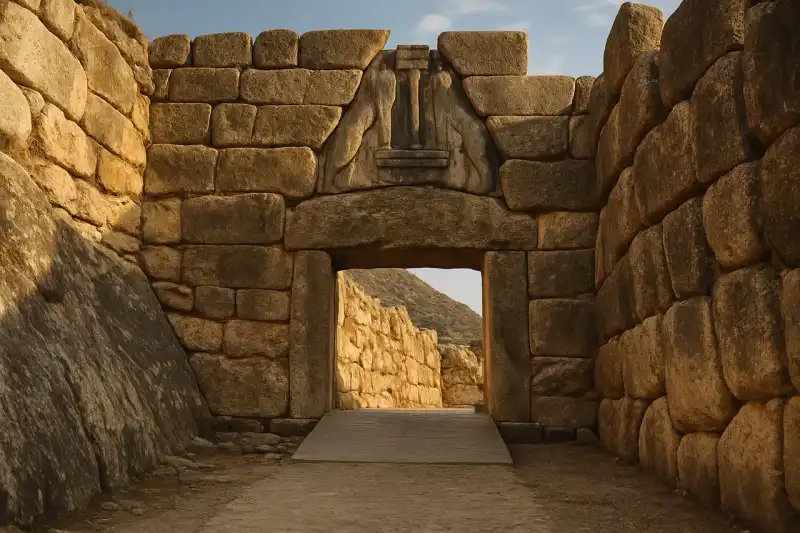
Beyond Athens, the strongest pairings for travelers focused on classical and Bronze Age Greece are Delphi (two and a half hours northwest by car or bus) and Mycenae (roughly two hours to the southwest in the Peloponnese). Delphi provides the religious counterpart to Athens’ civic monuments, while Mycenae takes you back to the Bronze Age civilization that preceded classical Greece by nearly a millennium. Both are feasible as day trips from Athens, though overnight stays allow more thorough visits.
Final Take
The Acropolis earns its reputation. The site is compact enough to visit efficiently, significant enough to reward close attention, and photogenic enough that even casual visitors walk away with a strong impression. Pair it with the Acropolis Museum, arrive early or late, and give it the full morning or afternoon it deserves rather than racing through in an hour. This is the anchor for any serious trip through Greece’s ancient world.
Quick Facts
| Attribute | Details |
|---|---|
| Location | Athens, Attica, Greece |
| Country | Greece |
| Region | Attica |
| Civilization | Ancient Greece |
| Historical Period | 5th century BCE (Periclean building program) |
| Established | c. 447 BCE (Parthenon construction began) |
| UNESCO Status | World Heritage Site (1987) |
| Elevation | ~150 m above sea level |
| Coordinates | 37.9715, 23.7265 |
Guided tours: worth it?
You can visit Acropolis independently, but a guide can help connect the most important objects to the wider ancient landscape instead of turning the visit into a long label-reading session.
Best for
- First-time visitors who want context, not just photos
- Trips where tickets, circuits, or timed entry can shape the day
- Museum-plus-site days where the collection needs context
- Short visits where a planned route saves time
When to go self-guided
Go independently if you prefer setting your own pace, reading as you go, and checking official hours or ticket rules directly before you arrive.
What I’d avoid
Skip paid tours that bundle unrelated stops you do not actually want. The best option should either save meaningful planning time or add historical context you would miss on your own.
Acropolis and Parthenon Guided Walking Tour
Useful when: historical context matters
Skip-the-line guided route through the Acropolis with focused historical context.
Some tour links are affiliate links, which may earn Ancient Travel a small commission at no extra cost to you. I try to surface options that make practical sense for the site—not just anything bookable.
Frequently Asked Questions
How long should I plan for the Acropolis?
Most travelers need 2 to 3 hours for the site itself, plus 1.5 to 2 hours if adding the Acropolis Museum.
What is the best time to visit the Acropolis?
Early morning and late afternoon are best for lighter crowds, cooler conditions, and better photo light.
Does an Acropolis ticket include the Acropolis Museum?
No. The Acropolis Museum requires a separate ticket from the Acropolis archaeological site. Book the site's selected date and time through Hellenic Heritage, and check the museum's own visitor page for museum admission. If buying a tour, confirm exactly which admissions are included before paying.
Nearby Ancient Sites
The Complete Acropolis Athens Travel Guide: Temples
Ancient GreecePlan the perfect visit to the Acropolis of Athens with our 2026 guide. Discover the Parthenon, best ...
Delphi: The Navel of the Ancient World and Greece's Most
Ancient GreeceExplore Delphi, Greece's most mystical archaeological site. Walk the Sacred Way, discover the Oracle...
Mycenae, Greece: The Citadel of Legend and Home of Agamemnon
Mycenaean GreeceExplore Mycenae, the legendary citadel of King Agamemnon and one of Greece's most important archaeol...