Quick Info
At a glance
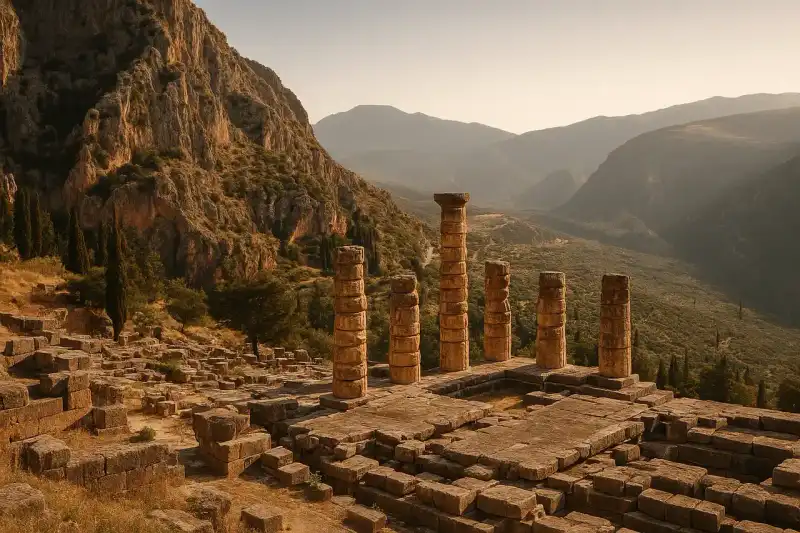
The first thing you notice at Delphi is not the ruins. It is the drop. The sanctuary sits on a narrow terrace carved into the southwestern flank of Mount Parnassus, with the Pleistos Valley plunging away below in a vast sweep of silver-green olive groves that runs all the way to the Gulf of Corinth. The scale is disorienting — you are standing at 550 meters above sea level, hemmed in by sheer limestone cliffs above and a thousand-foot fall below, and the air has a thin, bright clarity that makes every column and carved stone stand out with unusual precision. On mornings when clouds roll through the valley, the ruins seem to float above a white sea, and you begin to understand why the ancient Greeks believed this place was the center of the world.
For over a thousand years, Delphi was the most important religious site in the Greek world. Kings, generals, and ordinary citizens traveled here to consult the Oracle — a priestess called the Pythia who sat on a tripod over a geological fissure, breathed vapors rising from the earth, and delivered prophecies on behalf of the god Apollo. Her pronouncements, famously ambiguous, shaped wars, founded colonies, and altered the fates of empires. The city-states competed to build the most lavish treasuries along the Sacred Way, and the Pythian Games rivaled Olympia as a showcase of athletic and artistic excellence. What survives today is a UNESCO World Heritage Site of extraordinary power: a steep climb through monuments that trace Greek civilization from its archaic origins to its Roman twilight, crowned by a museum housing some of the finest sculpture ever produced in the ancient world.
Delphi is not a site for passive sightseeing. The Sacred Way climbs steeply, and the available monument terraces demand physical effort. Budget a full day, wear proper shoes, and bring water. The rewards are commensurate with the effort.
Current Access: Check Before You Go
Access guidance checked against the official Ministry notice on 11 October 2026: the current Delphi access notice says the Sanctuary of Athena Pronaia is closed because pedestrian access restrictions have not been lifted. It also says the Stadium remains closed while emergency works continue as part of the rockfall prevention and control project. Do not plan an ascent to the Stadium or a visit to Athena Pronaia/Tholos as part of your day.
Plan the Apollo sanctuary and museum sequence around your admission instructions and local conditions; both remain subject to local restrictions. The historical descriptions below are not an accessible route, and no reopening date is promised here. This 11 October check corrects visitor access guidance only; other existing visitor facts in this guide have not been comprehensively reverified.
Historical Context
Delphi’s religious significance predates the classical period by centuries. Archaeological evidence suggests cult activity on the site as early as the Mycenaean period (14th-11th century BCE), when the sanctuary may have been dedicated to an earth goddess before Apollo displaced her. According to myth, the young god slew Python, a serpentine guardian of the site, and claimed the oracle for himself — a founding narrative that the priestess’s title, Pythia, preserved for posterity.
By the 8th century BCE, the sanctuary had become a major pan-Hellenic institution. The Oracle’s influence extended far beyond religious matters: the Pythia was consulted on the founding of colonies (including Syracuse and Cyrene), the outcomes of military campaigns, and the legitimacy of political claims. Delphi’s neutrality — it belonged to no single city-state but to the Amphictyonic League, a council of surrounding peoples — gave it credibility as an impartial arbiter. The wealth that flowed in from grateful consultants funded an extraordinary building program.
The 6th through 4th centuries BCE marked Delphi’s peak. The Sacred Wars, fought over control of the sanctuary and its revenues, drew in Athens, Sparta, Thebes, and eventually Philip II of Macedon, whose intervention in the Third Sacred War gave him a foothold in central Greece that his son Alexander would exploit. The Pythian Games, reorganized in 582 BCE, became one of the four great athletic festivals of the Greek world, with competitions in music, poetry, and drama alongside the athletic events.
Roman conquest brought new patrons but also new threats. Nero reportedly carried off 500 bronze statues in a single visit. The emperor Hadrian, by contrast, was a benefactor, and the sanctuary continued to function into the 4th century CE. The Oracle was formally silenced in 393 CE when the Christian emperor Theodosius I closed all pagan sanctuaries. The site was gradually abandoned, and a village called Kastri grew up over the ruins. Modern archaeological excavation began in 1892 when the French School at Athens relocated the village and began the systematic work that continues today.
What to See
The Sacred Way and Treasury of the Athenians
The Sacred Way begins at the entrance to the archaeological site and climbs steeply toward the Temple of Apollo, following the same path that ancient pilgrims walked for centuries. Originally lined with thousands of bronze statues, marble monuments, and votive offerings from city-states and wealthy individuals, the route today preserves their stone foundations and a few reconstructed elements that hint at the staggering density of the original display. The most significant surviving structure along the way is the Treasury of the Athenians, fully reconstructed from its original marble blocks in the early 20th century. Built after the Battle of Marathon in 490 BCE, it served as both a storehouse for Athenian offerings and a statement of civic pride. Its metopes depict the labors of Heracles and the exploits of Theseus. Pause here — the treasury sits on a bend in the path and offers the first good view back down the valley, a natural rest point before the steeper climb ahead.
The Temple of Apollo
The temple is the spiritual and physical centerpiece of the site, its six surviving Doric columns standing on a massive terrace that dominates the middle of the sanctuary. The current ruins date from the 4th century BCE, the latest of several temples built on the same spot after earlier versions were destroyed by fire and earthquake. This was the building that housed the adyton, the inner chamber where the Pythia delivered her prophecies from a tripod positioned over the geological fissure. Modern geological research has confirmed the presence of fault lines beneath the temple and identified ethylene gas as a plausible agent for the trance states described in ancient sources. The temple’s exterior bore two of the most famous inscriptions in Greek philosophy — “Know Thyself” and “Nothing in Excess” — maxims that transformed the building from a mere oracular site into a center of ethical instruction. Little stands above foundation level today, but the terrace itself is vast, and the position commands the entire sanctuary below.
The Theater
Carved into the hillside above the Temple of Apollo, the theater seats approximately 5,000 spectators and survives in excellent condition, with most of its stone seating rows intact. It hosted the musical and dramatic competitions of the Pythian Games — choral performances, solo instrumental contests, and poetry recitals that were considered as prestigious as the athletic events. The acoustics remain impressive: a coin dropped on the orchestra floor is audible in the upper rows. From the top tier, you get the best panoramic view of the entire sanctuary, with the temple terrace, the Sacred Way, the valley, and the Gulf of Corinth all spread before you. The climb is steep but short — allow 10 minutes from the temple.
The Stadium
The highest part of the archaeological complex, the stadium is a remarkably well-preserved ancient Greek athletic venue, with stone seating for roughly 6,500 spectators and original starting blocks carved into the track at both ends. The Pythian Games’ footraces, wrestling, and boxing matches were held here. This is a historical description, not a current walking instruction: the official notice checked on 11 October 2026 says the Stadium remains closed for emergency rockfall-prevention works. Do not plan a stadium ascent.
The Tholos of Athena Pronaia
In the separate Sanctuary of Athena Pronaia, the Tholos is a circular temple whose three reconstructed Doric columns have become Delphi’s unofficial icon. Built around 380 BCE, the original structure had 20 exterior columns and 10 interior Corinthian columns, creating a layered architectural effect of remarkable sophistication. Its exact function remains debated: it may have been a treasury, a heroon (hero shrine), or a structure with ritual significance connected to Athena, protector of the sanctuary approach. The Sanctuary also contains the remains of two earlier temples and a gymnasium. This is a historical description, not an accessible route: the current official notice says Athena Pronaia is closed while pedestrian access restrictions remain in place.
Delphi Archaeological Museum
The museum, included in the site ticket, is not an afterthought. It houses the Charioteer of Delphi, one of the greatest surviving Greek bronzes — a life-size figure from around 475 BCE whose serene expression, inlaid glass eyes, and flowing robes represent the Early Classical style at its most refined. The original Omphalos stone, the carved “navel of the world” that once marked the sacred center of the sanctuary, is here as well. Other highlights include the Sphinx of Naxos, a massive marble creature that once crowned a 10-meter column; the twin kouroi Kleobis and Biton; and fragments of the Siphnian Treasury frieze that rank among the finest Archaic sculpture in existence. Plan at least 90 minutes for the museum and arrange the outdoor visit around the selected museum admission time and current access instructions.
Timing and Seasons
Spring (April through June) is the ideal window. Temperatures at Delphi’s elevation are comfortable — 15-25°C — wildflowers carpet the hillsides, and the olive groves below are at their most luminous green. Crowds are present but manageable, especially on weekdays. Autumn (September through October) is nearly as good, with clear skies, warm days, cooler evenings, and noticeably thinner crowds after the summer peak.
Summer (July and August) brings heat reaching 30-35°C, though Delphi’s 550-meter elevation keeps it cooler than Athens. Tour bus traffic peaks between 10:00 AM and 2:00 PM, making early morning and late afternoon the only comfortable windows for visiting the exposed outdoor site. Winter is atmospheric and almost deserted, with occasional snow on Parnassus and temperatures around 5-10°C, though some facilities have reduced hours and the mountains can be shrouded in cloud for days at a time.
Check the official notice and on-site information before choosing an arrival time or sequence. The Sacred Way faces generally south and catches morning light beautifully, but access conditions and crowd patterns can change. If you are staying overnight in Delphi town, a late-afternoon visit may offer different light and a quieter atmosphere.
Book Delphi Site and Museum Together
Hellenic Heritage currently describes the official Delphi ticket as access to the Archaeological Site and Archaeological Museum of Delphi. Start with the official Hellenic Heritage Delphi page and use its official ticket link rather than relying on an old price table or a reseller’s shorthand.
Booking guidance checked on 12 October 2026: the official ticket store labels the visit “Delphi (Museum)” and requires timed entry, with single entry on the selected date and time. Plan around the date and time on your ticket, then confirm the archaeological site access instructions in the official flow; the combined ticket does not establish a separate outdoor entry slot or unrestricted re-entry. Admission instructions are not a bus departure or guided-tour meeting time. Bring your ticket in digital or printed form. Visitors using reduced or free tickets must show valid ID or supporting documentation; check the current eligibility terms before selecting that rate. This source check covers admission guidance only, not the other transport or historical details below.
If you book a tour, read its inclusions before treating it as a ticket: confirm whether admission is included, whether it covers both the archaeological site and museum, and whether its meeting time, transport, guide, and cancellation terms fit your plan. A tour’s schedule is separate from official admission instructions.
By car from Athens: The drive is approximately 180 km via the E75 highway through Boeotia, taking 2.5 to 3 hours depending on traffic. The route passes through scenic mountain terrain and is straightforward. Parking at the site is free but limited in summer — arrive early to secure a spot in the lots near the entrance.
By bus from Athens: KTEL buses depart from the Liossion (Terminal B) bus station in Athens, with 3-4 departures daily. The journey takes about 3 hours and costs 15-20 euros each way. The bus drops you in the modern village of Delphi, a 10-minute walk from the site entrance. Return buses fill up in the afternoon; book or arrive early.
By organized tour from Athens: Day tours combining transport, guide, and entry typically cost $60-100 per person. They work well for logistics-averse travelers but allow limited time at the site — usually 2 to 3 hours, which feels rushed. For a deeper experience, rent a car or take the bus and stay overnight.
Overnight in Delphi: The modern village sits directly below the archaeological site and offers hotels and pensions at every budget level, many with terrace views over the Pleistos Valley. Staying the night allows you to experience the site at both opening and closing, when the light and atmosphere are at their best. Hotel Acropole and Hotel Varonos are solid mid-range options with strong views.
Practical Tips
- Wear hiking shoes or sturdy sneakers. The Sacred Way is steep, uneven, and paved with ancient stone that becomes slippery when wet. Flip-flops are a bad idea.
- Bring at least a liter of water per person. There is a small canteen near the museum but nothing inside the archaeological site itself.
- Sun protection is essential from May through September — hat, sunscreen, and sunglasses. There is very little shade on the Sacred Way.
- The available site route involves significant elevation gain. For the special-vehicle assistance described in the official notice above, contact the Ephorate of Antiquities of Phocis at least seven days before your visit (efafok@culture.gr; +30 22650 82312). This is a partial tour up to the Temple of Apollo, subject to weather and works, not access to the whole site. The vehicle cannot transport a non-folding wheelchair; confirm arrangements and other access needs before travel.
- Photography is permitted throughout the site and museum (no flash in the museum).
- The modern village of Delphi has several good tavernas. Taverna Vakhos and Epikouros are reliable for traditional Greek food at reasonable prices, and both have terrace seating with valley views.
Suggested Itinerary
Plan the museum visit around your ticket’s selected date and time. Check the current access notice and on-site instructions before deciding whether the outdoor visit fits before or after the museum. Follow the available Apollo sanctuary route at a comfortable pace, including the Sacred Way, Treasury of the Athenians, Temple of Apollo, and Theatre only where they are open and safe to enter.
Allow unhurried time inside the museum. Give the Charioteer, Omphalos, and sculpture galleries enough time to make the indoor collection a real part of the day rather than a rushed add-on.
Finish in the modern village. Lunch and any onward travel can follow the museum visit. Do not add the Stadium or Athena Pronaia/Tholos as a detour unless a current official notice confirms access.
Nearby Sites
Acropolis of Athens is the natural pairing — the political and civic heart of classical Greece compared to Delphi’s religious center. Athens is 2.5-3 hours south by car or bus, and the Acropolis demands at least a half-day of its own.
Mycenae lies about 3 hours south in the Peloponnese, a visit that takes you back a millennium before Delphi’s classical peak to the Bronze Age civilization of Agamemnon. The Lion Gate, Treasury of Atreus, and citadel walls connect the pre-Greek world to the mythology that shaped Delphi’s own stories.
Thermopylae, the narrow pass where Leonidas and his 300 Spartans made their famous stand against the Persians in 480 BCE, is about an hour’s drive east of Delphi. The modern landscape has changed (the sea has retreated), but a monument marks the spot and the drive combines well with a Delphi visit.
Hosios Loukas, a stunning 10th-century Byzantine monastery with gold-ground mosaics rivaling those of Ravenna, sits about 35 km southeast of Delphi. It is easily combined with the drive to or from Athens and adds a medieval layer to a day otherwise rooted in the classical world.
Final Take
Delphi earns its reputation as the most atmospheric archaeological site in Greece. The combination of dramatic mountain setting, mythological weight, and genuinely world-class sculpture in the museum creates an experience that rivals or exceeds the Acropolis — though the two sites are so different in character that comparison feels beside the point. The Acropolis is civic, urban, concentrated. Delphi is spiritual, wild, vertical. Follow the available Apollo sanctuary route with the current access notice in hand, and let the valley setting and museum collection carry the day.
Come early, stay late if you can, and give Delphi the full day it deserves. This is not a site to check off a list. It is a place to inhabit.
Discover More Ancient Wonders
- Acropolis of Athens — The political heart of classical Greece and Athens’ crowning monument
- Mycenae — The Bronze Age fortress of Agamemnon in the Peloponnese
- Knossos — The Minoan palace that predates classical Greece by over a millennium
- Ephesus — The best-preserved Greco-Roman city in the Mediterranean
- Explore our complete Greece Ancient Sites Guide for more archaeological destinations
Quick Facts
| Attribute | Details |
|---|---|
| Location | Phocis, central Greece; Mount Parnassus slopes |
| Country | Greece |
| Region | Phocis |
| Civilization | Ancient Greece |
| Historical Period | c. 8th-4th century BCE |
| Established | c. 800 BCE (oracle sanctuary) |
| UNESCO Status | World Heritage Site (1987) |
| Elevation | Site at 550m; town at 480m above sea level |
| Distance from Athens | 180 km (112 miles); 2.5-3 hours |
| Admission | Check the official Hellenic Heritage Delphi page and ticket flow for current terms |
| Best Time | April-June, September-October |
| Coordinates | 38.4824, 22.5011 |
Guided tours: worth it?
Self-guided works here, but a guide can add real value if you want the ruins explained as a living place rather than just a sequence of monuments.
Best for
- First-time visitors who want context, not just photos
- Short visits where a planned route saves time
When to go self-guided
Go independently if you prefer setting your own pace, reading as you go, and checking official hours or ticket rules directly before you arrive.
What I’d avoid
Skip paid tours that bundle unrelated stops you do not actually want. The best option should either save meaningful planning time or add historical context you would miss on your own.
Delphi Skip-The-Line Private Tour with Licensed Guide & Admission
Useful when: you want flexible timing or a private guide
Private guided exploration of the Temple of Apollo, ancient theater, and Delphi Museum with skip-the-line access and expert archaeologist guide
Delphi Ancient Footpath Hiking Tour
Useful when: you want to compare guided formats before deciding
Scenic hike through the ancient footpaths of Delphi with views of the olive groves and sanctuary ruins below
Some tour links are affiliate links, which may earn Ancient Travel a small commission at no extra cost to you. I try to surface options that make practical sense for the site—not just anything bookable.
Frequently Asked Questions
What was the Oracle of Delphi?
The Oracle was a priestess called the Pythia who entered a trance-like state (possibly induced by volcanic gases rising from a fissure beneath the temple) and delivered prophecies on behalf of the god Apollo. She was consulted by city-states, kings, and individuals on matters from military campaigns to personal dilemmas. Her pronouncements, famously ambiguous, shaped events across the ancient Mediterranean for centuries.
How do you get to Delphi from Athens?
Delphi is approximately 180 km from Athens, about 2.5-3 hours by car via the E75 highway. KTEL buses run from Athens' Liossion terminal (gate A) with 3-4 departures daily, taking about 3 hours. Most visitors do a long day trip from Athens or stay overnight in the modern village of Delphi adjacent to the site.
How long does it take to visit Delphi?
Allow a full day to move at a comfortable pace through the available Apollo sanctuary route, including the Sacred Way, Temple of Apollo, and Theatre, and to visit the Delphi Archaeological Museum. Local restrictions can affect individual areas, so confirm current access before setting your sequence.
What is the Tholos at Delphi?
The Tholos is a circular marble temple in the Sanctuary of Athena Pronaia, built around 380 BCE; its exact function remains uncertain and may have been a treasury or heroon. This is a historical description, not a current route: the official Ministry access notice says the Sanctuary of Athena Pronaia is closed while pedestrian access restrictions remain in place. Do not plan it as a routine stop; check the official notice before travel.
Does a Delphi ticket cover the archaeological museum?
Hellenic Heritage currently describes its Delphi ticket as access to the Archaeological Site and Archaeological Museum of Delphi. The official ticket store labels the visit Delphi (Museum) and requires timed entry on the selected date and time. Use its current instructions to plan the museum visit and confirm archaeological site access; do not assume that a third-party tour includes admission, both venues, or the same date/time requirements. Check any reduced or free-admission eligibility and documentation in the official flow before selecting that rate.
Is Delphi worth visiting?
Absolutely. The combination of stunning mountain setting, well-preserved ruins, excellent museum, and mythological significance makes Delphi one of Greece's most rewarding archaeological sites. Coming here, you understand why the ancient world considered it the 'navel of the earth'—a place of unique spiritual power. On par with the Acropolis for overall experience.
Nearby Ancient Sites
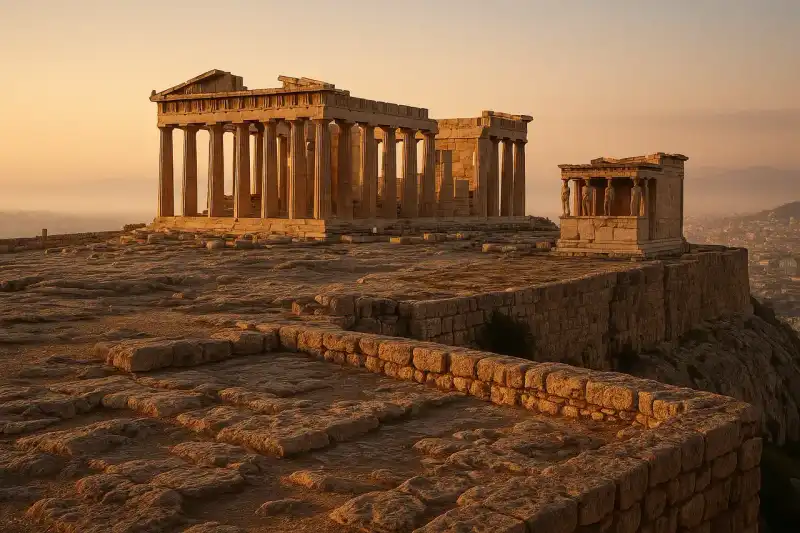
The Complete Acropolis Athens Travel Guide: Temples
Ancient GreecePlan the perfect visit to the Acropolis of Athens with our 2026 guide. Discover the Parthenon, best ...
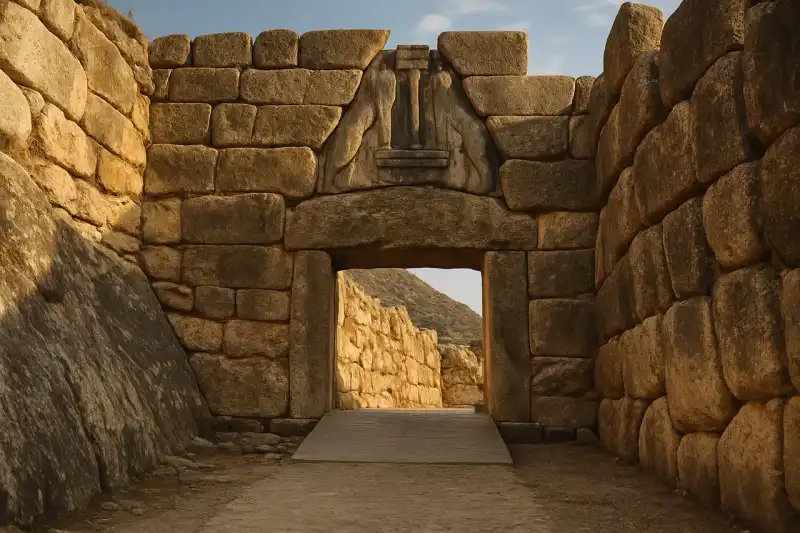
Mycenae, Greece: The Citadel of Legend and Home of Agamemnon
Mycenaean GreeceExplore Mycenae, the legendary citadel of King Agamemnon and one of Greece's most important archaeol...
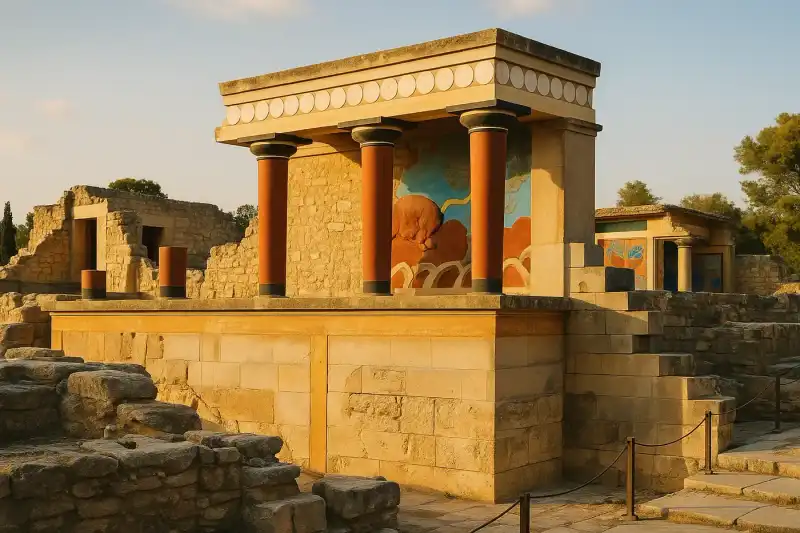
Knossos: Europe's Oldest Palace and the Birthplace of
MinoanExplore the legendary Palace of Knossos, center of Minoan civilization. Discover the Labyrinth myth,...