Quick route summary
This 5-day route starts and ends in Athens, with overnights in Athens, Delphi, and Nafplio. It begins with the Acropolis of Athens, the Ancient Agora of Athens, and Kerameikos, then heads northwest to Delphi. From there, the route crosses into the Peloponnese for Ancient Corinth, Mycenae, and Epidaurus before returning to Athens.
The pace is full, but it is not trying to turn five days into the whole Greek mainland. You will skip Olympia, Sparta, Messene, Bassae, and most of Attica. That is the right call. This itinerary works because it follows a clean historical arc: Athens’ civic and sacred center, Delphi’s pan-Greek sanctuary, and the Peloponnese world of citadels, healing cults, and old routes.
Who this itinerary is for
This itinerary is for travelers who want a first ancient Greece route with more range than Athens alone. It works well if you can handle early starts, a few driving days, and some hotel movement. It is especially good for people who want the Acropolis, but also want Delphi, Mycenae, and Epidaurus to feel connected rather than tacked on.
It is not ideal if you want a slow museum-heavy Athens stay, island time, or a no-driving vacation with loose mornings. You can do parts of the route by bus and guided tours, but the full version is much easier with a rental car, private driver, or carefully arranged transfers.
Route at a glance
- Day 1: Overnight in Athens. Walk the Acropolis, Ancient Agora, and Kerameikos, using central Athens as your base.
- Day 2: Overnight in Delphi. Travel from Athens to Delphi and visit the sanctuary, ideally outside the busiest afternoon rush.
- Day 3: Overnight in Nafplio. Revisit Delphi if needed, then transfer toward the Peloponnese, with Orchomenos as an optional historical stop.
- Day 4: Overnight in Nafplio. Visit Ancient Corinth and Mycenae by car or driver.
- Day 5: Overnight in Athens. Visit Epidaurus from Nafplio, then return to Athens.
Practical logistics before you go
The best base pattern is one night in Athens at the start, one night in Delphi, two nights in Nafplio, and one final night in Athens. If your flight schedule allows, you can skip the final Athens overnight and go straight to the airport after Epidaurus, but that makes the last day less forgiving.
A rental car is the simplest tool for Days 2 through 5. Greek intercity buses can work, especially between Athens and Delphi or Athens and Nafplio, but linking Delphi to Nafplio without backtracking takes more planning. If you do not want to drive, use a guided Delphi trip, then a separate Peloponnese driver or tour based from Nafplio.
Athens rewards early starts. Book timed Acropolis entry if required, check current ticket rules, and assume heat and crowds will shape your day. Delphi and the Peloponnese sites also have exposed walking. Bring water, real shoes, and a willingness to cut one minor stop if the day starts sliding.
Guided tours make sense in three places: the Acropolis if you want the building program explained clearly, Delphi if you want the oracle and sanctuary politics to make sense, and the Mycenae or Epidaurus day if you prefer not to handle Peloponnese driving. A focused Acropolis and Ancient Athens guided tour can be useful on Day 1 if you want context without turning the day into a lecture.
Day 1: Acropolis, Agora, and Kerameikos
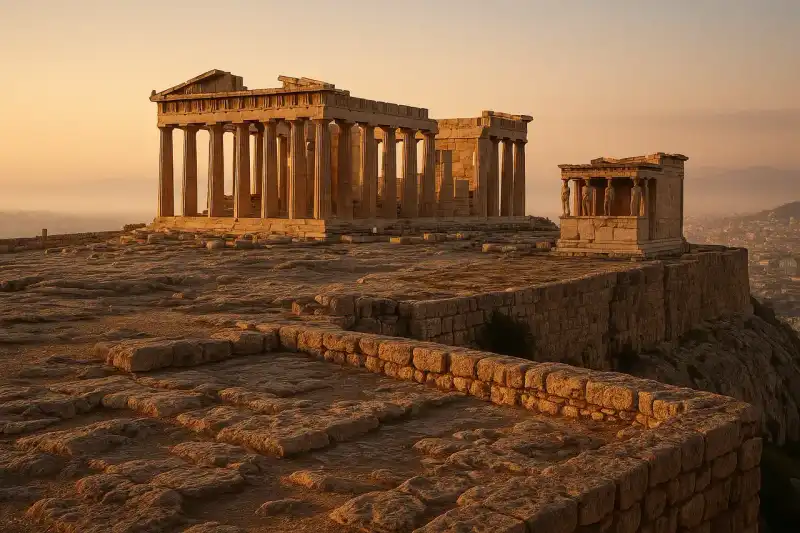
Start early at the Acropolis of Athens. The Parthenon gets most of the attention, but the whole rock matters: the Propylaia, Erechtheion, Temple of Athena Nike, slopes, and city views. After the Persian destruction of Athens in 480 BCE, the 5th-century BCE rebuilding program turned the hill into a statement about memory, money, piety, and power. The stones are quiet now, but the political ambition here was not subtle.
Continue downhill to the Ancient Agora of Athens. This is where Athens becomes a city rather than a postcard. The Agora held stoas, altars, courts, monuments, shops, and routes used by citizens who were doing politics, business, religion, and daily errands in the same public space. Give it time. The Temple of Hephaestus is impressive, but the more interesting thing is how many kinds of civic life crowded into one area.
Finish at Kerameikos, the cemetery and gateway zone northwest of the Agora. The Dipylon Gate and Sacred Gate connected Athens to roads leading outward, including the Sacred Way toward Eleusis. Grave reliefs here bring the city back down from famous names to families, status, mourning, and memory. Athens was not only philosophers and generals. It was also potters, relatives, travelers, and people trying to be remembered properly.
Do not add a major museum unless you have unusual stamina. This is already a dense walking day. Eat nearby, keep the evening simple, and prepare for the transfer to Delphi.
Day 2: Athens to Delphi
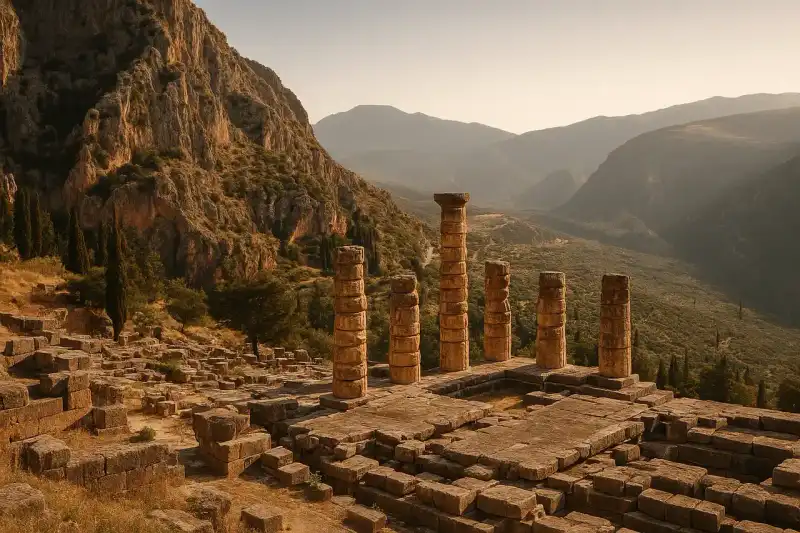
Leave Athens for Delphi as early as you reasonably can. The drive usually takes around two and a half to three hours, depending on traffic and stops. A bus or guided trip works too, but an overnight in Delphi gives the site more breathing room than a hard day trip from Athens.
Delphi is famous for the oracle of Apollo, but do not treat it as a mystical ruin floating outside politics. City-states came here with questions, dedications, treasuries, rivalries, and carefully staged displays of wealth. The Sacred Way was a route through memory and competition as much as religion. The sanctuary made Greek communities look at one another while claiming they were looking toward Apollo.
If you arrive by midday, visit the archaeological site first and save the museum for afterward. The Temple of Apollo, theater, treasuries, and stadium are more legible when you understand the slope. The landscape does real work here. The mountains, terraces, and views help explain why Delphi felt like a place where human decision-making needed divine interpretation.
A Delphi day trip from Athens can work if you are not overnighting, but for this itinerary the overnight is better. Stay in Delphi or nearby Arachova, keep dinner simple, and do not schedule a late-night drive.
Day 3: Delphi morning and transfer to Nafplio
Use the morning to finish Delphi properly. If you skipped the museum yesterday, go now. The Charioteer is the famous object, but the smaller dedications and architectural fragments are just as useful for understanding the sanctuary as a competitive Greek display space. Delphi was not only about receiving answers. It was about being seen asking important questions in a place everyone respected.
Then begin the long transfer toward Nafplio. This is the awkward day in the route, and it is worth being honest about it. Delphi to Nafplio is not a short hop. With a rental car, you can make it work as a scenic transfer day. Without one, you will need buses, a private transfer, or a route that backtracks through Athens.
If you want one historical stop and have a car, consider Orchomenos in Boeotia. It adds a Mycenaean thread before you reach Mycenae itself, with a tholos tomb and deep regional history. Do not add it if you are already running late. The goal is to arrive in Nafplio with enough energy to enjoy the Peloponnese tomorrow.
Nafplio is the right base for the next two nights. It keeps Mycenae and Epidaurus manageable and gives you a softer landing than trying to commute from Athens. Check in, park if needed, and stop. Tomorrow is the big Peloponnese day.
Day 4: Ancient Corinth and Mycenae
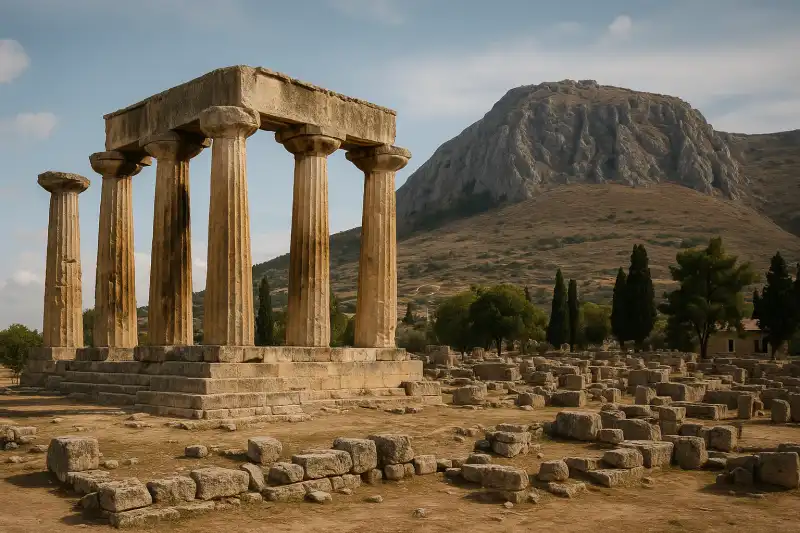
Start with Ancient Corinth if your route from Nafplio makes sense, or swap the order if your driver recommends it. Corinth sat near the narrow land bridge between mainland Greece and the Peloponnese, which made it wealthy, strategic, and repeatedly contested. The site is not only a set of ruins under Acrocorinth. It is a reminder that geography can make a city rich and vulnerable at the same time.
Give the museum and the Temple of Apollo enough time, but do not try to turn Corinth into a full-day visit on this route. The value today comes from pairing it with Mycenae, where the timeline jumps back into the Late Bronze Age. This is where Greek history starts to feel older, heavier, and less like the Classical Athens most travelers know.
At Mycenae, walk through the Lion Gate and let the masonry do its work. The citadel was a palace center in the second millennium BCE, long before the Classical city-states. Shaft graves, tholos tombs, fortification walls, and the view over the Argive plain all point to a world of elites, storage, warfare, trade, and burial display. Later Greeks tied Mycenae to Agamemnon and the Trojan War cycle, but the archaeology is powerful even before the myths arrive.
A Mycenae and Epidaurus day tour from Nafplio can be useful if you do not want to drive, though this route gives Epidaurus its own morning. Return to Nafplio and do not add Argos unless you started early and still have real energy. This is a good day for people who like their ruins political, strategic, and a little severe.
Day 5: Epidaurus and return to Athens
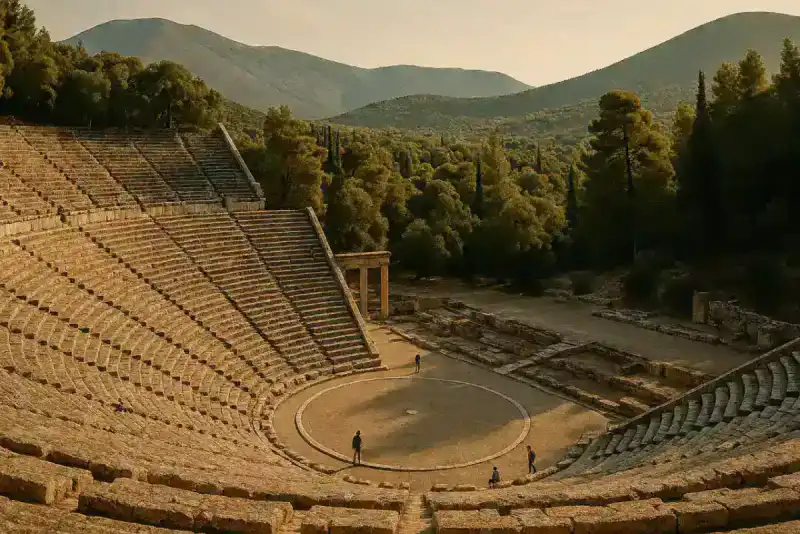
Visit Epidaurus in the morning from Nafplio. The theater is famous for its acoustics, but do not let that one demonstration flatten the site. Epidaurus was a sanctuary of Asclepius, a healing center where visitors came with illness, hope, offerings, and dreams. The theater belonged to a larger sacred and therapeutic landscape, not an isolated performance venue.
Give time to the sanctuary remains and museum, not just the theater seats. Ancient healing here involved ritual, sleep, interpretation, dedications, and the authority of Asclepius. It sits nicely after Delphi because both sites show Greek religion as something people traveled for, invested in, and used when ordinary decision-making or ordinary medicine felt insufficient.
From Epidaurus, return to Athens. If your flight is late, you can continue toward the airport, but build in more slack than you think you need. Peloponnese roads, rental car returns, and Athens traffic can turn a neat plan into a tight one.
Do not add Sounion or Eleusis today. They are excellent, but they belong to an Attica itinerary or an extra day. End the route cleanly: Athens as the civic opening, Delphi as the pan-Greek oracle, Corinth as the strategic hinge, Mycenae as the Bronze Age citadel, and Epidaurus as the healing sanctuary.
The historical thread: city-states, sanctuaries, and old roads
This route works because it moves through different kinds of ancient Greek power. Athens gives you civic space and sacred architecture in close contact: the Acropolis above, the Agora below, and Kerameikos at the edge where roads and burials shaped movement out of the city.
Delphi shifts the scale. It was not just an oracle on a mountain. It was a place where Greek communities brought questions, dedications, rivalries, and public memory into the same sanctuary. The route then crosses into the Peloponnese, where Corinth shows the force of geography and Mycenae reaches back to the Bronze Age world that later Greeks turned into heroic memory.
Epidaurus closes the itinerary with a different kind of travel: the journey for healing. After politics, oracles, trade routes, and citadels, the sanctuary of Asclepius brings the route back to bodies, anxiety, ritual, and hope. That mix is what keeps ancient Greece from feeling like one marble story.
Transportation notes
A rental car is the easiest way to run this route without wasting time. Pick it up when leaving Athens for Delphi, not before Day 1. You do not need a car for central Athens, and parking one there is usually more trouble than help.
If you do not want to drive, combine guided tours and transfers. Athens to Delphi is easy to arrange as a tour or bus route. Delphi to Nafplio is the harder link. You may need to backtrack through Athens, book a private transfer, or restructure the route with Athens as a repeated base.
Nafplio saves time for Mycenae and Epidaurus. Staying there for two nights is more comfortable than forcing every Peloponnese site as a day trip from Athens. It also gives the trip a better rhythm after the long Delphi transfer.
Do not compress this into four days unless you cut Delphi or Epidaurus. Trying to keep every site and remove an overnight will mostly create driving fatigue. The ancient sites are close enough to tempt overpacking and far enough apart to punish it.
Optional add-ons and swaps
If you have one extra Peloponnese day, add Nemea and Argos. Nemea brings athletics, Zeus, and a quieter sanctuary landscape into the route. Argos adds one of Greece’s oldest continuously inhabited cities. To fit them into five days, you would need to cut Corinth or shorten Mycenae, which is not my recommendation.
If you want a more Athens-focused version, swap the Delphi overnight for Eleusis or Sounion. Eleusis adds mystery cult and sacred-road context. Sounion adds the Temple of Poseidon and Attic coastal geography. Either swap makes the route less ambitious and easier logistically.
For a deeper archaeology route, add Ancient Messene with at least one more night. It is too far to bolt onto this 5-day itinerary casually, but it rewards travelers who want urban planning, fortifications, stadium space, and a less crowded Peloponnese site.
For a mountain-temple extension, Bassae or the Temple of Apollo Epicurius at Bassae needs careful planning and extra time. Do not try to squeeze it between Mycenae and Epidaurus.
Shorter and longer itinerary options
For a shorter route, use 3 Days in Ancient Athens and Attica. It keeps one base in Athens and focuses on the Acropolis, Agora, Kerameikos, Eleusis, Sounion, and Thorikos.
For a four-day version of this route, keep Athens, Delphi, Mycenae, and Epidaurus, and cut Ancient Corinth. It is a shame, but it keeps the structure readable.
For a longer mainland Greece route, add Olympia, Ancient Messene, Sparta or Mystras, and another night in Nafplio or the western Peloponnese. That turns this from a focused Athens to Peloponnese itinerary into a wider mainland loop.
Related ancient sites
- Acropolis
- Kerameikos
- Eleusis
- Sounion
- Temple of Poseidon at Sounion
- Nemea
- Argos
- Ancient Messene
- Bassae
- Olympia
FAQ
The most common planning questions for this route are answered below.