Quick Info
At a glance
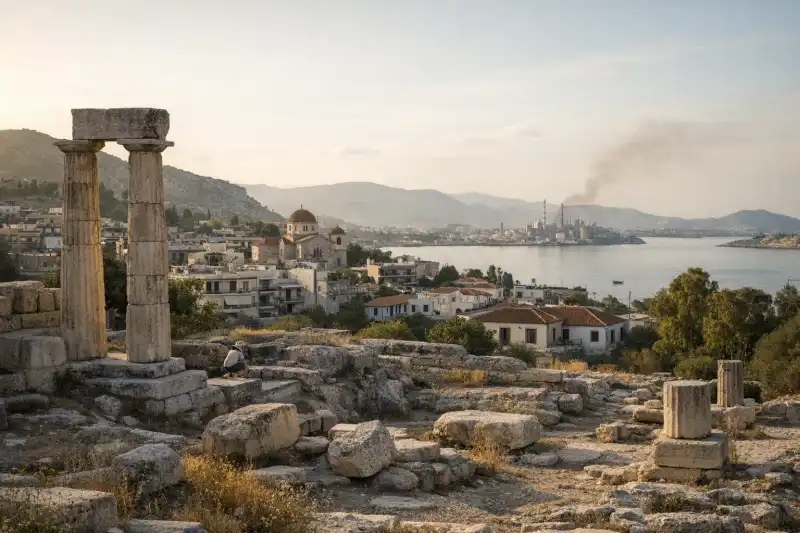
Eleusis, Greece, lies just west of Athens, but the atmosphere here feels far removed from the capital’s hurried avenues and crowded classical landmarks. At first glance, the modern industrial edges of the surrounding area can seem surprising for a place so central to ancient spirituality. Yet once you step inside the archaeological site, the mood changes. Broken columns, processional gateways, stone courts, and foundations spread across the slope in a setting that still carries an unmistakable sense of ritual importance. This was not merely another city of ancient Greece. Eleusis was among the most sacred places in the Mediterranean, the home of the Eleusinian Mysteries, secret initiation rites dedicated above all to Demeter and Persephone.
For more than a thousand years, pilgrims made their way here along the Sacred Way from Athens. Statesmen, poets, emperors, and ordinary worshippers came not to admire architecture alone but to take part in ceremonies believed to promise insight into life, death, and rebirth. Even today, that legacy shapes every visit. Eleusis is not the kind of site that overwhelms with sheer scale; instead, it draws you in through layers of meaning. The visible remains may be fragmentary, but the historical weight is immense. To walk through Eleusis is to enter one of antiquity’s most powerful sacred landscapes, where myth, civic identity, and personal hope once converged in extraordinary ways.
History
Prehistoric and Mycenaean Beginnings
The story of Eleusis reaches deep into prehistory. Long before the sanctuary became famous throughout the Greek world, the area was already occupied. Archaeological evidence points to settlement in the Bronze Age, and by Mycenaean times Eleusis had become an important local center in Attica. Its strategic location on the Thriasian Plain, with access to land routes and the nearby sea, helped support both agriculture and communication with surrounding regions.
The earliest religious activity at the site likely developed from agrarian cult practices. This is fitting, because Eleusis would later become inseparable from Demeter, goddess of grain, fertility, and the cultivated earth. Some scholars believe that local Bronze Age rites associated with seasonal renewal may have provided the deep foundations from which the later sanctuary emerged. While the grand architecture visible today belongs mostly to later centuries, the sacred reputation of the place was rooted in very old traditions.
Archaic and Classical Ascendancy
By the Archaic period, Eleusis had become one of the most important sanctuaries in Attica. Although politically absorbed into the Athenian state, it retained a distinct sacred identity of enormous prestige. The sanctuary’s fame rested on the Eleusinian Mysteries, initiation ceremonies whose details were kept secret under strict oath. Ancient authors describe them with reverence but rarely with precision, which only heightened the site’s aura in antiquity and continues to fascinate visitors now.
The myth at the heart of Eleusis centered on Demeter’s search for her abducted daughter Persephone. According to tradition, Demeter came to Eleusis in mourning and was welcomed there before the cycle of loss and return was resolved. This story gave religious expression to the agricultural year, but it also spoke to human mortality and the hope of renewal. The Mysteries transformed this myth into a profound shared experience.
During the 6th and 5th centuries BCE, the sanctuary expanded significantly. Processional ritual linked Athens and Eleusis through the Sacred Way, along which initiates traveled during the annual festival. Buildings were enlarged to accommodate growing numbers of participants, especially the Telesterion, the great hall used for initiation rites. Classical Eleusis became both a major religious destination and a key expression of Athenian power, since Athens controlled and protected the sanctuary while presenting itself as steward of a cult with pan-Hellenic significance.
Hellenistic and Roman Development
Eleusis remained highly revered after the Classical period. Hellenistic rulers and benefactors continued to support the sanctuary, and the site’s importance extended across the wider Greek-speaking world. Far from declining after the age of Pericles, Eleusis entered a new phase of prestige under Roman rule.
Roman emperors, aristocrats, and intellectuals were drawn to the Mysteries. Initiation at Eleusis became a mark of cultural distinction as well as religious devotion. Several major building phases transformed the sanctuary in this period. Monumental gateways, courtyards, and supporting structures were added or rebuilt, giving the complex much of the form now traceable on the ground. The Great Propylaea, modeled in part on Athenian ceremonial architecture, signaled the grandeur of the sacred entrance. Roman patrons recognized that Eleusis was not merely a local cult center but one of the spiritual treasures of the empire.
Despite episodes of damage, including invasions and political instability, the sanctuary repeatedly recovered. Its endurance testifies to the extraordinary hold the Mysteries had on generations of worshippers. For centuries, Eleusis preserved an unbroken ritual reputation that outlasted many better-known Greek institutions.
Late Antiquity and Decline
The end of Eleusis came gradually but decisively in late antiquity. As Christianity gained imperial backing and traditional pagan cults lost legal and social support, the Mysteries faced growing pressure. The sanctuary also suffered from destructive incursions, including the Gothic invasion associated with Alaric in the late 4th century CE. Although historians debate the exact sequence of final closures and destruction, the cult did not survive the transformation of the Roman world.
Once the initiation rites ceased, Eleusis lost the central function that had animated it for over a millennium. Buildings fell into ruin, materials were reused, and the once-renowned sanctuary entered a long afterlife as a memory preserved in texts, myth, and scattered remains. Modern archaeology has slowly recovered its plan and significance, allowing visitors today to understand how this modest-looking site once stood among the most sacred places in the ancient Mediterranean.
Key Features
The heart of Eleusis is the sanctuary precinct, where processional movement, sacred architecture, and hidden ritual once worked together to shape the experience of initiates. The most important structure is the Telesterion, a large hall unlike the open-air temples many travelers expect at Greek sites. It was specifically designed to receive initiates during the Mysteries. Rebuilt and expanded over centuries, it reflects the site’s unusual function. Rather than serving primarily as a house for a cult statue, it created an enclosed ceremonial environment. Today, what remains are foundations and structural traces, but even these reveal a building of exceptional scale and purpose. Standing beside its broad footprint, you can sense that the rites performed here were meant to envelop participants rather than simply be watched from a distance.
Near this ritual core is the Anaktoron, the innermost sacred area within the Telesterion complex, where the holiest objects of the cult were reportedly kept. Although little survives in elevation, the importance of the space is hard to overstate. Ancient testimony suggests that what was revealed in or associated with this central chamber formed part of the climactic experience of initiation. Because the Mysteries were secret, the physical remains carry a special charge: they are among the few direct links to one of antiquity’s most guarded ceremonies.
Another striking feature is the sequence of entrances. The Great Propylaea and the smaller entrance structures created a ceremonial threshold between ordinary space and the sacred enclosure. Procession mattered at Eleusis. Pilgrims did not simply arrive; they approached, assembled, crossed boundaries, and entered progressively more sanctified zones. These architectural layers helped stage the psychological transition from travel to ritual participation. The Roman-era gateway in particular gives a sense of the site’s enduring prestige under imperial patronage.
The Kallichoron Well is among the most evocative places within the sanctuary. According to tradition, this is where Demeter sat in grief during her search for Persephone. Myth and topography meet here in a way that makes Eleusis especially compelling. The well was not just a practical feature; it was woven into the sacred memory of the place. Ancient dances and rituals were associated with the area, linking water, mourning, and eventual renewal. For modern visitors, it offers a more intimate point of contact with the mythology than the larger architectural remains do.
Fragments of fortification walls and terraces show that Eleusis was also a defended and carefully organized sacred complex. The sanctuary was not isolated from civic and political realities. It functioned within a town, under Athenian oversight, and later under Roman administration. This mixture of spiritual centrality and practical management is visible in the layered remains of roads, courts, and support buildings. As you move through the site, you are not only seeing a temple precinct but the infrastructure of one of the ancient world’s great pilgrimage destinations.
The on-site archaeological museum adds important context. Sculptures, reliefs, inscriptions, and architectural fragments help reassemble the meanings that the ruins alone cannot always convey. One of the most famous objects associated with Eleusis is the great relief showing Demeter, Persephone, and Triptolemos, a masterpiece that expresses the sanctuary’s religious themes with remarkable clarity. Depending on display arrangements and conservation policies, not every famous artifact may be visible on every visit, but the museum remains essential for understanding the symbolism of the site.
What makes Eleusis distinctive overall is not a single monument but the way myth, initiation, architecture, and movement come together. It is a place best appreciated slowly, with attention to sequence and silence. The visible stones may seem restrained compared with more theatrical ruins elsewhere in Greece, yet the conceptual richness of the site is extraordinary. Eleusis rewards visitors who come prepared to imagine not only buildings, but ceremony, expectation, and the ancient desire to confront the mystery of what lies beyond death.
Getting There
Eleusis is one of the easiest ancient sites to reach from Athens. By car or taxi, the journey from central Athens usually takes around 30 to 45 minutes, depending on traffic. A taxi fare typically ranges from €25 to €45 each way, with prices varying by starting point, time of day, and whether toll roads are used. If you want flexibility to combine Eleusis with other sites in Attica, driving can be convenient, though urban and suburban traffic around Athens can be heavy.
Public transport is the most budget-friendly option. Regional and suburban bus services connect Athens with Eleusis, generally departing from western Athens transport hubs. Fares are usually modest, often in the range of €2 to €6 depending on the route and service type. Travel times are commonly between 45 and 70 minutes. Because routes and operators can change, it is wise to verify the latest timetable before setting out. Once in modern Elefsina, the archaeological site is accessible by a short walk or local taxi.
Some travelers choose to visit Eleusis as part of a guided tour from Athens, especially if they want historical interpretation or transport included. Group tours and private excursions can be found online, often combining Eleusis with other locations in Attica. These usually cost more than independent travel but remove the uncertainty of navigation and scheduling.
If you are planning a half-day visit, morning departure from Athens is ideal. Bring water, sun protection, and comfortable shoes, as the site is open-air and the terrain includes uneven stone surfaces. Allow at least 1.5 to 2 hours on site, or longer if you also want time in the museum and surrounding town.
When to Visit
Spring and autumn are the best times to visit Eleusis. From March to May and from late September to November, temperatures are generally comfortable, light is soft for photography, and walking through the exposed ruins is far more pleasant than in midsummer. These seasons also suit visitors who want a reflective atmosphere, since the site is usually quieter than Athens’ major classical attractions. The combination of mild weather and manageable visitor numbers makes these months ideal for appreciating Eleusis at a slower pace.
Summer has advantages and drawbacks. Long daylight hours make logistics easy, and a trip from Athens can be fitted into a broader sightseeing schedule. However, from June through August the heat can be intense, particularly around midday, with little shade across much of the archaeological area. If you visit in summer, go as early as possible in the morning or later in the afternoon, carry plenty of water, and avoid the hottest hours.
Winter can be rewarding for travelers who prefer solitude and cooler conditions. The site takes on a more austere mood under gray skies or after rain, which in some ways suits its ancient religious associations. On the other hand, winter weather can be changeable, and museum or site hours may be reduced in the low season. Always check opening times in advance.
If your trip coincides with cultural events in modern Elefsina, you may find the broader area especially lively. Even so, for most visitors the best practical balance remains spring or autumn, when Eleusis can be explored comfortably and thoughtfully, without heat dominating the experience.
| Quick Facts | Details |
|---|---|
| Location | Elefsina, West Attica, Greece |
| Ancient Significance | Sanctuary of Demeter and Persephone; center of the Eleusinian Mysteries |
| Distance from Athens | About 20 km west |
| Best Time to Visit | Spring and autumn |
| Main Highlight | The Telesterion initiation hall |
| Recommended Visit Length | 1.5 to 3 hours |
| Typical Access | Car, taxi, regional bus, or guided tour from Athens |
| Terrain | Uneven archaeological surfaces; comfortable footwear recommended |
| Associated Deities | Demeter and Persephone |
| Historical Periods Visible | Mycenaean, Archaic, Classical, Hellenistic, and Roman |
Guided tours: worth it?
Most travelers can visit Eleusis independently. Compare a tour only if you want a tighter history-focused visit, easier logistics, or a guide who can answer questions on the spot.
Best for
- Short visits where a planned route saves time
When to go self-guided
Go independently if you prefer setting your own pace, reading as you go, and checking official hours or ticket rules directly before you arrive.
What I’d avoid
Skip paid tours that bundle unrelated stops you do not actually want. The best option should either save meaningful planning time or add historical context you would miss on your own.
Eleusis and Athens Ancient Sites Tours
Useful when: you want to compare guided formats before deciding
Athens to Eleusis Day Tours
Useful when: you want to compare guided formats before deciding
Attica Archaeological Tours Including Eleusis
Useful when: you want to compare guided formats before deciding
Some tour links are affiliate links, which may earn Ancient Travel a small commission at no extra cost to you. I try to surface options that make practical sense for the site—not just anything bookable.
Frequently Asked Questions
What is Eleusis famous for?
Eleusis is famous as the sanctuary of Demeter and Persephone and as the center of the Eleusinian Mysteries, one of the most important religious rites in the ancient Greek world.
How far is Eleusis from Athens?
Eleusis is about 20 kilometers west of central Athens, making it an easy half-day or day trip by car, taxi, or public transport.
Can you visit the archaeological site of Eleusis today?
Yes, visitors can explore the archaeological site and museum area, though opening hours and ticket policies may vary by season and should be checked in advance.
What should I see at Eleusis?
Highlights include the Telesterion, the Great Propylaea, the Kallichoron Well, remains of the sanctuary walls, Roman additions, and the archaeological museum.
Why were the Eleusinian Mysteries important?
The Mysteries promised initiates a profound religious experience connected with Demeter, Persephone, death, and renewal, and they attracted participants from across the Greek and Roman worlds.
Is Eleusis worth visiting if I have already seen Athens?
Yes, Eleusis offers a very different experience from Athens: quieter ruins, exceptional religious significance, and a direct link to one of antiquity's most secretive cult traditions.
Nearby Ancient Sites
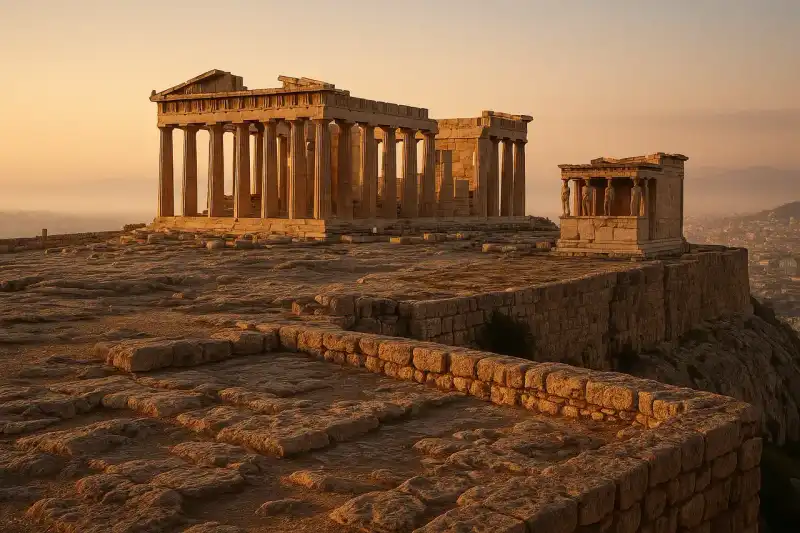
Acropolis Travel Guide 2026: Parthenon, Tickets, and Best Time
Ancient GreecePlan an efficient Acropolis visit with practical ticket timing, key monuments, and museum pairing ti...
The Complete Acropolis Athens Travel Guide: Temples
Ancient GreecePlan the perfect visit to the Acropolis of Athens with our 2026 guide. Discover the Parthenon, best ...
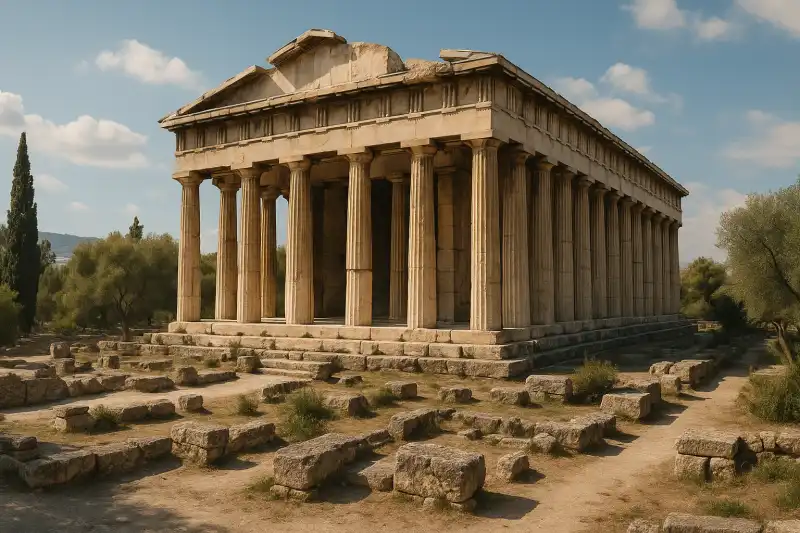
Ancient Agora of Athens Travel Guide 2026: Route, Tickets, and Context
Classical GreekPlan a better Ancient Agora visit with practical timing, monument priorities, and clear historical c...