Quick Info
At a glance
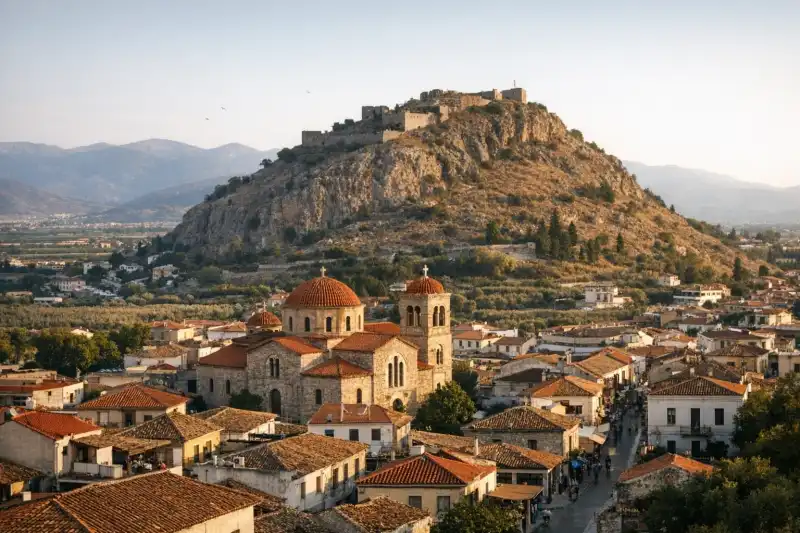
Argos in Greece is one of those places where antiquity does not feel neatly separated from modern life. The city spreads across the Argolis plain in the northeastern Peloponnese, framed by low mountains, olive groves, and roads that connect some of the best-known destinations in southern Greece. Yet Argos itself often remains quieter than nearby Nafplio or Mycenae, which gives it a distinctive appeal. Here, ancient stone sits beside everyday streets, and the long timeline of Greek history seems less like a sequence of isolated monuments and more like a continuous human presence.
For travelers interested in archaeology, Argos offers something especially compelling: not just a single ruin, but an entire urban landscape shaped over millennia. This was a city of kings, myths, sanctuaries, theaters, and military importance, and later a Roman and Byzantine center as well. The result is a layered site where you can move from a vast ancient theater to Roman baths, from market areas to the heights of Larisa Hill, and begin to understand how deeply rooted this city is in the Greek world. If you want a destination that combines major historical significance with a more relaxed atmosphere, Argos rewards slow exploration and careful attention.
History
Prehistoric and Mycenaean beginnings
Argos claims a place among the oldest continuously inhabited urban centers in Greece, and its early importance reaches back into prehistory. The fertile Argolis plain made the area attractive for settlement from very early times, with access to arable land, inland routes, and the wider northeastern Peloponnese. During the Bronze Age, the region formed part of the Mycenaean world, the same cultural sphere associated with nearby Mycenae, Tiryns, and other palace centers. Although Mycenae became the more famous archaeological name, Argos was deeply embedded in the same environment of elite power, fortified settlements, and regional competition.
In myth, Argos was linked to heroes, dynasties, and divine favor. Greek tradition associated it with figures such as Danaus, Perseus, and the descendants of Heracles. While myth cannot be read as straightforward history, it reveals the prestige Argos held in the Greek imagination. To later Greeks, this was not simply another town but one of the ancestral landscapes of heroic Greece.
Archaic growth and regional power
By the Archaic period, roughly the 8th to 6th centuries BCE, Argos had emerged as a major political and military force in the Peloponnese. It competed with neighboring cities for influence, territory, and prestige, and at times it stood as one of Sparta’s key rivals. Argos benefited from the rich plain around it, which supported agriculture and population growth, and it developed institutions, sanctuaries, and artistic traditions that reflected an increasingly complex civic life.
One of the city’s most important regional religious associations was with the sanctuary of Hera at the Heraion of Argos, located outside the urban center. Hera was a central deity for the Argive community, and the sanctuary helped anchor the city’s identity within both local and wider Greek religious life. Artistic production also flourished. Argos became known for sculpture and metalwork, and its craftsmen contributed to the visual culture of the ancient Greek world.
Classical era and shifting fortunes
The Classical period brought both prominence and pressure. Argos remained an important city, but Greek politics in this era were often defined by larger alliances and repeated wars. The city’s rivalry with Sparta shaped much of its strategic position. Argos sought to preserve its autonomy and influence while navigating the unstable political landscape of the Peloponnese.
Although it never eclipsed Athens or Sparta in broad historical narratives, Argos remained a serious and respected polis. It participated in the military and diplomatic struggles of the age and maintained an urban identity strong enough to support public building programs and civic institutions. The city’s theater and assembly-related spaces point to a robust public culture in which politics, performance, and collective identity overlapped.
Hellenistic and Roman transformation
Like many Greek cities, Argos adapted to the changing power structures of the Hellenistic age after the campaigns of Alexander the Great. Control and alliances shifted among regional powers, but the city endured and continued to function as a significant urban center. Its long-standing prestige, strategic location, and established institutions helped it remain relevant even when the political map of Greece was repeatedly redrawn.
Under Roman rule, Argos entered another phase of development. Roman administration often reinforced older cities rather than replacing them outright, and Argos gained new building projects and urban features. The Roman baths, additions to public spaces, and modifications to the city’s infrastructure show how the settlement remained active and prosperous. Roman visitors and officials moved through a city that was both distinctly Greek and increasingly integrated into the imperial Mediterranean.
Byzantine, Frankish, and later periods
Argos did not vanish with antiquity. Through the Byzantine period, it continued as an inhabited and strategically useful settlement. The acropolis area on Larisa Hill became especially important for defense. Fortifications were rebuilt, reused, and altered across centuries, including during Frankish, Venetian, and Ottoman phases. This continuity is one of the site’s defining characteristics: Argos is not preserved as a city frozen in one era, but as a place repeatedly reoccupied and reinterpreted.
That long life can make Argos more challenging to read than a single-period site, but it also makes it more rewarding. Ancient theaters, Roman remains, medieval walls, and the modern town all exist within the same historical field. For visitors today, that layered survival is precisely what makes Argos so memorable.
Key Features
The most striking monument in Argos is its ancient theater, cut dramatically into the hillside. It is one of the largest theaters in Greece, and even in a country filled with exceptional ancient performance spaces, it stands out for scale and setting. The seating rises in broad stone tiers, looking out across the plain, and the experience of climbing it gives a strong sense of the civic ambition behind the monument. This was not a modest local structure but a major urban installation intended for large gatherings. Standing there, you can imagine both theatrical performances and political assemblies, because spaces like this often served several public functions across different periods.
Near the theater are other remains that deepen the sense of a busy, multi-use civic center. There are traces of Roman baths and associated structures, reminders that Argos continued to develop long after the classical age. These bath complexes are less visually overwhelming than the theater, but they are essential to understanding the city’s later life. They show Argos not as a glorious ruin abandoned after an early peak, but as a durable urban settlement that remained active under changing rulers.
The hillside area also includes the so-called odeon and additional terraces and architectural fragments. As you move through the archaeological zone, the relationship between natural topography and construction becomes increasingly clear. Argos was built in dialogue with its landscape. Hillsides were carved, leveled, and fortified; open areas became civic spaces; elevations provided defense and symbolic prominence. The site rewards visitors who take time to look beyond individual monuments and notice how the city was organized.
Above the lower ruins rises Larisa Hill, the acropolis of Argos. The climb is one of the most memorable parts of a visit, especially in cooler weather. From the top, the view across the Argolis plain is superb, taking in farmland, roads, surrounding heights, and the broader geography that shaped Argos’s power. The fortifications visible here mostly reflect later phases, especially medieval and post-classical rebuilding, but the strategic value of the hill is ancient. It was the natural strongpoint of the city, and its continued use over centuries shows how geography anchored Argos’s political and military life.
The urban setting is another feature worth emphasizing. Unlike some archaeological parks isolated from contemporary settlement, Argos exists within and beside the modern city. That creates a different kind of visit. You may move from a café or town square to ancient ruins in a short walk, and this proximity makes the site feel lived-in rather than remote. For some travelers, that can seem less visually pristine; for others, it makes the historical continuity more vivid.
Argos also benefits from its regional context. Even if your focus is this city alone, the surrounding Argolis landscape contributes to the experience. Nearby lie famous centers of Bronze Age and classical history, and Argos sits at the heart of that network. The plain itself, so important to ancient agriculture and warfare, remains a key visual element. Looking out over it from the theater or acropolis helps explain why this city mattered for so long.
Finally, the archaeological museum and local interpretive materials can add valuable context, especially because Argos is a layered site rather than a single monument with an obvious storyline. Pottery, inscriptions, sculpture, and architectural fragments help visitors connect what they see on the ground with the city’s long chronology. Together, the theater, baths, fortifications, urban layout, and regional setting make Argos one of the most intellectually satisfying ancient destinations in mainland Greece.
Getting There
Argos is easy to reach from Athens and particularly convenient if you are already touring the Peloponnese. By car, the drive from Athens usually takes about 1.5 to 2 hours via the national highway toward Corinth and onward into Argolis. For many travelers, this is the best option because it allows you to combine Argos with Nafplio, Mycenae, or Epidaurus in a single itinerary. Fuel and toll costs from Athens typically add up to around €25-€40 each way depending on vehicle type and route.
Intercity buses are the main public transport option. KTEL buses connect Athens with Argolis, and services often run to Argos directly or via nearby Nafplio. One-way fares are commonly in the range of about €13-€18, though prices can change by season and operator updates. The trip generally takes around 2 to 2.5 hours. If you arrive in Nafplio first, Argos is only a short onward journey by local bus or taxi. A taxi between Nafplio and Argos usually costs roughly €12-€20 depending on time of day and pickup point.
If you are staying locally, Argos is also manageable as a short ride from Nafplio, which many visitors use as a base because of its larger range of hotels and seaside atmosphere. Organized day tours may include Argos as part of a broader Argolis circuit, though many focus more heavily on Mycenae and Epidaurus. If independent exploration matters to you, self-driving or a flexible local transfer is often preferable.
When to Visit
Spring is one of the best times to visit Argos. From March to May, temperatures are generally comfortable for walking, climbing to Larisa Hill, and exploring exposed stone monuments without the intense heat of high summer. The surrounding plain is greener, the light is often excellent for photography, and visitor numbers are moderate. For many travelers, this is the ideal balance between pleasant weather and a calmer experience.
Autumn, especially September through early November, is another strong choice. The summer crowds begin to thin, but the days remain warm enough for sightseeing. Early autumn can still be hot at midday, yet mornings and late afternoons are especially enjoyable. This season works well if you want to combine Argos with a longer Peloponnese trip.
Summer is certainly possible, but it requires planning. June through August can bring strong sun and high temperatures, especially in the middle of the day, and the archaeological areas offer limited shade. If you visit in summer, arrive early, carry water, wear a hat, and save the acropolis climb for the coolest hours. The upside is long daylight and a lively regional travel season.
Winter is the quietest season and can suit travelers who prefer solitude and softer light. Rain is more likely, and some days may feel cool or windy on exposed heights, but mainland Greek winters are often mild enough for sightseeing. If your main interest is history rather than beach weather, winter can be a surprisingly good time to experience Argos at a slower pace.
| Quick Facts | Details |
|---|---|
| Location | Argos, Argolis, Peloponnese, Greece |
| Best Known For | Ancient theater, long continuous habitation, acropolis on Larisa Hill |
| Historical Span | Prehistoric settlement through Byzantine and later eras |
| Best Visit Length | 2-4 hours, or half a day with museum and hill climb |
| Nearest Base | Nafplio |
| From Athens | About 1.5-2 hours by car; around 2-2.5 hours by bus |
| Terrain | Urban archaeological zone with slopes, steps, and uneven stone |
| Best Seasons | Spring and autumn |
| What to Bring | Water, sun protection, sturdy walking shoes |
| Ideal For | Archaeology lovers, history-focused travelers, Peloponnese road trips |
Guided tours: worth it?
Self-guided works here, but a guide can add real value if you want the ruins explained as a living place rather than just a sequence of monuments.
Best for
- First-time visitors who want context, not just photos
- Short visits where a planned route saves time
When to go self-guided
Go independently if you prefer setting your own pace, reading as you go, and checking official hours or ticket rules directly before you arrive.
What I’d avoid
Skip paid tours that bundle unrelated stops you do not actually want. The best option should either save meaningful planning time or add historical context you would miss on your own.
Argos and Mycenae Tours
Useful when: you want to compare guided formats before deciding
Peloponnese Ancient Sites Day Trips
Useful when: transport or pickup logistics matter
Nafplio and Argolis Archaeology Tours
Useful when: you want to compare guided formats before deciding
Some tour links are affiliate links, which may earn Ancient Travel a small commission at no extra cost to you. I try to surface options that make practical sense for the site—not just anything bookable.
Frequently Asked Questions
What is Argos best known for?
Argos is known as one of the oldest continuously inhabited cities in Greece, famous for its ancient theater, Roman baths, hilltop fortress area, and deep connections to Greek myth and early Greek history.
Is Argos worth visiting if I am already going to Nafplio or Mycenae?
Yes. Argos is very close to both Nafplio and Mycenae, making it an easy and rewarding stop for travelers interested in archaeology, mythology, and less crowded ancient sites in the Argolis region.
How much time do I need to visit Argos?
Most visitors can see the main archaeological highlights in 2 to 4 hours, though a fuller visit including the museum, theater, Roman remains, and Larisa Hill can take half a day.
Can you walk around the archaeological site of Argos easily?
Many of Argos’s main remains are accessible on foot, but some areas involve uneven stones, slopes, and summer heat, so supportive shoes and water are strongly recommended.
When is the best time of year to visit Argos?
Spring and autumn are generally the best seasons, with warm but manageable weather, greener landscapes, and fewer crowds than peak summer.
How do I get to Argos from Athens?
You can reach Argos from Athens by rental car in about 1.5 to 2 hours, or by intercity bus via the Argolis region, often with connections through Nafplio depending on the schedule.
Nearby Ancient Sites
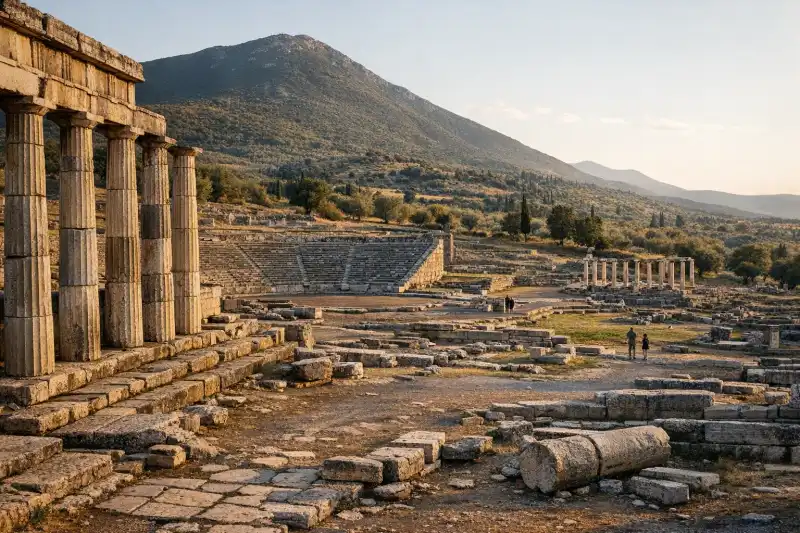
Ancient Messene
Ancient GreekExplore Ancient Messene, a remarkably preserved Greek city with grand stadium, theater, and fortific...
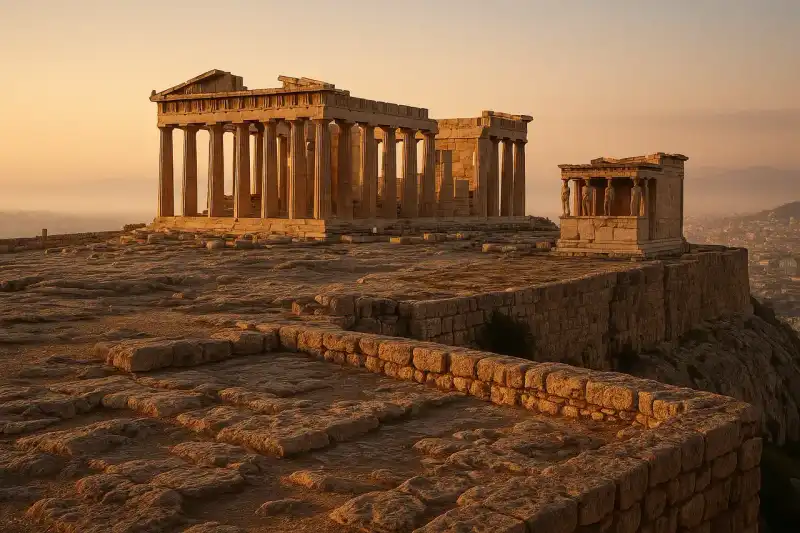
The Complete Acropolis Athens Travel Guide: Temples
Ancient GreecePlan the perfect visit to the Acropolis of Athens with our 2026 guide. Discover the Parthenon, best ...
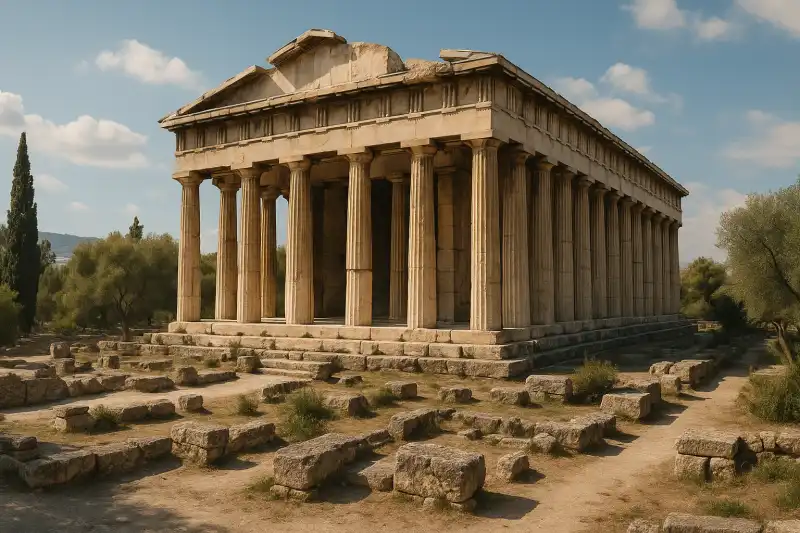
Ancient Agora of Athens Travel Guide 2026: Route, Tickets, and Context
Classical GreekPlan a better Ancient Agora visit with practical timing, monument priorities, and clear historical c...