Quick Info
At a glance
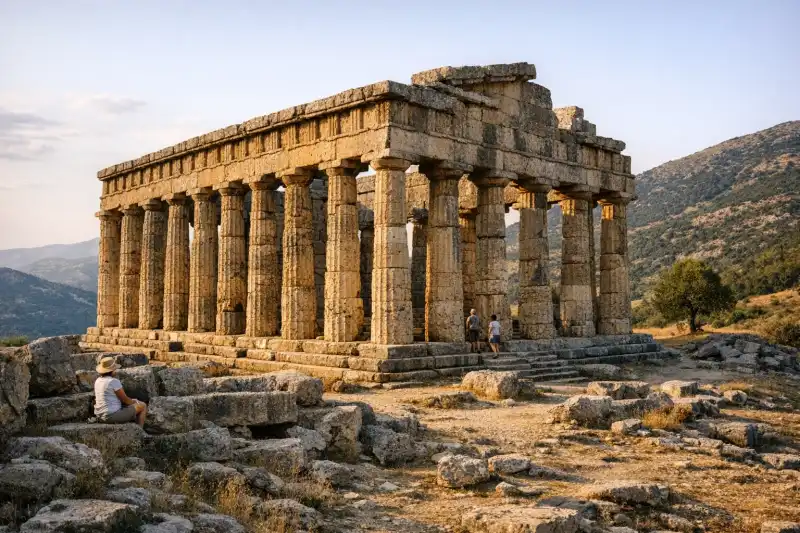
Bassae, Greece, is one of those ancient places that feels discovered rather than simply visited. High in the rugged mountains of the Peloponnese, far from the crowded lanes of Athens and the better-known sanctuaries of Olympia or Delphi, the sanctuary here stands in a landscape of ridges, pine-covered slopes, and deep silence. The centerpiece is the Temple of Apollo Epicurius, a monument that seems almost improbable in such an isolated setting: refined, sophisticated, and strikingly experimental, yet built in a place where wind, weather, and distance still define the experience of arrival. That contrast is part of Bassae’s power. It is not an urban ruin absorbed into modern life, but a mountain sanctuary where the environment remains essential to understanding why ancient worshippers came here at all.
For many travelers, Bassae is memorable precisely because it feels less polished and more contemplative than Greece’s most famous archaeological destinations. The journey itself, along twisting roads through Arcadia, prepares you for a site that rewards patience and curiosity. What survives today is sheltered beneath a protective structure, but the sense of drama has not vanished. Instead, it shifts from grand outward views to the intellectual thrill of seeing a building that changed architectural history. Bassae is a place for those interested not only in antiquity, but in the ideas ancient builders were testing in stone.
History
Early cult and the mountain sanctuary
Bassae was first and foremost a sacred landscape. The sanctuary occupied a high and relatively remote location in Arcadia, in the territory associated with the ancient city of Phigaleia. Long before the famous temple visible today, the mountain setting likely held religious significance. Greek sanctuaries were often linked to springs, caves, peaks, or borderlands, and Bassae fits that pattern well. Its isolation was not a disadvantage in antiquity; rather, it may have enhanced the sense that this was a place set apart for divine encounter.
The god worshipped here was Apollo, under the epithet Epicurius, usually translated as “the helper” or “the bringer of aid.” Ancient tradition connected the title with Apollo’s assistance during a time of plague, a story that reflects the practical and protective role Greek communities expected from their gods. Whether this memory preserves a specific local event or a broader religious theme, it shows that Bassae was not merely a decorative sanctuary. It was a place where people sought relief, gratitude, and divine favor.
Construction in the 5th century BCE
The great Temple of Apollo Epicurius was built in the later 5th century BCE, generally dated to around 430–400 BCE. This was a period of enormous artistic and political intensity in the Greek world. While Athens was commissioning the Parthenon and other monuments on the Acropolis, communities elsewhere were also investing in temples that expressed civic identity and devotion. Bassae’s remoteness should not obscure its ambition: this was a sophisticated architectural project, not a provincial imitation.
Ancient writers, especially Pausanias, later attributed the design to Ictinus, one of the architects associated with the Parthenon. Modern scholars treat that attribution with caution, but it is not impossible. Whether or not Ictinus himself worked here, the temple clearly belonged to the most advanced architectural thinking of its time. Its builders combined a Doric exterior with Ionic interior features and included what is often identified as the earliest known Corinthian capital in monumental architecture. These innovations make Bassae one of the most important temples in Greece for understanding the evolution of classical design.
Hellenistic and Roman continuity
Unlike some sanctuaries that declined quickly after their founding era, Bassae appears to have retained religious importance into the Hellenistic and Roman periods. Pilgrimage and local worship likely continued, though on a smaller scale than in major Panhellenic centers. The sanctuary’s mountain position meant it was never transformed into a grand urban complex, but that may also have helped preserve its sacred character for longer.
What changed over time was not simply ritual practice but the broader world around it. Greek political independence gave way to Macedonian dominance and later Roman rule. Sanctuaries adapted, often receiving repairs, dedications, or occasional attention from benefactors. Bassae seems to have remained respected, even if never monumentalized on the scale of larger sanctuaries. Its relative isolation probably protected it from the intense redevelopment seen elsewhere.
Rediscovery and the 19th century
By the modern era, the temple had fallen into ruin, though substantial remains were still visible. European travelers and antiquarians became increasingly interested in Bassae in the 18th and early 19th centuries, when the study of Greek antiquity accelerated dramatically. In 1811–1812, a group of architects and antiquaries explored the site and uncovered the temple’s sculpted frieze. This frieze, depicting battles involving Greeks, Amazons, and centaurs, was eventually removed and sold; it is now one of the treasures of the British Museum.
That episode is a reminder of both the excitement and the extractive habits of early archaeology. Bassae entered the European imagination as a masterpiece of Greek architecture, but not all of its most important finds remained in Greece. Even so, scholarly attention helped establish the site’s exceptional value, and later excavations clarified its layout and structural details.
Modern conservation and UNESCO status
In the modern period, Bassae has been recognized as one of the great monuments of classical Greece. It was among the earliest Greek sites inscribed on the UNESCO World Heritage List, a sign of its global significance. Yet recognition brought a challenge: the temple’s mountain exposure made it highly vulnerable to weathering, especially after centuries of damage and instability.
To protect the remains, authorities erected a large shelter over the temple. Some visitors find the tent-like structure visually surprising, but it reflects a serious conservation effort. The shelter allows specialists to stabilize stone, monitor deterioration, and preserve the monument for the future. Today, Bassae stands at the intersection of ancient brilliance and modern stewardship: a masterpiece still undergoing care, study, and interpretation.
Key Features
What makes Bassae extraordinary is not only that a temple survives here, but that it survives as a statement of architectural imagination. At first glance, the site can seem austere. The modern protective covering dominates the approach, and the mountain setting is less theatrical than the cliffside acropolises many travelers picture when they think of Greece. But as you begin to understand the structure beneath that shelter, Bassae becomes one of the most intellectually rewarding ruins in the country.
The Temple of Apollo Epicurius is primarily Doric in its external appearance. Its colonnaded outer form aligns it with the mainstream of Greek temple architecture, projecting order, balance, and strength. Yet the building does not simply repeat familiar formulas. Inside, the arrangement departs from standard expectations. The cella, or inner chamber, includes Ionic columns attached along the walls in a highly unusual configuration, creating a more dynamic and complex interior rhythm than is typical in earlier Doric temples. This blending of styles is one reason scholars return to Bassae again and again.
Most famous of all is the single Corinthian capital associated with the temple interior, often regarded as the earliest known example of the Corinthian order in monumental architecture. The Corinthian style would later become widespread across the Greek and Roman worlds, admired for its leafy, ornate elegance. At Bassae, however, it appears in an early and experimental form. Seeing the temple means witnessing a moment when architectural language was still being invented. That alone gives the site immense importance.
Another striking feature is the temple’s orientation. Unlike many Greek temples, which usually align east-west, Bassae’s plan responds in a more unusual way to its terrain and perhaps to local cult requirements. The mountain environment was not merely a backdrop; it influenced the design. Builders had to work with a ridge-top setting, difficult access, and a dramatic natural context. The result is a monument that feels deeply rooted in place rather than imposed upon it.
The sculptural decoration, though no longer on-site, remains part of Bassae’s story. The temple frieze once ran inside the building, depicting mythological battles charged with movement and tension. Even in absence, it enriches the visitor’s understanding of the sanctuary. Interpretive materials usually explain where these sculptures were found and why they matter. Their themes of conflict and heroism linked the sanctuary to wider Greek mythic traditions, connecting this remote Arcadian temple to the artistic currents of the classical world.
The surrounding landscape is also a key feature, even if it contains fewer visible ruins than a sprawling archaeological park. Bassae’s setting is integral to its atmosphere. The road climbs through a highland region of changing light, cool breezes, and broad views over mountain folds. On clear days, the sense of altitude is part of the experience, and in cooler months the isolation can feel almost monastic. This is not a place of cafés pressed up against ancient walls. It is a destination where the environment still insists on attention.
Finally, the protective shelter itself, while modern, has become part of the contemporary identity of Bassae. It signals that the monument is fragile and precious. For some visitors, that may initially seem to interrupt the romance of antiquity. In practice, it often sharpens appreciation. The tent frames the temple as something rare enough to defend against wind, rain, and time. Bassae is not staged for easy consumption; it is being actively preserved, and that seriousness gives the visit unusual depth.
Getting There
Reaching Bassae takes more planning than visiting Greece’s major urban sites, and that is exactly why many travelers remember it so vividly. The easiest way to get there is by rental car. Most visitors approach from Kalamata, Tripoli, or Olympia-area routes, depending on their broader itinerary through the Peloponnese. From Kalamata, the drive generally takes around 2 to 2.5 hours through mountain roads; from Olympia, allow roughly 1.5 to 2 hours. Car rental in the region often starts around €35–€60 per day for a compact vehicle, with fuel costs depending on your route and season.
Public transport is limited. You may be able to reach nearby towns such as Andritsaina by regional bus from larger hubs, but connections can be infrequent and may not line up neatly with site opening hours. A KTEL bus fare from a larger Peloponnese city to a nearby town might fall in the €10–€20 range one way, but you should verify current schedules locally, especially outside summer. From Andritsaina, a taxi to Bassae is usually the most practical option, and the fare can range from about €25 to €45 each way depending on time of day and availability.
Organized tours or private drivers are a good alternative if you prefer not to navigate mountain roads. Day trips from Kalamata or customized Peloponnese tours can vary widely in price, but private transport for the day often begins around €150 and rises with distance and guide services. Because Bassae is remote, many travelers combine it with other inland Peloponnese stops rather than treating it as a standalone transfer.
When to Visit
Bassae is best visited in spring and autumn, when the mountain climate is mild and the roads are easier to enjoy. From April to early June, the hills are greener, wildflowers may still be visible, and daytime temperatures are usually comfortable for exploring. September and October also offer excellent conditions, with clearer skies, softer light, and fewer visitors than the peak summer months. These shoulder seasons suit the site especially well because Bassae’s appeal lies in atmosphere as much as architecture.
Summer is still a viable time to go, but it is wise to start early. Although the sanctuary sits at higher elevation and can feel cooler than lower-lying parts of the Peloponnese, midday sun remains strong, and the drive can be tiring on hot afternoons. July and August are also when more domestic travelers are on the road, so nearby villages and routes may be busier than expected. Bring water, sun protection, and check opening hours in advance.
Winter visits can be rewarding for travelers who enjoy solitude, but conditions are less predictable. The mountains can be cold, misty, and occasionally affected by rain or even snow at higher elevations. Roads may be slower, and reduced seasonal services can make logistics harder. On the other hand, a clear winter day gives Bassae a stark beauty that feels very close to the ancient landscape.
Whatever the season, the best time of day is usually morning or late afternoon, when the light over Arcadia is gentler and the sanctuary feels most serene. Because conservation work or special closures may affect access, it is always sensible to confirm current visitor information before setting out.
| Quick Facts | Details |
|---|---|
| Site | Bassae |
| Main Monument | Temple of Apollo Epicurius |
| Location | Arcadia, Peloponnese, Greece |
| UNESCO Status | World Heritage Site |
| Date | Late 5th century BCE |
| Cultural Context | Ancient Greek |
| Best Base | Andritsaina or Kalamata |
| Typical Visit Length | 1–2 hours |
| Access | Best by car or private tour |
| Why It Matters | Innovative temple combining Doric, Ionic, and early Corinthian elements |
Bassae rewards a kind of travel that is becoming rarer: slow, deliberate, and attentive. It is not the easiest archaeological site in Greece to reach, nor the most instantly photogenic in a conventional sense. Yet that is precisely what makes it exceptional. The sanctuary asks you to leave behind the expectation of spectacle and instead notice proportion, innovation, setting, and survival. Here, architecture is not separated from the mountain that holds it. The silence, the altitude, and the protective shell over the ruins all emphasize how much has endured, and how much care is still required to preserve it.
For travelers interested in the deeper story of Greek antiquity, Bassae offers something unforgettable. It reveals that classical Greece was not only the world of famous city-states and crowded sanctuaries, but also of remote sacred landscapes where experimentation flourished far from political centers. The Temple of Apollo Epicurius stands as proof that artistic brilliance could emerge in places of apparent isolation. If you make the journey, you are unlikely to leave thinking only of ruins. You will remember the road into the mountains, the stillness around the sanctuary, and the feeling of encountering one of Greece’s greatest monuments on its own terms.
Guided tours: worth it?
A guide can be genuinely useful at Bassae, especially if you want help with transport, timing, tickets, or understanding a large site without losing half the day to logistics.
Best for
- First-time visitors who want context, not just photos
- Travelers who want transport, timing, or entry logistics handled
- Short visits where a planned route saves time
When to go self-guided
Go independently if you already have transport and tickets sorted, enjoy moving at your own pace, and are comfortable checking the latest official rules before you arrive.
What I’d avoid
Skip paid tours that bundle unrelated stops you do not actually want. The best option should either save meaningful planning time or add historical context you would miss on your own.
Peloponnese Ancient Sites Tours
Useful when: you want to compare guided formats before deciding
Kalamata to Bassae and Ancient Greece Tours
Useful when: you want to compare guided formats before deciding
Arcadia and Temple of Apollo Epicurius Tours
Useful when: you want to compare guided formats before deciding
Some tour links are affiliate links, which may earn Ancient Travel a small commission at no extra cost to you. I try to surface options that make practical sense for the site—not just anything bookable.
Frequently Asked Questions
What is Bassae best known for?
Bassae is famous for the Temple of Apollo Epicurius, a UNESCO World Heritage monument celebrated for its unusual mountain setting and highly innovative classical architecture.
Where is Bassae located?
Bassae lies in the mountains of Arcadia in the Peloponnese region of Greece, near the borders of Messenia and Elis.
Can you go inside the temple area?
Visitors generally enter the large protective tent structure that shelters the temple remains, though access conditions can change depending on conservation work.
How much time should I allow for a visit to Bassae?
Most travelers spend around 1 to 2 hours at Bassae, enough time to walk around the monument, read the site panels, and enjoy the mountain scenery.
Is Bassae easy to reach without a car?
Bassae is remote and public transport is limited, so reaching it is easiest by rental car, private driver, or an organized tour from Kalamata or other Peloponnese towns.
Why is the temple at Bassae architecturally important?
The temple is significant for combining Doric, Ionic, and one of the earliest known Corinthian elements in a single building, making it a landmark in the history of Greek architecture.
Nearby Ancient Sites
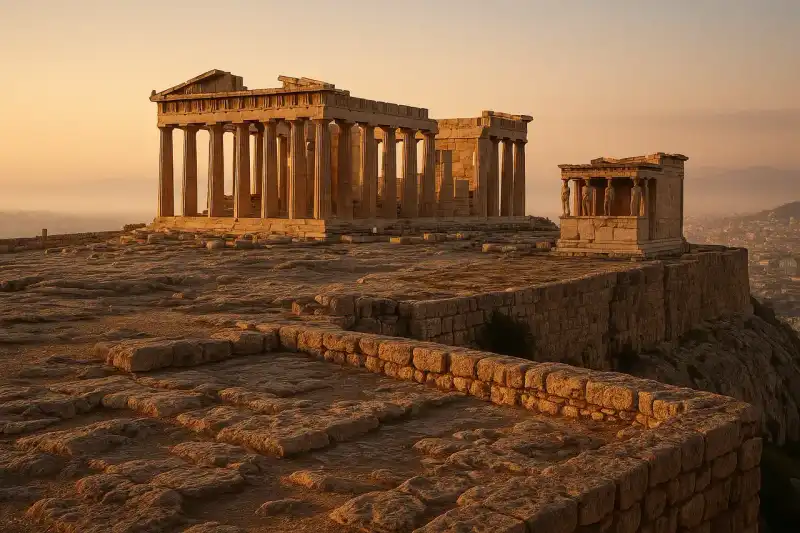
Acropolis Travel Guide 2026: Parthenon, Tickets, and Best Time
Ancient GreecePlan an efficient Acropolis visit with practical ticket timing, key monuments, and museum pairing ti...
The Complete Acropolis Athens Travel Guide: Temples
Ancient GreecePlan the perfect visit to the Acropolis of Athens with our 2026 guide. Discover the Parthenon, best ...
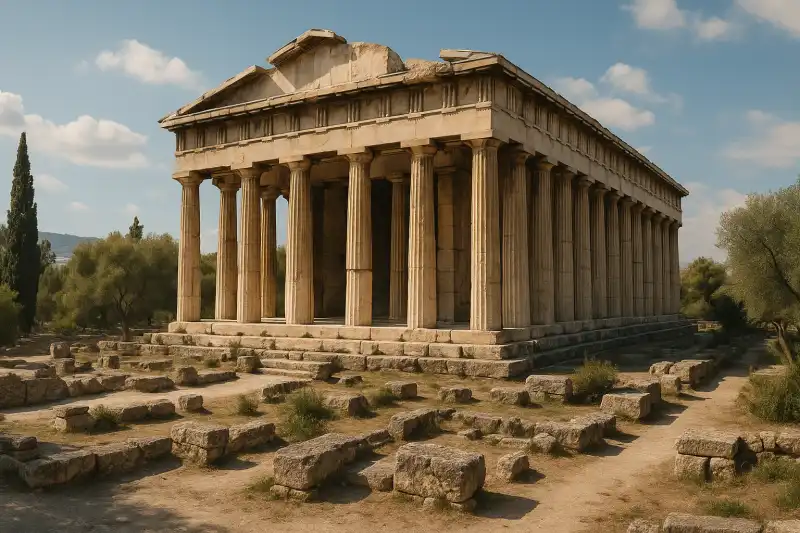
Ancient Agora of Athens Travel Guide 2026: Route, Tickets, and Context
Classical GreekPlan a better Ancient Agora visit with practical timing, monument priorities, and clear historical c...