Quick Info
Curated Experiences
Arykanda Hiking Tour from Finike
Lycia Ancient Sites Multi-Day Tour
Southwestern Turkey Mountain Ruins Tour
Quick Facts
- Location: High in the Taurus Mountains above Finike, southwestern Lycia
- Best for: Hikers, remote archaeology, dramatic mountain views
- When to visit: April-May, September-October (cooler months)
- Entry fee: Around 50 Turkish Lira
- Crowds: Very low - a true off-the-beaten-path site
- What to see: Hellenistic temples, Roman baths, acropolis, theater ruins
A City Built for the Gods
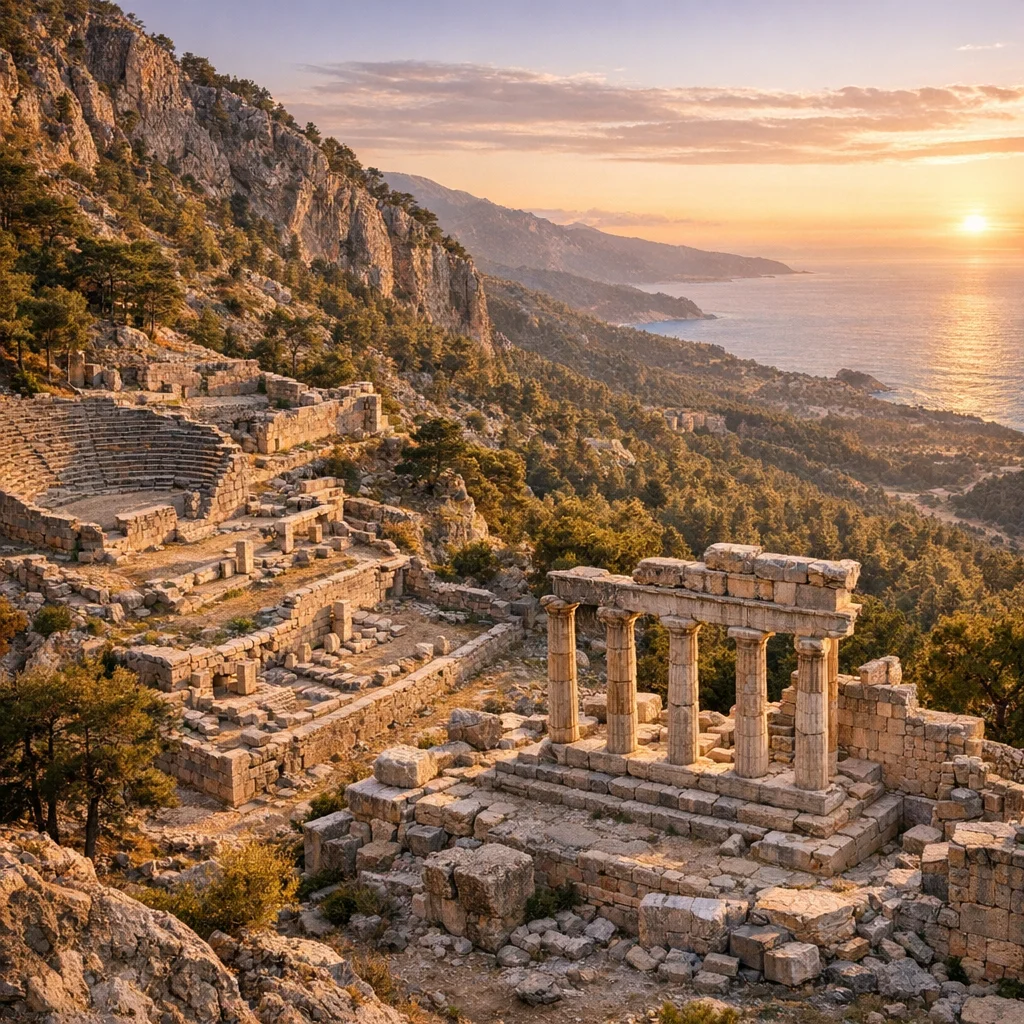
You climb through pine forest toward Arykanda, following a path that has existed for two thousand years. The air cools as elevation increases. The Mediterranean coast disappears behind you. And then the ruins emerge—temples and theaters built on a mountainside with such precision that you wonder how ancients accomplished such engineering without modern tools.
Arykanda is a Lycian city, one of the confederation of coastal cities in southwestern Turkey that maintained unique political and cultural independence even under Roman rule. But unlike the coastal cities of Xanthos and Myra, Arykanda is high—built for defense and ritual rather than trade. The result is a site of extraordinary architectural ambition and natural drama.
Temples of Precision
Arykanda’s most striking feature is its Hellenistic temples, built with the kind of mathematical precision that suggests the architects studied in Alexandria or Athens. The columns are fluted marble, the capitals perfect Corinthian, the entablature carved with sophistication.
The temples are arranged on terraces cut directly into the mountainside. This required moving vast quantities of stone, creating level surfaces where nature provided only slope. The engineering alone demonstrates that Arykanda was wealthy and important—its population commanded resources necessary to reshape terrain.
The temples themselves are small compared to the great sanctuary complexes, but this reflects Lycia’s mountainous terrain and smaller population density. What they lack in scale, they compensate for in positioning: the temples frame views of the mountains and distant coast, creating sacred landscapes where worship and natural beauty intertwine.
Roman Reconstruction
Later, when Rome incorporated Lycia into its empire, Arykanda was reconstructed and expanded with typical Roman infrastructure. The city acquired public baths—remarkable thermal complexes with hypocaust heating systems that warm even the ruins today when sun strikes the stone. Cold, warm, and hot bathing chambers were carved into the cliff face, connected by channels and passages that still appear functional after nearly two millennia.
These baths are among the best-preserved on any mountain site. They suggest that Arykanda maintained prosperity even in the Roman period, when many interior Lycian cities declined in favor of coastal ports. The Romans valued Arykanda—perhaps for its defensibility, perhaps for the military and religious symbolism of controlling the high country.
Theater and Urban Plan
The theater is carved from the mountainside, its seating rising steeply. It’s intimate—designed for a city of perhaps five thousand at its peak. The sight lines are excellent, the acoustics remarkable. Stand on the stage and whisper; the back rows hear you clearly.
Below the theater, the city plan unfolds: streets following contours, houses built into cliff faces, a market square where stone channels conducted water from mountain springs. The infrastructure suggests that even high-altitude Lycian cities had sophisticated urban organization and the civic resources to maintain it.
Hiking and Access
Arykanda is not easily reached by car. Most visitors approach from Finike on the coast, a 30-40 minute drive to the trailhead, then a 45-minute to 1-hour hike ascending approximately 400 meters in elevation. The trail is steep but well-worn, shaded by pine and cedar forests.
The hike is the experience. You’re not simply traveling to a site—you’re retracing an approach that pilgrims, merchants, and soldiers would have taken for centuries. The view from the top—where you can see from the Mediterranean coast to the high Taurus peaks—is worth the exertion alone.
Quietness and Solitude
Few tourists reach Arykanda. Turkish schoolchildren on educational excursions occasionally appear, but compared to major sites, it’s extraordinarily quiet. You sit in the theater and hear birds. You examine temple columns and encounter no other visitors. This isolation is part of Arykanda’s appeal—it preserves something of how ancient sites existed before tourism, when only archaeologists and local shepherds knew them intimately.
Connecting to Lycia
Arykanda should be part of a broader exploration of Lycia’s uniqueness. Visit Xanthos for the political and economic center of the confederation. See Myra for the rock-cut tombs that define Lycian funerary architecture. Experience Tlos for the acropolis fortress. Arykanda completes the picture—a mountain sanctuary that shows how Lycian cities colonized the difficult interior.
Practical Details
Best time: April-May or September-October. Summers are hot even at elevation; winters bring snow.
Physical demands: The hike is moderately strenuous. Good shoes are essential. Water is critical—bring more than you think you’ll need.
Duration: Plan a full half-day: 45 min hike up, 1-2 hours exploring the site, 30-40 min hike down.
Guides: Local guides in Finike can explain recent excavations and provide context. Hiring one is recommended for deeper understanding.
Facilities: None at the site. Bring everything you need.
Photography: The views are exceptional from multiple angles. Early morning or late afternoon light on the temples is particularly striking.
What Arykanda Teaches
Arykanda demonstrates that ancient ambition was not confined to coastal trade cities. Mountains mattered. Sacred places mattered. Defense mattered. And communities invested vast resources in building communities that affirmed their cultural values and religious commitments—even when geography made that difficult.
The city’s decline came not from conquest but from economic shift. When trade routes changed, when coastal cities grew more prosperous, the expense of maintaining a mountain sanctuary became unjustifiable. The people moved down to the coast. The temples were abandoned to weather and time.
The Lycian Cultural Context
Arykanda must be understood within the broader context of Lycian civilization. The Lycian people maintained a distinctive cultural identity throughout antiquity, even under foreign rule. They developed their own script (the Lycian alphabet), worshipped distinctive gods, and maintained burial practices that archaeologists recognize as distinctively Lycian.
The Lycian confederation consisted of approximately twenty independent cities, each maintaining political autonomy while cooperating on matters of common interest. This political structure shaped Lycian responses to external powers—Persian, Greek, and Roman. Arykanda participated in this confederation while developing its own distinctive character as a mountain sanctuary.
The Lycian language appears in inscriptions throughout the region, including at Arykanda. These inscriptions record individual dedications, civic decisions, and religious texts. They demonstrate literacy and administrative complexity. The presence of written records suggests that Arykanda had civic officials, religious functionaries, and educated citizens capable of recording information in writing.
The Sacred Landscape
Arykanda’s temples were not isolated structures but part of a deliberately constructed sacred landscape. The positioning of temples on terraced hillsides created processional pathways that guided worshippers through the sanctuary. Views from the temple complexes encompassed vast territories—the surrounding mountains and distant coast—creating a sense of cosmic hierarchy where the temple occupied the sacred center of the known world.
The commitment to building temples at high altitude, on difficult terrain, speaks to the spiritual importance of the site. The investment of resources to build on mountainsides rather than on more easily accessible low ground indicates that location itself was sacred. The altitude, the difficulty of access, and the commanding views all contributed to the site’s religious significance.
Pilgrims visiting Arykanda would have experienced a journey of increasing spiritual intensity. The hike upward through forests, the emerging views, the encounter with the stone temples—all contributed to a carefully orchestrated religious experience. The architecture worked with landscape to create meaning.
Roman Integration and Persistence
When Rome incorporated Lycia into its provincial system, Arykanda was reconstructed and expanded with Roman infrastructure. The thermal complex built during the Roman period demonstrates continued investment in the site even after political independence was lost. Roman citizens and local populations continued to visit the sanctuary, continued to make offerings, continued to participate in religious ceremonies.
The persistence of Arykanda through the political transitions from independence to Hellenistic rule to Roman incorporation suggests the site’s religious importance transcended political change. Sacred places maintained religious authority across different political regimes. Citizens of different eras and allegiances could agree on the spiritual significance of particular landscapes and structures.
The visible remains show both Lycian and Roman workmanship, both Lycian and Roman architectural styles. This layering of periods is archaeologically valuable—it demonstrates continuity of religious practice even as political systems changed. Pilgrims in the Roman period were visiting a site that had been sacred for centuries, that would continue to hold religious importance until Christianity transformed the religious landscape of the Mediterranean.
The Experience of Solitude
Today, Arykanda’s remoteness is part of its power. Few tourists make the effort to reach it. The absence of crowds allows a more direct encounter with the ruins and the landscape. Sitting in the theater, walking around the temple, ascending the hillside paths, visitors experience what earlier visitors experienced—the encounter with religious architecture in a landscape of mountains and forest.
The precise geometry of the temples, the careful engineering of the baths, the skilled masonry visible in remaining walls—all testify to the capabilities of ancient builders. These were not crude structures built by unsophisticated peoples. These were products of careful planning, mathematical calculation, and skilled labor. The temples were built to endure, built to speak across centuries, built to move and inspire.
Today their precision remains. The view is unchanged. And solitude—genuine solitude in the presence of ancient human ambition—awaits.
Nearby Ancient Sites
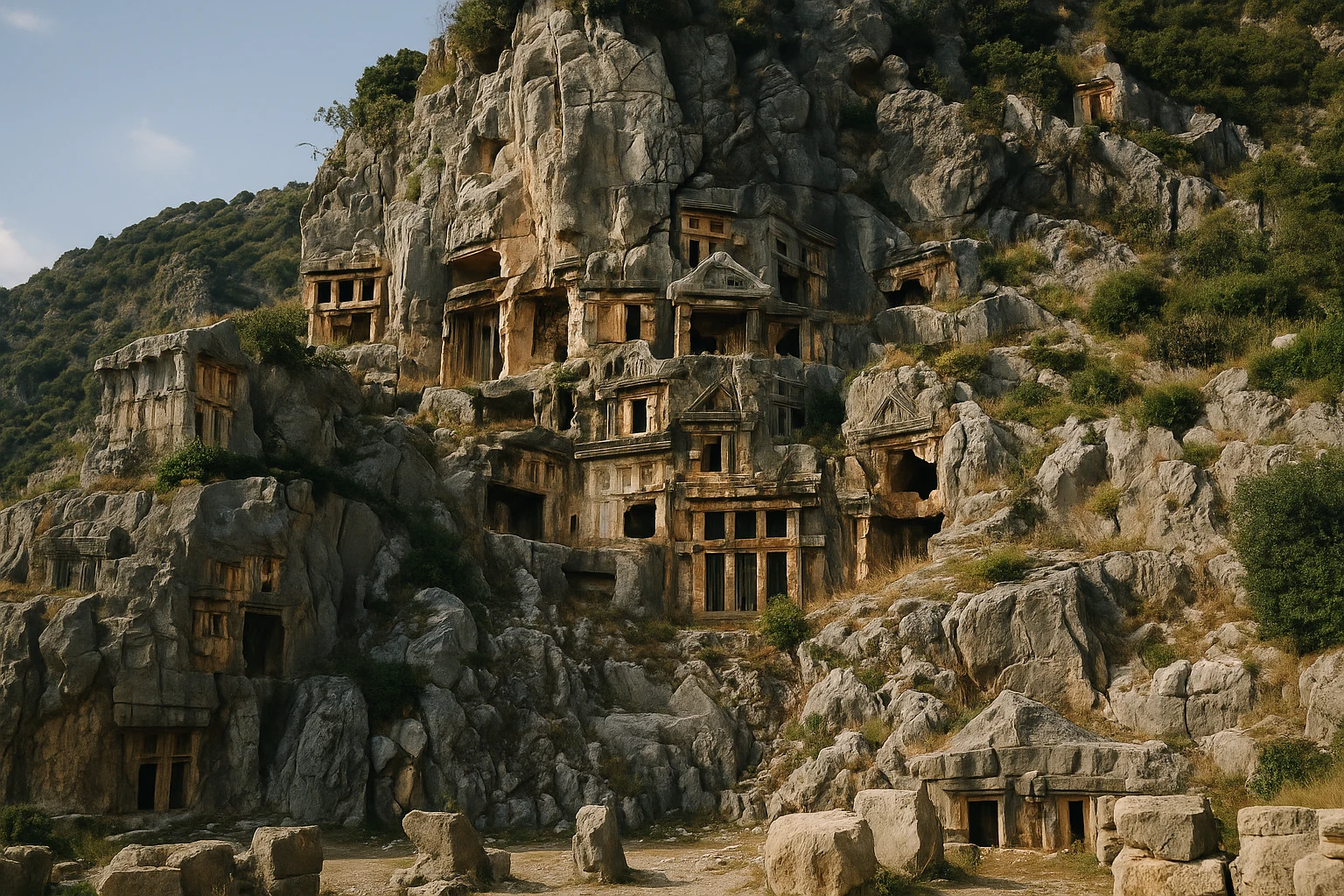
Myra Turkey Guide 2026: Lycian Tombs & Roman Theatre
Lycian-Roman-ByzantinePlan your Myra, Turkey visit with rock-cut Lycian tombs, a Roman theatre, tickets, hours, and transp...
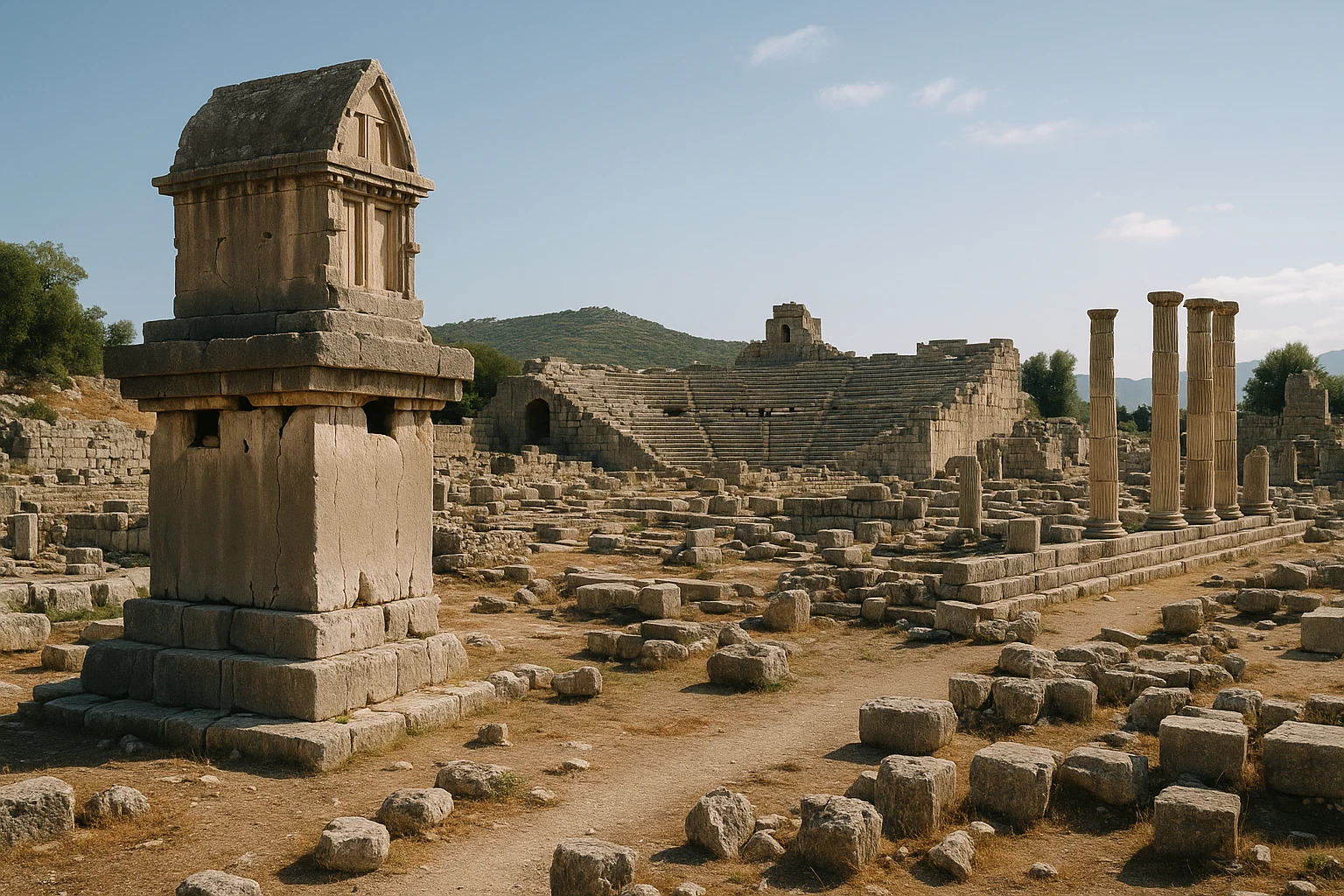
Xanthos Letoon Turkey Guide 2026: Lycian Tombs & Sanctuary
Lycian-Hellenistic-Roman-ByzantineVisit Xanthos and Letoon in Turkey for Lycian tombs, theater ruins, and sacred temples, with practic...
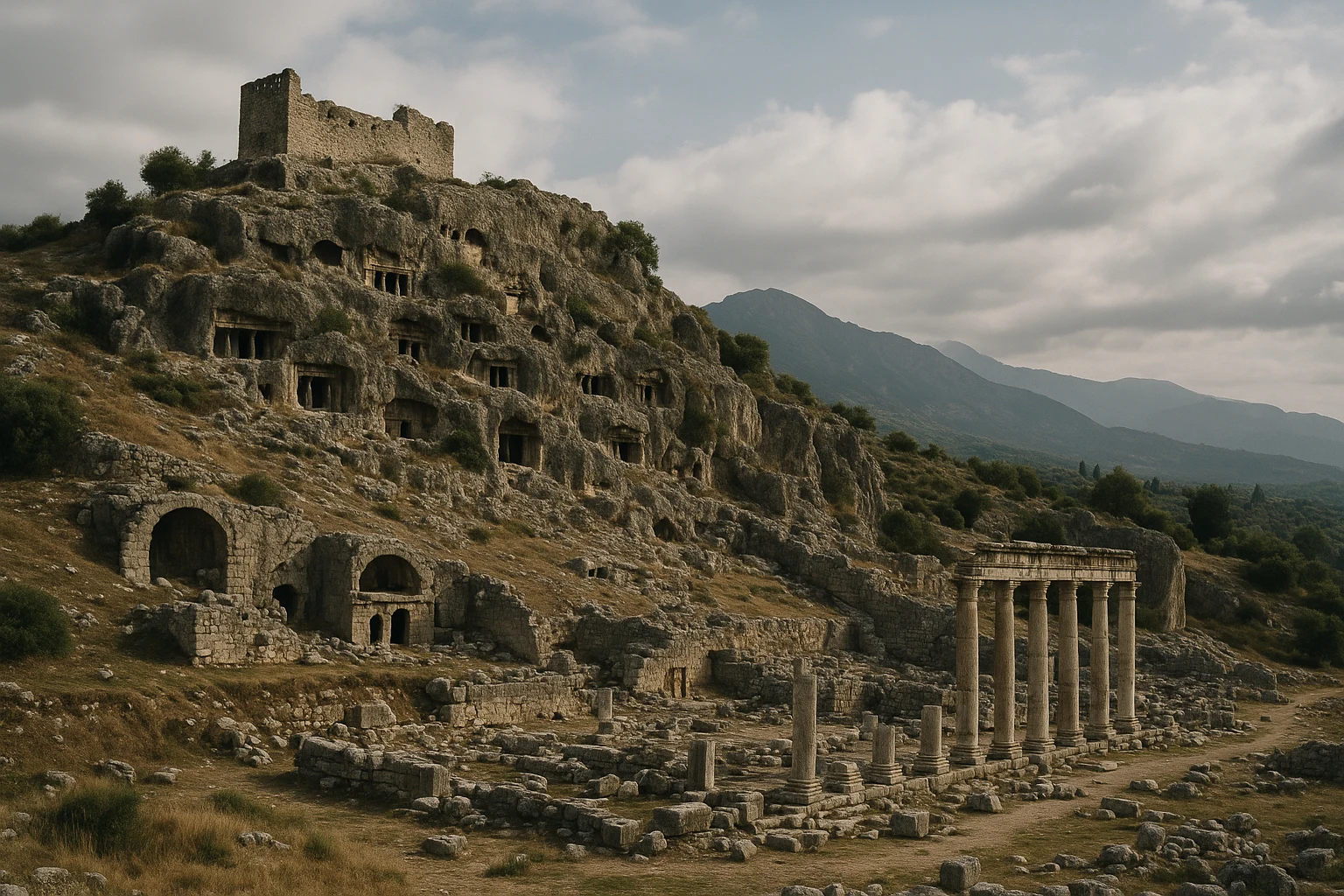
Tlos Turkey Guide 2026: Lycian Tombs & Roman Stadium
Lycian-Hellenistic-Roman-Byzantine-OttomanPlan your Tlos, Turkey visit with cliff tombs, Roman baths, and fortress views, including transport ...