Quick Info
Curated Experiences
Caral and Aspero Full-Day Archaeological Tour from Lima
Sacred City of Caral and Aspero Archaeological Experience
Private Norte Chico Route: Caral, Aspero and Supe Valley
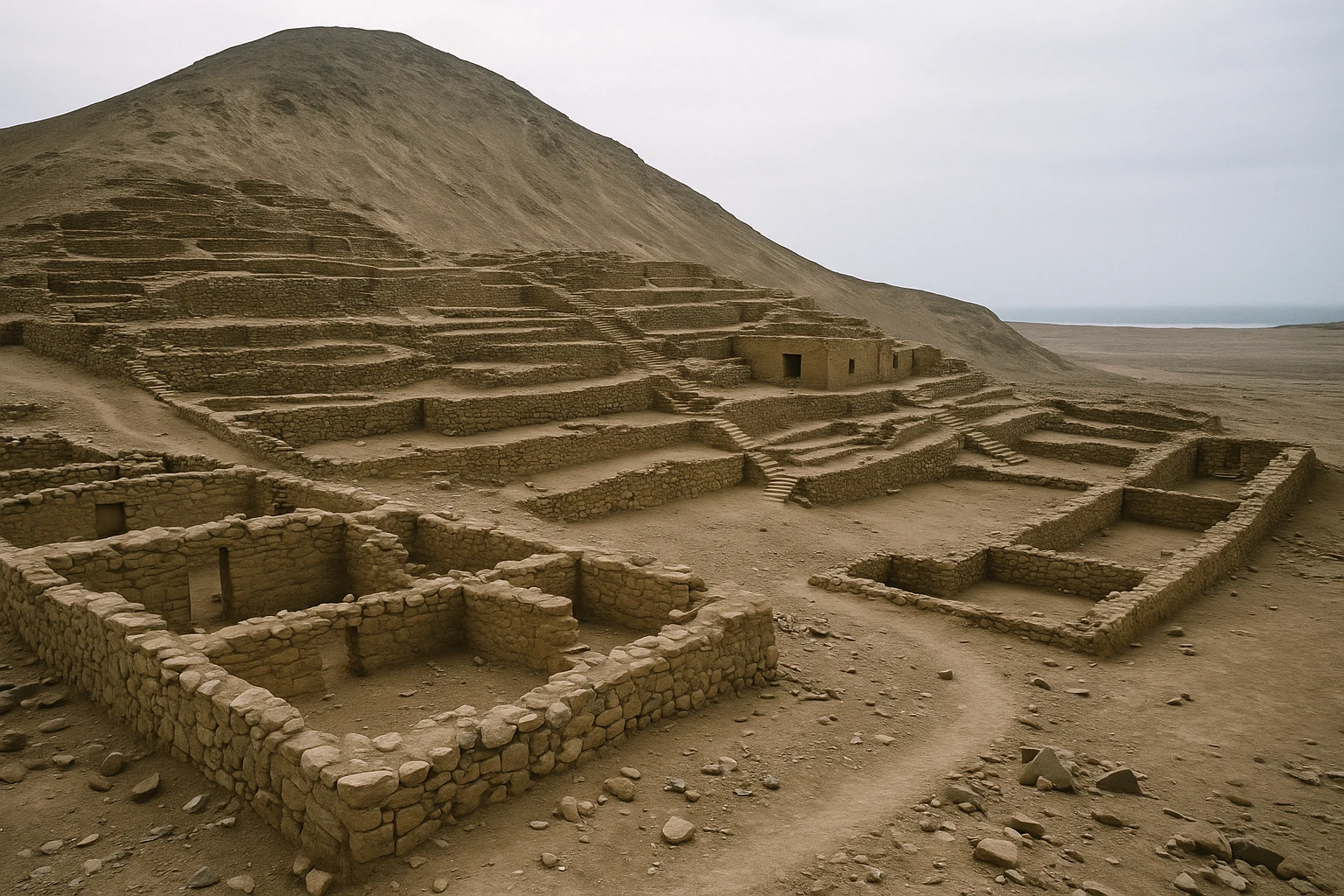
Aspero sits close enough to the Pacific that you can smell salt in the air while walking among some of the oldest monumental architecture in the Americas. If you are looking for an aspero peru travel guide that treats the site as more than a quick add-on to Caral, start here: this is where an early maritime community invested labor, ritual, and engineering into civic space long before the classic empires that dominate most Peru itineraries. In the district around modern Supe Puerto, north of Lima, Aspero reveals a coastal face of the Norte Chico world that often surprises visitors expecting only inland pyramids.
What makes the place memorable is contrast. You are in a fishing landscape, with desert light and marine humidity, yet standing before platform mounds that record social organization on a scale once thought impossible for this era. At Ancient Travels, we recommend seeing Aspero as part of a single historical corridor with Caral-Supe: coast and valley, ritual and exchange, seafood economy and monumental construction. This guide covers the site’s historical arc, the key monuments to prioritize, transport from Lima and nearby hubs, practical admission strategy, seasonal timing, and exactly how to combine Aspero with neighboring destinations without rushing through it.
History: A Coastal Chapter of the First Andean Cities
Early coastal settlement and maritime foundations (c. 3000-2600 BCE)
Archaeological evidence indicates that Aspero developed as a substantial settlement during the Late Archaic period, when communities along Peru’s central coast were intensifying both marine harvesting and social coordination. Rather than a temporary fishing camp, the site shows planned architecture and communal spaces that imply organized labor. People here relied heavily on the Pacific’s productivity—fish, shellfish, and related trade goods—while also maintaining ties with inland valleys. This dual economy helped support non-domestic construction and emerging ritual authority.
Monument building and civic-ceremonial consolidation (c. 2600-2200 BCE)
During its most active monumental phase, Aspero saw the construction and expansion of platform mounds and formal plazas, including structures now identified as elite compounds and ceremonial sectors. On first encounter, the profile of these buildings can seem low compared with later Andean centers, but their planning logic is unmistakable. Terraces, stair access, and bounded spaces suggest repeated gatherings under shared ritual frameworks. In this period, Caral-related cultural networks linked coastal and inland communities, and Aspero appears to have functioned as a strategic node in that broader system.
Exchange, specialization, and regional integration (c. 2400-2000 BCE)
Aspero’s significance was never only architectural. Material patterns suggest the site participated in exchange circuits connecting marine products, cotton, and possibly symbolic items across the Supe region and beyond. Cotton mattered because it enabled fishing technologies such as nets, creating feedback between agriculture and maritime production. This interdependence is one reason scholars treat Norte Chico societies as complex: power did not arise from a single resource, but from coordination between ecological zones. At Aspero, you see the coastal side of that equation in unusually clear form.
Late use, transformation, and partial abandonment (c. 2000-1800 BCE)
Like many early complex settlements, Aspero did not disappear in one dramatic collapse. Instead, occupation patterns shifted over time, with some sectors repurposed and others gradually losing prominence. Environmental pressures, changing exchange priorities, and regional social transformations likely all played roles. The monumental core remained a persistent reference in the landscape even as daily patterns evolved. For visitors, this matters because the site preserves layers of adaptation, not a single frozen moment, and that long rhythm is central to understanding early Andean urbanism.
Modern rediscovery and archaeological research (20th-21st centuries)
Although local communities long knew the mounds, systematic investigation accelerated in the late 20th and early 21st centuries as work in the Caral-Supe region expanded. Archaeologists documented architecture, contextualized Aspero within Norte Chico chronology, and highlighted its coastal identity within one of the world’s earliest centers of civilization. Recent interpretation has emphasized public architecture, social hierarchy, and ritual practice rather than treating the site as a peripheral outpost. Ongoing conservation and visitor infrastructure remain works in progress, but research has already reframed Aspero as a major destination for understanding how complex society developed in Peru.
The Key Monuments: What to See at Aspero
Huaca de los Ídolos
Huaca de los Ídolos is one of Aspero’s best-known monumental sectors and a good place to begin your circuit because it introduces the site’s architectural language quickly: elevated massing, controlled access, and staged spaces for ritual or leadership display. Excavation in and around this sector has produced evidence associated with symbolic practice and high-status activity, which is why the structure is often highlighted in site interpretation. Its form is not theatrical in the later imperial sense; the significance lies in planning and context. Stand back before climbing any approach path and you can read how the mound dominates nearby open ground. For photography, early morning side-light is ideal for bringing out the relief of terraces and edges.
Huaca Alta
At Huaca Alta, the scale feels broader and more civic, with the mound’s footprint helping you visualize repeated communal mobilization over generations. Construction here reflects accumulated episodes rather than a single build event, and that cumulative quality is one of Aspero’s strongest teaching points. You are seeing architecture as social memory: labor invested, reinvested, and maintained to preserve legitimacy. Depending on current access controls, look for transitions between formal approach zones and adjacent open areas that may have accommodated gatherings. Bring a wide lens if you shoot photos, because close framing can flatten the structure’s true dimensions.
Huaca de los Sacrificios
The sector known as Huaca de los Sacrificios carries a name that draws immediate curiosity, but it is most valuable when read carefully through archaeology rather than dramatic assumptions. This mound contributes to the broader picture of differentiated ceremonial architecture at Aspero, where specific compounds likely served distinct ritual and social functions. What survives today includes earthen volumes, structural outlines, and restored edges that help visitors trace original organization. As at many early sites, interpretation evolves with new findings, so treat signage and official guide commentary as part of an active research conversation. If you visit with a guide, ask how this sector compares functionally with Ídolos and Alta; that contrast sharpens the entire site.
Public plazas and circulation spaces
Aspero’s open spaces are as important as its huacas. The plazas and circulation corridors reveal how movement, visibility, and gathering were managed across the ceremonial core. In practical terms, these are the areas where a visitor can best sense social choreography: who approached from where, where people assembled, and how built forms framed collective experience. Even when surface details are fragmentary, the spatial logic remains legible. Walk slowly and look back often; the monuments read differently when seen from the low, open sectors that likely hosted audiences. Mid-morning light usually balances texture and comfort best for this part of the route.
The coastal setting as a monument in itself
A final “feature” worth treating as essential is the coastal landscape surrounding Aspero. This is not decorative backdrop; it is explanatory context. The site’s relationship to marine resources, estuarine dynamics, and nearby routes helps explain why complex construction emerged here. You are effectively reading an archaeological dialogue between sea and settlement. On clear days, the horizon line and ambient wind make the site’s environmental logic obvious in a way no museum panel can replicate. If you have time, pause after your main circuit and simply observe the terrain for ten quiet minutes. It changes the way the architecture makes sense.
Getting There: Transportation and Access
Reaching Aspero is straightforward with planning, but the trip works best when you treat it as a full-day north-coast archaeology run rather than a casual urban detour.
From Lima
Most travelers start in Lima and head north on the Pan-American corridor toward Supe/Barranca, then continue to Supe Puerto for site access. Road conditions are generally manageable, but departure timing matters because city traffic can add significant delay.
- Organized day tour: Typically 11 to 13 hours round trip including Caral combinations, with hotel pickup in many districts; expect roughly S/560-S/750 ($150-$200 USD) per person depending on group size and inclusions.
- Intercity bus + local taxi: Bus fares are often around S/35-S/65 ($9-$17 USD) one way to the Supe/Barranca zone, then a taxi transfer around S/25-S/45 ($7-$12 USD) to Aspero depending on negotiation and waiting time.
- Rental car: About 3.5 to 4.5 hours each way depending on Lima traffic and stops; fuel, tolls, and parking are additional, but this is the most flexible option for pairing Aspero and Caral at your pace.
From Barranca or Supe
If you overnight near Barranca, access becomes much easier and lets you enter earlier with fewer crowds and cooler conditions.
- Taxi direct to site: Common and convenient, often S/20-S/40 ($5-$11 USD) depending on starting point and return arrangement.
- Local colectivo + short taxi: Budget-friendly but slower and less predictable; combined cost is often S/10-S/25 ($3-$7 USD).
- Private driver for half day: Useful if you plan multiple stops; usually negotiated as a fixed package in soles with waiting included.
Admission and Hours
Aspero ticketing and hours can vary with conservation work and seasonal staffing, so verify current details before departure or at the official entry point. As a working baseline, independent travelers should budget around S/10-S/15 ($3-$4 USD) for site entry, with occasional bundled or tour-included arrangements when paired with Caral. Cash in soles is the safest assumption outside major urban ticket offices. Typical visiting windows are daytime, often starting in the morning and ending by late afternoon, with last entry earlier than closing. The best strategy is to arrive early, when temperatures are lower, shadows define architecture more clearly, and guided interpretation can proceed without midday glare.
When to Visit: Seasonal Considerations
Spring (September-November)
Spring is one of the most reliable periods for a comfortable visit, with many days around 18-24°C (64-75°F). Coastal haze can appear, but conditions are usually mild enough for extended walking through exposed sectors. Crowd levels are moderate, especially on weekdays. Light jackets for the morning and sun layers for late morning are a good combination.
Summer (December-March)
Summer brings stronger heat and brighter overhead light, often around 23-30°C (73-86°F) by midday. The site remains visitable, but start as early as possible and carry more water than you think you need. Crowd levels rise during holiday windows and domestic travel peaks. A hat, sunscreen, and breathable clothing become essential rather than optional.
Autumn (April-May)
Autumn is the sweet spot for many travelers and often the ideal season overall, with temperatures commonly around 19-26°C (66-79°F). Visibility can be excellent, and conditions support a slower, more interpretive visit without intense thermal stress. Crowds usually ease compared with high-summer weekends. If you prioritize photography and thoughtful pacing, this is a strong choice.
Winter (June-August)
Winter on Peru’s central coast is cooler and can feel damp from marine humidity, often around 15-21°C (59-70°F). You may encounter overcast mornings, but low crowd levels can make the site feel unusually quiet and contemplative. Bring a light wind layer and shoes with decent grip for compacted-earth surfaces. Winter works very well for travelers who prefer soft light and lower heat.
Combining Aspero with Caral-Supe and the North Coast
Aspero is most rewarding when paired with inland Caral-Supe in one narrative day: sea first, valley second, or the reverse depending on your departure point and heat tolerance.
If you begin from Lima, a strong sequence is to leave around 5:30 AM, reach the coastal zone by 9:00 AM, and walk Aspero’s principal sectors in the cooler part of the day. By 11:00 AM, continue inland toward Caral for a longer monumental circuit and contextual interpretation of how coastal and valley communities interacted. Around 1:30 PM, stop for lunch in Barranca or near Supe—ceviche and seafood-focused menus are common near the coast, while inland stops often serve more traditional set menus. Resume by 2:30 PM for remaining sectors, then start the return drive before commuter peaks.
If you are overnighting locally, invert the logic: visit Caral at opening, break for lunch, and arrive at Aspero by 3:30 PM when light begins to soften. This late window can be especially rewarding for photography because relief lines on mounds become more legible. Either way, plan roughly 7 to 8 hours of on-ground exploration plus transit segments. Travelers with limited time can do a focused Aspero-only half day in about 2 hours on site, but the richest understanding comes from seeing both coastal and inland nodes in a single itinerary.
Practical Information
What to bring
- Sun protection: Hat, sunscreen, and sunglasses are essential because shade is limited across open archaeological sectors.
- Water: Carry at least 1.5 liters per person for warm-season visits; on-site purchase options may be limited.
- Footwear: Closed, grippy shoes work best on dusty paths, uneven compacted surfaces, and occasional low steps.
- Camera or phone with extra battery: You will likely shoot wide frames plus architectural details; battery drain is faster in bright conditions.
- Cash in soles: Bring small bills for entry, taxis, and roadside purchases where card acceptance is inconsistent.
Dress code and etiquette
Aspero is not a formal religious complex in current worship use, so attire standards are practical rather than ceremonial, but respectful clothing is still recommended. Avoid climbing on unmarked structures, stay within indicated paths, and follow ranger or guide instructions around restricted sectors. Drone use may be controlled or prohibited without authorization, so confirm rules before launch.
Accessibility
Access conditions can be challenging for travelers with reduced mobility because surfaces are uneven and routes may include slopes, loose ground, and limited handrail support. Some viewpoints are easier than others, but a fully barrier-free circuit is unlikely at present. If accessibility is a priority, contact the site administration or a specialist operator in advance to confirm current route conditions and assistance options.
Why Aspero Matters
Aspero matters because it dismantles a lazy timeline. Standing here, you are not in the shadow of the Inca or even the great Middle Horizon states; you are in a much earlier world where coastal communities were already organizing labor, ritual, and architecture at civic scale. The site proves that complexity in the Andes did not begin in one place or one ecological niche. It emerged through relationships—between sea and valley, fishers and farmers, ceremonial leaders and working households—long before later empires wrote their own monumental chapters.
For a traveler, that insight changes how Peru unfolds. You stop seeing ancient history as a ladder that starts late and climbs fast, and start seeing it as a deep landscape of parallel experiments in social life. Aspero is quieter than many headline sites, but that is part of its force: the earthworks ask you to look closely, think comparatively, and feel time as accumulation rather than spectacle. Visit with patience, and the coast starts telling one of humanity’s oldest urban stories.
Quick Facts
| Attribute | Details |
|---|---|
| Location | Supe Puerto, Barranca Province, Peru |
| Ancient Name | Aspero (Norte Chico coastal center) |
| UNESCO Status | Part of the Caral-Supe cultural sphere (Caral UNESCO inscription: 2009) |
| Established | c. 3000 BCE coastal settlement |
| Distance from nearest hub | ~190 km from Lima (about 3.5-4.5 hours by road) |
| Entry Fee | Typically around S/10-S/15 ($3-$4 USD), verify current rates |
| Hours | Daytime access, commonly morning to late afternoon (confirm locally) |
| Best Time | Autumn and spring mornings for cooler weather and clearer light |
| Suggested Stay | 1.5-2.5 hours (or full day when combined with Caral) |
| Primary Civilization | Norte Chico / Caral tradition |
Explore More Peru
- Caral-Supe: The inland monumental capital that contextualizes Aspero’s coastal role.
- Huaca Pucllana: A major pre-Hispanic adobe complex in Lima with strong museum interpretation.
- Chavín de Huántar: A highland ceremonial center that shows a later phase of Andean religious development.
- Chan Chan: Monumental adobe urbanism on Peru’s north coast from a much later era.
Plan your broader archaeology route through Peru with our Peru Ancient Sites Guide. For route design tips, see How to Plan a Multi-Site Peru Itinerary.
Frequently Asked Questions
How much time should I plan for Aspero?
Plan 1.5 to 2.5 hours on site for a complete circuit of the principal huacas, plazas, and interpretive areas. If you are pairing Aspero with Caral-Supe in one day from Lima, reserve a full 11 to 13 hours including road time. Start early so you can visit Aspero in cooler coastal light.
Is Aspero included with a Caral ticket?
Ticket policies can change seasonally, so confirm at the official entrance or through your operator before departure. In practice, many organized day trips bundle both Caral and Aspero logistics in one package. If traveling independently, carry enough soles in cash for entry and local transport contingencies.
What is the best time of year to visit Aspero?
Late autumn through spring is usually the most comfortable for walking exposed archaeological sectors, with milder daytime temperatures and softer light. Summer can still work, but heat and glare are stronger by midday. Aim for morning visits year-round for better conditions and clearer photography.
How do I get to Aspero from Lima without a tour?
You can take an intercity bus north toward Supe/Barranca and continue by taxi to Supe Puerto and the site entrance. The total one-way journey typically takes around 3.5 to 4.5 hours depending on traffic and transfer timing. Renting a car offers the most flexibility if you also plan to visit Caral.
What will I actually see at Aspero?
Aspero preserves monumental platform mounds, circular and rectangular public spaces, and elite architectural compounds linked to one of the earliest complex societies in the Americas. You are looking at ceremonial and civic construction from the Late Archaic period, not Inca-period remains. The scale is subtle but historically extraordinary.
Is Aspero safe for tourists?
Yes, Aspero is generally safe when visited during daylight with normal travel precautions. Use registered transport, keep valuables discreet, and bring sun protection because shade is limited across open sectors. If visiting independently, let someone know your route and expected return time.
Nearby Ancient Sites
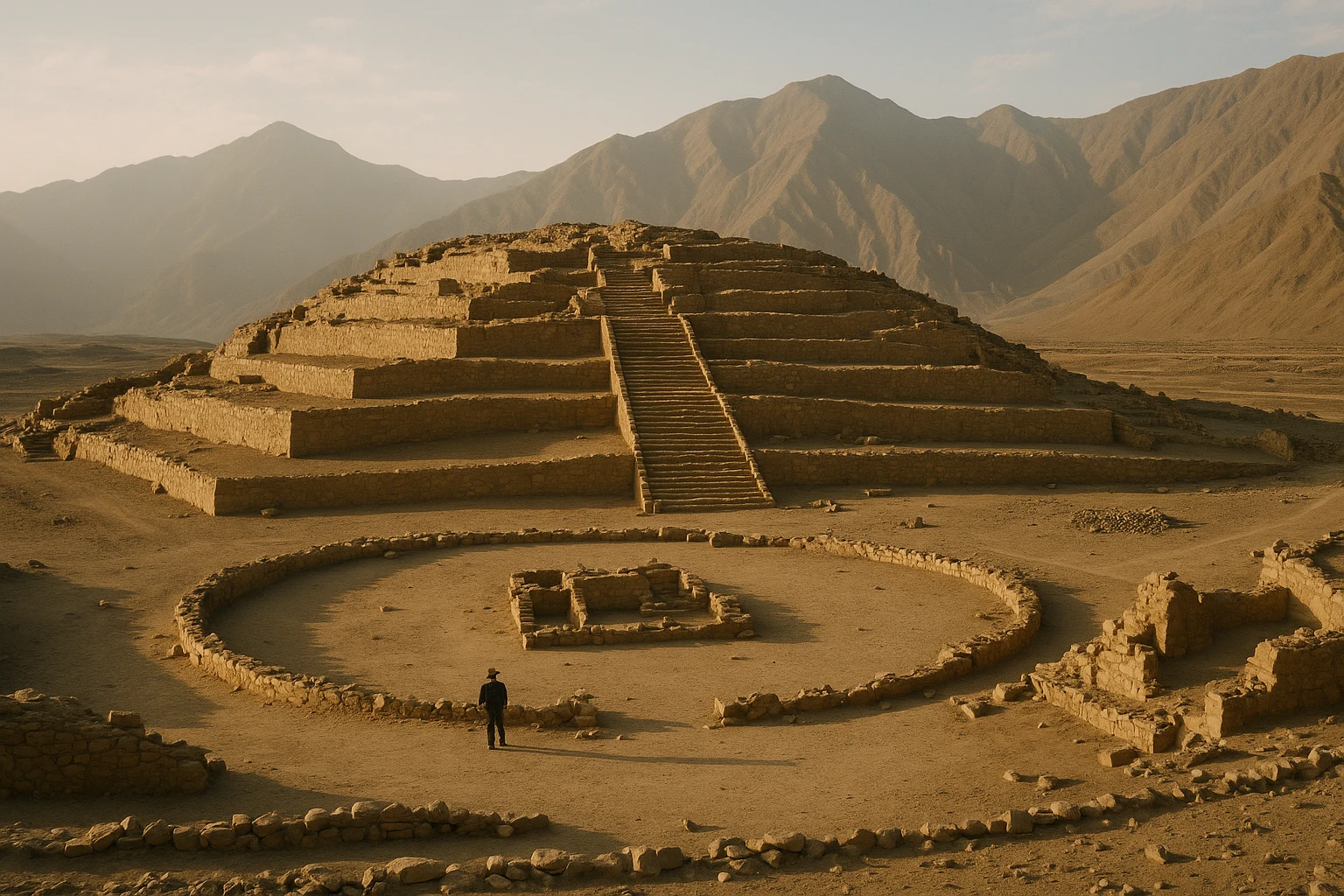
Caral-Supe Peru Guide 2026: Sacred Pyramids & the First Andean City
Norte-Chico-CaralVisit Caral-Supe in Peru, the oldest known city in the Americas, with practical transport from Lima,...
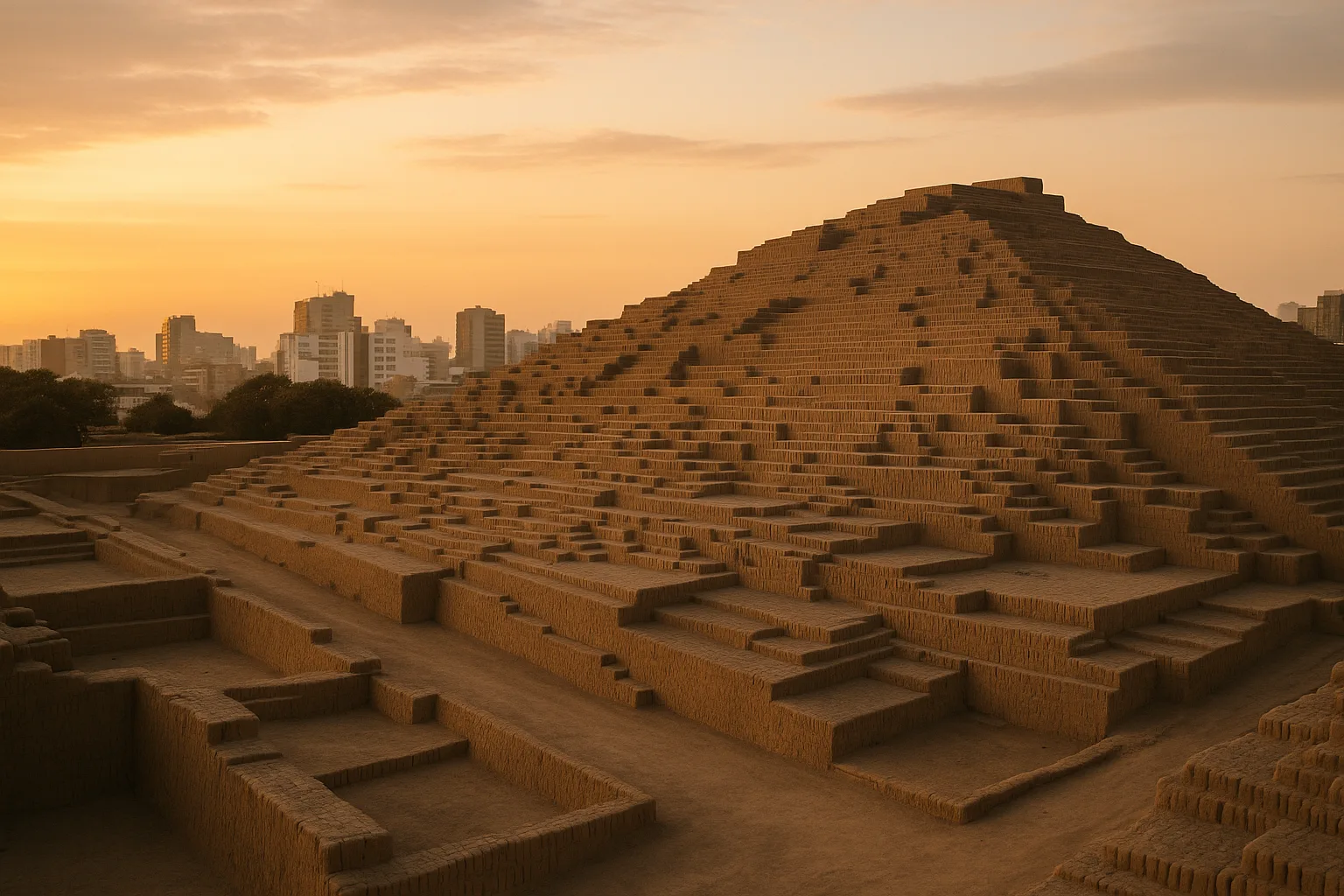
Huaca Pucllana Peru Guide 2026: Lima Adobe Pyramid & Lima Culture
Lima-Ychsma-IncaExplore Huaca Pucllana in Lima: pre-Inca adobe pyramid architecture, museum circuit, practical entry...
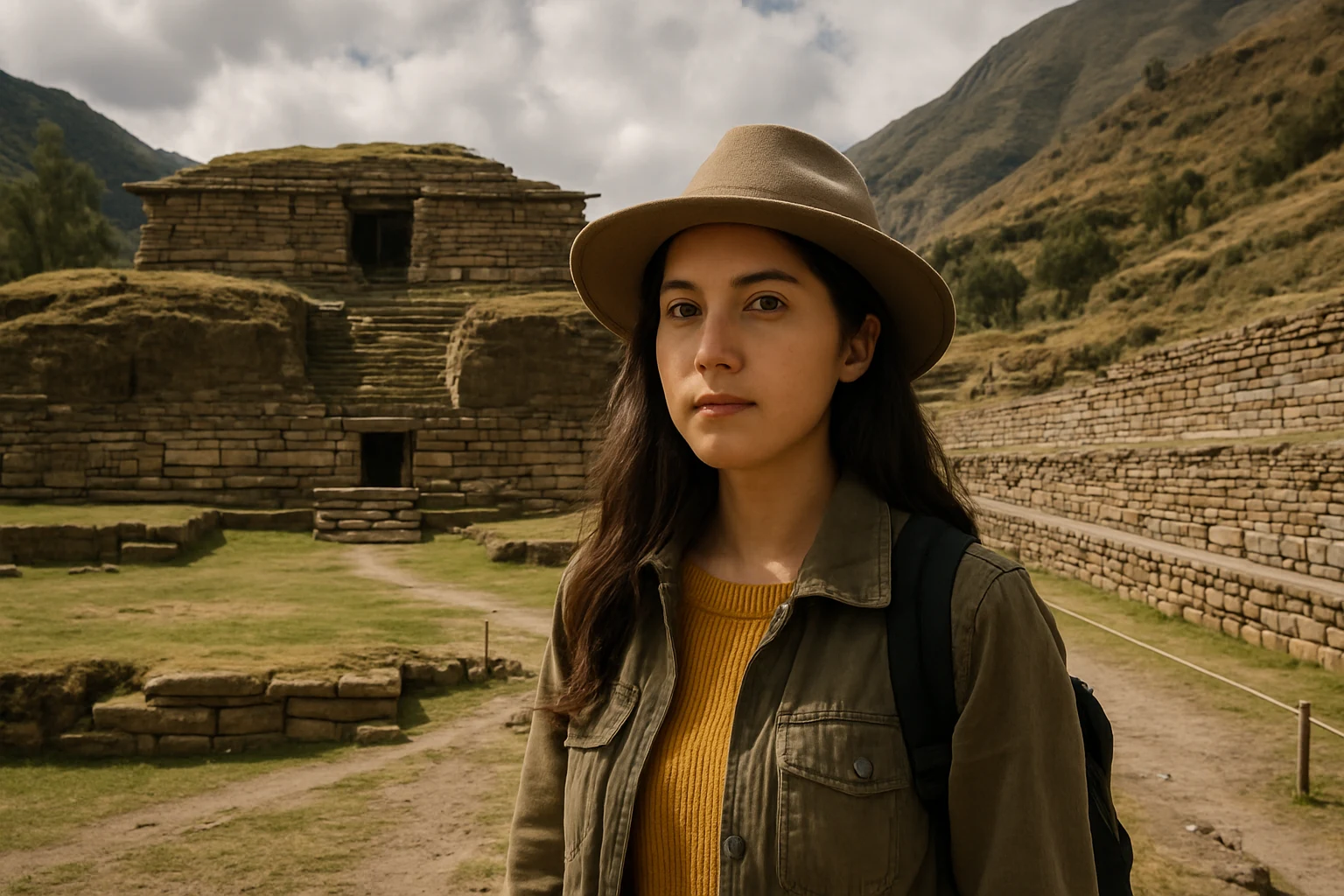
Chavin de Huantar Peru Guide 2026: Lanzon & Temple Galleries
Chavin-Highland Andean-Inca-Modern PeruvianPlan Chavin de Huantar, Peru: see the Lanzon and sunken plaza, reach the site from Huaraz, and time ...