Quick Info
Curated Experiences
Troy Tour from Izmir
Troy and Assos Private Tour from Çanakkale
Ancient Troad Full-Day Cultural Tour
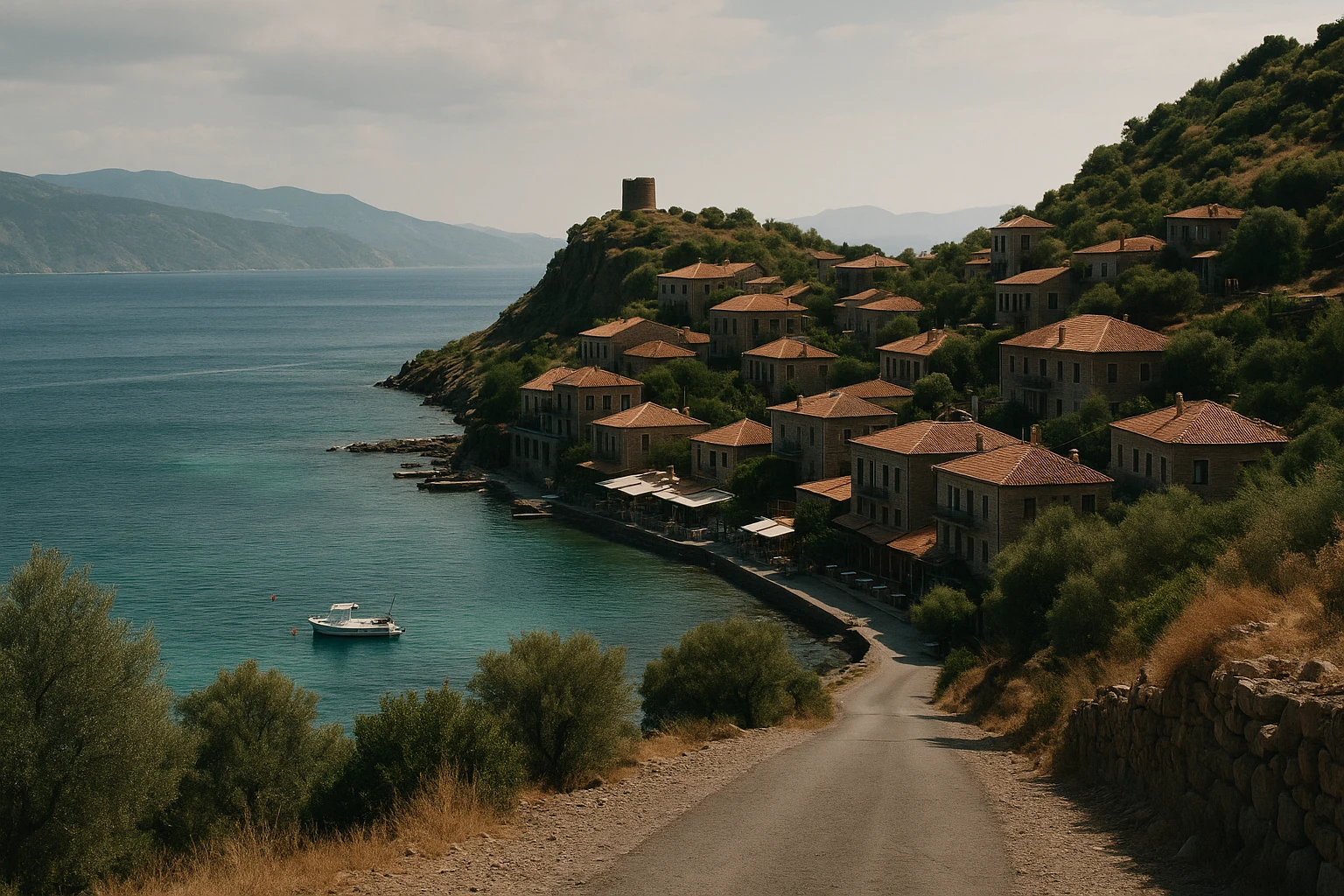
At the edge of a volcanic ridge above the Aegean, where olive groves fall toward a blue strait and the island of Lesbos hovers on the horizon, the broken columns of the Temple of Athena stand in wind and salt light. This is Assos, in Turkey’s Çanakkale province: a city that looks less like a museum set and more like a lived-in palimpsest, where ancient masonry, Ottoman village houses, and fishing boats still occupy the same steep terrain. You do not approach Assos through a grand ceremonial gate. You climb. The road coils upward to Behramkale, then the final ascent brings you to an acropolis that feels like a stone ship launched toward the sea.
Assos matters because it holds several histories in one compact landscape: an Aeolian Greek colony, a philosophical center associated with Aristotle, a fortified Hellenistic and Roman town, and a medieval-Ottoman settlement that never fully detached from the ancient bones beneath it. Ancient Travels recommends Assos not for spectacle on the scale of Ephesus, but for perspective. Here you can read military geography, sacred architecture, trade networks, and daily life in a single half-day circuit. This guide walks you through the site’s layered history, what to see on the hill and at the harbor, how to get there from Çanakkale and Izmir, and how to combine Assos with nearby Troy for one of the strongest archaeological days in northwestern Turkey.
History: A Citadel Between Sea Lanes and Empires
Early settlement and Aeolian foundation (c. 7th century BCE)
The hill above modern Behramkale had earlier occupation, but the city recognizable as Assos emerged in the Archaic period, when Aeolian Greeks established a fortified settlement controlling coastal movement along the southern Troad. Its position was strategic rather than ornamental. From this ridge, inhabitants could monitor shipping lanes in the northeastern Aegean and traffic through nearby gulfs and anchorages. The city’s high acropolis, defensible slopes, and access to workable volcanic stone gave it military and architectural advantages from the beginning. By the 6th century BCE, Assos had become a regional node, integrated into wider Aegean exchange networks in pottery, olive products, and maritime trade.
Philosophers, power struggles, and the age of Hermias (4th century BCE)
Assos reached unusual intellectual prominence in the 4th century BCE under Hermias of Atarneus, the ruler who attracted philosophers from Plato’s Academy. Most famously, Aristotle spent time in Assos after leaving Athens, teaching and writing in a period that shaped his biological and political thought. This is not just a romantic anecdote: it signals the city’s role as a serious cultural outpost rather than a marginal port. Politically, however, Assos remained exposed to larger forces. Persian influence, regional rivalries, and later Macedonian expansion pressed constantly on the Troad. Like many Anatolian cities, Assos survived by adapting to shifting hegemonies while preserving local institutions.
Hellenistic and Roman urban life (3rd century BCE-4th century CE)
After Alexander’s campaigns, Assos became part of the Hellenistic kingdoms and later the Roman imperial system. Defensive walls were strengthened, urban terraces expanded, and civic architecture adapted to Roman administrative and social patterns. The acropolis sanctuary remained symbolically central, while lower districts and the harbor served commerce, storage, and movement of goods. Roman Assos never rivaled Ephesus in scale, but that is partly why the site is so legible today. You can still trace how a medium-sized coastal city functioned: sacred summit, inhabited slopes, necropolis zones outside the core, and maritime infrastructure at the waterline. It is an excellent case study in regional urbanism.
Byzantine continuity, Ottoman village life, and archaeology (5th century CE-present)
Assos did not vanish with late antiquity. Through Byzantine centuries and later Ottoman settlement, parts of the site remained inhabited, reused, and rebuilt. Spolia from ancient structures entered village walls and houses, blurring boundaries between “ruin” and “living town.” Systematic archaeological work began in the late 19th century and expanded through 20th- and 21st-century campaigns, clarifying temple phases, fortification lines, and settlement organization. Modern conservation now balances tourism, local life, and ongoing research. What you experience at Assos is therefore not a frozen classical postcard but a long continuum of adaptation, where every era reused the topography and stone logic inherited from those before it.
The Key Monuments: What to See at Assos
Temple of Athena on the acropolis
The signature monument at Assos is the Temple of Athena, perched on the highest point of the site with uninterrupted views to Lesbos. Built in the late 6th century BCE and later modified, the temple combines Doric structural logic with local and eastern decorative tendencies that mark western Anatolia’s hybrid architectural language. Much of the superstructure is lost, but surviving column drums, capitals, foundations, and reconstructed standing elements make the footprint and orientation easy to read. What gives the temple unusual force is its setting: this sanctuary is not enclosed by dense urban remains, so sky and sea become part of the architecture. At sunset the limestone and volcanic stone shift to copper and rose tones, and the columns silhouette against open water. Photography tip: arrive 60-90 minutes before sunset and shoot both westward sea views and eastward angles where village stonework frames the temple remains.
The fortification walls and gates
Assos preserves one of Anatolia’s most impressive surviving systems of ancient fortification, especially in sections of Hellenistic curtain wall and towers stepping along the slopes. Built from dark local andesite blocks, these defenses show careful adaptation to topography: bastions secure vulnerable turns, gates sit where movement can be controlled, and the wall line exploits natural drop-offs to multiply defensive depth. Walking these stretches gives a physical sense of pre-modern military planning in a coastal frontier zone. Unlike isolated wall fragments at some sites, the Assos system still communicates enclosure and scale. Stand at a tower line and you can understand exactly why this ridge mattered to every power contesting the Troad. Photography tip: early morning side light reveals masonry joints and drafted stone edges far better than overhead midday sun.
Necropolis and lower urban terraces
Beyond and below the acropolis lie scattered remains of the necropolis and lower habitation zones, where sarcophagi, rock-cut features, and terrace walls indicate how Assos organized life and death around its steep core. Many visitors rush through these areas on the way to the harbor, but they are essential for understanding the city’s social geography. Burial zones outside primary residential space followed broad Mediterranean practice, while terraced construction inside the settlement maximized limited flat ground. The result is a vertically arranged city in which ritual, domestic life, and defense occupy distinct altitudes yet remain tightly connected by paths and stairways. This is where Assos feels most human in scale: not monumental, but intensely practical and durable.
The old harbor (ancient and modern continuity)
At sea level, Assos’s old harbor preserves the logic that sustained the hilltop city for centuries. Today’s small waterfront restaurants and guesthouses sit beside ancient blocks, reused quays, and retaining structures that indicate long maritime continuity. In antiquity, this was the working face of Assos: goods landed here, fish and agricultural products moved outward, and travelers entered the city through a demanding uphill route to the acropolis. Visiting both top and bottom is essential because the two zones explain each other. The acropolis offered defense and prestige; the harbor offered survival. Photography tip: if you can split your visit, shoot harbor blue hour after sunset on the hill, when warm lights reflect on the water and the upper ridge darkens into silhouette.
The Behramkale village fabric
Strictly speaking, Behramkale’s Ottoman-era lanes are not an “ancient monument,” but they are part of the Assos experience and should be treated as cultural infrastructure, not background scenery. Stone houses, small courtyards, and narrow passages incorporate reused ancient material and follow the same terrain constraints that shaped earlier settlement. The village mediates between visitors and archaeology, reminding you that Assos is inhabited landscape, not isolated ruin park. Moving slowly through the lanes also improves site comprehension: you feel gradient, orientation, and wind exposure in your own body, which helps explain why certain walls, terraces, and sanctuary alignments were built where they were.
Getting There: Transportation and Access
Assos is reachable without heroic logistics, but it rewards planning because schedules in the Troad are less frequent than on Turkey’s big intercity corridors.
From Çanakkale
Çanakkale is the easiest base for most travelers visiting Assos and Troy together. The drive to Behramkale generally takes about 1 hour 15 minutes to 1 hour 30 minutes, depending on season traffic.
- Rental car: Most flexible option; about 75-90 minutes each way via Ayvacık, with parking near the village approach.
- Taxi/private transfer: Around 2,500-3,800 TRY ($80-120 USD) round trip depending on wait time and season; negotiate return and driver standby in advance.
- Dolmuş/minibus: Budget-friendly but less frequent; routes typically involve Ayvacık connections and can stretch total transit to 2-3 hours each way.
From Izmir and the south Aegean
Assos can be reached from Izmir for travelers doing a northbound archaeology route (Ephesus-Pergamon-Troy). The trip is significantly longer than from Çanakkale and best handled as an overnight circuit.
- Rental car: Roughly 3.5-4.5 hours depending on traffic and stops.
- Long-distance bus + connection: Izmir to Ayvacık, then local transfer to Behramkale; practical but time-consuming.
- Organized day tour: Available seasonally; check inclusions carefully, since some products prioritize Troy and stop briefly at Assos viewpoints.
Admission and Hours
Assos archaeological entry is generally around 12 EUR (about 430-450 TRY, approximately $13-15 USD), though official rates can change and should be verified before departure. Typical opening windows are around 8:30 AM to 7:00 PM in summer and shorter in winter. Card payment is usually available, but carrying cash is wise in case of outages. The acropolis is exposed and wind-prone: for comfort and best photography, target early morning or late afternoon rather than midday.
When to Visit: Seasonal Considerations
Spring (March-May)
Spring is the best all-around season for Assos. Daytime temperatures usually range from 15-24°C (59-75°F), with greener hillsides and clear maritime visibility. Crowds are moderate except on holiday weekends. Light is soft and contrast manageable, ideal for wall textures and wide sea panoramas. Bring a light layer for wind on the acropolis even when the harbor feels warm.
Summer (June-August)
Summer brings strong heat and bright glare, often 28-35°C (82-95°F) and occasionally higher on exposed stone. Crowd levels rise, especially in July and August when coastal tourism peaks. The site has limited shade, so hydration and sun protection are non-negotiable. If visiting in summer, start as close to opening as possible or arrive in late afternoon for sunset conditions.
Autumn (September-November)
Autumn is excellent and often underrated, with temperatures around 18-29°C (64-84°F) in early fall, cooling later in the season. Sea haze can be lower than midsummer, producing crisp horizon lines toward Lesbos. Crowds ease after school holidays, making it easier to enjoy the temple platform without waiting for photos. This is the strongest shoulder season for travelers combining multiple western Turkey sites.
Winter (December-February)
Winter is the quietest period, typically 7-14°C (45-57°F), with wind and intermittent rain. The moody atmosphere suits Assos’s stony profile, and you may have long stretches nearly to yourself. Shorter daylight and occasional weather disruptions can limit harbor-acropolis double circuits, so plan a flexible schedule and waterproof layers. For solitude and reflective pacing, winter can be deeply rewarding.
Combining Assos with the Troad and North Aegean
Assos works best as part of a deliberate regional day, not a rushed photo stop. The strongest pairing is Troy plus Assos from Çanakkale. Start early and drive to Troy for opening, aiming to enter around 8:00 AM before major tour waves. Spend about three hours moving through the wall circuits, trench stratigraphy, and museum context. By 11:30 AM, head south toward Behramkale through olive country and low ridgelines, arriving around 1:00 PM for lunch in the village. A simple meal of grilled fish, meze, and seasonal vegetables gives you a slower reset before climbing to the acropolis.
Reach the Temple of Athena zone by 3:00 PM and use the next two hours for fortification walks and western viewpoints. The best emotional arc is to remain on the summit toward sunset, when the Aegean horizon softens and the temple fragments begin to read as silhouette rather than ruin. Around 5:30-6:00 PM (season dependent), descend for harbor dinner if you’re staying overnight, or return to Çanakkale if driving back same day.
If you have only half a day, choose Assos alone and do it in two elevations: acropolis first, then harbor. That split is the key to understanding why the city existed at all. Total combined time on site, including village transitions, is usually 4-5 hours. Walk times between parking, village lanes, and the temple are short in distance but steep in gradient, so build in buffer time.
Practical Information
What to bring
- Sun protection: Hat, sunscreen, and sunglasses are essential from April to October.
- Water: Carry at least 1 liter per person; more in summer.
- Footwear: Closed-toe shoes with grip for cobbles, dust, and uneven stone.
- Wind layer: A light jacket helps on the acropolis, especially at sunset.
- Cash backup: Useful for small purchases, parking, or card-terminal delays.
Dress code and etiquette
Assos is not a formal religious compound, but respectful dress is still the right approach in village areas: avoid beachwear away from the harbor, and keep voices low in narrow residential lanes. Ask before photographing people, private doorways, or family-run terraces. A polite greeting in Turkish goes a long way and usually earns warmer local guidance on paths and viewpoints.
Accessibility
Assos can be challenging for visitors with mobility limitations. Terrain includes steep inclines, uneven paving, and steps between key zones. Some viewpoints are reachable with minimal walking, but full-site coverage is difficult without strong mobility. If accessibility is a concern, prioritize selected acropolis viewpoints by vehicle drop-off and consider skipping the harbor descent unless assistance is available.
Why Assos Matters
Assos matters because it strips archaeology back to first principles: geography, memory, and endurance. You stand at the Temple of Athena and see why people fought to hold this ridge, why sailors steered toward this coast, and why philosophers found a place here to think about politics, nature, and human life. The city never became an imperial capital, and that is part of its value. Assos preserves the scale at which most ancient people actually lived: defended, connected, improvisational, and in constant negotiation with wind, stone, and sea.
In a region famous for blockbuster ruins, Assos offers something rarer — proportion. It teaches you how sacred space, military architecture, village continuity, and maritime economy fit together in one coherent landscape. By the time evening light settles over the acropolis and Lesbos fades into mauve distance, the broken columns feel less like fragments of loss and more like markers of persistence. Assos does not overwhelm you. It stays with you.
Quick Facts
| Attribute | Details |
|---|---|
| Location | Behramkale (Assos), Çanakkale Province, Turkey |
| Ancient Name | Assos |
| UNESCO Status | Tentative List (Archaeological Site of Assos, 2017) |
| Established | c. 7th century BCE city foundation |
| Distance from nearest hub | ~88 km from Çanakkale (about 1 hr 20 min by car) |
| Entry Fee | ~12 EUR (about 430-450 TRY, ~$13-15 USD) |
| Hours | Typically ~8:30 AM-7:00 PM (shorter in winter) |
| Best Time | Spring and autumn; sunset for photography |
| Suggested Stay | 3-5 hours (half day), longer with harbor meal |
| Civilizations | Aeolian Greek, Hellenistic, Roman, Byzantine, Ottoman continuity |
Explore More Turkey
- Troy: Nine archaeological layers where Late Bronze Age history and epic tradition intersect.
- Pergamon: A dramatic acropolis city with major Hellenistic and Roman remains.
- Ephesus: The most complete Roman urban landscape in Turkey.
- Plan your wider route with our Turkey Ancient Sites Guide.
- For trip planning basics, read our beginner’s guide to archaeological travel.
Frequently Asked Questions
How much time should I plan at Assos?
Plan 2-3 hours for the acropolis and Temple of Athena, plus another 1-2 hours if you also descend to the old harbor. If you like slow photography and sea views, Assos easily fills half a day. Combining it with Troy makes for a full day from Çanakkale.
What is the best time to visit Assos?
Spring and autumn are ideal, with mild temperatures and clear Aegean light. In summer, visit early morning or near sunset because the acropolis has little shade and midday heat can be intense. Winter can be atmospheric but windier and occasionally rainy.
How much does Assos cost and are there passes?
Entry to the archaeological zone is typically around 12 EUR (about 430-450 TRY, roughly $13-15 USD), though prices can change seasonally. MuseumPass Türkiye may cover Assos depending on current terms, so check validity before arrival. Keep a card and some cash available in case payment systems are slow.
How do I get to Assos from Çanakkale?
The simplest option is rental car, taking around 1 hour 20 minutes via Ayvacık. Shared minibuses (dolmuş) run to Behramkale but are less frequent than city routes and may require a transfer. Taxis are possible but expensive for round trips unless negotiated with waiting time.
What are the main highlights at Assos?
The Temple of Athena on the acropolis is the headline monument, especially for sunset over the Aegean and Lesbos. You'll also see Hellenistic and Roman fortifications, necropolis remains, and the steep stone lanes of Behramkale village. The old harbor below preserves the maritime character that made Assos strategically important.
Is Assos suitable for families or travelers with limited mobility?
Families who enjoy open-air ruins usually love Assos, but the terrain is steep and uneven with cobbles and stairs. Visitors with limited mobility should plan extra time and focus on selected viewpoints rather than trying to cover the whole slope. Good footwear and sun protection are essential for everyone.
Nearby Ancient Sites
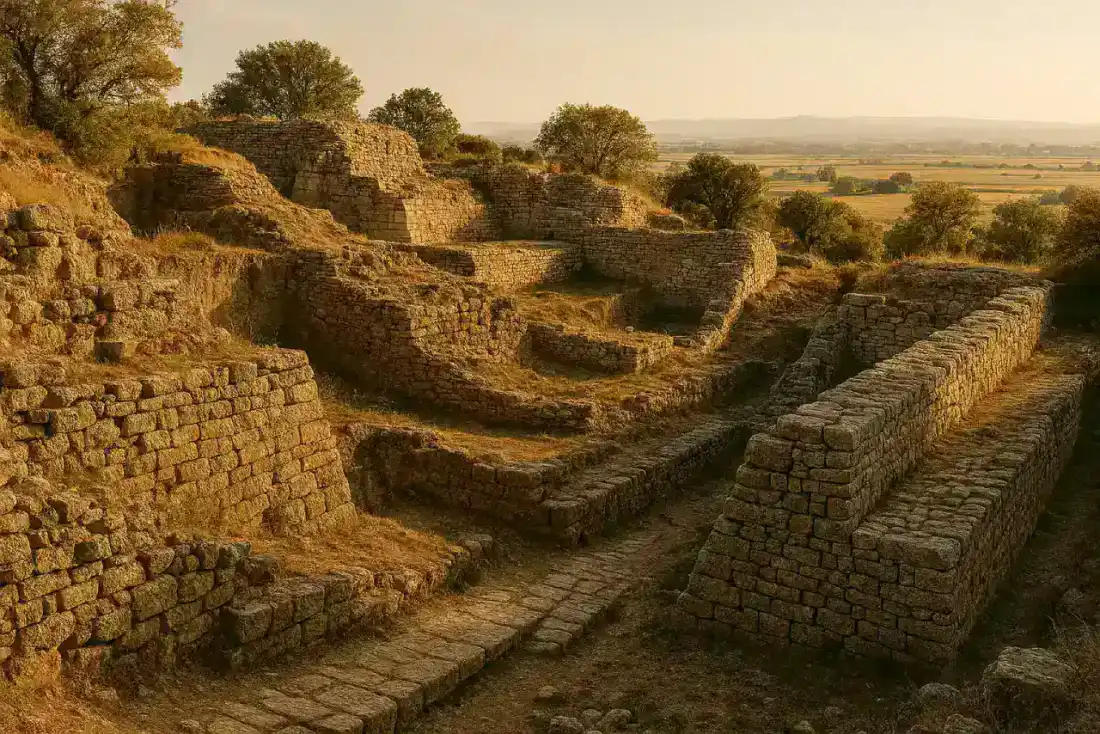
Troy Turkey Travel Guide 2026: Legendary City of Homer's Iliad
Multiple (Nine Layers)Walk the walls of ancient Troy, the legendary city of Helen and the Trojan Horse. Our guide covers n...
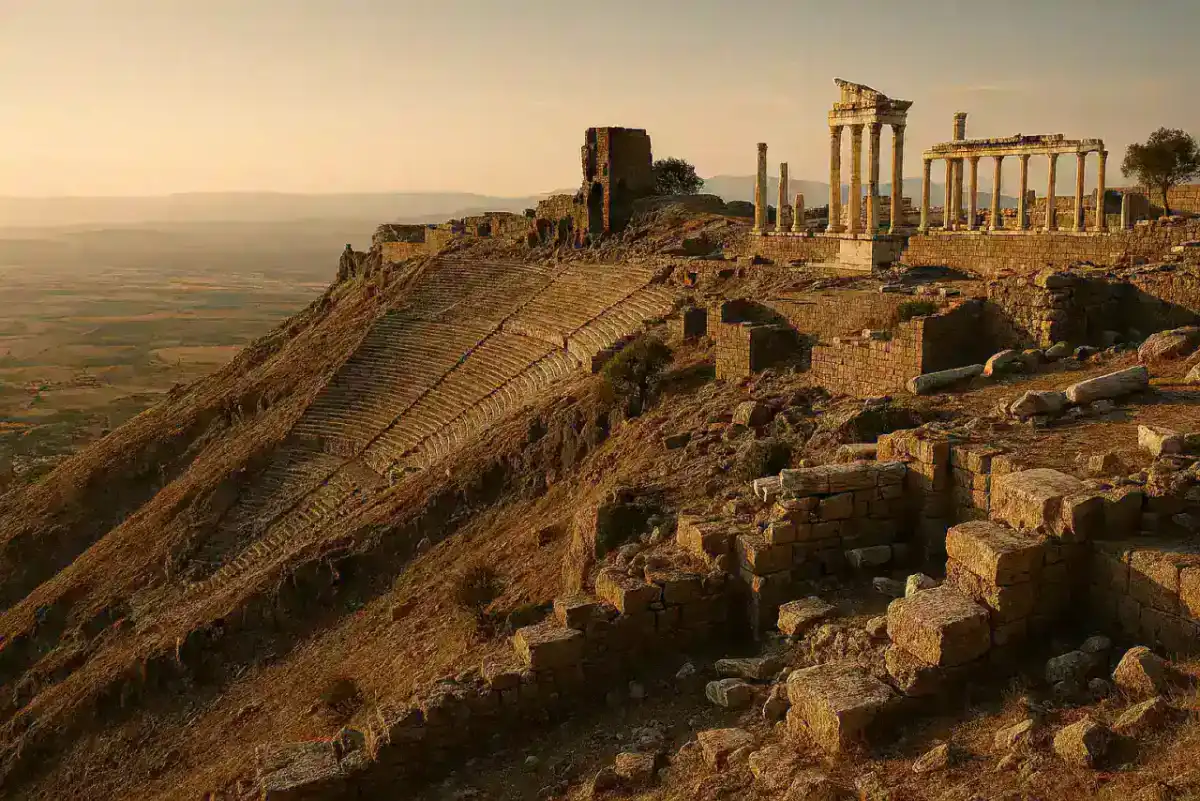
Pergamon Turkey Travel Guide 2026: Acropolis, Altar & Asclepion
Greco-RomanExplore Pergamon's dramatic acropolis, Great Altar, and healing center of Asclepion. Our guide cover...
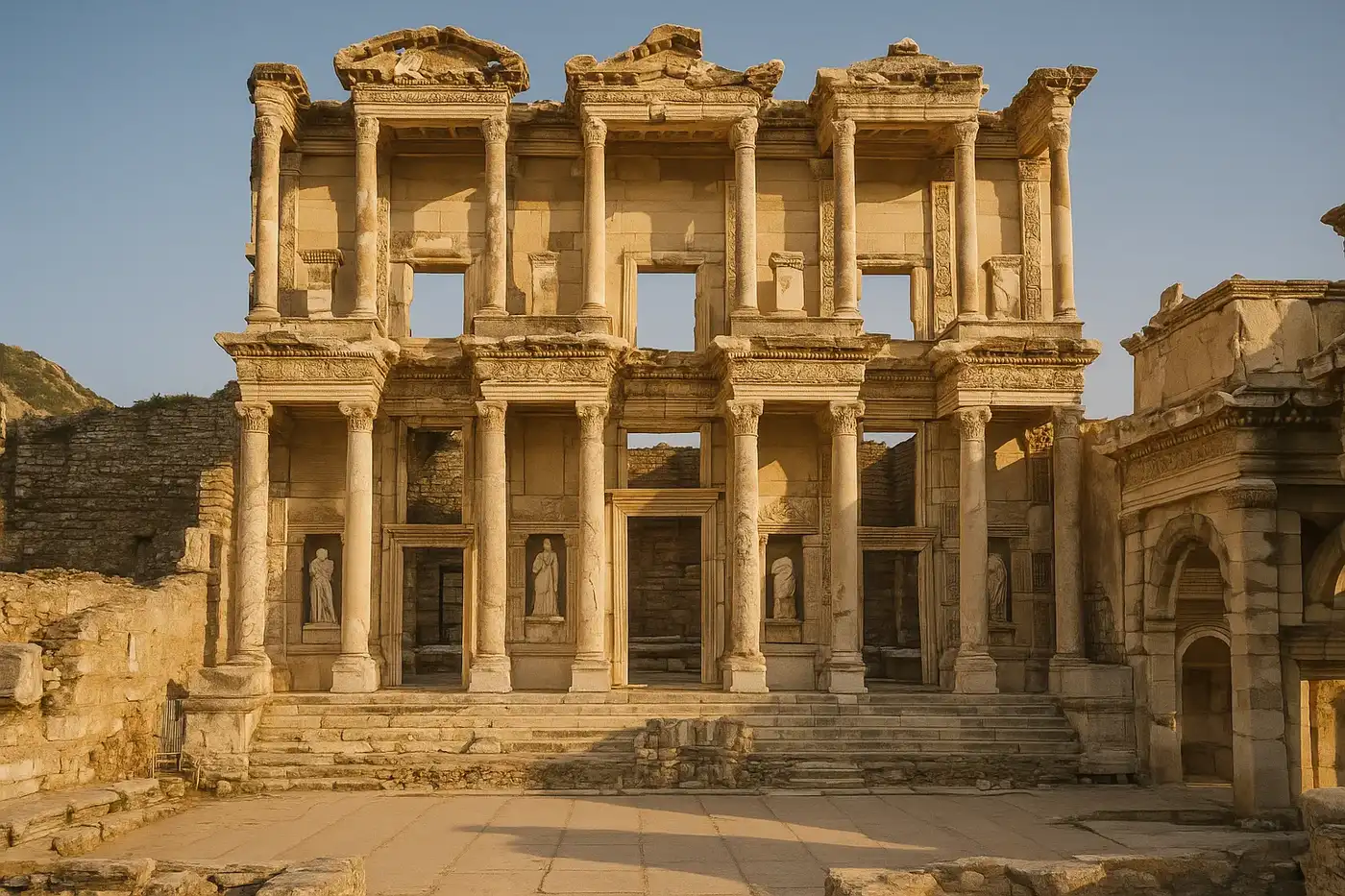
Ephesus Turkey Travel Guide: Library of Celsus & Terrace Houses
Greco-RomanDiscover Ephesus, the best-preserved ancient city in the Mediterranean. Our complete guide covers th...