Quick Info
At a glance
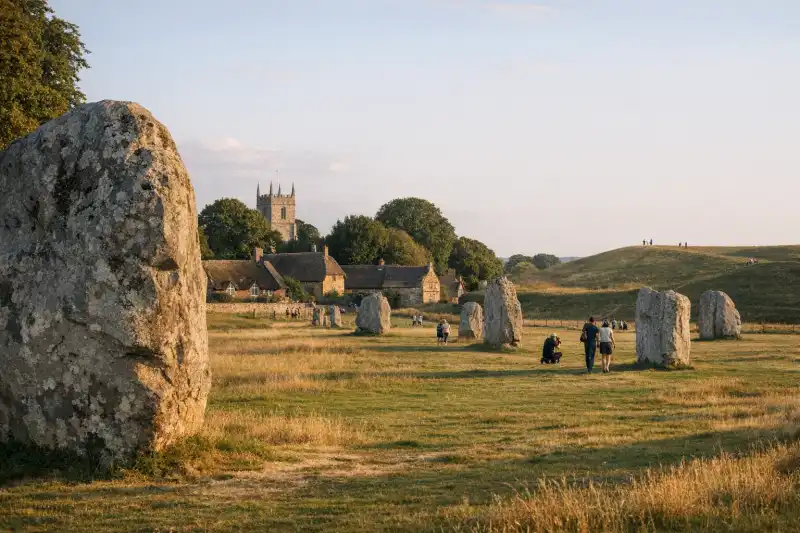
Avebury in the United Kingdom is one of those rare ancient places that feels both monumental and surprisingly intimate. Instead of standing behind barriers and looking in from a distance, visitors here find a prehistoric landscape woven into everyday village life: massive standing stones rise beside lanes, sheep graze nearby, and grassy banks curve across the countryside as they have for millennia. The result is not a single isolated ruin but an entire ceremonial world, broad in scale and rich in atmosphere.
Set in Wiltshire, Avebury is often mentioned alongside Stonehenge, yet it offers a very different experience. Where Stonehenge is tightly focused and visually dramatic, Avebury unfolds slowly. You walk through it, around it, and between it. The monument’s sheer size becomes clear only gradually, as earthworks stretch farther than expected and stones appear in clusters across the settlement and fields. It is a place of weather, silence, and changing light, where the landscape itself is as important as any one standing stone.
For travelers interested in ancient religion, archaeology, or the long human story of Britain, Avebury is among the country’s essential destinations. It is part of the UNESCO World Heritage landscape of Stonehenge, Avebury and Associated Sites, but it retains a personality all its own: less theatrical, perhaps, but deeply immersive. To visit is to step into a ceremonial center created around 4,500 years ago, then reshaped by centuries of fear, farming, rediscovery, and preservation.
History
Neolithic origins
Avebury was created during the Late Neolithic, in roughly the third millennium BCE, when communities across Britain were building ceremonial monuments on a previously unimaginable scale. The site did not emerge in isolation. It belonged to a wider sacred landscape that also includes Silbury Hill, the West Kennet Avenue, nearby burial mounds, and other earthworks. Archaeologists believe this area served as a major ceremonial and social center, drawing people from surrounding regions for gatherings, rituals, and perhaps seasonal events.
The main henge at Avebury is extraordinary in size. It consists of a vast circular earthwork with an inner ditch and outer bank, enclosing an area far larger than most comparable monuments. Within this enclosure stood a great outer stone circle, and inside that, two smaller inner circles. Building the monument would have required enormous communal labor: digging with primitive tools, moving sarsen stones weighing many tons, and setting them upright with careful planning and coordination. These were not casual constructions. They reflect a society able to organize large groups and invest heavily in symbolic landscapes.
Bronze Age continuity and changing use
As the Neolithic gave way to the Bronze Age, the sacred character of the area seems to have endured, even if its exact role changed. Burial monuments and barrows in the surrounding landscape suggest the continued importance of ancestry, memory, and ceremonial practice. Rather than being abandoned after one phase of construction, Avebury remained part of a long-lived ritual environment.
It is difficult to reconstruct exactly what people believed or did here. No written records survive from the builders, so interpretation depends on archaeology, alignments, deposits, and comparisons with other prehistoric sites. Some scholars see the circles and avenues as processional spaces, guiding movement through ritual landscapes. Others emphasize seasonal observation, social assembly, or symbolic divisions between the living and the dead. Whatever the details, Avebury was clearly more than decoration. It was a place designed to shape experience.
Medieval destruction and fear
By the medieval period, the original meaning of the stones had long been forgotten. As Christianity became dominant, ancient monuments were often viewed with suspicion, folklore, or outright hostility. At Avebury, many stones were toppled, buried, or broken up. Some were seen as dangerous relics of paganism; others were simply obstacles to agriculture and settlement.
One of the most famous episodes from this era concerns the so-called Barber Surgeon, a skeleton found beneath a fallen stone. The man appears to have been crushed while helping to dismantle it in the 14th century, a striking reminder of the uneasy relationship between medieval villagers and the ancient monument around them. Over time, parts of the stone circles disappeared below the ground or were repurposed, and the village grew within the prehistoric enclosure itself.
Antiquarian rediscovery
Interest in Avebury revived in the 17th and 18th centuries as antiquarians began documenting Britain’s ancient remains. Early figures such as John Aubrey and later William Stukeley played a major role in recording what survived. Stukeley, in particular, produced influential drawings and descriptions of Avebury and the nearby avenues. Although some of his interpretations were imaginative and shaped by the intellectual fashions of his time, his work preserved valuable evidence for features that later vanished or deteriorated.
By then, however, significant damage had already been done. Stones had been lost, alignments disrupted, and many details obscured by later development. Still, antiquarian attention marked an important turning point. Avebury was no longer simply an oddity in the landscape; it had become a subject of national historical interest.
Modern archaeology and conservation
In the 20th century, archaeologist Alexander Keiller transformed understanding of the site. Through excavations, surveys, and restoration work in the 1930s, he identified the positions of missing stones, re-erected several fallen ones, and clarified the plan of the monument. His efforts, though reflecting the restoration philosophies of the time, were critical in making Avebury legible again to modern visitors.
Today, Avebury is protected as part of a UNESCO World Heritage Site and managed through a combination of public and heritage stewardship, including the National Trust and English Heritage in the wider landscape. Ongoing research continues to refine knowledge of how the site developed, while conservation balances public access with preservation. The modern challenge is not rediscovery but careful coexistence: allowing people to experience the monument directly without damaging the fragile archaeological setting that has survived for more than four thousand years.
Key Features
What makes Avebury so remarkable is not just one circle of stones but the scale and complexity of the entire ceremonial landscape. The first feature most visitors notice is the massive henge earthwork itself. Unlike many stone circles, Avebury is enclosed by an enormous bank and ditch. Standing on or near the bank, you begin to grasp the ambition of the builders. The circuit is vast, and the monument’s dimensions are better appreciated on foot than in photographs. The ditch, originally cut deep into the chalk, lies inside the bank, a layout that suggests the enclosure was symbolic rather than defensive.
Within this henge stands the great outer stone circle. Even in its incomplete state, it remains one of the largest prehistoric stone circles in the world. Some stones are tall and imposing, others broader and more irregular, each with a distinct personality shaped by natural form and weathering. Because visitors can move freely among many of them, the experience is unusually direct. You are not simply observing a monument; you are inhabiting its spaces, passing between stones as generations of people have done in very different contexts.
Inside the outer ring were once two smaller inner circles, generally referred to as the northern and southern inner circles. Although many stones are missing, enough survives to suggest a more intricate ceremonial design than might first appear. The arrangement indicates that Avebury was not a single open circle but a structured, layered environment, perhaps intended to guide movement and meaning. The surviving stones, together with markers for lost positions, help visitors imagine the original density and drama of the setting.
One of Avebury’s most distinctive characteristics is the village itself. Houses, roads, gardens, and a church all exist within the prehistoric enclosure. This can initially seem surprising, even intrusive, yet it is central to Avebury’s identity. Ancient and modern life overlap here in a way that few archaeological sites can match. The village does not sit beside the monument; it sits inside it. That overlap tells an important story about continuity, adaptation, and the changing uses of sacred landscapes.
The broader ritual complex extends beyond the main circle. The West Kennet Avenue, a line of paired standing stones, once connected Avebury to other ceremonial sites across the landscape. Walking part of this avenue gives a sense of procession and direction, as if movement through the land itself formed part of ritual practice. Though incomplete, the avenue remains one of the most evocative elements of the wider complex.
Nearby Silbury Hill, the largest prehistoric artificial mound in Europe, reinforces the sense that this was no ordinary settlement zone but a ceremonial heartland. While Avebury is the focus of this page, the visual and archaeological relationship between the circle, the avenue, barrows, and Silbury Hill is essential. Together they create a monumental geography rather than a single destination.
Visitors should also seek out the Alexander Keiller Museum, which adds depth to the outdoor experience. Its displays explain the archaeology of the area, the history of excavation, and the tools and objects that help reconstruct prehistoric life. After walking among the stones, the museum helps connect atmosphere with evidence. It also sheds light on restoration work, including how archaeologists identified sockets of missing stones and attempted to recover the monument’s plan.
Finally, there is the quality of the landscape itself. Chalk downs, open skies, grazing fields, and shifting weather all shape the visit. Avebury does not depend on a dramatic central viewpoint. Its power lies in cumulative experience: the crunch of a path, the curve of the bank, the unexpected closeness of a megalith, the long perspective of an avenue, the awareness that the whole village sits inside an idea conceived in prehistory. It is a place best appreciated slowly.
Getting There
Avebury is reachable by car, public transport, or organized tour, though planning ahead makes a big difference. By road, it lies in Wiltshire roughly 40 minutes from Bath, about 45 minutes from Swindon, and around 2 hours from London depending on traffic. Driving is the most flexible option, especially if you want to combine Avebury with Silbury Hill, West Kennet Long Barrow, or other nearby prehistoric sites. Paid parking is usually available near the village; expect rates in the range of about £7 to £8 for the day, though charges can change seasonally.
By train, the nearest practical stations are often Swindon and Pewsey. From London Paddington to Swindon, standard advance fares can start around £20 to £35 one way, with journey times of about 50 to 60 minutes. From Swindon, local buses toward Marlborough or Devizes may connect onward to Avebury, though services can be limited and schedules should always be checked in advance. A taxi from Swindon to Avebury typically costs around £35 to £50 each way.
From Bath or Salisbury, bus and rail combinations are possible but not always direct. Travelers relying solely on public transport should allow extra time and have a backup plan for return journeys, especially on Sundays and holidays when service frequency may drop. Guided day tours from London or Bath can be a good alternative, often combining Avebury with Stonehenge or other Wiltshire highlights. These tend to cost anywhere from about £60 to £150 per person depending on inclusions and group size.
Once in the village, Avebury is best explored on foot. Wear sturdy shoes, as surfaces can be grassy, uneven, or muddy after rain.
When to Visit
Avebury can be visited year-round, but each season changes the mood of the landscape. Spring is one of the most rewarding times to come. The grass is fresh, daylight increases, and the countryside around Wiltshire feels open and lively without yet reaching the busiest summer levels. Temperatures are usually comfortable for longer walks, though showers are common, so a waterproof layer is wise.
Summer brings the longest days and the easiest conditions for combining Avebury with nearby prehistoric sites. Early morning and late evening light can be especially beautiful on the stones and banks. This is also when the village sees more visitors, especially on weekends and school holidays. The site is large enough that it rarely feels as compressed as some famous heritage attractions, but parking and facilities can be busier. Around the summer solstice and other spiritually significant dates, visitor numbers may increase noticeably.
Autumn is excellent for travelers who want atmosphere with fewer crowds. Lower sun angles, misty mornings, and changing colors across the surrounding fields can make the landscape feel especially ancient. Temperatures are often still pleasant in early autumn, though paths may become slick later in the season.
Winter offers the quietest experience. On cold, clear days, Avebury can feel stark and unforgettable, with the monument’s geometry standing out strongly against bare fields and wide skies. The trade-off is shorter daylight, wetter ground, and more unpredictable weather. If you visit in winter, arrive early, dress warmly, and check opening times for the museum and facilities.
For the best balance of weather, access, and atmosphere, late spring and early autumn are hard to beat. If your priority is solitude, choose a weekday outside school holidays and arrive in the morning.
| Quick Facts | Details |
|---|---|
| Location | Avebury, Wiltshire, England, United Kingdom |
| Type | Neolithic henge and stone circle complex |
| Date | c. 2850-2200 BCE |
| UNESCO Status | Part of Stonehenge, Avebury and Associated Sites |
| Best Known For | One of the largest prehistoric stone circles in the world |
| Time Needed | 2-4 hours for Avebury village and circle; longer with nearby sites |
| Nearest Town | Marlborough |
| Nearest Major Rail Hub | Swindon |
| Entry Cost | Stone circle access is generally free; parking and museum may cost extra |
| Best Season | Late spring or early autumn |
Guided tours: worth it?
Most travelers can visit Avebury independently. Compare a tour only if you want a tighter history-focused visit, easier logistics, or a guide who can answer questions on the spot.
Best for
- Short visits where a planned route saves time
When to go self-guided
Go independently if you prefer setting your own pace, reading as you go, and checking official hours or ticket rules directly before you arrive.
What I’d avoid
Skip paid tours that bundle unrelated stops you do not actually want. The best option should either save meaningful planning time or add historical context you would miss on your own.
Avebury and Wiltshire prehistoric sites tours
Useful when: you want to compare guided formats before deciding
Stonehenge and Avebury day trips
Useful when: transport or pickup logistics matter
Bath to Avebury historical tours
Useful when: you want to compare guided formats before deciding
Some tour links are affiliate links, which may earn Ancient Travel a small commission at no extra cost to you. I try to surface options that make practical sense for the site—not just anything bookable.
Frequently Asked Questions
What is Avebury best known for?
Avebury is best known for its enormous Neolithic stone circle, one of the largest in the world, and for the wider prehistoric landscape that includes avenues, barrows, and nearby Silbury Hill.
Is Avebury free to visit?
Yes, the stone circle itself can be visited free of charge, though parking, museum entry, and some National Trust facilities may involve fees.
How much time do I need at Avebury?
Most visitors should allow at least two to four hours to walk through the stone circle, explore parts of the village, and visit the museum or nearby prehistoric features.
Can you walk among the stones at Avebury?
Yes, unlike some prehistoric monuments, visitors can usually walk among the stones at Avebury, though they should respect any temporary restrictions, paths, and preservation guidance.
How do I get to Avebury from London?
The easiest route is usually by train from London to Swindon or Pewsey, followed by a bus or taxi, or by driving directly in around two hours depending on traffic.
Is Avebury suitable for families?
Avebury can be a rewarding family visit thanks to open spaces, short walking options, and nearby facilities, though uneven ground and livestock in surrounding fields mean sensible footwear and supervision are important.
Nearby Ancient Sites
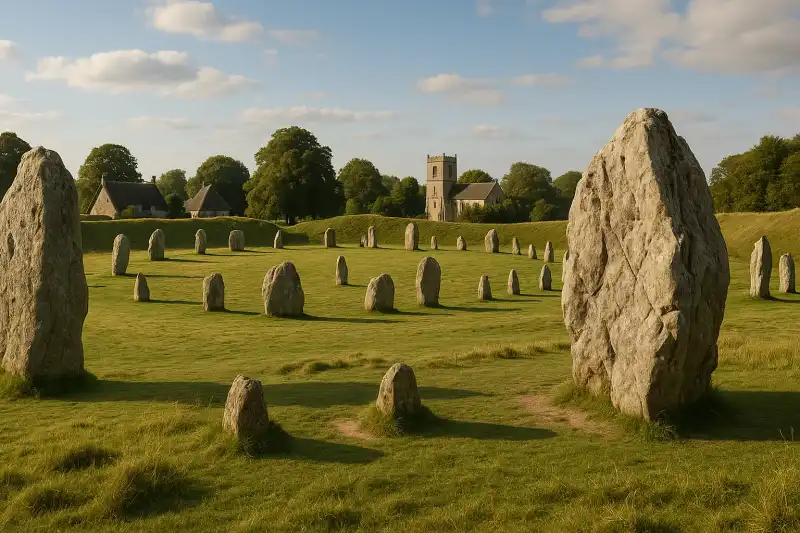
Avebury Stone Circle Travel Guide 2026: Best Walk Routes, History, and Visit Planning
Neolithic BritainPlan a stronger visit to Avebury Stone Circle with practical walking routes, landscape context, and ...
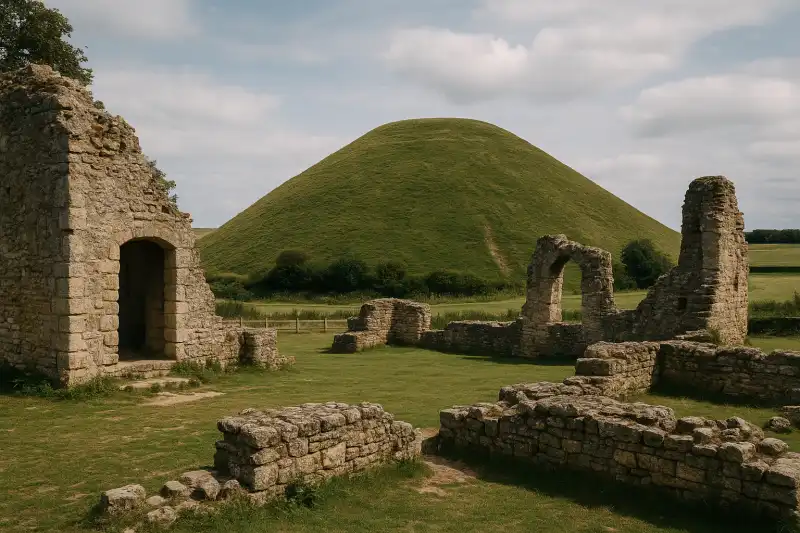
Silbury Hill Travel Guide 2026: Visiting Wiltshire’s Largest Prehistoric Mound
Neolithic BritainPlan a smart stop at Silbury Hill with practical access notes, archaeology context, and easy itinera...
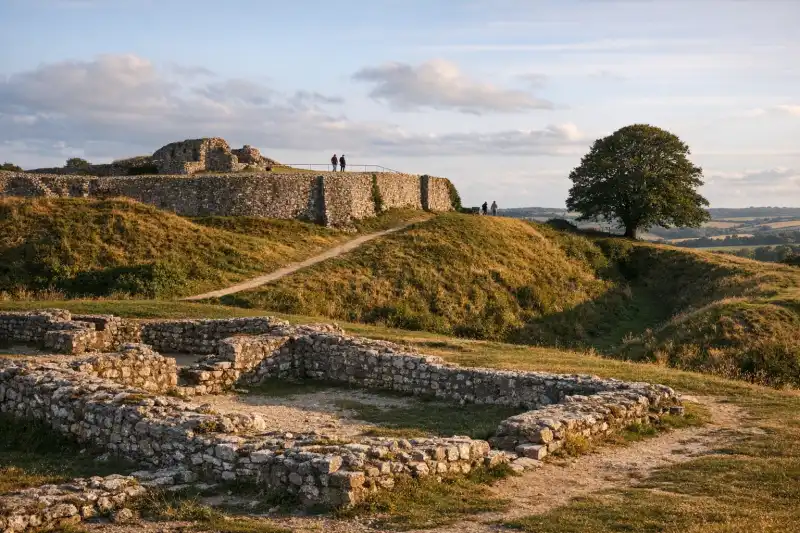
Old Sarum
Explore the storied ruins of Old Sarum, the ancient settlement and former city near Salisbury, Unite...
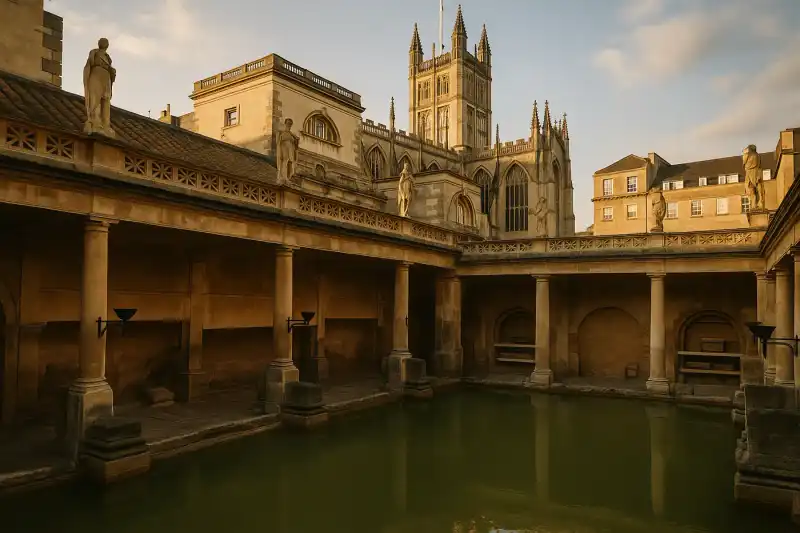
Roman Baths Bath Travel Guide 2026: Tickets, History, and Smart Visit Tips
Roman BritainPlan a better visit to the Roman Baths in Bath with clear ticket strategy, historical context, and p...