Quick Info
Curated Experiences
Ayutthaya Historical Park Small-Group Day Tour from Bangkok
Ayutthaya is not a single temple - it is the skeleton of a former capital, spread across an island where rivers converge and brick ruins rise from flat ground in every direction. For 417 years this city commanded trade routes stretching from China to Persia, built hundreds of monasteries and royal compounds, and developed the political traditions that still define Thailand. The sheer sprawl can overwhelm visitors who arrive without a plan. But with a clear route and an early start, this is one of the most powerful historical day trips in Southeast Asia.
Why Ayutthaya Matters
Most visitors to Thailand encounter the country’s history through gilded Bangkok temples and polished museum displays. Ayutthaya offers something rawer. Here you walk through the actual ruins of the civilization that preceded Bangkok - not reconstructions or replicas, but the cracked brick and laterite walls of a city that was, at its height, among the largest on earth. The scale is hard to process from photographs alone. Dozens of temple complexes are scattered across an island roughly four kilometers wide, and even a full day barely scratches the surface.
UNESCO inscribed Ayutthaya Historical Park in 1991, recognizing not just the architecture but the broader significance of a capital that functioned as one of Asia’s great crossroads. This is where Thai royal culture, Theravada Buddhist monastic tradition, and international commerce fused into something distinct. Walking these grounds, you are standing in the place where that fusion happened.
Historical Context
King Ramathibodi I founded Ayutthaya in 1351 on an island formed by the confluence of three rivers - the Chao Phraya, the Pa Sak, and the Lopburi. The location was strategic: surrounded by water, defensible, and perfectly situated for riverine trade. Within two centuries the kingdom had absorbed the older Khmer territories to the east and Sukhothai to the north, becoming the dominant power in mainland Southeast Asia.
At its peak in the 17th century, Ayutthaya’s population approached one million. Persian, Chinese, Japanese, Portuguese, Dutch, and French merchants maintained permanent trading quarters along the riverbanks. The court sent diplomatic missions to Versailles. Temples numbering in the hundreds filled the island and surrounding landscape, their prangs and chedis reflecting both Khmer architectural influence and a homegrown Ayutthayan style that favored towering corncob-shaped spires.
The end came in April 1767, when Burmese armies breached the defenses after a prolonged siege. The sacking was systematic and devastating. Temples were stripped, Buddha images decapitated, and the royal court destroyed. Survivors regrouped downriver and eventually founded Bangkok, but Ayutthaya was never rebuilt as a living capital. What remains today is the footprint of that destruction - and it is enormous.
What to Prioritize on Your Visit
Wat Mahathat
The tree-root Buddha head is Ayutthaya’s most photographed image, and you should see it. But the surrounding ruins deserve equal time. Rows of headless Buddha statues and the remnants of a massive prang hint at the original scale of this royal monastery. Arrive early, before tour groups fill the narrow paths, and approach the root-entwined head with respect - this remains a site of active reverence, not just a photo opportunity.
Wat Phra Si Sanphet
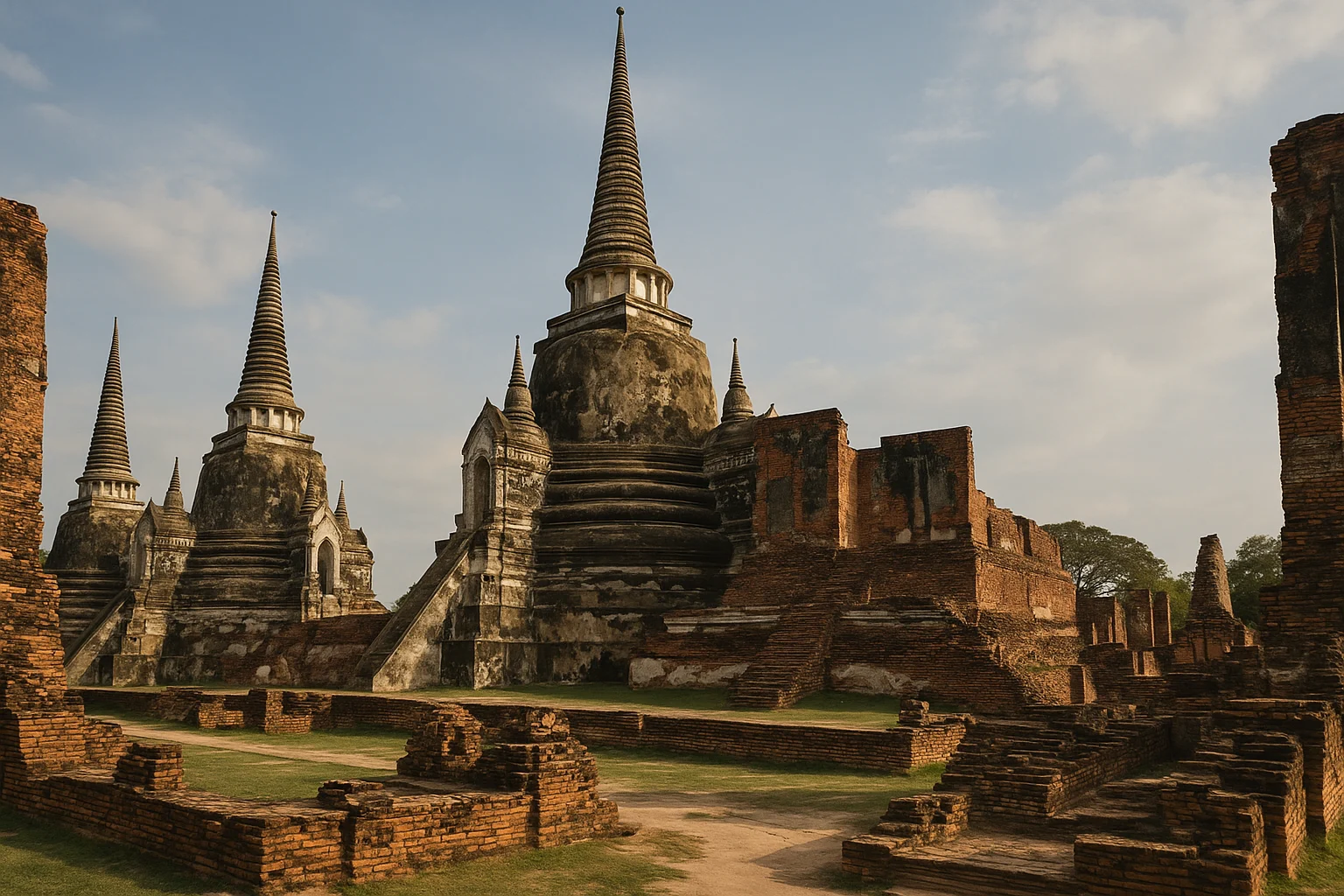
Three aligned bell-shaped chedis mark what was once the most sacred temple in the royal palace compound. This is the closest you will get to feeling Ayutthaya as a functioning seat of power. No other site on the island communicates the geometry of royal authority so clearly. The adjacent Wihan Phra Mongkhon Bophit houses a large bronze Buddha that survived the destruction and is worth a brief stop.
Wat Chaiwatthanaram
Set on the western bank of the Chao Phraya, this Khmer-influenced temple complex was built in 1630 by King Prasat Thong and modeled loosely on Angkor Wat’s layout. The central prang surrounded by smaller towers creates the strongest silhouette in the park, particularly at sunset. If your day allows one golden-hour visit, spend it here. The light on the river and the scale of the ruins make this the emotional high point for most visitors.
Wat Ratchaburana
Often overlooked in favor of neighboring Wat Mahathat, this temple rewards closer inspection. The main prang is one of the best-preserved in the park, and you can descend into the crypt where original frescoes - faded but visible - survive from the 15th century. The paintings are among the oldest in Thailand.
Wat Yai Chai Mongkhon
Located southeast of the island proper, this complex features a massive chedi you can climb for panoramic views. The rows of saffron-draped Buddha statues along the base create one of Ayutthaya’s most distinctive visual scenes. It is slightly removed from the central cluster, so plan your route accordingly.
Practical Visit Strategy
The single biggest mistake visitors make is underestimating the distances and the heat. Ayutthaya is not a compact site you can walk in a loop. Group your temple stops by geographic zone to avoid zig-zagging across the island.
- Getting there: Minivans from Bangkok’s Victory Monument run frequently and take about 90 minutes. Trains from Hua Lamphong (or Bang Sue Grand) are cheaper but slower. Organized day tours handle logistics but compress your schedule.
- When to go: November through February offers the best conditions - lower humidity, manageable temperatures. March through May brings serious heat; plan for shade breaks and extra water. Leave Bangkok before 7:00 a.m. to reach the ruins ahead of midday tour traffic.
- Getting around: Rent a bicycle from shops near the train station if you handle heat well. Otherwise, negotiate a tuk-tuk for a half-day or full-day circuit - agree on the route and total price upfront rather than paying per stop.
- What to bring: Sunscreen, a refillable water bottle, and temple-appropriate clothing (covered shoulders and knees required). Cash for individual entrance fees at each temple site.
- Time needed: Budget 5 to 7 hours on the ground, plus travel time from Bangkok. An overnight stay allows you to catch both sunrise and sunset light at different temples, which serious photographers will appreciate.
Route Pairing and Nearby Sites
Ayutthaya fits naturally into broader itineraries where political history and sacred architecture overlap. Within Thailand, pair it with Sukhothai Historical Park to trace the arc of Thai civilization from its first kingdom to its grandest. Wat Phra That Doi Suthep in Chiang Mai offers northern Thai Buddhist continuity and a living pilgrimage tradition that contrasts with Ayutthaya’s ruined grandeur.
Regionally, the connections run deeper. Angkor Wat and Angkor Thom represent the Khmer empire whose architectural influence is visible throughout Ayutthaya. Bagan in Myanmar provides the closest parallel in landscape-level temple density. Visitors covering multiple Southeast Asian countries will find that Ayutthaya sits at the center of these connections, both geographically and historically.
Final Take
Ayutthaya rewards the visitor who treats it as a former capital rather than a checklist of temples. Pick three or four major complexes, move between them with purpose, and leave time to notice the details - crumbling stucco figures, root-cracked walls, headless Buddhas still seated in meditation. This was a city that once rivaled the great capitals of Europe and Asia, and its destruction is as much a part of the story as its construction. Done right, this is one of the most memorable days you can spend in Thailand.
Quick Facts
| Attribute | Details |
|---|---|
| Full Name | Ayutthaya Historical Park |
| Location | Ayutthaya, Central Thailand |
| Country | Thailand |
| Region | Central Thailand |
| UNESCO Status | World Heritage Site (1991) |
| Civilization | Kingdom of Ayutthaya |
| Historical Period | 14th to 18th century CE |
| Founded | 1351 CE |
| Destroyed | 1767 CE |
| Coordinates | 14.3559, 100.5689 |
Frequently Asked Questions
Is Ayutthaya worth a day trip from Bangkok?
Yes. Most travelers can cover 3 to 5 major temple sites in one full day with an early departure and a clear route plan.
How much time do I need in Ayutthaya Historical Park?
Plan 5 to 7 hours on the ground for core ruins, museum stops, and transport between temple clusters.
What is the best way to get around Ayutthaya?
For first visits, a guided day tour is easiest. Independent travelers typically use bikes, tuk-tuks, or private drivers between temple groups.
Nearby Ancient Sites
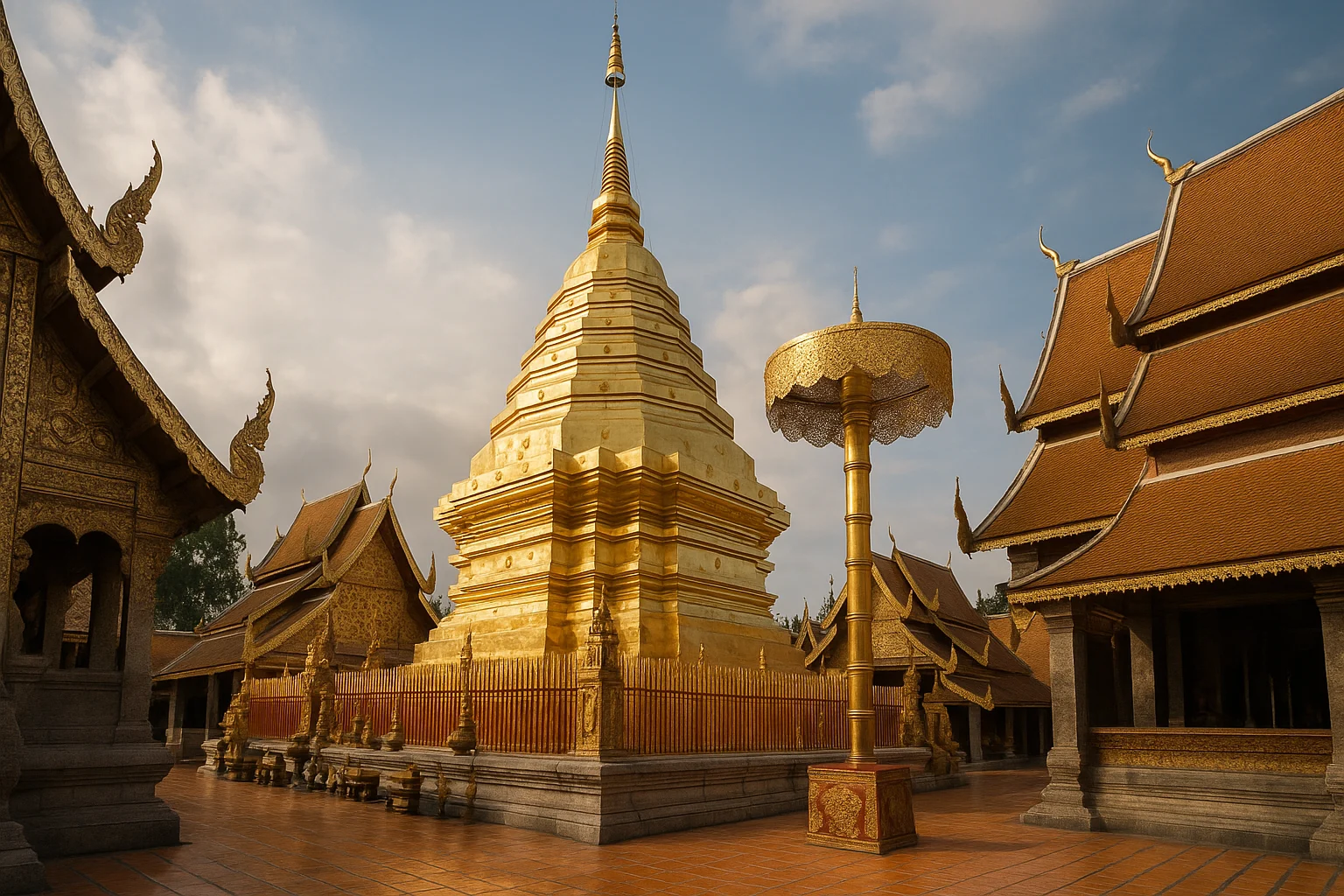
Wat Phra That Doi Suthep Travel Guide 2026: Temple Etiquette, Timing, and Chiang Mai Logistics
Lanna KingdomPlan a smooth Wat Phra That Doi Suthep visit with practical timing, temple etiquette, and route tips...
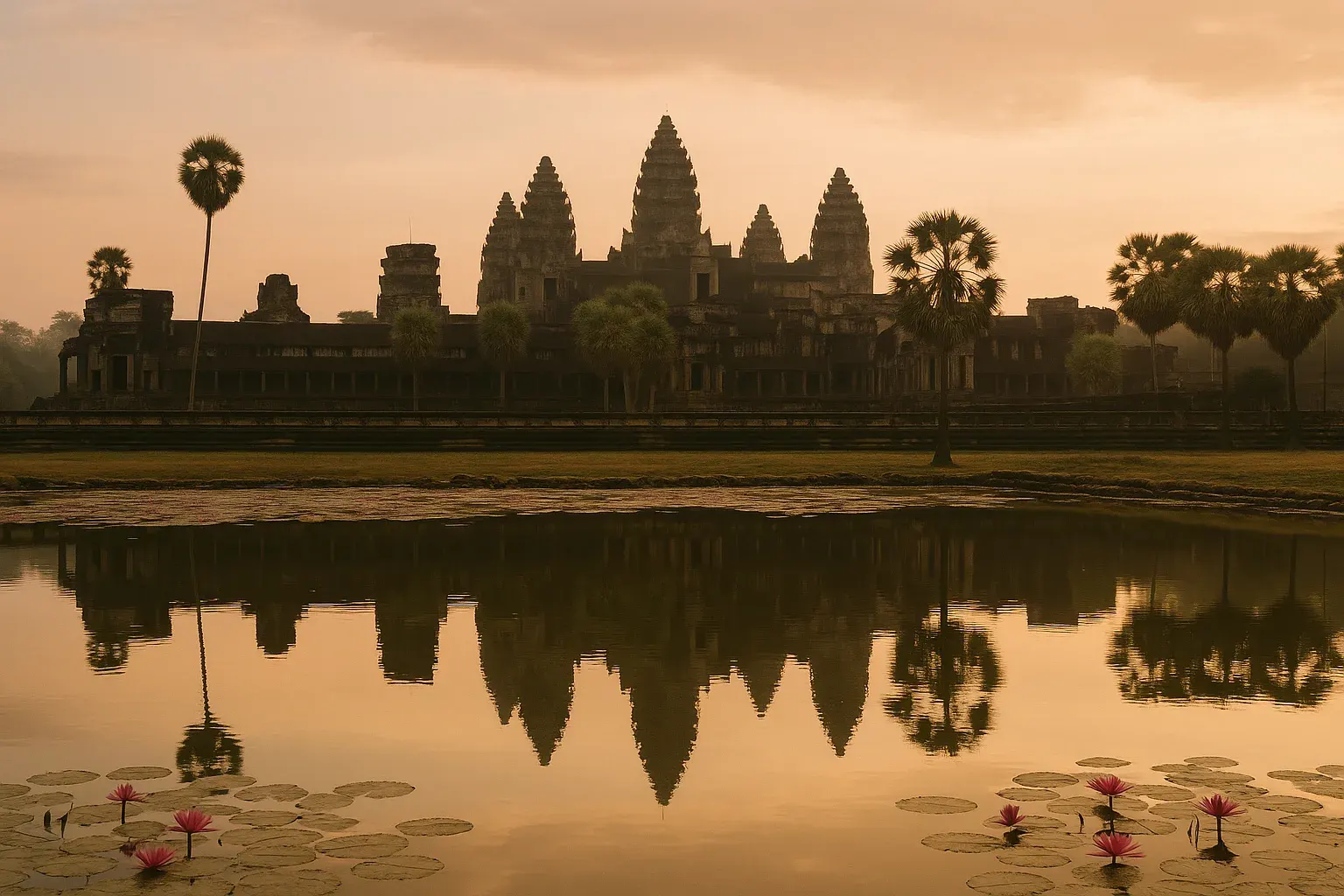
Angkor Wat Travel Guide 2026: Everything You Need to Know
KhmerAngkor Wat, the world's largest religious monument, spans over 400 acres in the heart of Cambodia. T...
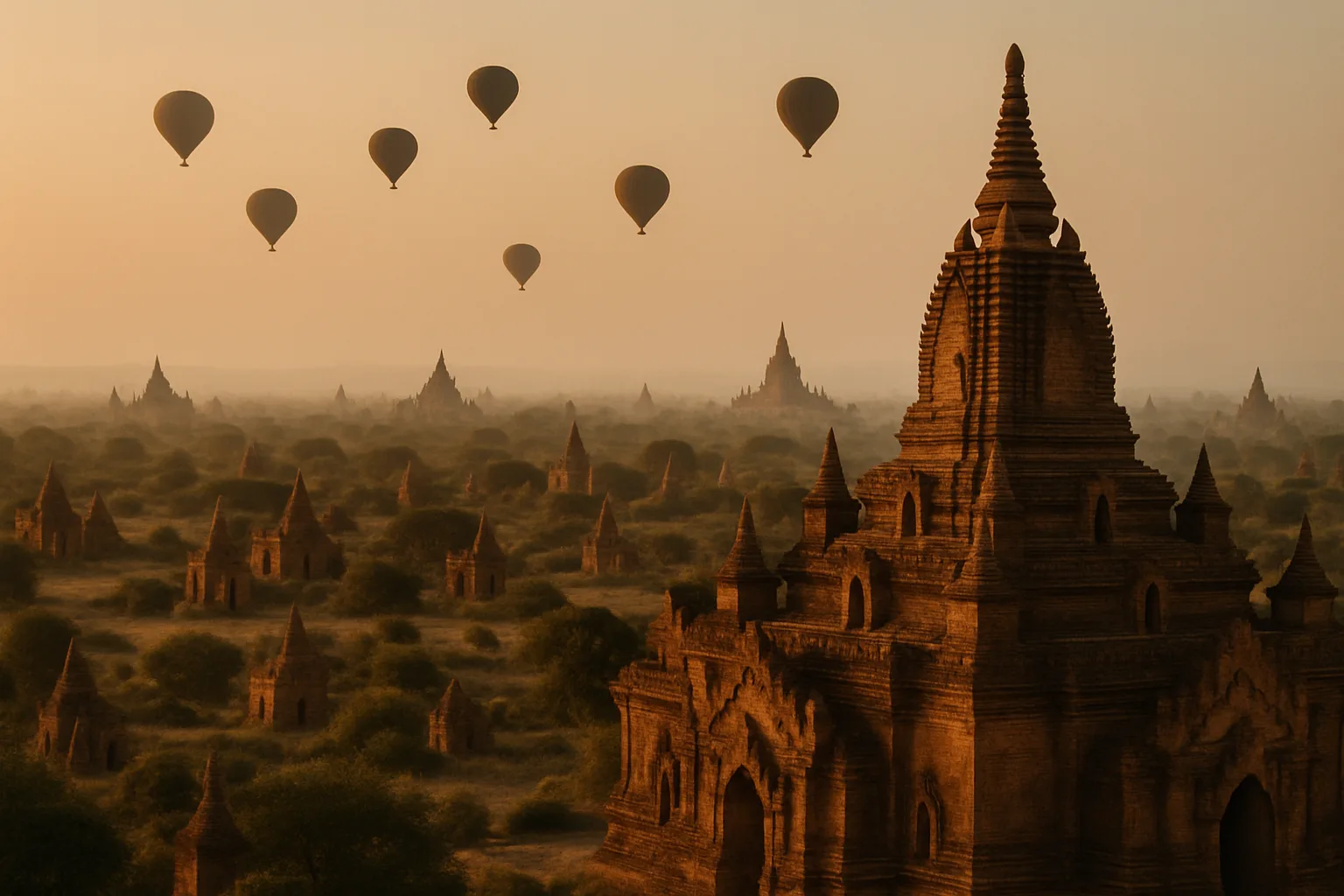
Bagan: 2,000 Temples Rising from the Myanmar Plains
Pagan Kingdom (Burmese)Explore Bagan, Myanmar's ancient temple city with over 2,000 surviving pagodas scattered across the ...