Quick Info
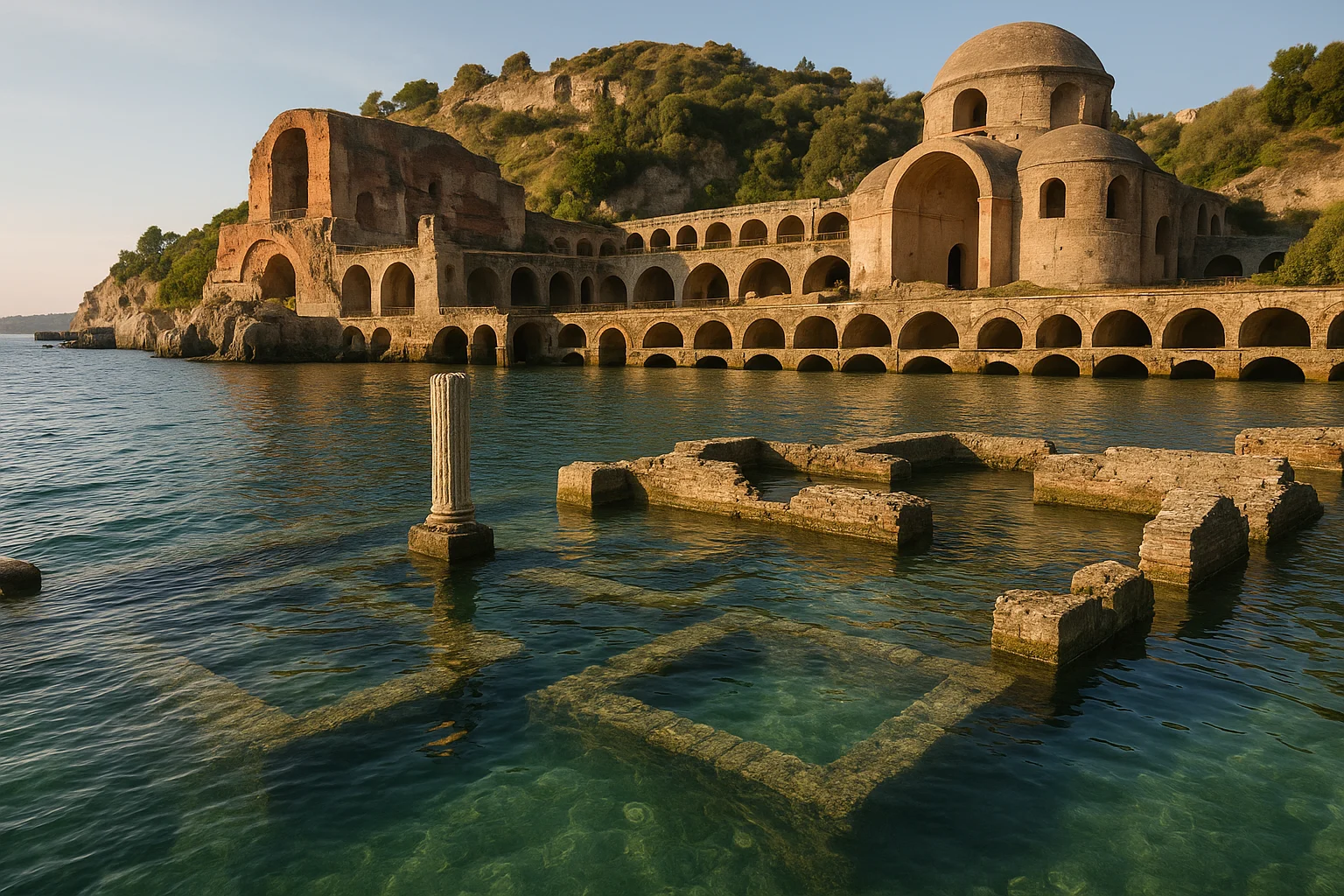
You stand on a terrace of crumbling Roman concrete overlooking the Bay of Naples and realize that the ruins at your feet are only half the story. Below the waterline, maybe 15 feet down, an entire neighborhood of the ancient resort city of Baiae sits on the seafloor — streets, mosaic floors, statue niches, and villa foundations visible through clear water on a calm day. The land sank. The sea moved in. And one of the Roman world’s most exclusive leisure destinations became an underwater archaeological park without anyone choosing to put it there.
Baia Archaeological Park is one of Italy’s strangest and most rewarding ancient sites because it forces you to think in two planes simultaneously. The terrestrial park preserves a massive Roman thermal complex terraced into the hillside above the coast. The marine protected area below preserves the submerged remains of the villas, streets, and public buildings that once lined the waterfront. Together, they document a place that ancient writers described as the most luxurious and morally questionable resort in the Roman Empire — a place where senators, emperors, and their entourages came to bathe, scheme, and display wealth at a scale that shocked even other Romans.
If you already know Pompeii and Herculaneum and want something that feels genuinely different from the standard Campania archaeology circuit, Baia is the answer.
Historical Context
Ancient Baiae developed during the late Roman Republic as an elite retreat along the northern shore of the Bay of Naples, in the volcanic landscape known as the Campi Flegrei (Phlegraean Fields). The area’s geology provided two critical resources: thermal springs heated by volcanic activity, which fueled an elaborate bathing culture, and a protected coastal setting with views across the bay to Capri and the Sorrentine Peninsula. By the 1st century BCE, Baiae had become the most fashionable destination in the Roman world.
The roster of Baiae’s visitors and residents reads like a textbook of late Republican and early Imperial power. Julius Caesar owned a villa here. Cicero complained about the behavior of other guests. Nero had his mother Agrippina murdered at a villa nearby. Hadrian died at Baiae in 138 CE. The place was simultaneously a health resort, a political back-channel, and a social arena where the Roman elite performed their status through architecture, entertainment, and conspicuous consumption.
The thermal complexes that survive in the terrestrial park represent the public face of this culture. Three major bathing sectors — traditionally named after Venus, Sosandra, and Mercury — climb the hillside in a series of domed halls, vaulted corridors, and terraced platforms that demonstrate Roman concrete engineering at its most inventive. The so-called Temple of Mercury, actually a domed thermal hall, features one of the earliest large-scale concrete domes in Roman architecture, predating the Pantheon by at least a century. The dome is roughly 70 feet in diameter with an oculus at its apex, making it a crucial link in the engineering lineage that would culminate in Rome’s most famous building.
Beginning in the late Roman period and accelerating through the medieval era, the phenomenon of bradyseism — slow volcanic ground movement that periodically raises or lowers the coastline in the Campi Flegrei — caused the waterfront portions of Baiae to sink below sea level. Villas, thermae, roads, and public buildings that once stood on dry land were gradually submerged. This process created the conditions for what is now the Parco Archeologico Sommerso di Baia (Baia Underwater Archaeological Park), established as a marine protected area in 2002. The submerged ruins, preserved in remarkably good condition by the protective blanket of seawater, include mosaic floors, marble columns, statuary bases, and the outlines of entire building complexes visible at depths of 15 to 30 feet.
What to See
The Thermal Terraces and Bathing Complexes
The terrestrial park’s core consists of three interconnected thermal sectors terraced into the hillside above the modern waterfront. These are not small bath installations. They are monumental architectural complexes with domed halls, barrel-vaulted corridors, service tunnels, and open-air terraces that together demonstrate the full engineering repertoire of Roman concrete construction. The “Sector of Venus” preserves rooms with niches for statuary, while the “Sector of Sosandra” (named after a famous ancient copy of a Greek statue found here) includes a semicircular courtyard and multiple bathing rooms with traces of marble facing and plaster decoration. Walk these spaces slowly and pay attention to the concrete vaulting. The dome and wall construction techniques visible here directly prefigure the engineering achievements of the Pantheon and the great imperial thermae in Rome.
Practical tip: Start your visit at the upper terraces and work downhill. The views back over the bay improve as you descend, and the spatial logic of the thermal complex reads more clearly from top to bottom.
The Temple of Mercury (Thermal Dome)
The so-called Temple of Mercury is actually a circular domed bathing hall, and it is one of the most important structures at the site. The dome, roughly 70 feet in diameter, was one of the largest concrete spans built before the Pantheon. The interior is partially flooded (rising water levels have filled the lower portion), which creates an eerie, echo-rich atmosphere when you peer in from the upper viewing platform. The oculus at the dome’s apex admits a shaft of light that moves across the interior walls throughout the day. This space alone is worth the visit for anyone interested in Roman engineering, and it provides a vivid link between the experimental concrete work of the late Republic and the perfected technique of the Hadrianic period.
Practical tip: The flooded interior of the Temple of Mercury creates strong acoustic effects. Visit during a quiet moment to hear how sound reflects off the dome surface, a phenomenon the original bathers would have experienced.
The Submerged City (Glass-Bottom Boat Tour)
The underwater archaeological park extends across the shallow waters in front of the modern coastline and is the experience that distinguishes Baia from every other Roman site in Italy. Glass-bottom boat excursions depart from the Baia harbor area and travel over the submerged remains of the ancient waterfront. Through the glass panels, you can see paved Roman streets, mosaic floor fragments, column bases, statuary niches (some with reproduction casts placed where originals once stood), and the outlines of villa rooms and courtyard walls. On clear, calm days, the visibility is remarkable, and the experience of looking down at a Roman neighborhood through a few feet of seawater is genuinely haunting.
Snorkeling and diving excursions are also available for visitors who want a more immersive experience, with certified guides leading routes through the submerged structures. Diving provides closer access to mosaic details and architectural elements that are harder to appreciate from a boat.
Practical tip: Book glass-bottom boat tours in advance, especially in spring and summer. Morning departures typically offer the best water visibility before afternoon winds create surface chop. Expect trips to run 60 to 90 minutes and cost approximately $15 to $25 USD per person.
The Castello di Baia (Archaeological Museum)
The Aragonese castle that overlooks the bay from the promontory above the park houses the Museo Archeologico dei Campi Flegrei, one of the best regional archaeology museums in southern Italy. Its collections include statuary recovered from the submerged city (including the original Sosandra statue), architectural fragments, and exhibits on the broader Campi Flegrei volcanic landscape and its relationship to Roman settlement patterns. The museum provides essential context for both the terrestrial and underwater sites and should be treated as part of the core Baia experience rather than an optional add-on.
Practical tip: Visit the museum either before the park (for interpretive context) or after (to see the actual objects recovered from the ruins you just walked through). The museum is in the castle at the top of the hill, about a 10-minute walk or short drive from the park entrance. Entry is approximately $5 to $8 USD.
Timing and Seasons
Spring (April through June) is the ideal season for Baia. Temperatures range from 59 to 79°F (15 to 26°C), walking conditions are comfortable, and water clarity for glass-bottom boat excursions is typically at its best before summer algae blooms reduce visibility. This is also when boat tour operators are running full schedules without peak-season crowding.
Summer (July through August) brings heat, often 82 to 93°F (28 to 34°C), and the terrestrial park can be uncomfortably warm on exposed terraces. The upside is that marine conditions are often good for snorkeling and diving. Visit the land park in early morning and schedule water-based activities for late morning or afternoon.
Autumn (September through October) is excellent, with temperatures in the 64 to 79°F (18 to 26°C) range and declining tourist density. Water visibility is variable but often good. Some boat operators reduce schedules after mid-October.
Winter (November through March) is mild, with highs around 50 to 59°F (10 to 15°C), but marine excursions may be limited or suspended due to sea conditions. The terrestrial park remains open and is pleasantly uncrowded. Bring a jacket for wind on exposed terraces.
The best time of day for the land park is early morning. For boat excursions, target mid-morning departures for optimal light penetration into the water.
Tickets, Logistics, and Getting There
Terrestrial park admission: Approximately $5 to $8 USD (4 to 6 euros). Hours are typically 9:00 AM to approximately one hour before sunset (varies seasonally). Confirm current hours before visiting.
Glass-bottom boat tours: Approximately $15 to $25 USD per person, running 60 to 90 minutes. Multiple operators run from Baia harbor. Advance booking is recommended, especially in spring and summer.
Diving/snorkeling excursions: Approximately $50 to $90 USD per person depending on equipment rental and group size. Certification is not always required for guided snorkeling; diving requires basic open-water certification. Book through licensed operators affiliated with the marine protected area.
Castello di Baia museum: Approximately $5 to $8 USD.
From Naples: Baia is approximately 16 miles west of Naples city center. The Cumana railway (EAV network) runs from Naples Montesanto station to Baia station in roughly 40 to 50 minutes for about $2 to $3 USD. From Baia station, the park is a 10 to 15 minute walk downhill. By car, the drive takes 30 to 45 minutes depending on Naples traffic. By taxi, expect $35 to $50 USD each way.
From Pozzuoli: Baia is about 10 minutes by car or one stop on the Cumana line from Pozzuoli. This proximity makes a combined Pozzuoli-Baia day trip one of the most efficient archaeology itineraries in the Naples area.
Parking: Limited free and paid parking is available near the park entrance and the harbor area. Arriving before 10:00 AM helps in summer.
Practical Tips
- Wear sturdy walking shoes with grip. The terrestrial park involves slopes, uneven surfaces, and occasional damp stone in the thermal areas.
- Bring sun protection and at least a liter of water. Shade is limited on the upper terraces, and there are no refreshment facilities inside the park itself.
- A light jacket or windbreaker is useful even in warm months. The coastal setting and elevated terraces can be breezy, and boat excursions on the water are cooler than shore temperatures suggest.
- If prone to seasickness, take preventive measures before the glass-bottom boat tour. The shallow-water route is generally calm, but even mild chop can affect sensitive travelers when looking down through glass panels.
- Photography is excellent at the site. The combination of ruined thermal architecture, bay views, and underwater remains through glass-bottom panels offers unusual compositional variety.
- Combine the terrestrial park, a boat excursion, and the castle museum for the fullest possible experience. The three components together take 5 to 6 hours and give you a multidimensional understanding that no single element provides alone.
Suggested Itinerary
Morning Land Park (2 to 2.5 hours): Arrive at 9:00 AM. Begin at the upper thermal terraces and work downhill through the Venus and Sosandra sectors. Spend focused time at the Temple of Mercury dome (20 minutes). Complete the main circuit and exit by 11:00 or 11:30 AM.
Late Morning Boat Excursion (1 to 1.5 hours): Walk to the Baia harbor area (10 minutes from the park) for a pre-booked glass-bottom boat departure. The submerged streets, mosaics, and villa foundations visible through the glass panels add the dimension that makes Baia unique.
Midday Museum and Lunch (1.5 to 2 hours): Drive or walk uphill to the Castello di Baia for the archaeological museum. See the recovered statuary and Campi Flegrei geological exhibits. Eat lunch at one of the small restaurants along the waterfront near the harbor.
Afternoon Extension (2 hours): If time allows, drive 10 minutes to Pozzuoli to see the Flavian Amphitheatre (the third-largest Roman amphitheatre, with the best-preserved underground service corridors in Italy) and the Macellum (Serapeum), whose partially submerged columns demonstrate bradyseism in real time. The Pozzuoli addition rounds out a full Campi Flegrei day.
Nearby Sites
Pompeii is approximately 30 minutes southeast by car (or 45 minutes by regional train via Naples). Pompeii’s urban-scale preservation provides a completely different mode of Roman archaeology — a frozen disaster city versus Baia’s gradually submerged resort landscape. The contrast is illuminating and the two sites pair well on consecutive days.
Herculaneum is about 25 minutes east by car, offering the most intimate domestic preservation of any Vesuvian site. Where Baia shows the monumental and public face of Roman luxury, Herculaneum reveals the household-scale textures of everyday wealthy life.
Paestum lies roughly 1.5 to 2 hours south along the coast, with three of the best-preserved Doric temples outside Greece. The chronological gap — Greek colonial architecture from the 6th-5th centuries BCE versus Roman imperial leisure from the 1st century BCE onward — gives the combination strong narrative range.
Pozzuoli, just 10 minutes away, is less a separate day trip than a natural extension of a Baia visit. The Flavian Amphitheatre and the Macellum together take about 1.5 to 2 hours and deepen your understanding of the Campi Flegrei volcanic landscape that shaped everything you see at Baia.
Final Take
Baia is the ancient site that makes you rethink what Roman archaeology can be. This is not about walking through forum ruins or reading inscriptions on temple walls. It is about standing on a crumbling thermal terrace with one of the most inventive concrete domes in the Roman world behind you and a drowned city beneath the blue water in front of you. The geology that created the resort also destroyed it, and the slow submersion that swallowed the waterfront preserved it in a way that no land-based site can replicate.
For travelers who have done the Vesuvian circuit and want the next revelation, Baia delivers. It is smaller, stranger, and more layered than Pompeii, and the glass-bottom boat ride over submerged Roman streets is an experience that no other site in Italy can offer.
Discover More Ancient Wonders
- Pompeii — A full Roman city preserved by Vesuvius, the benchmark for urban archaeology
- Herculaneum — Intimate domestic preservation from the Bay of Naples eruption zone
- Paestum — Doric temples and Magna Graecia heritage on the Campania coast
- Italy Ancient Sites Hub — Plan your complete Campania and Italian archaeology route
- Budget Travel Guide — Practical tips for seeing ancient Campania affordably
Quick Facts
| Attribute | Details |
|---|---|
| Location | Baia, Campi Flegrei, Campania, Italy |
| Country | Italy |
| Region | Campania |
| Civilization | Roman |
| Historical Period | Late Republic to Late Antiquity |
| Established | Major development from the 1st century BCE onward |
| Land Park Entry | ~$5-$8 USD (€4-6) |
| Boat Tour | ~$15-$25 USD (60-90 min) |
| Museum Entry | ~$5-$8 USD |
| Best Time | Spring; morning for land, mid-morning for boat |
| Suggested Visit | 2-3 hours (land); 5-6 hours (full experience) |
| Nearest Base | Naples / Pozzuoli |
| Coordinates | 40.8225, 14.0778 |
Frequently Asked Questions
What makes Baia Archaeological Park different from Pompeii or Herculaneum?
Baia is less about a single frozen disaster layer and more about elite Roman resort culture, thermal architecture, and coastal change, including major underwater remains.
Can I see the underwater ruins without diving?
Yes. Many visitors use glass-bottom boat trips in the Baia Underwater Archaeological Park to view submerged streets and structures without entering the water.
How long should I budget for Baia Archaeological Park?
Plan 2 to 3 hours for the terrestrial park, and add 1 to 1.5 hours if you include a marine excursion over the submerged sectors.
Is Baia suitable as a day trip from Naples?
Absolutely. Baia works well as a half-day or full-day Campi Flegrei itinerary from Naples, especially when combined with Pozzuoli and nearby volcanic landscape stops.
When is the best season for visiting Baia?
Spring and autumn are usually best for comfortable walking conditions and better visibility for marine visits, with fewer summer heat and crowd pressures.
Nearby Ancient Sites
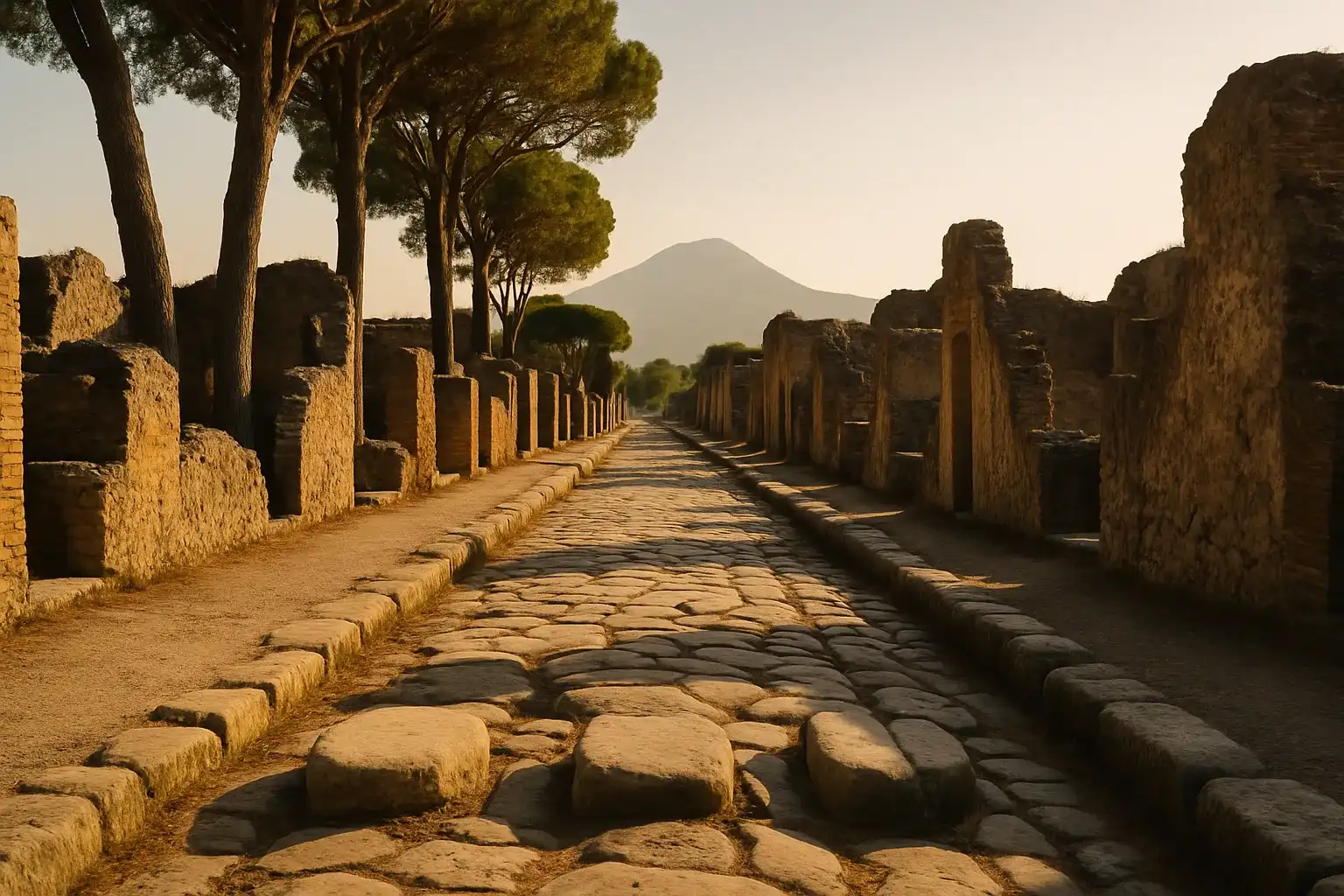
Pompeii Italy Travel Guide: Frozen in Time, Complete 2026
Roman EmpireWalk the streets of ancient Pompeii with our complete guide. Discover the best routes, must-see hous...
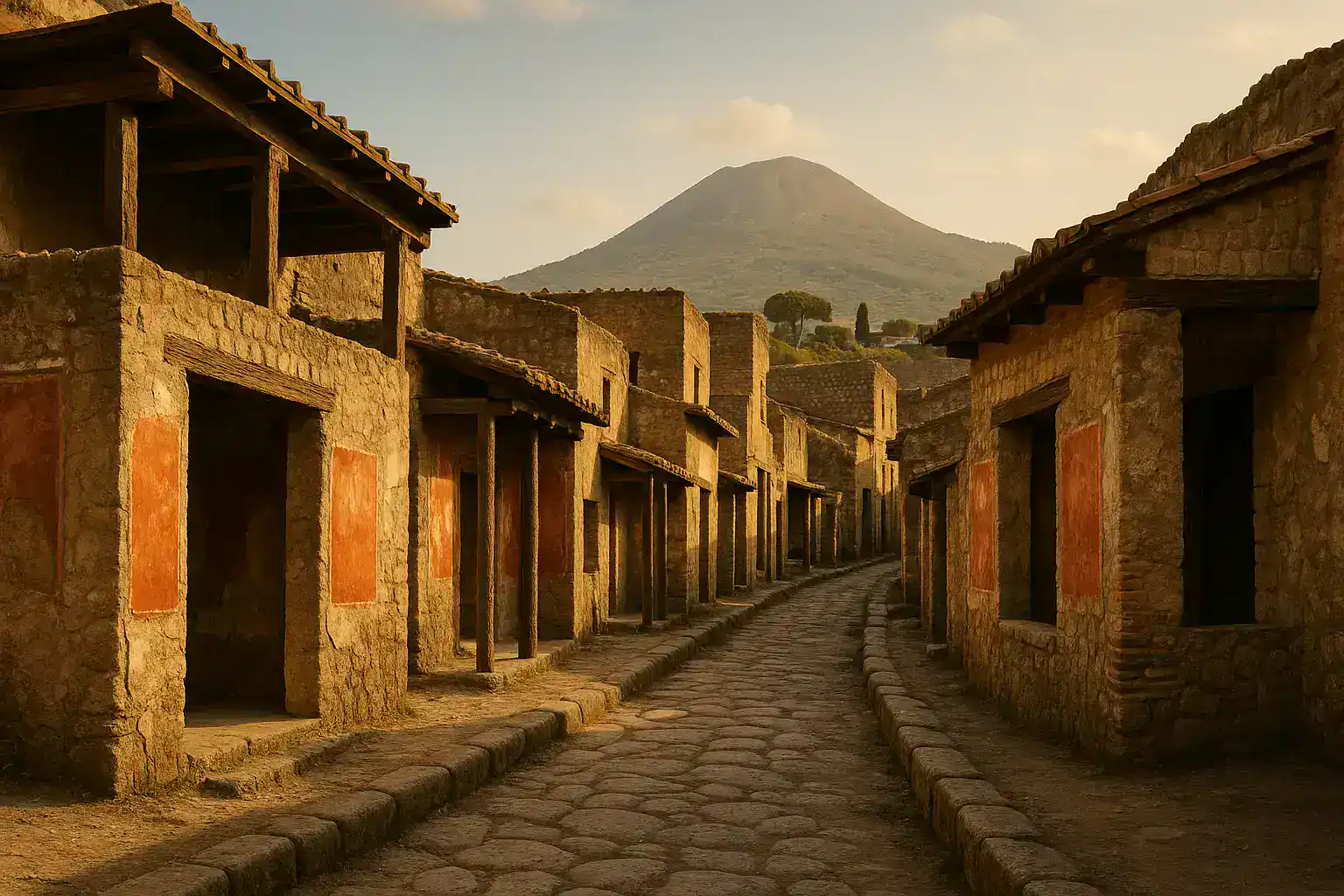
Herculaneum Italy Travel Guide 2026: Better Preserved Than Pompeii
Roman EmpireDiscover Herculaneum's extraordinary preservation of ancient Roman life. See carbonized wood, vivid ...
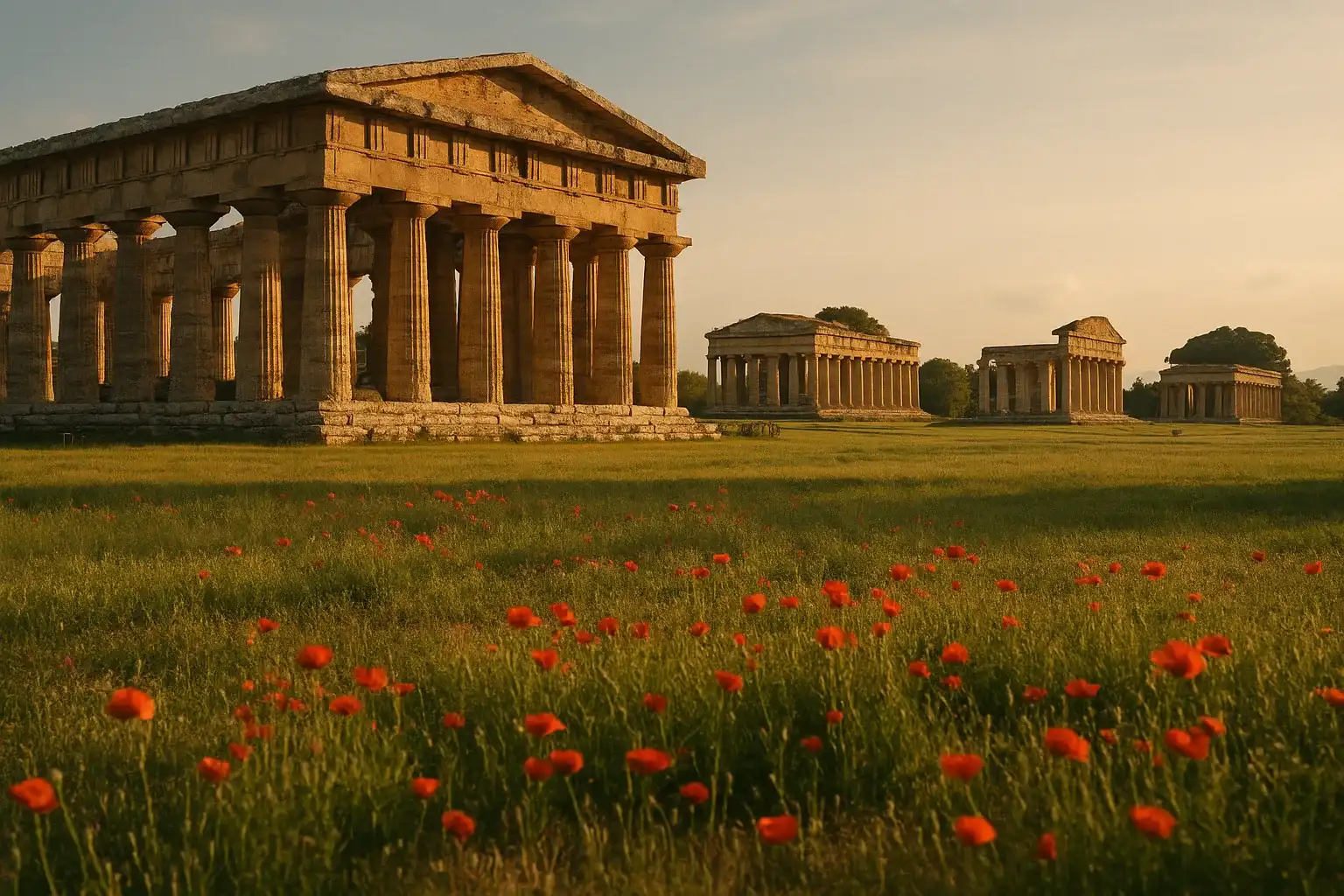
Paestum: Europe's Best-Preserved Greek Temples on Italy's
Ancient Greek / RomanDiscover Paestum's magnificent Greek temples, the Tomb of the Diver, and buffalo mozzarella farms on...
Ostia Antica Italy Travel Guide 2026: Rome's Ancient Port City
Roman EmpireExplore Ostia Antica, the best-preserved ancient Roman city after Pompeii. Walk intact streets, see ...
Baths of Caracalla Rome Guide 2026
RomanPlan your visit to the Baths of Caracalla with practical route advice, history context, timing, and ...