Quick Info
Curated Experiences
Roluos Group and Bakong Half-Day Tour from Siem Reap
Private Angkor Temples Adventure Including Bakong
Full-Day Temples of Angkor Tour with Bakong
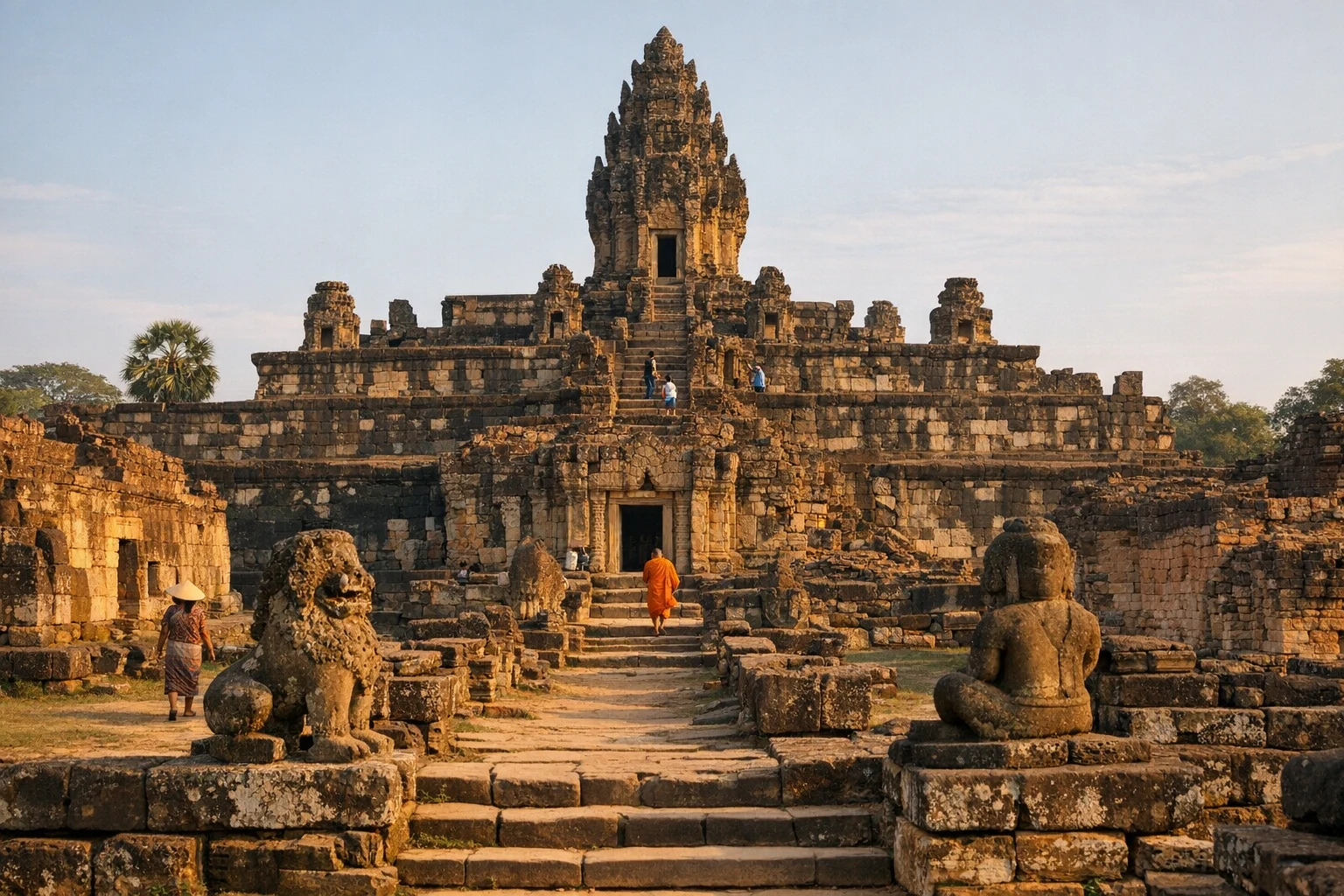
Tucked amid the emerald rice paddies and rural serenity of Cambodia’s Siem Reap Province rises Bakong, the monumental stone heart of what was once the ancient city of Hariharalaya. Only 13 kilometers from Siem Reap city, Bakong presides as the grandest member of the Roluos Group—the cluster of early Angkorian temples that preceded Angkor Wat by hundreds of years. Approaching Bakong at sunrise, the pampas mist yields to reveal a stepped sandstone pyramid crowned by ancient towers, waterways, and scattered frangipanis—a tableau that calls forth the mysterious power and enduring spirit of the Khmer Empire. For many travelers with an eye for Southeast Asia’s deeper past, Bakong is not just a prelude to Angkor but a destination in its own right: a place where bold architectural innovation, divine symbolism, and the living pulse of rural Cambodia meet.
Wandering along the lotus-flanked moat, visitors trace the footsteps of priests and monarchs who, over eleven centuries ago, cemented this complex as the spiritual and political core of an evolving Khmer civilization. On its broad ceremonial causeways, worn yet resilient naga balustrades beckon; at the summit of Bakong’s five ascending terraces, a panoramic view opens across the rice lands to where sunrise bathes the ancient city’s outline in golden haze. In the soft hush between tour groups or at the stirring of a Buddhist blessing within the still-active pagoda onsite, Bakong inspires a sense of both timeworn grandeur and living cultural continuity. Whether you seek a quieter escape from the crowds of Angkor or a deeper understanding of early Khmer ingenuity, the journey to Bakong promises awe, reflection, and connection in equal measure.
History
Foundations in the Dawn of the Khmer Empire
Bakong stands as a testament to the creative ambition and political mastery of Indravarman I, the eighth monarch of the Khmer Empire, who reigned from 877 to 889 CE. When he ascended the throne, the Khmer heartland was shifting. The power center moved away from the older city of Hariharalaya (now Roluos), but before that transition, Indravarman set out to create a new, lasting symbol of imperial might and religious devotion.
The construction of Bakong began around 881 CE, marking a pivotal moment in Khmer architectural evolution. Unlike its brick-and-laterite predecessors such as Preah Ko and Lolei, Bakong was the first large-scale Khmer “temple mountain” built primarily with quarried sandstone. This was no trivial undertaking: sandstone had to be sourced and transported over considerable distances, requiring both labor and organizational expertise emblematic of a burgeoning empire with centralized power and resources.
Spiritual Significance and Hindu Legacy
Bakong’s design embodies the ancient Hindu cosmological concept of Mount Meru—the mythical abode of the gods—brought into physical reality atop the Cambodian plains. At its zenith, the temple enshrined a linga (phallic symbol of Shiva), while the moat represented the cosmic ocean. Structurally, Bakong’s five stepped terraces mirror the ascent to the divine, with subsidiary towers arrayed along each level like celestial satellites.
As the principal state temple (prasat) of Indravarman’s reign, Bakong was more than a place of worship; it hosted court ceremonies, state rituals, and the very rituals that underpinned royal authority. The epigraphs found at Bakong reference royal endowments, the placement of religious images, and the involvement of local elites—a clear indicator that the temple functioned as both sacred sanctuary and administrative center.
Influence on Later Monuments and Decline
The successful marriage of sandstone architecture with the temple mountain form at Bakong would echo for centuries. When later kings established Angkor Thom and conceived the wonders of Angkor Wat and Bayon temple, they looked back upon Bakong as a proto-type: its bold central pyramid, moated enclosures, and axial entrances anticipated Angkor’s most famous monuments.
Yet in the centuries that followed Indravarman’s rule, the focus of Khmer civilization moved northward, toward the Angkor complex we know today. Bakong gradually transitioned from imperial capital to religious site for local communities. While some shrines were added or modified in later periods, and the presence of a modern Buddhist pagoda demonstrates ongoing spiritual significance, much of Bakong’s grandeur faded into memory amid Cambodia’s dense, reclaiming jungles.
Rediscovery and Modern Preservation
In the late nineteenth and early twentieth centuries, during the French colonial period, Bakong attracted European explorers, archaeologists, and eventually conservators. The École française d’Extrême-Orient undertook restoration efforts that prevented its collapse, rediscovering its lost carvings and re-erecting toppled towers. Today, Bakong is inscribed as part of the Angkor UNESCO World Heritage Site, recognized both for its role in shaping Khmer art and for the living heritage maintained by local Buddhist custodians. The temple, serene yet accessible, offers a bridge from the earliest Angkorian history through Cambodia’s many layered epochs—an ancient monument still vital and loved by those who seek its quiet grandeur.
Key Features
Bakong’s majesty lies not only in its grand scale but also in its subtle architectural refinements and atmospheric setting. Encircled by a broad, lotus-dappled moat, the temple rises atop a stepped pyramid structure, a form symbolic of ascension to the realm of the gods. Approaching from the ancient eastern causeway, visitors pass between guardian lions and weathered nagas—serpentine deities—whose balustrades once protected the threshold to the sacred center. Each step brings new discoveries, from sculpted lintels covered in elaborate floral and mythological motifs, to the icons of devas (gods) and asuras (demons) that line the approach.
The most striking element of Bakong is its central pyramid, a five-tiered sandstone structure that remains the earliest true example of the “temple mountain” style perfected in later Angkorian monuments. Each terrace is precisely squared and aligned, with smaller brick satellite towers occupying the corners—a testament to the Khmer’s growing mastery of both engineering and cosmic symbolism. As you ascend the steep stone steps (worn smooth by centuries of pilgrims), the breadth of Bakong’s design becomes even clearer: the entire complex is laid out along precise east-west and north-south axes, reflecting cosmological order as dictated by Hindu and later Buddhist beliefs.
At the summit, once reserved exclusively for royalty and high priests, stands the principal sanctuary. This sanctuary, now open to all visitors, originally sheltered a sacred linga and features relief carvings evoking celestial palaces and mythic battles. The panoramic views from this vantage—stretching across the lowland countryside and the traces of once-grand city walls—invite a moment of contemplation, as the boundaries between past and present gently blur.
Beyond the pyramid itself, Bakong’s grounds are rich with atmospheric ruins and living tradition. The subsidiary shrines, some overrun with twisting roots and moss, include both Hindu and later Buddhist icons, weaving a narrative of religious evolution. The presence of an active Buddhist monastery (Wat Bakong) near the complex’s entrance lends a sense of spiritual continuity, as orange-robed monks pass quietly among the ruins or conduct ceremonial blessings for visitors. On the temple’s western edge, you’ll find remnants of ancient city gates and the faint traces of habitation, now largely reclaimed by nature but still visible to the attentive explorer.
Throughout Bakong, restoration has been carefully balanced to preserve both the grandeur of the original and the patina of time. Intricate sandstone lintels frame the doorways; bas-reliefs depict scenes from Hindu epics and daily life long past; block walls, in places, appear to melt back into the Cambodian earth. The overall effect is haunting and beautiful—inviting you not just to view a monument, but to inhabit a world where deities, kings, and everyday Khmer once converged.
Getting There
Bakong’s close proximity to Siem Reap city—the bustling hub for most Angkor visitors—makes it one of the most accessible early Angkorian temples for modern travelers. The temple is located in the Roluos area, approximately 13 kilometers east of central Siem Reap, at the edge of the main road toward Phnom Penh. Getting to Bakong is straightforward and suits most travel preferences and budgets.
For independent visitors, the most popular option is hiring a tuk-tuk from Siem Reap. A standard round-trip journey to the Roluos Group—including Bakong, Preah Ko, and Lolei—typically costs between $15 and $20 USD, depending on negotiation, inclusivity of waiting time, and the number of stops. The ride takes around 25–30 minutes each way, gliding through rural villages and beautiful rice paddy vistas. The journey itself is both scenic and comfortable, especially if undertaken in the early morning or late afternoon.
Private cars with drivers are also widely available, suitable for small groups or those seeking air-conditioned transport. Expect fares in the range of $25–$40 USD for a half-day excursion, typically packaged with visits to several temples in the area.
Adventurous visitors often opt to cycle from Siem Reap. The flat terrain and paved main road make for a pleasant ride; bike rentals range from $3 to $10 USD per day. Allow 45–60 minutes cycling each way, and be sure to bring ample water, especially during the dry season when temperatures soar. Several tour agencies in town also offer guided cycling tours that include Bakong and its neighboring temples, with the added benefit of an expert guide to interpret the ruins.
For those preferring organized tours with commentary, many local operators provide half-day or full-day itineraries covering the Roluos Group, either on minibuses, vans, or as part of private guided experiences. These often include hotel pickup, licensed Angkor guides, and the convenience of bundled logistics, usually for around $30–$60 USD per person, depending on group size and inclusions.
All visitors require a valid Angkor Pass, easily purchased at the official ticket office in Siem Reap. There is no separate fee for Bakong itself; entrance is included with any Angkor Pass (one-day, three-day, or seven-day options).
When to Visit
The charm of Bakong alters subtly with Cambodia’s shifting seasons, each offering a distinct mood and visitor experience. Cambodia’s climate is tropical, shaped by two primary periods: the dry season (November to April) and the wet season (May to October).
The dry season is by far the most popular, with peak months between December and February. During this time, days are sunny, temperatures range from 20°C to 28°C (68–82°F), and humidity is relatively low. These months are ideal for temple exploration, with clear light perfect for photography and more comfortable conditions for climbing Bakong’s pyramid. However, this period also coincides with Cambodia’s busiest tourism window—expect more visitors, though Bakong generally sees fewer crowds compared to the main Angkor temples.
The wet season, marked by frequent afternoon showers and lush greenery, transforms Bakong’s surroundings into a vibrant, almost ethereal landscape. From June through September, daytime highs reach 30–35°C (86–95°F), but the storms—while sometimes intense—are usually brief, leaving quiet intervals ideal for exploration. The moat fills and lotuses bloom, providing atmospheric backdrops seldom seen during the dry months. Despite occasional muddy paths, this is a wonderful time for solitude and evocative photographs, as tour groups thin out and the countryside bursts with life.
Try to visit Bakong early in the morning (7:00–9:00am) or late in the afternoon (after 3:30pm) to avoid both crowds and the most intense midday heat. Sunrise and sunset both reward patient photographers with beautiful, slanting light and the echo of prayers from nearby Wat Bakong. During major Buddhist holidays, the site may host religious events, making visits more vibrant but often busier.
No matter the season, Bakong remains a site where Cambodia’s ancient past meets the ongoing rhythm of village and monastic life year-round. Bring water, sun protection, and suitable clothing for a respectful yet comfortable temple visit.
Quick Facts
| Fact | Detail |
|---|---|
| Location | Roluos, Siem Reap Province, Cambodia |
| Distance from Siem Reap | 13 kilometers east (approx. 25–30 minutes by tuk-tuk) |
| Year Established | Circa 881 CE |
| Civilization | Khmer Empire |
| Primary Religion | Originally Hinduism (god Shiva), with later Buddhist use |
| Construction Materials | Sandstone, laterite, brick |
| Architectural Style | Temple mountain, prototype of later Angkorian pyramids |
| UNESCO Status | Inscribed as part of Angkor World Heritage Site since 1992 |
| Entrance Fee | Included with Angkor Pass (one-day, three-day, or seven-day passes accepted) |
| Dress Code | Modest clothing required (shoulders and knees covered) |
| Accessibility | Temple grounds mostly flat; central pyramid features steep stairs, not wheelchair accessible |
| Nearest Major City | Siem Reap |
| Best Time to Visit | December to February for best weather; June–September for lush scenery and fewer crowds |
| Facilities | Toilets, basic stalls for drinks/snacks; Buddhist pagoda (Wat Bakong) at the site entrance |
Frequently Asked Questions
What makes Bakong unique among Angkor temples?
Bakong is the first temple mountain constructed by the Khmer empire using sandstone, serving as a prototype for later Angkorian masterpieces, with its five-tiered pyramid form and grand scale.
Is Bakong part of the official Angkor Archaeological Park?
Bakong is part of the Roluos Group, just outside the main Angkor park. Entrance is included with the standard Angkor Pass.
How long should I spend visiting Bakong?
A thorough visit takes about 1 to 1.5 hours, especially if you wish to explore the surrounding Roluos Group temples and climb the central pyramid.
Can you climb to the top of Bakong temple?
Yes, visitors can ascend the five levels of Bakong’s central pyramid for panoramic views of the countryside and temple grounds, but take care on steep steps.
Are there guides available at Bakong?
Official guides can be hired in Siem Reap or at the Angkor ticket office; some tours to Roluos include knowledgeable English-speaking guides.
What should I wear when visiting Bakong?
Wear modest clothing covering shoulders and knees, as Bakong is still an active spiritual site. Comfortable footwear is also recommended for climbing.
Are there any food or drink facilities at Bakong?
There are small local vendors and occasional stalls near the temple entrance. It’s advisable to carry water and snacks, especially during hot days.
Is Bakong accessible for visitors with limited mobility?
The grounds are mostly flat, but the central pyramid features steep stairs. Those with limited mobility may find the climb challenging.
Nearby Ancient Sites
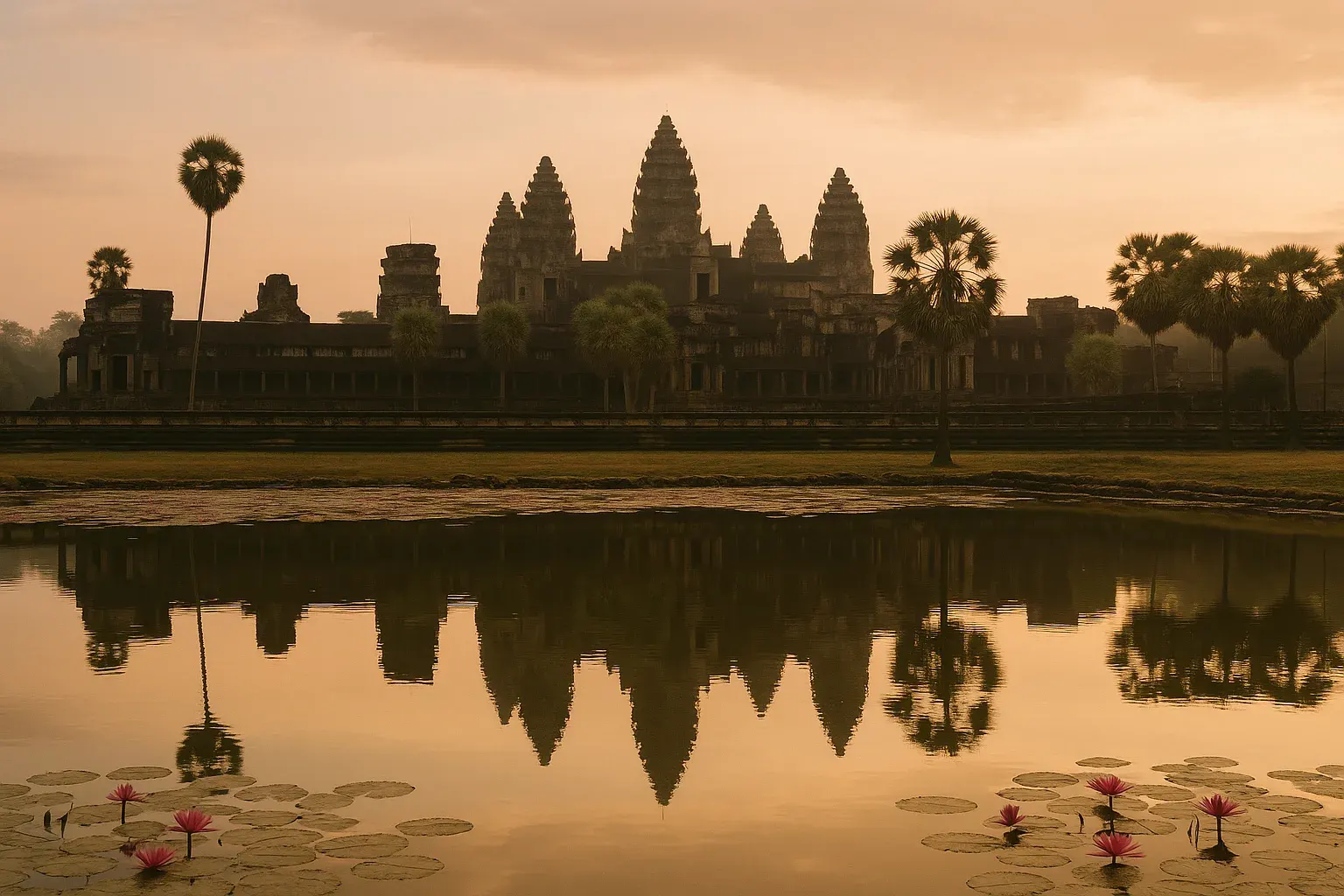
Angkor Wat Travel Guide 2026: Everything You Need to Know
KhmerAngkor Wat, the world's largest religious monument, spans over 400 acres in the heart of Cambodia. T...
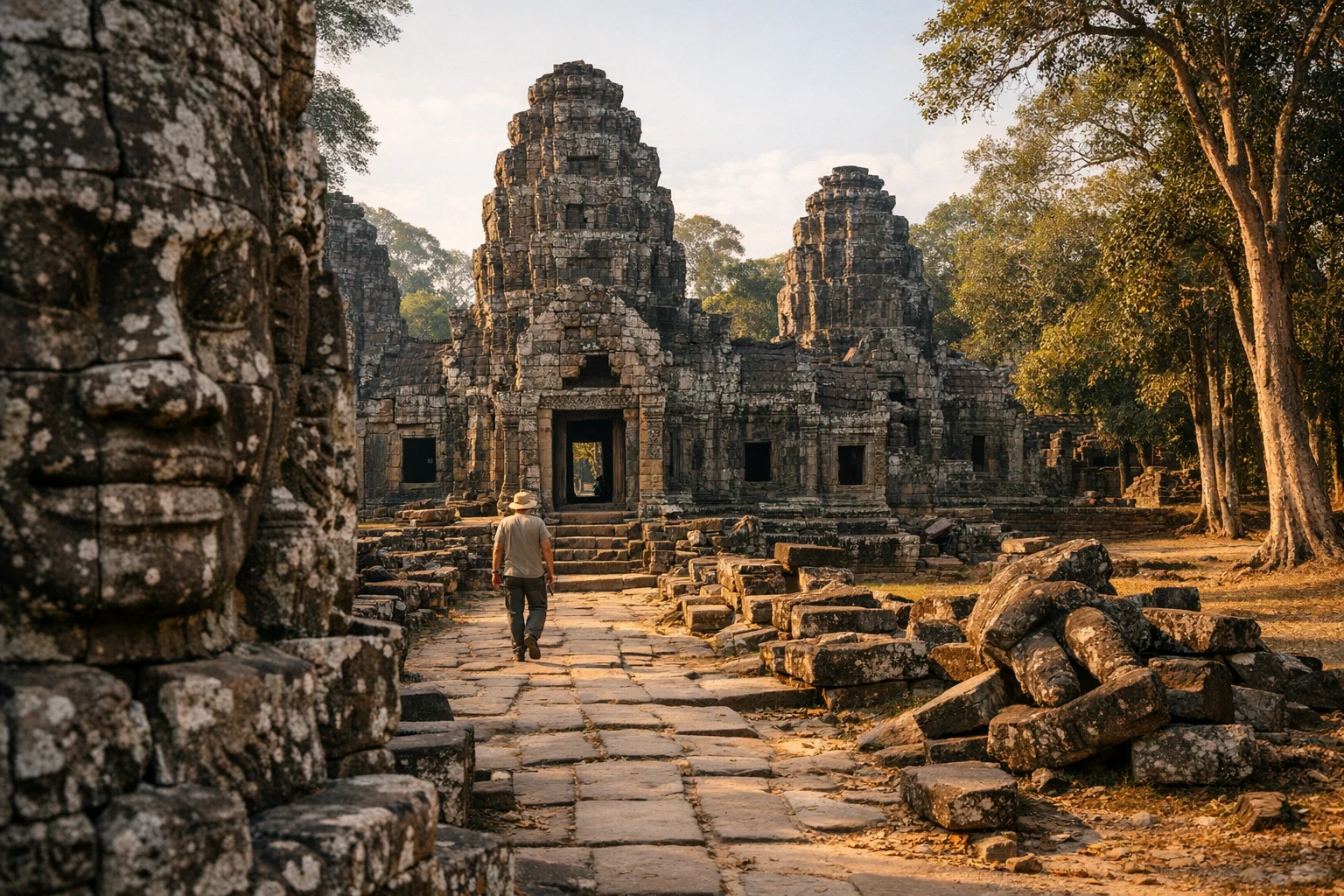
Banteay Kdei
KhmerExplore Cambodia’s Banteay Kdei, a atmospheric Angkor temple-monastery of quiet courtyards, worn car...
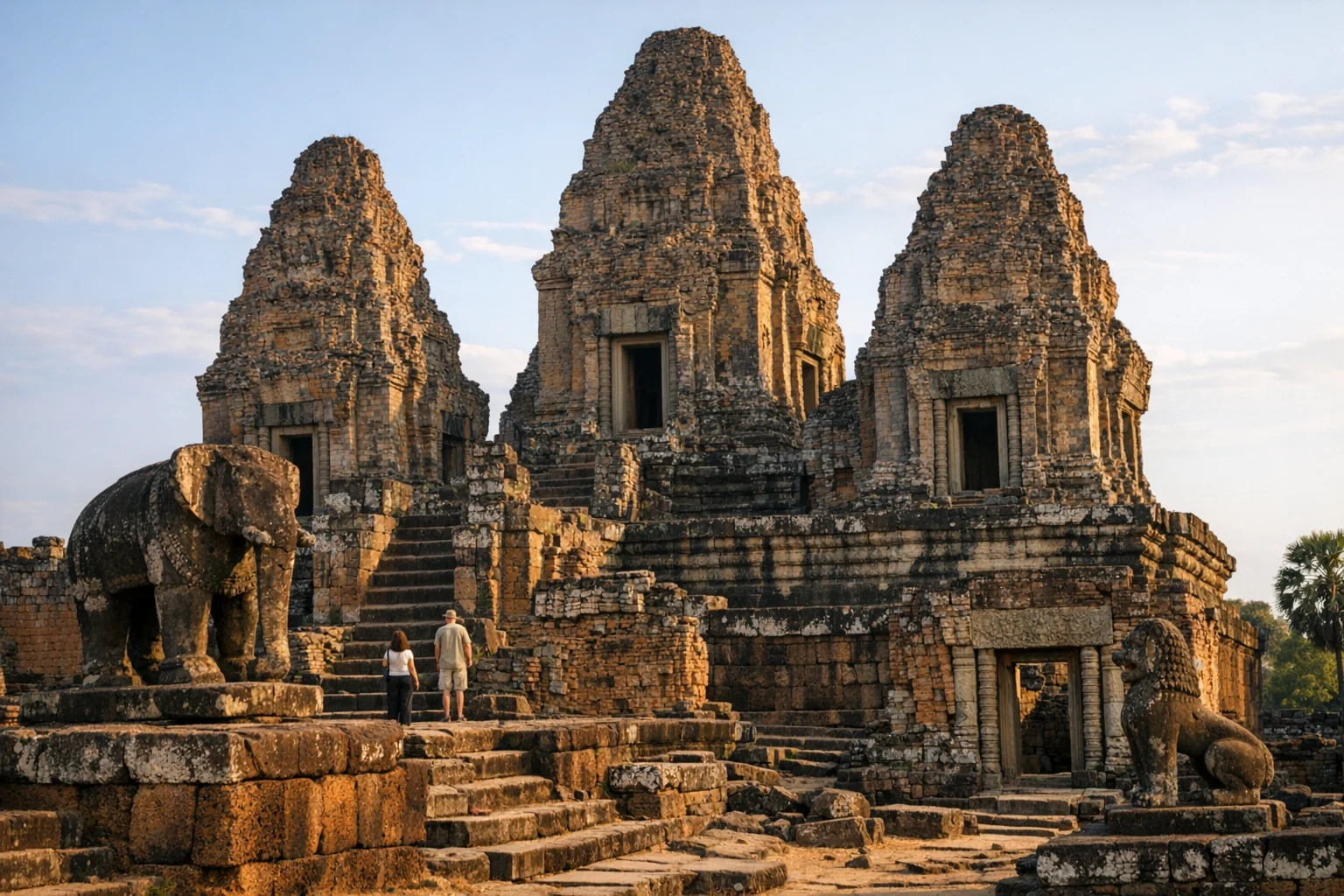
East Mebon
KhmerExplore Cambodia’s East Mebon, a striking 10th-century Angkor temple once standing on an island in t...
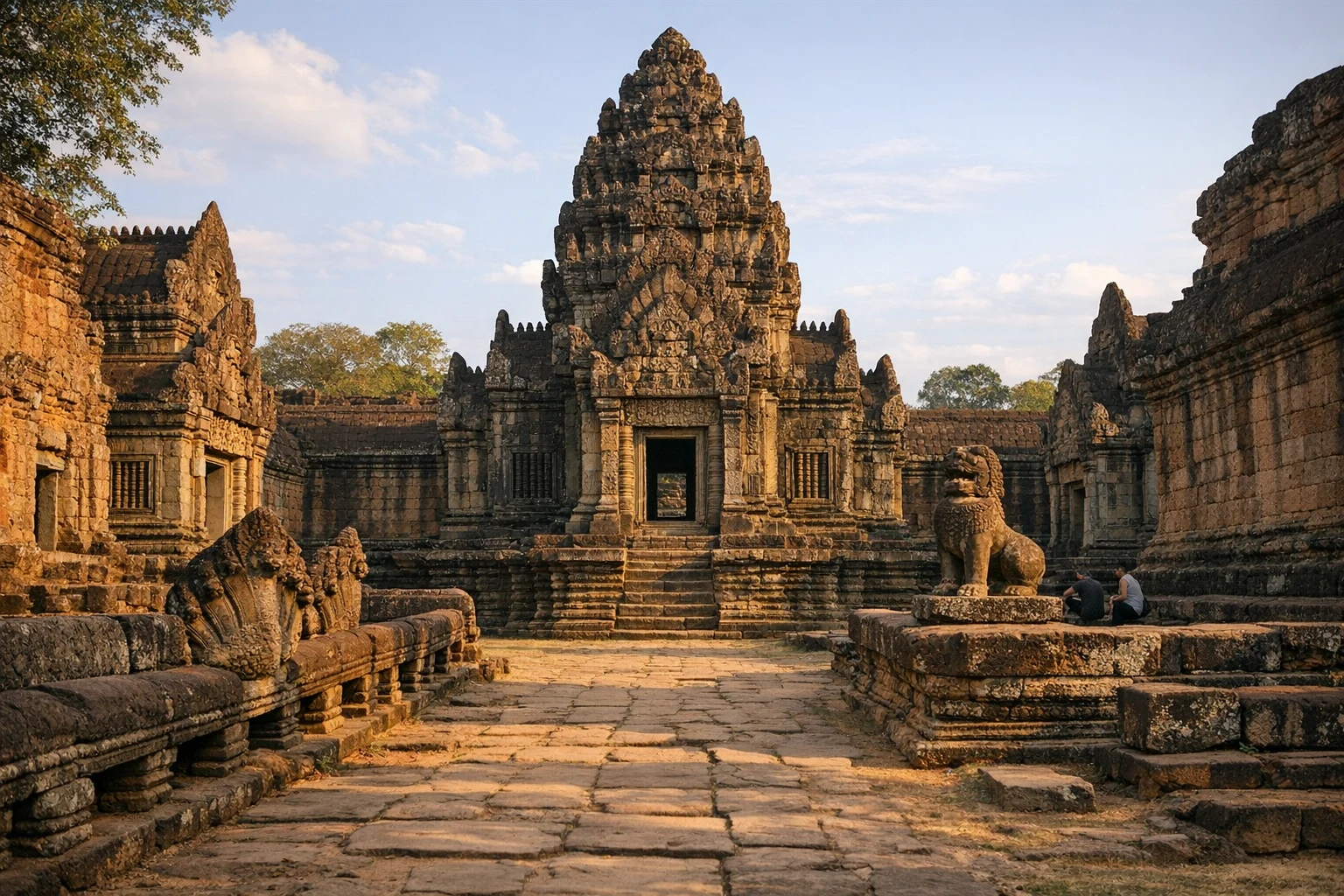
Banteay Samré
Banteay Samré is a beautifully preserved 12th-century Hindu temple in Cambodia’s Siem Reap province,...
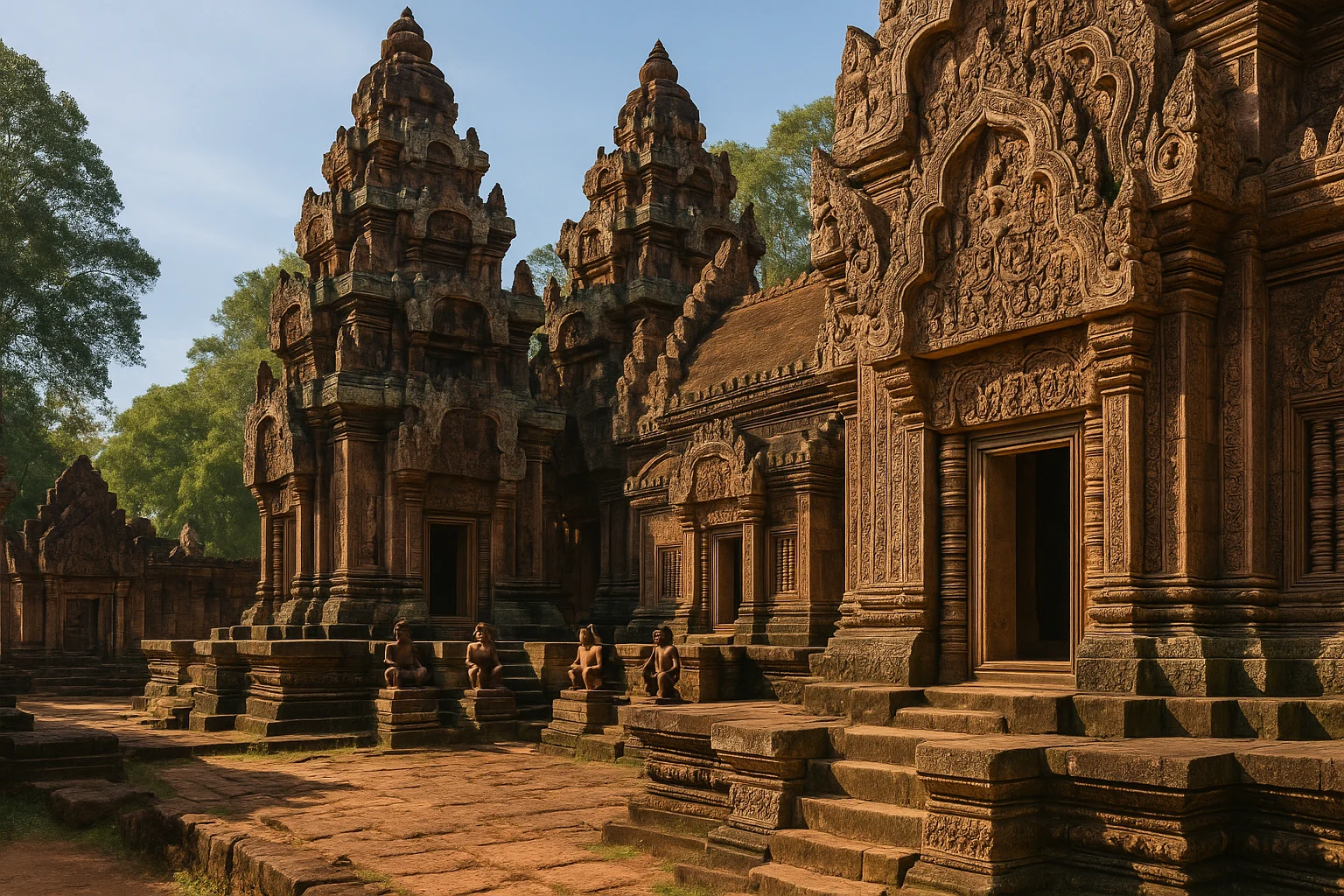
Banteay Srei Travel Guide 2026: Pink Sandstone Temple, Carvings, and Visit Tips
KhmerBanteay Srei is one of Cambodia’s most detailed Khmer temples, known for fine pink sandstone carving...