Quick Info
Curated Experiences
Private Angkor Wat and Banteay Samré Temple Discovery
Ancient Temples: Banteay Samré, Banteay Srei & More
Siem Reap Full Angkor Circuit Guided Tour
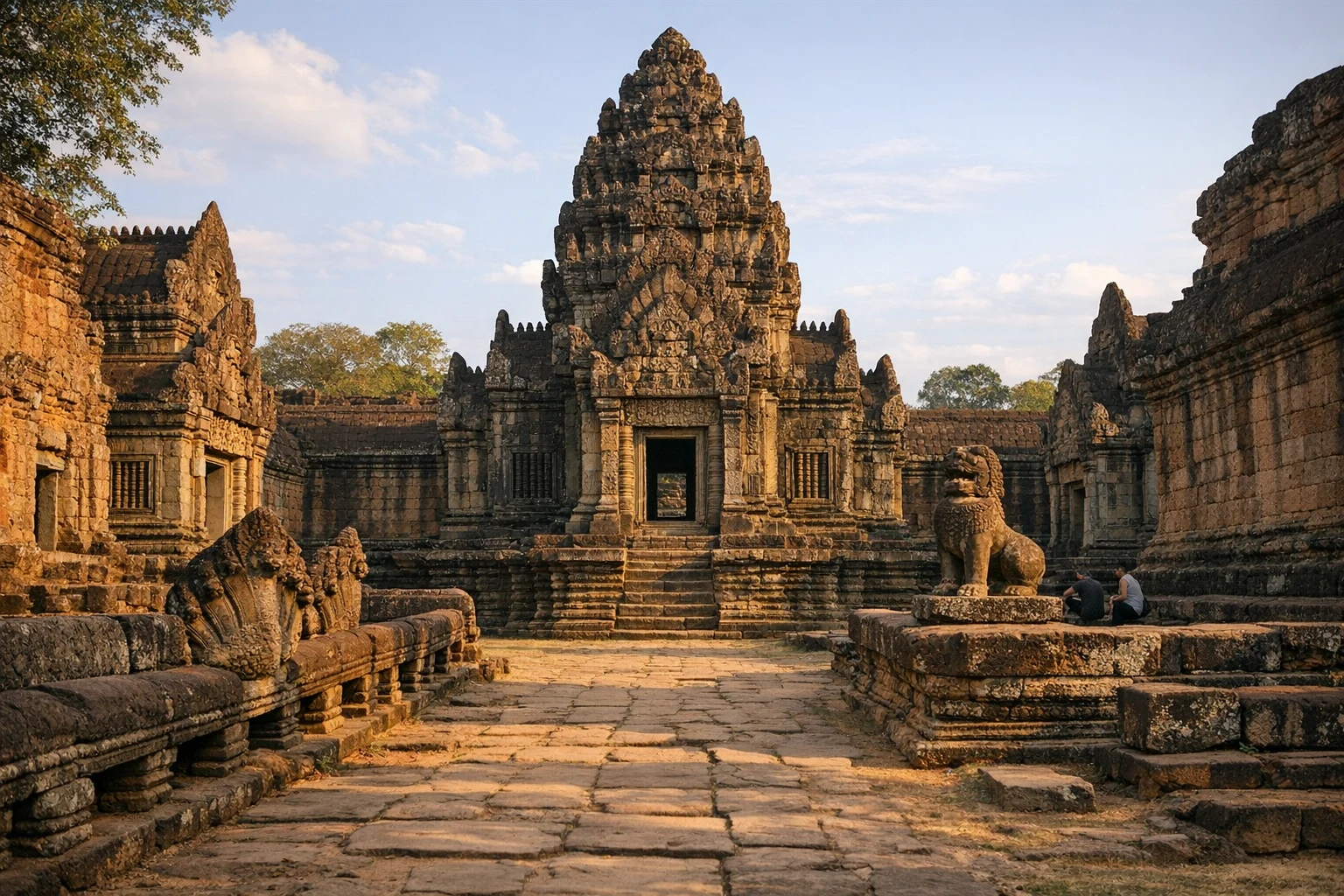
Tucked away from the main crowds of Angkor’s headline monuments, Banteay Samré stands quietly yet majestically amidst Cambodia’s rural landscape. Located in the Siem Reap province, approximately 20 kilometers east of the famed Angkor Wat, this exquisite 12th-century temple offers a unique, contemplative experience for those willing to journey a little off the main tourist trail. Surrounded by verdant rice fields and small villages, the tranquil approach to Banteay Samré sets the stage for a site that feels both intimate and grand, its ancient sandstone towers rising above the trees in proud testament to the Khmer Empire’s enduring legacy. While larger and more celebrated temples like Angkor Wat or Bayon attract thousands of visitors every day, Banteay Samré is often uncrowded, allowing for leisurely exploration and quiet appreciation of its well-preserved architecture and intricate carvings.
Built during the reign of King Suryavarman II—the monarch responsible for Angkor Wat itself—Banteay Samré was conceived as a Hindu temple dedicated primarily to Vishnu, constructed in the Angkor Wat style but on a more compact scale. Unlike the main Angkor circuit, Banteay Samré’s distance from the park center and lack of royal association have left it less frequented, preserving its atmospheric sense of solitude and offering an evocative glimpse into a less-explored chapter of Khmer history. Its restoration, completed in the 1930s, has left the temple remarkably intact, with sweeping galleries, libraries, courtyards, and towers that showcase the elegance and sophistication of Angkorian design. Whether you are a history buff, photographer, or casual traveler seeking inspiration away from the crowds, Banteay Samré invites you to step into a world where ancient stone whispers the secrets of Cambodia’s golden age.
History
Foundation and Construction in the Twilight of the Golden Age
Banteay Samré’s origins are rooted in the apogee of the Khmer Empire—a period marked by grand projects, dizzying architectural ambition, and expanding territorial control. It was built during the 12th century, most likely during the first half of the reign of Suryavarman II (c. 1113–1150), whose patronage gave birth to many of Angkor’s most remarkable monuments, including the world-renowned Angkor Wat. What sets Banteay Samré apart is that, while echoing the style and spiritual symbolism of Angkor Wat, it was constructed not in the center of the great city of Angkor but rather on the empire’s northeastern fringes, possibly upon lands held by the Samré people, an ancient group living in the region.
The temple’s dedication to Vishnu points to the religious landscape of the time, when Hinduism was the foundation of royal authority and state cosmology. The very layout of Banteay Samré mirrors the Angkor Wat plan: a concentric succession of moats, galleried enclosures, and a central tower symbolizing Mount Meru, the cosmic mountain of Hindu mythology. However, the patronage here appears to have been granted by a high official, landholder, or minor royal figure rather than the king himself; the specifics have been lost to time, but inscriptions suggest a local administrator or noble initiated construction, perhaps as an act of merit or allegiance.
Subsequent Use, Restoration, and Rediscovery
For centuries after its completion, Banteay Samré likely remained a vibrant religious center, its shrines home to cultic images and ceremonial rituals. However, with the ebbing of Hindu dominance and the rise of Mahayana and later Theravada Buddhism in the region, the temple would have gradually been repurposed or abandoned, falling into silence as the capital shifted and the empire’s grandeur faded. As was the fate of so many Angkorian monuments, Banteay Samré was eventually engulfed by nature—the jungle encroached, soil filled the moats, and its halls were reclaimed by silence and the slow passage of centuries.
Unlike the main temples, which maintained periodic occupation and even attracted the interest of French colonial explorers in the 19th century, Banteay Samré remained relatively obscure until the early 20th century. In the 1930s, under the direction of French architect Maurice Glaize—a key figure in the École française d’Extrême-Orient’s pioneering work in Angkor—the temple was restored using the method of anastylosis. This technique involved carefully dismantling and reconstructing the monument using its original stones, stabilizing the structure and returning its courtyards, galleries, and shrines to their former glory.
Banteay Samré in the Modern Era
Today, Banteay Samré is celebrated among scholars and travelers for its exceptional state of preservation and the purity of its architectural lines. It exemplifies “classic Angkor Wat” style, bridging the high classical phase of Khmer temple construction and providing crucial insight into both the regional diffusion of art and the spread of Angkorian religious influences. More recently, improvements in infrastructure and increased awareness have brought a gentle trickle of visitors to Banteay Samré, yet it remains more serene than the tour-bus-laden main complex. Its significance lies as much in its relative solitude as in its artistic or spiritual value, serving as a living classroom for Cambodia’s ancient past, and inviting exploration by those with a passion for the world’s great civilizations.
Key Features
Visitors to Banteay Samré are often struck by the temple’s harmonious proportions and the deft craftsmanship evident in every corner. Approaching the site, one is first greeted by a long laterite causeway, adorned with naga balustrades—mythic serpents that seem to slither protectively along the entrance path. This causeway was once flanked by a moat, symbolically separating the sacred space from the mundane world, and while the moat is dry today, its outlines can still be traced, giving a sense of the ceremonial grandeur of ancient Angkorian processions.
Passing through the imposing eastern gopura (entrance tower), you enter the outer enclosure—a serene courtyard carpeted in grass and framed by the original laterite wall. The architecture and materials are quintessentially Angkorian: red sandstone for the main buildings, with finely carved lintels and pediments displaying elaborate mythological scenes, flanked by libraries and smaller shrines. The wall itself is punctuated by galleries, offering shaded corridors and windows ornamented with baluster columns, letting in dappled light that dances across the sculpted surfaces. Unlike some other Angkor temples, which suffered extensive loss of their decorative elements, many of Banteay Samré’s carvings of epic battles, gods, and celestial beings remain crisp, allowing visitors to appreciate the sophistication of 12th-century Khmer artisans.
At the heart of the temple is the central sanctuary—the symbolic Mount Meru—rising majestically above subsidiary towers at each axis. Here, the textures of aging sandstone add a luminous warmth to the sacred spaces, especially at dawn and dusk when the sun highlights the subtlety of the temple’s decorative program. The sanctuary is surrounded by an inner ornately carved gallery that encourages slow exploration and close study. The architecture here achieves a balance rare among the Angkor temples: grand enough to evoke awe, yet intimate enough to invite contemplation.
One unique aspect of Banteay Samré is its preservation. The restoration in the 20th century not only returned its original shapes but ensured that doorways, lintels, and columns were properly reassembled, offering the rare chance to walk through spaces much as they would have looked 900 years ago. Details such as false doors, functional drainage systems, and symbolic yoni (female fertility) motifs embedded within the structure reveal layers of meaning beyond what first meets the eye. The libraries, located within the corners of the inner enclosure, are a favorite place to pause, as are the two small, symmetric satellite shrines on the north and south axes—each exemplifying the architect’s flair for symmetry and repetition.
Surrounding the temple are rice fields and palm-dotted Cambodian countryside, providing a photogenic backdrop and reinforcing the temple’s separation from the bustle of Angkor Archaeological Park. Without the noise of large crowds, the bird calls and gentle rustling of the breeze create a contemplative atmosphere, especially during golden hour. The overall effect is immersive—a site where ancient stone, sacred geometry, and rural tranquility combine to form one of Cambodia’s quietest masterpieces.
Getting There
Banteay Samré is located about 20 kilometers east of Angkor Wat and 14 kilometers from Siem Reap’s city center, making it a rewarding excursion for those seeking a more off-the-beaten-path temple experience. The two most common ways to travel to Banteay Samré are by tuk-tuk or by private car/taxi, with organized tours also an increasingly popular option for those wishing to combine their visit with other sites in the area.
A tuk-tuk ride from central Siem Reap to Banteay Samré typically takes about 40 minutes one way, winding through rural roads, local markets, and lush rice paddies. As of early 2024, expect to pay between $20 and $25 USD for a round-trip tuk-tuk charter, though prices may be slightly higher if you include multiple stops at other temples (such as Banteay Srei or East Mebon). Private taxis or air-conditioned vehicles, which are more comfortable but less atmospheric than tuk-tuks, usually cost around $35–$40 USD for a half-day journey, including time at the temple and the return to the city.
For adventurous travelers, cycling is technically possible, though only recommended for those comfortable with the heat, humidity, and traffic; expect a two-hour trip each way. Joining a guided tour is another excellent option, particularly for visitors interested in history and architecture. These tours often include Banteay Samré as part of the “Grand Circuit,” together with lesser-visited temples in the northeast of Angkor.
Regardless of the mode of transport, all visitors must hold a valid Angkor Pass, obtainable from the official ticketing offices in Siem Reap. The pass costs $37 USD for a single day, $62 USD for three days, and $72 USD for one week (7 days non-consecutive within one month), and covers Banteay Samré along with the main Angkor temples. There are no separate entrance fees for the temple itself.
When to Visit
Optimal conditions for visiting Banteay Samré are shaped by Cambodia’s tropical climate, with two main seasons dictating the rhythm of local life: the dry season (November to April) and the wet, or monsoon, season (May to October). Each brings a different atmosphere to the temple and its surroundings.
The dry season is the most popular time for travelers, with cooler temperatures between November and February making for comfortable temple touring. During these months, skies are usually clear, and the light is ideal for photography, especially during early morning or late afternoon when the sun’s rays angle across the carvings and give the sandstone a beautiful golden hue. However, December and January are peak tourist months across Angkor, so if you value true solitude, consider visiting on a weekday in November or late February, when visitor numbers dip.
The wet season has its own rewards. From May to October, afternoon showers and morning mists transform the surrounding countryside into a lush tapestry of green. The fields around Banteay Samré teem with life, moats occasionally refill with water, and the temple is often deserted except for the odd intrepid photographer or local monk. Rain showers tend to be brief but intense, usually occurring in the late afternoon, so plan your visit for the morning or bring a lightweight poncho. The advantages: atmospheric skies, brilliant colors, and very few other tourists.
Banteay Samré is open daily from 7:30 AM to 5:30 PM. Early morning and late afternoon afford the best lighting and the quietest conditions year-round. As the temple is less visited than central Angkor, chances are high you will have large portions of it to yourself, no matter the season.
| Quick Facts | Details |
|---|---|
| Location | Siem Reap Province, Cambodia |
| GPS Coordinates | 13.4643° N, 103.9183° E |
| Primary Period | Early to mid-12th century (Angkor Wat style) |
| Built By | Likely a high-ranking official under Suryavarman II |
| Religious Affiliation | Hinduism (dedicated to Vishnu) |
| Materials | Sandstone, laterite |
| Restoration | Major work in the 1930s by Maurice Glaize |
| Access | Included in Angkor Pass |
| Opening Hours | 7:30 AM – 5:30 PM |
| Best Time to Visit | Early morning or late afternoon, Nov–Feb (dry season) |
| Closest Major City | Siem Reap (14km) |
| Notable Features | Nagas, decorated lintels, preserved sanctuary |
| Suggested Visit Time | 30–60 minutes |
| Facilities | Limited (shade, no cafés or restrooms on site) |
| Nearby Sites | Banteay Srei, East Mebon, Angkor Thom, Angkor Wat |
Frequently Asked Questions
Where is Banteay Samré located?
Banteay Samré is located in the northeast of the Angkor Archaeological Park, in Siem Reap province, Cambodia, around 20km from Angkor Wat.
What is the best way to visit Banteay Samré?
Most visitors reach Banteay Samré by tuk-tuk, taxi, or private tour from central Siem Reap or Angkor, often as part of a temple circuit tour.
Do I need a ticket to enter Banteay Samré?
Yes. Entry requires an Angkor Pass, which grants access to Banteay Samré and the main Angkor sites. Passes can be bought for 1, 3, or 7 days.
How long should I spend at Banteay Samré?
Most visitors spend 30–60 minutes touring Banteay Samré, though enthusiasts of Angkorian architecture may wish to linger longer.
Is Banteay Samré wheelchair accessible?
The temple has steps and uneven stone surfaces; some areas may be challenging for visitors with limited mobility. There are no ramps.
Nearby Ancient Sites
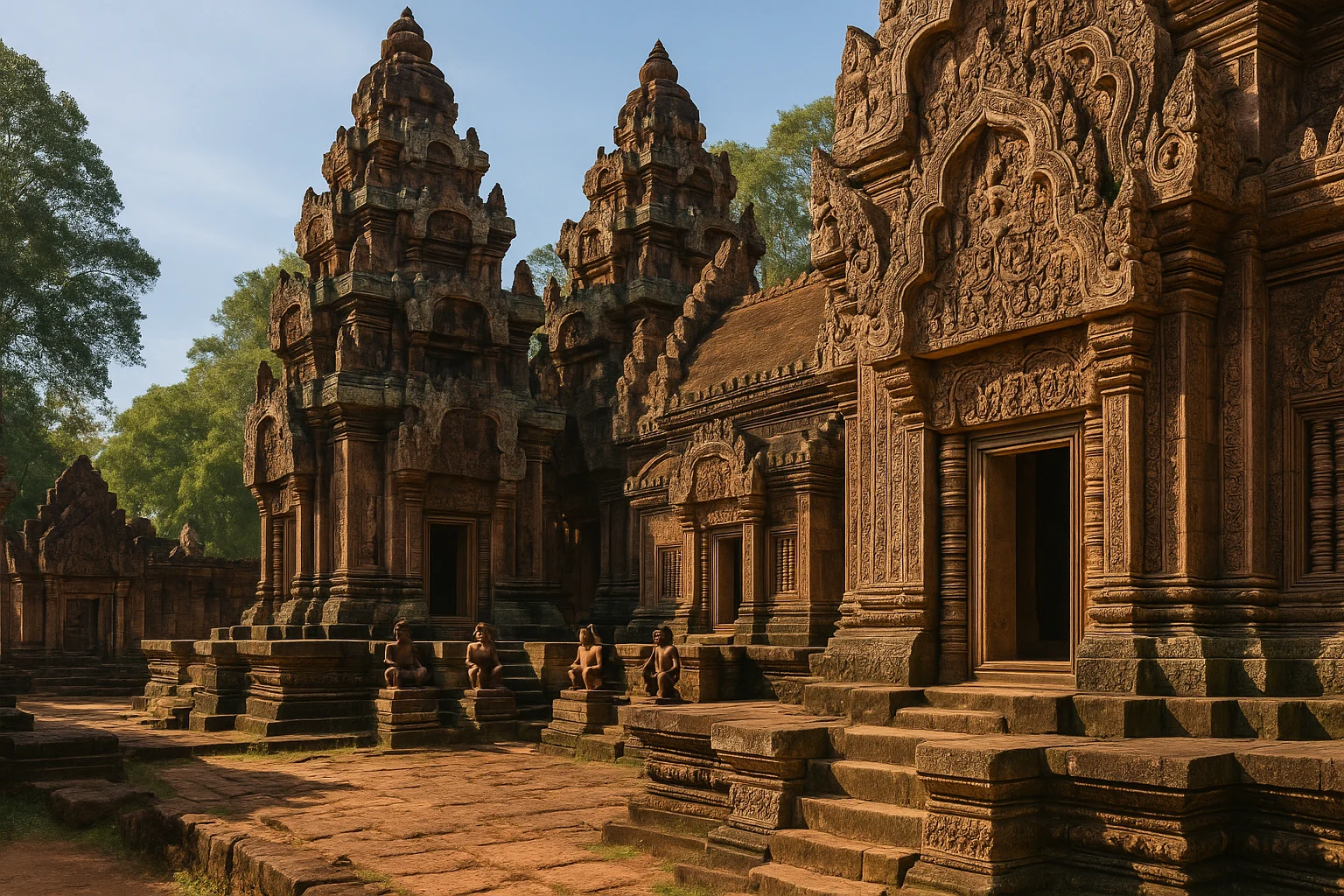
Banteay Srei Travel Guide 2026: Pink Sandstone Temple, Carvings, and Visit Tips
KhmerBanteay Srei is one of Cambodia’s most detailed Khmer temples, known for fine pink sandstone carving...
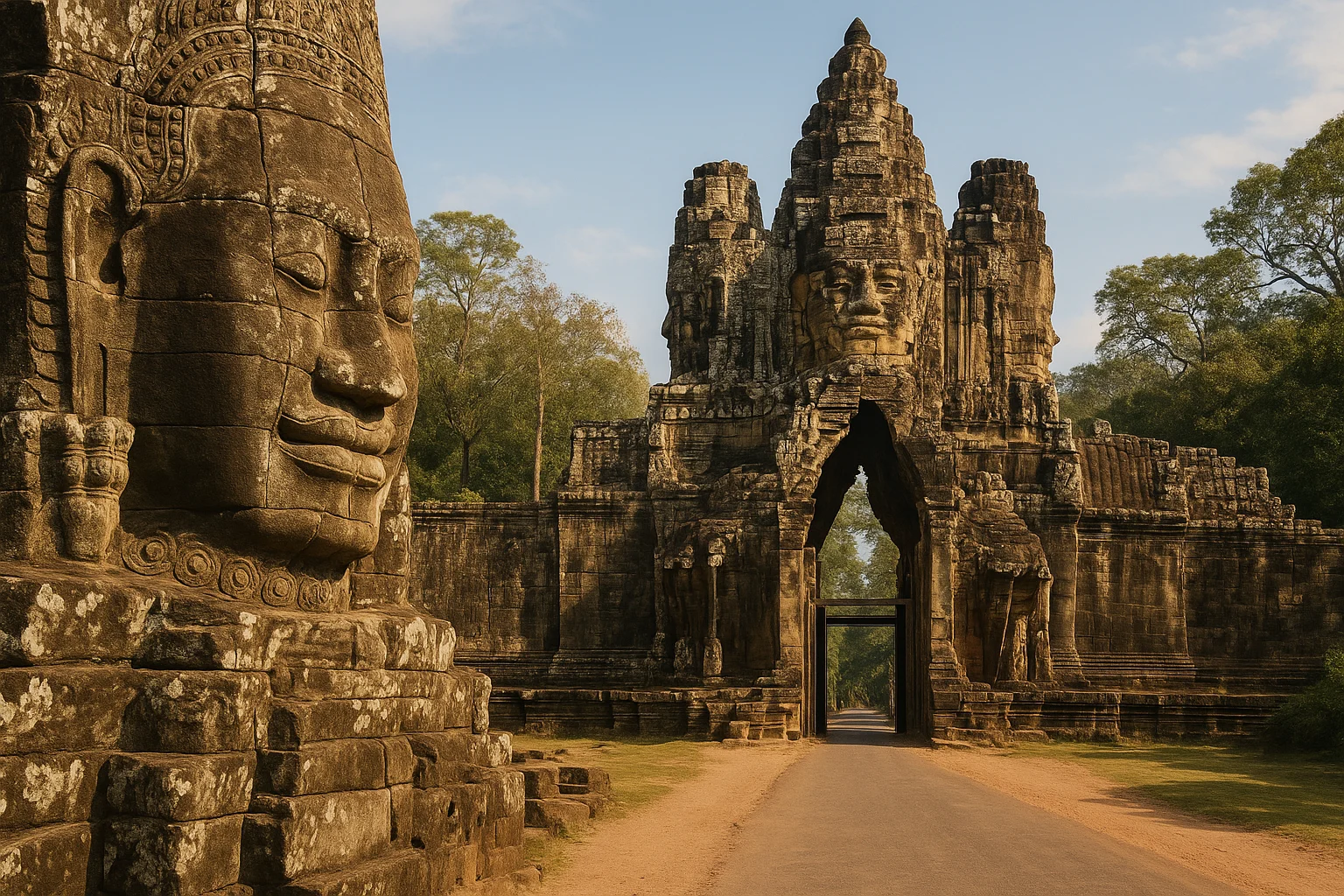
Angkor Thom Travel Guide 2026: Bayon Faces, Gates, and the Khmer Royal City
KhmerAngkor Thom was the last great capital of the Khmer Empire. This guide covers how to visit Bayon, th...
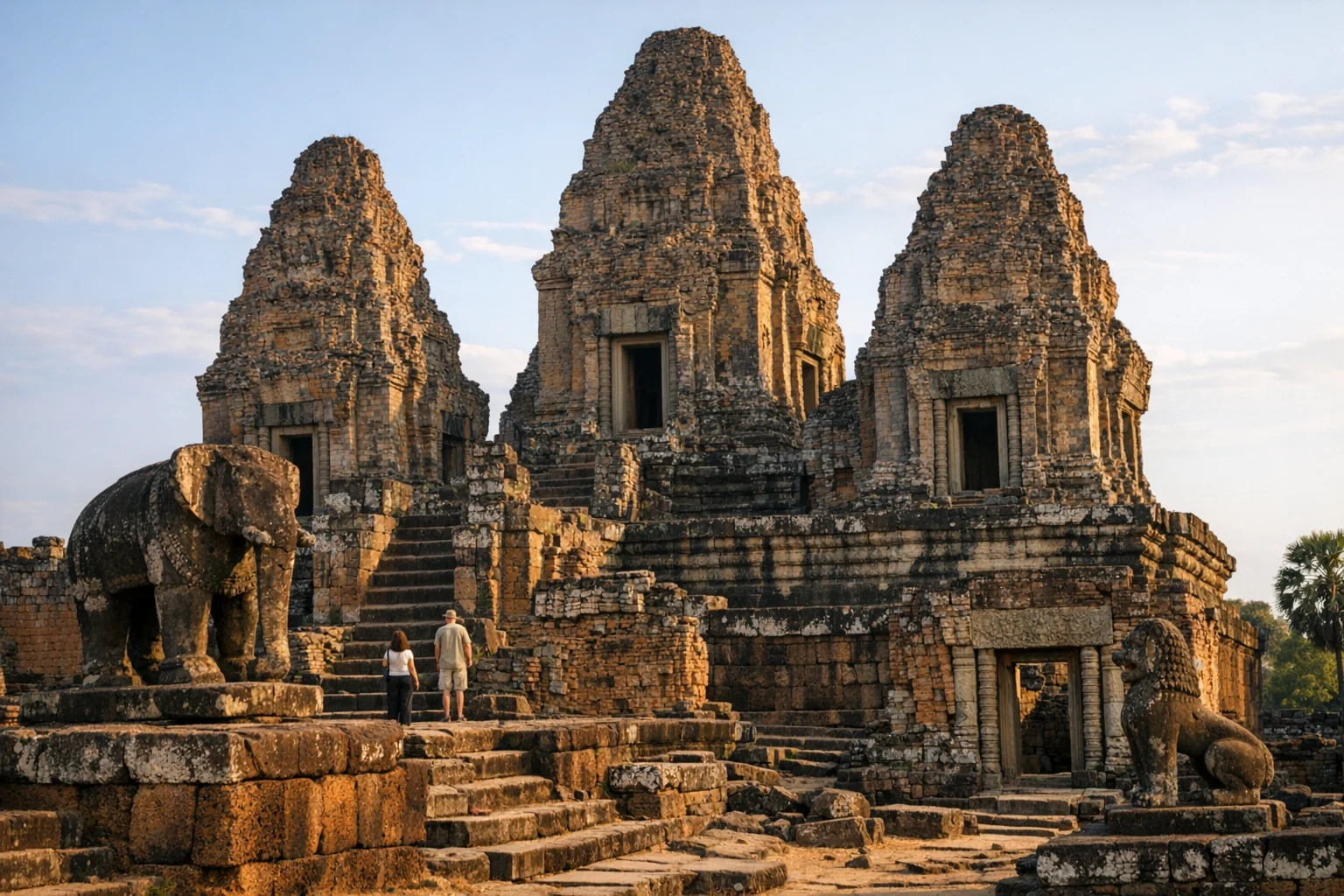
East Mebon
KhmerExplore Cambodia’s East Mebon, a striking 10th-century Angkor temple once standing on an island in t...
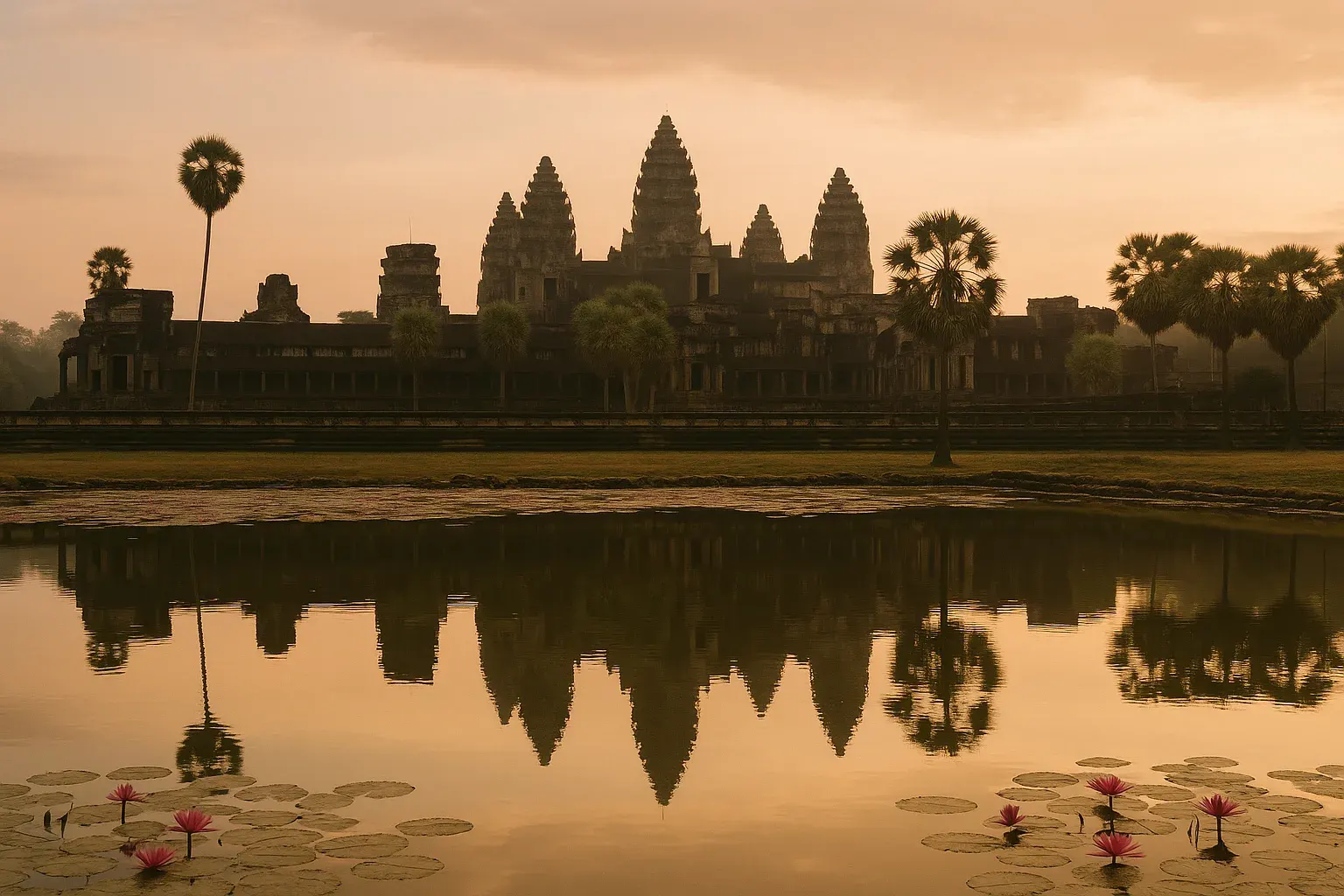
Angkor Wat Travel Guide 2026: Everything You Need to Know
KhmerAngkor Wat, the world's largest religious monument, spans over 400 acres in the heart of Cambodia. T...