Quick Info
Curated Experiences
Banteay Srei and Grand Circuit Small-Group Tour
Private Banteay Srei Temple Day Trip from Siem Reap
Angkor Highlights Tour Including Banteay Srei
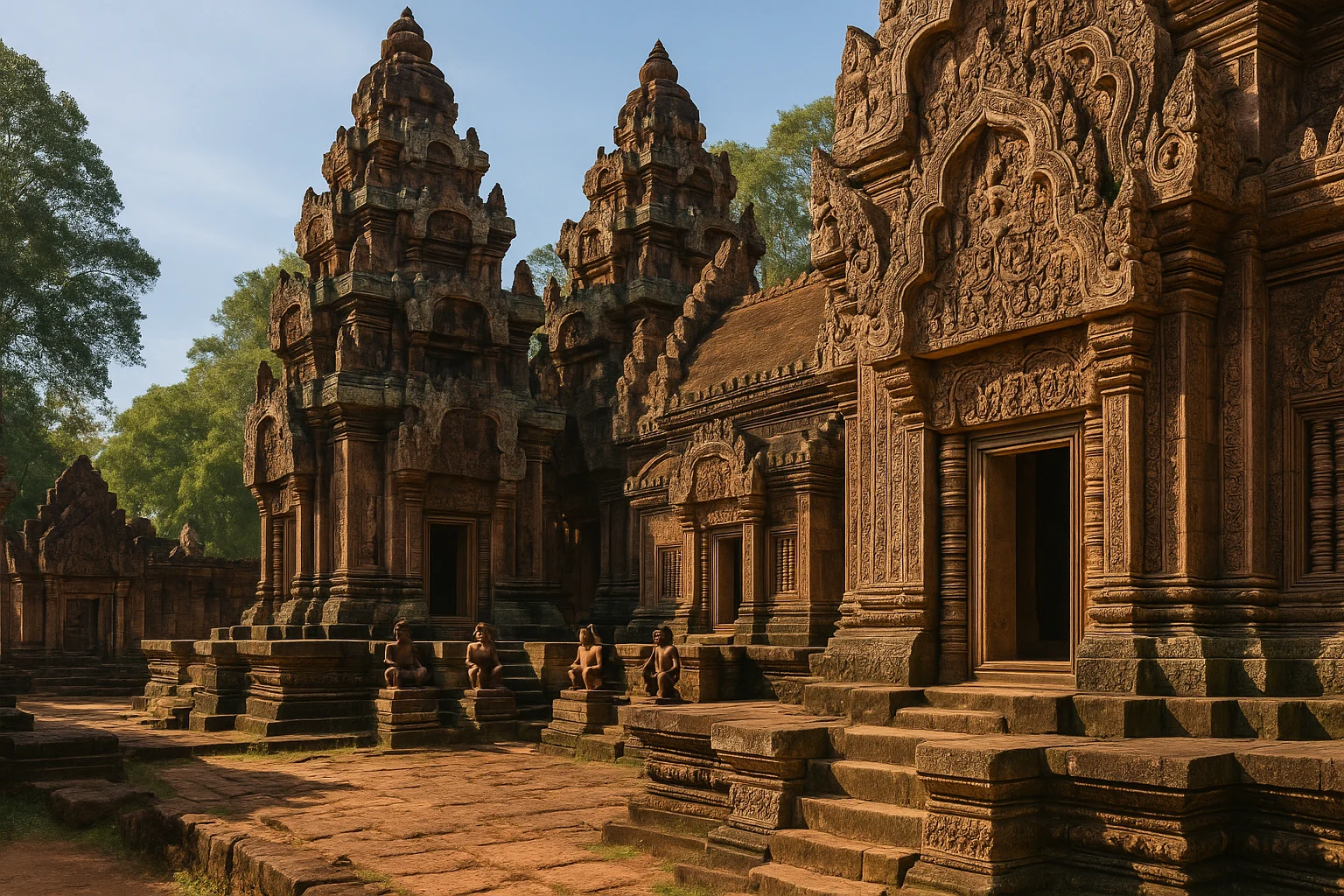
Banteay Srei sits about 25 kilometers northeast of the main Angkor complex, far enough from the central circuit that many visitors skip it entirely. That is a mistake. This compact 10th-century Hindu temple holds what is widely considered the finest decorative carving in all of Southeast Asia, and seeing it in person makes the case immediately. The pink sandstone surfaces are covered in relief work so detailed and so well preserved that they look more like wood carving than stonework.
If Angkor Wat represents the pinnacle of Khmer architectural scale, Banteay Srei represents the pinnacle of Khmer decorative precision. Both deserve a place on any serious Siem Reap itinerary.
Why Banteay Srei Matters
Banteay Srei is routinely described as the jewel of Angkor-era art, and the label holds up under scrutiny. The temple’s relatively small footprint (the central sanctuary area measures roughly 25 by 15 meters) concentrates an extraordinary density of ornamentation into a space you can walk in under an hour. Every pediment, lintel, and false door is carved with layered mythological scenes, floral arabesques, and guardian figures rendered at a level of intricacy unmatched elsewhere in the Angkor complex.
The site also matters historically because it was not a royal commission. Banteay Srei was built by a Brahman advisor to King Rajendravarman II, making it one of the few major Angkor temples constructed under non-royal patronage. That unusual origin story helps explain its character: intimate rather than monumental, focused on refinement rather than assertion of power.
For art history-minded travelers, this is the single most important stop outside the main Angkor circuit. For everyone else, it is still one of the most visually striking temples in Cambodia.
Historical Context
Banteay Srei was consecrated in 967 CE, during the reign of Rajendravarman II and continuing into the early years of Jayavarman V. Its founder, Yajnavaraha, served as a royal guru and scholar. The temple is dedicated to Shiva, and its carved narratives draw heavily from the Ramayana and Mahabharata.
The name “Banteay Srei” translates roughly as “Citadel of Women” or “Citadel of Beauty,” though the origin of this name is debated. Some scholars link it to the delicacy of the carvings; others suggest it derives from the depictions of devatas (female divine figures) found throughout the complex.
The temple was largely forgotten after the decline of the Angkor empire and was not rediscovered by French researchers until 1914. It gained international notoriety in 1923 when the young Andre Malraux was arrested for attempting to steal several carved lintels from the site, an incident that drew Western attention to Angkor’s vulnerability and eventually spurred more systematic conservation efforts. Restoration work by the Ecole Francaise d’Extreme-Orient through the mid-20th century used the anastylosis method (disassembling and reassembling structures block by block), and the results remain some of the most successful conservation work at Angkor.
What to Prioritize Onsite
The Central Sanctuaries
Three main tower sanctuaries sit on a shared platform. The central tower was dedicated to Shiva, with the flanking towers dedicated to Vishnu and Brahma. The carved false doors on these towers are exceptional, with multi-layered depictions of deities, palace scenes, and mythological episodes.
Pediments and Lintels
Banteay Srei’s triangular pediments are its signature features. The east-facing pediment of the southern library depicts the demon king Ravana shaking Mount Kailasa, with Shiva seated calmly above. The north library’s pediment shows Indra riding Airavata amid a downpour. These scenes are carved in such deep relief that figures nearly detach from the background, creating a three-dimensional effect rare in Khmer stonework.
Guardian Figures
Kala faces (protective demon masks) appear above most doorways, flanked by dvarapala (guardian figures) at entrances. At Banteay Srei these guardians include monkey and lion-headed figures rather than the standard human sentinels, adding mythological variety to the visual program.
Pink Sandstone and Light
The temple’s pink-hued sandstone is softer than the gray sandstone and laterite used at most Angkor sites. This softer material allowed carvers to achieve finer detail, but it also means the stone catches and reflects light differently throughout the day. Morning light rakes across the relief carvings and brings out maximum contrast. Late afternoon light warms the pink tones further. Midday sun tends to flatten the surfaces.
Practical Visit Strategy
When to Go
Early morning remains the strongest window for visiting Banteay Srei. Arriving by 7:30 or 8:00 AM puts you ahead of most tour groups, gives you cooler temperatures, and provides the best light for appreciating (and photographing) the carvings. Late afternoon works as a secondary option, particularly for the warm light quality, but bus groups sometimes cluster around 3:00-4:00 PM.
Avoid mid-morning (10:00 AM to noon) if possible. This is peak tour-bus time, and the compact viewing platforms around the central sanctuaries become congested.
Getting There
Banteay Srei is approximately 37 kilometers from central Siem Reap, or about 45-60 minutes by road depending on traffic and vehicle type.
- Tuk-tuk: The most common budget option. Expect to negotiate a round-trip fare, often combined with other outer-circuit stops. The road is paved and manageable.
- Private car: Faster and air-conditioned. Practical if you are combining Banteay Srei with Kbal Spean (the River of a Thousand Lingas), which lies another 12 kilometers further north on an unpaved road.
- Guided tour: Many group and private tours include Banteay Srei as part of an outer-circuit day trip.
What to Bring
- Water and a hat. Shade is limited in the outer moat area and along the approach causeway.
- A zoom lens or binoculars if you want to study upper pediments closely. Rope barriers keep visitors several meters from the central towers.
- Modest clothing covering shoulders and knees, as required at all Angkor temples.
Visit Duration
Most visitors spend 45 minutes to 1.5 hours at Banteay Srei. The site is small enough to cover efficiently, but the carving detail rewards slower, more deliberate viewing. Budget at least an hour if you want to read the relief narratives carefully.
Route Pairing and Nearby Sites
Banteay Srei pairs naturally with several other sites in the outer Angkor area:
- Kbal Spean: A riverbed carved with Hindu iconography, about 12 kilometers north. Requires a moderate uphill hike (roughly 45 minutes each way). Best visited in or just after the wet season when water flows over the carvings.
- Banteay Samre: A well-restored 12th-century temple between Banteay Srei and the main Angkor complex. Less visited and worth a 30-minute stop.
- Ta Prohm: If returning to the central circuit in the afternoon, Ta Prohm provides a strong contrast with its tree-enveloped atmosphere and rougher stonework.
- Bayon Temple: Another strong afternoon pairing, offering monumental face towers that contrast with Banteay Srei’s miniaturist precision.
A practical day itinerary: Banteay Srei early morning, Kbal Spean or Banteay Samre mid-morning, lunch in Siem Reap, then Angkor Thom or Ta Prohm in the afternoon.
Final Take
Banteay Srei is not the biggest temple at Angkor and it is not the most famous. But it is arguably the most beautiful, and it offers something no other site in the complex quite matches: carved surfaces so refined and so legible that they collapse a thousand years of distance between you and the artists who made them.
The extra drive from Siem Reap is a small price for what is consistently one of the most rewarding stops in Cambodia. If your Angkor itinerary has room for one site beyond the central circuit, this should be it.
Quick Facts
| Attribute | Details |
|---|---|
| Location | Siem Reap Province, Cambodia |
| Country | Cambodia |
| Region | Siem Reap |
| Civilization | Khmer Empire |
| Historical Period | 10th century CE (Angkor period) |
| Established | Consecrated 967 CE |
| Dedication | Shiva (Hindu) |
| Distance from Siem Reap | ~37 km (45-60 min by road) |
| Recommended Visit Time | 1-1.5 hours |
| Coordinates | 13.5989, 103.9635 |
Frequently Asked Questions
Is Banteay Srei part of Angkor?
Yes. Banteay Srei is part of the wider Angkor Archaeological Park network and is commonly visited as an outer-circuit temple from Siem Reap.
Why is Banteay Srei famous?
Banteay Srei is known for exceptionally detailed pink sandstone carvings, especially lintels and pediments that remain among the finest in Khmer art.
How long should I spend at Banteay Srei?
Most travelers spend 60 to 90 minutes at the temple, then continue to other Angkor sites on the same day.
Nearby Ancient Sites
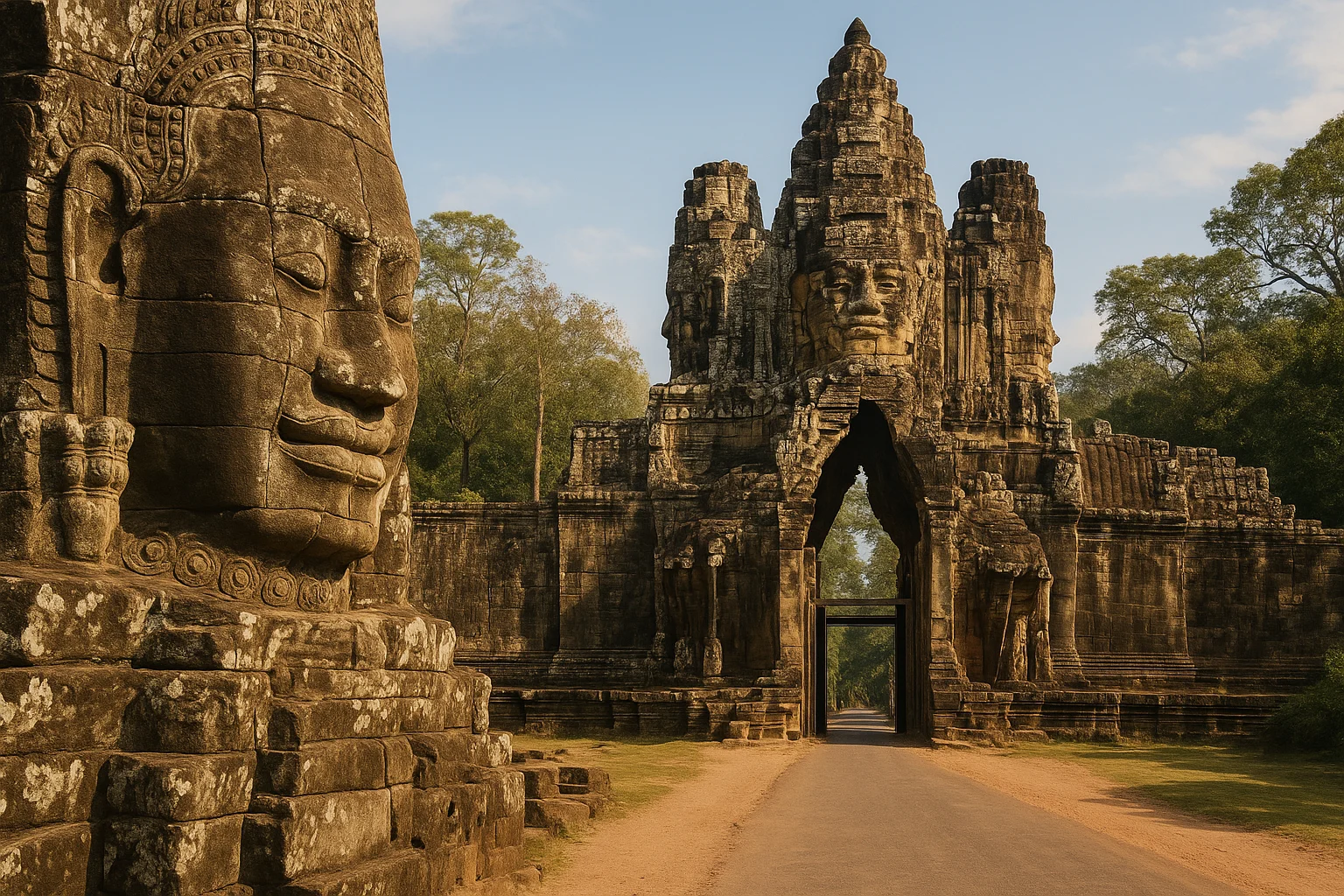
Angkor Thom Travel Guide 2026: Bayon Faces, Gates, and the Khmer Royal City
KhmerAngkor Thom was the last great capital of the Khmer Empire. This guide covers how to visit Bayon, th...
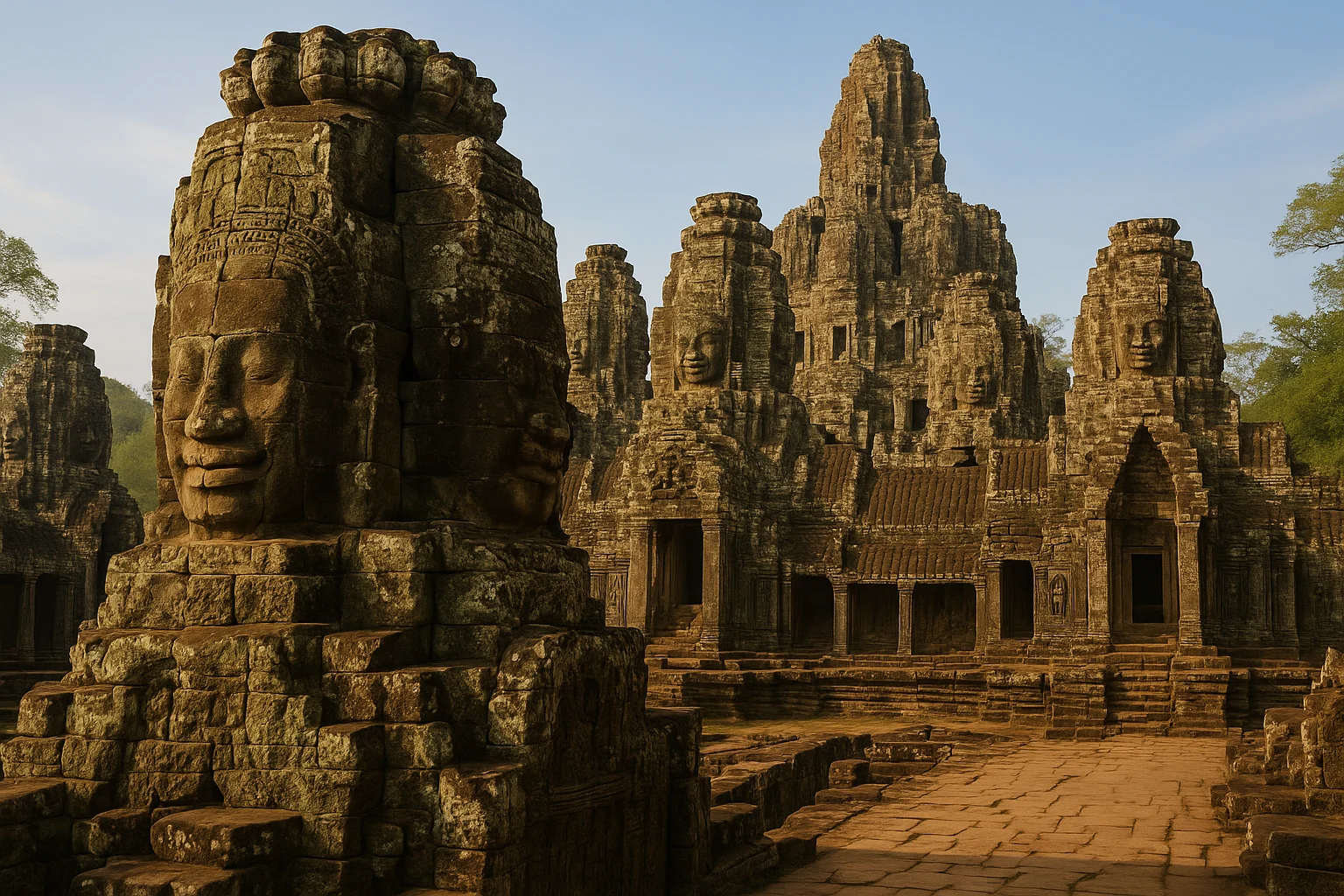
Bayon Temple Travel Guide 2026: Face Towers, Bas-Reliefs, and Best Visit Timing
KhmerBayon Temple sits at the center of Angkor Thom and is famous for its carved stone faces. This guide ...
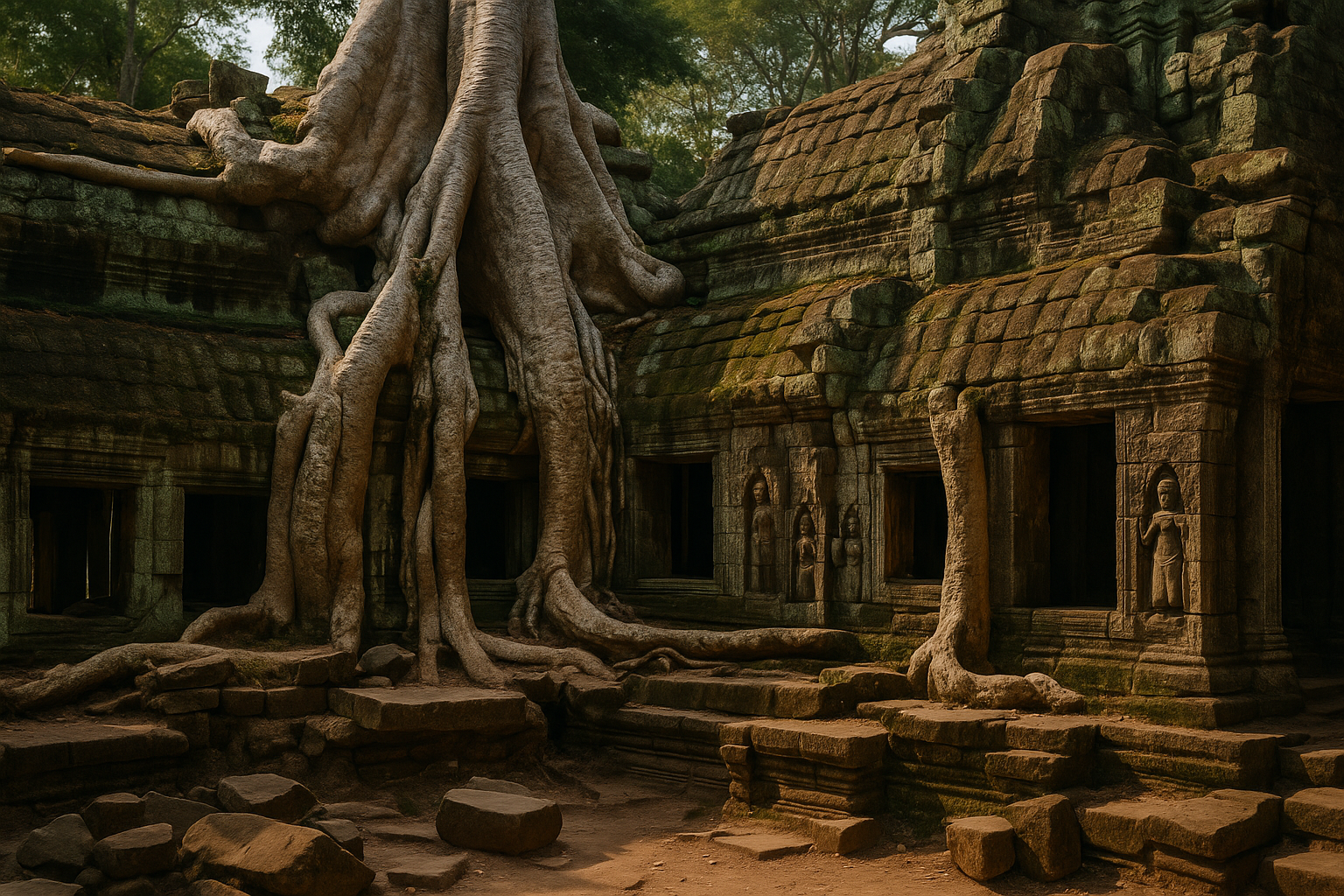
Ta Prohm Travel Guide 2026: Temple of the Trees, Routes, and Photo Timing
KhmerTa Prohm is one of Angkor’s most atmospheric temples, where giant roots and sandstone galleries merg...
Angkor Wat Travel Guide 2026: Everything You Need to Know
KhmerAngkor Wat, the world's largest religious monument, spans over 400 acres in the heart of Cambodia. T...