Quick Info
Curated Experiences
Full-Day Angkor Thom, Bayon and Ta Prohm Guided Tour
Angkor Small Circuit Tour with Bayon Temple
Private Angkor Archaeological Park Day Trip
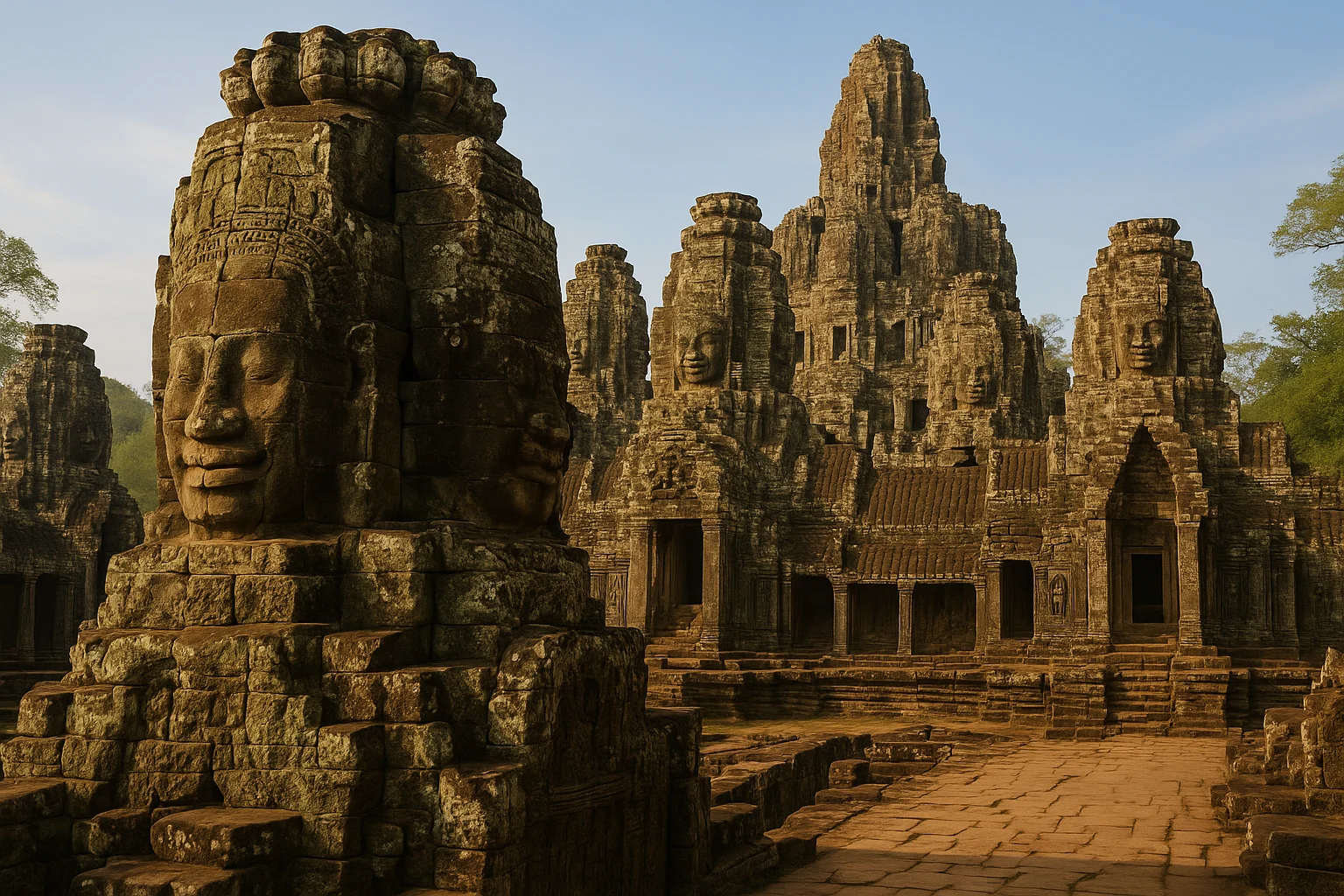
Bayon Temple is one of those places that feels stranger and more memorable in person than it does in photos. At first glance, it reads as a dense stack of towers and galleries sitting at the exact center of Angkor Thom. Then the faces emerge - calm, half-smiling, carved into stone on every side of every tower until the entire structure seems to watch you move through it.
If Angkor Wat is the grand architectural statement of the Khmer empire, Bayon is the psychological one: intimate, disorienting, and loaded with symbolic weight that rewards repeat visits more than any single walk-through can capture.
Why Bayon Matters
Bayon represents a turning point in Khmer civilization. It was built not during a period of expansion but during reconstruction - after military defeat, occupation, and the hard work of reassembling an empire. The temple’s famous face towers, numbering over 200 individual carved faces across 37 surviving towers (originally thought to be 49 or more), broadcast a message that was part spiritual reassurance and part political propaganda.
For travelers, the significance is direct. Bayon is the densest single concentration of narrative sculpture in Southeast Asia. Its outer galleries contain more than 11,000 carved figures depicting not just gods and kings but ordinary people - market vendors, fishermen, cockfight spectators, women giving birth. No other Angkor temple gives you this level of access to daily Khmer life. That alone makes it essential, but when combined with the surreal upper terrace and its ring of stone faces, Bayon becomes one of the most distinctive archaeological sites anywhere.
Historical Context
Jayavarman VII and the Rebuilding of Angkor
Bayon was constructed in the late 12th to early 13th century under King Jayavarman VII, arguably the most consequential ruler in Khmer history. He came to power after the Cham kingdom sacked Angkor in 1177, an event that shattered the existing political order. Jayavarman VII’s response was not just military reconquest but a total reimagining of the capital.
He moved the center of gravity from Angkor Wat to the newly walled city of Angkor Thom, placing Bayon at its geographic heart where the main axes of the city intersect. The temple served as the state temple of his reign and marked a dramatic religious shift - from the Hindu traditions of earlier kings to Mahayana Buddhism.
The Face Towers
The identity of the faces has been debated for over a century. The most widely accepted interpretation links them to Avalokiteshvara, the bodhisattva of compassion, whose serene expression was meant to radiate benevolence across the four cardinal directions. Other scholars see a deliberate blending of divine and royal imagery, with Jayavarman VII’s own features embedded in the design. Either reading points to the same political function: a ruler projecting omnipresence and spiritual authority across his rebuilt capital.
The temple also went through multiple phases of construction and modification, with Hindu elements added during later reigns. This layering is visible in places where Buddhist imagery was defaced or altered, giving Bayon a palimpsest quality that rewards careful observation.
What to Prioritize Onsite
The Outer Bas-Relief Galleries
Start at the eastern entrance and work counterclockwise through the outer gallery. The southern wall contains the most famous panel sequence: a massive naval battle between Khmer and Cham forces on the Tonle Sap lake. The detail is extraordinary - you can make out individual soldiers, boat construction, crocodiles attacking the fallen, and fish beneath the waterline.
Continue through panels showing military processions, palace scenes, and the everyday life sections that distinguish Bayon from every other Angkor temple. Look for cooking scenes, market activity, chess players, and a surprisingly vivid depiction of a woman being treated by a healer. These carvings are at eye level and best read slowly.
The Inner Galleries
The inner gallery carvings are less well-preserved but shift to mythological and religious themes. Hindu scenes were added during later modifications, creating a visual record of the religious back-and-forth that defined post-Jayavarman Angkor.
The Upper Terrace and Face Towers
This is the experience that defines Bayon. The upper level is a compact, almost maze-like space where narrow passages open suddenly onto massive stone faces at close range. Morning side light (particularly between 7:00 and 8:30 AM) creates strong shadows that deepen the carved features. Midday light flattens everything.
Move slowly between towers and revisit corners from different angles. Several vantage points along the north and east edges give striking sightlines across stacked towers - good spots to pause, photograph, and reset before continuing.
Practical Visit Strategy
Timing
Bayon gets crowded once large tour groups arrive, typically between 9:30 and 11:30 AM. The two best windows are early morning (7:00-8:30 AM) for the best light and thinnest crowds, or late afternoon (3:30-5:00 PM) when groups have moved on and the western light warms the stone.
A practical sequence is Bayon first thing in the morning, then the nearby Terrace of the Elephants and other Angkor Thom highlights, saving Angkor Wat for sunset.
Getting There
Bayon sits inside Angkor Thom’s walled enclosure, roughly 25-40 minutes from central Siem Reap by tuk-tuk or private car depending on traffic. Access requires an Angkor Archaeological Park pass (available as 1-day, 3-day, or 7-day options at the main ticket office). Budget 1.5-2.5 hours for a focused visit that covers both gallery levels and the upper terrace.
What to Bring and Wear
- Shoes with good grip. The stone steps are steep, uneven, and occasionally slick, especially in the wet season.
- Water and a hat. Shade is limited on the upper terrace.
- A small flashlight or phone light for reading bas-relief details in darker gallery sections.
- Modest clothing covering shoulders and knees, as required at all Angkor temples.
Route Pairing and Nearby Sites
Bayon anchors any Angkor Thom visit. After the temple, walk north to the Terrace of the Elephants and the Terrace of the Leper King, both within easy walking distance. Ta Prohm pairs well as a morning or afternoon counterpoint - where Bayon is dense and vertical, Ta Prohm is sprawling and overtaken by forest.
For a deeper Angkor circuit, add Banteay Srei (the finest decorative carving in the region, about 30 minutes northeast) and Angkor Wat itself. Travelers building a broader Southeast Asian itinerary should consider Sukhothai Historical Park in Thailand for a comparative look at Buddhist temple urbanism, or Borobudur in Java for another monumental expression of Buddhist cosmology in stone.
Final Take
Bayon is not a temple you glance at and move on from. Its power is cumulative - it builds as you loop through galleries, climb uneven stairs, and turn corners into faces that have been watching the same courtyard for eight centuries. The bas-reliefs alone justify a long visit, but the upper terrace is where the temple becomes something harder to describe: a place where political architecture and spiritual intention fuse into an experience that stays with you.
If your route includes Angkor, treat Bayon as a priority stop, not an afterthought squeezed between bigger names. Give it a full morning, start early, and let the faces find you.
Quick Facts
| Attribute | Details |
|---|---|
| Location | Angkor Thom, Siem Reap, Cambodia |
| Country | Cambodia |
| Region | Siem Reap |
| Civilization | Khmer |
| Historical Period | Late Angkor period (12th-13th centuries CE) |
| Established | Late 12th to early 13th century CE |
| Key Ruler | Jayavarman VII |
| Religious Affiliation | Mahayana Buddhist (with later Hindu additions) |
| Face Towers | 37 surviving towers, 200+ carved faces |
| Coordinates | 13.4419, 103.8585 |
Frequently Asked Questions
How long should I spend at Bayon Temple?
Most travelers need 60 to 120 minutes for Bayon alone, and longer if you want time for detailed bas-relief viewing and photography from multiple tower levels.
What is Bayon Temple known for?
Bayon is known for its massive carved stone faces and narrative bas-reliefs depicting battles, ceremonies, and daily life in the Khmer Empire.
Is Bayon inside Angkor Wat?
No. Bayon is located inside Angkor Thom, the walled royal city near Angkor Wat. Both are in the Angkor Archaeological Park and covered by the same pass.
Nearby Ancient Sites
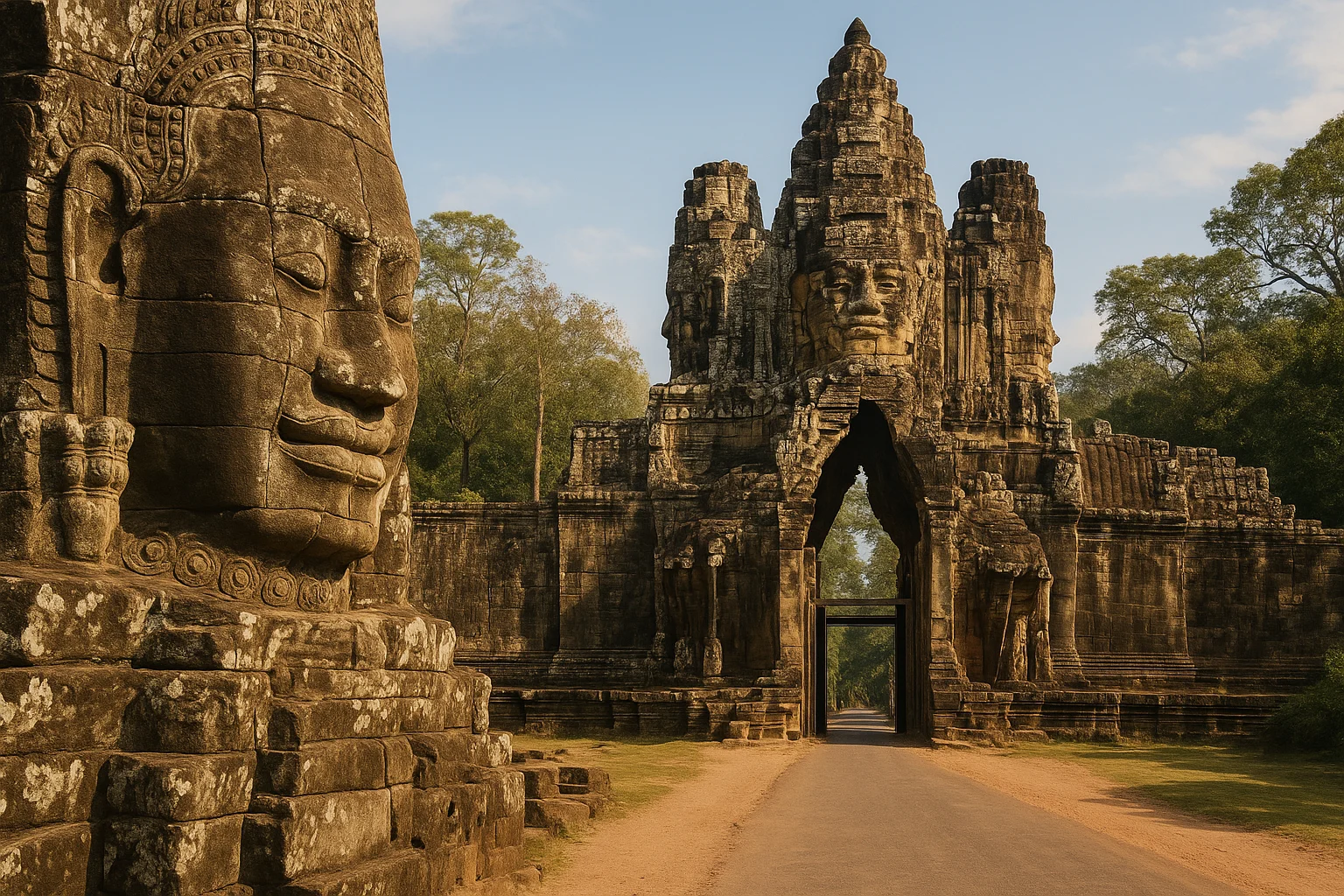
Angkor Thom Travel Guide 2026: Bayon Faces, Gates, and the Khmer Royal City
KhmerAngkor Thom was the last great capital of the Khmer Empire. This guide covers how to visit Bayon, th...
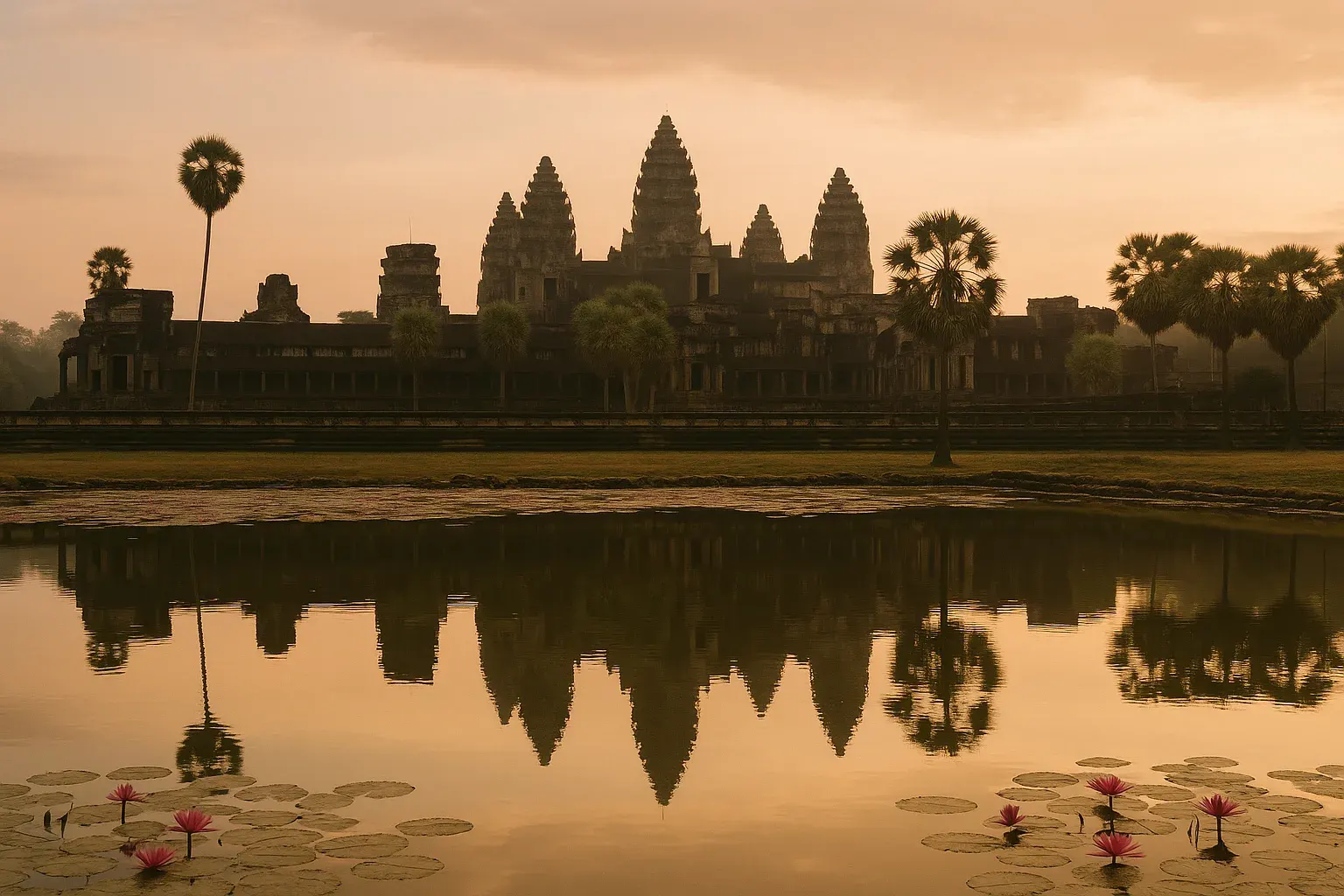
Angkor Wat Travel Guide 2026: Everything You Need to Know
KhmerAngkor Wat, the world's largest religious monument, spans over 400 acres in the heart of Cambodia. T...
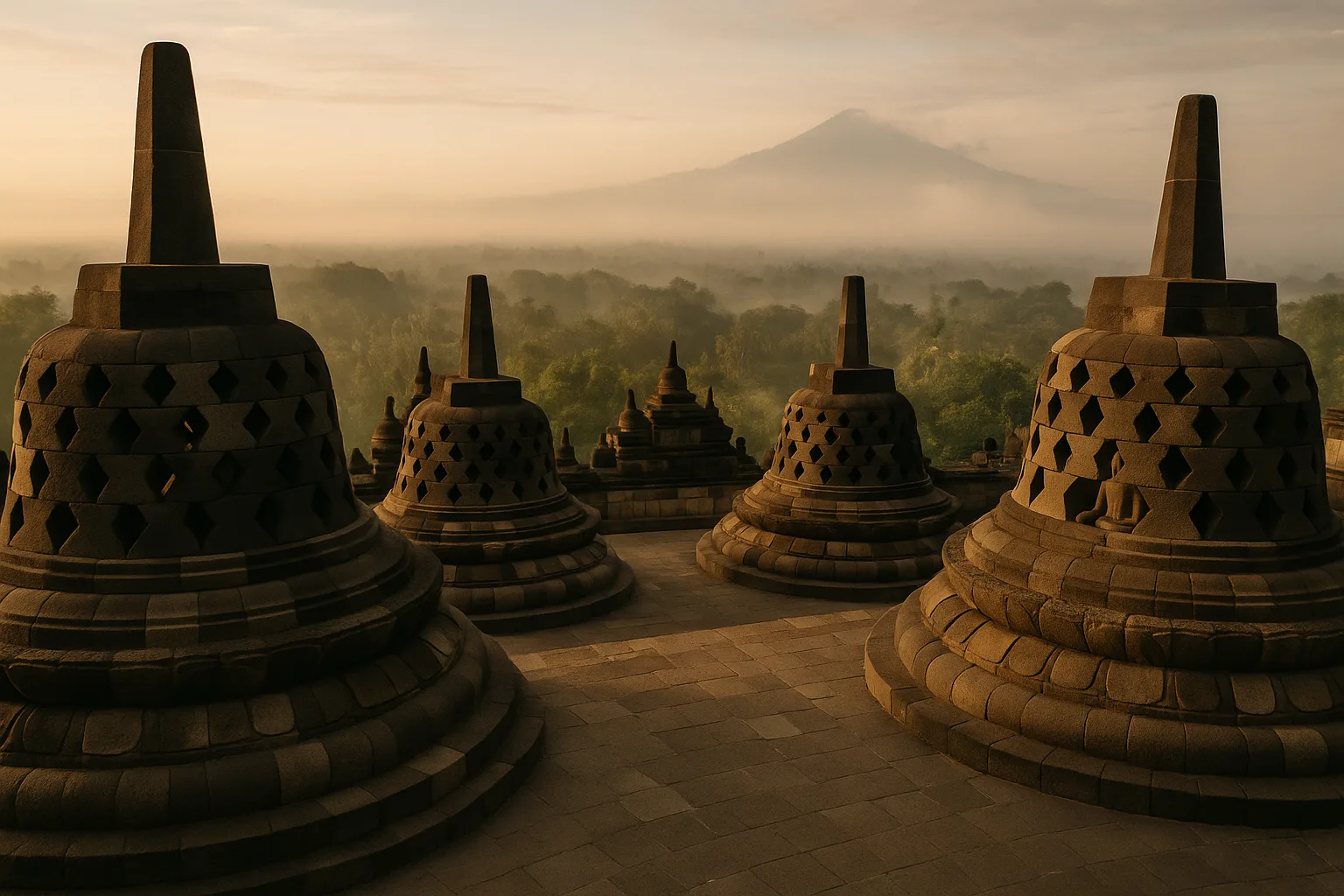
Borobudur Temple, Indonesia: The Sacred Mountain of a
Sailendra Dynasty (Buddhist)Discover Borobudur, the world's largest Buddhist temple and Indonesia's most visited attraction. Com...