Quick Info
Curated Experiences
Beizhen Ancient City Ruins Day Tour from Jinzhou
Private Liaoning Heritage Tour to Beizhen Ancient City Ruins
Beizhen Historical Sites and Ancient City Guided Excursion
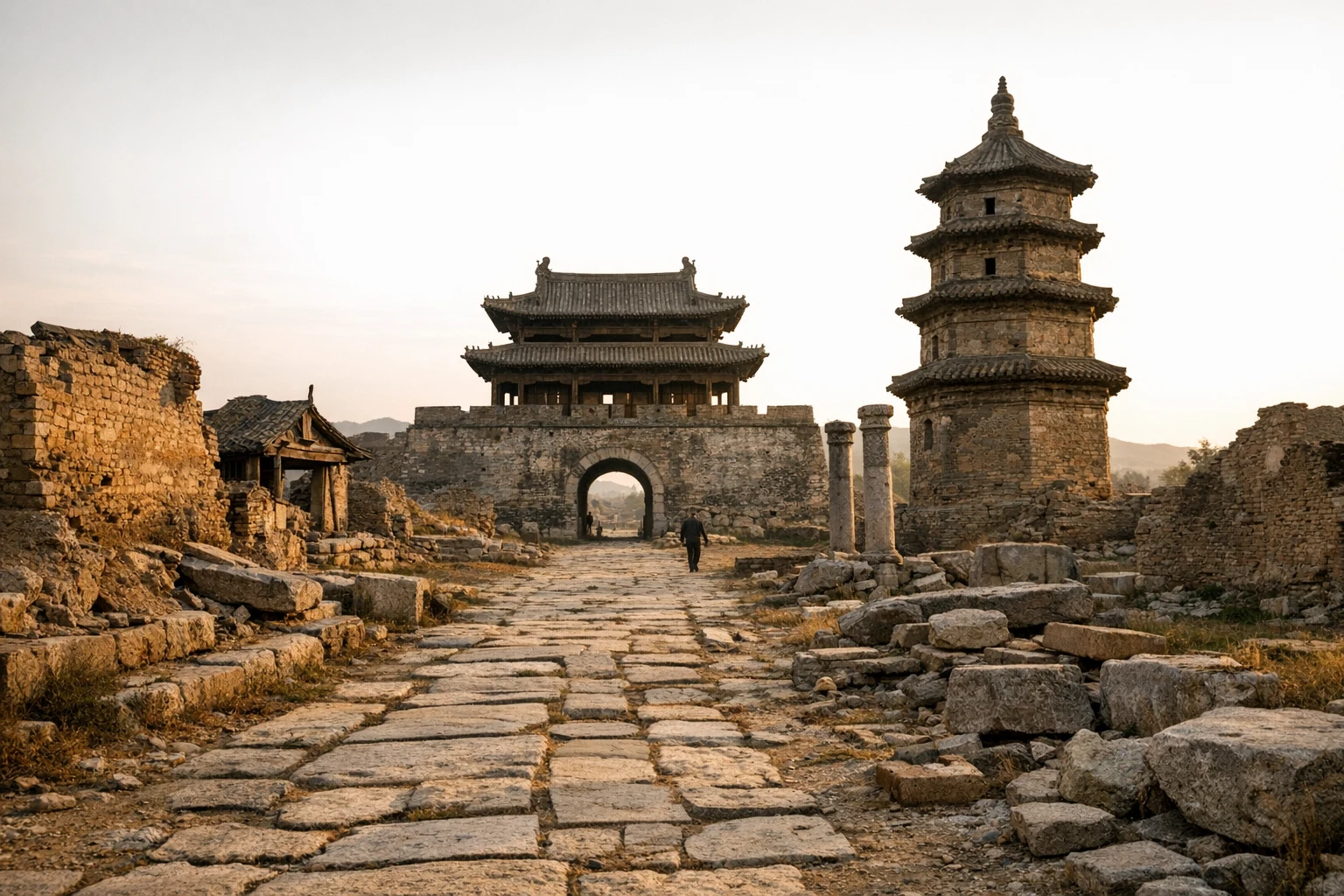
Beizhen Ancient City Ruins in China are the kind of site that asks visitors to slow down and learn how to read a landscape rather than wait for one spectacular monument to explain everything. In Liaoning Province, where mountains, plains, roads, and older administrative corridors meet, the ruins preserve the memory of a city that mattered because of its position as much as because of its buildings. This was not an isolated ceremonial capital built for display alone. It was a working urban center shaped by movement, frontier management, religion, trade, and the strategic realities of northeastern China. Today, much of what survives is archaeological rather than grandly architectural: traces of walls, alignments, foundations, earthworks, street planning, and the broader relationship between the urban site and its surrounding sacred and political geography.
That can make Beizhen unexpectedly rewarding. Some ancient cities impress immediately with towering gates or intact palaces. Beizhen works differently. The longer you stay, the more the site expands in your mind. You begin to understand why a city was founded here, how dynasties reinterpreted it, and how a place on the edge of multiple spheres of power could become durable across centuries. The ruins belong to a broader cultural landscape in which urban planning, military concerns, and ritual prestige were all entangled. For travelers interested in the deeper mechanics of Chinese historical geography, Beizhen offers something rare: a chance to see how a regional city could become important not through imperial centrality alone, but through its role as a hinge between state authority, sacred terrain, and the routes that tied northeastern China together.
History
Early Settlement and Strategic Location
The importance of Beizhen begins with geography. Northeastern China has long been shaped by corridors of movement linking the North China plain, Liaodong, Inner Asian frontier zones, and the wider northeast. A settlement placed in such a corridor was never just local. It had value as a node of communication, administration, and control. Beizhen occupied exactly this kind of advantageous position. The surrounding terrain offered access, defensibility, and proximity to routes that mattered across dynasties. This made the area attractive not only for habitation, but for sustained political attention.
Before the city took on the form represented by the later ruins, the broader region already held significance as part of the evolving frontier world between sedentary Chinese states and the polities and peoples of the northeast. This context is essential. Beizhen was never only a market town or a religious settlement. It belonged to a zone where transport, military planning, and symbolic geography overlapped. That combination would shape its later history again and again.
Liao, Jin, and the Medieval Frontier City
The medieval period was especially important in giving Beizhen a stronger urban identity. During eras associated with the Liao and Jin, northeastern China was not merely a peripheral edge of Chinese civilization but a politically dynamic region with powerful states and hybrid administrative cultures of its own. Cities in this zone often served as more than provincial centers. They could be military hubs, transport checkpoints, taxation nodes, ritual centers, and local expressions of larger imperial ambitions.
Beizhen’s development as an urban site reflects this broader frontier dynamism. The city’s layout, defensive works, and administrative role likely evolved in response to the needs of states that required durable regional control while also negotiating mobility and contested frontiers. Urban form in such settings was practical, but never only practical. Walls, gates, official buildings, ritual compounds, and associated sacred sites all worked together to make authority visible. The Beizhen ruins preserve traces of this process. Even if much of the architecture no longer stands dramatically above ground, the city’s planning still reveals that it once played a recognized role in the political system of the region.
Ming and Qing Reframing of the Urban Landscape
Beizhen’s significance did not end with the medieval frontier states. Under the Ming and Qing, northeastern cities took on renewed importance within changing systems of regional administration, transport, and military oversight. Some settlements were rebuilt, expanded, or reorganized in response to new strategic realities. Others inherited older forms and adapted them to different bureaucratic purposes. Beizhen appears to have been one of those places where layered continuity mattered. The city persisted because its location remained useful, even as the governing dynasties changed.
This long continuity is one of the most important things about the ruins. Beizhen was not a one-dynasty phenomenon. It was repeatedly meaningful. In later periods, the city’s relationship to nearby sacred mountains and regional cult practice also reinforced its status. In Chinese historical landscapes, cities and mountains often exist in dialogue rather than isolation, and Beizhen is best understood in that way. Administrative life, defensive planning, and ritual geography were not separate spheres. They made each other stronger.
Decline, Transformation, and Archaeological Visibility
Like many historic cities, Beizhen changed as new routes, modern administration, and shifting urban patterns altered the function of the old core. Some structures decayed, some were dismantled, some were built over, and others survived only as low traces in the ground. The city’s former importance became harder to read without excavation and historical study. Yet this apparent fading is what eventually made the archaeological site legible. When later scholars and preservation efforts turned toward the old city, they encountered not a blank field but a layered urban memory preserved in walls, foundations, and patterns of land use.
Today, the ruins matter because they preserve the form of a regional city whose importance was once embedded in much larger historical systems. They offer evidence for city planning, frontier administration, and dynastic continuity in northeastern China. Their value lies not in one famous surviving hall, but in the chance to understand a whole urban organism across time.
Key Features
The most important feature of Beizhen Ancient City Ruins is the urban layout itself. This is a site where the plan matters as much as any surviving wall or structure. The traces of enclosure, streets, gates, and internal organization help visitors grasp how the city once functioned as a coherent administrative and defensive center. Even when individual buildings are reduced to foundations or low remains, the broader pattern remains readable enough to reveal intention. This is one of those archaeological places where scale and alignment carry more meaning than ornament.
Surviving wall sections, embankments, and perimeter traces are another major feature. Historic city walls in frontier or regional centers were never simply decorative boundaries. They organized access, marked authority, and translated political order into visible form. At Beizhen, the remains of these defensive and delimiting features help visitors understand how the city negotiated openness and protection. A city in this region had to communicate command, regulate movement, and stand ready for instability. The archaeology of the perimeter therefore becomes central to the whole story.
The relationship between the ruins and the surrounding landscape is equally important. Beizhen is not best experienced as an isolated archaeological plot. The site belongs to a wider setting that includes routes, settlements, and sacred topography. This broader context helps explain why the city existed where it did. Looking out from the ruins, or studying them in relation to nearby terrain, makes the site feel more intelligible. Ancient cities were placed for reasons. Beizhen’s landscape still allows those reasons to be felt.
Interpretive facilities, local museums, or reconstructed markers—where available—are key features because they translate archaeological evidence into historical imagination. Since the site is not dominated by standing monumental architecture, good interpretation becomes especially valuable. Plans, artifacts, ceramic finds, city models, and explanatory signage help connect the visible remains to the people who once lived, governed, traded, and worshipped here. In many ways, Beizhen is a perfect example of a site where archaeology matters precisely because it allows a lost urban environment to become visible again.
Another notable feature is the site’s layered historical identity. Visitors are not seeing only one moment in time, but the traces of a city shaped by multiple dynasties and functions. This layering gives Beizhen unusual richness. The city was strategic, administrative, and sacred in different but overlapping ways, and the ruins preserve that complexity better than a single surviving building could.
Getting There
Beizhen Ancient City Ruins are located in Beizhen, Liaoning Province, and are most practically visited from nearby regional urban centers such as Jinzhou or from within the wider Liaoning transport network. Depending on your route, the simplest approach is usually by private car, taxi, or arranged local driver. Visitors coming by high-speed rail or intercity transport to nearby cities will often need a final car transfer to the ruins area. Travel times vary depending on where you start, but from Jinzhou or nearby urban nodes the journey is generally manageable as a day trip.
Public transportation may be possible in part, but for many travelers—especially those unfamiliar with local schedules or language logistics—private transport is the more efficient choice. This is particularly true if you want to combine the ruins with nearby historical or religious landmarks in the Beizhen area. Local taxis or drivers can often be hired for half-day or full-day arrangements, though prices will vary with season and distance.
Because the site is archaeological rather than a tightly enclosed monument complex, it helps to arrive with a rough understanding of the layout and any museum hours. Comfortable shoes and weather-appropriate clothing are important, since walking the grounds is part of the experience. Beizhen is not especially difficult to reach, but it rewards a little advance planning.
When to Visit
The best time to visit Beizhen Ancient City Ruins is generally spring or autumn, when Liaoning’s temperatures are milder and the exposed archaeological landscape is easier to enjoy. In spring, the ground feels more open and fresh after winter, while autumn often offers clear air and sharper visibility across the surrounding terrain. These are the seasons when the relationship between ruins and landscape reads most clearly, which matters a great deal at a site like this.
Summer is possible, but hot sun and humidity can make long walks around open remains more tiring than expected. Winter can be atmospheric, especially if you enjoy stark archaeological landscapes and fewer visitors, but cold wind and harsher conditions may make the site feel more austere than enlightening for some travelers. Because Beizhen’s appeal depends on reading space and context, physical comfort has a real effect on how much you notice.
Morning or late afternoon generally offers the best light for seeing low remains and understanding the contours of walls and foundations. Strong midday light can flatten archaeological features. If possible, avoid rushing. Beizhen is the kind of place that becomes clearer with time rather than delivering everything in the first five minutes.
| Quick Facts | Details |
|---|---|
| Location | Beizhen, Liaoning Province, China |
| Best Known For | The archaeological remains of a strategically important historic city in northeastern China |
| Cultural Context | Multi-dynastic frontier and regional urban landscape |
| Main Historical Importance | Evidence of city planning, defense, administration, and sacred geography |
| Likely Major Periods | Liao, Jin, Yuan, Ming, and Qing phases |
| Site Type | Ancient city ruins and archaeological landscape |
| Recommended Visit Length | 2 to 4 hours |
| Best Season | Spring and autumn |
| Nearby Base | Jinzhou or Beizhen |
| Practical Tip | Treat the site as a historical landscape rather than expecting one major standing monument; interpretation and context are key to appreciating it |
Frequently Asked Questions
What are the Beizhen Ancient City Ruins best known for?
The Beizhen Ancient City Ruins are best known for preserving the layout and archaeological traces of an important historic city in Liaoning linked to frontier administration, trade routes, and sacred regional geography.
Where are the Beizhen Ancient City Ruins located?
They are located in Beizhen, Liaoning Province, in northeastern China, in a historic corridor between the Liaodong region and inland northern China.
Why are the Beizhen Ancient City Ruins important?
They are important because they reveal the long urban history of a strategically placed regional center shaped by multiple dynasties, defensive planning, transport routes, and religious significance.
How much time should you spend at Beizhen Ancient City Ruins?
Most visitors should allow 2 to 4 hours for the ruins and interpretation areas, with more time if combining the visit with nearby temples, museums, or the broader Beizhen historical landscape.
Do you need a guide at Beizhen Ancient City Ruins?
A guide is not strictly required, but one can greatly improve the visit because much of the site’s meaning lies in city planning, archaeological context, and historical layering rather than standing monuments alone.
When is the best time to visit Beizhen Ancient City Ruins?
Spring and autumn are usually the best seasons, offering milder temperatures and clearer conditions for walking the exposed archaeological grounds.
Nearby Ancient Sites
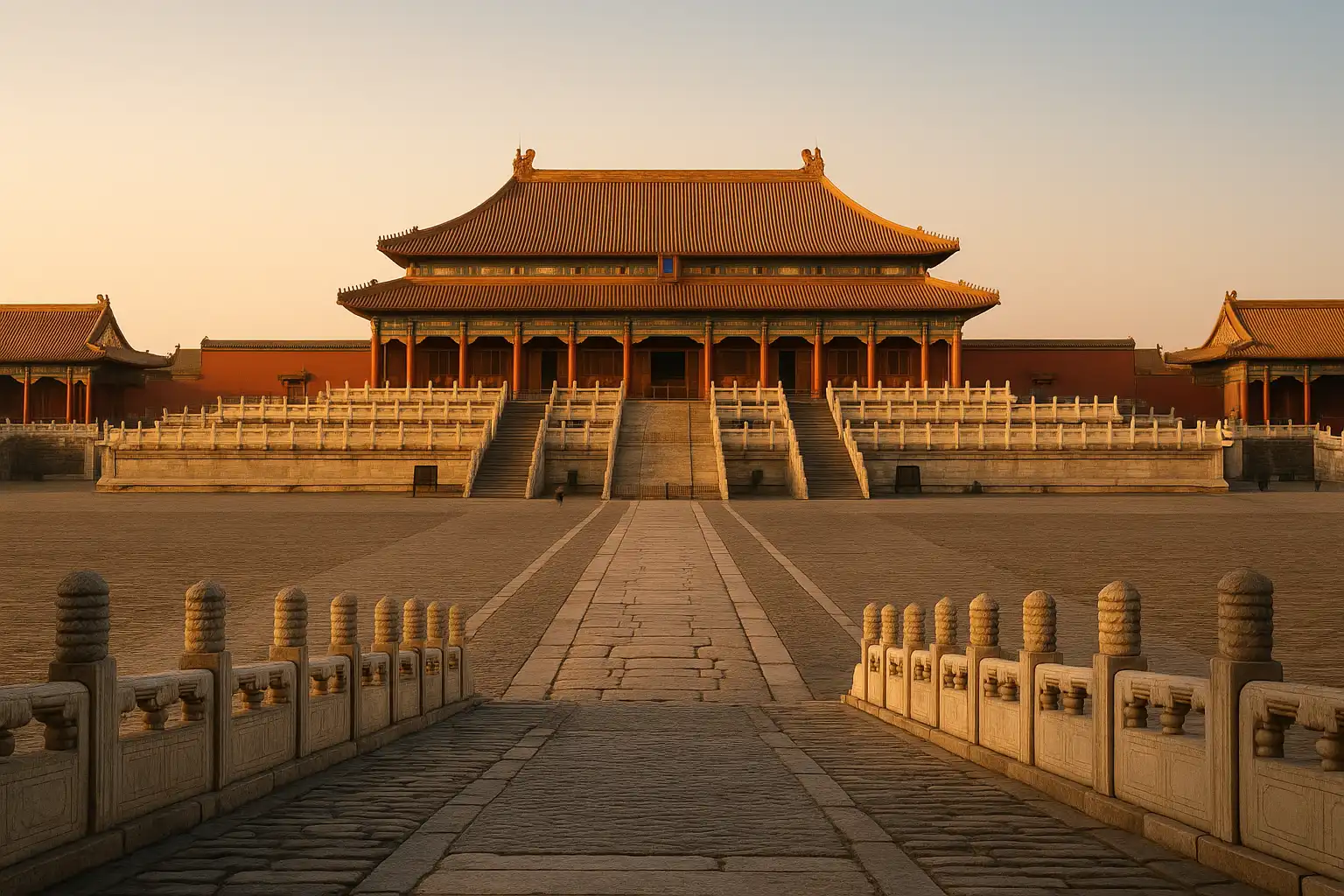
Forbidden City China Travel Guide 2026: Imperial Palace of Beijing
Chinese ImperialExplore the Forbidden City, China's imperial palace for 500 years. Discover the Hall of Supreme Harm...
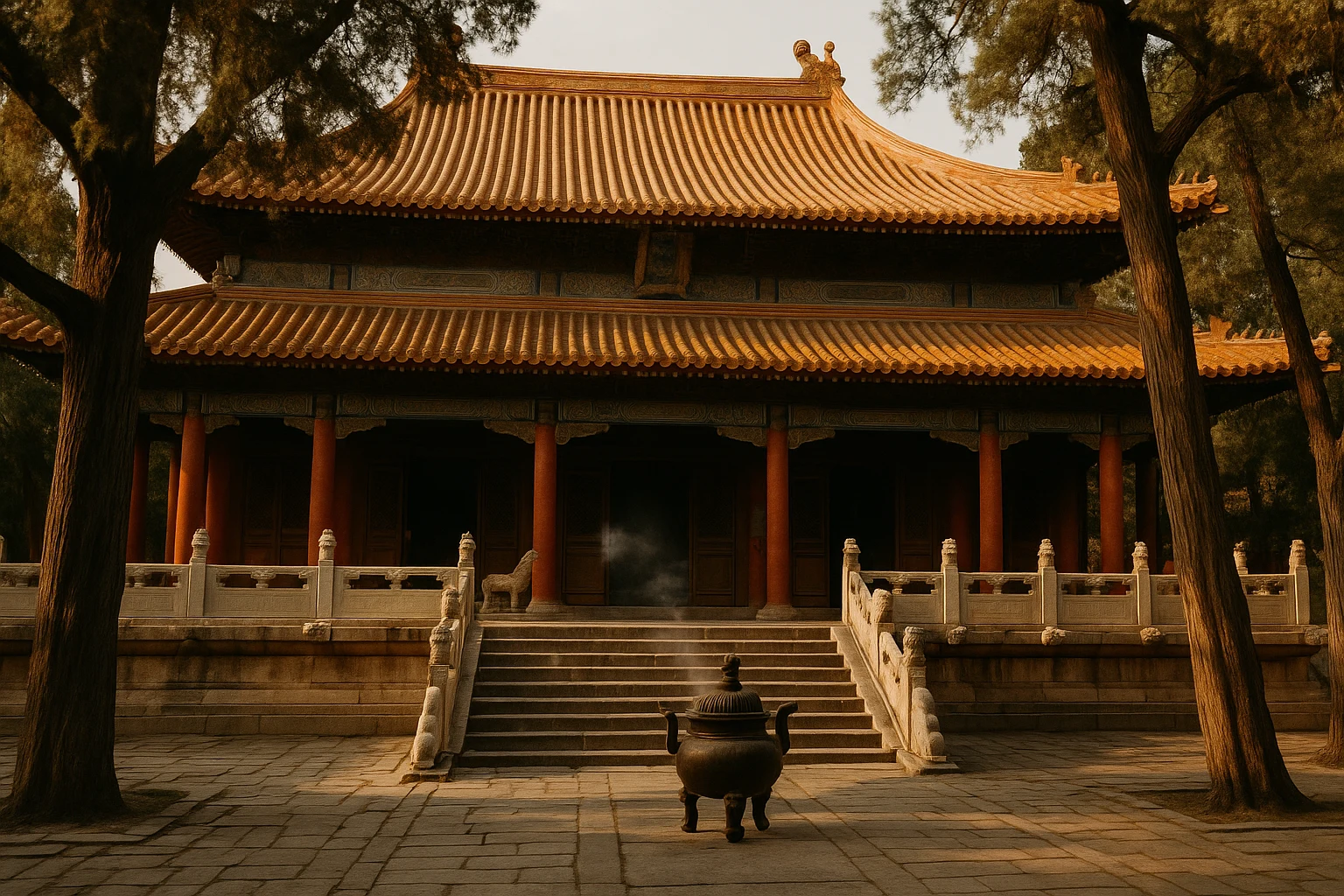
Confucius Temple (Qufu)
The ancient Temple of Confucius in Qufu, Shandong, is China's largest Confucian temple complex, a UN...
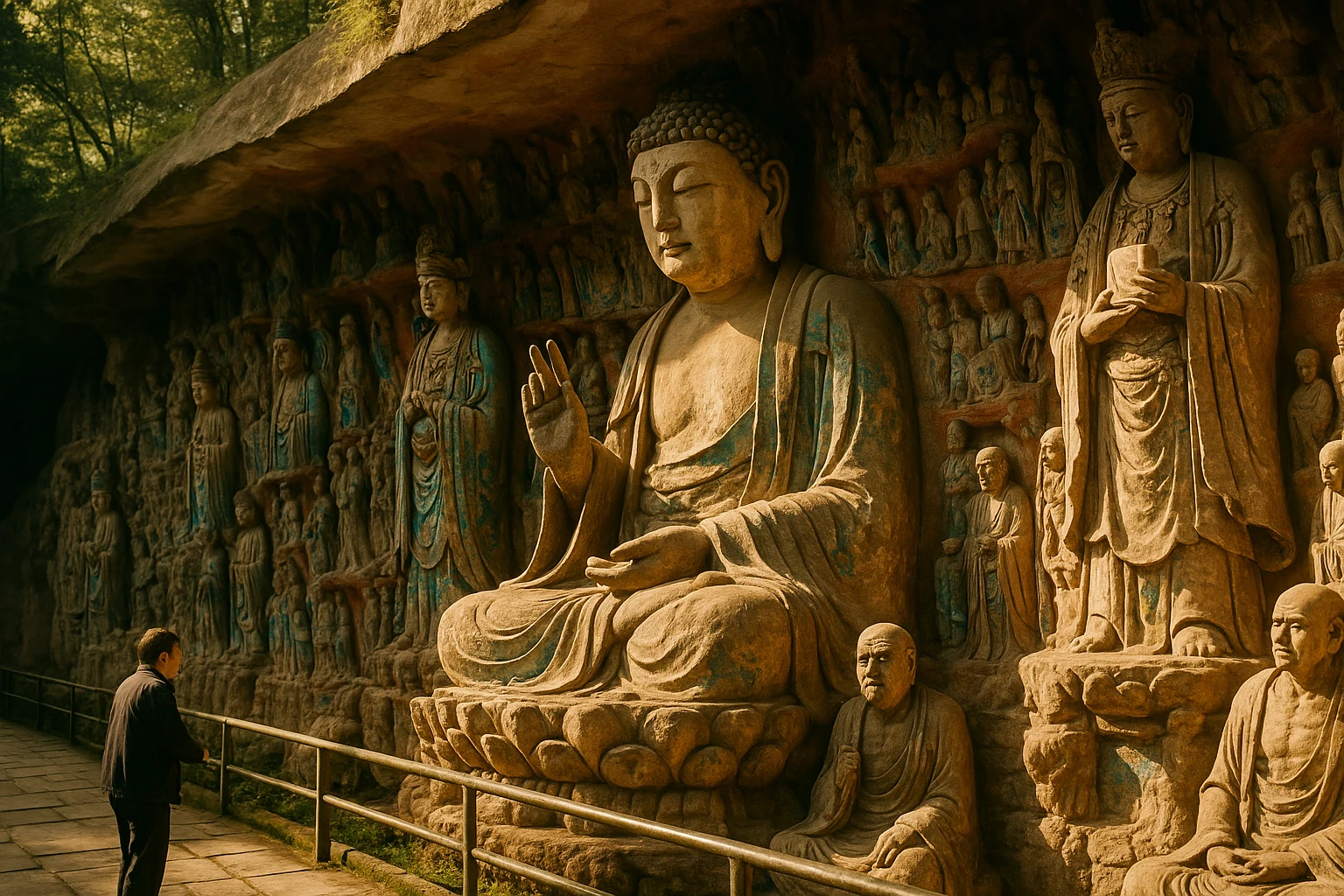
Dazu Rock Carvings
Tang and Song Dynasty ChinaAncient Buddhist, Taoist, and Confucian rock sculptures carved into cliffsides across Dazu District,...

Fenghuang Ancient Town
Ming and Qing Dynasty ChinaFenghuang Ancient Town preserves Ming and Qing dynasty architecture along the Tuojiang River in west...