Quick Info
At a glance
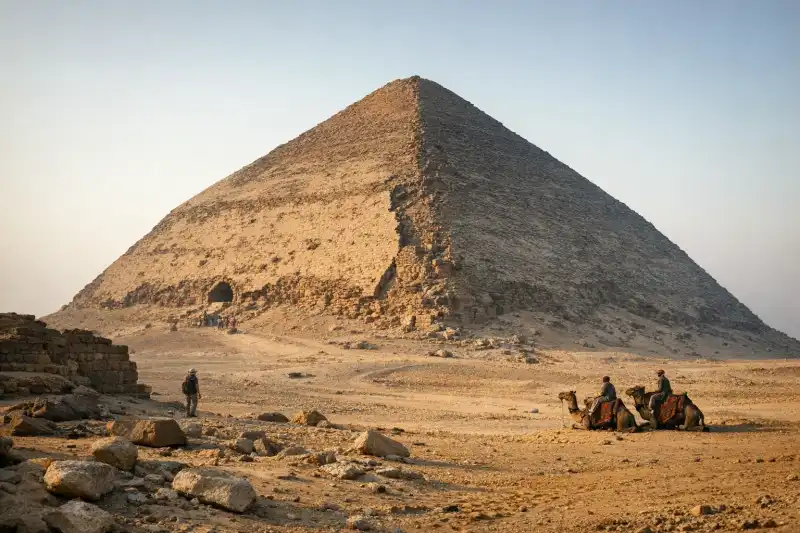
Bent Pyramid in Egypt rises from the desert at Dahshur with a silhouette unlike any other royal monument in the Nile Valley. At first glance it looks almost impossible, as if two different pyramids were joined together mid-construction: a steep lower section climbing sharply from the sands, then an upper angle that softens and turns the whole form into something unexpectedly graceful. In the still light of morning, when the desert is pale gold and the sky seems larger than anywhere else, the pyramid feels both experimental and deeply assured. It is ancient, imposing, and strangely intimate, because its unusual shape lets you imagine the decisions, problems, and ambitions of the builders more vividly than at many more polished sites.
For travelers used to the famous outlines of Giza, Dahshur offers a quieter encounter with Egypt’s Old Kingdom. There are fewer crowds, broader views, and a stronger sense of the landscape as a royal cemetery rather than a single tourist stop. The Bent Pyramid is the centerpiece of that experience. Built for King Sneferu, the founder of the Fourth Dynasty, it stands at a turning point in architectural history, when Egyptian builders were moving from earlier stepped forms toward the true smooth-sided pyramid. Its very shape records that moment of innovation. Visiting it is not only a chance to admire one of Egypt’s most remarkable monuments, but also to witness a rare surviving lesson in how the ancient Egyptians learned to build for eternity.
History
The Age of Sneferu
The Bent Pyramid was constructed during the reign of King Sneferu, around the early 26th century BCE, at the dawn of Egypt’s Fourth Dynasty. Sneferu was one of the most energetic royal builders in Egyptian history, and his reign marked a decisive phase in the development of pyramid architecture. Earlier kings had been buried in step pyramids or other transitional forms, but Sneferu’s projects show a determined effort to perfect the fully smooth-sided pyramid that would become the classic symbol of ancient Egypt.
Dahshur, south of Memphis, was chosen as one of Sneferu’s royal building grounds. At this time Memphis served as the capital of the kingdom, and the surrounding desert plateau was filled with cemeteries, temples, and royal monuments. The Bent Pyramid was part of a much larger funerary complex, including a valley temple, causeway, mortuary temple, subsidiary pyramid, and enclosure walls. It was not built in isolation. Like other royal pyramids, it formed the center of a sacred landscape designed to support the king’s cult after death.
Why the Shape Changed
What makes the monument famous today is also what makes it historically invaluable: the abrupt change in slope. The lower part of the pyramid was built at a steep angle, generally estimated at about 54 degrees, but the upper section was reduced to roughly 43 degrees. Scholars have long debated why this happened. One theory is structural caution. As construction progressed, the builders may have noticed instability caused by the steep angle, foundation issues, or the weight distribution within the masonry. Lowering the angle would have reduced pressure and allowed the project to be completed more safely.
Another view is that practical timing played a role. Sneferu may have wanted the monument finished more quickly, perhaps because of political or religious concerns surrounding royal burial preparations. A shallower angle would reduce the amount of stone needed to complete the upper courses. It is also possible that lessons learned from earlier experiments, especially the collapse or instability of other pyramidal projects, forced a mid-course correction. Whatever the exact reason, the Bent Pyramid captures a real engineering decision preserved in stone.
Part of a Wider Architectural Experiment
The Bent Pyramid should not be understood as a failure. Rather, it belongs to a sequence of innovations under Sneferu. The king is also associated with the pyramid at Meidum and the Red Pyramid at Dahshur. Together, these monuments chart the evolution of pyramid design from unstable experiments to the successful true pyramid form. The Red Pyramid, built after the Bent Pyramid, maintained the shallower angle throughout and is usually considered the first fully successful smooth-sided pyramid in Egypt.
This sequence matters because it laid the foundation for the later pyramids at Giza. Without Sneferu’s ambitious building program, the architectural confidence of Khufu’s Great Pyramid would be difficult to imagine. The Bent Pyramid is therefore one of the key surviving monuments for understanding how Egyptian architects, masons, and administrators refined their techniques. It preserves a moment of adaptation rather than a final perfected formula, which is precisely why historians value it so highly.
Survival, Rediscovery, and Modern Interest
Unlike many pyramids that lost most of their casing stones over the centuries, the Bent Pyramid still preserves a significant portion of its original polished limestone outer casing. This is one of its greatest treasures. It gives modern visitors a much clearer sense of how Old Kingdom pyramids once looked: smooth, bright, and sharply defined against the desert light. The monument also retains much of its associated complex, allowing archaeologists to reconstruct the ritual and architectural intentions behind it.
European travelers, scholars, and Egyptian antiquities officials studied the pyramid more closely from the 19th century onward, as Dahshur became better documented. Modern archaeological work has improved understanding of the internal chambers, construction techniques, and broader site layout. Today the Bent Pyramid is recognized not simply as a curiosity with an unusual profile, but as one of the most important monuments in the history of ancient engineering. It stands as a document of trial, correction, and achievement from one of Egypt’s most creative royal reigns.
Key Features
The most striking feature of the Bent Pyramid is of course its silhouette. No photograph quite captures the way the angle shift changes the viewer’s sense of the structure as they walk around it. From some perspectives the lower section seems almost aggressively steep, emphasizing the ambition of its builders. From others, the gentler upper part creates a more balanced, almost elegant finish. This duality makes the pyramid feel alive in a way that many more regular monuments do not. It is an object of geometry, but also of decision-making, visibly recording an adjustment that was never hidden or undone.
Another remarkable aspect is the survival of the outer casing. At many pyramids, the smooth limestone facing was stripped away in later periods for reuse in other buildings. At the Bent Pyramid, large sections remain intact, making it one of the best places in Egypt to appreciate the original finished surface of a royal pyramid. In bright sunlight the casing has a soft, pale glow, and its surviving seams reveal the precision with which blocks were laid. For travelers trying to imagine how the pyramids looked in antiquity, this detail alone makes Dahshur exceptionally rewarding.
The internal arrangement also distinguishes the monument. The Bent Pyramid contains two separate entrances, one on the north side and another on the west, an unusual feature among Egyptian pyramids. Inside are corbelled chambers, narrow passages, and a sequence of spaces that give a sense of both technical sophistication and physical challenge. The interior is not grand in the modern sense. Instead, it feels purposeful and close, with steep passageways and chamber roofs designed to manage weight and pressure. Visitors who enter often come away with a stronger appreciation for ancient construction logic than from exterior viewing alone.
Close to the main pyramid stands a smaller satellite pyramid, likely tied to ritual functions within the royal funerary complex. Though far less massive, it helps complete the architectural story of the site. Around the pyramid are traces of the mortuary temple and enclosure system, reminders that the monument was not just a tomb but the center of a continuing royal cult. The full complex was intended to support offerings and ceremonies linked to the deceased king’s transformation and eternal power.
The setting of Dahshur itself is one of the site’s greatest assets. Unlike more urbanized or crowded archaeological zones, this area still conveys the broad, desert horizon that ancient planners would have known. The Bent Pyramid stands with a powerful sense of isolation, yet it is also visibly part of a larger royal necropolis that includes the Red Pyramid and other remains. The emptier landscape allows the eye to read the monument’s form more clearly. It also makes changes in light especially dramatic. Early morning and late afternoon bring out subtle color variations in the limestone and the sand, while the pyramid’s changing planes cast long angular shadows that emphasize its unusual profile.
For architecture lovers, the monument’s significance lies not only in what it is, but in what it reveals. The Bent Pyramid is a lesson in ancient problem-solving. It shows that pyramid construction was not a single leap from concept to perfection, but a process of experiment and refinement. Every line of the building seems to capture a conversation between ambition and stability. That tension gives the site a human dimension. It reminds visitors that even the greatest monuments of ancient Egypt emerged from planning, risk, observation, and revision.
Getting There
The Bent Pyramid is located at Dahshur, roughly 40 to 50 kilometers south of central Cairo depending on your starting point and route. Most travelers visit from Cairo as a half-day or full-day trip, often combining Dahshur with Saqqara and Memphis. The easiest option is a private taxi or ride-hailing car. From downtown Cairo or Giza, a one-way ride typically costs around 300 to 700 Egyptian pounds depending on traffic, vehicle type, and negotiation. If you want the driver to wait and continue to multiple sites, expect a half-day arrangement to cost more, often in the 1,000 to 2,000 Egyptian pound range.
Organized tours are a convenient alternative, especially if you want transport, site sequencing, and local guidance included. Day tours from Cairo that cover Dahshur usually bundle the Bent Pyramid with the Red Pyramid, Saqqara, and sometimes Memphis. Prices vary widely depending on whether the tour is private or shared, but they can be good value if you prefer not to coordinate transport in an area with limited public options.
Public transportation exists only in a fragmented way and is not the most practical choice for most visitors. You may be able to take a microbus or local transport part of the way toward Dahshur, then hire a taxi for the final stretch, but this takes time and may be confusing without Arabic or local knowledge. Once at the site, carry water and sun protection, since amenities can be limited compared with the major pyramid fields near Cairo. Entry fees change periodically, so check current official pricing before departure.
When to Visit
The best time to visit the Bent Pyramid is between October and April, when temperatures in Egypt are milder and walking around open desert sites is much more comfortable. Winter is especially pleasant for exploring Dahshur because the air is cooler, visibility is often excellent, and you can spend more time outdoors without the intense heat that defines late spring and summer. Daytime temperatures in the coolest months are usually ideal for combining several archaeological stops in one outing.
If you travel in summer, start as early as possible. From May through September, the heat can become severe by late morning, and the exposed desert setting offers little shade. Early arrival not only helps with comfort but also improves the atmosphere of the site. The low light shortly after sunrise gives the limestone a softer color and makes photography more rewarding. It is also the quietest time, when the broad plateau feels especially empty and monumental.
Weekdays can be calmer than weekends and holidays, especially if domestic tourism is high. If your main goal is to appreciate the shape of the pyramid and the surrounding landscape in peace, aim for an early weekday visit. Wind can sometimes pick up in the desert, particularly in spring, and occasional dusty conditions are possible, so sunglasses and a scarf can be useful. Whenever you go, allow flexibility for site access rules, as interior openings or security procedures may occasionally change.
| Quick Facts | Details |
|---|---|
| Location | Dahshur, Giza Governorate, Egypt |
| Built For | King Sneferu |
| Date | c. 2600 BCE |
| Civilization | Ancient Egyptian |
| Period | Old Kingdom, Fourth Dynasty |
| Type | Royal pyramid and funerary complex |
| Famous For | Distinctive change in slope and preserved casing stones |
| Approximate Height | About 101 meters |
| Best Base | Cairo or Giza |
| Typical Visit Length | 1 to 2 hours |
Guided tours: worth it?
Self-guided works here, but a guide can add real value if you want the ruins explained as a living place rather than just a sequence of monuments.
Best for
- First-time visitors who want context, not just photos
- Trips where tickets, circuits, or timed entry can shape the day
- Short visits where a planned route saves time
When to go self-guided
Go independently if you prefer setting your own pace, reading as you go, and checking official hours or ticket rules directly before you arrive.
What I’d avoid
Skip paid tours that bundle unrelated stops you do not actually want. The best option should either save meaningful planning time or add historical context you would miss on your own.
Dahshur Bent Pyramid Tours
Useful when: you want to compare guided formats before deciding
Memphis Saqqara and Dahshur Day Tours
Useful when: you want to compare guided formats before deciding
Cairo Pyramids and Dahshur Excursions
Useful when: you want to compare guided formats before deciding
Some tour links are affiliate links, which may earn Ancient Travel a small commission at no extra cost to you. I try to surface options that make practical sense for the site—not just anything bookable.
Frequently Asked Questions
Why is the Bent Pyramid called the Bent Pyramid?
It gets its modern name from the visible change in slope partway up the structure. The lower courses rise at a steeper angle, while the upper part continues at a shallower angle, creating its distinctive bent profile.
Where is the Bent Pyramid located?
The Bent Pyramid stands in the royal necropolis of Dahshur in Egypt, south of Cairo and not far from Saqqara and Memphis.
Can visitors go inside the Bent Pyramid?
Yes, access is often allowed, and many travelers visit the interior chambers through a steep passageway. Entry conditions can change, so check current site rules before you go.
How much time should I plan for the Bent Pyramid?
Most visitors spend 1 to 2 hours at the pyramid and its surrounding complex, though a half-day works well if you also want to explore other Dahshur monuments.
Is the Bent Pyramid worth visiting compared with Giza?
Yes. It offers a quieter and more archaeological experience than Giza, and its unusual design makes it one of Egypt's most important pyramids for understanding early pyramid construction.
What should I wear when visiting the Bent Pyramid?
Wear light, breathable clothing, sturdy shoes, a hat, and sun protection. If you plan to enter the pyramid, expect steep passages and warm, confined interior spaces.
Nearby Ancient Sites
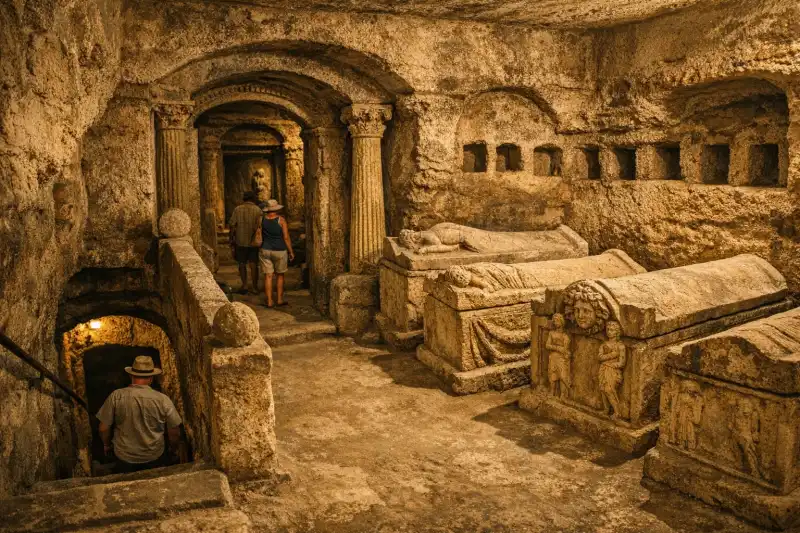
Alexandria Catacombs
Greco-Roman EgyptExplore Alexandria Catacombs in Egypt, a remarkable Roman-era underground necropolis blending Egypti...
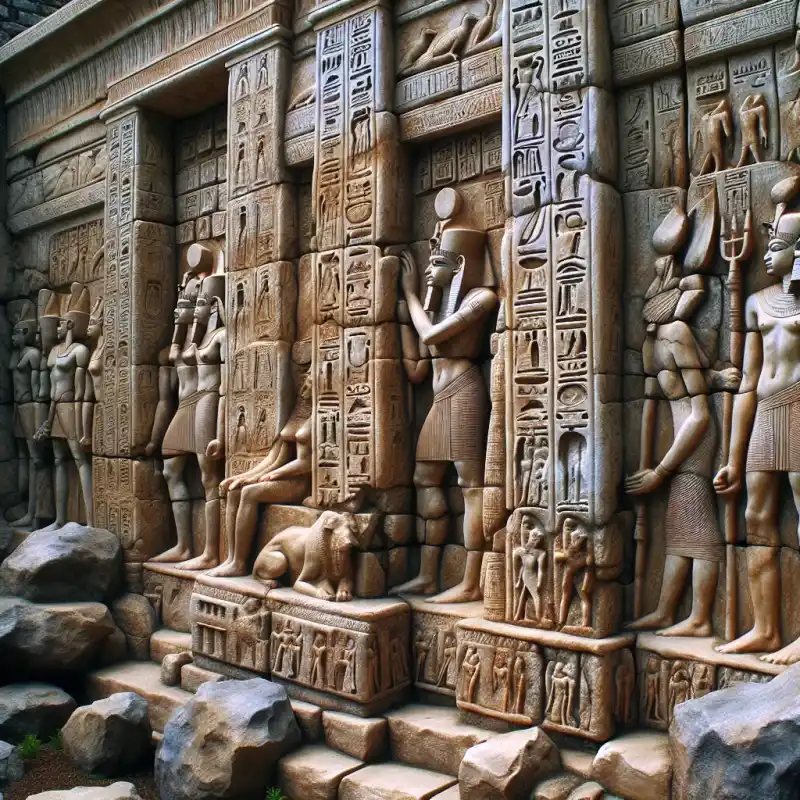
Abydos Temple Egypt Guide 2026: Temple of Seti I & King List
New Kingdom-PtolemaicAbydos Temple near Luxor: magnificent Temple of Seti I with war reliefs, ancient king list, and vibr...
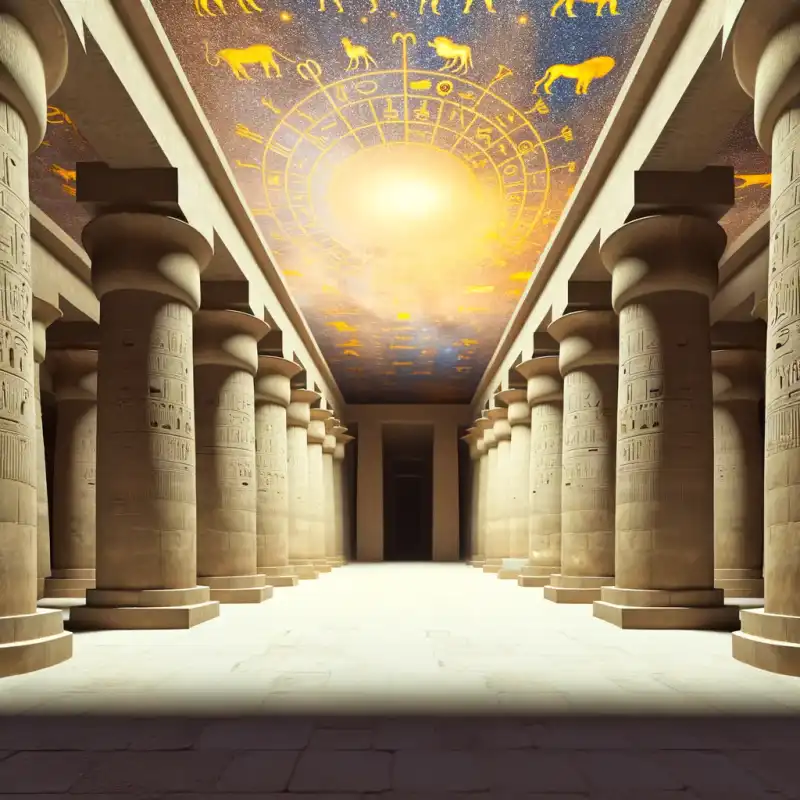
Dendera Temple Complex Egypt Guide 2026: Temple of Hathor & Zodiac Ceiling
Ptolemaic-RomanExplore Dendera's magnificent Temple of Hathor near Luxor. Star-mapped zodiac ceiling, Ptolemaic arc...