Quick Info
At a glance
Alexandria Catacombs in Egypt feel less like a single monument and more like a descent into a forgotten layer of the ancient Mediterranean world. In modern Alexandria, where traffic, sea air, apartment blocks, and cafés define everyday life, the catacombs open a very different atmosphere beneath the surface: cool, shadowed, ceremonial, and strangely intimate. Known most commonly as the Catacombs of Kom el Shoqafa, this subterranean necropolis is one of the city’s most compelling archaeological sites, not because of its monumental size alone, but because it captures the cultural character of Alexandria itself.
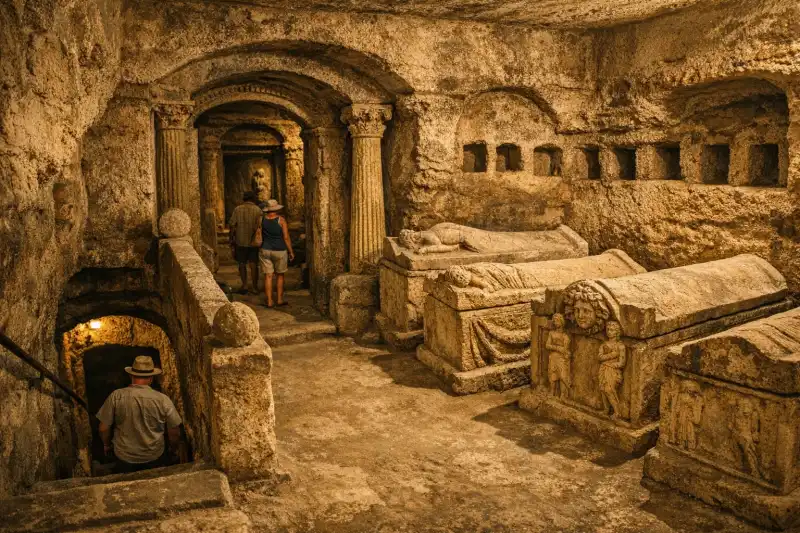
This was a city where Egyptian traditions endured, Greek language and aesthetics remained influential, and Roman rule shaped public and private life. The catacombs preserve that blend in stone. Visitors move down a spiral staircase into chambers decorated with reliefs that combine pharaonic motifs, classical forms, and funerary symbolism from several worlds at once. Statues wear Roman dress yet stand in an Egyptian ritual setting. Serpents, gods, banquet rooms, sarcophagi, and burial niches tell a story not of one isolated civilization but of exchange, adaptation, and identity. For travelers interested in ancient Egypt beyond pyramids and temples, Alexandria Catacombs offer a rarer experience: a deeply atmospheric site where religion, family memory, and urban multiculturalism meet underground.
History
Origins in Roman Alexandria
The Alexandria Catacombs are generally dated to the 2nd century CE, during the Roman imperial period, when Alexandria remained one of the greatest cities of the eastern Mediterranean. Though politically under Rome, the city had never ceased to be a meeting point of cultures. Founded by Alexander the Great and shaped by the Ptolemies, Alexandria had long sustained strong Greek traditions while remaining firmly anchored in Egyptian land and religious memory. By the time the catacombs were created, its population included Egyptians, Greeks, Romans, Jews, and other communities tied to trade, administration, and scholarship.
Archaeologists believe the complex may have begun as a private family tomb, later expanding into a larger communal burial site. That development makes sense in a cosmopolitan city where elite families often displayed both wealth and cultural sophistication through funerary architecture. Instead of building a purely Egyptian tomb or a purely Greco-Roman mausoleum, the creators of Kom el Shoqafa fashioned a hybrid monument. The result is one of the clearest surviving examples of Alexandrian syncretism: a funerary space that honored the dead using visual language from several traditions at once.
Expansion into a Necropolis
Over time, what may have started as a family burial installation grew into a broader necropolis. Additional chambers, loculi, corridors, and ceremonial spaces were incorporated into the underground layout. The use of the catacombs likely extended across generations, and the architecture suggests a site designed not only for interment but also for ritual remembrance. One of the most notable spaces is the so-called Hall of Caracalla, where remains of humans and horses were reportedly found, though the exact interpretation of that chamber remains debated.
The tomb complex illustrates changing funerary habits in Roman Egypt. Cremation and inhumation both existed in the wider Roman world, but Egyptian burial customs retained strong emphasis on bodily preservation, tomb space, and symbolic protection in the afterlife. At Kom el Shoqafa, visitors can see how these ideas were adapted under Roman authority. The carvings draw on Egyptian funerary imagery such as Anubis and other protective motifs, yet the figures and decorative framing also reflect classical artistic conventions. This was not imitation for its own sake. It represented how Alexandrians of the period understood themselves: heirs to multiple traditions.
Decline, Burial, and Rediscovery
As centuries passed, Alexandria changed dramatically. Earthquakes, flooding, urban development, and political transformation altered the city above ground, while many older monuments were damaged, repurposed, or forgotten. The catacombs eventually fell out of regular use and sank from public memory. Their underground nature helped preserve portions of the complex, even as access became lost.
The most often repeated account of rediscovery dates to the early 20th century, when a donkey reportedly fell through the ground into the hidden chambers below. Whether remembered with some embellishment or not, the story captures the accidental quality of many archaeological rediscoveries in dense historic cities. Excavation revealed a substantial underground funerary monument of exceptional importance. Scholars quickly recognized that the catacombs were not simply another burial site, but one of the finest surviving records of the multicultural society of Roman Alexandria.
Archaeology and Modern Significance
Since their rediscovery, the Alexandria Catacombs have drawn archaeologists, historians, and travelers interested in Roman Egypt and ancient funerary art. Their importance lies not in royal association, but in cultural evidence. They show how local elites and families negotiated identity under empire. Rather than abandoning Egyptian religion, they adapted it. Rather than rejecting Hellenistic or Roman style, they integrated it. The visual program of the catacombs makes that process visible in a way few sites do so clearly.
Today, the site is protected as a major archaeological attraction in Alexandria. Conservation remains an ongoing challenge, especially because underground monuments are vulnerable to humidity, groundwater, urban pressure, and the wear caused by tourism. Even so, the catacombs continue to offer an unusually direct encounter with the world of ordinary commemoration in antiquity. They remind visitors that ancient Alexandria was not only a city of libraries, palaces, and harbors, but also a city of families burying their dead with care, symbolism, and cultural imagination.
Key Features
The most memorable part of visiting Alexandria Catacombs is the descent itself. A broad spiral staircase leads downward around a central shaft, creating a gradual transition from bright Mediterranean daylight into muted underground stillness. This architectural approach is practical, but it is also theatrical. You do not simply arrive at the monument; you enter it by degrees, leaving the modern city behind and moving into a space designed around ritual passage.
At the heart of the complex is the main tomb chamber, the artistic centerpiece of the site. Here the mixed visual language of Roman Alexandria becomes unmistakable. Figures associated with Egyptian funerary religion appear alongside classical decorative forms. Anubis, the jackal-headed guardian of embalming and the dead, is shown in ways that reflect Roman costume and posture. Relief carvings frame the burial setting with a balance of solemnity and elegance rather than overwhelming scale. The result is not chaotic fusion, but a coherent local style shaped by Alexandria’s cosmopolitan society.
The sarcophagus chamber is especially striking because it suggests permanence and sacred enclosure. Carved stone burial containers are integrated into the architecture, emphasizing that this was not a temporary resting place but a constructed world for the dead. The imagery surrounding the tombs is rich in protection, transition, and afterlife meaning. Even visitors without specialist knowledge can feel the deliberate symbolism of the space. Every niche, carved panel, and threshold contributes to the atmosphere of a hidden ceremonial environment.
Another distinctive element is the triclinium, or banquet hall, where families likely gathered for funerary meals and memorial observances. This part of the complex is particularly valuable for understanding how the living interacted with the dead. Burial in the ancient world often involved continuing acts of remembrance, and the banquet setting suggests that memory was not abstract. It was social, embodied, and seasonal. Relatives and mourners could come together in a designated space, sharing food in honor of those interred below. This feature helps the catacombs feel less like an isolated tomb and more like a functioning memorial landscape.
The network of loculi, the niches cut into the walls for human remains, gives the site a denser and more communal character. These passages reveal that the catacombs expanded beyond a single monumental chamber into a larger burial system. Walking through these corridors, visitors begin to appreciate how many individuals may once have been laid to rest here. The atmosphere changes subtly from formal artistry to repetition and quiet accumulation. It is a reminder that ancient burial architecture was not only about spectacle, but also about practical accommodation for generations of the dead.
The so-called Hall of Caracalla adds another layer of intrigue. Though interpretations vary, the chamber is often associated with remains found there and with episodes of violence or disposal linked, perhaps indirectly, to the reign of the emperor Caracalla. Whether every historical association can be firmly proved, the hall broadens the site’s meaning. It suggests that the catacombs were not static and that their use or adaptation may have changed over time. Archaeological sites often contain ambiguity, and this chamber is a good example of how mystery remains part of the visitor experience.
What makes Alexandria Catacombs especially rewarding is the intimacy of scale. This is not an open temple court or a colossal pyramid field. It is enclosed, textured, and immediate. Carvings are close enough to examine carefully. Corridors turn unexpectedly. Shadows define the architecture as much as stone does. Because of that, the site often leaves a stronger emotional impression than larger monuments. It feels inhabited by memory, and by the everyday complexity of a city where identities overlapped rather than remained neatly separate.
Getting There
Alexandria Catacombs are located within Alexandria’s urban area, making them relatively easy to reach once you are in the city. If you are staying in central Alexandria near the Corniche, downtown, or around the main railway areas, a taxi or rideshare is usually the simplest option. Depending on traffic and your starting point, the trip often takes 15 to 30 minutes. Typical taxi or app-based ride fares within the city are roughly 80 to 180 EGP, though prices can rise in heavy traffic or during busy periods.
Travelers coming from Cairo commonly visit Alexandria as a day trip. Fast trains from Cairo to Alexandria usually take around 2.5 to 3 hours, with fares varying by class but often falling in the range of 150 to 300 EGP or more. Once you arrive at Alexandria’s main station, you can continue by taxi to the catacombs. Private day tours from Cairo are also widely offered and are convenient if you want transport, entry logistics, and commentary arranged in advance, though these are naturally more expensive than independent travel.
Public minibuses and local transport exist, but they can be confusing for first-time visitors who do not speak Arabic or know Alexandria well. For most travelers, a taxi remains the best balance of cost and convenience. Wear comfortable shoes, carry water, and expect some stairs at the site itself. Since the monument is underground, visitors with mobility concerns should note that access is more challenging than at many open-air attractions.
When to Visit
The best time to visit Alexandria Catacombs is generally between October and April, when temperatures in Alexandria are milder and exploring the city is far more comfortable. Unlike Upper Egypt, Alexandria benefits from Mediterranean weather, so even in warmer months conditions are often less intense than in Luxor or Aswan. Still, cooler seasons remain ideal if you plan to combine the catacombs with other city landmarks in a full day of sightseeing.
Winter, especially from December to February, brings the most pleasant daytime temperatures, often suitable for walking and lingering outdoors before or after your visit. The underground chambers themselves stay comparatively sheltered, but the approach, queues, and transfers around the city are more enjoyable in cooler weather. You may encounter more domestic tourists on weekends and holidays, so weekday mornings are often the calmest time to go.
Spring and autumn are excellent shoulder seasons. Temperatures are moderate, the light in Alexandria is beautiful, and the city feels active without the heavier summer fatigue. Summer visits are still possible, especially because the catacombs are underground, but the journey through the city can be hot and humid. If visiting from June to September, try to arrive early in the day to avoid afternoon heat and heavier traffic.
If photography, atmosphere, and a less rushed experience matter to you, early morning is usually the best choice year-round. Arriving soon after opening can mean fewer tour groups and more space to absorb the carved details. As with many archaeological sites in Egypt, it is wise to check opening times and any holiday changes before setting out.
| Quick Facts | Details |
|---|---|
| Site name | Alexandria Catacombs |
| Also known as | Catacombs of Kom el Shoqafa |
| Location | Alexandria, Alexandria Governorate, Egypt |
| Date | Primarily 2nd century CE |
| Cultural context | Greco-Roman Egypt |
| Type | Underground necropolis and funerary complex |
| Best visit length | 45 minutes to 1.5 hours |
| Access notes | Includes stairs and underground passages |
| Best season | October to April |
| Nearest major city | Alexandria |
A visit to Alexandria Catacombs stays with many travelers because it offers something Egypt’s more famous monuments do not always provide: a sense of hidden continuity between civilizations. Here, Egyptian gods did not vanish under Greek or Roman influence, and classical aesthetics did not erase local beliefs. Instead, the underground chambers show how people in ancient Alexandria built meaning from all the worlds around them. That cultural blending is not an abstract historical idea; it is carved into doorways, embodied in statues, and preserved in burial architecture beneath a modern city.
For travelers planning time in Alexandria, the catacombs work especially well as part of a broader historical day that might include the Roman theater, Pompey’s Pillar area, or the Bibliotheca Alexandrina. Yet even on their own, they justify the trip. They are atmospheric without being inaccessible, scholarly without feeling dry, and unusual enough to stand apart from better-known Egyptian experiences. You leave not with the memory of scale alone, but with the feeling of having entered a layered world where family grief, civic identity, and artistic exchange were given enduring stone form.
In that sense, Alexandria Catacombs are one of the best places in Egypt to understand antiquity as lived experience rather than distant legend. They are quiet, underground, and often overshadowed by grander sites, but that is precisely their strength. They reveal a human-scale ancient world—multicultural, ceremonial, and deeply personal—hidden just below the surface of Alexandria.
Guided tours: worth it?
Self-guided works here, but a guide can add real value if you want the ruins explained as a living place rather than just a sequence of monuments.
Best for
- First-time visitors who want context, not just photos
- Short visits where a planned route saves time
When to go self-guided
Go independently if you prefer setting your own pace, reading as you go, and checking official hours or ticket rules directly before you arrive.
What I’d avoid
Skip paid tours that bundle unrelated stops you do not actually want. The best option should either save meaningful planning time or add historical context you would miss on your own.
Alexandria Catacombs Tours
Useful when: you want to compare guided formats before deciding
Alexandria Day Tours from Cairo
Useful when: transport or pickup logistics matter
Alexandria Private Sightseeing Tours
Useful when: you want flexible timing or a private guide
Some tour links are affiliate links, which may earn Ancient Travel a small commission at no extra cost to you. I try to surface options that make practical sense for the site—not just anything bookable.
Frequently Asked Questions
What are the Alexandria Catacombs?
The Alexandria Catacombs, usually identified with Kom el Shoqafa, are an underground funerary complex from Roman Egypt known for combining Egyptian, Greek, and Roman artistic styles.
Where are the Alexandria Catacombs located?
They are located in Alexandria, Egypt, in the Karmouz area of Alexandria Governorate, not far from the historic center of the city.
How much time do you need to visit the catacombs?
Most visitors spend about 45 minutes to 1.5 hours exploring the site, depending on crowds and how closely they examine the carved chambers and reliefs.
Are the Alexandria Catacombs suitable for all visitors?
The site includes stairs and underground passages, so it may be difficult for travelers with limited mobility, claustrophobia, or sensitivity to humid enclosed spaces.
Can you visit the Alexandria Catacombs independently?
Yes. Many travelers visit independently by taxi or rideshare, although a guide can add useful historical context about the symbolism and mixed artistic traditions.
What should you wear when visiting?
Wear light, comfortable clothing and sturdy shoes with grip, as the underground floors and stairways can feel damp or uneven.
Are the Alexandria Catacombs worth visiting?
Yes, they are among Alexandria’s most distinctive ancient attractions and offer a rare look at burial practices and cultural fusion in Roman-era Egypt.
Nearby Ancient Sites
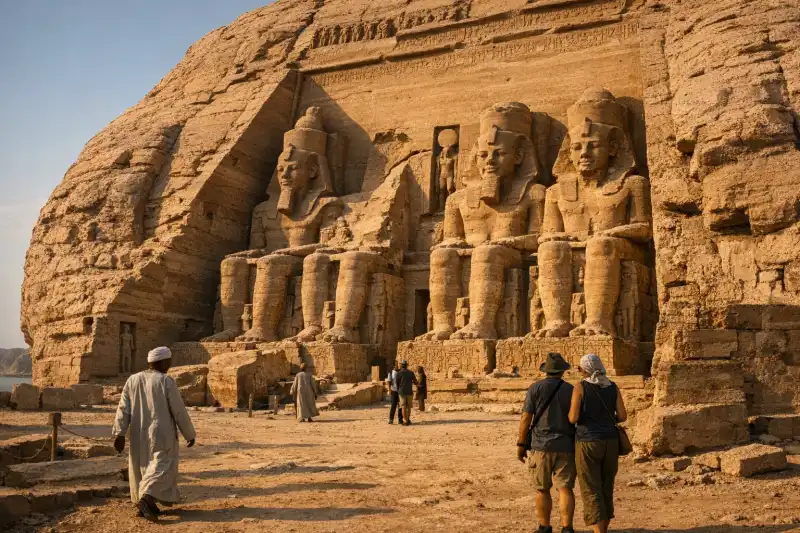
Abu Simbel
Ancient EgyptianDiscover Abu Simbel in Egypt, where colossal rock-cut temples of Ramses II rise above Lake Nasser ne...
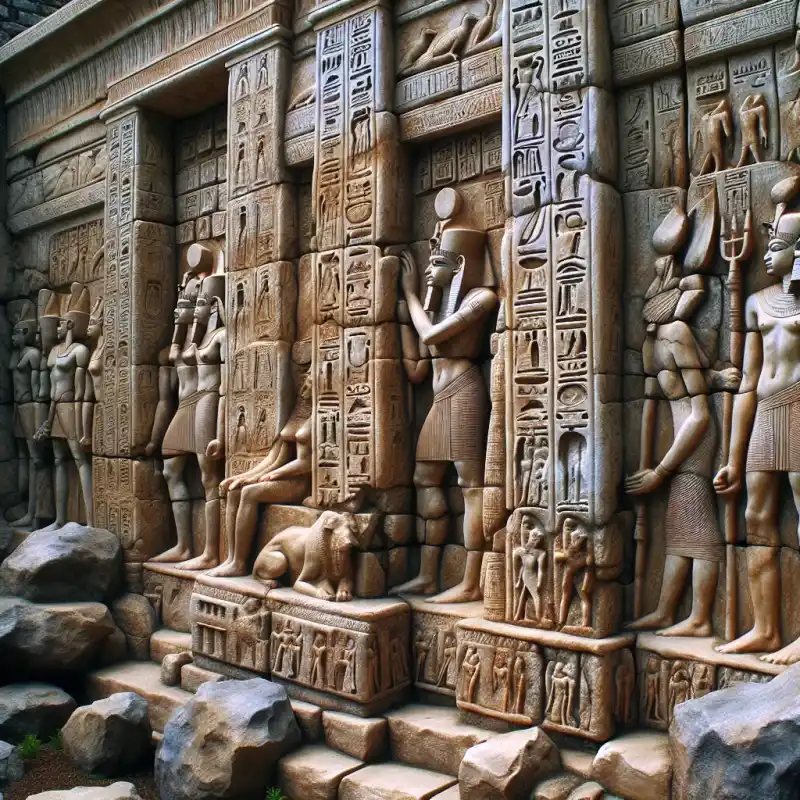
Abydos Temple Egypt Guide 2026: Temple of Seti I & King List
New Kingdom-PtolemaicAbydos Temple near Luxor: magnificent Temple of Seti I with war reliefs, ancient king list, and vibr...
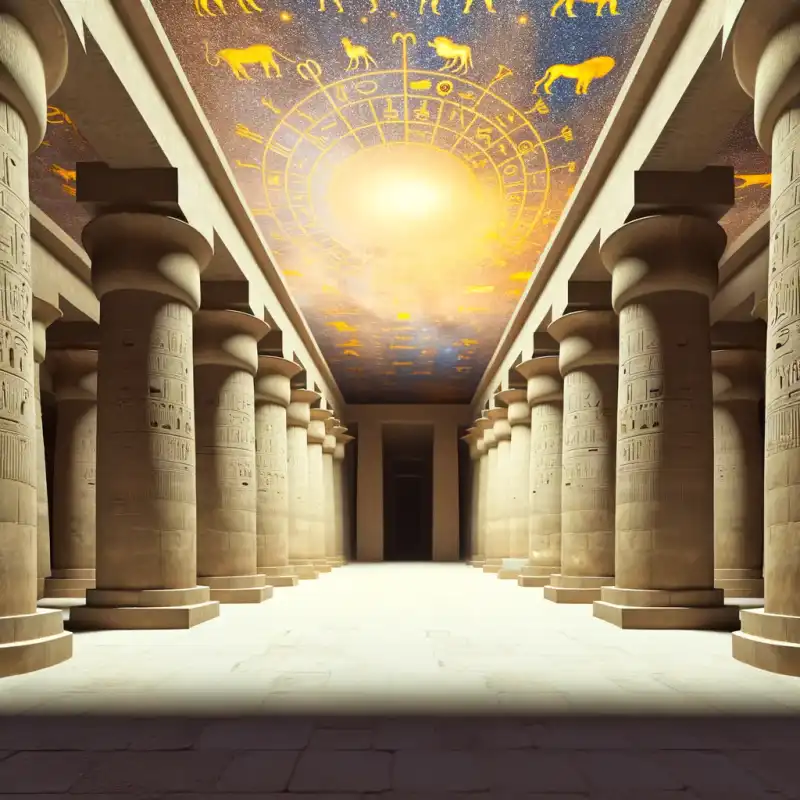
Dendera Temple Complex Egypt Guide 2026: Temple of Hathor & Zodiac Ceiling
Ptolemaic-RomanExplore Dendera's magnificent Temple of Hathor near Luxor. Star-mapped zodiac ceiling, Ptolemaic arc...