Quick route summary
This 3-day route uses Cairo as a single base and keeps the focus on the ancient sites that sit west and south of the modern city. You start with the Pyramids of Giza and the Great Sphinx of Giza, then spend a full day at Saqqara Necropolis, the Step Pyramid of Djoser, the Serapeum of Saqqara, and the old Memphis area. The final day goes to Dahshur for the Bent Pyramid and Red Pyramid.
The pace is busy, but not silly. You could compress parts of this into two days, but you would lose the best thing about the route: watching pyramid building change from experiment to statement to landscape-scale royal theater.
Who this itinerary is for
This itinerary is for travelers who want ancient Egypt right away and do not mind using taxis, a private driver, or a guided tour to make the logistics work. It is especially good for a first Cairo visit if the pyramids are the reason you came.
It is not the best plan if you want long museum days, lots of Islamic Cairo, or a slow cafe-heavy trip. Those are worth doing, but this route is built around Old Kingdom tombs, desert edges, and the strange thrill of seeing Egypt’s pyramid experiments in order.
Route at a glance
- Day 1: Overnight in Cairo. Visit Giza, with the pyramids, the Sphinx, and time to understand the plateau instead of just taking the standard photo.
- Day 2: Overnight in Cairo. Drive south to Saqqara and Memphis, with the Step Pyramid, mastaba tombs, and the Serapeum.
- Day 3: Overnight in Cairo. Continue to Dahshur for the Bent Pyramid and Red Pyramid, then return to Cairo for a lighter finish.
Practical logistics before you go
Cairo traffic shapes this itinerary more than distance on a map. Giza can be reached by taxi or rideshare from much of Cairo, but Saqqara, Memphis, and Dahshur are easier with a private driver or a guided day trip. Public transport is not the right tool for this route.
If you stay in Giza, Day 1 starts easier. If you stay in central Cairo or Zamalek, the evenings are usually better. Either works. The main thing is to leave early on Days 1 and 2, carry water, and avoid planning a major evening commitment after Saqqara. The desert sites are rewarding, but they take more energy than their distances suggest.
A guided tour makes the most sense on Day 2 or Day 3, when the sites are spread out and context matters. This is a good place for a Cairo day tour to Giza, Saqqara, Memphis, and Dahshur, especially if you want one driver and a guide who can explain the pyramid sequence without making you solve Cairo logistics on the fly.
Day 1: Giza Plateau and the Sphinx
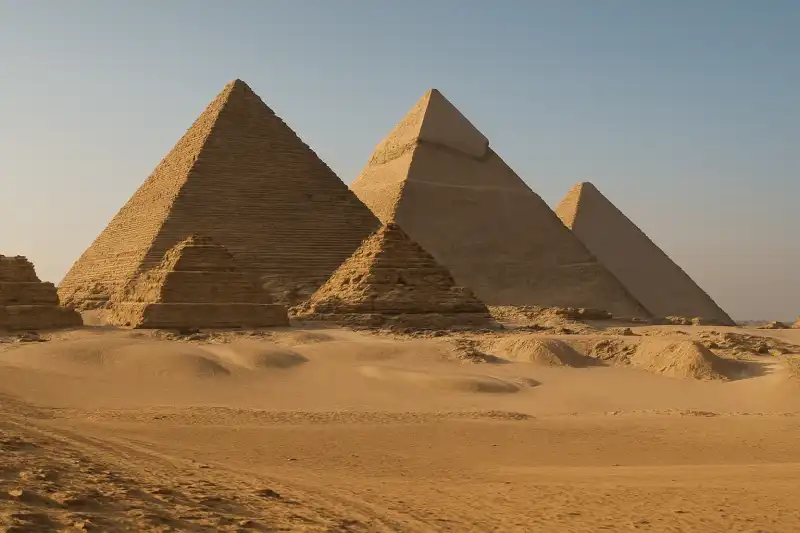
Start with the Pyramids of Giza early. The plateau is famous enough that it can feel familiar before you arrive, but give it time anyway. The Great Pyramid was built for Khufu in the 26th century BCE, and the sheer mass of the thing still makes the desert feel engineered rather than natural.
Do not rush straight from one photo stop to another. Walk enough to see how the pyramids, causeways, smaller queens’ pyramids, and tomb fields relate to each other. Giza was more than three pyramids in sand. It was a royal necropolis with workers, priests, officials, processional routes, and an entire political idea made visible in limestone.
Save time for the Great Sphinx of Giza. One detail people often miss: the Sphinx was carved from the bedrock of the plateau, not assembled block by block like the pyramids. Its body and the surrounding quarry are part of the same geological story, which makes it feel less like a statue placed in the landscape and more like something pulled out of it.
Logistics are simple today compared with the next two days. Use a taxi, rideshare, private driver, or guide, then return to your Cairo base before traffic gets too punishing. If you want a museum visit, keep it short. This day is better when Giza remains the main event.
Day 2: Saqqara and Memphis
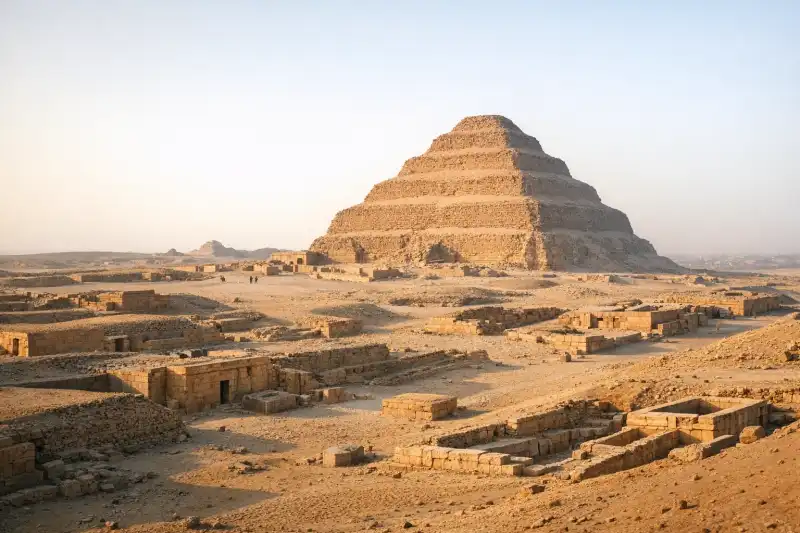
This is the day to hire a driver or book a good guided tour. Saqqara Necropolis is large, layered, and easy to underestimate. It is where pyramid building gets wonderfully experimental: mastaba tombs, the Step Pyramid of Djoser, decorated tomb chapels, underground spaces, and later burials all overlap across a long-used sacred landscape.
The Step Pyramid is the anchor. Built for King Djoser in the 27th century BCE, it began as a mastaba and grew into a stacked stone form that changed Egyptian royal architecture. Imhotep, the official traditionally connected with the complex, became so admired later that Egyptians remembered him not just as an architect, but as a sage and healer.
Do not skip the Serapeum of Saqqara if it is open and practical on your visit. The underground galleries held the burials of sacred Apis bulls, and the huge stone sarcophagi have a completely different mood from the sun-blasted pyramid precinct. It is one of those places where Egyptian religion feels less tidy and more physical.
Pair Saqqara with Memphis and Dahshur, but keep your expectations for Memphis realistic. Ancient Memphis was once a capital and administrative center, but the surviving visit is fragmentary. Treat it as a historical hinge between the necropolis landscapes, not as a full-day standalone site.
Plan on a long half day or a full day depending on how deeply you tour Saqqara. Return to Cairo before dinner and do not schedule another major site afterward. This is the densest history day of the route.
Day 3: Dahshur and a slower Cairo finish
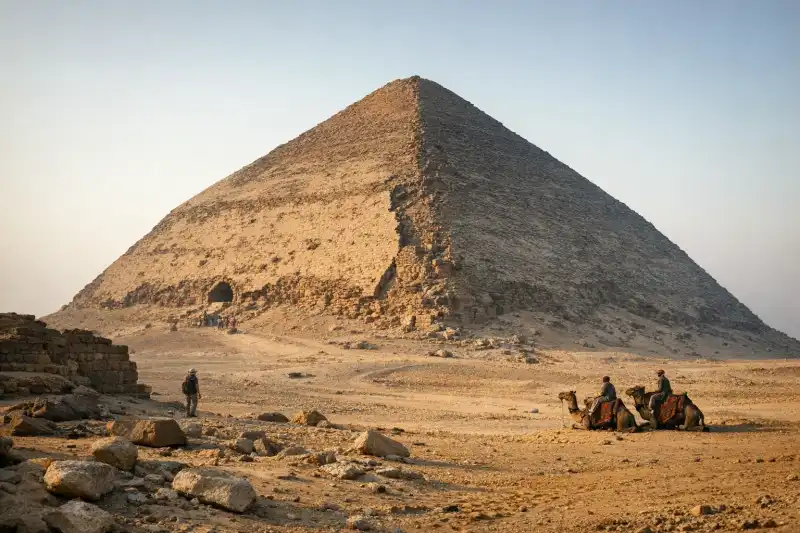
Dahshur is quieter than Giza and often easier to love because the pyramid experiments are so visible. Start with the Bent Pyramid, built for Sneferu. Its angle changes partway up, probably because the original slope created structural problems. You do not need a technical background to see the adjustment. The pyramid tells on itself.
Then continue to the Red Pyramid, also linked to Sneferu. This is one of the first successful true pyramids, and it helps the whole 3-day route click into place. After Giza, Saqqara, and Dahshur, the pyramids stop feeling like isolated monuments and start reading as a century-long architectural argument.
Use Memphis and Dahshur as the practical planning page for this southern route. The drive is not hard with a driver, but it is not a day for improvising with public transit. Leave early, bring water, and build in a little slack. Desert sites punish overpacked plans.
After Dahshur, return to Cairo and keep the rest of the day flexible. If you still have energy, add a museum or a walk through a historic district. If not, stop. A good ancient-sites itinerary should leave you with something to think about, not just a camera roll and a headache.
The historical thread: pyramids, power, and the desert edge
Giza, Saqqara, Memphis, and Dahshur belong together because they show the Old Kingdom near its center of gravity. Memphis was the administrative heart. Saqqara was one of its great burial landscapes. Dahshur preserves the trial-and-error stage of true pyramid building. Giza shows the royal project at its largest scale.
The route also makes a useful correction. Many travelers see the pyramids as a single achievement, almost as if they appeared fully formed. Visiting these sites together shows a messier and more interesting story: experiments, adjustments, borrowed ideas, solved problems, and kings using architecture to make power feel permanent.
Transportation notes
Use Cairo as your base for all three nights. Moving hotels would waste time.
For Day 1, a taxi, rideshare, private driver, or guided tour works. For Days 2 and 3, book a driver or tour. Saqqara, Memphis, and Dahshur are spread out, and the value of the day comes from moving between them without losing time at every transfer.
Expect traffic to be part of the trip. Distances around Cairo can look short and still take longer than planned. Start early, keep lunch simple, and avoid stacking a big evening activity after the southern sites.
Optional add-ons and swaps
If you have an extra day, consider Alexandria for the Alexandria Catacombs. It changes the historical period completely, moving from Old Kingdom pyramid landscapes to Greco-Roman Egypt. That is not a small add-on, though. It is a full day from Cairo.
A more adventurous swap is Tanis, a Delta site tied to later royal burials and reused monuments. It is historically fascinating, but it is not as smooth for a first Cairo trip. Add it only if you already know you want a less standard ancient Egypt day.
If you need to cut the route down, keep Giza and Saqqara. Dahshur is the painful cut, but it is the easiest to remove if you only have two days.
Shorter and longer itinerary options
For a shorter visit, use this as a two-day plan: Day 1 at Giza, Day 2 at Saqqara and Dahshur with a driver. It will be tiring, but it works.
For a longer trip, the next planned routes are a 5-day ancient Egypt itinerary and a 7-day ancient Egypt itinerary. Those will add Luxor and the Nile temples, which shift the story from pyramid landscapes to temple cities, royal tombs, and New Kingdom power.
Related ancient sites
- Pyramids of Giza
- Great Sphinx of Giza
- Saqqara Necropolis
- Step Pyramid of Djoser
- Serapeum of Saqqara
- Memphis and Dahshur
- Bent Pyramid
- Red Pyramid
FAQ
The most common planning questions for this route are answered below.