Quick route summary
This 5-day route starts in Cairo and ends in Luxor, with two practical bases: Cairo for the pyramid landscapes and Luxor for the great Theban sites. You begin with the Pyramids of Giza and the Great Sphinx of Giza, then spend a full day south of Cairo at Saqqara Necropolis, Memphis, and Dahshur. After that, you transfer to Luxor for Karnak Temple Complex, the Valley of the Kings, Hatshepsut’s temple, Medinet Habu, and Luxor Temple.
The pace is full, but not reckless. The main rule is simple: do not try to turn this into a 7-day Egypt route by force. Five days is enough for Cairo and Luxor if you protect your mornings, use drivers where they save time, and accept that Aswan, Edfu, Kom Ombo, Abydos, and Dendera belong to a longer trip.
Who this itinerary is for
This itinerary is for first-time Egypt travelers who want the ancient sites to lead the trip. It works well if you can handle early starts, two busy Cairo site days, and a transfer day between Cairo and Luxor. It is especially good for travelers who want to see how ancient Egyptian royal power changes from pyramid fields to temple cities and hidden tombs.
It is not ideal if you want a slow cafe-heavy Cairo trip, long museum days, a Nile cruise, or a beach break. It also is not the right plan if you want to see everything in Luxor. Luxor can fill a week by itself. This route chooses the strongest first-visit sequence and leaves some excellent sites for a return.
Route at a glance
- Day 1: Overnight in Cairo. Visit Giza for the pyramids and Sphinx, using a taxi, driver, or guide.
- Day 2: Overnight in Cairo. Drive south to Saqqara, Memphis, and Dahshur with a private driver or guided tour.
- Day 3: Overnight in Luxor. Fly or take the train to Luxor, then visit Karnak if timing and energy allow.
- Day 4: Overnight in Luxor. Start early on the West Bank for the Valley of the Kings, Hatshepsut, and the Colossi of Memnon.
- Day 5: Overnight in Luxor. Visit Medinet Habu in the morning, rest midday, and finish at Luxor Temple late in the day.
Practical logistics before you go
Use Cairo for the first two nights and Luxor for the final three. In Cairo, staying in Giza makes the first pyramid morning easier. Staying in central Cairo or Zamalek usually gives better evenings. Either works, but do not move hotels between Cairo and Giza for such a short trip.
For Cairo’s southern sites, book a driver or guided tour. Giza is simple enough by taxi or rideshare, but Saqqara, Memphis, and Dahshur are spread out and awkward by public transport. A Cairo day tour to Giza, Saqqara, Memphis, and Dahshur makes sense if you want one driver and a guide who can connect the pyramid sequence.
For Cairo to Luxor, flying is usually the cleanest choice on a 5-day route. The overnight train can work, but do not treat it as guaranteed rest. If you arrive tired, move Karnak later in the day or cut the Open Air Museum.
Luxor needs early starts. Tombs get hotter and more crowded as the morning goes on, and ticket rules can change. Carry cash, choose your tombs before you reach the ticket window, and avoid scheduling a major evening commitment after the West Bank. The ruins are rewarding, but they take more energy than the map suggests.
Day 1: Giza Plateau and the Sphinx
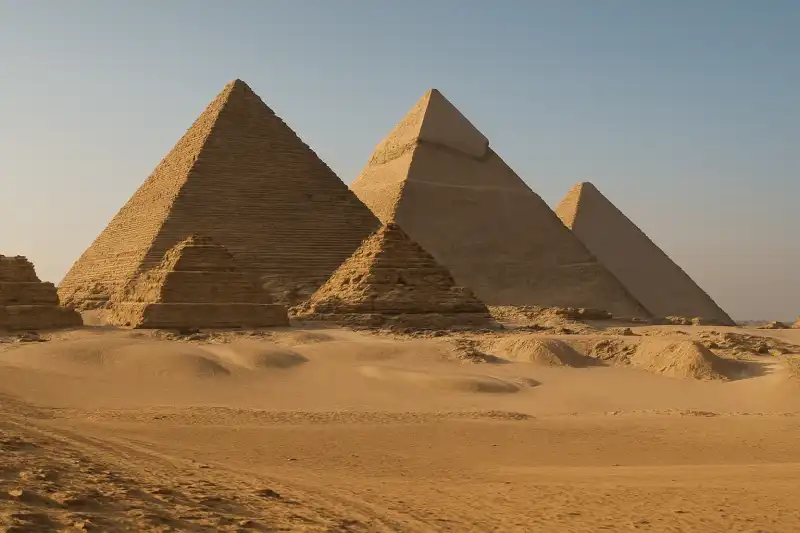
Start early at the Pyramids of Giza. The Great Pyramid was built for Khufu in the 26th century BCE, and its scale still does something strange to the desert around it. Give the plateau more time than the standard photo circuit. The causeways, queens’ pyramids, mastaba fields, and workers’ areas help you see Giza as a royal necropolis rather than three isolated monuments.
Save proper time for the Great Sphinx of Giza. The Sphinx was carved from the limestone bedrock of the plateau, not assembled like a block statue. That detail changes how the site feels. The body, quarry, temples, and pyramids all belong to the same engineered landscape.
Logistics are easier today than they will be tomorrow. Use a taxi, rideshare, private driver, or guide, and do not overload the evening. If you want to add a museum, keep it short. The first day works best when Giza remains the main event and you return to your Cairo base before traffic drains the rest of your attention.
If you are tempted to add Saqqara today, resist unless you are compressing the trip by necessity. Giza deserves space, and Saqqara is too large and layered to become an afterthought.
Day 2: Saqqara, Memphis, and Dahshur
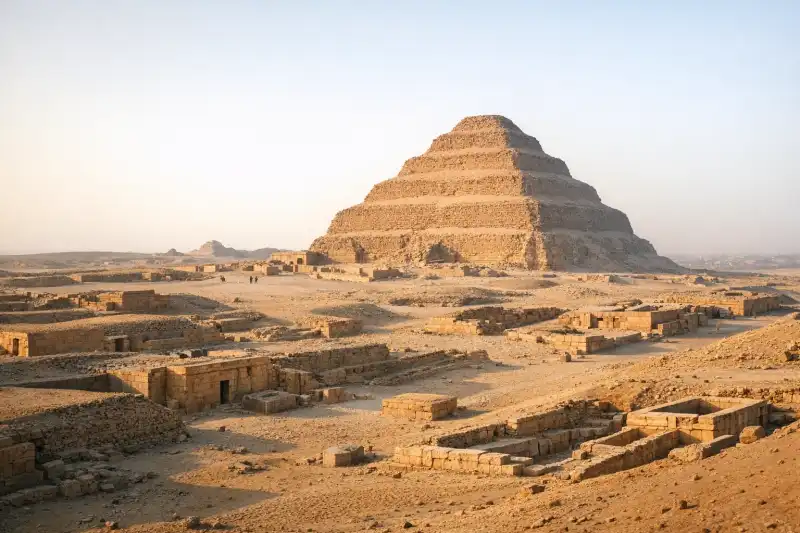
This is the day to hire a driver or take a guided trip south of Cairo. Saqqara Necropolis is large, layered, and easy to underestimate. It is where pyramid building starts to get wonderfully experimental: mastaba tombs, the Step Pyramid of Djoser, decorated chapels, underground galleries, and later burials all sit within reach of each other.
The Step Pyramid was built for Djoser in the 27th century BCE. It began from the mastaba tradition and became something new in stone. Imhotep, the official traditionally linked with the complex, was later remembered as a figure of unusual wisdom, which tells you how strongly Egyptians themselves looked back at this project.
If it is open, include the Serapeum of Saqqara. The underground galleries held sacred Apis bull burials, and the huge stone sarcophagi have a completely different mood from the bright pyramid enclosure. Saqqara is not tidy history. It is a burial landscape reused and reinterpreted for centuries.
Use Memphis and Dahshur as the practical anchor for the rest of the day. Memphis was once a capital and administrative center, though the modern visit is fragmentary. Dahshur is the stronger visual finish. The Bent Pyramid shows Sneferu’s builders changing the angle partway up, probably after structural trouble. The Red Pyramid feels like the next answer in stone.
This is a full day. Bring water, keep lunch simple, and do not schedule another major sight afterward. Desert sites punish overconfident planning.
Day 3: Fly to Luxor and visit Karnak
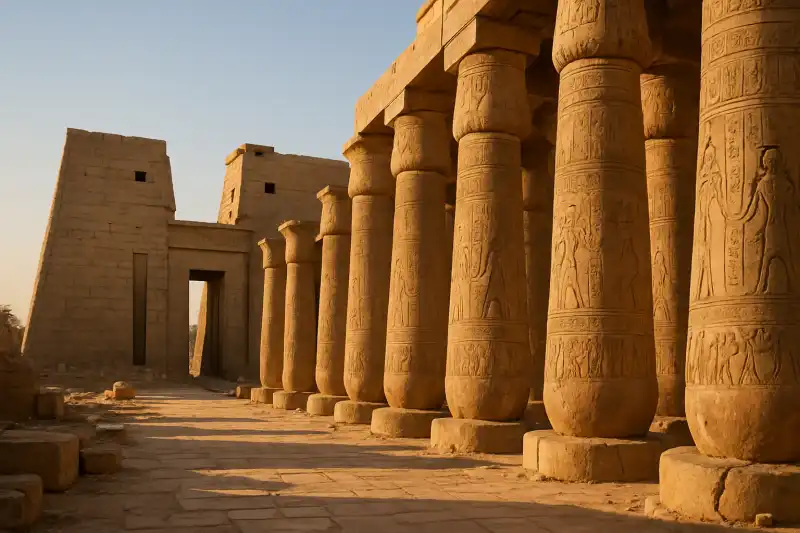
Transfer from Cairo to Luxor. A morning flight gives you the best chance of using the afternoon well. The train can work, but if you arrive tired, be honest about it. Check in, eat, and decide whether Karnak should happen today or move to the morning of Day 5.
If you have enough energy, go to the Karnak Temple Complex. Karnak is not one cleanly planned temple. It is a massive sacred zone expanded by generations of rulers who added courts, pylons, obelisks, reliefs, chapels, and processional routes. The Hypostyle Hall, associated especially with Seti I and Ramesses II, is the famous set piece, but the best way to read Karnak is as accumulated power.
Add the Karnak Open Air Museum only if you are still fresh. Its reconstructed chapels help show how earlier monuments were dismantled, reused, and rebuilt inside later temple projects. Ancient Egyptian temples were not frozen. They were edited.
Keep the evening simple. Luxor is easier than Cairo in many ways, but temple days in the heat are still tiring. If Karnak feels like too much after the transfer, stop. The route has room to recover.
Day 4: Valley of the Kings and Hatshepsut
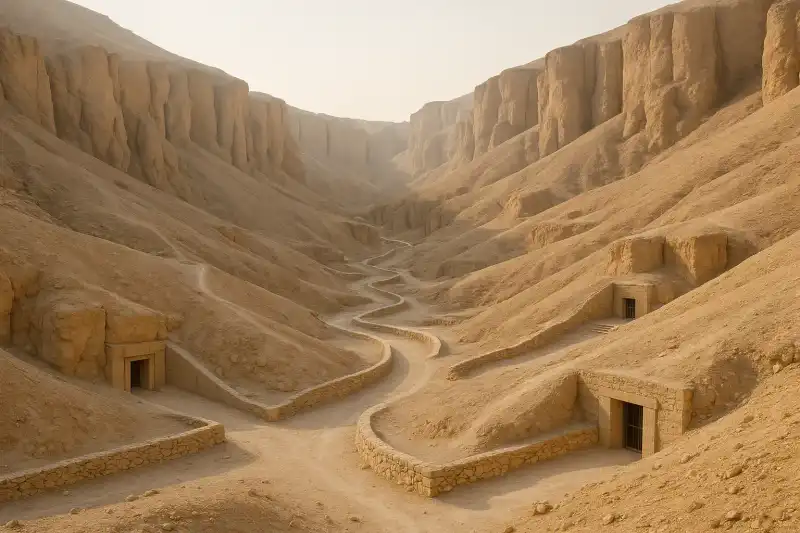
Start early on the West Bank. The Valley of the Kings works better when you choose tombs before you arrive rather than making decisions in the heat. Standard tickets usually include a limited number of open tombs, and special tombs cost extra. Open tombs rotate for conservation, so check current options locally.
The tombs are not just decorated rooms. Their corridors organize the king’s passage through the underworld with solar boats, gods, gates, and protective texts. The Tomb of Tutankhamun is famous because Howard Carter found it largely intact in 1922, not because it is the most visually rich tomb in the valley. Go in with that expectation and it becomes more interesting.
Continue to the Temple of Hatshepsut. Its terraces at Deir el-Bahri still feel startlingly controlled against the cliffs. Hatshepsut’s reign used architecture, divine birth scenes, trade imagery, and royal titles to make a female pharaoh legible inside a kingship system usually expressed as male. The building is elegant, but the politics were not quiet.
Stop at the Colossi of Memnon on the way in or out. The statues once fronted Amenhotep III’s huge mortuary temple, most of which is gone. They are a quick visit, but they help you understand the West Bank as a whole landscape of tombs, temples, memory, and royal self-presentation.
A guided West Bank day can be worth it here. A Luxor West Bank private tour can simplify transport and tomb choices, especially if you want to add one extra site without wasting the morning.
Day 5: Medinet Habu and Luxor Temple
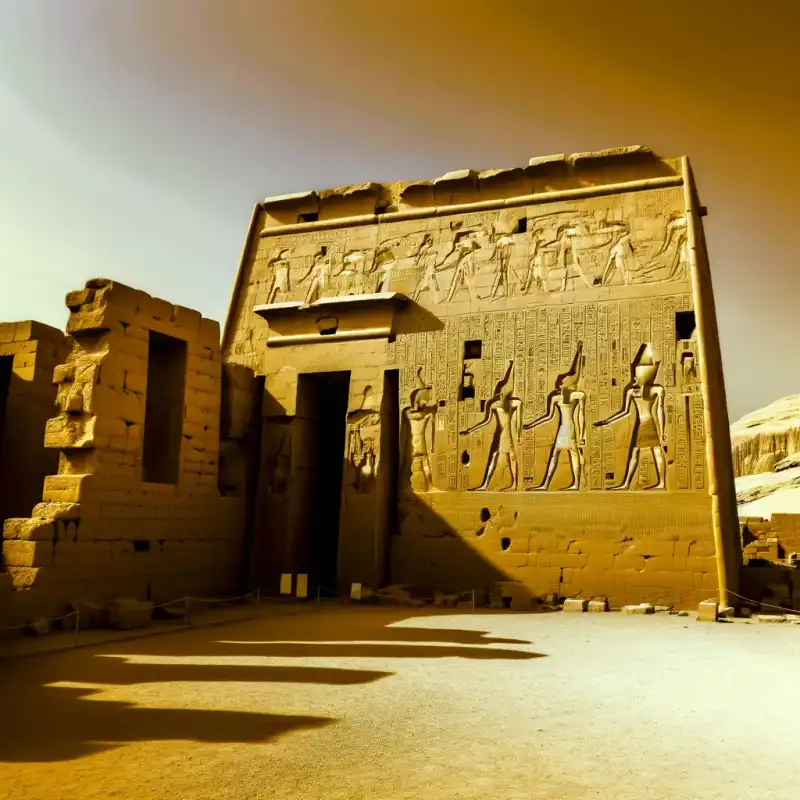
Use the final day carefully. Start with Medinet Habu on the West Bank. Ramesses III’s mortuary temple is one of Luxor’s most satisfying sites because it has scale, color, relief, and space to think. The battle scenes linked with the Sea Peoples are royal propaganda, not neutral reporting, but that is part of the point. This is a king turning military danger into carved legitimacy.
If you want one extra West Bank site, choose based on your interests rather than proximity. Deir el-Medina is excellent for the lives of the workers who built royal tombs. The Ramesseum is better if you want Ramesses II’s ruined mortuary architecture and colossal fragments. Do not do both unless you are staying another night.
Rest through the hottest part of the day, then finish at Luxor Temple or the closely related Temple of Luxor. Luxor Temple sits inside the modern city, which makes the transition from traffic and streets to colonnades feel wonderfully strange. Amenhotep III and Ramesses II both shaped the temple, and later Roman and Islamic layers show how long this place stayed active, reused, and visible.
End here rather than trying to squeeze in another bank crossing. A short itinerary needs a strong last impression, not one more hurried ticket. Luxor Temple near evening gives the route a clean finish: from pyramid fields to temple processions, from Old Kingdom burial architecture to New Kingdom sacred theater.
The historical thread: from pyramid experiments to Theban power
Cairo and Luxor belong together because they show two different ways Egyptian kings made power visible. Around Cairo, the story is stone, desert, burial, and experiment. Saqqara shows the move from mastaba to pyramid. Dahshur shows the problem-solving stage. Giza shows the royal project at its most massive Old Kingdom scale.
Luxor changes the language. Instead of pyramids, you get temple cities, hidden tombs, processional routes, and mortuary temples. Kingship becomes something performed through festivals, inscriptions, divine parentage, underworld texts, and repeated claims on sacred space. Karnak and Luxor Temple look public and processional. The Valley of the Kings turns royal death inward, into painted corridors and guarded chambers.
That contrast is what makes a 5-day Cairo and Luxor route satisfying. It does not show everything, but it shows a real arc: Egyptian kingship moving from pyramid fields near Memphis to the temple and tomb landscapes of Thebes.
Transportation notes
Use two bases only: Cairo and Luxor. Adding a third base would waste time. In Cairo, stay in Giza if pyramid access matters most, or central Cairo or Zamalek if evenings and restaurants matter more.
For Day 1, taxis, rideshares, private drivers, and guided tours all work. For Day 2, use a private driver or tour. Saqqara, Memphis, and Dahshur are spread out, signage varies, and public transport is not the right tool for that day.
Between Cairo and Luxor, fly if you can. The route is short enough that saving time matters. The overnight train is a reasonable alternative, but build in slack because poor sleep can ruin the first Luxor day.
In Luxor, do not self-drive unless you already know local conditions. Taxis, hotel-arranged drivers, and guides are easier. The West Bank looks compact on a map, but tomb ticketing, heat, ferry or bridge logistics, and site spacing all slow the day down.
Optional add-ons and swaps
If you have one extra Luxor day, add Deir el-Medina and the Ramesseum. Remove nothing if you can extend the trip. If you must keep five days, swap them for Medinet Habu, though that is a painful cut.
For a longer day from Luxor, add Abydos and Dendera. This is a serious full-day driver trip, not a casual side quest. To fit it into five days, you would need to remove the Cairo southern pyramid day or cut the Luxor West Bank down too sharply. Better to use a 7-day or 10-day route.
If you want a Nile temple add-on, Temple of Esna is the easiest southern extension from Luxor. It works better with an extra night or as part of a route continuing toward Edfu, Kom Ombo, and Aswan.
If you need to reduce the itinerary to four days, keep Giza, Saqqara, Karnak, and the Valley of the Kings. Cut Medinet Habu and Luxor Temple first, even though the route loses a lot of texture without them.
Shorter and longer itinerary options
For a shorter Egypt trip, use 3 Days in Cairo, Giza, Saqqara, and Dahshur. It stays in one base and focuses on the Old Kingdom pyramid sequence around Cairo.
For a fuller Nile route, use Ancient Egypt 7-Day Itinerary: Cairo, Luxor, Edfu, Kom Ombo, and Aswan. That version keeps Cairo and Luxor but continues south to the Ptolemaic Nile temples and Aswan.
For the deepest version, 10 Days in Ancient Egypt: Cairo to Abu Simbel adds Abu Simbel, Abydos, Dendera, Philae, and more recovery time. It is the better plan if you want the broad historical arc without rushing every transfer.
Related ancient sites
- Pyramid of Unas
- Temple of Ptah at Memphis
- Deir el-Medina
- Ramesseum
- Tombs of the Nobles in Luxor
- Valley of the Queens
- Temple of Mut
- Temple of Montu
- Temple of Opet
- Malkata Palace
FAQ
The most common planning questions for this route are answered below.