Quick route summary
This 10-day route starts in Cairo and ends in Aswan, using three practical bases: Cairo, Luxor, and Aswan. It begins with the Pyramids of Giza, the Great Sphinx of Giza, Saqqara, Memphis, and Dahshur, then moves south to Luxor for Karnak, royal tombs, Abydos, Dendera, and the Theban west bank. The final stretch follows the Nile temple road through Edfu and Kom Ombo Temple before finishing with Philae and Abu Simbel.
The route is full, but it has recovery built in. Day 7 in Luxor and Day 9 in Aswan are deliberately lighter because the harder days around Cairo, Abydos, the Nile road, and Abu Simbel can wear people down. Do not add more just because the map makes sites look close. Egypt is generous, but it is not gentle on overpacked plans.
Who this itinerary is for
Use this itinerary if you want a serious first ancient Egypt route and care more about tombs, temples, and historical sequence than resort time. It is especially good for travelers who want to see the Old Kingdom pyramid landscapes, the New Kingdom world around Luxor, later Ptolemaic Nile temples, and Ramses II’s southern statement at Abu Simbel in one trip.
It is not the right route if you want one relaxed base, late starts every morning, or a beach break in the middle. It also may be too much if you dislike long driver days. You can make it smoother with guided tours and private transfers, but you cannot make Cairo traffic, Luxor heat, and the Abu Simbel departure disappear.
Route at a glance
- Day 1: Overnight in Cairo. Arrive, settle in, and keep any ancient sightseeing close to the city.
- Day 2: Overnight in Cairo. Visit Giza for the pyramids and Sphinx, using a taxi, driver, or guide.
- Day 3: Overnight in Cairo. Drive south to Saqqara, Memphis, and Dahshur with a driver or guided tour.
- Day 4: Overnight in Luxor. Fly or take the train to Luxor, then visit Karnak if timing works.
- Day 5: Overnight in Luxor. Start early on the West Bank for the Valley of the Kings, Hatshepsut, and the Colossi of Memnon.
- Day 6: Overnight in Luxor. Make the long day trip north to Abydos and Dendera.
- Day 7: Overnight in Luxor. Use a lighter day for Medinet Habu, rest, and Luxor Temple near sunset.
- Day 8: Overnight in Aswan. Transfer from Luxor to Aswan with stops at Edfu and Kom Ombo.
- Day 9: Overnight in Aswan. Visit Philae, Elephantine Island, and the Nile-side ancient layers of Aswan.
- Day 10: Overnight in Aswan. Go to Abu Simbel very early, then return to Aswan for a simple finish.
Practical logistics before you go
The best base pattern is simple: three nights in Cairo, four nights in Luxor, and three nights in Aswan. That keeps hotel moves under control and gives Luxor enough time. Many Egypt trips underbudget Luxor, then try to cram the West Bank, Karnak, Luxor Temple, Abydos, and Dendera into two days. That is technically possible and spiritually unwise.
Between Cairo and Luxor, flying is usually the cleanest choice for a 10-day route. The overnight train can work, but treat it as transport, not rest. If you arrive in Luxor tired, move Karnak to Day 7 and keep Day 4 light. A good itinerary survives a bad night of sleep.
Guided tours or private drivers make sense on four parts of this route: Saqqara and Dahshur from Cairo, the Luxor West Bank if you want tomb context, Abydos and Dendera from Luxor, and Abu Simbel from Aswan. Edfu and Kom Ombo are easiest as a private transfer between Luxor and Aswan or as part of a Nile cruise schedule.
Tickets and access change often enough that you should check current rules a few days before each visit. Tombs in the Valley of the Kings rotate, special tombs cost extra, and some smaller areas at temple sites may close without much warning. Carry cash, start early, and assume heat will affect your judgment by midafternoon.
Day 1: Cairo arrival and a light first look
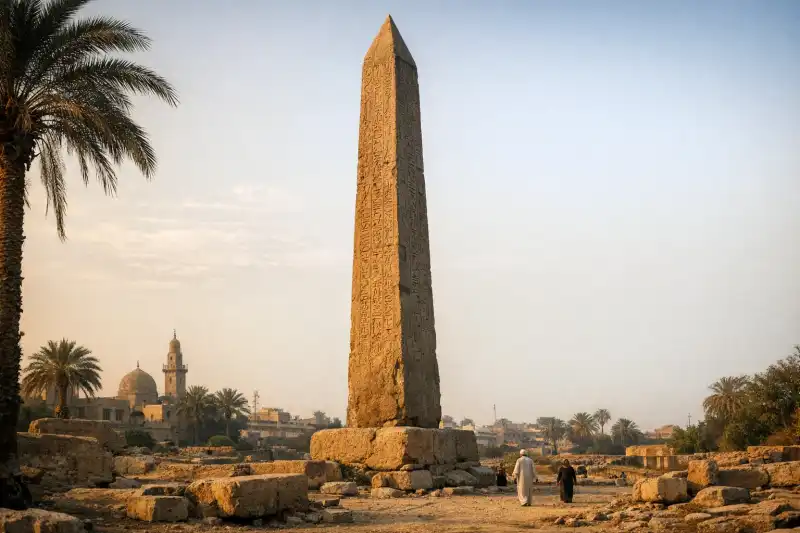
Arrive in Cairo and resist the urge to begin with a full pyramid day. The city can be loud, traffic-heavy, and slow to decode when you are tired. Use today to settle into your hotel, sort cash, confirm transport for the next two days, and adjust your expectations from “map distance” to “Cairo distance.”
If you land early and want one ancient site, consider the Obelisk of Heliopolis. It is not a big visit, but it is a good first clue that ancient Egypt is buried inside the modern city, not neatly separated from it. Heliopolis was once a major solar cult center, and the surviving obelisk of Senusret I points back to Middle Kingdom royal religion long before the New Kingdom temples that dominate the southern part of this route.
Keep the day modest. A museum visit can work if your flight arrives early, but do not pretend you will absorb labels clearly after long-haul travel. The better move is to be ready for Giza in the morning. Confirm whether you are staying in central Cairo, Zamalek, or Giza, then plan departure time around traffic rather than optimism.
Day 2: Giza Plateau and the Sphinx
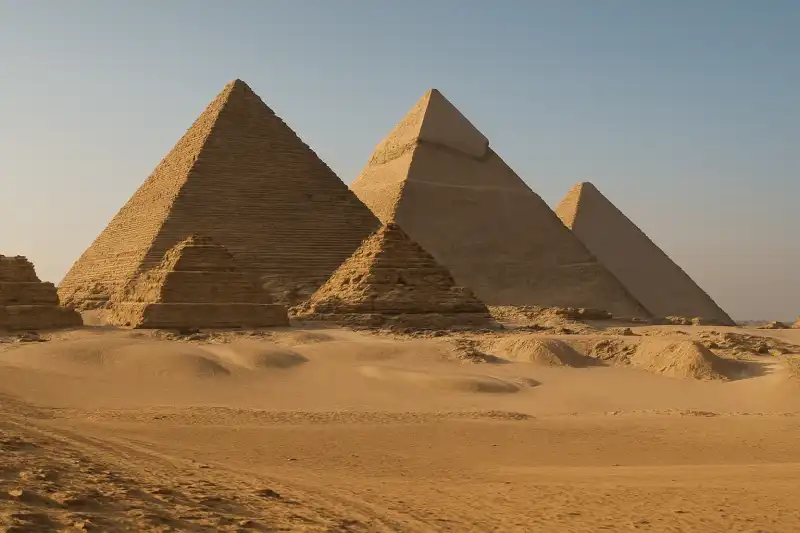
Start early at the Pyramids of Giza. The Great Pyramid of Khufu dates to the 26th century BCE, and its scale can make the rest of the plateau feel like background scenery if you rush. Slow down enough to notice the causeways, smaller pyramids, tomb fields, and the way the plateau was organized as a royal landscape, not just a set of monuments.
The Great Sphinx of Giza deserves its own time. It was carved from the limestone bedrock of the plateau, which is why the body and quarry setting feel tied together. The Sphinx is famous, but the best part is not the standard photo. It is realizing how the statue, temples, pyramids, and stone extraction all belong to the same engineered desert edge.
Use a taxi, rideshare, private driver, or guide today. Independent visiting is possible, but a good guide can help with pacing and site geography. If you want to enter one pyramid, build in extra time and do not treat it as a casual add-on. Interior pyramid visits are hot, cramped, and memorable in a very physical way.
Do not stack Saqqara onto this day unless you are compressing the route by choice. Giza works better when it has room. Return to your Cairo base before traffic gets too punishing, and save your energy for the longer southern pyramid day.
Day 3: Saqqara, Memphis, and Dahshur
This is the day to hire a driver or book a guided route. The distances south of Cairo are manageable by car but awkward to improvise. A Cairo day tour to Giza, Saqqara, Memphis, and Dahshur can be useful here, especially if you want one driver and a guide who can connect the pyramid sequence without making you negotiate each move separately.
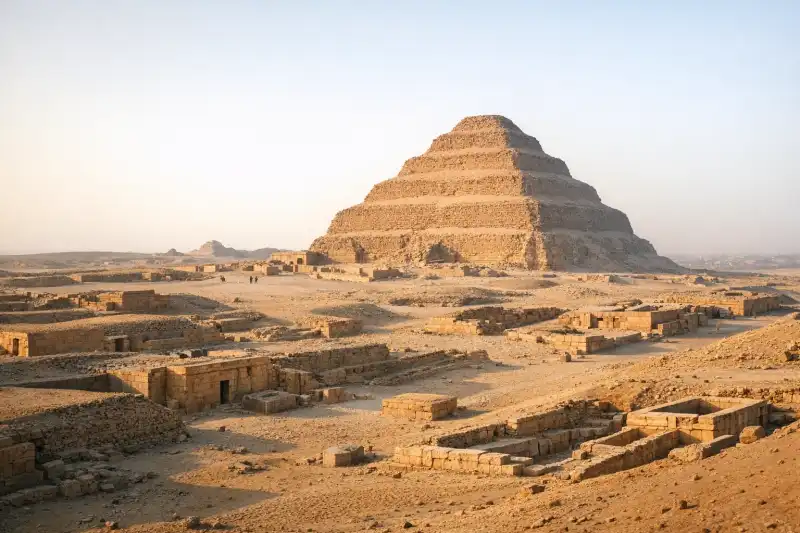
Begin at Saqqara Necropolis, where royal ambition gets wonderfully experimental. The Step Pyramid of Djoser began as a mastaba and became a stacked stone monument in the 27th century BCE. Later Egyptians remembered Imhotep, the official linked with the complex, as a figure of unusual wisdom. That afterlife of reputation tells you something about how strange and admired the project became.
If open, add the Serapeum of Saqqara. The underground galleries and massive stone sarcophagi for sacred Apis bulls feel very different from the bright pyramid precinct. Saqqara is not one neat chapter of Egyptian history. It is a long-used burial landscape where Old Kingdom, New Kingdom, Late Period, and Ptolemaic religious habits overlap.
Continue through the old Memphis area using Memphis and Dahshur as the practical planning anchor. Memphis was once a royal and administrative center, but the visit today is fragmentary. Treat it as a hinge between the necropolis sites rather than the main event.
End at Dahshur if time and heat allow. The Bent Pyramid shows Sneferu’s builders changing the pyramid angle partway up, probably because the original slope created structural trouble. The Red Pyramid then feels like the problem solved in stone. This is the day when Giza starts to make more historical sense.
Day 4: Fly or train to Luxor, then Karnak
Travel from Cairo to Luxor. A morning flight is the most efficient option. The overnight train can fit the route, but only if you are comfortable arriving with uncertain sleep. Either way, do not plan the day as if transport will be invisible. Get to Luxor, check in, eat something simple, and then decide how much temple time you actually have.
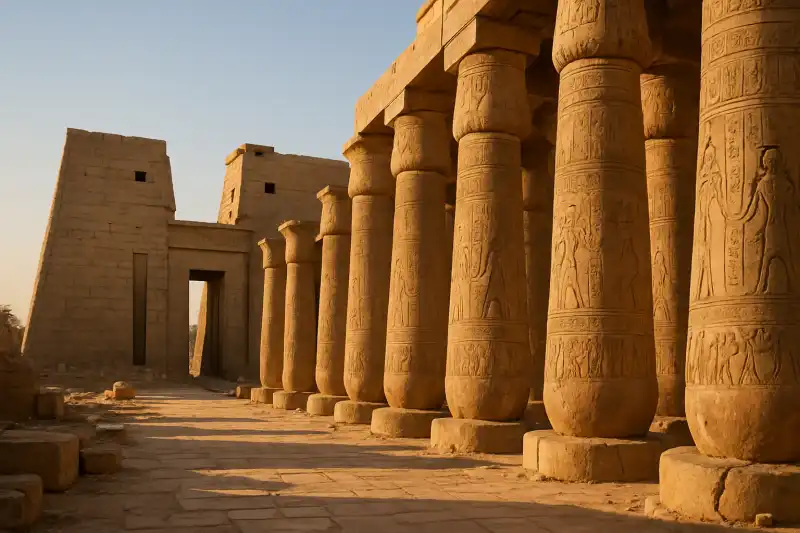
If you arrive with enough energy, go to the Karnak Temple Complex. Karnak is not one temple in the tidy sense. It is a huge sacred zone built, expanded, revised, and claimed by rulers across many centuries. The Hypostyle Hall, associated especially with Seti I and Ramesses II, is famous for good reason, but the site is more interesting when you notice how pharaohs used additions, reliefs, pylons, and obelisks to argue with the past.
The Karnak Open Air Museum is worth adding if it is open and you have time. Reconstructed chapels there help explain how later building projects reused earlier sacred architecture. Egypt’s temples were not frozen objects. They were worked on, altered, dismantled, restored, and politically rebranded.
If your transfer ran late, move Karnak to Day 7 and just walk the Nile Corniche or rest. There is no prize for seeing Karnak while exhausted. Luxor rewards people who can still pay attention.
Day 5: Luxor West Bank tombs and temples
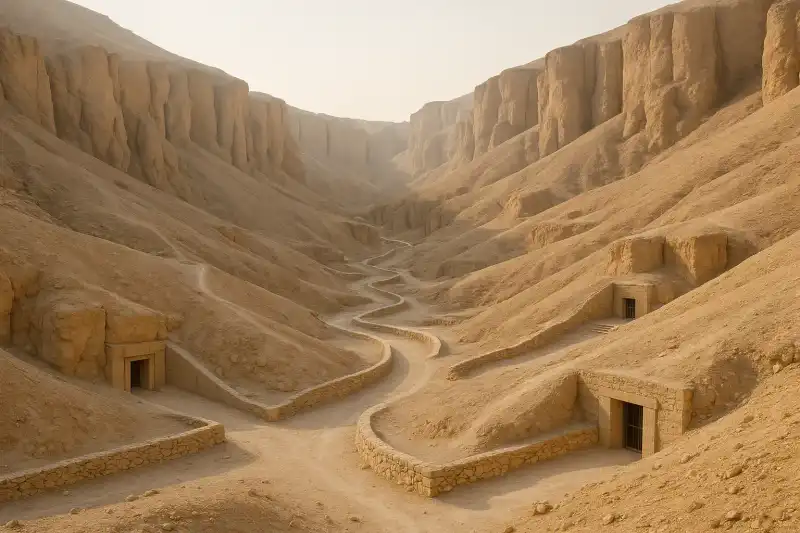
Start before the heat on the West Bank. The Valley of the Kings is one of the places where advance planning really improves the day. Standard tickets usually include a limited number of open tombs, while special tombs cost extra. Tombs rotate for conservation, so pick based on what is open, your budget, and your tolerance for stairs and heat.
The tombs are not only about treasure. Their painted corridors map a royal journey through the underworld, with solar boats, gods, demons, gates, and spells turning death into a highly organized royal problem. The Tomb of Tutankhamun is historically famous because Howard Carter found it largely intact in 1922, not because it is the most decorated tomb in the valley. Go in with that expectation and it becomes more satisfying.
Continue to the Temple of Hatshepsut. Its terraces sit against the cliffs at Deir el-Bahri with a theatrical confidence that still works. Hatshepsut’s reign in the 18th Dynasty used building, trade imagery, divine birth scenes, and royal titles to make a female pharaoh legible inside a male-coded kingship system. The architecture is clean, but the politics were not simple.
Stop at the Colossi of Memnon on the way in or out. These seated statues of Amenhotep III once fronted a huge mortuary temple, most of which is gone. They are quick to visit, but they help fix the West Bank in your mind as a landscape of royal memorial temples, not only tombs cut into cliffs.
Day 6: Abydos and Dendera day trip
This is a long day north from Luxor, and it is worth doing with a private driver or guided tour. A Luxor day trip to Abydos and Dendera solves a real logistics problem because both sites deserve time and the route is not ideal for improvising. Leave early, bring snacks, and expect to return tired.
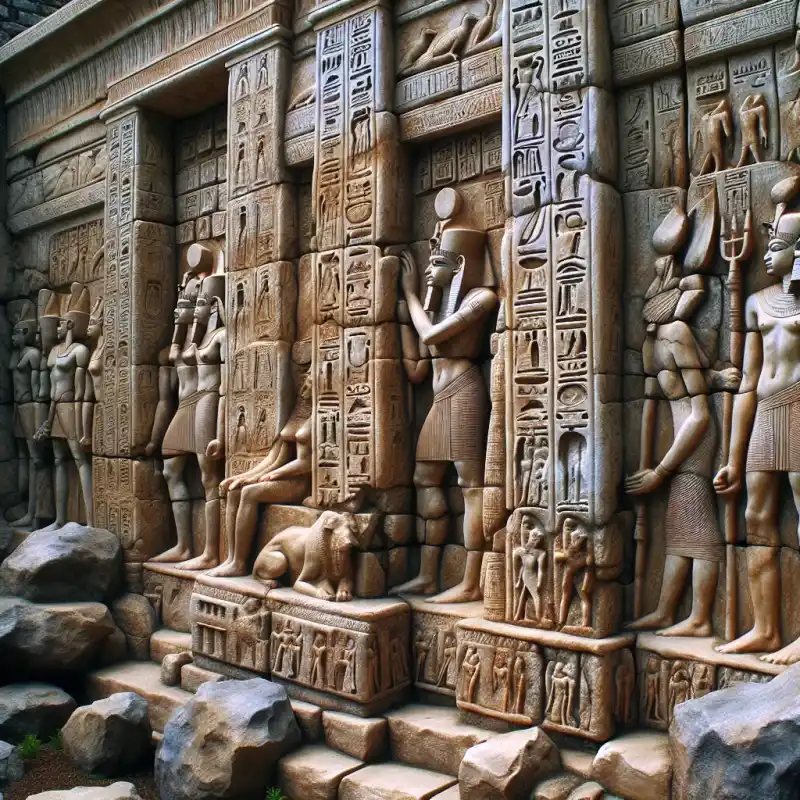
Start with Abydos and the Temple of Seti I at Abydos. Abydos was tied to Osiris and became one of Egypt’s most charged pilgrimage landscapes. The Seti I temple is famous for the Abydos King List, which presents a curated line of earlier rulers. It is not a neutral history chart. It is royal memory arranged for a purpose, with inconvenient or illegitimate rulers left out.
The reliefs at Abydos are often sharper and more elegant than first-time visitors expect. Give them time. This is a good day for people who like their ruins political: kings honoring earlier kings, priests maintaining sacred geography, and Seti I placing himself inside a carefully edited past.
Continue to Dendera and the Dendera Temple Complex. The Temple of Hathor belongs mostly to the Ptolemaic and Roman periods, which means it comes much later than the pyramid and New Kingdom sites earlier in the route. That time shift matters. Egyptian religious architecture did not vanish after the pharaohs most travelers know. It kept adapting under Greek and Roman rule.
Look up at Dendera. The astronomical ceilings, Hathor-headed columns, crypts, and roof spaces if open make the temple feel dense with ritual information. The famous zodiac ceiling now in Paris has a replica at the site, and even that absence tells a story about excavation, removal, and the afterlife of Egyptian monuments in European collections.
Day 7: Luxor recovery day and Luxor Temple
After Abydos and Dendera, build in a lighter Luxor day. This is not wasted time. It is what keeps the 10-day route from becoming a blur. Use the morning for one site you missed or for Medinet Habu, then rest through the hottest part of the day.
Medinet Habu is one of the best West Bank choices if you still have energy. Ramesses III’s mortuary temple preserves large battle reliefs, including scenes connected with the Sea Peoples. The inscriptions are royal propaganda, not neutral reporting, but that is exactly why the site is interesting. You can see a king turning military threat into carved legitimacy.
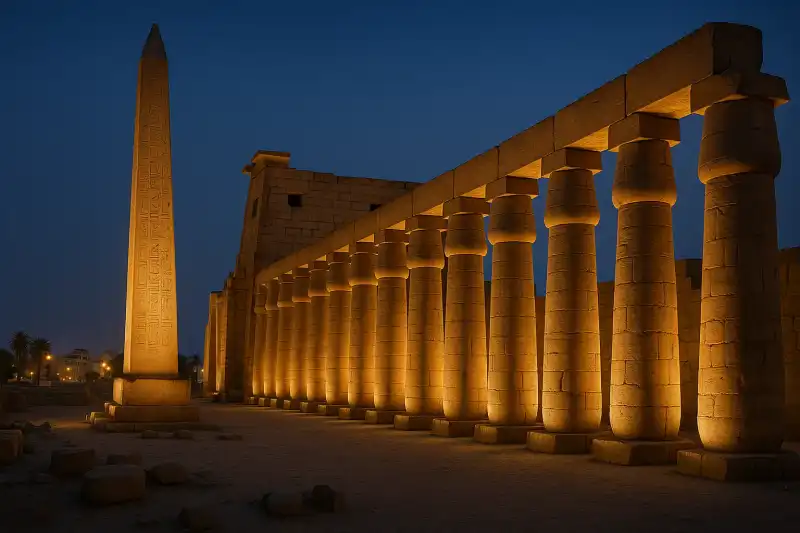
Save Luxor Temple or the closely related Temple of Luxor for late afternoon or evening. Unlike Karnak, Luxor Temple sits in the middle of the modern city, and the transition from street noise to ancient colonnades is part of the experience. Amenhotep III and Ramesses II both shaped the temple, and later Roman and Islamic layers add to the sense that the site stayed in use, reuse, and memory for a very long time.
Do not add five more tombs today just because they are nearby. If you want a specific extra, choose Deir el-Medina or the Ramesseum and cut something else. The route is stronger when Day 7 gives your attention span a chance to recover.
Day 8: Drive the Nile temple road to Aswan
Travel from Luxor to Aswan with stops at Edfu and Kom Ombo. This works well by private car, or as part of a Nile cruise if the schedule fits your style. A Luxor to Aswan transfer with Edfu and Kom Ombo can be the simplest way to turn a travel day into a strong temple day without handling separate transport.
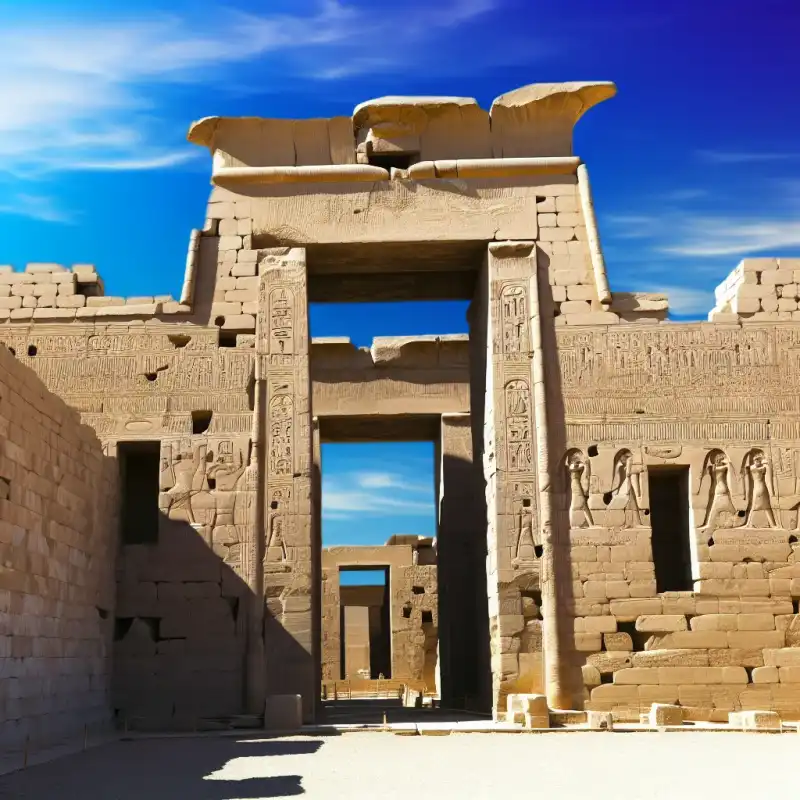
Begin at Edfu and the Temple of Horus at Edfu. Edfu is one of Egypt’s best-preserved Ptolemaic temples, and that preservation can be a little deceptive. It feels ancient in a familiar pharaonic way, but its main construction belongs to the Greek-ruled Ptolemaic period, long after the New Kingdom kings of Luxor. The reliefs retell the conflict between Horus and Seth with a ritual clarity that turns myth into temple choreography.
Continue to Kom Ombo Temple and the Ptolemaic Temple at Kom Ombo. Kom Ombo is unusual because it is a double temple, with paired spaces for Sobek and Haroeris, Horus the Elder. The symmetry is not just decorative. It structures the building around two divine cults sharing one Nile-side platform.
This is a satisfying day, but it is still a transfer day. Keep lunch simple, watch your hydration, and do not expect long, contemplative hours at both sites unless you leave very early. Arrive in Aswan, check in, and stop. The Nile gets quieter here. Let that change in pace do some work.
Day 9: Philae and Elephantine Island
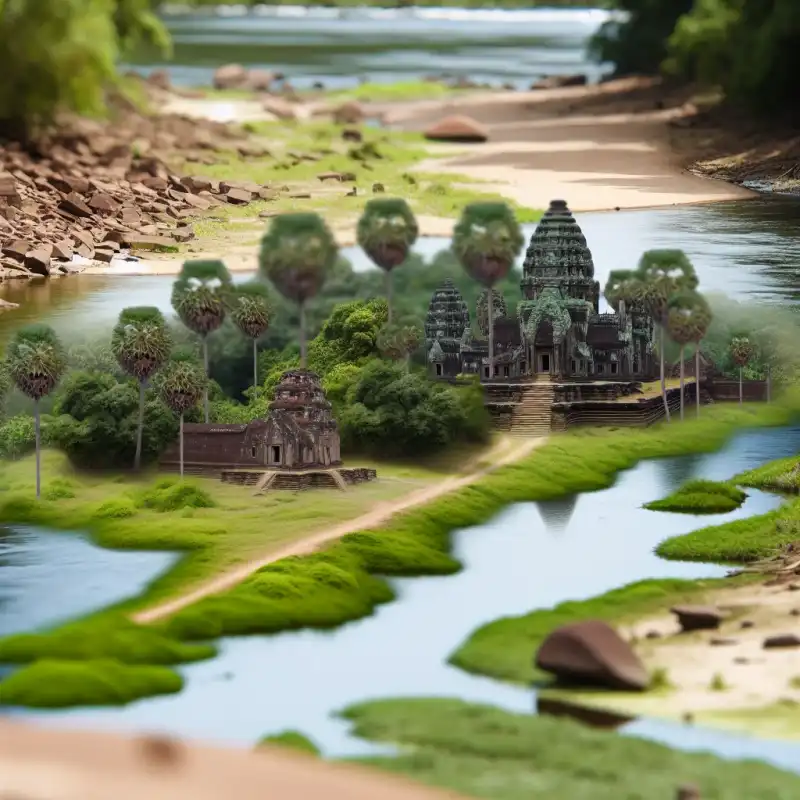
Use Aswan as a slower base today. Start with Philae and the Temple of Isis at Philae. Reaching the temple by boat is part of the visit, but the more interesting story is modern as well as ancient. Philae was moved to Agilkia Island during the UNESCO rescue campaigns connected with the Aswan High Dam, after rising water threatened Nubian and ancient sites.
The cult of Isis at Philae lasted remarkably late, and the temple’s inscriptions and reliefs show Egyptian religion still active in the Greco-Roman world. That makes Philae a good companion to Dendera, Edfu, and Kom Ombo. By now, the route has moved far beyond the Old Kingdom pyramid story and into a much longer survival of Egyptian sacred forms.
In the afternoon, visit Elephantine Island and the Temple of Khnum area if conditions allow. Elephantine was tied to Nile flood measurement, frontier trade, and local cult life. It is less immediately spectacular than Abu Simbel or Karnak, but it helps explain why Aswan mattered: granite, river traffic, Nubian connections, and control of movement through Egypt’s southern edge.
Keep this day lighter because tomorrow starts brutally early if you go to Abu Simbel by road. If you want another Aswan site, choose the Tombs of Aswan and cut something else. Do not turn the rest day into a second West Bank marathon.
Day 10: Abu Simbel and the Lake Nasser edge
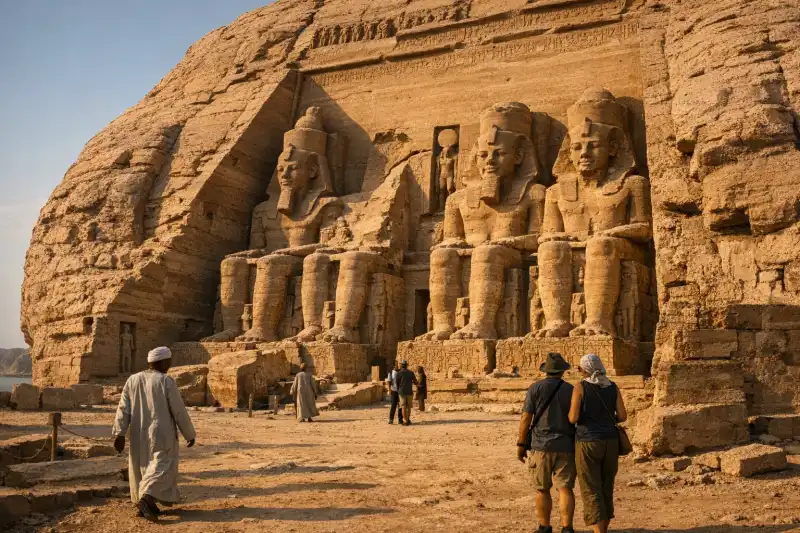
Leave very early for Abu Simbel unless you fly. By road, the day is long and starts before dawn, but the historical payoff is real. A day trip to Abu Simbel from Aswan is often the easiest way to handle the timing, permits, and return logistics without fuss.
The Great Temple was cut into the rock for Ramesses II in the 13th century BCE, with colossal seated statues facing outward toward Nubia. This is not subtle architecture. It is kingship scaled for a frontier zone, where Egypt projected power southward through image, inscription, and stone. The smaller temple, dedicated to Hathor and Queen Nefertari, is also part of that political message. Nefertari’s statues appear at a scale unusually close to the king’s, which is worth noticing.
Abu Simbel also has a modern preservation story. Like Philae, it was relocated during the Nubian monument rescue campaigns linked to Lake Nasser and the Aswan High Dam. The temples feel immovable when you stand before them, yet their current position is the result of 20th-century engineering. Ancient ambition and modern salvage sit together here.
If you have energy after returning to Aswan, keep any final visit small. Temple of Kalabsha can be a good add-on with an extra Aswan night, but it is too much for most travelers after Abu Simbel by road. End quietly. This route has already covered a lot of stone, sand, river, and royal self-belief.
The historical thread: from pyramid fields to frontier temples
This route works because it follows ancient Egypt across time as well as geography. Cairo and Giza introduce Old Kingdom royal power through pyramid landscapes, where kings used stone, desert edges, and burial complexes to make authority visible. Saqqara and Dahshur show that this form did not appear fully solved. It was tested, adjusted, and argued into shape.
Luxor changes the grammar. Instead of pyramids, the route turns to temple cities, hidden royal tombs, processional avenues, and mortuary temples tied to New Kingdom Thebes. The Valley of the Kings makes royal death secretive and text-heavy. Karnak and Luxor Temple make divine kingship public, architectural, and constantly revised.
Abydos and Dendera add another layer: sacred memory and religious endurance. Abydos looks backward through the cult of Osiris and the edited royal past. Dendera, Edfu, Kom Ombo, and Philae show Egyptian temple culture still alive under Ptolemaic and Roman rule. Abu Simbel ends the route at the southern edge, where Ramesses II made power colossal and modern engineers later had to move that power block by block.
Transportation notes
For most travelers, the simplest route is Cairo to Luxor by flight, Luxor to Aswan by private car with Edfu and Kom Ombo stops, and Aswan to Abu Simbel by road tour or flight. The train between Cairo and Luxor can work, but it should not be treated as guaranteed rest. If sleep matters to you, fly.
Do not self-drive this itinerary unless you already know Egypt well and are comfortable with local driving conditions, checkpoints, desert roads, and city traffic. Private drivers are widely used for exactly the kinds of days this route requires: Saqqara and Dahshur, Abydos and Dendera, Luxor West Bank, and the Luxor to Aswan temple road.
A Nile cruise can replace part of the overland middle section. It may make Edfu and Kom Ombo easier, and it gives the journey a slower river rhythm. The tradeoff is control. Cruise schedules can shorten site time or bunch visits with other groups. If your priority is ancient sites over cruise comfort, compare itineraries carefully.
Avoid compressing this route below 10 days unless you remove whole sections. The most sensible cuts are Abu Simbel, Abydos and Dendera, or the Cairo southern pyramid day. The worst version is keeping every site and stealing time from sleep. That turns a strong route into an endurance test.
Optional add-ons and swaps
For an extra Cairo day, add the Alexandria Catacombs as a long day trip or overnight. This shifts the story toward Greco-Roman Egypt and funerary mixing in Alexandria. To make room inside 10 days, remove Abydos and Dendera or cut the Luxor recovery day, though I would rather add a day than steal that recovery.
For a Delta-focused swap, consider Tanis and the Tombs of the Kings of Tanis. This is more specialized and less smooth for a first Egypt route. It works best for travelers interested in later royal burials and reused monuments. Swap it for Day 3 only if you have already seen Saqqara and Dahshur before.
For Middle Egypt, Amarna can be added only with careful planning and extra time. Akhenaten’s short-lived capital is historically fascinating, but it does not fit neatly into this Cairo to Abu Simbel route without adding a hard travel day. Remove Abu Simbel or add at least two days if Amarna is a priority.
Around Aswan, Temple of Kalabsha and the Tombs of Aswan are good additions with one more night. Kalabsha pairs well with the relocated monument story at Philae and Abu Simbel. The tombs add local elite and frontier context. Do not squeeze both into Day 10 after Abu Simbel unless you enjoy making ancient sites feel like errands.
Shorter and longer itinerary options
For a compact Cairo-only version, use 3 Days in Cairo, Giza, Saqqara, and Dahshur. It keeps the focus on Old Kingdom pyramid landscapes and avoids the Cairo to Luxor transfer.
For a first trip with less strain, 5 Days in Ancient Egypt: Cairo and Luxor is the cleaner choice. It gives you Giza, Saqqara, Karnak, Luxor Temple, and the West Bank without the southern Nile temple road.
For a strong middle route, Ancient Egypt 7-Day Itinerary: Cairo, Luxor, Edfu, Kom Ombo, and Aswan keeps the Cairo to Aswan arc but usually skips Abydos, Dendera, and Abu Simbel. That version is better if you have limited vacation time or want fewer very early mornings.
If you have 12 to 14 days, keep this 10-day structure and add one night in Cairo, one night in Luxor, and one night in Aswan. That lets you add Alexandria, Deir el-Medina or the Ramesseum, and Kalabsha or the Tombs of Aswan without damaging the pace.
Related ancient sites
- Pyramid of Unas
- Temple of Ptah at Memphis
- Ramesseum
- Deir el-Medina
- Tombs of the Nobles in Luxor
- Valley of the Queens
- Temple of Esna
- Gebel el-Silsila
- Temple of Hathor at Dendera
- Temple of Osiris at Abydos
- Temple of Kalabsha
- Tombs of Aswan
FAQ
The most common planning questions for this route are answered below.