Quick Info
Curated Experiences
Bethany Beyond the Jordan: Baptism Site Tour from Amman
Madaba, Mount Nebo, and Bethany Beyond the Jordan Day Trip
Jordan Baptism Site and Dead Sea Tour
Nestled along the eastern banks of the Jordan River, Bethany Beyond the Jordan stands as one of Jordan’s most revered archaeological and religious destinations. Located in the Balqa Governorate, close to the border with Israel and the Palestinian Territories, this tranquil site exudes both spiritual and historical significance. Though the landscape is serene—a tangle of tamarisk trees, wild reeds, olive groves, and swaying grasses—the stories embedded in this sacred ground ripple through centuries of Christian, Jewish, and Islamic tradition. Bethany Beyond the Jordan, or Al-Maghtas (“the place of baptism”), is widely recognized as the traditional site of Jesus’ baptism by John the Baptist—a pivotal event in Christian theology. Today, it is a UNESCO World Heritage Site, attracting pilgrims and history enthusiasts alike, and is one of the rarest places where faith, archaeology, and the timeless scenery of the Holy Land converge.
Visiting Bethany Beyond the Jordan is not merely a lesson in ancient history; it’s a journey that evokes a sense of almost palpable reverence. The air carries the gentle fragrance of oleander and the subtle salinity of the river, which flows quietly only meters away from the reconstructed trails and ancient ruins. As you walk along shaded wooden paths and pause beneath Roman-period stone arches, the hushed ambience invites contemplation, while the presence of diverse denominations—Greek Orthodox, Roman Catholic, Armenian, and more—attests to its universal appeal. Whether you arrive as a pilgrim seeking spiritual connection or as a traveler intrigued by archaeology and the crossroads of civilizations, Bethany Beyond the Jordan offers a rare glimpse into a living landscape where stories of prophets and empires are layered upon the rushing waters of the sacred river.
History
Ancient Beginnings: Biblical Roots and Beyond
The earliest traces of settlement and activity at Bethany Beyond the Jordan date back to the Early Bronze Age (circa 3500 BCE), though it was the site’s connection to key biblical events that would give it enduring significance. According to the Gospels, it was here, “across the Jordan,” that John the Baptist preached repentance and baptized followers, including Jesus of Nazareth. This moment, described in all four canonical Gospels, marks the beginning of Jesus’ public ministry and remains a defining event for Christian theology—ushering in the concept of baptism as spiritual rebirth. Archaeological finds, corroborated by ancient literary sources such as the works of the Byzantine-era pilgrim Egeria (circa 380 CE), indicate that Bethany Beyond the Jordan was revered by Christians from the earliest days of the faith.
By the 3rd and 4th centuries CE, pilgrims from across the Roman and Byzantine Empires would make perilous journeys to the Jordan River, seeking to witness and experience the sacred waters themselves. Early Christian communities constructed chapels, monasteries, and baptismal pools near the riverbanks, cementing the site’s status as a global center of pilgrimage. Remnants of Roman and Byzantine structures—such as church mosaics, column bases, and walls—still dot the area around Tell al-Kharrar (Elijah’s Hill) and the river itself, chronicling centuries of reverence, conquest, and reconstruction.
Medieval to Early Modern Era
The significance of Bethany Beyond the Jordan was not lost on later generations. Jewish, Christian, and Islamic traditions all reference the area—known variously as Bethabara (from the Hebrew for “crossing place”) and Al-Maghtas (“baptism” in Arabic). For the Jewish people, the Jordan River has long signified a border of promise and passage, most famously when the Israelites, led by Joshua, crossed its waters into Canaan. In the centuries following the Islamic conquest of the Levant in the 7th century CE, the site retained its prominence; Muslim visitors venerated the river and its prophetic histories alongside Christian and Jewish pilgrims. Under Mamluk and Ottoman rule, the site remained a locus of religious rituals, especially during the annual feast of Epiphany, when processions would wade into the river to re-enact the baptismal rite.
However, geopolitical upheavals, such as the Crusades and subsequently the shifting boundaries between the Ottoman and British Mandate territories, intermittently reduced accessibility. Bridges were built, destroyed, and rebuilt. Monasteries were abandoned and then revived. The river’s own shifting course sometimes submerged or uncovered archaeological remains. Yet even as empires rose and fell along its banks, the tradition of pilgrimage endured.
Modern Rediscovery and Preservation
During the late 20th century, Bethany Beyond the Jordan was cut off from most visitors due to its position inside a sensitive military zone near the Jordan-Israel border. Only after the 1994 peace treaty between Jordan and Israel did archaeologists gain safe access to the site. Major excavations, led by international teams, uncovered an astonishing array of ancient churches, baptismal pools, wells, pottery, and even a causeway believed to have been used by early pilgrims. The work validated centuries of oral and religious tradition and informed the modern restoration of the site.
In 2015, UNESCO declared Bethany Beyond the Jordan a World Heritage Site, underscoring its unparalleled religious significance, the diversity of its historical layers, and the integrity of its preserved ruins. Today, careful management ensures that modern development is minimal, and the sanctity and authenticity of the site are protected for generations of visitors—secular tourists, believers, and those curious about the crossroads of faith and history.
Key Features
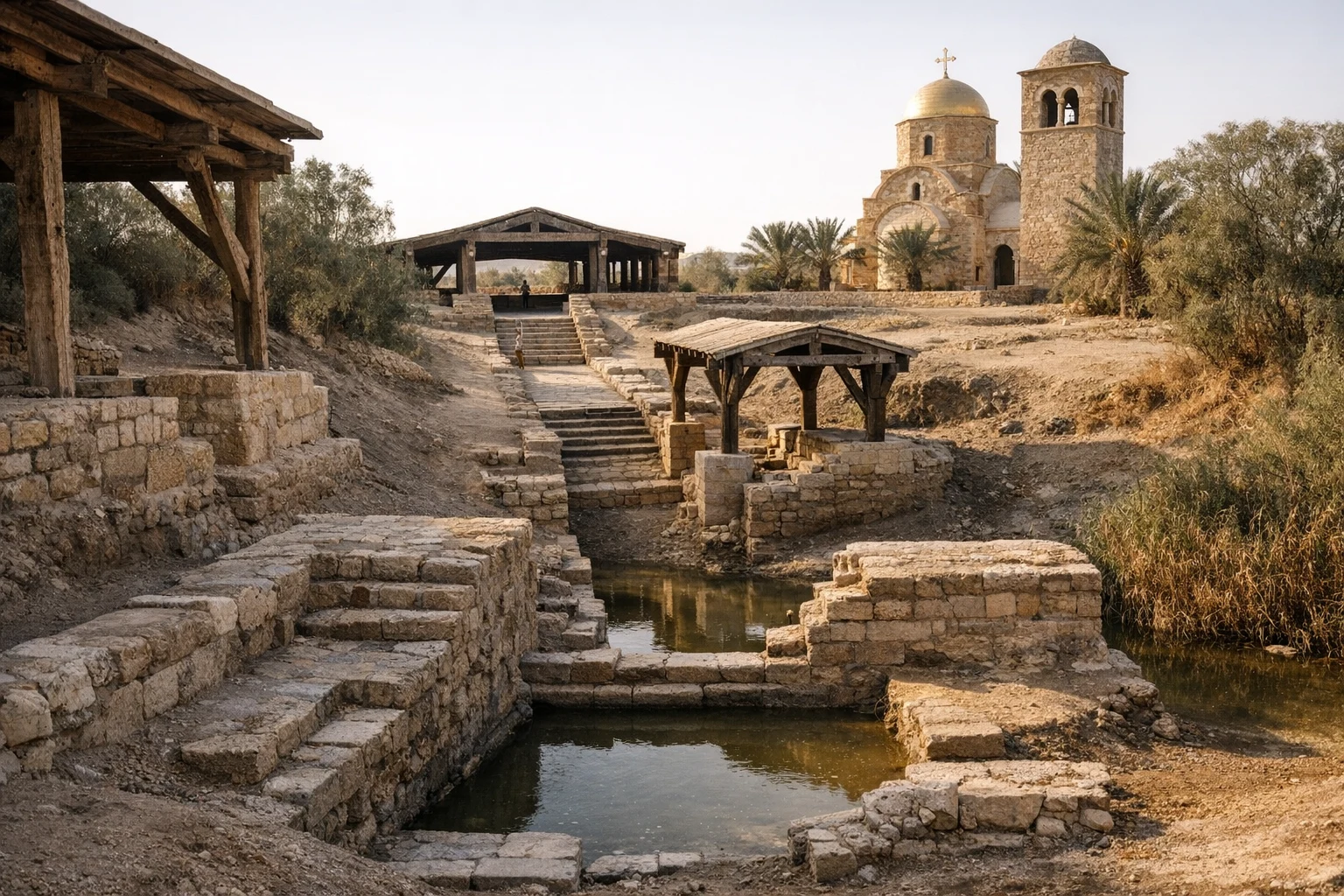
The spiritual heart of Bethany Beyond the Jordan lies along a gentle bend in the river, flanked by indigenous trees, reedy shallows, and the muted remnants of ancient churches and baptismal sites. Upon entering via the modern visitor center, guests join a guided tour—compulsory due to the sensitivity of the site—which leads along marked paths towards a landscape where ancient and modern faith intertwine.
One of the first major stops is Elijah’s Hill (Tell al-Kharrar), a low mound believed to be linked to the prophet Elijah’s dramatic ascension to heaven, as recorded in the Old Testament. The knoll offers sweeping views across the river valley and toward the hills of the West Bank, adding a tangible sense of biblical geography to the experience. Ruins at the base and slopes of the hill include the remains of Byzantine-era chapels and monastic complexes, their stonework worn smooth by centuries of wind, water, and prayer.
Descending from the hill, visitors follow shaded trails toward the main baptismal area. The site’s archaeological heart comprises the ruins of several ancient baptismal pools and church foundations, including the “Church of John the Baptist.” Archaeologists uncovered the elaborate foundations of these early churches, some of which were open-air monuments constructed directly above the river’s presumed ancient course. Carefully preserved mosaic flooring, eroded altar stones, and deep, stone-cut steps descend into now-dry pools, where pilgrims once submerged themselves in the sacred water.
A recently built Greek Orthodox Church, with its brilliant golden dome and richly iconographed interior, sits dramatically at the river’s eastern edge. Together with several smaller chapels serving different Christian denominations, it serves today’s diverse pilgrims amid a setting infused with timeless ritual. During the feast of Epiphany (January 6th), the site comes alive with processions, baptisms, and prayers, echoing the ancient rites that have drawn believers here for millennia.
The nearby Jordan River remains a focal point for modern visitors. While its waters are narrower and more reduced now than in antiquity, the sense of sacred encounter persists. Platforms installed along the muddy banks allow pilgrims and tourists alike a safe place from which to contemplate or participate in baptismal rites, a practice observed by Christian denominations from around the world. On quiet days, the only sounds are the call of birds, the gentle flow of water, and the distant echoes of prayers offered by a continuous stream of international visitors.
What distinguishes Bethany Beyond the Jordan from many other holy sites is its blend of spiritual tranquility, unspoiled natural beauty, and authentic archaeological remains. The landscape evokes both the legendary drama of the biblical narrative and the peaceful persistence of faith across centuries, making it a unique testament to humanity’s enduring quest for meaning.
Getting There
Bethany Beyond the Jordan’s remote riverside location—about 50 kilometers (31 miles) west of Amman, the Jordanian capital—means transportation planning is essential. The site is not directly served by public transport, which preserves its tranquility but requires visitors to make advance arrangements.
From Amman, the most convenient option is to book a private taxi or join an organized tour. Taxi fares from Amman typically range from 20 to 30 Jordanian dinars (JOD) each way, depending on negotiation and traffic conditions; round-trips including waiting time are commonly arranged for around 50–60 JOD total. Many local tour operators offer half-day or full-day excursions that bundle Bethany Beyond the Jordan with nearby highlights such as Mount Nebo, the Dead Sea, and Madaba. These tours, booked through reputable agencies or platforms like Viator, usually cost between 40 and 80 JOD per person and often include pick-up, transportation, entrance fees, and guiding—making them a stress-free choice for visitors unfamiliar with the area.
Rental cars provide another flexible option, allowing travelers to combine Bethany Beyond the Jordan with other landmarks at their own pace. Major international car rental firms operate out of Amman’s Queen Alia International Airport and city centers; daily rates typically range from 25–45 JOD. The drive follows modern highways (Highway 40 and the Dead Sea Highway) and is well signposted in English and Arabic. The journey takes approximately 45–60 minutes, depending on starting point and traffic.
Visitors entering from the Dead Sea resorts—just a 25-minute drive away—can also reach the site by taxi. Public buses in the Jordan Valley do not stop at the baptism site due to its protected status, so independent travelers should not rely on bus schedules. Upon arrival, all visitors must register and purchase tickets at the official visitor center, where shuttles and guides provide onward transportation to the archaeological zones.
When to Visit
The climate at Bethany Beyond the Jordan is subtropical, marked by scorching summers, mild winters, and relatively low rainfall. As such, timing your visit can greatly enhance your comfort and experience. The most popular—and spiritually significant—period is around the Christian feast of Epiphany on January 6th, when thousands of pilgrims and clergy, from across the Orthodox and Catholic traditions, descend on the site for processions, liturgies, and open-air baptisms. The atmosphere during this festival is vibrant and celebratory, but expect extensive crowds, security, and longer waiting times.
For quieter visits, the months between October and April are ideal. During autumn and early spring, daytime temperatures range from 18°C to 24°C (64–75°F), while nights are cool and breezy—leaving the trails, churches, and riverbanks tranquil and easy to explore. The landscape is especially lush after winter rains, with wildflowers and grasses brightening the paths around Elijah’s Hill and the ancient ruins.
The summer months (May–September) can be extremely hot, with daytime highs regularly exceeding 35°C (95°F) and intense sunlight reflecting off sandstone and river water alike. If you must visit during this period, plan for an early morning or late afternoon trip, bring plenty of water, and use sun protection. The site provides shaded rest stops and benches along most walking trails, but there is little shelter from the midday sun.
Rain is infrequent but typically falls between November and March. The site’s gravel trails handle wet weather well, but surfaces can be slippery, so comfortable, sturdy shoes are always recommended. Owing to the site’s ongoing preservation efforts and religious importance, visitors should check ahead for modified hours or closures around major religious holidays or events.
| Quick Facts | Details |
|---|---|
| Location | Balqa Governorate, Jordan, east bank of the Jordan River |
| UNESCO World Heritage Site since | 2015 |
| Key Religious Significance | Traditional site of Jesus’ baptism by John the Baptist |
| Visiting Hours | 8:00 AM – 6:00 PM (summer), 8:00 AM – 4:00 PM (winter) |
| Entrance Fee | 12 Jordanian Dinar (about $17 USD) incl. guided tour |
| Required Guide | Yes, guided tours included with ticket |
| Main Faith Traditions Visited By | Christian (all denominations), Islamic, Jewish |
| Closest Major City | Amman (50 km / 31 mi) |
| Best Visiting Season | October to April |
| Facilities | Visitor center, souvenir shop, restrooms, shuttle bus |
| Combined Tours Available | Yes (e.g., Dead Sea, Mount Nebo, Madaba) |
| Nearby Attractions | Mount Nebo, Dead Sea, Madaba, Amman Citadel, Jerash |
| Dress Code | Modest dress required for all visitors |
| Access to River | Yes—platforms for viewing, prayer, or baptismal rites |
| Accessibility | Wheelchair-accessible visitor center & main paths |
Frequently Asked Questions
Do I need a ticket to enter Bethany Beyond the Jordan?
Yes, all visitors need to purchase an entry ticket at the visitor center. Guided tours are included with your ticket.
Is Bethany Beyond the Jordan accessible by public transport?
No direct public transport. Most visitors hire a taxi from Amman or book a tour, as the site is remote.
What should I wear when visiting the baptism site?
Dress modestly, covering shoulders and knees, as the site holds deep religious significance. Bring a hat and sunscreen.
Can I swim or be baptized in the river at the site?
Visitors may access the riverbank and participate in baptismal rites with appropriate arrangements. Swimming is generally not allowed.
How long does a typical visit to Bethany Beyond the Jordan take?
A standard guided visit takes about 1.5–2 hours, including time at the archaeological sites and riverbanks.
Nearby Ancient Sites
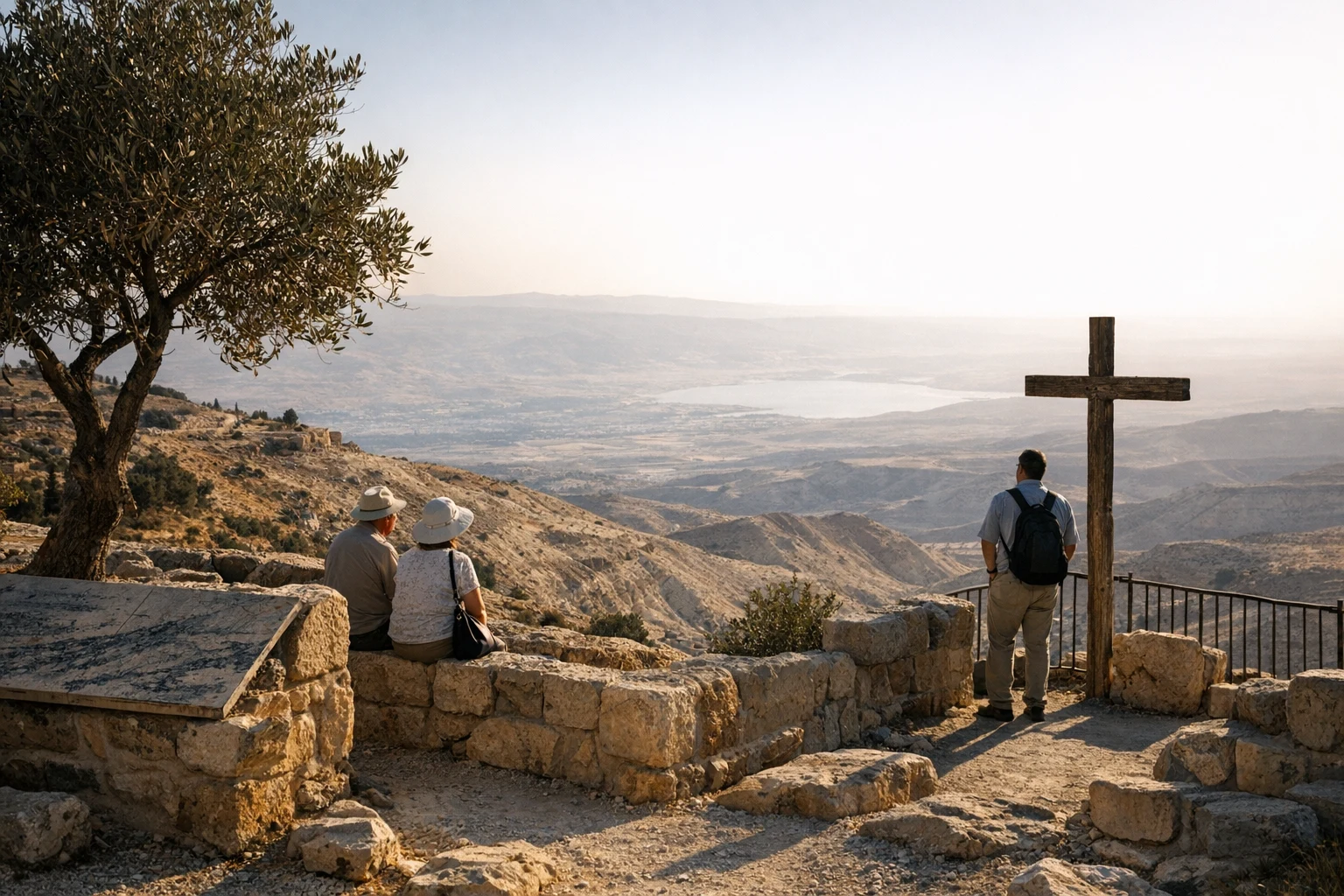
Mount Nebo
Mount Nebo in Jordan offers sweeping views of the Holy Land, biblical significance, and ancient ruin...
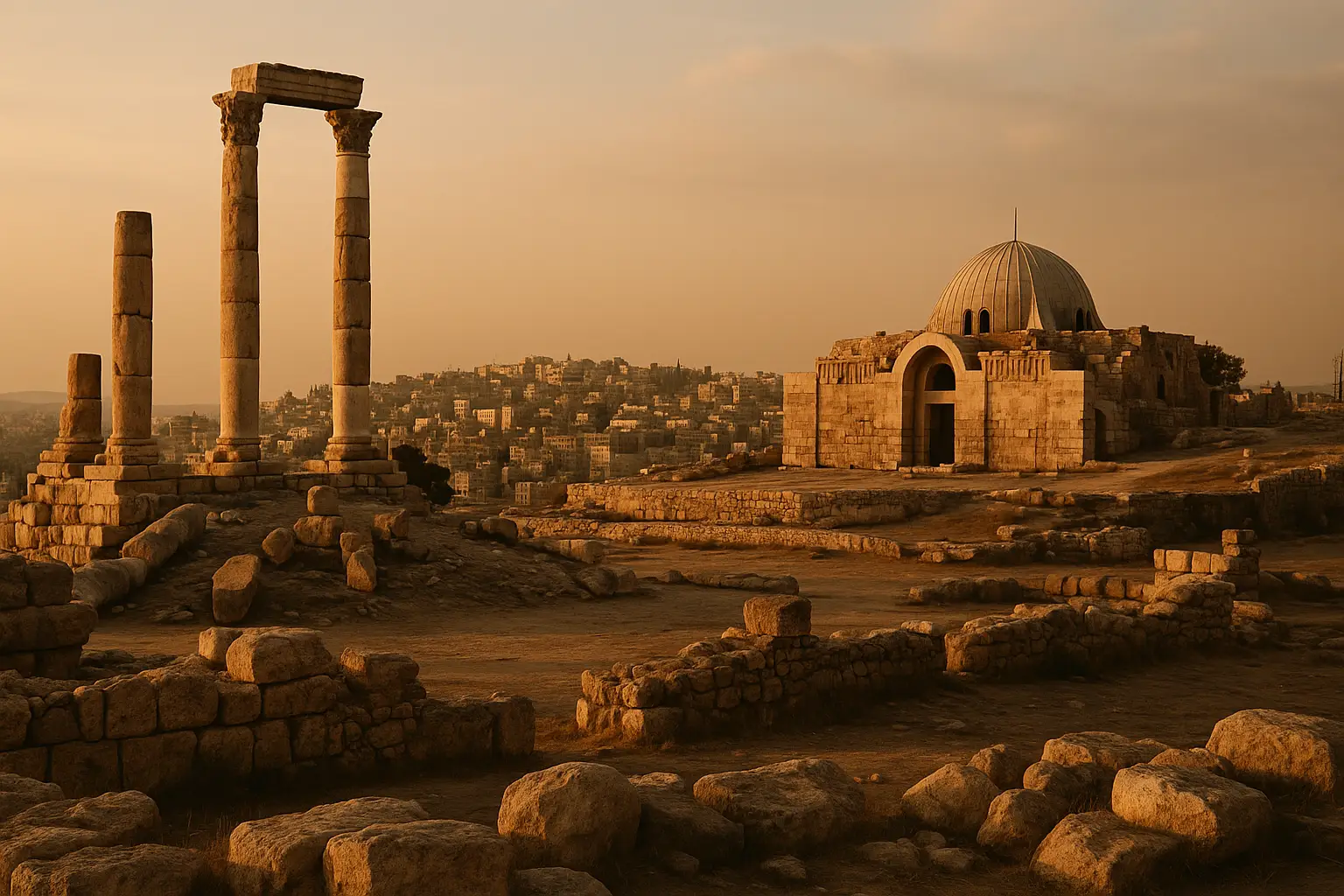
Amman Citadel Jordan Guide 2026: Temple of Hercules & Ancient Rabbah
Ammonite-Roman-UmayyadExplore Jordan's ancient citadel overlooking modern Amman. Discover the Temple of Hercules, Umayyad ...
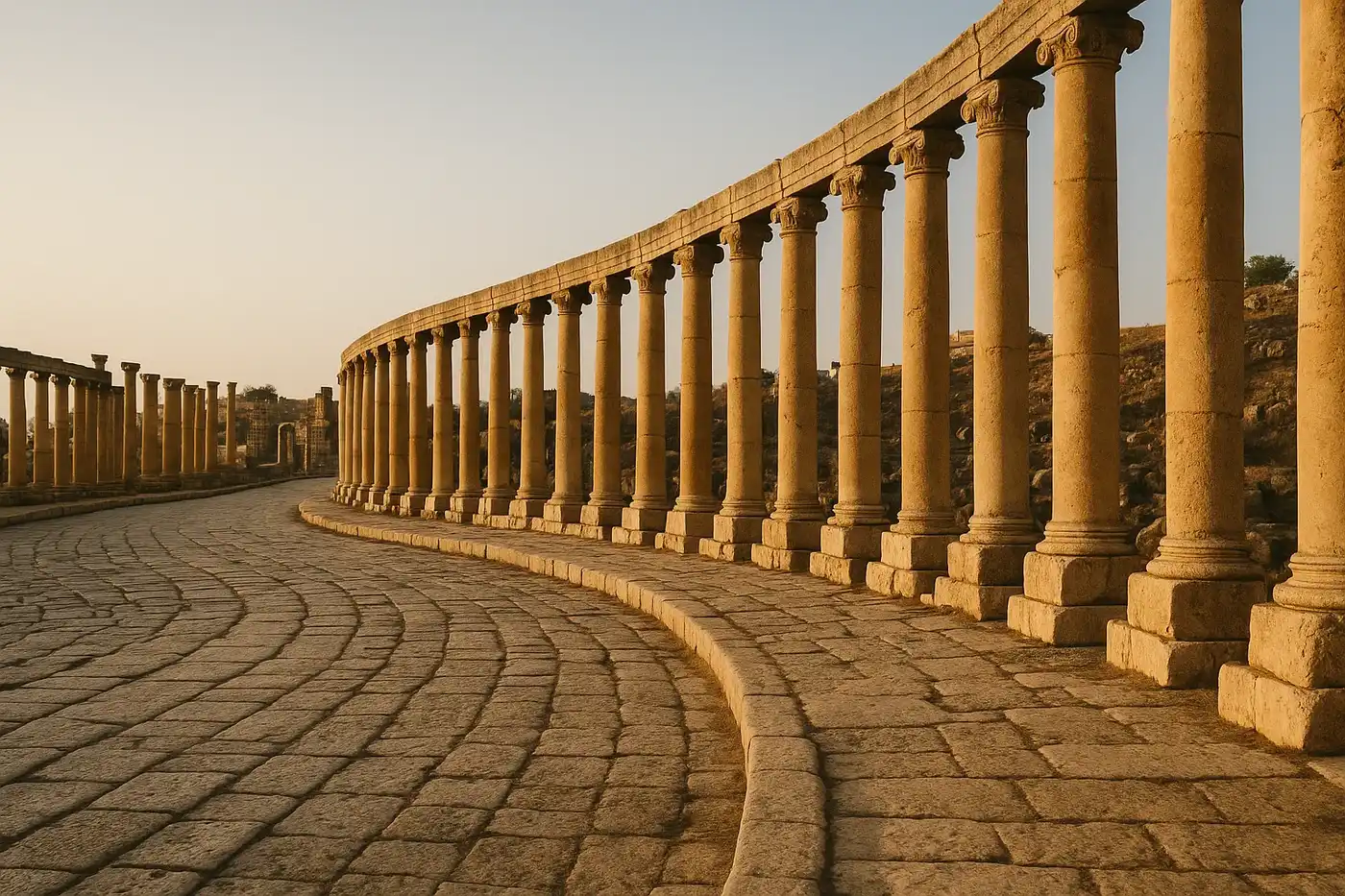
Jerash: The Pompeii of the East and Jordan's Best-Preserved
Roman / NabataeanDiscover Jerash, Jordan's remarkable Roman ruins. Walk the colonnaded streets of ancient Gerasa, exp...