Quick Info
Curated Experiences
Bezeklik Thousand Buddha Caves Day Tour from Turpan
Private Turpan Heritage Tour Including Bezeklik Caves
Turpan and Flaming Mountains Tour with Bezeklik Thousand Buddha Caves
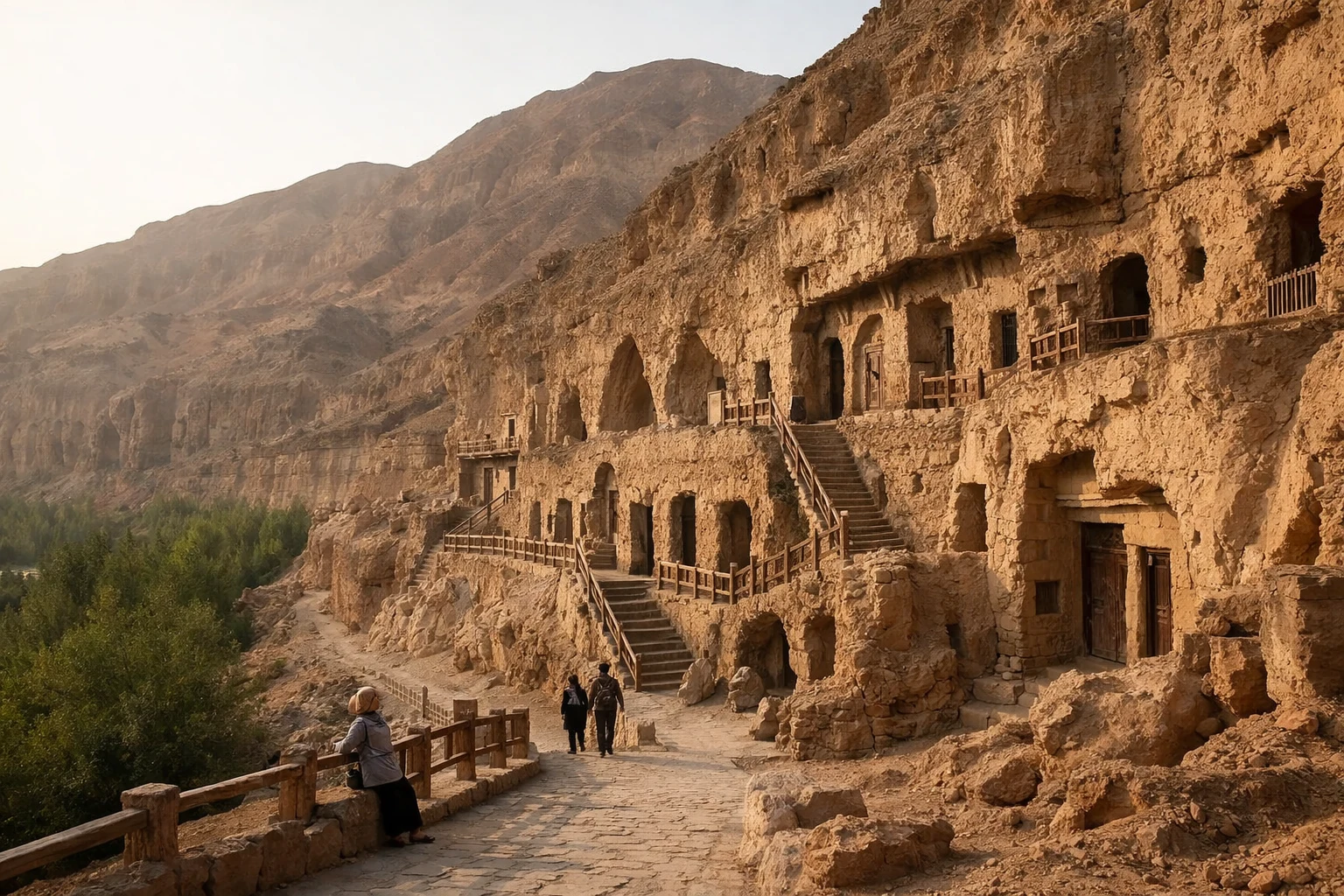
Bezeklik Thousand Buddha Caves in China sit in one of the most dramatic landscapes of the Silk Road, where the ochre and red ridges near Turpan seem almost too harsh to support the delicate traces of mural painting preserved inside cliffside cave temples. The site lies in the Mutou Valley beneath the Flaming Mountains, and arriving there feels like stepping into a place shaped equally by devotion and geology. Wind, heat, and bare rock dominate the first impression. Then the caves appear, cut into the cliff in a sequence of openings that once held one of the great Buddhist mural programs of Central Asia. Even in their damaged condition, the caves still carry an atmosphere of concentration and cultural depth. This was never a remote oddity. It was part of a much larger religious and commercial world stretching across the Silk Road.
What makes Bezeklik so compelling is the contrast between fragility and endurance. Many of the murals were damaged, defaced, or removed long ago, and the site does not present the fully intact painted interiors some visitors may imagine from better-preserved cave complexes elsewhere. Yet this very incompleteness can make Bezeklik more moving. You see traces of color, faces half-preserved, donor figures, patterns, and sacred imagery surviving against extraordinary odds. The caves become an archive of passage: of monks, patrons, traders, translators, imperial influences, and shifting religious communities in a frontier oasis world. For travelers interested in the Silk Road not as a romantic slogan but as a real zone of exchange and transformation, Bezeklik is one of the most revealing places in Xinjiang.
History
Early Buddhist Presence in the Turpan Region
Bezeklik developed in the wider cultural world of the Turpan basin, one of the most important oasis regions on the Silk Road. The area’s significance came from geography. Harsh desert conditions made oases indispensable, and the routes through this part of Central Asia carried merchants, pilgrims, envoys, and ideas between China, Central Asia, India, and beyond. Buddhism moved along those same routes, spreading through translation, patronage, artistic exchange, and monastic settlement. Cave shrines became one of the characteristic architectural forms of this diffusion because they provided durable and symbolically resonant places for worship, meditation, and religious display.
The earliest phases of Bezeklik likely date to around the 5th century CE, though the site developed over many centuries. In this period, the Turpan region was a crossroads rather than a fixed cultural border. Various local kingdoms and ruling groups interacted with broader Buddhist traditions, and the cave temples of Bezeklik emerged within this atmosphere of layered influence. The site was never simply “Chinese” in a narrow sense, nor purely Central Asian in isolation. It belonged to a hybrid Silk Road world where languages, artistic styles, and religious practices overlapped.
Uyghur Patronage and Artistic Flourishing
Bezeklik’s most significant artistic phases are often linked to the period of Uyghur influence in the Turpan region, especially from the 9th century onward after the fall of the Uyghur Khaganate and the establishment of Uyghur kingdoms in the oasis zones of eastern Central Asia. This was a crucial era for the caves. Under Uyghur patronage, Buddhism remained important, and the cave paintings at Bezeklik came to reflect a highly distinctive visual culture shaped by Iranian, Indian, Central Asian, and Chinese influences as well as specifically Uyghur courtly identity.
This is one of the reasons Bezeklik matters so much. The murals are not only religious images. They are records of cultural translation. Donor portraits, clothing styles, iconography, and painting techniques reveal a world where Buddhist devotion was tied to local elites and wider artistic currents alike. The “Thousand Buddha” theme itself, common in Buddhist mural programs, placed the site within a broader sacred visual language while allowing local expression in the details. The caves became, in effect, painted testimony to the Silk Road’s multicultural reality.
Change, Decline, and Damage
The history of Bezeklik is also a history of religious change and vulnerability. Over the centuries, political and religious shifts altered the fate of Buddhist communities in the region. As Islam spread more widely across parts of Central Asia, Buddhist institutions declined in importance, and some sites suffered damage or neglect. Accounts differ in detail, and the exact sequence of iconoclasm, abandonment, and environmental loss can be complex, but it is clear that Bezeklik’s murals did not survive intact. Some paintings were defaced, some deteriorated naturally, and the caves gradually lost the active monastic life that had once sustained them.
In the modern era, another kind of loss occurred. Early foreign expeditions removed mural fragments from several caves, sending them to collections in Europe and elsewhere. This was part of a larger pattern in early Silk Road archaeology, when scholars and explorers often treated fragile sites as sources of collectible objects rather than cultural landscapes requiring intact preservation. At Bezeklik, this history is impossible to ignore. The site’s current appearance is shaped not only by ancient decline and environmental exposure, but also by modern extraction. That complicates the visitor experience in a productive way. You are not just seeing what time left behind. You are seeing what time, conflict, and archaeology together altered.
Modern Preservation and Interpretation
Today, Bezeklik is protected as part of the cultural heritage landscape of the Turpan region and interpreted within the broader story of Silk Road Buddhism. Its survival is significant precisely because it is partial. The remaining caves, murals, and structural traces preserve enough to show what once existed, while also making loss itself part of the historical narrative. Modern conservation must work with that condition rather than pretend it away. The site’s value lies not only in what remains physically visible, but in how those remains connect to the movement of religious art, patronage, and cultural exchange across Inner Asia.
For modern visitors, Bezeklik therefore operates on several levels at once: as a cave-temple complex, as a fragmentary mural archive, and as evidence of a multicultural oasis civilization shaped by both flourishing and rupture. It is one of the most telling places in China for understanding how much of the Silk Road was carried not by goods alone, but by sacred images and layered identities.
Key Features
The first great feature of Bezeklik is its setting. The caves are carved into cliffs in a valley near the Flaming Mountains, and the stark desert environment gives the site an intensity unlike greener Buddhist cave landscapes elsewhere. The surrounding red and ochre rock, the sparse vegetation, and the dry air create a visual world that feels both austere and theatrical. This setting matters because it sharpens the contrast between exterior and interior. Outside is heat, stone, and exposure; inside are traces of painted cosmologies, devotional imagery, and sacred enclosure. The caves feel all the more precious because the landscape around them seems so unforgiving.
The mural remnants are the core of the site’s importance. Even where damage is severe, the surviving figures, patterns, and colors reveal an artistic world of enormous richness. Rows of Buddhas, donor portraits, celestial beings, and decorative motifs once filled many of the cave interiors, transforming them into immersive religious environments. At Bezeklik, these images often preserve the marks of the Silk Road’s cultural crossings: mixed stylistic influences, local elite dress, and iconography shaped by broad Buddhist traditions yet adapted to the Turpan region’s own social and political setting. For careful viewers, even fragments can be eloquent. A surviving face, robe fold, or painted halo can carry the weight of an entire lost program.
Another remarkable feature is the donor imagery associated with Uyghur patronage. Bezeklik is especially important for showing how local ruling and elite groups inserted themselves into Buddhist sacred spaces through mural representation. These portraits are not just historical curiosities. They reveal a social world in which religion, politics, and identity were closely linked. The caves were devotional sites, but they were also places where status, piety, and cultural affiliation could be made visible. This makes Bezeklik invaluable for anyone interested in how Buddhist art functioned within real Silk Road societies rather than as abstract spiritual symbolism alone.
The cave architecture itself is also worth attention. While not every chamber survives equally well, the arrangement of niches, vaulted spaces, painted ceilings, and shrines shows how cave temples structured movement and vision. These were not blank rooms covered in art. They were carefully composed sacred interiors where architecture and painting worked together. Entering one of the caves, even in reduced condition, still carries a sense of threshold: a movement from the vast exposure of the desert cliff into a deliberately enclosed devotional world.
Finally, Bezeklik’s partial preservation is a feature, not just a limitation. The scars of damage, missing mural sections, and visible losses force visitors to confront the history of heritage itself. This is a site that teaches not only about Buddhism and the Silk Road, but about fragility, extraction, and the ethics of preservation. It can be sobering, but it also makes the surviving caves more memorable. They are not sanitized masterpieces. They are survivors.
Getting There
Bezeklik Thousand Buddha Caves are usually visited from Turpan, the main base for exploring this part of Xinjiang. The caves lie east of Turpan in a broader heritage zone that often includes the Flaming Mountains, Gaochang, and other Silk Road sites. By car or organized tour, the journey from central Turpan usually takes around 45 minutes to 1.5 hours depending on route and itinerary. Private drivers and guided tours are the simplest options, especially because many visitors combine several regional attractions in one day.
Taxi or chartered car arrangements are possible through hotels or local operators, and private tours are particularly practical if you want flexibility in pacing and interpretation. Costs vary by season and group size, but the site is generally treated as part of a Turpan excursion rather than a standalone long-haul destination. Some domestic group tours also include Bezeklik on wider Xinjiang circuits. Public transportation is less convenient for most visitors, especially if you are trying to combine multiple desert sites efficiently.
Because Bezeklik is an outdoor site in a dry environment, bring water, sun protection, and sturdy footwear. Entry and access conditions may vary, and some cave areas may have restricted photography or controlled movement for preservation reasons. It is wise to confirm current access if this is a priority stop on your itinerary.
When to Visit
The best time to visit Bezeklik is generally spring or autumn, when temperatures in the Turpan region are more manageable. April to June and September to October are usually the most comfortable windows for combining the caves with other outdoor archaeological sites in the area. During these seasons, the desert light remains dramatic but the heat is less punishing, making it easier to spend time looking carefully rather than simply enduring the climate.
Summer can be extremely hot in Turpan, one of the hottest regions in China. The caves remain visitable, but midday sightseeing can be exhausting and the exposed approach areas can feel harsh. If you travel in summer, go as early as possible, carry more water than you think you need, and plan your day strategically around indoor or shaded stops where available. Winter is quieter and can suit travelers who do not mind a starker atmosphere, but colder conditions and reduced tourist services may make the overall regional trip less straightforward.
Morning and late afternoon are the best times for light and comfort. The cliffs gain stronger definition, and the mood of the valley feels more nuanced than under flat midday sun. Whatever season you choose, Bezeklik is a site best approached with patience. Its rewards come through texture, context, and surviving traces rather than instant spectacle.
| Quick Facts | Details |
|---|---|
| Location | Near Turpan, Xinjiang Uyghur Autonomous Region, China |
| Best Known For | Silk Road Buddhist cave temples and mural remnants |
| Cultural Context | Buddhist oasis culture of the Turpan region |
| Main Artistic Periods | 5th to 14th century CE, especially Uyghur phases |
| Signature Experience | Viewing mural fragments inside desert cliff caves |
| Nearby Base | Turpan |
| Recommended Visit Length | 1 to 2 hours on site, often part of a full regional day tour |
| Best Season | Spring and autumn |
| Main Challenge | Heat, exposure, and the fragmentary condition of surviving murals |
| Practical Tip | Combine Bezeklik with other Turpan heritage stops, but give the caves enough quiet time to appreciate their historical depth |
Frequently Asked Questions
What are the Bezeklik Thousand Buddha Caves best known for?
The Bezeklik Thousand Buddha Caves are best known for their cliffside Buddhist cave temples and the surviving mural fragments that reflect the multicultural Silk Road world of the Turpan region.
Where are the Bezeklik Thousand Buddha Caves located?
They are located near Turpan in Xinjiang, China, in the Mutou Valley between the Flaming Mountains and the ancient Silk Road oasis zone.
Why are many murals at Bezeklik damaged or missing?
Many paintings were damaged over time by conflict, religious change, environmental exposure, and the removal of mural fragments during early expeditions.
How much time should you spend at Bezeklik Thousand Buddha Caves?
Most visitors spend 1 to 2 hours at the caves, usually as part of a broader Turpan day tour that also includes nearby desert and oasis heritage sites.
When is the best time to visit the Bezeklik Thousand Buddha Caves?
Spring and autumn are usually best, when temperatures in the Turpan region are more manageable and outdoor sightseeing is more comfortable.
Are the Bezeklik Thousand Buddha Caves part of the Silk Road heritage landscape?
Yes. The caves are closely tied to the wider Silk Road cultural world and the Buddhist history of the Turpan oasis, even if visitors often experience them through a broader regional itinerary.
Nearby Ancient Sites
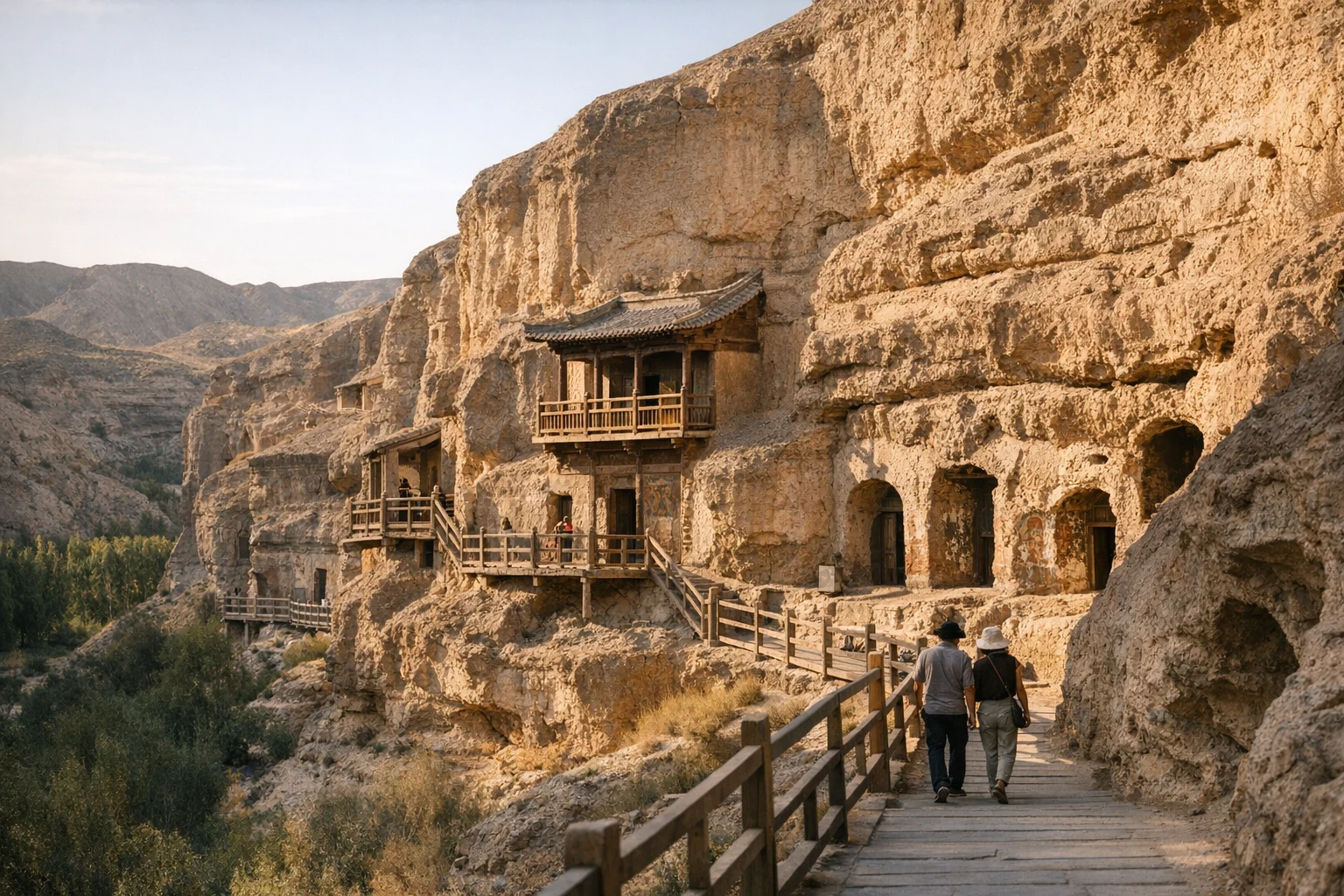
Dunhuang Yulin Caves
Chinese BuddhistExplore China’s Dunhuang Yulin Caves, a remote Silk Road sanctuary of Buddhist murals, sculptures, a...
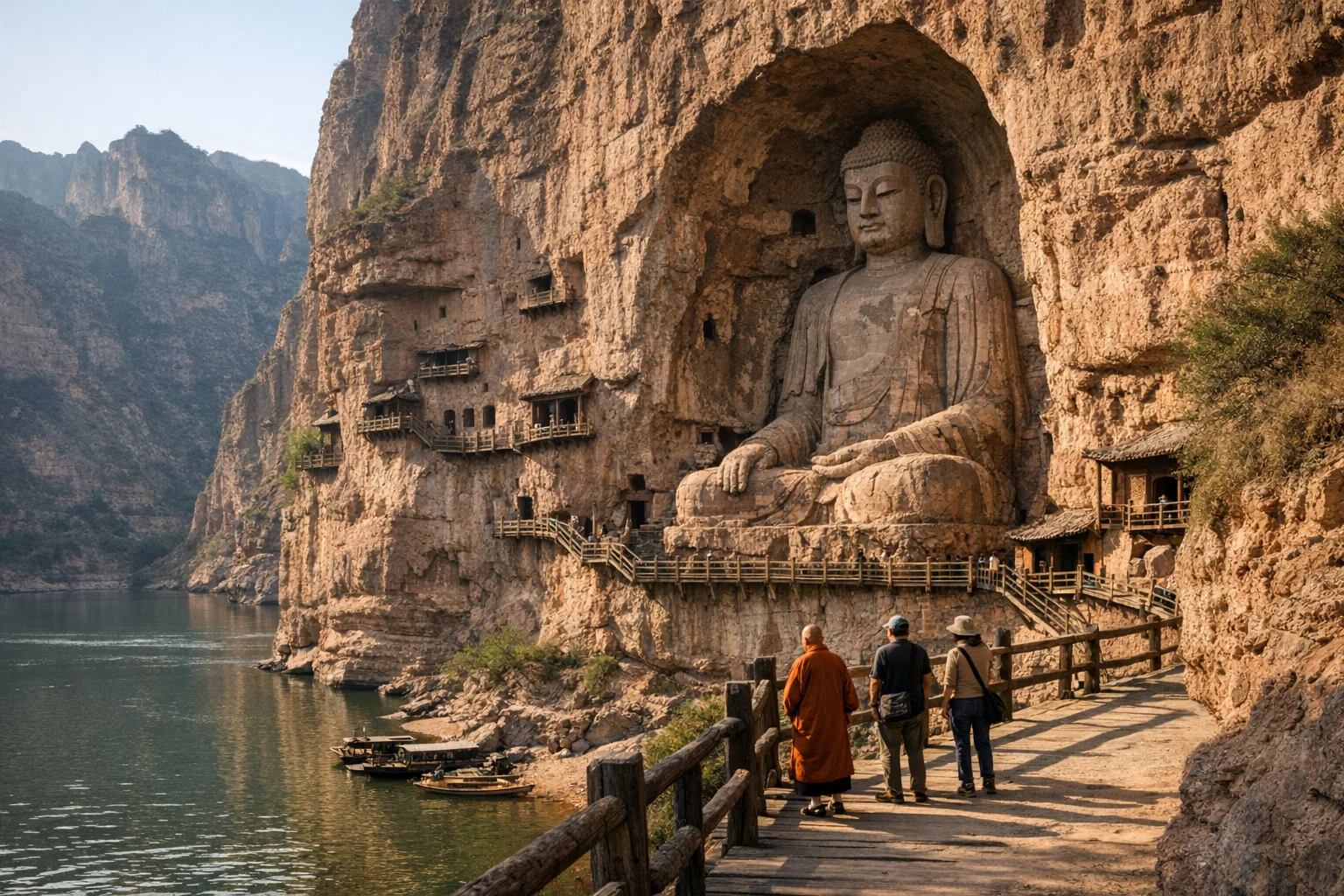
Bingling Temple Grottoes
Chinese BuddhistExplore China’s Bingling Temple Grottoes, a dramatic cliffside Buddhist cave complex of statues, mur...
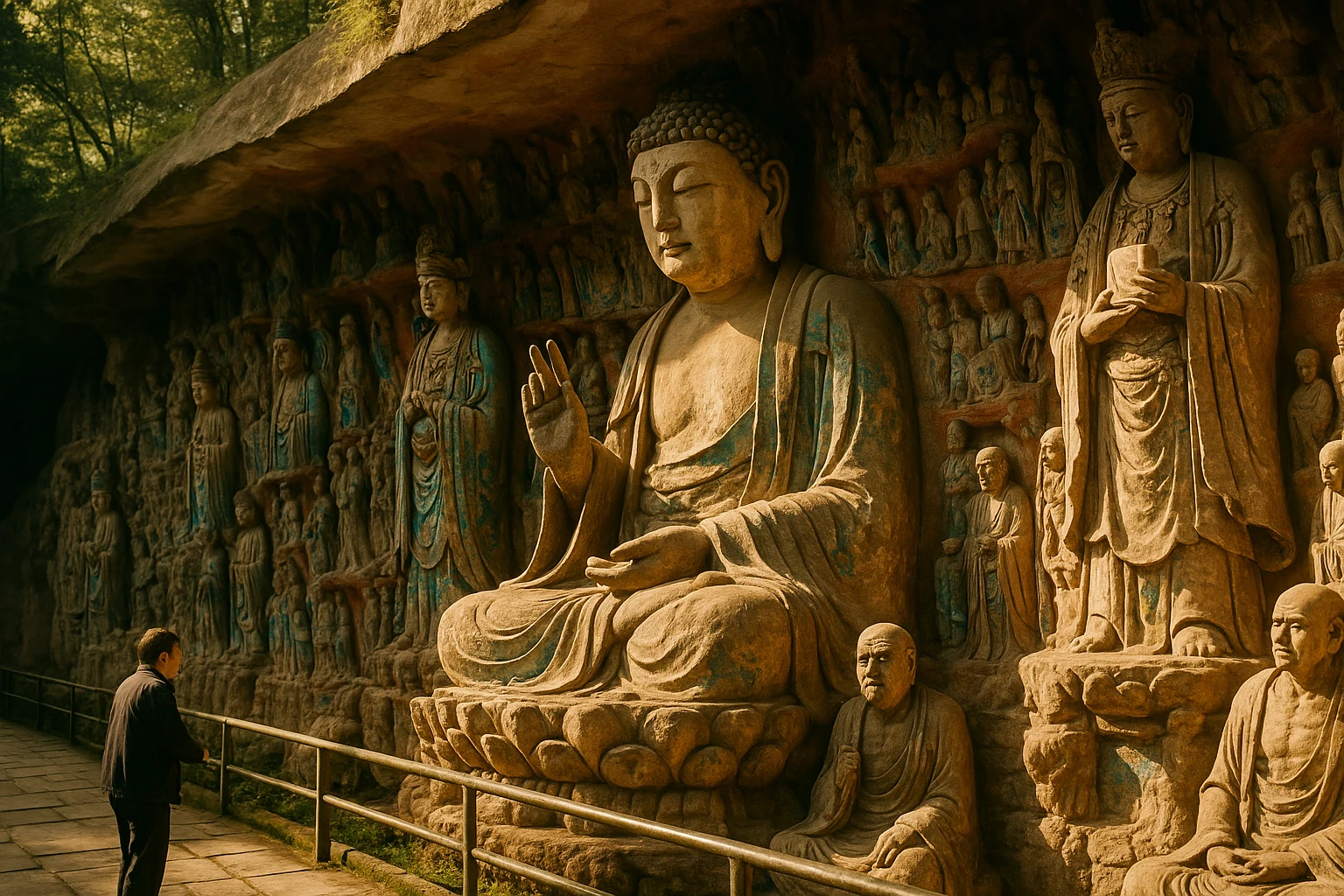
Dazu Rock Carvings
Tang and Song Dynasty ChinaAncient Buddhist, Taoist, and Confucian rock sculptures carved into cliffsides across Dazu District,...
Forbidden City China Travel Guide 2026: Imperial Palace of Beijing
Chinese ImperialExplore the Forbidden City, China's imperial palace for 500 years. Discover the Hall of Supreme Harm...