Quick Info
Curated Experiences
Bingling Temple Grottoes Day Tour from Lanzhou
Liujiaxia Reservoir and Bingling Temple Grottoes Private Tour
Lanzhou to Bingling Temple Buddhist Caves Guided Excursion
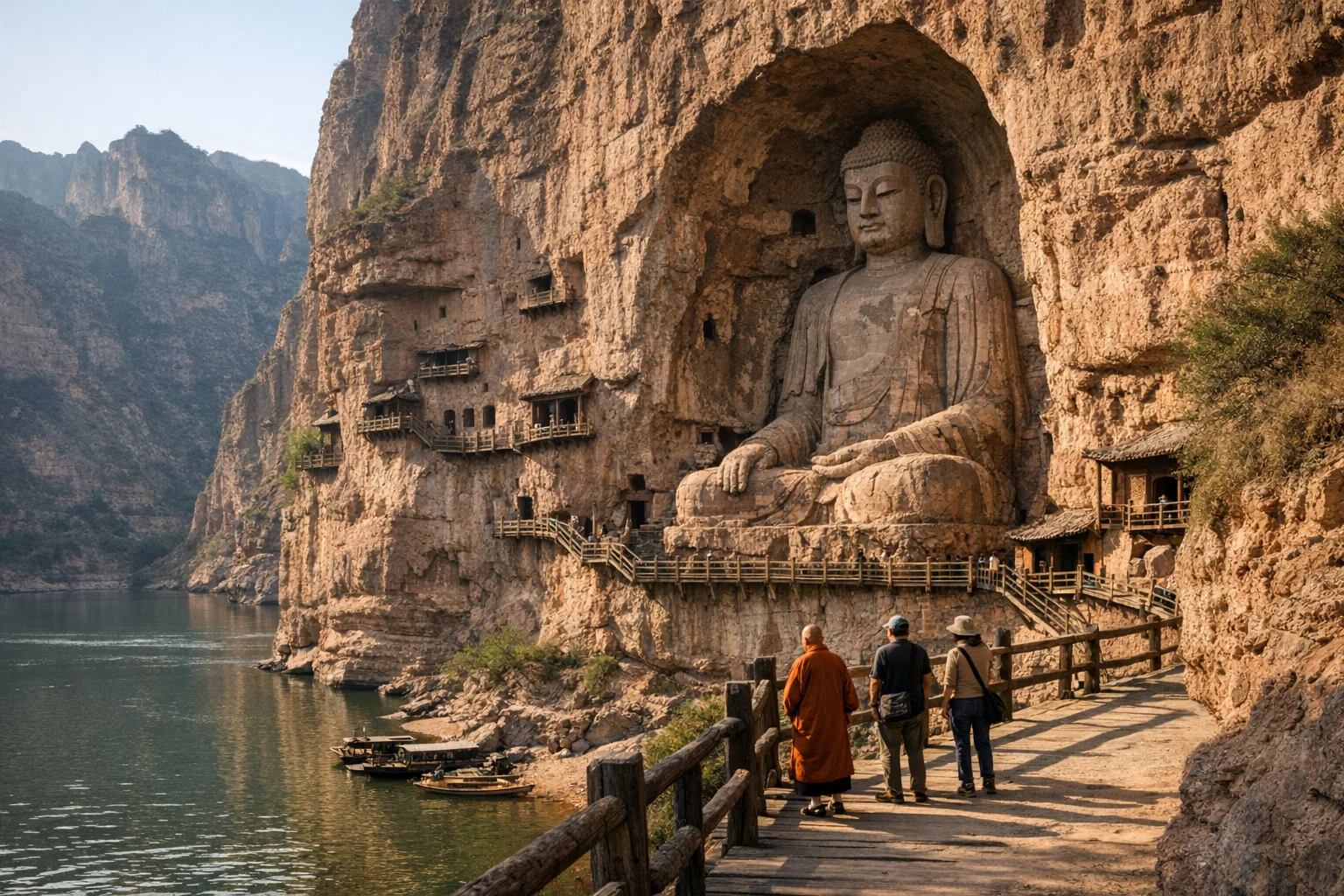
Bingling Temple Grottoes in China are one of those places that feel hidden even after you arrive. Reached through the canyon country of Gansu, most often by crossing the waters of Liujiaxia Reservoir and approaching steep ochre cliffs by boat, the site appears gradually rather than all at once. First there is the sensation of remoteness: long slopes, layered rock, and the strange calm of a landscape that seems to separate itself from the modern world. Then the caves and carvings come into view, cut directly into the cliff face in rows, niches, and chambers that hold centuries of Buddhist devotion. The effect is immediate and quietly astonishing. This is not a museum of detached objects. It is a sacred environment shaped where belief, trade, and geography met along the wider Silk Road world.
What makes Bingling Temple especially memorable is the contrast between its dramatic natural setting and the intimacy of its art. From a distance, the site reads as a monumental wall of caves beneath a towering rock face. Up close, it becomes a sequence of gestures in stone and pigment: Buddhas seated in meditation, bodhisattvas with softened expressions, niches no larger than shrines, murals carrying traces of vanished dynasties, and inscriptions that anchor devotion to specific moments in history. The giant seated Buddha is the site’s most commanding image, but the grottoes are not important because of one colossal figure alone. They matter because they preserve a layered story of Buddhist expansion, patronage, craftsmanship, and survival in northwestern China. For travelers willing to make the journey, Bingling Temple offers one of the most atmospheric and rewarding cave-temple experiences in the country.
History
Origins in a Frontier Buddhist World
The Bingling Temple Grottoes emerged in a period when Buddhism was spreading deeply across northwestern China through networks of pilgrimage, patronage, translation, and trade. Gansu was a crucial region in this story. It lay along routes that connected the Chinese heartland with Central Asia, and it absorbed cultural influences moving in both directions. The caves at Bingling began in the 5th century CE, during the era of the Western Qin, when rulers and local elites in the region supported Buddhist institutions as part of both religious life and statecraft.
This early context matters because Bingling was never simply a local shrine complex. From the start, it belonged to a broader frontier Buddhist world shaped by movement. Monks, artisans, donors, and texts traveled across these corridors, carrying iconographic ideas, styles, and devotional practices. The cave-temple form itself was part of this transregional culture. Excavating sacred spaces into rock faces created durable places for worship, meditation, display, and merit-making. At Bingling, the surrounding canyon cliffs offered a natural architectural frame that lent solemnity and protection to these early efforts.
The site’s remoteness today can make it feel marginal, but historically that frontier quality was part of its importance. It was situated at the edge of empires and within the flow of cultural exchange, not outside it.
Growth Through Northern Dynasties Patronage
As Buddhist patronage expanded in north China, Bingling Temple grew through successive phases of excavation and decoration. During the Northern dynasties, especially under regimes that supported Buddhism as a unifying and legitimizing force, more caves were cut and more sculptures created. This was a period when cave-temple art across China flourished, and Bingling belongs to that larger movement alongside better-known sites such as Yungang, Longmen, and later Mogao, though it retains its own regional character.
The surviving inscriptions at Bingling are especially important because they provide unusually precise dating for some of the site’s early work. One cave inscription dated to 420 CE is among the earliest securely dated cave records in China, making Bingling a key site for understanding the development of Buddhist cave art in the country. This gives the grottoes historical weight beyond their visual appeal. They are not merely beautiful examples of Buddhist sculpture; they are crucial evidence for the chronology of religious art in early medieval China.
At the same time, artistic styles evolved. Early figures often show a blend of Indian, Central Asian, and Chinese influences, revealing the visual movement of Buddhism along Silk Road channels. Over time, forms became more sinicized, drapery and facial treatment shifted, and the site accumulated a layered artistic record of changing devotional taste.
Tang, Song, and Later Continuity
Bingling Temple did not belong to one short-lived burst of activity. The grottoes continued to receive attention through later dynasties, including the Tang, Song, Western Xia, Yuan, Ming, and beyond. This continuity is one of the site’s strengths. It preserves not only the origins of Buddhist cave carving in the region but also the long afterlife of the tradition. New caves were made, older ones were repainted or repaired, and fresh sculptures were added to an already ancient sacred landscape.
The Tang period in particular linked Gansu more firmly to wider imperial and Silk Road networks, and Buddhist art in the region benefited from those exchanges. Although some later work at Bingling may be less stylistically unified than the earliest phases, it helps demonstrate how sacred sites evolved organically over centuries. Different patrons, workshops, and communities left their marks. The result is not a frozen masterpiece from a single dynasty, but a long archive of religious practice embedded in the cliff.
This continuity also helps explain why the site’s artistic range is so rich. At Bingling, visitors encounter not a singular style but an accumulation of devotional forms: monumental statues, small caves for worship, painted surfaces, inscriptions, and cliff niches that together document centuries of adaptation.
Modern Rediscovery, Protection, and UNESCO Recognition
Like many cave sites in China, Bingling Temple experienced periods of neglect, weathering, and relative obscurity in the modern era, especially given its difficult access. Yet that remoteness also preserved it to a degree. Unlike sites nearer major urban centers, Bingling remained physically separated from intense modern development. Archaeological study and state protection in the twentieth century gradually brought greater scholarly and public attention to the grottoes.
Today the site is recognized as part of the UNESCO World Heritage property known as the Silk Roads: the Routes Network of Chang’an-Tianshan Corridor. That inscription places Bingling within a huge transregional history of exchange rather than treating it as an isolated monument. It also reinforces the site’s role in the movement of Buddhism, artistic styles, and devotional practices across Asia. Conservation challenges remain, as they do at all cliff and cave sites exposed to water, wind, and tourism. But Bingling’s current status reflects a balance between access and preservation, allowing visitors to encounter the grottoes while still understanding them as fragile and irreplaceable works of religious heritage.
Key Features
The most striking feature of Bingling Temple Grottoes is the way the entire site inhabits the cliff face. Rather than presenting a single freestanding temple complex, Bingling unfolds vertically and laterally across the rock in a series of caves, niches, stairways, and sculpted surfaces. This arrangement creates an unusual visual rhythm. From afar, the grottoes seem woven into the canyon wall, with openings and figures appearing almost like extensions of the natural stone. The sensation is not of architecture imposed upon the landscape but of sacred space coaxed from it.
The most iconic image at the site is the giant seated Maitreya Buddha, which dominates one section of the cliff with calm, commanding scale. Rising dramatically above visitors, the statue anchors the entire complex and provides the sort of immediate monumentality that travelers often expect from major grotto sites. Yet what makes Bingling richer than a one-statue destination is the way monumental presence gives way to intricacy. Around the great Buddha are numerous smaller caves and carved figures that reward slow attention. Some are highly finished chambers with sculpted groups and traces of murals; others are more intimate devotional spaces cut into the cliff with a directness that feels personal rather than imperial.
The variety of the grottoes is one of the site’s major strengths. Different dynasties, patrons, and artistic traditions left visible traces, so the caves form a layered visual history rather than a single uniform program. In some spaces, you can still see pigments clinging to walls and sculpture, reminders that Buddhist cave temples were once far more colorful than the bare stone many modern visitors imagine. These remnants of paint matter because they restore a sense of the site’s original sensory life. Bingling was not only sculptural. It was pictorial, immersive, and lit in ways that would have deepened the spiritual effect of entering each chamber.
The inscriptions are another important feature, especially for visitors interested in early Buddhist history. Bingling is one of the rare cave sites where dated inscriptions help fix the chronology of particular works with unusual precision. This gives the site exceptional value for historians of religion and art. Even for casual travelers, knowing that some carvings here can be anchored so early in the development of Chinese Buddhist cave art adds gravity to the experience. These are not only beautiful caves; they are foundational documents in stone.
The setting amplifies all of this. Reaching Bingling by water makes the approach part of the site’s power. The cliffs rise gradually, the reservoir narrows into canyon scenery, and the grottoes appear in a way that feels earned rather than casually encountered. That sense of arrival distinguishes Bingling from more roadside heritage stops. Even the modern reservoir environment, though historically different from the ancient landscape, preserves a dramatic sense of isolation. The canyon, the rock, the silence between visitor groups, and the verticality of the cliff all contribute to a mood of removal that suits the sacred character of the grottoes.
Getting There
Most visitors reach Bingling Temple Grottoes from Lanzhou, the capital of Gansu Province. The usual route involves traveling first to Liujiaxia Reservoir, which lies southwest of the city, and then continuing by tourist boat or speedboat to the grotto site. From Lanzhou to Liujiaxia, private car transfers or guided tours are the simplest option, and the road journey usually takes around 1.5 to 2 hours depending on traffic and departure point. From the reservoir, boat travel to the grottoes commonly takes another 1 to 2 hours depending on water conditions, vessel type, and route.
Organized day tours are popular because the logistics can be awkward to coordinate independently, especially if schedules are limited or seasonal. Private tours from Lanzhou often combine vehicle transfer, boat tickets, and entrance arrangements, which can save time even if they cost more. Travelers going independently should be prepared for changing schedules and should confirm boat operations in advance. Costs vary, but a full day trip from Lanzhou typically includes transport expenses beyond just the site ticket, and the boat portion is a meaningful part of the total.
Public transportation can get you part of the way toward Liujiaxia, but it rarely offers the same ease or reliability as arranged transport for a day visit. Bring cash, water, sun protection, and patience. Because access depends on both road and reservoir conditions, this is not the kind of site where showing up casually works especially well.
When to Visit
The best time to visit Bingling Temple Grottoes is generally from late spring through early autumn, especially between May and October, when weather is milder and boat access is usually more dependable. These months also make the journey itself more pleasant. The reservoir crossing and cliffside visit are both far easier to enjoy in warm but not punishing conditions. Summer can be busy, but it also offers the longest daylight and the highest likelihood of stable access.
Spring and early autumn often provide the best balance between comfort and crowd levels. Temperatures are usually moderate, the canyon scenery is clear, and Lanzhou-based day trips are easier to manage without the extremes of winter cold or midsummer congestion. The grottoes themselves can feel starkly beautiful in almost any light, but softer morning and late-afternoon conditions often bring out the textures of the cliff and sculptures more effectively than harsh midday glare.
Winter visits are much less ideal for most travelers. Boat schedules may be reduced or less predictable, and the combination of cold wind, transport complexity, and shorter daylight can make the trip harder than it is worth unless you have a strong special interest. Rain is not usually the main challenge compared with access logistics and seasonal conditions. Whatever time of year you choose, start early from Lanzhou, since the site is best approached as a full-day outing rather than something to squeeze in casually.
| Quick Facts | Details |
|---|---|
| Location | Near Liujiaxia Reservoir, Gansu Province, China |
| Best Known For | Cliffside Buddhist caves, sculptures, murals, and Silk Road heritage |
| Religious Tradition | Buddhist cave temple complex |
| Earliest Dated Work | 5th century CE |
| UNESCO Status | Part of the Silk Roads: Chang’an-Tianshan Corridor World Heritage listing |
| Signature Landmark | Giant seated Buddha carved into the cliff |
| Typical Access | Road from Lanzhou plus boat transfer |
| Recommended Visit Length | Full day from Lanzhou |
| Best Season | May to October |
| Practical Tip | Confirm boat schedules ahead of time and expect the journey to be part of the experience |
Frequently Asked Questions
What are the Bingling Temple Grottoes best known for?
The Bingling Temple Grottoes are best known for their cliffside Buddhist caves, ancient sculptures, murals, and the giant seated Buddha overlooking a canyon landscape.
Where are the Bingling Temple Grottoes located?
They are located in Gansu Province, China, in a remote canyon area reached most commonly via boat from Liujiaxia Reservoir near Lanzhou.
How do you get to the Bingling Temple Grottoes?
Most visitors travel from Lanzhou to Liujiaxia and then take a speedboat or tourist boat across the reservoir to the grotto site.
How much time do you need at Bingling Temple Grottoes?
Most travelers should allow a full day from Lanzhou, with around 1.5 to 3 hours at the grottoes depending on the boat schedule and ticket type.
When is the best time to visit Bingling Temple Grottoes?
Late spring to early autumn is the best time, when boat access is most reliable and the weather is generally more comfortable for sightseeing.
Are the Bingling Temple Grottoes part of a UNESCO World Heritage Site?
Yes, they are one of the sites included in the Silk Roads: the Routes Network of Chang'an-Tianshan Corridor UNESCO World Heritage listing.
Nearby Ancient Sites
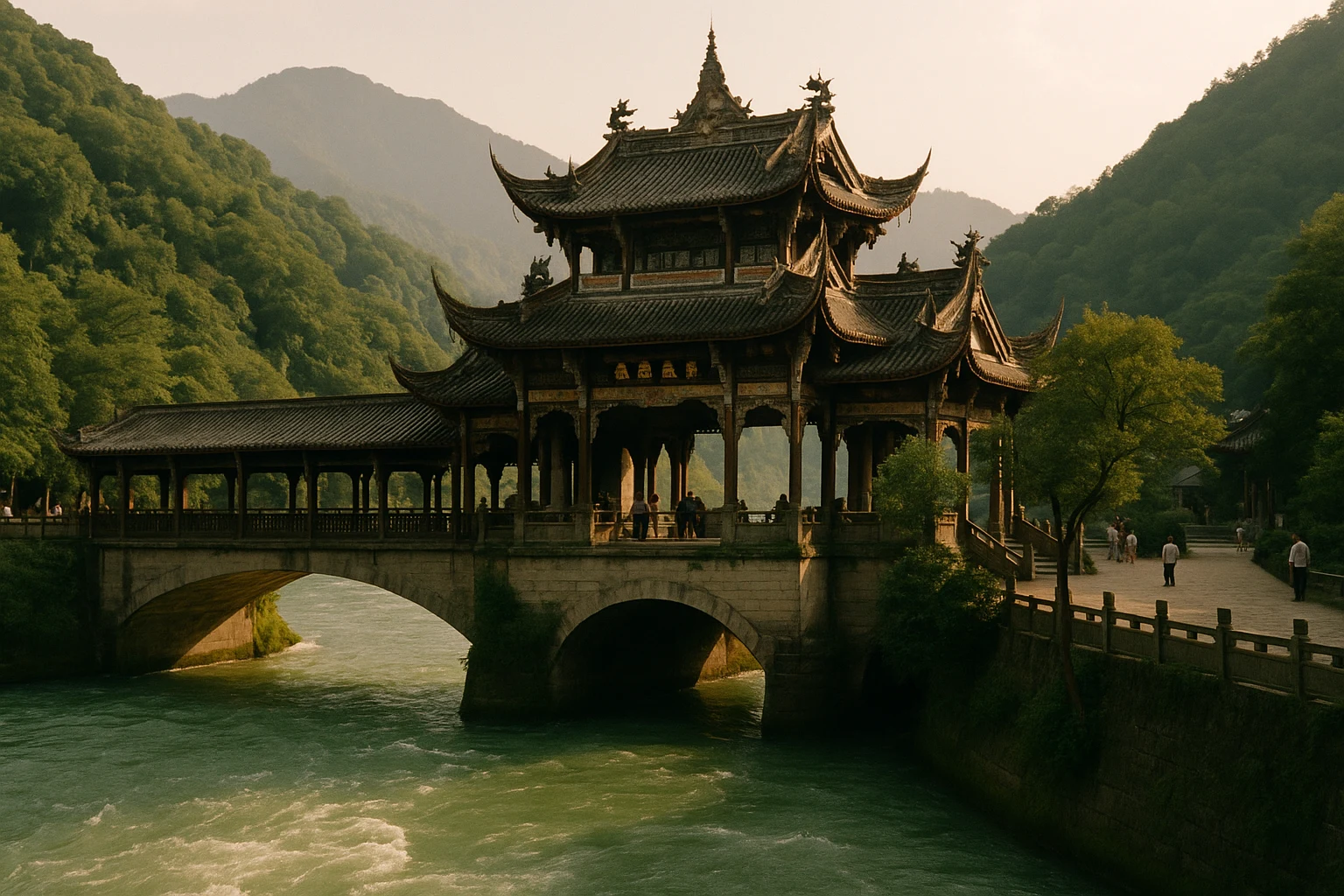
Dujiangyan Irrigation System
Explore Dujiangyan, the world's oldest functioning irrigation system, built in 256 BCE by engineer L...
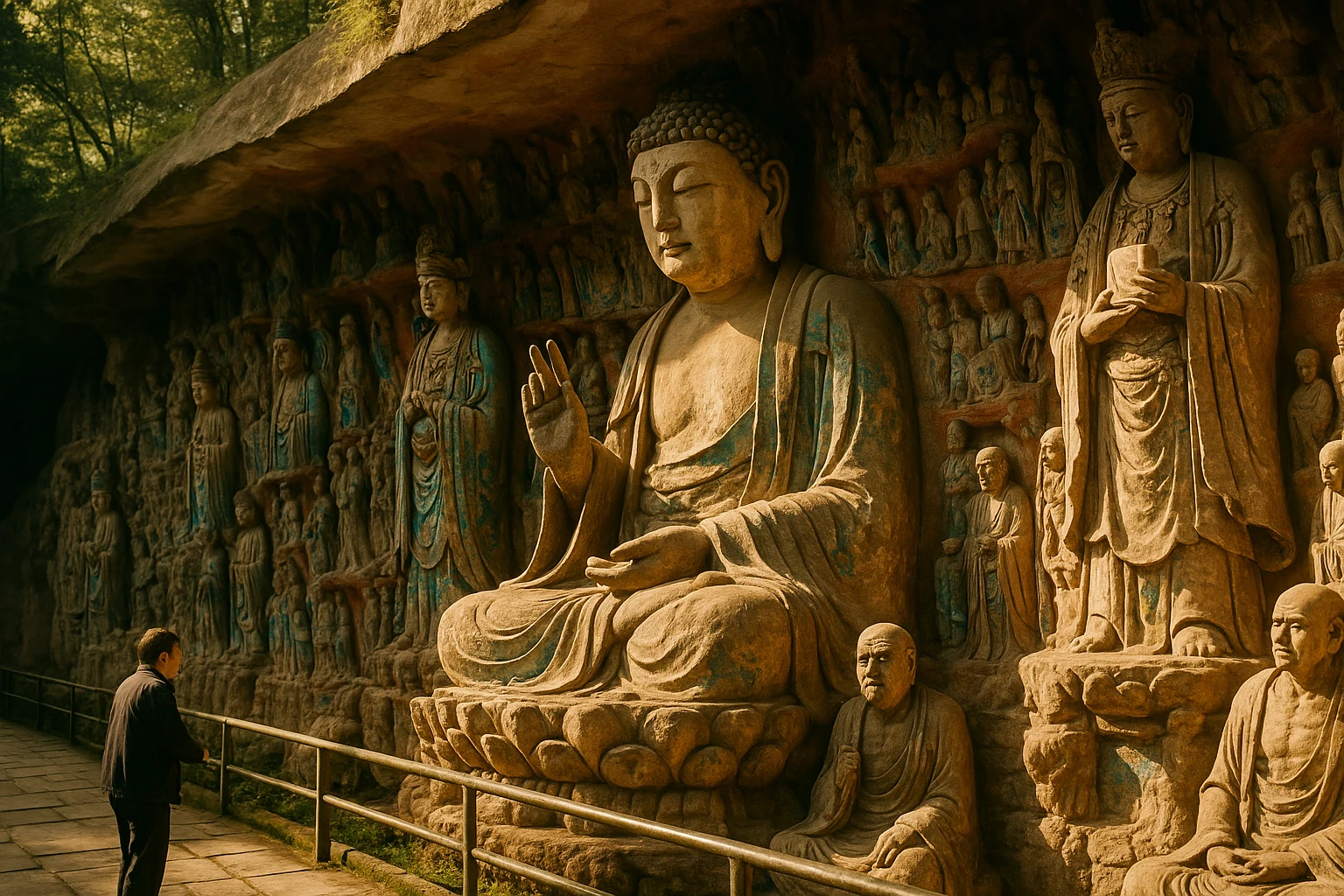
Dazu Rock Carvings
Tang and Song Dynasty ChinaAncient Buddhist, Taoist, and Confucian rock sculptures carved into cliffsides across Dazu District,...
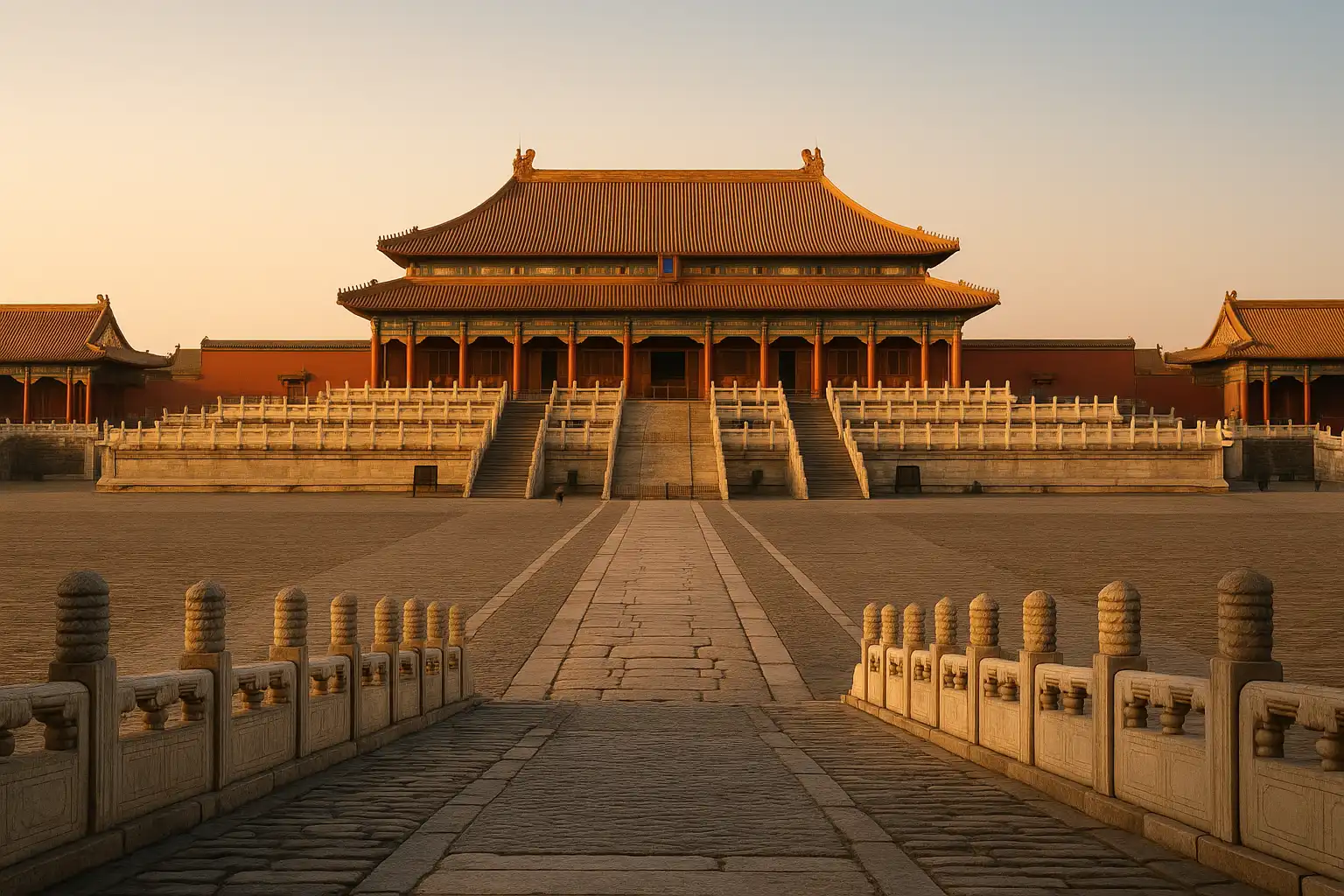
Forbidden City China Travel Guide 2026: Imperial Palace of Beijing
Chinese ImperialExplore the Forbidden City, China's imperial palace for 500 years. Discover the Hall of Supreme Harm...