Quick Info
At a glance
Caerleon Roman Fortress in the United Kingdom is one of the most atmospheric Roman sites in Britain, a place where the outline of an imperial military base still shapes the modern village around it. Set on the River Usk in south Wales, Caerleon does not announce itself with a single vast monument rising over the countryside. Instead, its power comes from layers: grassy embankments, excavated barrack blocks, the curve of an amphitheatre, and the knowledge that nearly two thousand years ago this was one of only three permanent legionary fortresses in Roman Britain.
Walking here feels different from visiting a neatly enclosed ruin. Roman Caerleon, known as Isca Augusta, survives in fragments embedded in a living settlement, so the ancient and the everyday sit side by side. One moment you are beside ordinary streets and stone cottages; the next you are looking across the sunken arena where soldiers, animals, and spectators once gathered under the authority of Rome. The site rewards imagination, but it does not rely on imagination alone. The remains are substantial, the museum interpretation is strong, and the baths and amphitheatre are among the most memorable Roman survivals in Wales. For travelers interested in Roman Britain, military history, or archaeology, Caerleon offers a rare chance to stand inside the footprint of a legionary world and understand how empire operated at its western edge.
History
Founding of Isca Augusta
Caerleon began as a strategic Roman military installation in the later 1st century AD, probably founded around AD 74 to 78 during the Roman campaigns to consolidate control over Wales. The fortress, named Isca Augusta, was built for the Second Augustan Legion, Legio II Augusta, one of the most important military units in Britain. Its position was carefully chosen. The River Usk provided access inland and toward the sea, while the surrounding landscape gave Rome a strong base from which to control the region and oversee movement through south Wales.
The early fortress was first constructed in timber, as was common for newly established Roman military bases during active campaigns. Timber ramparts, gateways, roads, and barracks could be erected rapidly, allowing a legion of several thousand men to function efficiently almost as soon as the site was secured. This was not a minor outpost. A legionary fortress was a huge planned complex, essentially a military town, with command buildings, storage facilities, workshops, accommodation, baths, and defensive systems.
From Timber Camp to Stone Fortress
As Roman power in the region stabilized, the temporary timber structures were gradually replaced with more permanent stone buildings. This transformation reflected confidence and long-term intent. Caerleon became one of the most important Roman military centers in Britain, housing not only soldiers but also the administrative and logistical machinery needed to maintain imperial authority.
The legion stationed here was responsible for road building, engineering, and operations across much of western Britain. Around the fortress grew a civilian settlement, or canabae, inhabited by traders, craftspeople, families, and others whose lives depended on the military presence. This mixed military-civilian environment is one of the reasons Caerleon is so historically rich: it was both fortress and community, a node where army life and provincial life met.
Among the major structures built in stone were the baths complex and the amphitheatre. These were not decorative additions. Baths were essential to Roman urban and military culture, serving hygienic, social, and ceremonial functions. The amphitheatre, meanwhile, provided space for drills, displays, and spectacles, reinforcing discipline and identity within the legion and impressing local populations with the reach of Roman order.
Life in the Roman Fortress
At its height, Isca Augusta was home to around 5,000 to 6,000 legionaries, with many more civilians nearby. Daily life followed strict organization. Soldiers slept in barracks, trained in formations, maintained equipment, and undertook construction and patrol duties. Officers occupied more spacious quarters, and specialized workshops produced or repaired tools, weapons, armor, and transport components. Grain and supplies were stored in large granaries designed to keep food dry and secure.
Yet Caerleon was not defined only by military discipline. Roman religion, bathing culture, commerce, and entertainment all played a role. Inscriptions and finds from the area suggest a world full of official ritual, personal devotion, imported goods, and local adaptation. The people here lived in a frontier province, but they were connected to a much wider empire stretching across Europe, North Africa, and the eastern Mediterranean.
Decline and Afterlife
By the late 3rd and 4th centuries, the role of Caerleon shifted as the military structure of Roman Britain changed. The permanent presence of a full legion likely diminished, though the site continued in some use. As imperial control weakened in Britain during the early 5th century, the formal Roman system collapsed. Buildings fell into disrepair, materials were reused, and the ordered life of the fortress gave way to a more fragmented post-Roman landscape.
Even so, Caerleon did not vanish from memory. Its impressive ruins remained visible for centuries and became woven into local tradition. In the medieval period, the site was associated with legends, including stories linked to King Arthur. Antiquarians later took interest in the remains, and modern archaeology revealed the scale and importance of the Roman fortress beneath and around the village. Today, Caerleon stands as one of the clearest windows into the military infrastructure of Roman Britain and the long afterlife of empire in the British landscape.
Key Features
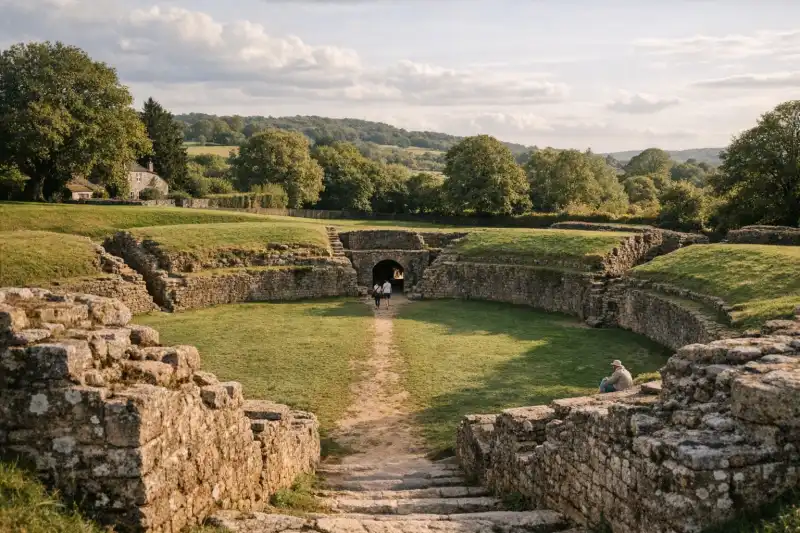
The most striking feature for many visitors is the amphitheatre, one of the best-preserved Roman amphitheatres in Britain. Set slightly apart from the main fortress area, it appears as an elegant oval earthwork scooped into the landscape, with grassy banks marking where seating once rose above the arena. Unlike heavily reconstructed monuments elsewhere in Europe, Caerleon’s amphitheatre feels subtle and grounded, which only adds to its atmosphere. Standing at its center, you can appreciate both its practical design and its emotional force. This was a place of training, public ceremony, and spectacle, where military identity was performed before an audience. The open setting makes it easy to imagine noise, movement, and the formal rhythms of Roman public life.
Within the fortress area itself, the excavated barracks are especially important. These remains help visitors understand the scale and order of a legionary base. What survives are mostly foundations and outlines rather than standing walls, but the plan is eloquent. Long rectangular ranges reveal where ordinary soldiers lived in grouped rooms and where officers had larger accommodation attached. The repetition of these building footprints conveys the disciplined structure of Roman military life more powerfully than a single monumental ruin could. For anyone interested in how armies actually functioned on the ground, these remains are invaluable.
The Roman baths are another highlight and among the best reasons to include Caerleon on a wider Wales itinerary. Bath complexes were central to Roman life, and here the surviving remains reveal just how sophisticated the infrastructure was. Visitors can trace the sequence of heated and unheated rooms and see how hypocaust systems circulated warmth beneath the floors. The baths were not merely practical facilities for washing. They were social and cultural spaces where routine, health, status, and imperial habits came together. At Caerleon, the baths help transform the site from an abstract military ruin into a lived environment with texture and rhythm.
The museum collections deepen that experience. Artifacts recovered from excavations include inscriptions, coins, pottery, jewelry, sculptural fragments, and everyday objects that bring individual lives into focus. A fortress can seem impersonal until a visitor sees a gaming piece, a tile stamped by a legion, or a fragment of carved stone dedicated to a deity. These finds connect the large structures to personal stories and remind visitors that Caerleon was not simply a machine of conquest. It was also a place of memory, habit, labor, and belief.
The wider village landscape is itself a feature. Because Roman Caerleon lies under and around a modern settlement, exploring the site means moving through layers of time. Streets, churchyards, houses, and open spaces occupy land that once held the ordered geometry of a Roman fortress and its civilian suburbs. That overlap creates a sense of continuity and transformation that is rare at more isolated ruins. Visitors can spend part of a day here not only looking at archaeology but also understanding how ancient sites survive inside later communities.
Finally, the setting on the River Usk adds an important geographical dimension. Rivers mattered deeply to Roman logistics, and Caerleon’s position helps explain why the site was so significant. Looking at the landscape today, it becomes easier to grasp how the fortress connected inland military power with supply routes and wider movement across the province. The site is therefore rewarding not only as a cluster of ruins but as a strategic landscape still legible to the careful traveler.
Getting There
Caerleon is easiest to reach via Newport in south Wales. Newport is on the main rail line linking Cardiff, Bristol, and London, so most visitors using public transport arrive there first. From Cardiff, direct trains to Newport typically take around 15 to 20 minutes, with standard off-peak fares often in the range of £5 to £10 depending on time and booking conditions. From Bristol, journeys are often around 30 to 45 minutes, while trains from London Paddington generally take about 1 hour 30 minutes to 2 hours and can vary widely in price, from roughly £25 booked ahead to much more for flexible last-minute tickets.
From Newport station, Caerleon is about 4 miles (6.5 km) away. Local buses connect Newport to Caerleon, with single fares commonly around £2 to £4. A taxi is the simplest option if you want speed and flexibility, usually costing about £10 to £15 depending on traffic and time of day. If you are driving, Caerleon is straightforward to reach from the M4 via Newport, and the journey from central Cardiff generally takes around 30 to 40 minutes in normal conditions.
Many travelers combine Caerleon with a broader south Wales itinerary, visiting from Cardiff or pairing it with nearby Newport attractions. Once in the village, the key Roman sites are close enough to explore on foot. Comfortable shoes are recommended, as even though distances are modest, you will want time to wander between the amphitheatre, baths, museum, and surrounding remains at a relaxed pace.
When to Visit
Late spring through early autumn is the most rewarding time to visit Caerleon Roman Fortress if you want the fullest experience of the outdoor ruins. From May to September, longer daylight hours and generally milder weather make it easier to appreciate the amphitheatre, walk between different parts of the site, and spend time lingering over views and details. Summer brings the greenest landscapes and the liveliest atmosphere, but it can also mean more visitors, especially on weekends and school holidays.
For many travelers, the best balance comes in May, June, or September. These months often offer pleasant temperatures, softer light for photography, and fewer crowds than high summer. The grassy earthworks of the amphitheatre are especially appealing in these shoulder seasons, when the site feels open and serene without being too busy. If your interest is archaeology and contemplation rather than events and bustle, these are excellent months.
Autumn can also be attractive, particularly on dry days when the lower sun gives the ruins added texture. Winter visits are quieter and can feel especially atmospheric, but you should be prepared for rain, wind, and muddy ground. The site remains compelling in cold weather, yet the experience is more comfortable when layered clothing and waterproof footwear are part of the plan.
Because Caerleon includes both indoor and outdoor elements, it works in a variety of conditions. If the weather turns, museum interpretation and enclosed displays can balance time outside. Still, checking opening hours in advance is wise, especially in winter or around public holidays. Morning visits often feel calmer, while late afternoon can provide more dramatic light across the amphitheatre and earthworks.
| Quick Facts | Details |
|---|---|
| Location | Caerleon, Newport, Wales, United Kingdom |
| Roman Name | Isca Augusta |
| Site Type | Legionary fortress, baths, amphitheatre, museum |
| Founded | c. AD 74-78 |
| Main Legion | Legio II Augusta |
| Best Known For | One of Roman Britain’s best-preserved legionary fortress sites |
| Time Needed | 2-4 hours |
| Nearest Major Hub | Newport |
| Good For | Roman history, archaeology, families, heritage travel |
| Best Season | Late spring to early autumn |
Caerleon Roman Fortress is not a place of towering columns or dramatic temple facades. Its appeal is deeper and, in many ways, more rewarding. Here, the Roman Empire can be understood not as an abstract chapter in a history book but as a functioning system of roads, soldiers, engineers, rituals, and daily routines brought into a Welsh landscape and then slowly absorbed into everything that came after. The amphitheatre gives the site emotional power, the baths and barracks give it structure, and the museum gives it voice.
What makes Caerleon memorable is the way it combines clarity and mystery. Enough survives to show you the shape of the fortress and the seriousness of Rome’s commitment here, yet enough has vanished to leave space for the imagination. You walk through a modern village and suddenly find yourself in the footprint of a legion. You stand on a grassy bank and realize you are looking at a place where imperial authority was once displayed to thousands. For visitors to the United Kingdom who want a Roman site with substance, atmosphere, and historical range, Caerleon is one of the strongest choices in Britain.
Guided tours: worth it?
Self-guided works here, but a guide can add real value if you want the ruins explained as a living place rather than just a sequence of monuments.
Best for
- First-time visitors who want context, not just photos
- Short visits where a planned route saves time
When to go self-guided
Go independently if you prefer setting your own pace, reading as you go, and checking official hours or ticket rules directly before you arrive.
What I’d avoid
Skip paid tours that bundle unrelated stops you do not actually want. The best option should either save meaningful planning time or add historical context you would miss on your own.
Roman History Tours from Cardiff
Useful when: transport or pickup logistics matter
South Wales Day Tours
Useful when: you want to compare guided formats before deciding
Caerleon and Newport Tours
Useful when: you want to compare guided formats before deciding
Some tour links are affiliate links, which may earn Ancient Travel a small commission at no extra cost to you. I try to surface options that make practical sense for the site—not just anything bookable.
Frequently Asked Questions
What is Caerleon Roman Fortress?
Caerleon Roman Fortress is the site of the Roman legionary fortress of Isca Augusta in south Wales, including an amphitheatre, barracks remains, baths, and museum collections.
Where is Caerleon Roman Fortress located?
It is located in Caerleon, now part of Newport in Wales, United Kingdom, on the River Usk.
How much time do I need to visit?
Most visitors should allow two to four hours to explore the amphitheatre, fortress remains, baths, museum, and the historic village setting.
Is Caerleon Roman Fortress suitable for families?
Yes, the open-air ruins, large amphitheatre, museum displays, and manageable village layout make it a good destination for families.
Can I reach Caerleon by public transport?
Yes. Visitors usually travel first to Newport by train or bus, then continue to Caerleon by local bus, taxi, or a short drive.
When is the best time to visit Caerleon Roman Fortress?
Late spring to early autumn offers the best weather for walking the site, though quieter visits are often possible in winter on clear days.
Nearby Ancient Sites
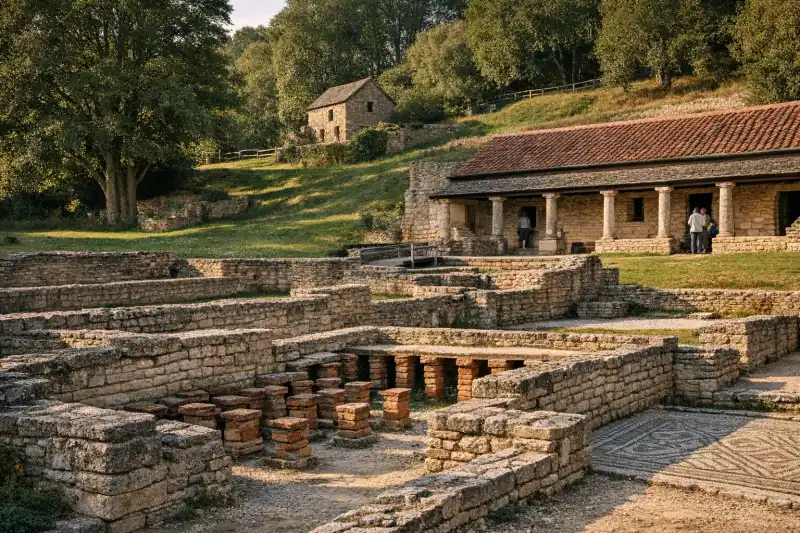
Chedworth Roman Villa
RomanExplore Chedworth Roman Villa, a remarkably preserved Roman countryside estate in the United Kingdom...
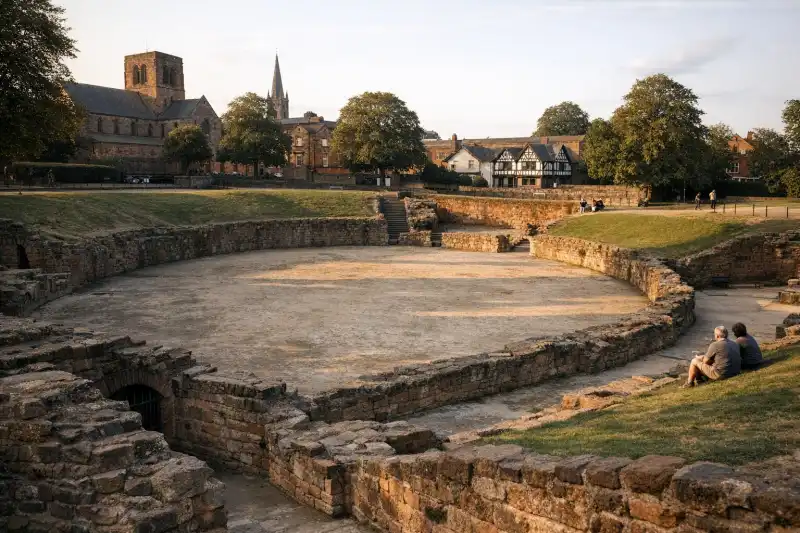
Chester Roman Amphitheater
Explore Chester Roman Amphitheater in the United Kingdom, the largest known Roman amphitheater in Br...
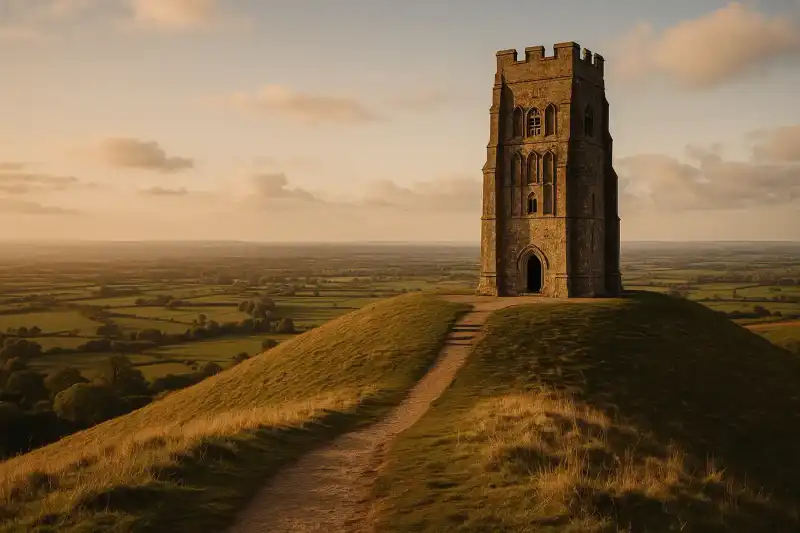
Glastonbury Tor Travel Guide 2026: Best Walk Times, History, and Visit Planning
Early Medieval EnglandPlan a smarter visit to Glastonbury Tor with practical climb timing, weather tips, and context on wh...