Quick Info
Curated Experiences
Caesarea Maritima Day Tour from Tel Aviv
Private Caesarea Maritima and Northern Coast Tour
Caesarea, Haifa, and Acre Guided Tour
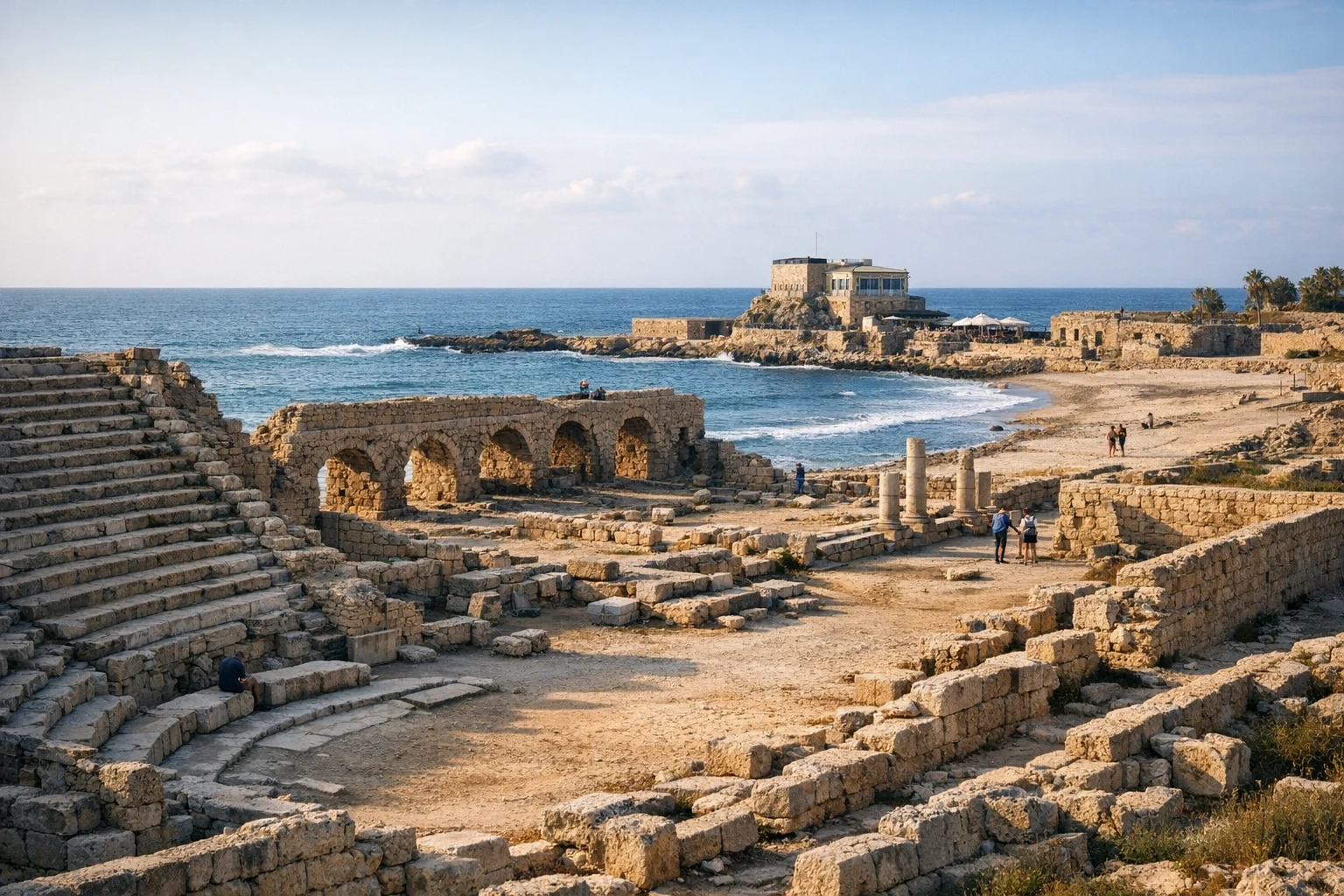
Caesarea Maritima in Israel feels like a city built to impress both land and sea. On the Mediterranean coast between Tel Aviv and Haifa, its ruins spread across a broad shoreline where surf, sandstone, and Roman engineering still meet in unusually dramatic fashion. The first impression is often the light: hard blue water, pale stone, and open sky framing remains that once belonged to one of the most ambitious urban projects of the ancient Levant. Herod the Great did not create Caesarea as a modest harbor town. He built it as a statement of power, loyalty, and modernity in Roman terms, carving out a port city where no natural harbor of sufficient scale existed and filling it with theaters, palaces, temples, administrative buildings, and maritime infrastructure.
That ambition still shapes the experience of visiting. Caesarea Maritima is not one monument but a whole urban landscape, layered across Herodian, Roman, Byzantine, early Islamic, Crusader, and later periods. You can walk from a theater still visually complete enough to host performances, to a hippodrome along the sea, to palace remains perched almost above the waves, then on to harbor works that once made this one of the eastern Mediterranean’s engineering marvels. The site rewards both broad and close attention. At the large scale, it reveals how a ruler could impose an imperial city on a coastline. At the smaller scale, it shows how that city was reused, reshaped, fortified, and remembered across centuries. Few sites in the region combine maritime setting, political history, and archaeological richness so completely.
History
Herod’s Vision on the Mediterranean Coast
Caesarea Maritima was founded on an enormous scale by Herod the Great in the late 1st century BCE, probably between about 22 and 10 BCE. Herod ruled Judea as a client king under Roman authority and was one of the most ambitious builders in the eastern Mediterranean. Founding Caesarea was a political act as much as an urban one. By naming the city after Augustus Caesar and creating a monumental port on the coast, Herod signaled loyalty to Rome while also establishing a new royal showcase that could rival older Levantine and Hellenistic cities.
The site had earlier settlement history under the name Straton’s Tower, but Herod transformed it almost beyond recognition. Most extraordinary was the harbor, built using hydraulic concrete and massive engineering effort to create an artificial deep-water port where nature had not provided one. Around it rose a city with streets, public buildings, a temple platform, entertainment venues, and elite architecture. Caesarea was intended to function not just as a local town, but as a major administrative and commercial center tied to Roman imperial systems. It embodied the fusion of local kingship and Roman-style urbanism.
Roman Provincial Capital and Imperial City
After Herod’s death, Caesarea remained central to Roman administration in the region. It became the seat of Roman governors of Judea and played a crucial role in the political life of the province. This is the city most famously associated with Pontius Pilate, whose inscription was found here, offering one of the most important archaeological confirmations of a figure known from literary sources. Caesarea thus occupies a special place in both Roman provincial history and the historical backdrop to early Christianity.
During the Roman period, the city flourished as a cosmopolitan port and administrative center. It served trade, military logistics, taxation, and governance, while also displaying the urban entertainments and monumental culture expected of a major Roman city. The theater, hippodrome, baths, warehouses, streets, and temples all contributed to a strongly Roman civic identity. Yet Caesarea was also embedded in the religious and ethnic tensions of the wider region, and it played roles in events leading up to the Jewish revolt against Rome. In this sense, the city was not merely prosperous. It was politically charged.
Byzantine Continuity and Christian Transformation
Caesarea continued to thrive into the Byzantine period, when it became an important Christian center as well as an administrative one. The city’s role shifted with the Christianization of the empire, and ecclesiastical institutions gained growing prominence. Churches, bishoprics, and intellectual activity linked Caesarea to the emerging Christian landscape of late antique Palestine. It became known as a center of learning, and the famous library and scholarly activity associated with figures such as Origen and Eusebius give the city an additional historical layer beyond its harbor and public monuments.
This period did not erase the Roman city so much as adapt it. Existing urban structures were repurposed, new Christian buildings rose, and the city continued as a major node in Mediterranean and regional networks. Caesarea’s persistence across this transition is one of the reasons it is so archaeologically rich. It did not simply fall after the Roman high point. It kept changing, and each phase left a new imprint on the urban fabric.
Conquest, Crusaders, and Archaeological Rediscovery
The city passed through early Islamic rule, periods of decline, and later Crusader occupation, each of which reshaped the site. The Crusaders added fortifications and reused parts of the older city, giving Caesarea a medieval military layer superimposed on its classical and late antique foundations. Over time, however, the harbor silted, the city’s strategic value changed, and many monumental areas fell into ruin. Sand, sea action, and centuries of spoliation altered the visible remains significantly.
Modern archaeology gradually brought Caesarea back into focus, revealing not only the better-known theater and aqueduct but the city’s harbor installations, palace areas, streets, warehouses, and fortification layers. Underwater archaeology has been especially important in understanding the ancient port and the engineering methods behind Herod’s harbor. Today Caesarea Maritima survives as a site of layered excavation rather than a singular preserved moment. That is precisely what makes it so rich: it tells the story not of one era alone, but of a city repeatedly reinvented on the Mediterranean edge.
Key Features
The harbor is one of Caesarea Maritima’s defining features, even though much of its original form survives only through archaeology, underwater remains, and interpretive reconstruction. Herod’s harbor was one of the ancient world’s great engineering achievements, using imported volcanic ash concrete and large-scale marine construction to create an artificial port of major significance. Even for visitors who are not engineering specialists, knowing this changes how the coastline reads. The sea is not just scenic backdrop here. It is the reason the city exists. Caesarea was conceived as a maritime machine, and the harbor was its heart.
The Roman theater is among the most visually complete and immediately rewarding monuments on site. Its graceful semicircle facing the sea makes it easy to imagine crowds gathering for performances under imperial rule, and its continued use for modern events gives it unusual vitality. Unlike some ancient theaters that survive only as fragments, Caesarea’s remains still communicate structure, seating, and civic purpose with clarity. It is one of the best places in the eastern Mediterranean to feel how entertainment architecture served both prestige and public life.
The hippodrome, or circus-like racing and spectacle zone along the waterfront, adds another layer of urban drama. Here the site opens wide, and the combination of racecourse form, sea light, and palace remains nearby creates one of Caesarea’s most memorable landscapes. The palace itself, built near or over the water, expresses Herodian theatricality perfectly. This was architecture meant to dominate the coastline and merge elite residence with scenic command. The idea of a ruler’s palace overlooking the Mediterranean in direct dialogue with urban public monuments says much about the political culture that produced Caesarea.
The aqueduct is another major highlight, especially because it stands somewhat apart from the dense core of ruins and gives the city a broader territorial dimension. Stretching elegantly along the coast, it reminds visitors that cities on this scale depended on infrastructure beyond walls and monuments. Water supply, roads, and regional management were part of urban grandeur, not separate from it. The aqueduct’s long line is also one of Caesarea’s most photogenic features and helps connect the archaeological site to the wider landscape.
Finally, the site’s layered archaeology is itself a feature. Crusader walls, Byzantine traces, Roman public buildings, harbor remains, inscriptions, and museum displays all coexist. Caesarea is at its best when read not as a single-period ruin, but as a city whose importance kept attracting reuse. That layered quality gives the site unusual depth and makes repeat or slow visits especially rewarding.
Getting There
Caesarea Maritima is relatively easy to reach from both Tel Aviv and Haifa, making it one of Israel’s most accessible major archaeological sites. By car, the drive from either city usually takes around 45 minutes to 1 hour depending on traffic. Taxis and private drivers are straightforward options, though costs vary significantly by distance and negotiation. Organized day tours from Tel Aviv or Jerusalem often include Caesarea with Haifa, Acre, or other northern coastal sites, and these can be convenient if you want historical context along with transport.
Public transportation is also feasible. Train routes connect major Israeli cities to Caesarea-Pardes Hanna station, from which you will need a taxi, bus, or local transfer to the archaeological park. This can be cost-effective, though less seamless than direct car travel. Visitors with rental cars will find the site especially easy to combine with a wider coastal itinerary, including Haifa, Akko, or even inland sites depending on pace.
Once on site, expect significant walking. Caesarea’s archaeological park is broad and exposed, and its monuments are spread across a substantial area. Comfortable shoes, water, and some sun protection are essential. This is not a compact ruin. The reward for that scale is the chance to understand Caesarea as a true city rather than a single isolated monument.
When to Visit
The best times to visit Caesarea Maritima are spring and autumn, when temperatures are warm but usually manageable and the Mediterranean light is especially attractive. March to May and September to November often offer the ideal balance of pleasant weather, open skies, and comfortable walking conditions. Because the site is exposed and spread out, climate matters more here than at some denser urban archaeological areas.
Summer can be beautiful, especially with the sea constantly visible, but it can also be hot and bright, with little shelter across major sections of the site. If visiting in summer, start early in the morning or come later in the afternoon when the light softens and the theater, palace zone, and harbor edge become more atmospheric. Winter is often perfectly viable thanks to the coastal climate, though occasional rain and wind can make the open setting less comfortable on some days.
Late afternoon is one of the most rewarding times to be here. The sea takes on stronger color, the stone warms in tone, and the long urban remains become easier to read visually. If possible, avoid rushing the site in the middle of a larger tour day. Caesarea repays time, especially when the crowds thin a little and the city’s maritime scale begins to sink in.
| Quick Facts | Details |
|---|---|
| Location | Mediterranean coast, Haifa District, Israel |
| Best Known For | Herodian harbor, Roman theater, hippodrome, aqueduct, and layered port-city archaeology |
| Founder | Herod the Great |
| Main Periods | Herodian, Roman, Byzantine, early Islamic, Crusader |
| Historical Importance | Major Roman provincial capital and one of the eastern Mediterranean’s great artificial harbors |
| Signature Monument | The harbor and theater complex |
| Recommended Visit Length | 3 to 5 hours |
| Best Season | Spring and autumn |
| Nearby Base | Caesarea, Tel Aviv, or Haifa |
| Practical Tip | Wear sun protection and allow enough time to explore both the urban core and the aqueduct area for the full sense of the city |
Frequently Asked Questions
What is Caesarea Maritima best known for?
Caesarea Maritima is best known for its monumental Herodian harbor, Roman theater, hippodrome, aqueduct, and its role as one of the great port cities of the ancient eastern Mediterranean.
Who built Caesarea Maritima?
Caesarea Maritima was founded on a grand scale by Herod the Great in the late 1st century BCE and later expanded by Roman and Byzantine rulers.
How much time should you spend at Caesarea Maritima?
Most visitors should allow at least 3 to 5 hours to explore the harbor area, theater, hippodrome, palace remains, aqueduct, and museum displays without rushing.
Is Caesarea Maritima worth visiting if you are interested in Roman history?
Absolutely. It is one of the most important Roman-period coastal cities in the region and offers an unusually rich mix of maritime engineering, public architecture, and layered archaeology.
Can you swim at Caesarea Maritima?
There are nearby beaches in the Caesarea area, but swimming within the core archaeological zones is restricted or unsuitable in many sections, so visitors should follow local site guidance.
When is the best time to visit Caesarea Maritima?
Spring and autumn are usually best, with warm but manageable weather, good coastal light, and comfortable conditions for walking the large open-air site.
Nearby Ancient Sites
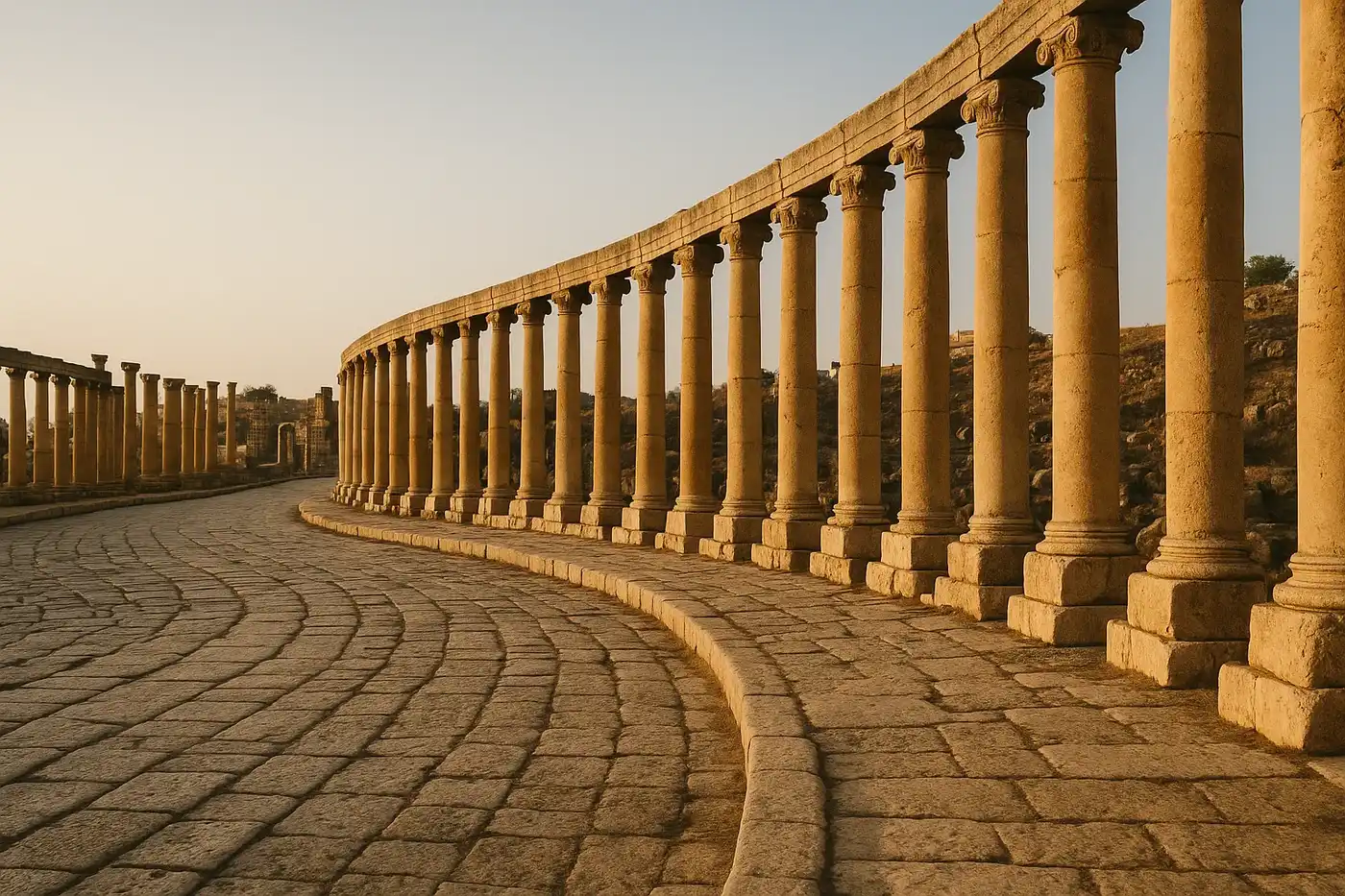
Jerash: The Pompeii of the East and Jordan's Best-Preserved
Roman / NabataeanDiscover Jerash, Jordan's remarkable Roman ruins. Walk the colonnaded streets of ancient Gerasa, exp...
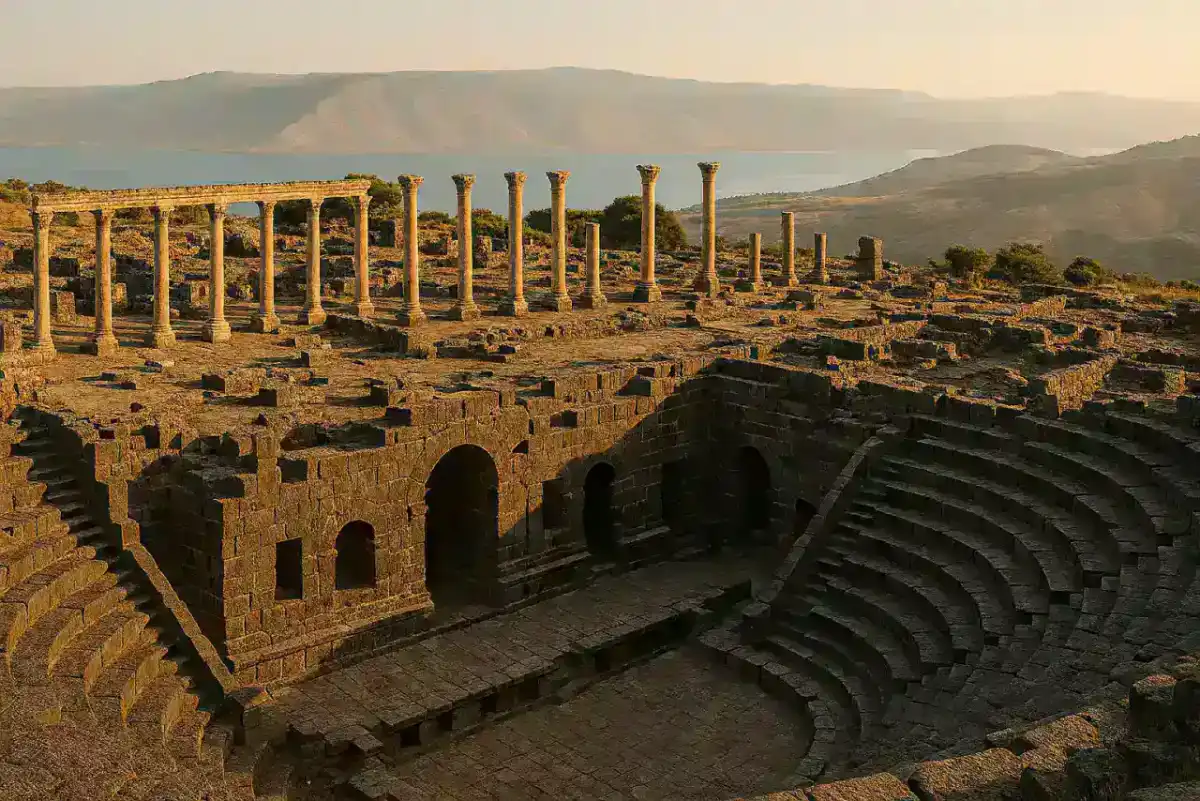
Umm Qais Jordan Travel Guide 2026: Gadara & Views to Galilee
Greco-Roman (Decapolis)Visit Umm Qais, ancient Gadara, for dramatic views over the Sea of Galilee, Golan Heights, and Jorda...
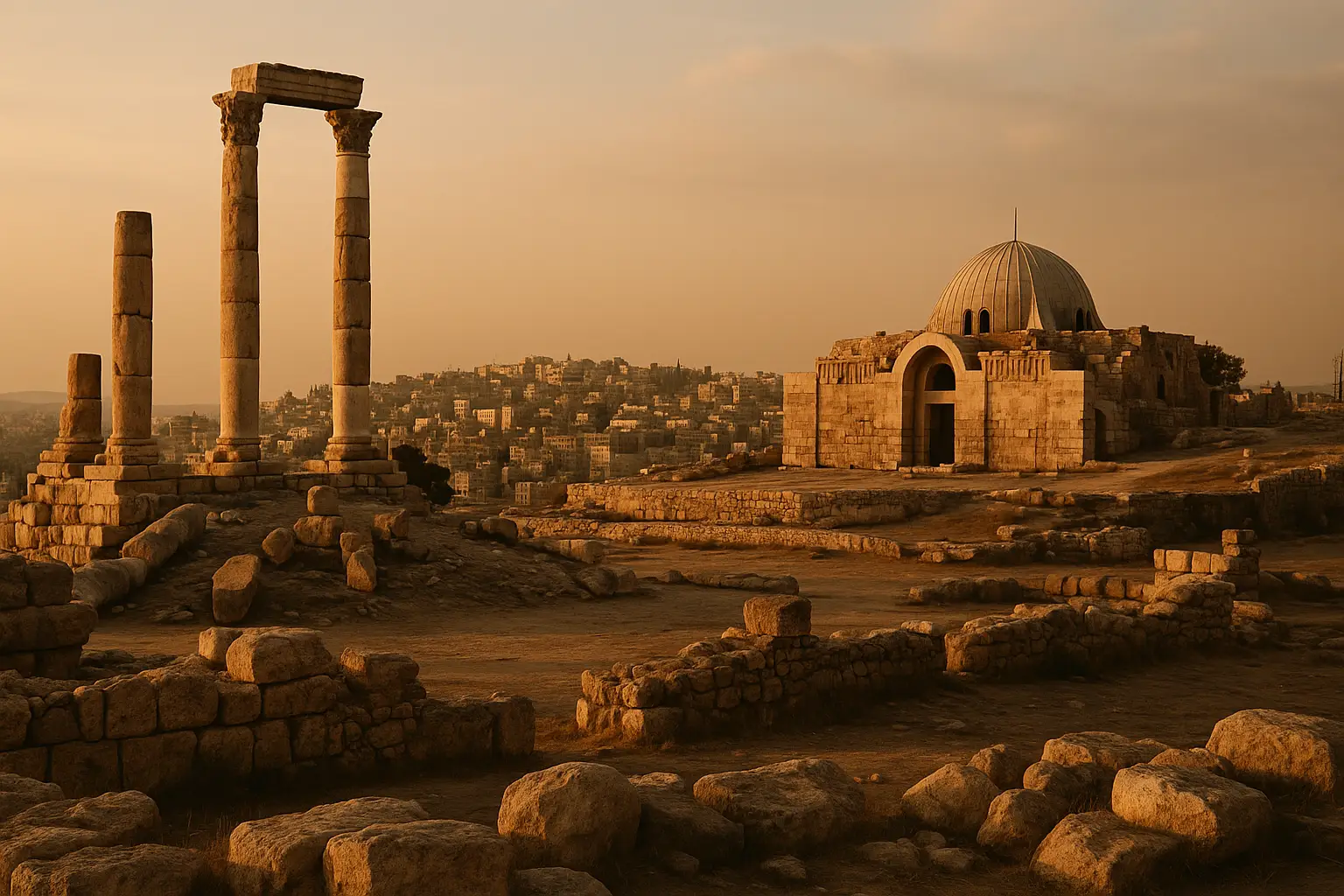
Amman Citadel Jordan Guide 2026: Temple of Hercules & Ancient Rabbah
Ammonite-Roman-UmayyadExplore Jordan's ancient citadel overlooking modern Amman. Discover the Temple of Hercules, Umayyad ...
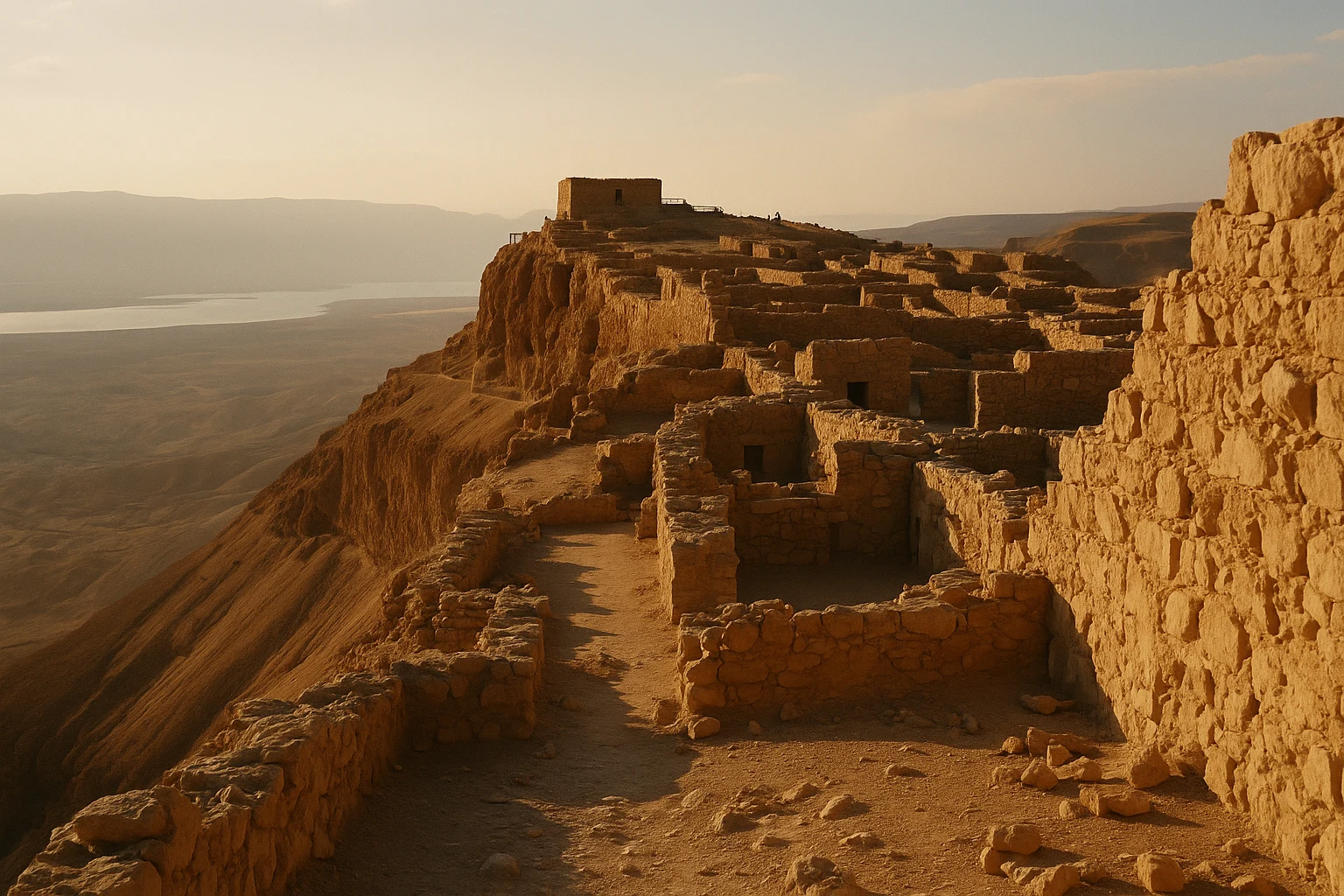
Masada
Hasmonean / Herodian / RomanMasada is a dramatic desert fortress in Israel where Herod built a clifftop palace and Jewish rebels...