Quick Info
Curated Experiences
Carnac Megalithic Sites Guided Tour
Brittany Ancient Landmarks Day Trip from Nantes
Private Brittany and Carnac Stone Alignments Excursion
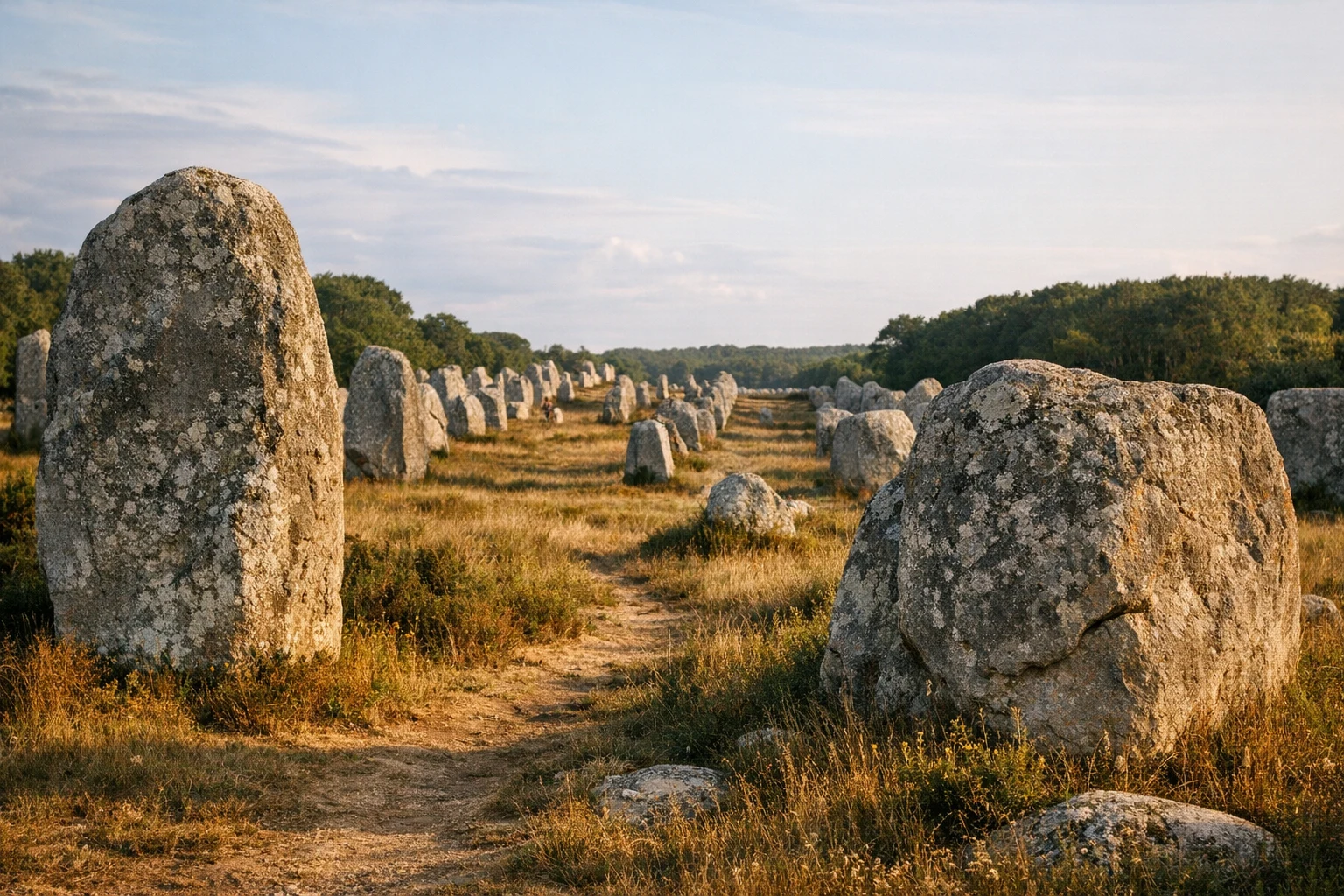
Set amid the wind-swept coastal plains of Brittany, the Carnac Stones stand silent but powerful—an awe-inspiring reminder of France’s ancient past. Spanning over four kilometers around the small town of Carnac, these enigmatic stone alignments have stirred curiosity and speculation for centuries, drawing visitors, archaeologists, and spiritual seekers alike. When you arrive, the first impression is that of sheer scale: thousands of weathered granite menhirs, some towering over three meters high, stretch unwavering across lush fields, punctuated by tumuli, dolmens, and burial mounds. Embedded within the serene Breton landscape, their mysterious order is both hypnotic and humbling. Mist hovers low in the mornings and the salt tang from nearby Atlantic breezes sharpens the air, deepening the sense that this is a place of age-old ritual and enduring enigma. Whether you approach as a lover of history, a seeker of secrets, or a curious traveler, the Carnac Stones in France offer an unforgettable journey into Europe’s Neolithic heart.
Despite their prominence, the true purpose of the Carnac Stones eludes absolute certainty, adding to their mystique. Locals have spun legends of giants turned to stone, while scholars continue to ponder the site’s astronomical and ceremonial significance. Over more than 6,000 years, these stones have witnessed empires rise and fall, religions wax and wane, and cultures reimagine their meaning. From their prehistoric origins, through the era of medieval pilgrims and modern archaeologists, the stones remain the enduring soul of Brittany—both landmark and riddle, a monument as old as European civilization itself.
History
Neolithic Beginnings (ca. 4500–3300 BCE)
The origins of the Carnac Stones trace deep into the European Neolithic, a period marked by the transition from nomadic hunter-gatherer societies to settled farming communities. Around 4500 BCE, people living in the area began dragging massive granite blocks—sometimes weighing several tons—from local quarries and uprighted them in precisely arranged lines, circles, and clusters. The motivation behind this herculean enterprise remains hotly debated. Some theories suggest a connection to ancestor veneration, communal burial, or agricultural rites, while others point to their alignment with astronomical events such as solstices and lunar cycles. What is certain is that the labor needed to erect these megaliths required impressive organization, cooperative effort, and shared belief—suggesting that Carnac was, even then, a center for ritual and social gathering.
Ritual Use and Cultural Shifts
As waves of new cultures reached Brittany, the meaning and function of the stones may have changed. Archaeological finds around the site—pottery shards, tools, burial goods—hint at ritual feasting, ancestor worship, and funerary practices. Some dolmens served as collective tombs, capped by massive slabs and covered with earth to form tumuli, indicating communal burial traditions. Excavations of burial mounds at Carnac and throughout Brittany reveal complex mortuary customs in which the souls of the deceased were cared for and protected by the presence of the stones. The orientation and spacing of the alignments suggest a possible astronomical or calendrical role, serving as a monumental calendar for early farmers or marking sacred times in the annual cycle.
Evolution Across Millennia
By the Bronze Age and into the Iron Age, the Carnac alignments appear to have lost some of their ritual primacy. The introduction of metal tools and changing religious customs led later communities to reuse or even topple stones for building materials or mark their boundaries. During the Roman era, the stones were further mythologized, woven into local lore and sometimes associated with Druidic practices, though no reliable contemporary account links Carnac to the historical Druids.
Medieval chroniclers retold stories of giants petrified by saints or gods, preserving the awe and reverence the site inspired—even if its original meanings had faded. Local Christian communities integrated the stones into their sacred landscape by constructing chapels nearby and carving crosses on standing stones. Over centuries, the menhirs became part of an evolving Breton identity, at times threatened by agricultural expansion, urban development, or war.
Rediscovery and Preservation
It wasn’t until the 19th century, amid a wave of antiquarian interest sweeping Europe, that the Carnac Stones reemerged in scientific discourse. Early explorers sketched the alignments and speculated wildly about their creators, while the advent of archaeology brought careful study, excavation, and ultimately, protective intervention. In the 20th century, the French government and local authorities worked to preserve the site amid threats from tourism, farming, and the spread of modern infrastructure. Today, Carnac is recognized as one of the world’s foremost megalithic sites. Its landscape, once the exclusive setting for ancient ritual, now coexists with visitor centers, guided paths, and educational exhibitions—all carefully managed to conserve its legacy for future generations.
Key Features
The Carnac Stones are not a single monument but a sprawling, complex ensemble of megalithic wonders. Their most distinctive features are the alignments: long, parallel rows of menhirs—upright standing stones—some numbering in the hundreds, extending across the Breton countryside. The most celebrated alignments are the Ménec, Kermario, and Kerlescan groups, each with its unique atmosphere and arrangement. In the Ménec alignment, visitors encounter over a thousand stones undulating over slightly hilly terrain, some massive and imposing, others worn down by millennia of wind and rain. The careful spacing and orientation have inspired various astronomical and geometric theories—some plausible, others speculative—but all agree on the awe these fields generate.
Further east, the Kermario alignment offers another spectacle: larger stones organized in impressively straight lines, best appreciated during early morning light when long shadows create a tapestry of stone and grass. Look closely, and you may notice how some menhirs appear to be paired or grouped, possibly marking important celestial events or ritual spaces. The smallest but perhaps most enigmatic is the Kerlescan alignment, where the stones form a tight, almost mystical cluster at the edge of a dense pine forest, evoking a sense of secrecy and spiritual energy.
Interspersed among these alignments are dolmens and tumuli—the prehistoric burial chambers and ceremonial mounds that add another layer of significance to the site. The dolmen of Kermario and the tumulus of St. Michel, for example, display the skill of Neolithic engineers, employing massive capstones and perfect alignment to create enduring spaces for the communal dead. Close inspection of some stones reveals ancestors’ attempts to leave their mark: faint carvings of serpents, axes, and other sacred symbols, almost erased by rain and time.
An essential stop for visitors is the Maison des Mégalithes, Carnac’s engaging interpretation center. Here, you’ll find interactive exhibits, scaled models, and archaeological finds that place the alignments in historical context. Through models and digital reconstructions, the center brings to life how the site might have appeared when first erected—lush with ceremonial activity and ritual gatherings. The walking paths are clearly signposted, winding through fields of menhirs and leading to panoramic viewpoints. As you stroll, the interplay of natural and human-made beauty is palpable. Whether enveloped in early morning mist or basking in midsummer sun, the stones maintain their unique atmosphere: serene, mysterious, and hauntingly beautiful.
Getting There
Reaching the Carnac Stones is both convenient and rewarding, as Brittany is well-connected by road, rail, and public transport. For those traveling from Paris, the fastest route is by high-speed TGV train from Paris Montparnasse to Auray, a journey of around three hours. Fares typically range from €40–€90 one-way, depending on booking and season. From Auray, regular buses run to Carnac, with the 1-hour journey costing about €2–€3. Taxis are also available for the 15-kilometer ride and will cost approximately €25–€35, making them a practical option for small groups or families with luggage.
Alternatively, travelers can rent a car either in Auray or in larger hubs like Nantes or Rennes, offering the freedom to explore Brittany’s picturesque countryside at your own pace. The national road system is straightforward, with well-maintained highways and scenic coastal routes. Free parking is available near the Maison des Mégalithes visitor center and at several points along the alignments, although these can fill up during the peak summer months.
If you’re arriving by air, the nearest major airports are in Lorient (about 1-hour drive) and Nantes (approximately 2.5 hours by car). Both airports are served by domestic and limited international flights, with car rental and shuttle options on site. Public bus services connect most of the villages in the region, but they operate less frequently outside the main tourist season.
Once on site, most visitors prefer exploring on foot or by bicycle. Dedicated walking and cycling paths link the main stone groups and nearby hamlets, with bike rentals available locally for around €15–€20 per day. Guided minibus tours also operate in high season, offering expert commentary as you travel between the various alignments, dolmens, and tumuli, typically costing €10–€15 per person.
When to Visit
The Carnac Stones are an all-season destination, though your experience will differ markedly with the changing Breton climate. The high season runs from late May through September, when mild temperatures (16–26°C or 60–78°F) and long daylight hours make for leisurely explorations. During July and August, visitor numbers swell, and certain alignments—especially Ménec and Kermario—are accessible only with a guided tour to help protect these fragile treasures. Though this restricts unsupervised wandering among the stones, it rewards visitors with insightful narratives and ensures the preservation of the site.
Spring and early autumn are ideal for those seeking fewer crowds and lush, green surroundings—April, May, late September, and October see fewer coach tours yet provide comfortable walking weather. Off-peak times also allow for quieter moments among the stones, when the Breton mists swirl and the ancient atmosphere is most palpable. Be aware that some local facilities—cafés, bike rentals, and interpretative centers—may operate reduced hours outside high season, but you’ll be rewarded with solitude and a more contemplative ambience.
Winter brings brisk winds and occasional rain, but the stones remain open, their grey silhouettes set starkly against stormy skies. If you appreciate dramatic landscapes and are prepared with sturdy footwear and a waterproof jacket, winter’s solitude can offer a unique perspective on the alignments. Several times a year, the site hosts special events—solstice sunrise viewings, archaeological workshops, and local festivals—that highlight Carnac’s continued importance to the community and to those drawn by its ancient magic.
| Quick Facts | |
|---|---|
| Location | Carnac, Brittany, France |
| Coordinates | 47.5956°N, -3.0805°E |
| Estimated Age | ca. 4500–3300 BCE |
| Type | Megalithic alignments, dolmens, tumuli |
| Number of Stones | Over 3,000 |
| Visitor Center | Maison des Mégalithes |
| Access | Free in low season, guided tours required for core areas in high season |
| UNESCO World Heritage? | On tentative list |
| Nearby City | Auray (15 km), Vannes (30 km) |
| Best Time to Visit | April to October |
| Famous Features | Ménec, Kermario, Kerlescan Alignments, Dolmen of Kermario, Tumulus of St. Michel |
The Carnac Stones stand as both enigma and testament, their ancient lines unmarred by conquest or the passage of time. Whether you come to ponder their mysteries, marvel at prehistoric engineering, or simply wander among some of Europe’s most evocative ancient landscapes, this site will leave you with a sense of wonder that exceeds even the mythology of Brittany’s rugged coast.
Frequently Asked Questions
What are the Carnac Stones?
The Carnac Stones are a collection of over 3,000 Neolithic standing stones spread out in alignments, dolmens, and tumuli near Carnac, Brittany, France.
Can you walk among the stones?
Access varies by season and area; during high season, guided tours are required for certain alignments, but some sections are always accessible.
How old are the Carnac Stones?
The stones date back to the Neolithic period, approximately 4500–3300 BCE, making them among the oldest megalithic sites in Europe.
Is there an entrance fee to visit the Carnac Stones?
Visiting the alignments on a guided tour typically requires a ticket averaging €10 for adults, while some sections and the visitor center are free.
How do I reach Carnac from Paris?
Take a TGV train from Paris Montparnasse to Auray (about 3 hours), then a local bus or taxi to Carnac, which is around 15 km away.
Nearby Ancient Sites
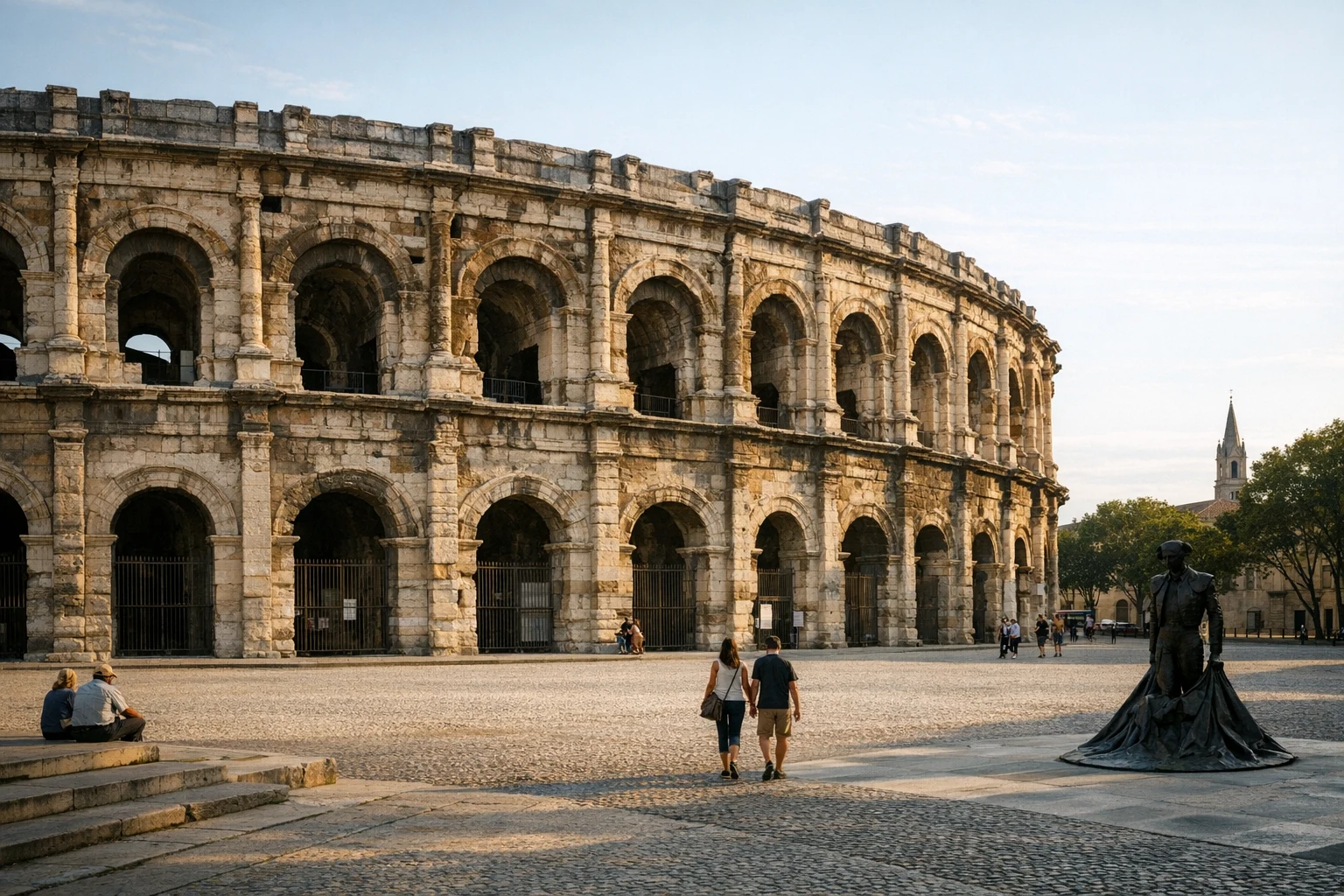
Nîmes Roman Arena
RomanExplore France’s Nîmes Roman Arena, one of the best-preserved amphitheaters in the Roman world and s...

Aachen Cathedral
Carolingian, Holy Roman EmpireVisit Aachen Cathedral, Charlemagne's eighth-century palatine chapel and the first UNESCO World Heri...
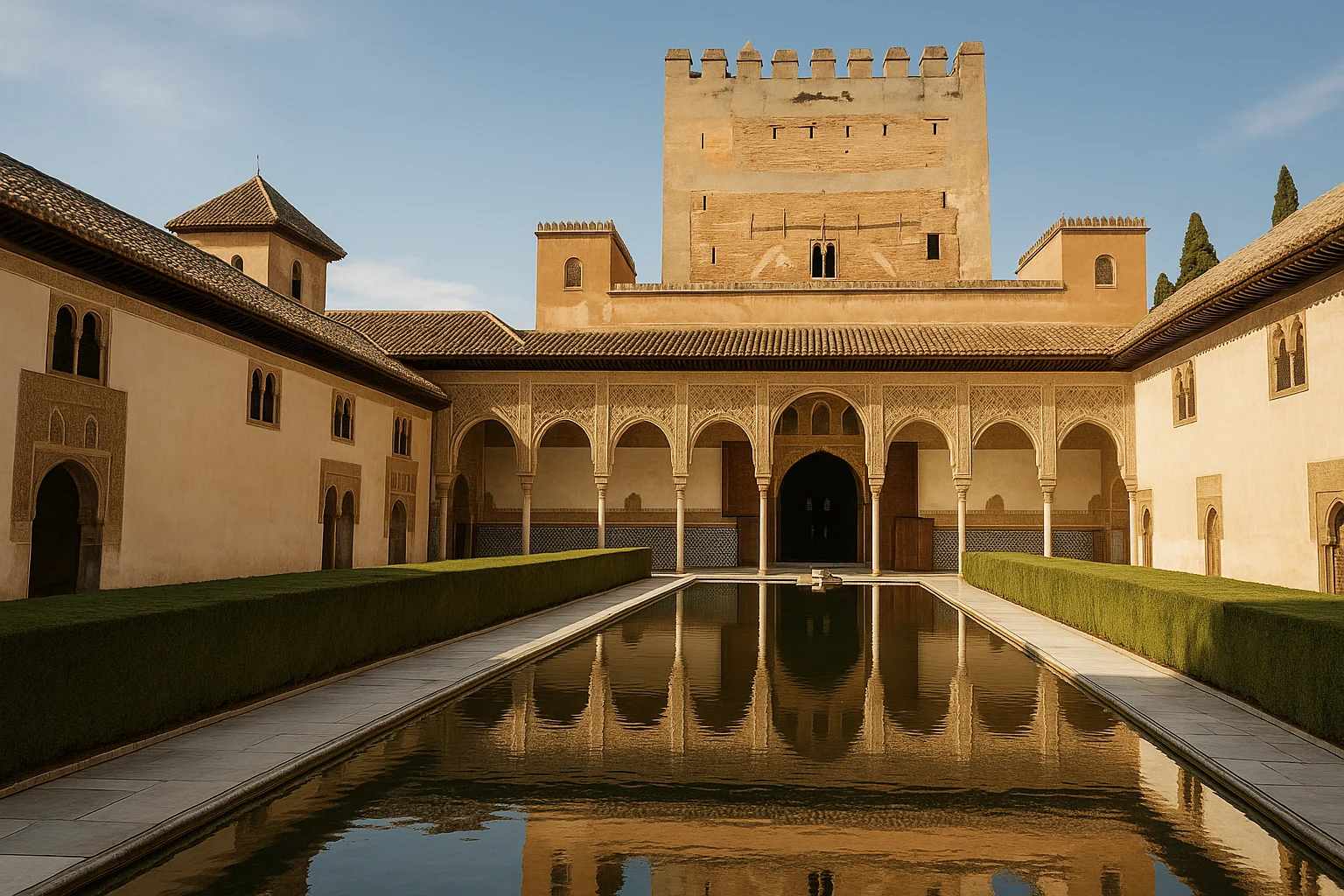
Alhambra Travel Guide 2026: Nasrid Palaces, Tickets, and Visit Strategy
Nasrid Dynasty (Moorish)Plan a well-timed visit to Granada's Alhambra with practical ticket advice, must-see highlights, and...