Quick Info
Curated Experiences
Half-Day Tour of Carthage Ruins from Tunis
Carthage, Sidi Bou Said and Bardo Museum Full-Day Tour
Private Guided Tour of Ancient Carthage
On a promontory above the Gulf of Tunis, where honey-coloured stone rises out of garden walls and Roman columns shoulder through scrubland above the sea, the ruins of Carthage hold together the memory of one of antiquity’s most consequential civilisations. Located in the Tunis Governorate of northeastern Tunisia, roughly fifteen kilometres from the modern capital, Carthage is both an archaeological site of global significance and a quietly residential suburb where the ancient and the everyday coexist in an almost surreal intimacy. Few places on earth carry so many layers — Phoenician traders, Carthaginian generals, Roman proconsuls, early Christian bishops, Vandal kings, Byzantine governors, and Arab conquerors have all left their marks across this narrow headland.
The name derives from the Phoenician Qart-Hadasht, meaning “New City,” and the ambition encoded in that name proved prophetic. Founded, according to tradition, by the princess Elissa of Tyre around 814 BC, the settlement grew from a modest trading outpost into the richest metropolis of the ancient Mediterranean world. At its peak the city housed perhaps 400,000 inhabitants, operated the most powerful navy afloat, and extracted tribute from vast territories across North Africa, the Iberian Peninsula, Sicily, and Sardinia. The long Rome–Carthage rivalry that culminated in three Punic Wars — including Hannibal’s legendary crossing of the Alps — is one of the defining conflicts of Western antiquity, and the ruins scattered across this coastal promontory are its physical residue. A UNESCO World Heritage Site since 1979, Carthage rewards visitors with a layered landscape of Punic cisterns, Roman bath complexes, early Christian basilicas, and one deeply enigmatic religious sanctuary.
History
Phoenician Foundations and the City of Dido
The traditional founding date of Carthage — 814 BC — places its birth before the founding of Rome, a chronology the Carthaginians themselves kept alive as a mark of their seniority over their great rival. Greek and Roman sources record that Elissa, a princess of the Phoenician city of Tyre who fled a political crisis at home, led a band of settlers across the central Mediterranean and negotiated with the local Berber chief Iarbas for a parcel of land “no bigger than an ox-hide.” By the clever trick of cutting the hide into the thinnest possible strips and laying them end-to-end around a hilltop, she secured the Byrsa promontory and founded the first settlement. Modern archaeology broadly supports a Phoenician presence at the site from the late ninth century BC, confirming the essential outline of the tradition even if the founding legend belongs to literary embellishment.
The early city thrived on trade. Carthaginian merchants controlled the western Mediterranean’s most lucrative routes — silver and tin from Iberia and beyond, grain from the Libyan hinterland, luxury textiles, and slaves from throughout the known world. By the sixth century BC Carthage had eclipsed its Phoenician motherland and was planting its own colonies across North Africa and the Iberian Peninsula. A distinctive Punic culture emerged: commercially sophisticated, highly literate, religiously intense, and governed by an oligarchic republic of elected magistrates called suffetes backed by a powerful senate. The Carthaginian navy was without peer in the western Mediterranean, and the city’s double harbour — a commercial port and a circular military basin capable of sheltering more than two hundred warships — made it the supreme naval power of its age.
The Punic Wars and Roman Destruction
Carthage’s expanding power inevitably brought it into collision with the Greek world first, and then with Rome. A long series of conflicts in Sicily beginning in the fifth century BC consumed enormous Carthaginian resources and produced some of antiquity’s most celebrated commanders. The First Punic War (264–241 BC) ended in a decisive Roman naval victory and the forced surrender of Sicily. The Second (218–201 BC) saw Hannibal Barca cross the Alps with his war elephants and inflict a sequence of catastrophic defeats on Roman armies — at the Trebia, Lake Trasimene, and above all at Cannae in 216 BC, where perhaps 50,000 Romans died in a single afternoon. Only Hannibal’s inability to take Rome itself, and Scipio Africanus’s bold counter-invasion of North Africa, turned the tide. Scipio crushed Hannibal at Zama in 202 BC and imposed a punishing peace.
The Third Punic War (149–146 BC) was effectively Rome’s decision to eliminate a rival it could never fully trust. After a three-year siege that reduced the city block by block, Scipio Aemilianus completed the demolition of every standing structure over seventeen days. Modern excavation has confirmed the totality of the destruction: thick burning layers, charred timber, shattered Punic pottery, and collapsed walls mark the 146 BC level across the entire promontory.
Roman Rebirth and Christian Carthage
Julius Caesar planned to refound Carthage as a Roman colony; the colonisation proper began under Augustus from around 44–29 BC. Within little more than a century the rebuilt city had become the second or third largest city in the western Roman empire, with a population estimated between 100,000 and 300,000. Prodigious public works transformed the site: a new forum atop Byrsa Hill, a circus capable of seating 60,000 spectators, an amphitheatre, and a remarkable aqueduct running 132 kilometres from the springs of Zaghouan to fill the city’s enormous cistern systems and the monumental Antonine Baths.
Carthage was simultaneously an early and enormously important centre of Christianity. Tertullian, the theologian Cyprian, and the philosopher Augustine of Hippo all worked in or near the city. Councils convened here repeatedly through the third and fourth centuries, and the Carthage church exercised authority over much of North Africa. The city’s final centuries were eventful: the Vandal king Gaiseric captured it in 439 AD, used it as the base for a sack of Rome itself in 455 AD, and ruled it until the Byzantine general Belisarius retook it in 533 AD. The Arab army that stormed Carthage in 698 AD deliberately levelled the remaining structures, redirecting commerce to the new foundation of Tunis a few kilometres inland. The ancient city was never rebuilt.
Key Features
The Antonine Baths
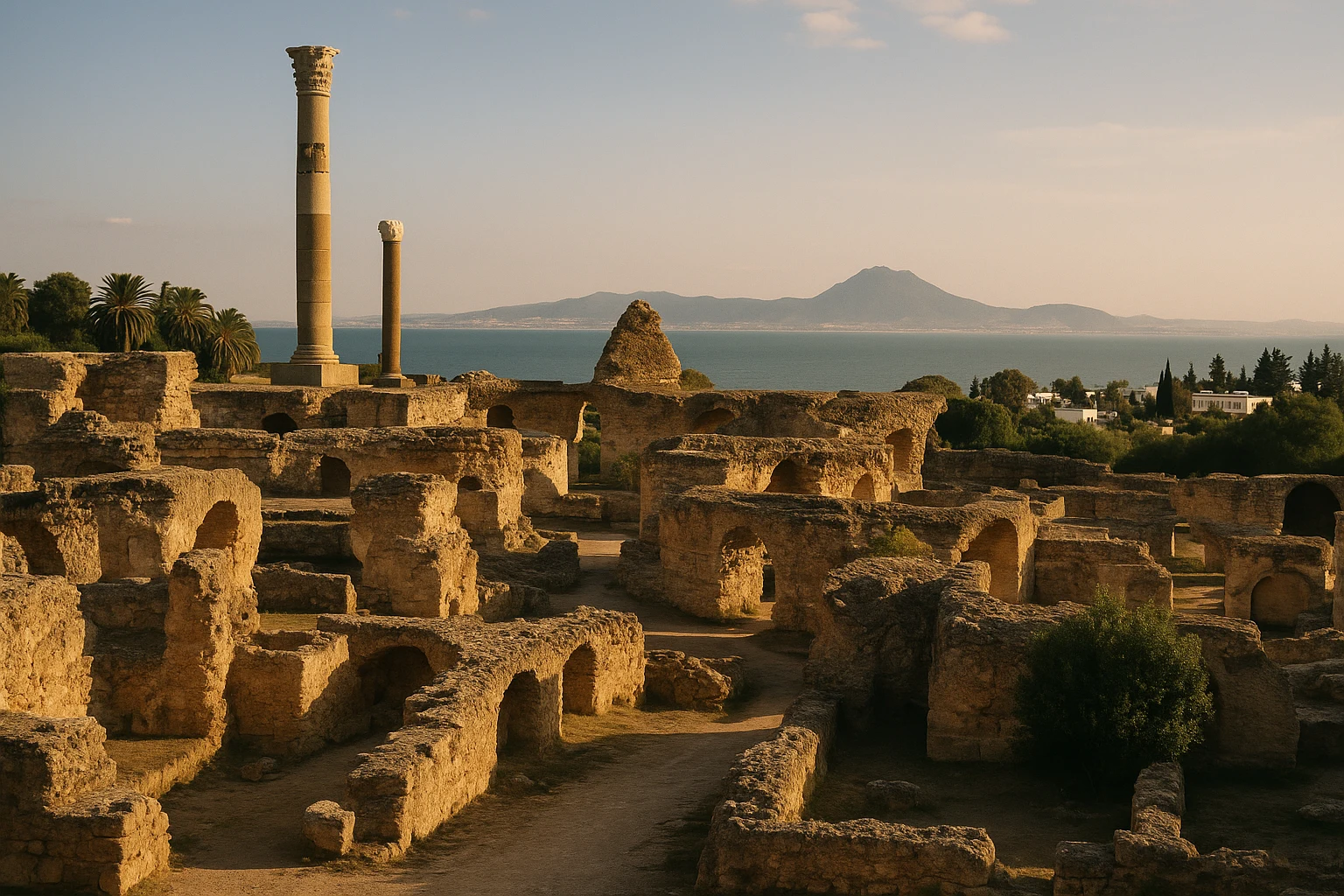
The largest Roman bath complex outside Rome itself, the Antonine Baths cascade down the seafront hillside in monumental fragments that convey an almost hallucinatory sense of scale. Begun under Emperor Hadrian and completed under Antoninus Pius around 162 AD, the complex originally covered roughly 35,000 square metres. The defining image of modern Carthage is the single re-erected column standing fifteen metres against the sky at the edge of the terrace — a slender reminder of the towering vaulted halls that once enclosed hot rooms, cold plunge pools, exercise courts, and libraries. Walkways thread through the excavated foundations of the caldarium, tepidarium, and frigidarium at the water’s very edge, while a small on-site museum displays marble statuary, mosaic fragments, and architectural elements. The views across the Gulf of Tunis toward the Cap Bon peninsula from the bath terrace are among the finest panoramas in North Africa.
Byrsa Hill and the National Museum
The hill where Elissa legendarily marked out the first city is today crowned by the white dome of Saint Louis Cathedral — no longer in use as a church — and the Musée National de Carthage, which houses an unrivalled collection of Punic stelae, terracotta votive masks, gold jewellery, amulets, and domestic objects that bring the pre-Roman city to vivid life. On the hill’s southern slope, a section of the Punic residential quarter excavated by UNESCO archaeologists in the 1970s and 1980s reveals the street plan, cisterns, and multi-storey housing blocks of the late Hellenistic city — some of the only standing Punic domestic architecture visible anywhere in the world. The combination of the open-air archaeological zone and the museum makes Byrsa the intellectual heart of any Carthage visit.
The Tophet
The most discussed monument at Carthage is the walled enclosure south of the ancient ports known as the Tophet, a sanctuary of the gods Tanit and Baal Hammon. Excavations beginning in the 1920s unearthed thousands of small urns containing the cremated remains of infants and animals alongside votive stelae carved in limestone. Ancient Greek and Roman sources accused the Carthaginians of systematic child sacrifice here; modern scholars continue to debate whether the burials represent sacrifice, natural infant deaths consecrated to the gods, or some combination that shifted over the sanctuary’s eight centuries of use. Whatever the conclusion about ritual, the Tophet’s atmosphere is unlike anything else at the site: rows of eroded stelae, many bearing the outstretched-arm triangle that is the symbol of Tanit, standing in the dappled shade of a walled garden above the sea.
The Punic Ports
Two lagoons south of the Tophet preserve the outline of Carthage’s legendary harbours. The rectangular outer basin served commercial shipping; the inner circular basin, the cothon, roughly 325 metres in diameter, was the military harbour, capable of housing up to 220 warships in roofed dry docks arranged around a central admiral’s island. Though the docks themselves vanished long ago, the circular geometry of the cothon remains strikingly legible from the surrounding bank, and the small Punic Ports Museum on the central island displays models and artefacts that reconstruct the ancient installation in detail. Standing at the cothon’s edge — knowing that the fleet that nearly brought Rome to its knees was once moored in the calm water before you — is one of those historical moments that the ruins of Carthage deliver unexpectedly and with force.
The Odeon, Roman Villas, and Theatre
A well-preserved Odeon — a roofed theatre for musical performances and recitations — occupies a quiet hillside above the coastal road, its semicircular cavea still intact to several courses of seating. Nearby, the Villa of the Aviary and associated Roman residential ruins preserve in-situ mosaic floors of considerable quality, testifying to the wealth of Carthage’s imperial-period elite. The site’s larger open-air theatre, used during summer festivals, retains much of its original seating and commands a hill-top position with sweeping sea views. The park also encompasses stretches of the Roman street grid, remains of early Christian basilicas, and the massive cisterns of La Maalga — among the largest ancient cistern complexes in the world — which stored water delivered by the Zaghouan aqueduct.
Combining Your Visit
Carthage’s proximity to Tunis makes it easy to combine with several other exceptional sites in a single day or over a short stay. The hilltop village of Sidi Bou Said, with its whitewashed buildings and blue-painted doors perched directly above the gulf, is a ten-minute TGM ride from Carthage-Dermech and makes a natural half-day companion; most organised tours pair the two destinations. The Bardo National Museum in central Tunis holds what is arguably the world’s finest collection of Roman mosaics, many looted from the villas of Carthage, and provides essential context for what you see on site — ideally visited the day before or after the ruins. For travellers with more time, the Phoenician settlement of Kerkouane on the Cap Bon peninsula, the only largely unexcavated Punic town in the world and itself a UNESCO site, lies around 100 kilometres southeast of Tunis and merits its own day trip.
Getting There
By Light Rail (TGM): The Tunis-Goulette-Marsa tram line is the most practical option for independent travellers. Trains depart from Tunis Marine station every fifteen to twenty minutes throughout the day. The journey to Carthage-Hannibal station takes approximately thirty minutes. A single ticket costs around 0.7 TND — less than US$0.25. Multiple Carthage stops serve different parts of the site: Carthage-Salammbo is best for the ports and Tophet; Carthage-Hannibal for the Antonine Baths and coastal villas; Carthage-Dermech or Carthage-Byrsa for the hill museum and Punic quarter.
By Taxi: A metered taxi from central Tunis to the Antonine Baths costs approximately 10–15 TND (around US$3–5) depending on traffic. Uber and Bolt operate in Tunis and typically offer comparable fares with transparent pricing. Taxis are easy to hail throughout the day.
By Rental Car: The drive from central Tunis takes 20–30 minutes via the La Goulette motorway. Parking is available near the Antonine Baths and around Byrsa Hill, though the monument clusters are spread over several kilometres and the TGM is generally more efficient for moving between them.
Entry Fees: A composite ticket covering the principal Carthage monuments and the national museum costs approximately 12 TND (around US$4) for foreign visitors. Individual site tickets are also available. The Tophet and Punic Ports Museum charge small separate admission fees. Opening hours run generally from 08:00 to 17:00 in winter and 08:00 to 19:00 in summer.
When to Visit
Carthage’s coastal position moderates North Africa’s temperature extremes, but the seasons make a real difference to the experience of visiting open-air ruins spread across a hillside above the sea.
Spring (March–May) is the ideal window for most visitors. Daytime temperatures range between 17°C and 25°C, wildflowers open across the archaeological parks, and the light in April and May is exceptional for photography — long morning shadows rake the column stumps of the Baths and the carved surfaces of Tophet stelae. Tourist numbers are manageable before the European school-holiday rush.
Autumn (September–November) is equally attractive. Summer heat has eased, the sea remains warm for swimming, and hotel rates in Tunis fall from their July–August peak. October in particular offers near-perfect conditions: warm afternoons, cool evenings, and skies that are usually cloudless.
Summer (June–August) brings temperatures regularly above 35°C at midday and the highest visitor volumes of the year. The strategy of arriving before 09:30 and retreating during the hottest midday hours makes the season workable. The annual International Festival of Carthage, held in the restored Roman theatre through July and August, draws performers from across the Arab world and the Mediterranean — a genuinely memorable cultural experience that rewards timing a visit accordingly.
Winter (December–February) brings the fewest crowds, lower prices, and occasional rain. The ruins are uncrowded and atmospheric on grey mornings, temperatures rarely fall below 8°C at night, and the Bardo Museum in Tunis is at its most accessible without summer queues.
| Quick Facts | |
|---|---|
| Location | Tunis Governorate, northeastern Tunisia |
| Coordinates | 36.8528° N, 10.3233° E |
| Founded | c. 814 BC (Phoenician tradition) |
| Civilisations | Phoenician, Carthaginian, Roman, Vandal, Byzantine |
| UNESCO Inscription | 1979 |
| Nearest City | Tunis (15 km southwest) |
| Protected Area | ~250 hectares |
| Opening Hours | 08:00–17:00 (winter) / 08:00–19:00 (summer) |
| Entry Fee | ~12 TND composite ticket |
| Getting There | TGM tram from Tunis Marine (~30 min, <1 TND) |
Frequently Asked Questions
Where exactly is Carthage located?
Carthage sits on a broad promontory of the Gulf of Tunis, about 15 kilometres northeast of central Tunis in the Tunis Governorate of northeastern Tunisia. Today it is effectively a quiet residential suburb of the capital, with ruins interspersed among modern streets and villas.
Is Carthage a UNESCO World Heritage Site?
Yes. The Archaeological Site of Carthage was inscribed on the UNESCO World Heritage List in 1979, recognised for its outstanding universal value as the former capital of a Mediterranean empire and a major centre of early Christianity.
How much time do I need to visit Carthage?
A focused visit to the main highlights — the Antonine Baths, Byrsa Hill and its museum, the Tophet, and the Punic ports — takes four to five hours. A full day allows you to also explore the Odeon, the Roman villas, and easily combine a visit with the nearby village of Sidi Bou Said.
What is the best way to get to Carthage from Tunis?
The TGM light rail line (Tunis-Goulette-Marsa) connects central Tunis to multiple Carthage stops in about 30 minutes for under 1 TND. It is the cheapest and most practical option. Taxis from central Tunis cost around 10–15 TND and take 20–30 minutes depending on traffic.
When is the best time to visit Carthage?
Spring (March–May) and autumn (September–November) offer the most comfortable temperatures — between 17°C and 26°C — for walking the open-air ruins. Summer is hot but manageable with early-morning starts. Winter is uncrowded and prices are lower, with only occasional rain.
What happened to the original Phoenician city of Carthage?
The Phoenician and Punic city was completely razed by Rome at the end of the Third Punic War in 146 BC. After a brutal three-year siege, the Roman general Scipio Aemilianus demolished every building over seventeen days. A new Roman Carthage was founded on the same site by Julius Caesar and Augustus from around 44–29 BC and grew into one of the empire's great cities.
What is the Tophet at Carthage?
The Tophet is a walled sanctuary south of the ancient ports where thousands of urns containing the cremated remains of infants and animals were buried alongside votive stelae dedicated to the gods Tanit and Baal Hammon. Whether the burials represent ritual sacrifice or natural infant deaths consecrated to the gods remains actively debated by scholars. The site's rows of eroded stelae, many bearing the distinctive symbol of Tanit, are among Carthage's most atmospheric monuments.
Nearby Ancient Sites
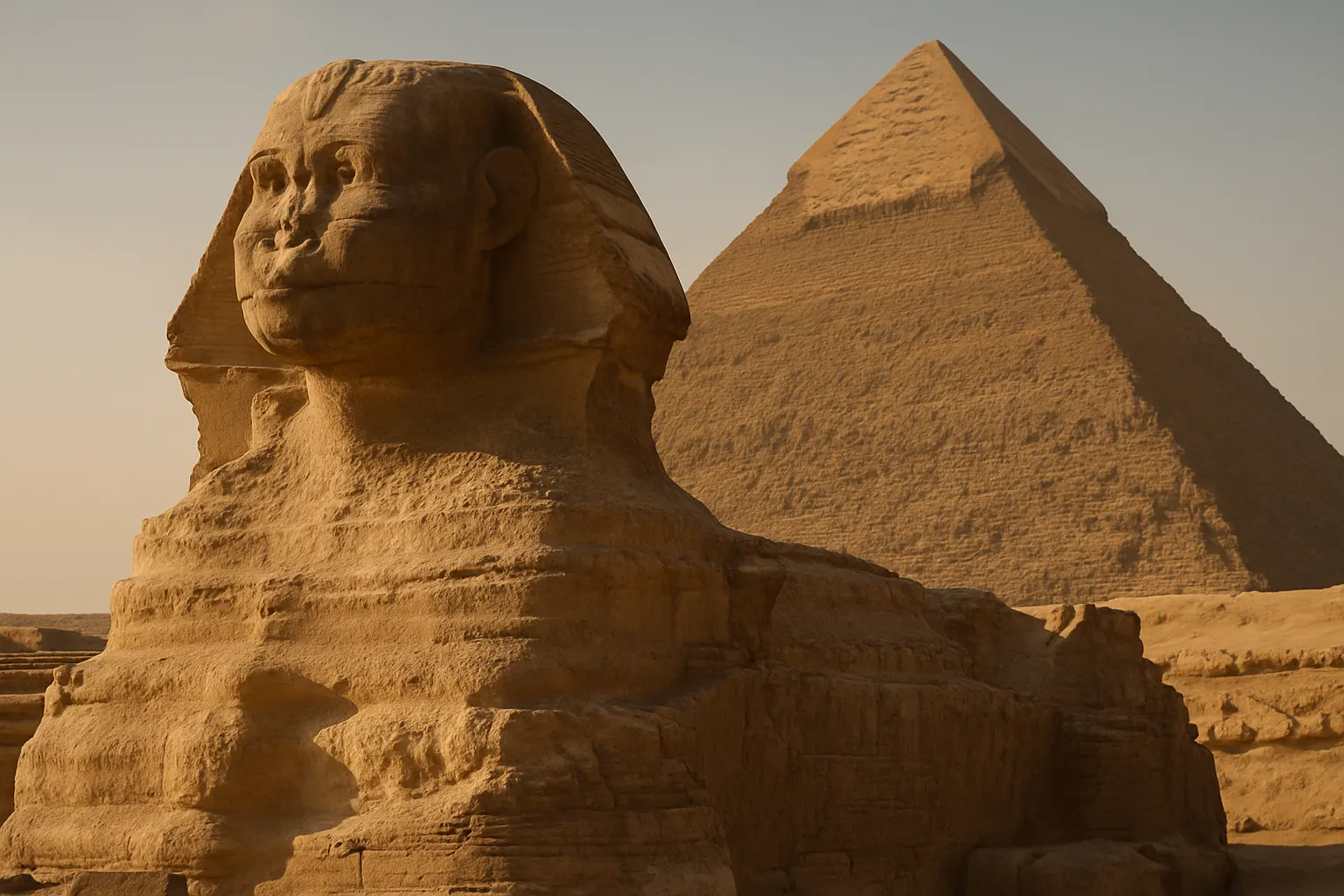
Great Sphinx of Giza Egypt Travel Guide 2026: Guardian of the Pyramids
Ancient EgyptianVisit the Great Sphinx, Egypt's enigmatic limestone guardian. Our guide covers the Sphinx's history,...
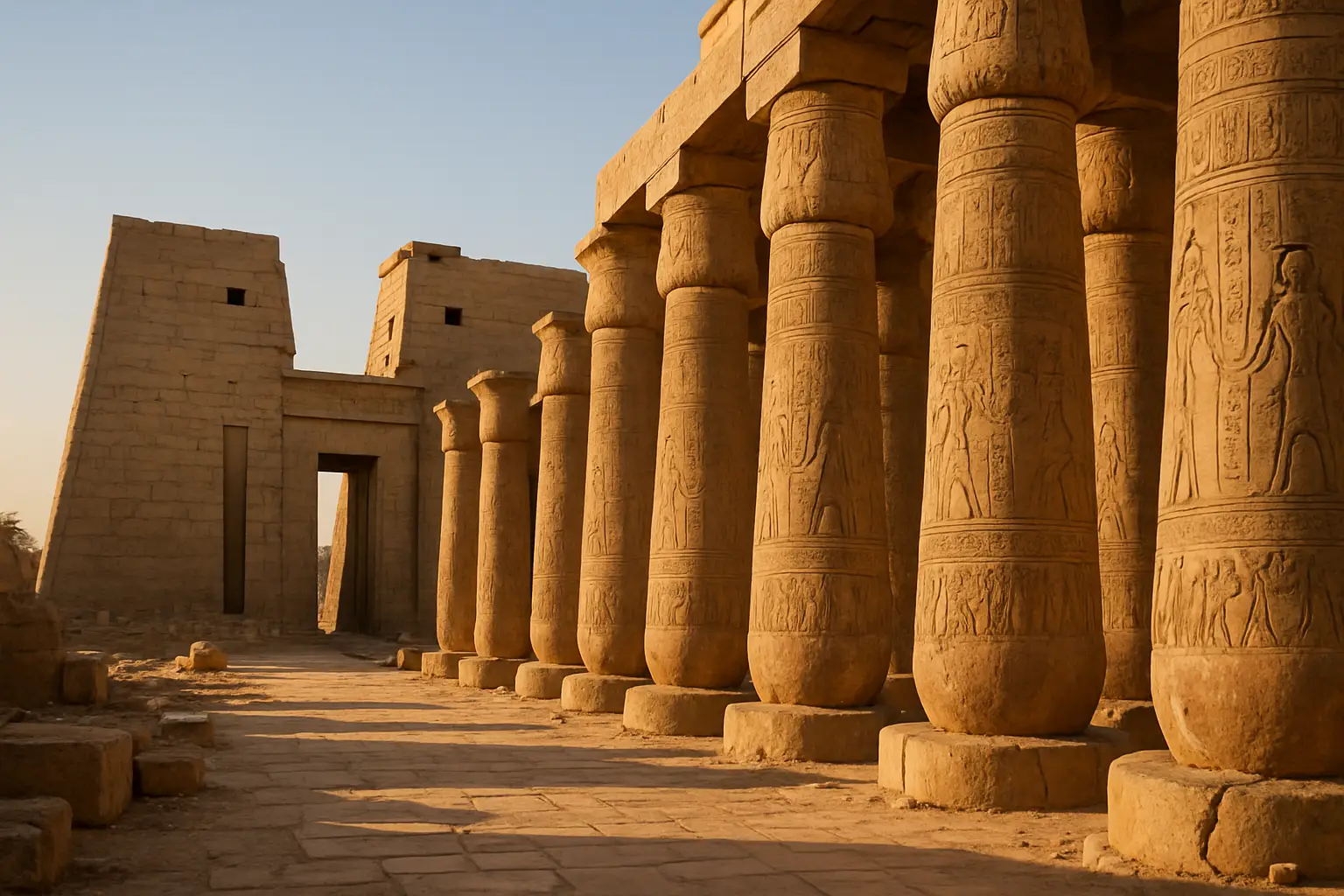
Karnak Temple Complex Egypt Travel Guide 2026: Egypt's Greatest Temple
Ancient EgyptianExplore Karnak, the world's largest ancient religious complex. Discover the Hypostyle Hall, Sacred L...
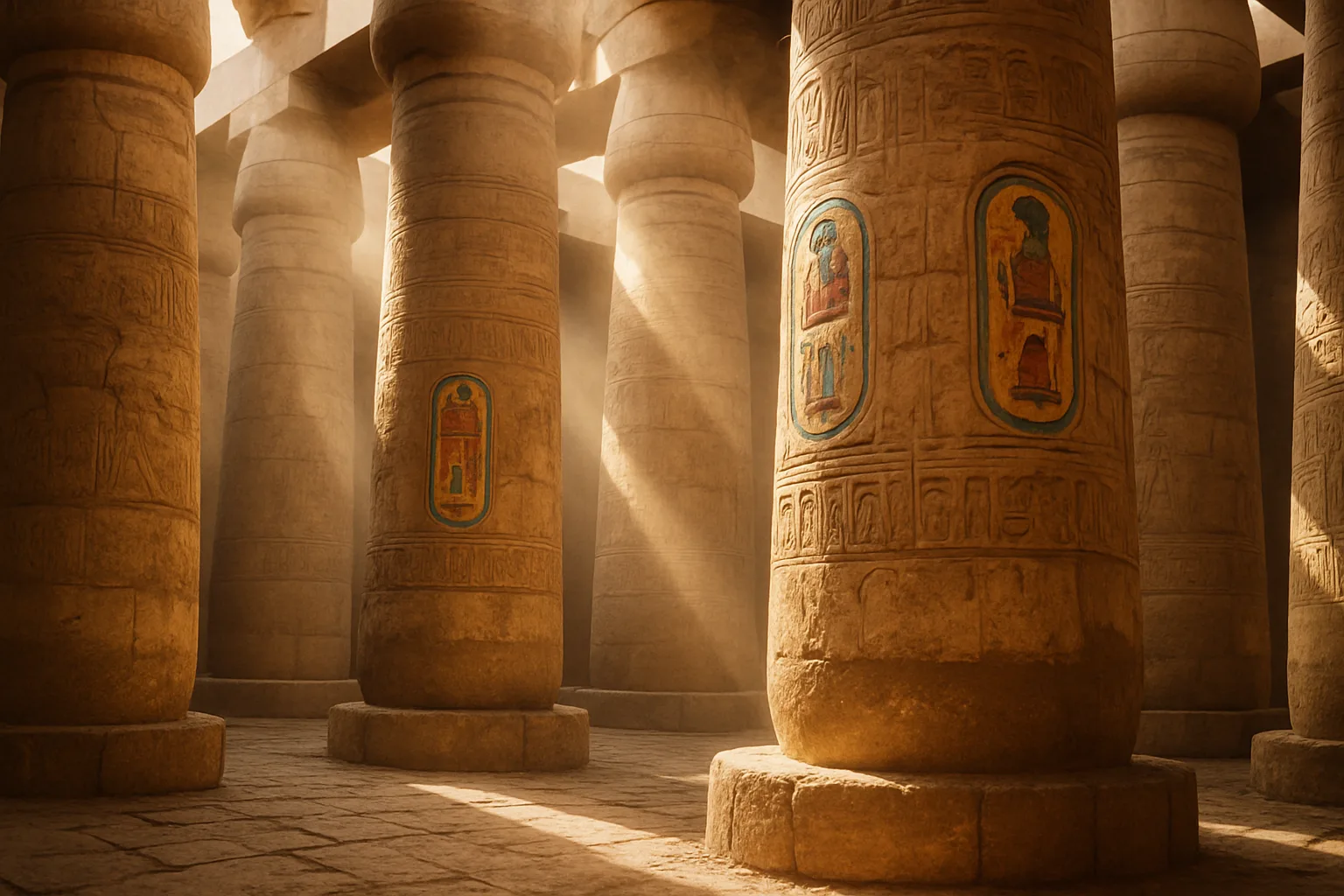
Luxor Egypt Travel Guide 2026: Valley of Kings, Karnak
Ancient Egyptian (New Kingdom)Luxor stands as the world's greatest open-air museum, spanning both banks of the Nile with temples, ...
Abydos Temple Egypt Guide 2026: Temple of Seti I & King List
New Kingdom-PtolemaicAbydos Temple near Luxor: magnificent Temple of Seti I with war reliefs, ancient king list, and vibr...