Quick Info
Curated Experiences
Chichen Itza, Cenote, and Valladolid Tour
Chichen Itza Gastronomic, Valladolid and Cenote Extremo
VIP Chichen Itza Private Tour
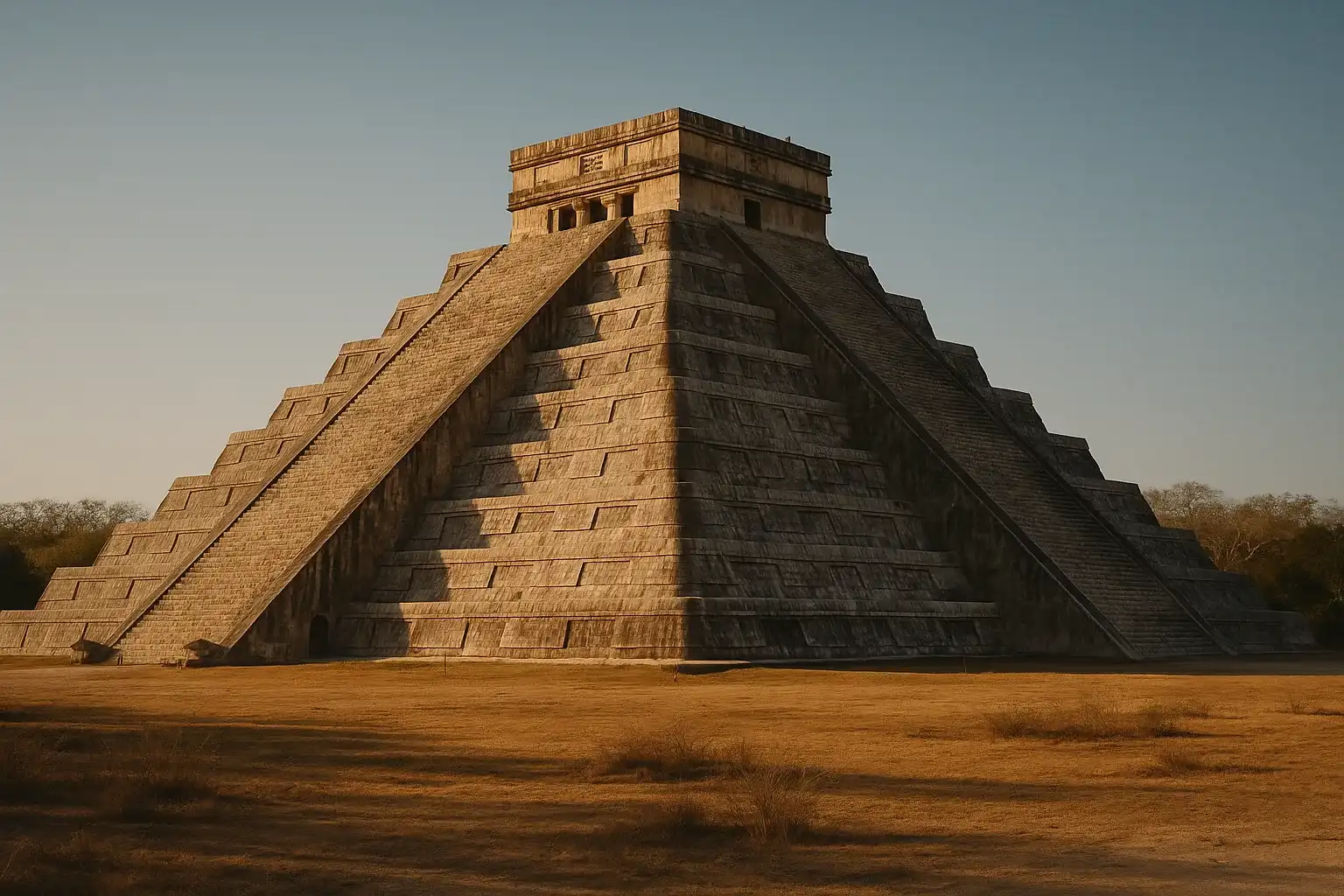
A silent army of stone serpents guards Chichen Itza. When you first glimpse El Castillo—the stepped pyramid dominating the site’s center—it’s easy to understand why this ancient city captivated both Spanish conquistadors and modern travelers. Unlike many ruins, Chichen Itza doesn’t require imagination to visualize its former glory. The structures remain remarkably intact, their geometric precision still commanding awe eight centuries after the city’s abandonment.
At Ancient Travels, we appreciate sites where archaeology tells a clear story. Chichen Itza delivers: here you’ll find evidence of human sacrifice alongside one of humanity’s earliest observatories, a ball court where ritual games ended in death, and acoustic engineering that still baffles modern scientists.
Essential Logistics: Planning Your Visit
Getting to Chichen Itza: Driving vs. Guided Tours
From Cancun (3 hours): The most common route follows the toll highway 180D—faster, safer, and well-maintained at roughly $25 USD in tolls each direction. Signs are bilingual, and highway rest stops offer surprisingly good coffee. Rental cars run $40-$70/day but remember: Mexico requires liability insurance by law, and rental agencies often pressure additional coverage.
From Merida (1.5 hours): Closer and less trafficked than the Cancun route, this approach lets you explore colonial Merida before your ruins visit. Many travelers base themselves in Merida’s historic center for a more authentic Yucatan experience than Cancun’s hotel zone.
ADO buses connect major cities to Piste, the town adjacent to Chichen Itza. Comfortable and economical (~$25 from Cancun), but arrival times may not align with optimal visiting hours.
Guided tours ($60-$120 including transportation, guide, and sometimes cenote visits) make sense for travelers uncomfortable with Mexican driving or those wanting archaeological context. Many tours include Valladolid, a stunning colonial city worth the stop.
Entrance Fees and Ticket Tips
2024 General Admission: 614 Mexican pesos (~$35 USD) for non-Mexican adults. Cash and cards accepted, though card machines occasionally fail. The fee includes entry to the main archaeological zone only—the evening light show at El Castillo requires separate tickets (book online in advance during peak seasons).
Arrive early to beat the sales pressure from unofficial “guides” at parking lot entrances. Licensed guides wear official identification—verify credentials before hiring. Expect $40-$60 for a 2-hour private tour.
Timing the Sun: The Best Time to Visit
Beating the Heat and the Crowds
8:00 AM sharp—mark this time. Tour buses from Cancun begin arriving around 9:30 AM, transforming the relatively peaceful morning site into dense crowds by 10:30 AM. The 8:00 AM opening provides two magical hours of elbow room before the organized tours descend.
Dry season (November-April) offers the most comfortable temperatures, with days rarely exceeding 85°F (29°C). December-February brings the most pleasant weather—and the thickest crowds. January hosts Chinese New Year tour groups, creating unprecedented congestion.
Rainy season (May-October) sees afternoon thunderstorms that can be dramatic but brief. The surrounding jungle glows emerald green, and crowds thin considerably. Bring waterproof sandals and a poncho that covers your backpack.
Witnessing the Equinox: The Serpent of Light
Twice yearly—around March 20 and September 22—the afternoon sun strikes El Castillo’s northern stairway at the precise angle to create the illusion of a serpent slithering down the pyramid. The shadow form connects the serpent heads at the base to stone carved at the top.
Thousands gather for this “Descent of Kukulkan,” making it both magical and maddening. Arrive by noon to secure a viewing position. The effect occurs between roughly 3:00-5:00 PM depending on exact date. Spring equinox draws larger crowds, but September offers equally impressive shadows with slightly fewer visitors.
Architectural Marvels of Chichen Itza
El Castillo (Temple of Kukulkan): The Calendar in Stone
This 79-foot pyramid embodies the Maya calendar in its geometry: 365 steps (one per day of the solar year), 52 panels on its nine terraces (corresponding to the 52-year calendar round), and 18 terraces on each staircase (the months of the Maya calendar). Climbing has been prohibited since 2006 for preservation and safety, but the structure’s mathematical precision remains visible from ground level.
Competitive Edge: El Castillo Secret
Most visitors photograph El Castillo head-on from the east. For more dramatic angles, walk to the Great Ball Court’s eastern wall—here you’ll frame the pyramid above the ancient ball court’s walls, creating layered depth impossible from standard positions. Early morning light hits the east face beautifully around 8:30 AM.
The Great Ball Court: The Largest in Mesoamerica
At 545 feet long and 225 feet wide, this acoustic marvel still produces clear echoes—a whisper from one end carries distinctly to the other. Stone rings mounted 20 feet high mark the scoring targets. Losers of these ritual games weren’t merely humiliated; Maya reliefs depict decapitations of defeated players.
Stand precisely in the court’s center and clap sharply—the echo returns as a piercing chirp. Acoustic engineers believe this intentionally mimics the quetzal bird, sacred to the Maya and associated with Kukulkan.
El Caracol: The Ancient Observatory
This unusual circular structure aligns with astronomical significance—its windows line up with Venus’s extreme positions and the sunset positions on equinoxes. The Maya tracked Venus obsessively, timing warfare and royal accessions to coincide with the planet’s appearance.
The Sacred Cenote: Offerings to the Gods
The natural sinkhole that gave Chichen Itza its name (“at the mouth of the well of the Itza”) lies north of the main plaza. Archaeological dredging recovered jade, gold, and human remains—sacrificial offerings to Chaac, the rain god. The cenote’s dark water, 60 meters across and 35 meters deep, creates an appropriately ominous atmosphere.
Note: Swimming is not permitted in the Sacred Cenote. For cenote swimming, visit nearby Ik Kil or Yokdzonot.
The Chichen Itza Experience: Sample Itineraries
The Half-Day Express (4 hours)
Arrive at 8:00 AM opening. Focus on El Castillo, the Great Ball Court, and the Temple of the Warriors. Skip the Sacred Cenote if time-constrained. Depart by noon as crowds peak.
Best for: Travelers with tight schedules who want the essential experience.
The Full Day with Cenote (7-8 hours)
Morning at the ruins (8:00 AM-1:00 PM), followed by lunch in Valladolid and afternoon swimming at Ik Kil cenote. Return to Cancun by evening.
Best for: Most visitors—this combination captures the archaeological and natural highlights of the Yucatan.
The Equinox Experience (full day)
Arrive early morning to explore the site before crowds. Midday break in Valladolid for lunch and rest. Return by 3:00 PM to secure equinox viewing position. Witness the serpent shadow, then evening light show.
Best for: Visitors visiting during March or September who want the full astronomical experience.
What to Bring and Wear
Essential items:
- Sunscreen (SPF 50+) and wide-brimmed hat—shade is minimal
- Water bottles (refill stations exist but bring backups)
- Comfortable walking shoes (you’ll cover 2-3 miles on stone)
- Small bills for tips and vendors
What to wear: Lightweight, breathable clothing covering shoulders (sun protection). The site has minimal shade; long sleeves beat sunburn.
Photography gear: Polarizing filter cuts haze and enhances sky contrast against the limestone structures. Wide-angle essential for capturing El Castillo’s full height.
Reading the Site Beyond the Postcard Stops
Many visitors leave with photos of El Castillo and little understanding of how complex this urban center actually was. Chichen Itza rewards slower, more intentional movement.
Start with the main plaza and then work outward in loops. The farther you walk from the primary pyramid axis, the easier it is to notice details that get lost in crowded centerline views: carved serpent motifs, weathering patterns on columns, and subtle orientation choices in stairways and platforms.
If you’re with a guide, ask specifically about chronology rather than only legends. Chichen Itza was not built in one burst. Architectural styles and inscriptions reflect centuries of adaptation, influence, and political change, including contact with central Mexican traditions. That layered timeline is one of the most important things the site can teach.
Family, Accessibility, and Comfort Reality
Chichen Itza is manageable for most travelers, but comfort planning makes a major difference.
- Families with kids: Bring more water than you think you’ll need and plan shaded rest breaks near vendor corridors at the perimeter.
- Older travelers: Prioritize early entry and shorter loops first, then decide whether to continue toward secondary groups based on heat and energy.
- Mobility considerations: Main paths are generally wide but can be uneven in places, with packed dirt and stone transitions. Wheelchair users can access portions of the core zone, but full coverage of all structures is limited.
Heat is the real challenge, not technical terrain. In warmer months, many visitors feel strongest from 8:00 to 10:30 AM and then fade quickly. Plan your highest-priority areas for that window.
Common Mistakes That Hurt the Experience
Arriving late from the Riviera Maya
If you arrive after the bus wave, you encounter both higher temperature and lower visibility at crowded viewpoints. Early arrival is the single highest-impact decision you can make.
Treating Chichen Itza as only a checkbox stop
A rushed 90-minute pass can feel expensive and chaotic. A more realistic 3-4 hour visit allows the place to make sense historically and spatially.
Ignoring hydration and sun load
There is little overhead cover in major plaza zones. Dehydration and sun fatigue are common reasons visitors leave early.
Not budgeting for the full day
Even if your ruins time is four hours, transport from Cancun or Playa del Carmen makes this an all-day commitment. Schedule dinner and evening plans accordingly.
Suggested High-Efficiency Day Plans
Plan A: Self-Drive from Cancun
- Leave by 5:00-5:30 AM
- Enter at opening (8:00 AM)
- Complete main complex before 11:00 AM
- Lunch in Valladolid
- Optional cenote stop mid-afternoon
- Return before evening traffic thickens near coastal zones
This plan gives flexibility and usually better time control than large group buses.
Plan B: Guided Group Tour
Best for travelers who want minimal planning and bilingual interpretation. Choose operators that explicitly include:
- Early site arrival (not midday)
- Clear total bus time expectations
- Limited shopping-stop pressure
- Licensed archaeology guide at the site
Cheap tours can still be good, but the lowest-cost options often recover margin through long retail detours.
Plan C: Private Guide + Driver
For families, photographers, or travelers with limited mobility, private transport can be worth the premium. You control pacing, rest stops, and on-site sequencing.
Why Chichen Itza Belongs in a Bigger Mexico Route
Chichen Itza pairs exceptionally well with Valladolid and one cenote stop because you experience three distinct layers of Yucatan history in one day: pre-Hispanic urban planning, colonial grid-town architecture, and the living water systems that sustained settlement here for centuries.
If you have multiple days in the region, consider pairing Chichen Itza with a second archaeological site like Ek Balam or Coba. The comparison helps clarify that Maya cities were not interchangeable; each had different scale, political role, and landscape strategy.
The Enduring Mystery of the Maya
Chichen Itza captures the Maya paradox better than any other site: a civilization that achieved extraordinary astronomical precision yet practiced ritual human sacrifice, that constructed cities of mathematical perfection yet apparently collapsed from environmental overreach.
Standing before El Castillo, watching afternoon shadows create the serpent of light, you sense why the Maya believed their gods inhabited these stones. The pyramid functions as a three-dimensional calendar, a ritual platform, and an embodiment of divine power simultaneously.
Modern Mexico encroaches—Cancun’s hotel zone lies just hours away—but Chichen Itza retains its power. Come prepared, arrive early, bring curiosity, and this ancient city rewards you with understanding. The Maya didn’t vanish; their descendants sell embroidery near the parking lot, still living on sacred ground their ancestors chose centuries ago.
For more Mayan exploration, consult our Mexico ancient travel guide. Also explore Teotihuacan near Mexico City and Tikal in Guatemala for complementary Maya and Mesoamerican experiences.
Quick Facts
| Attribute | Details |
|---|---|
| Location | Valladolid, Yucatan Peninsula, Mexico |
| Country | Mexico |
| Region | Yucatan Peninsula |
| Civilization | Maya |
| Historical Period | c. 600–1200 CE |
| Established | c. 600 CE |
| Coordinates | 20.6843, -88.5678 |
Explore More Mesoamerican Sites
- Teotihuacan: The City of the Gods near Mexico City
- Tikal: Guatemala’s magnificent Maya metropolis
- Machu Picchu: The legendary Inca citadel in Peru
Plan your complete Mexico adventure with our Mexico Ancient Sites Guide. Learn essential travel skills with our beginner’s guide.
Ready to walk the Avenue of the Dead? The feathered serpent awaits—but it rewards those who respect the ancient stones and arrive prepared.
Frequently Asked Questions
Is a guide required for Chichen Itza?
No, but highly recommended. Explanatory plaques exist in English and Spanish, but a guide provides historical depth and points out details invisible to casual observers. Licensed guides ($40-$60) gather near the entrance.
Can I climb the pyramid at Chichen Itza?
No. Climbing El Castillo has been prohibited since 2006 for preservation and safety. The stairs are extremely steep and several tourists died in falls before the ban. Respect the prohibition—it's non-negotiable and enforced.
How much time should I plan inside Chichen Itza?
Most travelers need 3 to 4 hours for a complete visit at a comfortable pace. If you also want guide-led interpretation, photos, and time at the Sacred Cenote path, plan closer to 4 hours.
Is Chichen Itza worth visiting from Cancun as a day trip?
Yes, but start early. It is a long day from Cancun (about 2.5 to 3 hours each way), so first-entry timing and realistic expectations are essential for a good experience.
What should I wear to Chichen Itza?
Wear breathable clothing, sun protection, and comfortable shoes with grip. There is little shade in the core complex, and midday heat on open stone surfaces can be intense.
Nearby Ancient Sites
Teotihuacan Mexico Travel Guide 2026: Pyramids, Mysteries & Day Trips
TeotihuacanoTeotihuacan, the 'birthplace of the gods,' remains Mesoamerica's most influential ancient city. This...
Tikal Guatemala: The Lost City of the Maya
Classic MayaDiscover Tikal, the magnificent Maya metropolis rising from the Guatemalan rainforest. Explore soari...