Quick Info
At a glance
Ciudad Perdida in Colombia does not reveal itself all at once. It emerges after days of walking through humid forest, along muddy paths, over swinging river crossings, and up steep stone stairways hidden beneath towering palms and lianas. Deep in the Sierra Nevada de Santa Marta, this ancient settlement—also known as Teyuna and often called the Lost City—feels less like a ruin encountered by chance and more like a place that must be earned. The journey is part of its meaning. Unlike archaeological sites reached by highway or train, Ciudad Perdida remains inseparable from the landscape that once protected it and still shapes every modern visit.
That isolation is one reason the site holds such fascination. Built by the Tairona people centuries before the Spanish founded many of Colombia’s colonial cities, Ciudad Perdida occupies a series of mountain terraces connected by stone steps and paths. It sits within an environment of extraordinary biodiversity and enduring Indigenous presence, where descendants of the region’s original peoples continue to view the Sierra Nevada as sacred territory. For travelers, the site offers more than dramatic scenery or archaeological intrigue. It provides a rare chance to experience an ancient urban center in the rhythm of the terrain that sustained it. Mist hangs over the forest in the early morning, rivers thunder below, and the terraces appear almost suspended between jungle and cloud. The result is one of the most memorable and physically immersive heritage journeys in the Americas.
History
Origins in the Tairona world
Ciudad Perdida is generally dated to around the 8th century CE, making it older than Machu Picchu by several centuries. The city belonged to the broader Tairona cultural sphere, which flourished in the Sierra Nevada de Santa Marta and adjacent Caribbean lowlands of present-day northern Colombia. The Tairona were not a single centralized empire in the later Inca sense, but rather a network of communities linked by trade, ritual life, agriculture, and shared architectural traditions. Their settlements ranged across different ecological zones, allowing them to move goods such as salt, fish, tropical crops, ceramics, and worked stone between coast, foothills, and mountain valleys.
Within that network, Ciudad Perdida appears to have been a major ceremonial, political, and residential center. Its placement on a mountainside above the Buritaca River valley was strategic as well as symbolic. The location offered access to water, fertile surrounding land, and natural defenses, while also embedding the settlement in the sacred geography of the Sierra. The Tairona reshaped the steep terrain with remarkable engineering skill, cutting terraces into the slopes, building retaining walls, laying stone-paved paths, and creating stairways that connected elevated sectors of the city. These interventions stabilized the mountainside and supported a sizeable, organized population.
Growth, exchange, and regional importance
Over the centuries, Ciudad Perdida likely expanded as one of several important Tairona centers. Archaeologists have identified numerous terraces of varying size, suggesting differentiated spaces for elite activity, ceremonies, housing, and communal use. Circular house platforms indicate the forms of dwellings that once stood there, while roads and staircases point to tightly planned movement through the city. The site was not isolated in antiquity in the way it feels today. Instead, it was integrated into a wider landscape of settlements and pathways extending through the Sierra Nevada.
Tairona society became well known for sophisticated goldwork, stone construction, and agricultural adaptation to mountain terrain. While spectacular metal objects often dominate museum displays, Ciudad Perdida shows another side of that achievement: urban planning in a rainforest environment. The city’s architecture depended less on monumental carved temples than on the cumulative power of terraces, circulation routes, drainage, and topographic control. It was a city made to fit the mountain rather than erase it.
Contact, disruption, and abandonment
Spanish incursions into the Santa Marta region began in the 16th century and brought profound upheaval. Violence, forced labor, disease, and the disruption of Indigenous political systems destabilized Tairona communities across the Sierra Nevada. Many settlements were abandoned, relocated, or transformed as people withdrew deeper into the mountains. Although the exact sequence at Ciudad Perdida remains debated, the site appears to have been abandoned by the late 16th or early 17th century. Forest growth gradually covered terraces, stairways, and walls, concealing the city beneath dense vegetation.
Yet “lost” is a misleading term when taken too literally. The broader region remained inhabited by Indigenous peoples, including the Kogi, Wiwa, Arhuaco, and Kankuamo, who maintain cultural continuity with the ancient inhabitants of the Sierra and whose traditional knowledge preserved the significance of the landscape even when the stone architecture disappeared from wider public attention.
Rediscovery and archaeology in the modern era
Ciudad Perdida entered national and international awareness in the 1970s after looters, often called huaqueros, reached the site and removed artifacts from tombs and terraces. Their activity damaged the archaeological context and led to illegal sales of objects. Once authorities and archaeologists learned of the site, Colombia’s Instituto Colombiano de Antropología e Historia and other institutions began documentation, protection, and conservation work. Efforts focused on clearing vegetation, stabilizing terraces, mapping the city, and controlling access.
Modern research has deepened understanding of Ciudad Perdida as a substantial settlement rather than a small ritual outpost. Archaeology continues to refine estimates of its size, chronology, and role within the Tairona network. At the same time, site management has increasingly had to balance conservation, tourism, security, and the rights and spiritual concerns of Indigenous communities. Today Ciudad Perdida stands not only as an archaeological destination, but as a place where questions of heritage, stewardship, and living cultural landscapes remain central.
Key Features
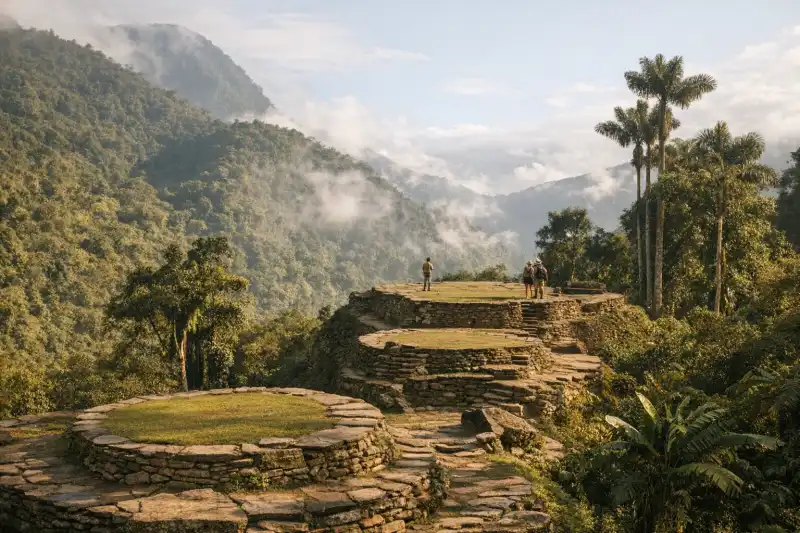
The defining feature of Ciudad Perdida is its system of stone terraces, which spread across the mountain in graceful, deliberate arcs. These platforms are the foundations of the ancient city. Some are broad and open, capable of holding large structures or communal activity, while others are smaller and more intimate. Seen through the jungle, they create a layered geometry that feels both engineered and organic. Moss, roots, and filtered sunlight soften the stone edges, but the scale of human labor remains unmistakable. The terraces demonstrate how the Tairona transformed a steep, rain-soaked hillside into a stable and habitable urban environment.
Equally striking are the stairways, especially the final ascent of roughly 1,200 stone steps that leads trekkers to the archaeological core. This staircase is more than a dramatic approach; it reveals the sophistication of circulation within the site. Throughout Ciudad Perdida, steps and pathways connect terraces at different elevations, guiding movement in ways that would have shaped social interaction, ritual access, and everyday life. The stones are worn, irregular, and often slick in wet weather, reminding visitors that this was a functioning mountain city rather than a ceremonial stage set apart from practical concerns.
Another essential feature is the site’s relationship to water and drainage. In a region with heavy seasonal rain, successful settlement required careful hydrological management. Retaining walls, channels, and engineered surfaces helped control runoff and reduce erosion. These systems are less visually dramatic than the terraces, but they are critical to understanding why Ciudad Perdida could endure in such a challenging environment. The Tairona did not simply occupy the Sierra Nevada; they developed a durable method of living within it.
The city’s architectural remains are often subtle compared with more heavily reconstructed sites elsewhere in the world. Visitors will not find towering temples or restored palaces. Instead, the circular house bases and stone-edged platforms invite a different kind of imagination. You read the city through pattern, spacing, and terrain. The arrangement of terraces suggests neighborhoods, gathering spaces, and hierarchies of access. The absence of standing superstructures—most of which were made from perishable materials such as wood and thatch—actually sharpens appreciation for the planning beneath them.
The surrounding forest is also one of Ciudad Perdida’s great features, not merely its backdrop. Howler monkeys, birds, butterflies, and dense tropical plant life contribute to the sensory power of the site. Morning mist can drift over the terraces, while the sound of insects and distant water fills pauses in conversation. The jungle creates an atmosphere of concealment and revelation that few archaeological destinations can match. It also serves as a reminder that the city was never detached from its ecological setting. Agriculture, trade, and spiritual life were all tied to the Sierra’s vertical landscape.
Finally, Ciudad Perdida’s significance is heightened by its living cultural context. The Sierra Nevada de Santa Marta remains sacred to Indigenous communities, particularly the Kogi and Wiwa, among others. For many visitors, learning even a little about these perspectives changes the experience. The site becomes more than a relic of a vanished civilization. It becomes part of a continuing cultural world in which mountains, rivers, and ancient places hold moral and spiritual meaning. This dimension gives Ciudad Perdida a depth that extends beyond archaeology alone.
Getting There
Most visits to Ciudad Perdida begin in Santa Marta, the main gateway city on Colombia’s Caribbean coast. From Santa Marta, authorized trekking operators typically arrange transport by 4x4 vehicle to the trailhead near El Mamey, also called Machete Pelao. The road journey usually takes about 2.5 to 3.5 hours depending on weather and road conditions. If booked separately, shared transport can cost roughly COP 80,000 to 150,000 each way, while private transport is higher. In practice, most travelers join an organized multi-day trek, which bundles transport, guide services, accommodation in camps, meals, and entrance fees.
The hike itself generally takes 4 to 6 days round trip. Four-day itineraries are the most common and involve long walking days, while five- and six-day options give a slower pace. Prices vary by operator and season, but standard guided treks often fall around COP 1,800,000 to 2,500,000 per person. International pricing may also be quoted in US dollars. Because access is regulated, independent trekking is not usually permitted.
To reach Santa Marta, travelers can fly into Simón Bolívar International Airport from Bogotá, Medellín, and other Colombian cities. Budget domestic fares often range from about COP 150,000 to 500,000 depending on route and booking time. Long-distance buses from Cartagena or Barranquilla are also available and can be economical, though slower.
Visitors should budget extra for snacks, waterproof bags, tips for guides, and optional luggage storage in Santa Marta. Good hiking shoes, light clothing, insect repellent, and rain protection are essential. The journey is as much expedition as excursion, so practical preparation matters.
When to Visit
The most popular time to visit Ciudad Perdida is during the drier part of the year, usually from December through March. During these months, trails are often less muddy, river levels can be lower, and walking conditions are generally easier. Clearer mornings can also improve views over the terraces and surrounding forest. That said, “dry season” in the Sierra Nevada does not mean guaranteed sunshine. Humidity remains high, occasional rain is always possible, and the jungle environment can still feel heavy and slippery underfoot.
The wetter months, particularly around May to November, bring greener vegetation, stronger river flow, and a more intense sense of the rainforest at full volume. Some travelers enjoy this atmosphere, but the trek can be more demanding. Muddy climbs, wet camps, and swollen crossings may slow progress. Heavy rains can affect logistics and, in some periods, trails or the site may close temporarily for safety, conservation, or cultural reasons. It is wise to confirm conditions before booking.
Temperature is less about seasonal cold and more about tropical heat at lower elevations versus cooler nights in the mountains. Daytime hiking can feel exhausting year-round, especially on exposed sections. Starting early each morning helps.
Another important consideration is holiday timing. Colombian vacation periods and international peak travel dates can make Santa Marta busier and some treks fuller, even though the trail never feels urban in scale. If you want a balance of manageable weather and fewer people, late January, February, and early March are often strong choices. Whenever you go, flexibility is useful. Ciudad Perdida is governed by terrain, climate, and local management decisions more than by rigid tourist schedules.
| Quick Facts | Details |
|---|---|
| Site name | Ciudad Perdida (Teyuna) |
| Country | Colombia |
| Region | Magdalena, Sierra Nevada de Santa Marta |
| Civilization | Tairona |
| Founded | c. 8th century CE |
| Type | Mountain settlement and ceremonial center |
| Setting | Tropical rainforest in the Buritaca River basin |
| Access | Authorized guided multi-day trek only |
| Nearest gateway city | Santa Marta |
| Typical visit length | 4-6 days round trip |
| Main highlights | Stone terraces, stairways, jungle setting, sacred mountain landscape |
| Best-known challenge | Humid, muddy trek with steep ascents including the final staircase |
Guided tours: worth it?
A guide can be genuinely useful at Ciudad Perdida, especially if you want help with transport, timing, tickets, or understanding a large site without losing half the day to logistics.
Best for
- First-time visitors who want context, not just photos
- Travelers who want transport, timing, or entry logistics handled
- Short visits where a planned route saves time
When to go self-guided
Go independently if you already have transport and tickets sorted, enjoy moving at your own pace, and are comfortable checking the latest official rules before you arrive.
What I’d avoid
Skip paid tours that bundle unrelated stops you do not actually want. The best option should either save meaningful planning time or add historical context you would miss on your own.
Ciudad Perdida trek from Santa Marta
Useful when: transport or pickup logistics matter
Lost City Colombia multi-day hike
Useful when: you want to compare guided formats before deciding
Sierra Nevada de Santa Marta archaeology tour
Useful when: you want to compare guided formats before deciding
Some tour links are affiliate links, which may earn Ancient Travel a small commission at no extra cost to you. I try to surface options that make practical sense for the site—not just anything bookable.
Frequently Asked Questions
What is Ciudad Perdida?
Ciudad Perdida, or the Lost City, is a major pre-Hispanic Tairona archaeological site in Colombia’s Sierra Nevada de Santa Marta, reached by a multi-day jungle trek.
How many days does it take to visit Ciudad Perdida?
Most visitors complete the trek in 4 to 6 days, depending on the route, operator, weather, and pace.
Do I need a guide to visit Ciudad Perdida?
Yes. Access is controlled and visitors must go with an authorized guide or licensed trekking operator.
Is the Ciudad Perdida hike difficult?
The trek is considered moderately to highly demanding because of heat, humidity, river crossings, mud, and long uphill sections, especially the final staircase.
When is the best time to visit Ciudad Perdida?
The drier months from roughly December to March are generally the easiest for trekking, though conditions can vary and closures may occur.
Can you visit Ciudad Perdida from Santa Marta?
Yes. Santa Marta is the standard gateway, and most tours include transport from the city to the trailhead.
Nearby Ancient Sites
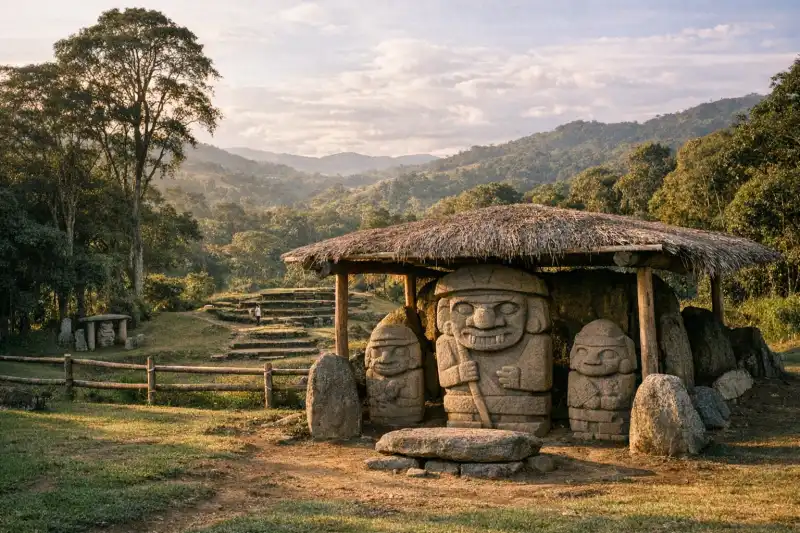
San Agustín Archaeological Park
San Agustín cultureExplore Colombia’s San Agustín Archaeological Park, home to enigmatic stone statues, tombs, and sacr...
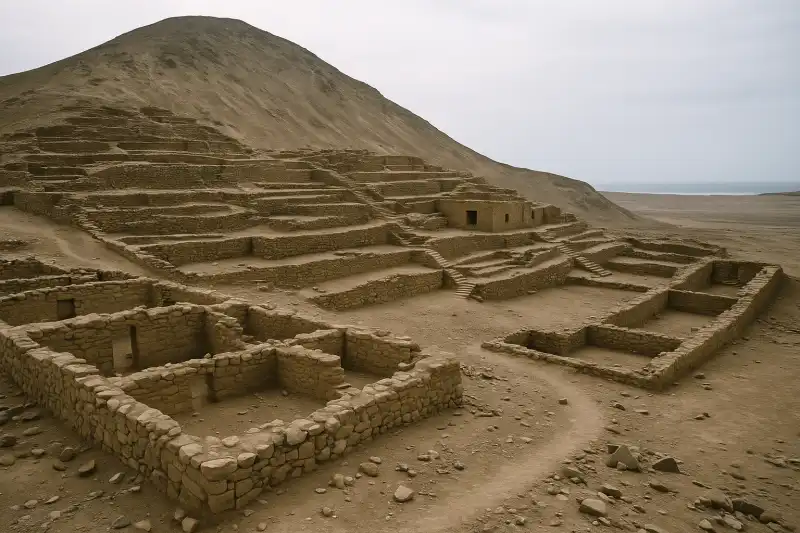
Aspero Peru Guide 2026: Norte Chico Pyramids & Caral Coast
Norte-Chico-CaralVisit Aspero in Peru to see Norte Chico pyramids, plazas, and elite temples, with practical tips for...
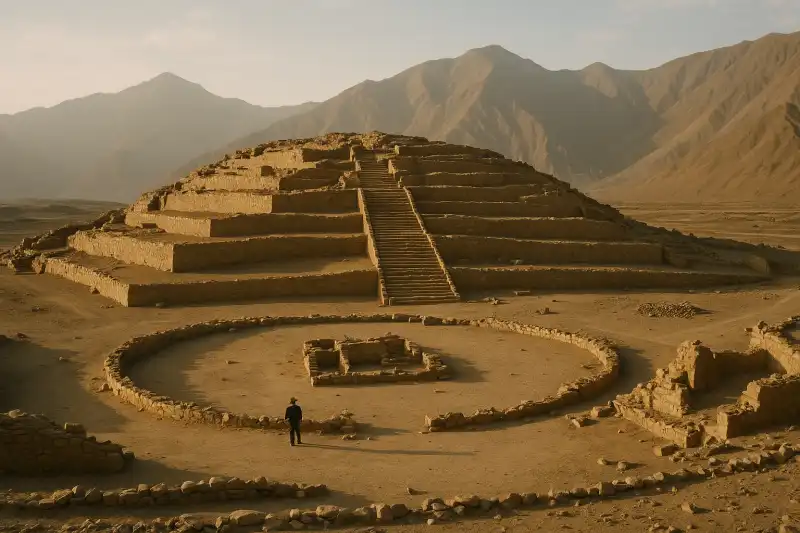
Caral-Supe Peru Guide 2026: Sacred Pyramids & the First Andean City
Norte-Chico-CaralVisit Caral-Supe in Peru, the oldest known city in the Americas, with practical transport from Lima,...