Quick Info
Curated Experiences
Clonmacnoise and Shannon Heritage Day Tour
Private Clonmacnoise and Central Ireland History Tour
Ireland Monastic Sites Small-Group Experience
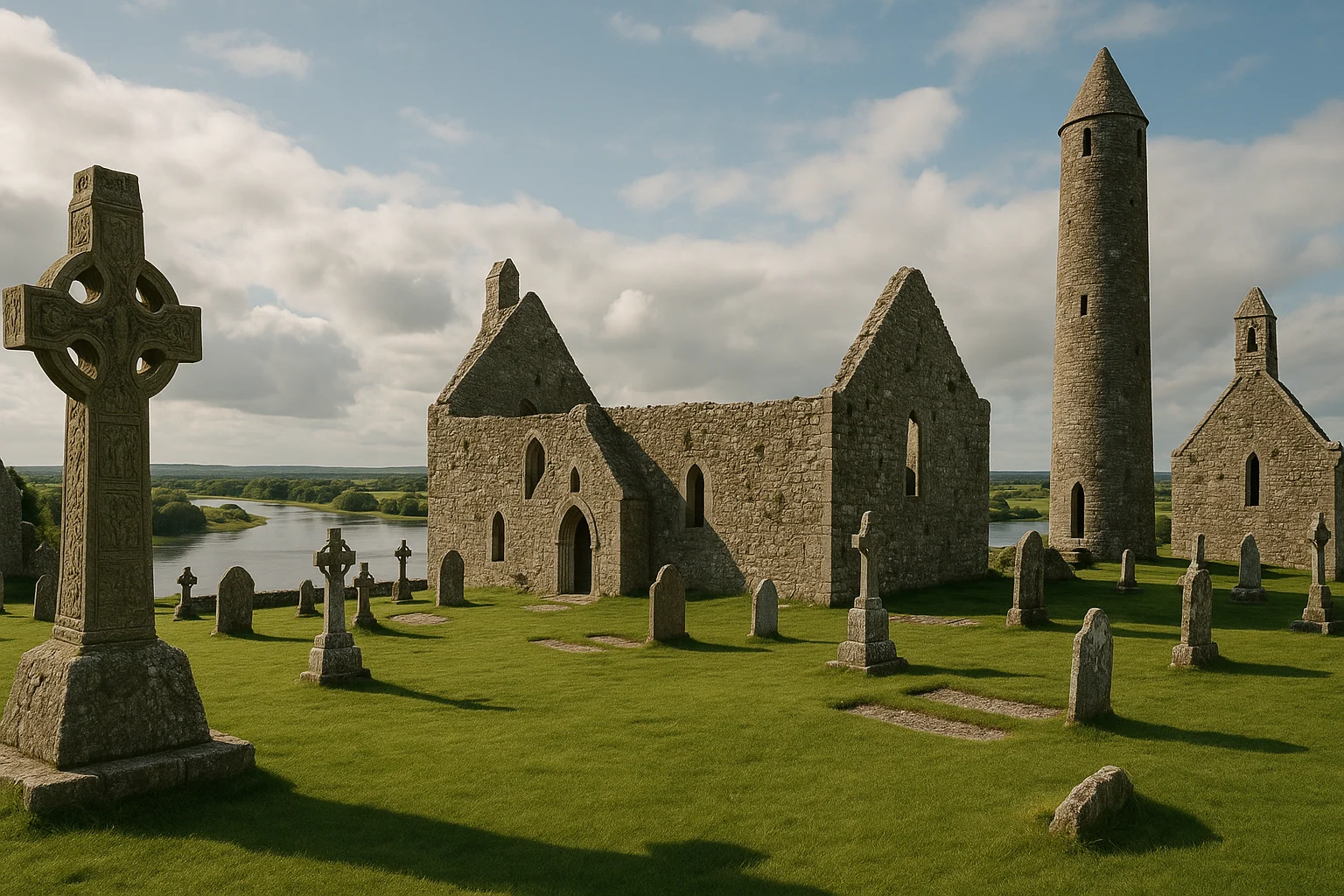
Clonmacnoise sits on a gentle rise above the River Shannon in the Irish midlands, surrounded by the kind of quiet bogland that makes you wonder why anyone built anything important here at all. Then you look at the river, wide and slow, cutting through the center of Ireland like a highway, and it clicks. This was never a remote retreat. It was a crossroads — the place where water routes, overland tracks, and competing kingdoms converged, and where a monastery could grow rich on all three.
What survives today is a dense scatter of ruined churches, carved high crosses, a round tower, and hundreds of grave slabs arranged across a grassy enclosure overlooking the Shannon floodplain. There is no single dramatic ruin to photograph and move on from. The power of Clonmacnoise comes from the accumulation, from walking slowly through layer after layer of stone and carved inscription and realizing that this modest hilltop shaped Irish intellectual and spiritual life for over six hundred years.
Come prepared to read rather than just look. Clonmacnoise rewards attention in a way that more visually spectacular sites sometimes do not.
Historical Context
Saint Ciaran founded the monastery around 545 CE, choosing a site at the junction of the Shannon with an important east-west road called the Esker Riada — a glacial ridge that provided dry passage across the boglands of central Ireland. The combination of river and road made Clonmacnoise accessible from almost every major kingdom on the island, and the monastery exploited that position brilliantly. Within a few generations it had grown into one of the wealthiest and most influential monastic centers in Ireland, producing manuscripts, training scholars, and attracting the patronage of kings.
At its peak, roughly the 8th through 10th centuries, Clonmacnoise functioned as something closer to a small town than a simple monastery. Craftsmen worked metal and stone. Scribes produced illuminated manuscripts. The Annals of Clonmacnoise recorded events across Ireland with the precision of a national chronicle. High kings and regional rulers sought burial here, and the monastery’s abbots wielded significant political influence alongside their spiritual authority.
That prominence came at a cost. Vikings raided Clonmacnoise repeatedly from the 9th century onward, arriving by longship up the Shannon. Rival Irish kingdoms attacked when alliances shifted. The site was burned and rebuilt multiple times — the Annals record at least a dozen major raids — yet the monastery endured each time, rebuilding in stone what had been lost in fire. The round tower, several stone churches, and the high crosses date to these centuries of resilience and reconstruction.
By the 12th century, church reforms reorganized Irish ecclesiastical structures around a diocesan system modeled on continental European practice. Clonmacnoise’s old monastic model no longer fit the new order, and the settlement gradually declined. English forces sacked the site in 1552, and by the 17th century it stood abandoned. What remains today is the accumulated physical record of those six centuries of vitality and the slow centuries of abandonment that followed.
The site is now managed by the Office of Public Works (OPW), with a visitor center that houses the original high crosses in protected conditions and provides the interpretive context that makes the outdoor ruins far more legible.
For travelers building an understanding of how Christianity shaped Ireland, Clonmacnoise is essential because it shows the full arc: from foundation through prosperity, destruction, recovery, decline, and abandonment, all visible in one grassy enclosure above a river that still moves as slowly as it did when the monks arrived.
What to See
The High Crosses
Start in the visitor center, where the original Cross of the Scriptures and South Cross are displayed in climate-controlled conditions. The Cross of the Scriptures is the standout — densely carved with biblical scenes including the Crucifixion, the Last Judgment, and Christ in the tomb, along with an inscription naming King Flann Sinna and Abbot Colman, who likely commissioned it around 900 CE. The carving is remarkably detailed, and seeing it at close range indoors lets you trace the chisel work in a way that outdoor replicas cannot match. Replicas mark the original outdoor positions, providing spatial context once you walk the grounds.
The Cathedral
The largest church on the site, the cathedral was built in stages between the 10th and 15th centuries. Its west doorway, carved in the Romanesque style, is the most refined architectural detail in the complex. The interior is roofless now, but the surviving walls give a clear sense of scale — this was the principal church of one of Ireland’s most important monasteries, and its proportions reflect that status. Look for the carved heads and decorative stonework embedded in the walls, some of which may have been reused from earlier structures.
O’Rourke’s Tower (Round Tower)
The round tower rises to roughly 62 feet and dates to approximately the 12th century, though an earlier tower likely stood on the same spot. Round towers served multiple functions in Irish monasteries — bell towers, treasuries, and places of last resort during raids. This one is missing its conical cap but otherwise stands intact, and its position within the complex gives you a vertical reference point that helps you read the site’s layout from ground level.
Temple Ciaran
The smallest and oldest church on the site, Temple Ciaran is traditionally held to mark the burial place of the founder. The structure is tiny — barely large enough for a few people to stand inside — but its age and association give it a weight that the larger ruins cannot replicate. Pilgrims still visit, and you may find small devotional objects left at the entrance.
The Grave Slabs
Clonmacnoise holds one of the largest collections of early medieval grave slabs in western Europe — over 600 fragments and complete slabs carved with crosses, inscriptions, and decorative patterns spanning several centuries. Many are displayed in the visitor center, while others remain in situ among the ruins. These are easy to overlook if you are focused on the churches and crosses, but they represent the most direct surviving record of the individuals who lived, worked, and died at this monastery. Give them time.
River Shannon Overlook
Before you leave, walk to the southern edge of the enclosure and look out over the Shannon floodplain. The river is slow and wide here, bordered by water meadows that flood in winter, and once you see it you understand immediately why this location mattered. Anyone moving through central Ireland by water passed within sight of these walls. The view also makes clear how exposed the monastery was to waterborne attack — the same river that brought trade brought Viking raiders.
Timing and Seasons
The best months to visit are April through June and September through October. During these periods, the midlands light is soft, the grass is vivid green, and visitor numbers are moderate enough to give you quiet time among the ruins. Temperatures range from 48-60°F (9-16°C) in spring and 50-58°F (10-14°C) in early autumn. Summer (July and August) is warmer, around 60-68°F (16-20°C), but midday hours can feel crowded when tour buses arrive in clusters.
The site is fully exposed, with no shade or shelter among the ruins themselves. Morning visits — arriving at or near opening time — consistently produce the best experience. Late afternoon, roughly after 3:30 PM, is a second good window when day-trippers from Dublin and Galway have moved on and the light drops low across the Shannon. Winter visits are possible but cold, windy, and limited by shorter operating hours; temperatures sit around 38-46°F (3-8°C).
Tickets, Logistics, and Getting There
Adult admission is approximately $9 (EUR 8) including the visitor center and outdoor ruins. Children, students, and seniors receive discounted rates. OPW Heritage Card holders enter free, and the card pays for itself quickly if you are visiting multiple Irish heritage sites. The visitor center typically opens at 10:00 AM and closes between 5:30 and 6:00 PM in summer, with reduced hours in the shoulder and winter seasons.
Clonmacnoise is located about 20 kilometers south of Athlone and roughly 130 kilometers west of Dublin. The site is accessible only by car or organized tour — there is no regular public bus service to the monastery. From Dublin, the drive takes roughly 1 hour 45 minutes via the M6 motorway. From Galway, expect about 1 hour 30 minutes. From Athlone, the drive is approximately 25 minutes along the R444. Organized day tours from Dublin typically cost $64-80 per person and include transport, admission, and guided interpretation.
Parking at the site is free and immediately adjacent to the visitor center.
For visitors without a car, organized day tours from Dublin provide the most practical option. These typically depart in the morning, include guided interpretation at the site, and return by late afternoon. Some tours combine Clonmacnoise with a stop in Athlone or other midlands heritage sites.
Practical Tips
- Start in the visitor center before walking the outdoor ruins. The exhibition panels, audiovisual presentation, and indoor cross displays give you the interpretive framework that makes the outdoor experience significantly richer.
- Bring a waterproof layer regardless of the forecast. Midlands weather turns quickly, and the site is entirely exposed to wind and rain.
- Wear sturdy shoes. The ground is uneven grass over old foundations, with muddy patches common after rain.
- Budget real time for the grave-slab collection. It is easy to rush past, but the inscriptions and cross designs are remarkably varied and repay close inspection.
- The small cafe adjacent to the visitor center serves light refreshments. Athlone, 25 minutes north, has a full range of restaurants and is a good lunch stop if combined with the visit.
- A pair of binoculars helps for reading carved detail on outdoor cross replicas and for watching birds along the Shannon.
Suggested Itinerary
Arrive at opening time and spend the first 30 to 40 minutes in the visitor center. Study the original high crosses at close range, watch the introductory audiovisual, and review the grave-slab collection. This indoor investment transforms the outdoor walk that follows.
Exit into the ruins and begin at the cathedral, working south through the cluster of smaller churches. Spend time at Temple Ciaran and the round tower, then loop to the outdoor cross replicas marking original positions. Allow 45 minutes to an hour for this circuit, longer if you stop to read inscriptions and photograph details.
Finish at the southern edge of the enclosure with the Shannon overlook. The full visit takes 1.5 to 2.5 hours depending on your pace and interest level. If you have the day, combine with a stop in Athlone for lunch and a walk along the river, or continue to another heritage site in the region.
Nearby Sites
Glendalough in County Wicklow offers the strongest comparison — another great early medieval monastic settlement, but set in a glacial valley rather than a river-plain landscape. Visiting both gives you two radically different expressions of the same monastic impulse. Glendalough is roughly 2.5 hours east by car.
Rock of Cashel picks up the story in a later period, showing how ecclesiastical and royal power merged on a dramatic hilltop in County Tipperary. It is about 2 hours south of Clonmacnoise and pairs naturally on a multi-day Ireland heritage route.
Boyne Valley Passage Tombs at Newgrange and Knowth reach back over 5,000 years into Ireland’s Neolithic past. The contrast between a passage-tomb complex and an early medieval monastery — separated by four millennia but both shaped by the same river-valley geography — is one of the most instructive pairings available on the island. The Boyne Valley is about 2 hours northeast.
Athlone itself, just 25 minutes north, holds a 12th-century castle overlooking the Shannon and makes a convenient lunch or overnight base for exploring the midlands.
Discover More Ancient Wonders
- Glendalough — Glacial-valley monastic settlement in County Wicklow
- Rock of Cashel — Hilltop cathedral complex where royal and ecclesiastical power converged
- Newgrange — Neolithic passage tomb predating Clonmacnoise by four millennia
- Skellig Michael — Atlantic island monastery at the extreme edge of early Irish Christianity
- Our guide to early medieval monastic sites in Ireland
Final Take
Clonmacnoise asks you to slow down and accumulate impressions rather than chase a single highlight. The cathedral is modest, the round tower is missing its cap, and the high crosses are best seen indoors rather than in their original positions. None of that diminishes the site. What Clonmacnoise offers instead is the most grounded, most legible introduction to early medieval Ireland available anywhere on the island — a place where scholarship, faith, trade, and violence converged on a Shannon riverbank for six centuries and left a record in stone that you can still walk through today.
Give it the time. Start in the visitor center, read the crosses, walk the ruins slowly, and finish at the river. You will leave with a clearer understanding of how medieval Ireland actually worked than almost any other single site can provide.
Quick Facts
| Attribute | Details |
|---|---|
| Location | Athlone, County Offaly, Ireland |
| Country | Ireland |
| Region | County Offaly |
| Civilization | Early Medieval Ireland |
| Historical Period | 6th century CE — 12th century CE |
| Established | c. 545 CE |
| Admission | ~$9 (EUR 8) adults |
| Opening Hours | 10:00 AM daily; closing varies seasonally |
| Time Needed | 1.5-2.5 hours |
| Managed By | Office of Public Works (OPW) |
| Coordinates | 53.3247, -7.9856 |
Frequently Asked Questions
How much time should you plan for Clonmacnoise?
Most first-time visitors should plan 1.5 to 2.5 hours. That is enough for the main ruins, cross replicas, visitor center context, and a short River Shannon overlook walk.
Why is Clonmacnoise historically important?
Clonmacnoise became one of Ireland's key early medieval monastic centers, known for scholarship, religious influence, and major high-cross sculpture traditions connected to wider Irish church networks.
Can Clonmacnoise be visited as a day trip?
Yes. It works well as a day trip from Dublin or Galway, especially when paired with Athlone or other central-Ireland stops.
Nearby Ancient Sites
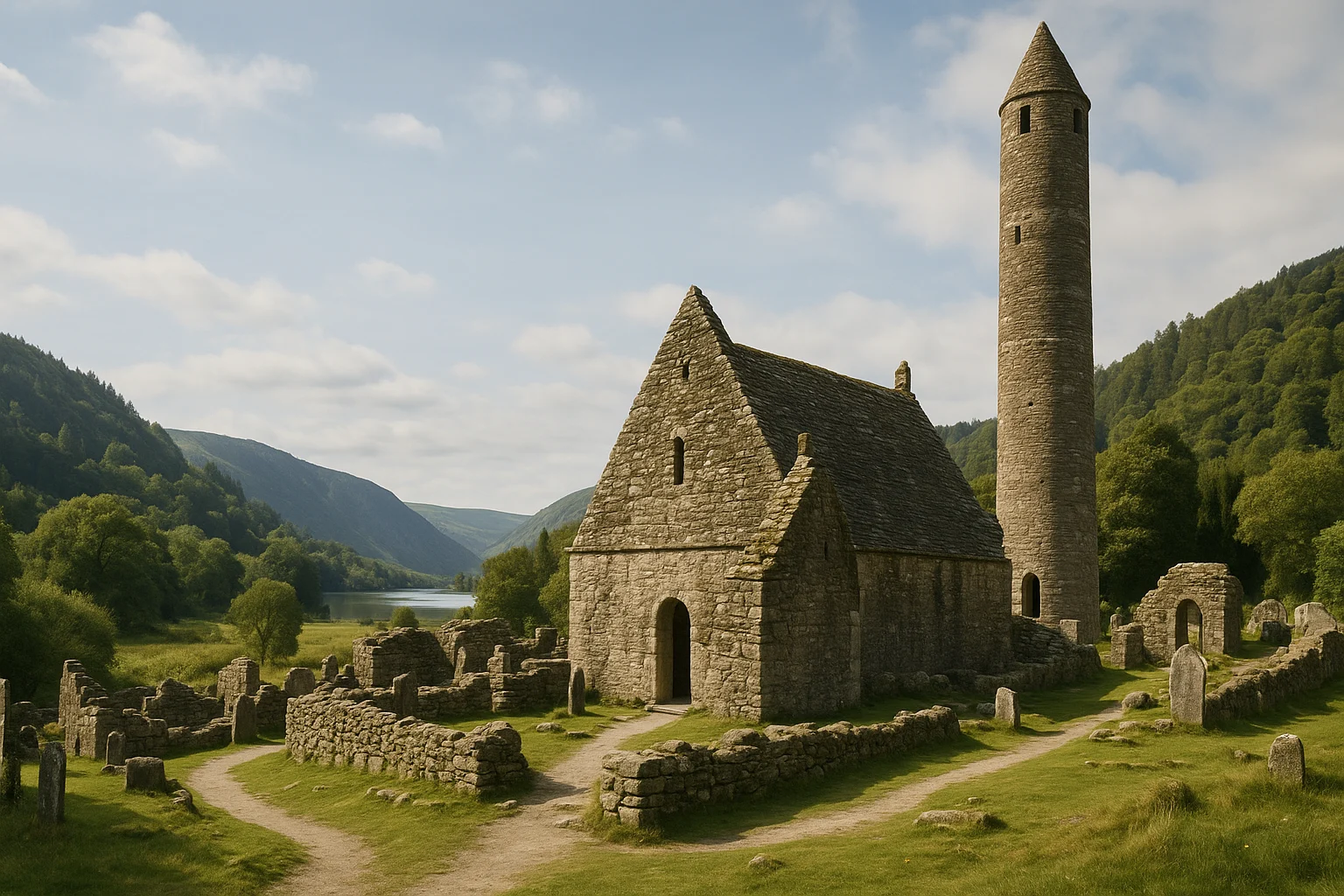
Glendalough Travel Guide 2026: Monastic Ruins, Lakes, and Wicklow Day-Trip Plan
Early Medieval IrelandPlan a clear first visit to Glendalough with route advice, monastic-site context, and practical timi...
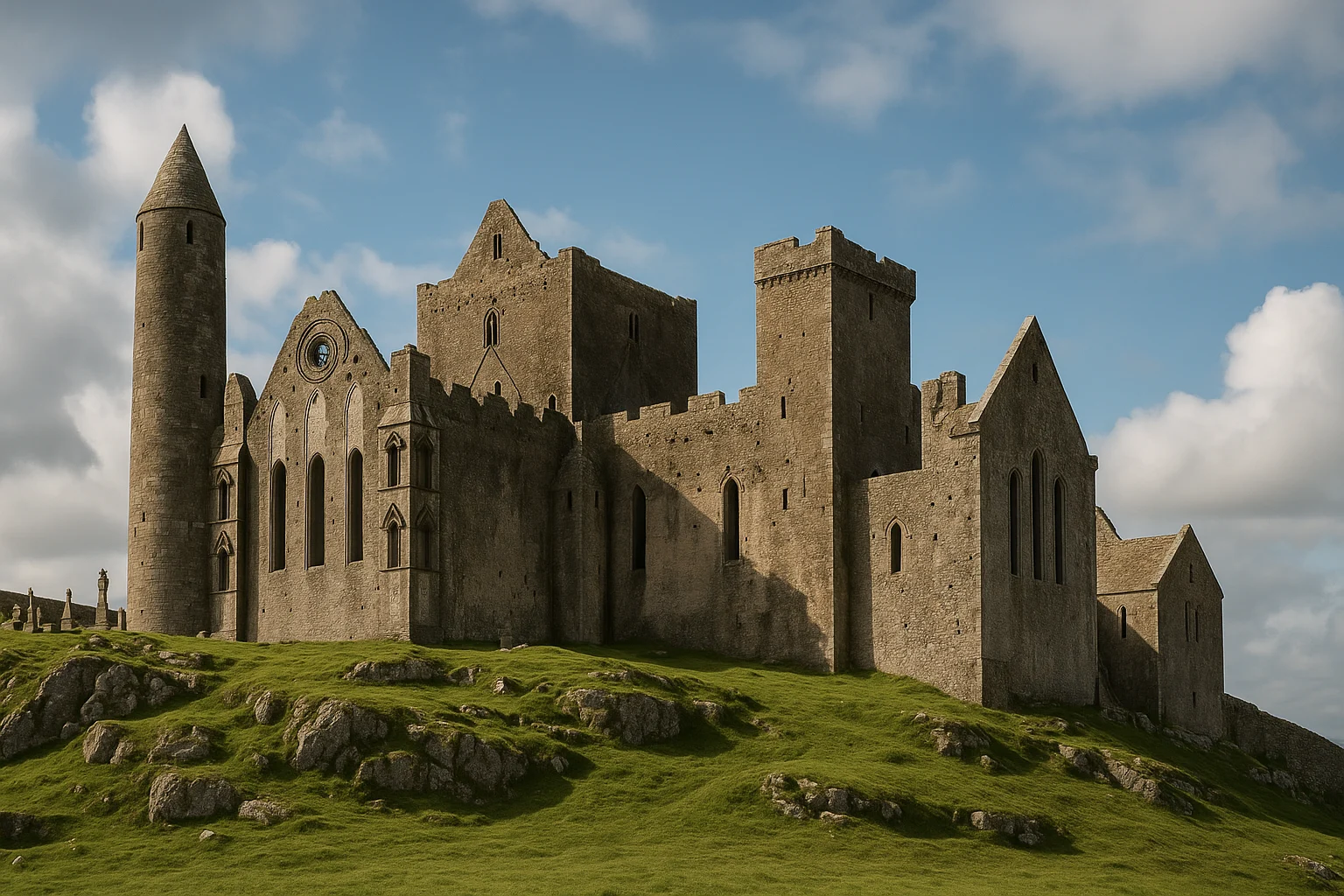
Rock of Cashel Travel Guide 2026: Cathedral Hill Timing, Access, and County Tipperary Plan
Medieval IrelandPlan your first visit to the Rock of Cashel with practical timing, hilltop route priorities, and eas...
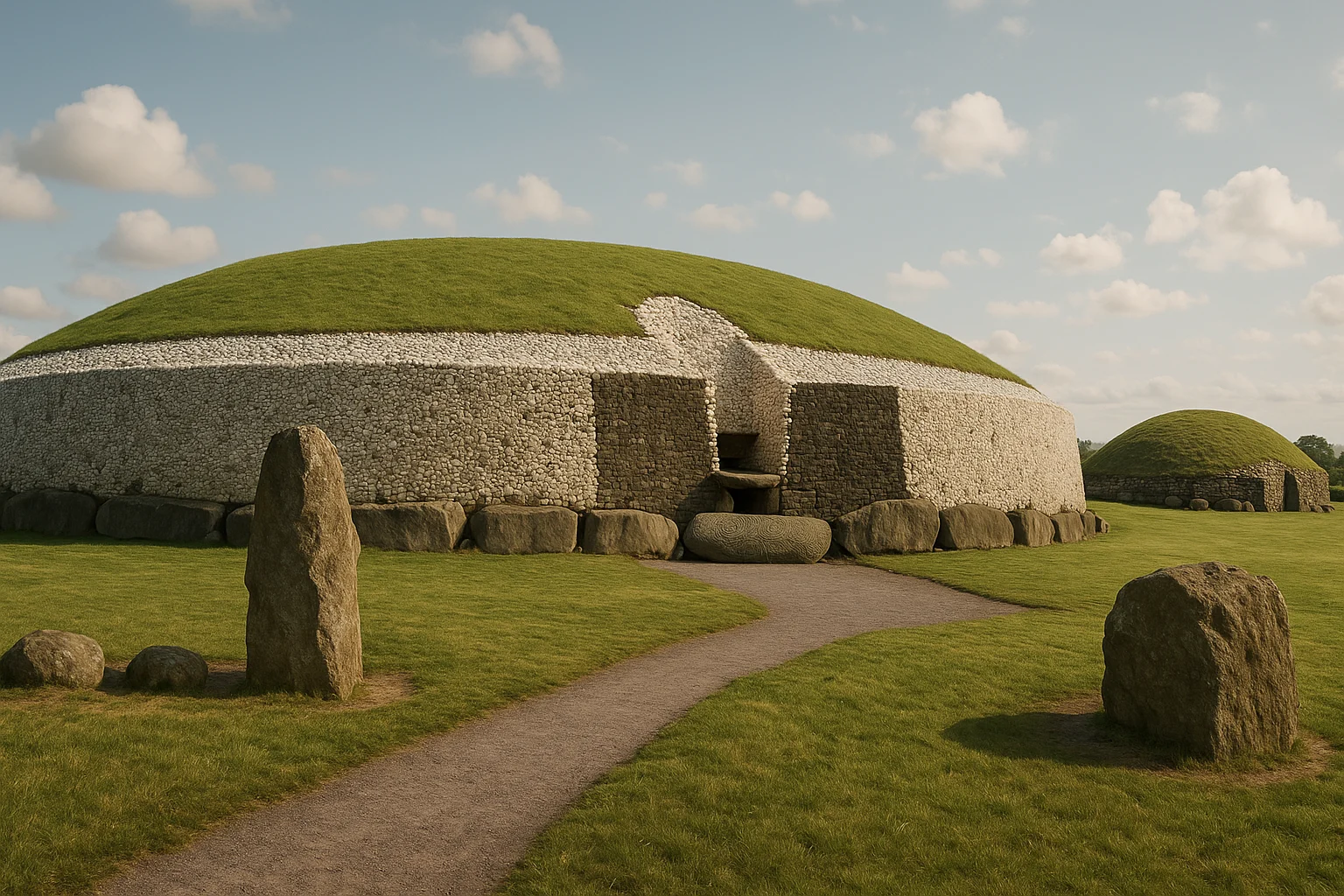
Boyne Valley Passage Tombs Travel Guide 2026: Newgrange, Knowth, and Dowth Visit Strategy
Neolithic IrelandPlan your first Boyne Valley passage tombs visit with practical timing, Brú na Bóinne access flow, a...