Quick Info
Curated Experiences
Valley of the Kings & Colossi of Memnon Half-Day Tour from Luxor
Luxor West Bank Full-Day Tour Including Colossi of Memnon
Private Guided Tour of the Theban Necropolis and Colossi
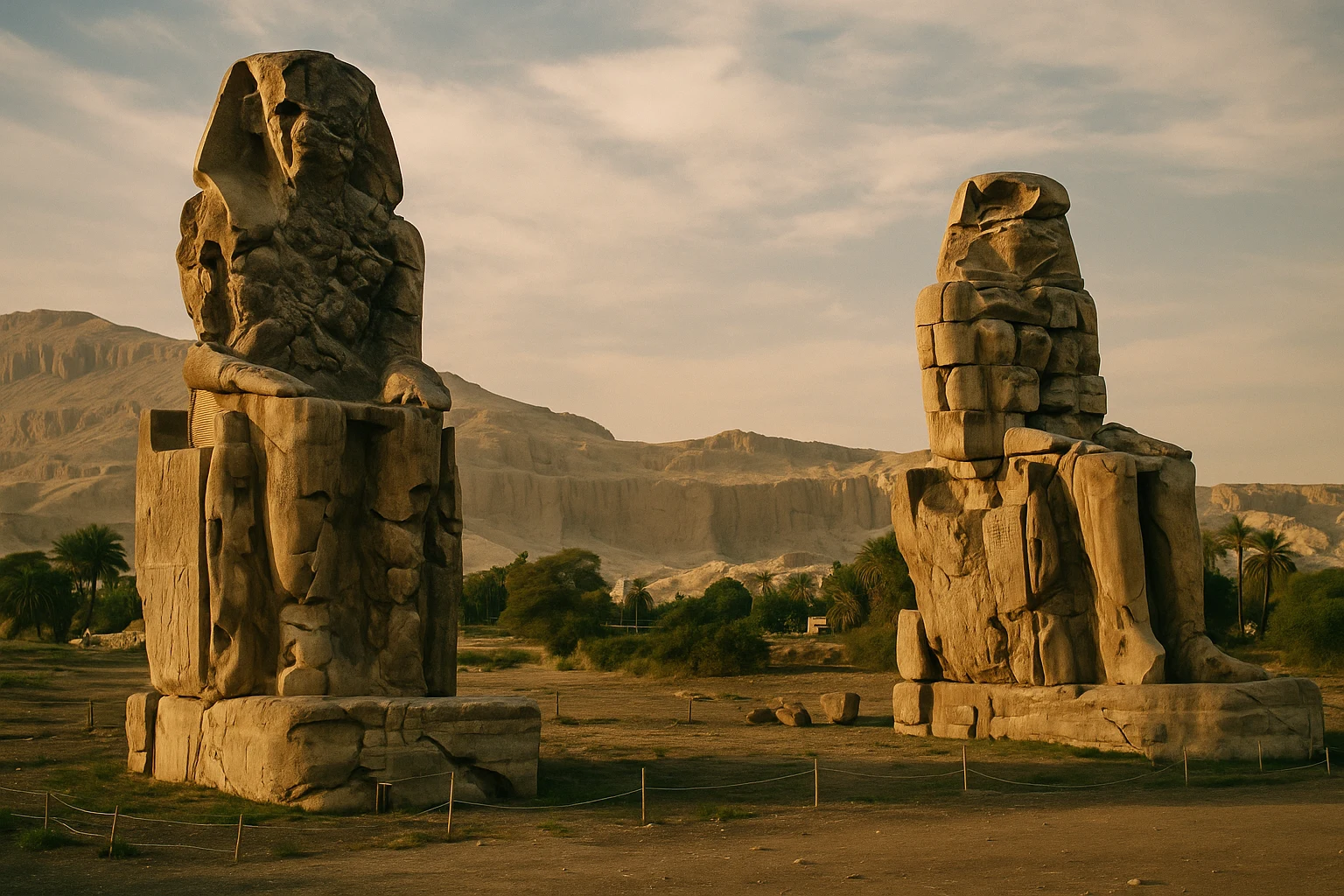
At the edge of Luxor’s West Bank plain, where the green ribbon of the Nile floodplain meets the tawny limestone cliffs of the Theban hills, two colossal figures rise from the earth with an authority undimmed by three and a half millennia. The Colossi of Memnon, Egypt, are among the most immediately recognisable monuments in the ancient world — twin seated statues of Pharaoh Amenhotep III, each soaring roughly 18 metres (60 feet) above the surrounding fields and weighing an estimated 720 tonnes apiece. They have presided over this landscape since approximately 1350 BCE, enduring earthquakes, floods, Roman-era tourism, and the slow attrition of time. Unlike most of Egypt’s great monuments, they demand nothing of the visitor in terms of admission fees or guided access; they simply stand there, vast and weathered, staring eastward across the river towards the rising sun — as they were always designed to do. Arriving at dawn, when the sky turns rose-gold behind the East Bank hills and the statues emerge from darkness as silhouettes of impossible scale, is one of the most quietly astonishing experiences available to any traveller in the ancient world.
History
Amenhotep III and the Mortuary Temple
The Colossi were never intended to stand alone. They were the monumental gateway sentinels of Amenhotep III’s mortuary temple — in its day the largest and most ornate religious complex ever constructed in Egypt, covering an area greater than Karnak’s precinct of Amun. Amenhotep III reigned for approximately thirty-eight years during the 18th Dynasty’s golden age, presiding over an empire at the height of its wealth and diplomatic influence. His building programme was staggering in ambition, and his mortuary temple on the West Bank at Thebes — modern Luxor — was the grandest expression of that ambition.
The two colossi were quarried from quartzite sandstone, likely sourced from Gebel el-Ahmar near modern Cairo, hauled more than 675 kilometres upstream, and erected as the first pylon’s flanking figures. Behind them stretched a complex of pylons, courtyards, hypostyle halls, and sanctuaries filled with statues of the king and the gods, all designed to sustain Amenhotep III’s divine cult in perpetuity. Ancient texts describe the temple as being decorated with gold, silver, and lapis lazuli; its floors were reportedly paved with silver.
Flood, Ruin, and Reuse
The temple’s proximity to the floodplain proved its undoing. Annual Nile inundations over the following centuries gradually undermined its foundations; subsequent pharaohs, including Merenptah, systematically quarried its stones for their own construction projects. By the Greco-Roman period, virtually nothing of the superstructure survived above ground. The colossi remained standing — their sheer mass making them impossible to demolish — but the complex behind them had vanished so completely that its very existence became uncertain to later travellers.
The 27 BCE earthquake that struck the region cracked the northern colossus at the waist, partially collapsing its upper body. This structural damage had an extraordinary consequence: the damaged statue began emitting a haunting, resonant tone each morning at sunrise, caused by temperature-induced expansion in the cracked stone as it was warmed by the early sun. Ancient Greeks and Romans who travelled in considerable numbers to the Theban area interpreted this as the voice of Memnon, the legendary Ethiopian king and son of the dawn goddess Eos, mourning as he greeted his divine mother each morning.
The Singing Colossus and Roman Fascination
The fame of the “singing Memnon” drew a remarkable stream of ancient visitors. More than 107 Greek and Latin inscriptions have been identified carved into the northern colossus’s legs and feet — among the most extensive body of ancient tourist graffiti surviving anywhere in the world. Visitors included Roman governors, Greek poets, and the Emperor Hadrian himself, who visited in 130 CE accompanied by his court. The Greek poet Julia Balbilla carved four elegies in archaic Sapphic Greek onto the statue’s left leg during Hadrian’s visit, and they remain legible today.
Around 199 CE, Emperor Septimius Severus ordered the cracked statue to be restored, filling the fracture with layers of sandstone blocks. The intervention silenced the singing permanently — whether because the repair eliminated the resonant cavity, or because it altered the stone’s thermal dynamics, is still debated. The loss of the phenomenon disappointed later visitors, and the site gradually receded from the Roman itinerary.
Modern Rediscovery and Ongoing Excavation
Modern scholarly attention focused on the site primarily from the nineteenth century onwards, when Egyptologists began mapping the West Bank’s archaeological zones. The true scale of what lay beneath the surrounding fields only became apparent in 1998, when the Colossi of Memnon and Amenhotep III Temple Conservation Project commenced systematic excavation under the direction of Hourig Sourouzian. The project has since revealed dozens of additional colossal statues, including representations of the goddess Sekhmet in black granite, seated and standing figures of Amenhotep III, and the remains of sphinx-lined processional avenues. The excavation is ongoing, and each season adds substantially to the known record of what was once Egypt’s greatest temple.
Key Features
The Northern and Southern Colossi
The two statues are superficially similar but reward close inspection for their differences. Both depict Amenhotep III enthroned, wearing the double crown of Upper and Lower Egypt, his hands flat on his thighs in the canonical pose of pharaonic majesty. Carved into the sides and backs of the thrones are smaller figures of the king’s mother, Mutemwiya, and his principal wife, Queen Tiye — a touching assertion of the dynasty’s female lineage flanking the monument’s central masculine authority.
The northern colossus, the one that once sang, retains clearly visible evidence of its ancient repairs: the lower portion of the body is the original New Kingdom stonework, while the upper section shows the different-coloured sandstone blocks added by Severus’s workmen. The southern colossus is better preserved overall and retains more surface detail, including traces of the elaborate carved decoration that once covered the throne’s sides. Both statues have suffered considerable erosion to their faces and upper bodies over the millennia, lending them a weathered, almost abstract grandeur.
The Ancient Tourist Inscriptions
The graffiti inscriptions covering the lower legs and feet of the northern colossus constitute a remarkable historical document in their own right. Written in Greek, Latin, and Demotic Egyptian, they span several centuries of ancient visitation, recording the names, ranks, and reactions of travellers from across the Greco-Roman world. Some inscriptions are perfunctory — a name and a date — while others, like Julia Balbilla’s poems, are extended literary compositions. Reading them, even in translation, produces a vivid sense of the ancient tourism industry that grew up around Egyptian monuments during the Roman Imperial period.
The Ongoing Excavation Site
The ground surrounding the colossi is actively being excavated, and visitors who time their visit well may observe fieldwork in progress during the cooler months of the Egyptian season (October through April). The project has established a small open-air display area where significant finds — including fragments of colossal statues and architectural elements — can be examined at close quarters. Sekhmet statues recovered from the site are among the most striking, their black granite surfaces still polished to a smooth lustre despite three thousand years of burial.
The Landscape Setting
Part of what makes the Colossi so affecting is their setting. They stand in open agricultural land, surrounded in the growing season by fields of sugar cane, clover, and wheat. The Theban cliffs — limestone escarpments riddled with royal and private tombs — form the western backdrop. The relationship between the figures and their environment communicates with immediate clarity the ancient Egyptian cosmology: the setting sun descending into the western realm of the dead, with these guardian figures at the threshold between the living world of the Nile and the necropolis beyond.
Getting There
The Colossi of Memnon stand on the main road leading from the West Bank ferry landing into the Theban necropolis, approximately 3 kilometres from the Nile shore. From central Luxor on the East Bank, the simplest approach is the local passenger ferry from the dock near Luxor Temple — crossings run continuously through daylight hours and cost a nominal fee (around 5–10 EGP as of 2025; confirm locally as fares adjust with inflation). From the West Bank ferry landing, a standard local taxi for the short run to the Colossi costs approximately 30–50 EGP, or you can hire a bicycle from one of the rental shops near the dock for a flat daily rate of around 50–80 EGP, making the entire West Bank circuit manageable at a leisurely pace.
Organised half-day and full-day tours from Luxor hotels invariably include the Colossi as a stop, typically at the beginning or end of a Valley of the Kings itinerary. These tours run from approximately USD 25–60 per person depending on group size and inclusions. Private car hire for the West Bank gives the most flexibility and typically costs USD 30–50 for a half-day.
There is no dedicated car park at the Colossi; vehicles pull off the roadside. The statues are directly visible from the road and require no hiking or extended walking to reach. For those with limited mobility, the roadside viewing position offers an entirely satisfactory experience without needing to approach the statues’ base.
When to Visit
The West Bank plain around Luxor is one of the hottest places in Egypt during summer, with midday temperatures regularly exceeding 42°C between June and August. The ideal visiting window runs from mid-October through late March, when daytime temperatures sit between 18°C and 28°C and the light has a warm, diffuse quality particularly flattering for photography. December and January see peak tourist numbers; if you prefer smaller crowds, aim for October–November or February–March.
For the most memorable experience, plan to arrive at the Colossi at first light — roughly 30 to 45 minutes after sunrise. At this hour, the eastern sun falls directly on the statues’ faces, the tour buses have not yet arrived from the East Bank, and the surrounding agricultural plain is still quiet. The effect, with mist sometimes rising from the cane fields, is extraordinarily atmospheric. By 9:00 AM on most mornings from November through February, the site is noticeably busier.
Ramadan, which falls on a different calendar cycle each year, affects opening hours and the availability of local services including taxis and food vendors. The broader Luxor region remains navigable during Ramadan, but it is worth checking current conditions before travelling. The Nile cruise season (October–April) brings the highest density of organised tour groups to all West Bank sites; independent travellers who avoid these peak mid-morning hours will have a qualitatively different experience.
| Quick Facts | |
|---|---|
| Location | West Bank, Luxor, Luxor Governorate, Egypt |
| Coordinates | 25.7207° N, 32.6104° E |
| Built | c. 1350 BCE |
| Commissioned by | Pharaoh Amenhotep III, 18th Dynasty |
| Height (each statue) | ~18 m (60 ft) |
| Material | Quartzite sandstone |
| UNESCO Status | Part of Ancient Thebes World Heritage Site (1979) |
| Entrance fee | Free (roadside viewing); West Bank ticket for some areas |
| Opening hours | Accessible at all hours from roadside |
| Nearest city | Luxor (~3 km east, via Nile ferry) |
| Best season | October – March |
| Recommended visit time | 30–60 minutes (standalone); half-day (West Bank circuit) |
Frequently Asked Questions
What are the Colossi of Memnon?
The Colossi of Memnon are two massive stone statues depicting Pharaoh Amenhotep III seated on his throne. Standing approximately 18 meters (60 feet) tall and carved from quartzite sandstone, they originally flanked the entrance to Amenhotep III's vast mortuary temple on the Nile's West Bank at Luxor.
Why are they called the Colossi of Memnon?
Ancient Greek and Roman travelers misidentified the statues as Memnon, the mythological Ethiopian king who fought at Troy. Following a 27 BCE earthquake that cracked the northern statue, it famously produced a haunting musical tone at dawn — interpreted as Memnon greeting his mother Eos (goddess of the dawn). After Roman Emperor Septimius Severus restored the statue around 199 CE, the singing ceased.
Is there an entrance fee for the Colossi of Memnon?
The Colossi of Memnon themselves stand in an open area beside the road and can be viewed and photographed for free from the roadside at any time. However, visiting the ongoing excavation area or accessing certain restored sections may require purchasing a West Bank sites ticket through the Egyptian Ministry of Tourism and Antiquities.
How do I get to the Colossi of Memnon from central Luxor?
From Luxor's East Bank, take the local passenger ferry (a few Egyptian pounds) across the Nile to the West Bank dock, then hire a taxi, bicycle, or join an organised tour. The Colossi stand roughly 3 km from the ferry landing. Most West Bank tour itineraries stop here as a first or last landmark, making them easy to include without extra planning.
When is the best time to visit the Colossi of Memnon?
Early morning — arriving just after sunrise — offers the most atmospheric light, cooler temperatures, and smaller crowds before tour groups arrive. October through March is the most comfortable season, with daytime temperatures between 18°C and 28°C. Summer months (June–August) can exceed 42°C on the West Bank plain, making a dawn visit even more essential.
What is being excavated near the Colossi of Memnon?
Since 1998, the Colossi of Memnon and Amenhotep III Temple Conservation Project, led by Egyptologist Hourig Sourouzian, has been systematically excavating Amenhotep III's long-lost mortuary temple — once the largest religious complex in Egypt. Teams have uncovered dozens of additional colossal statues, sphinx avenues, and architectural fragments that continue to rewrite understanding of New Kingdom temple design.
Can I visit the Colossi of Memnon independently?
Yes. The statues are freely accessible from the roadside and require no guided tour or ticket for a standard visit. Independent travellers often combine them with a self-guided bicycle or taxi tour of the West Bank, calling at Medinet Habu, the Valley of the Queens, and the Ramesseum in a single day.
Nearby Ancient Sites
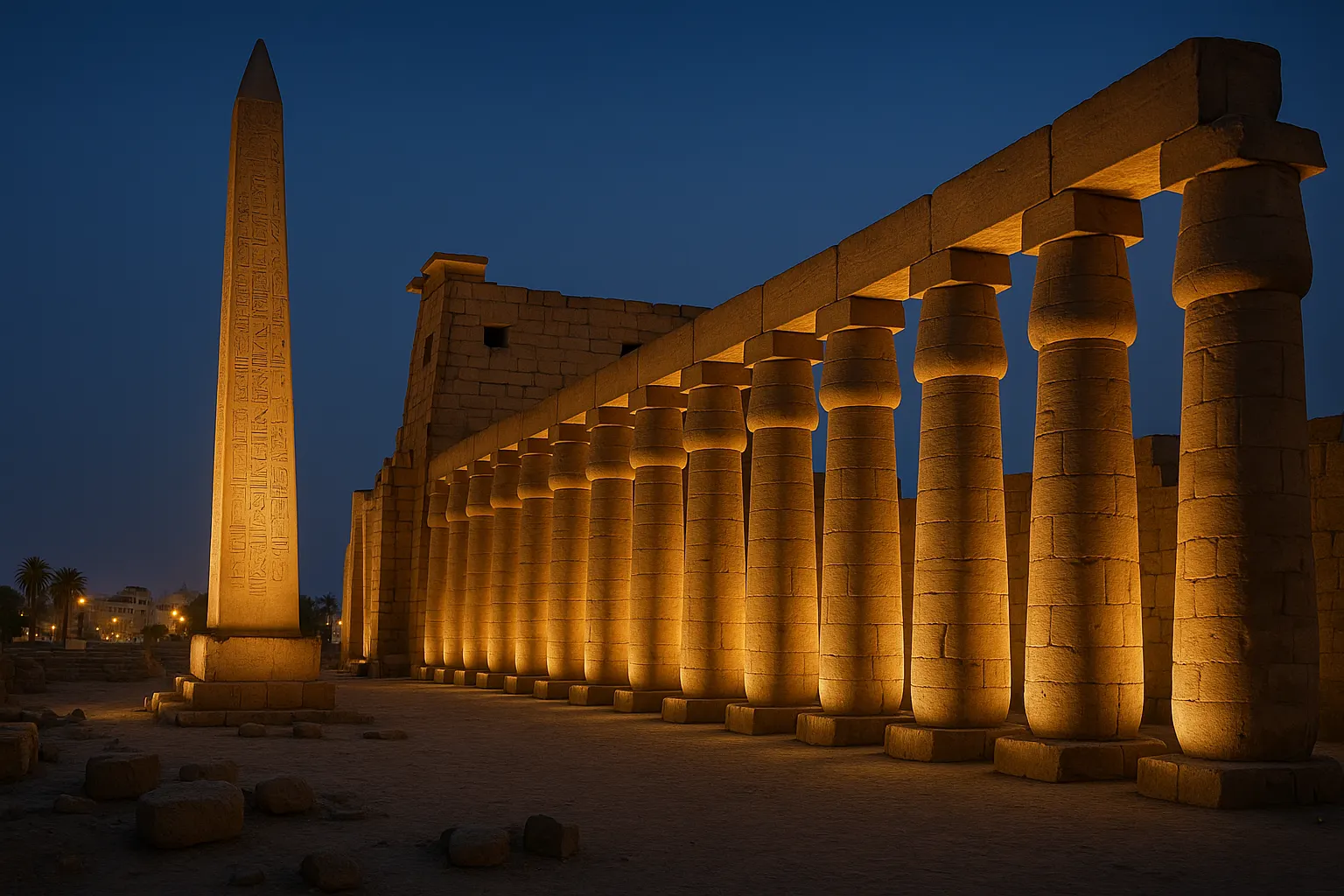
Luxor Temple Egypt Travel Guide 2026: The Elegant Temple of Luxor
Ancient EgyptianVisit Luxor Temple, the most elegant temple in Egypt. Discover the Avenue of Sphinxes, Colonnade of ...
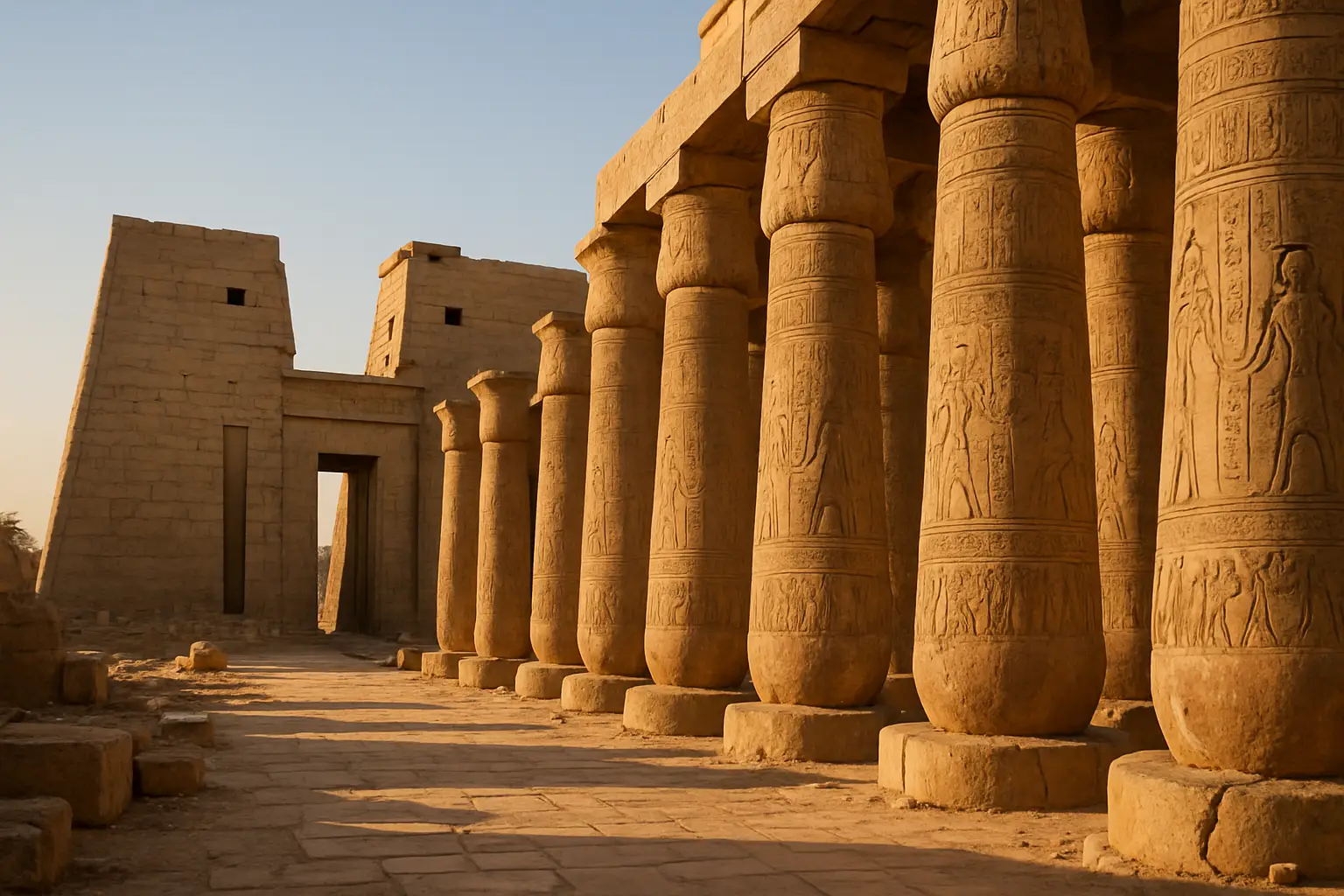
Karnak Temple Complex Egypt Travel Guide 2026: Egypt's Greatest Temple
Ancient EgyptianExplore Karnak, the world's largest ancient religious complex. Discover the Hypostyle Hall, Sacred L...
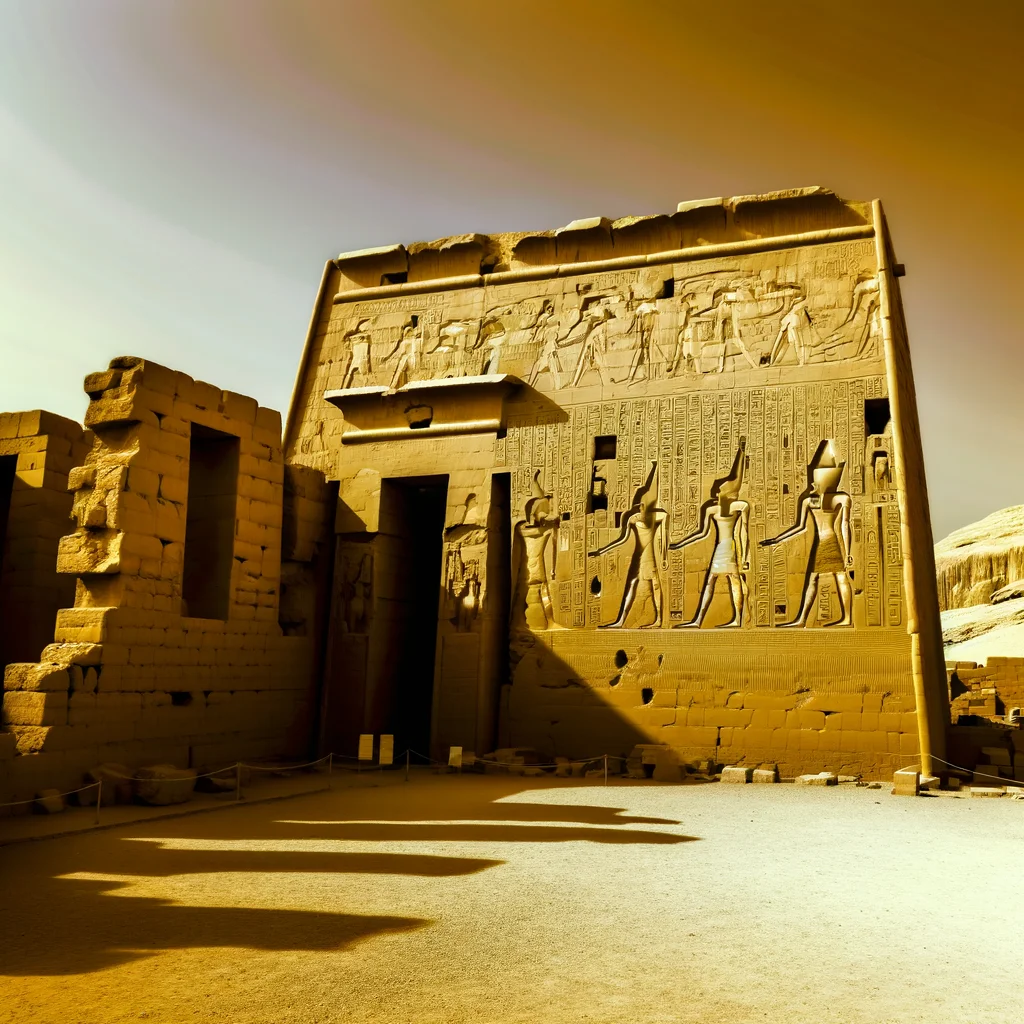
Medinet Habu Temple Egypt Guide 2026: Ramesses III & War Reliefs
New Kingdom-RamessideMedinet Habu mortuary temple near Luxor: Ramesses III's colossal monument with sea people battle sce...
Luxor Egypt Travel Guide 2026: Valley of Kings, Karnak
Ancient Egyptian (New Kingdom)Luxor stands as the world's greatest open-air museum, spanning both banks of the Nile with temples, ...
Edfu Temple Egypt Guide 2026: Temple of Horus & Dramatic Battle Reliefs
PtolemaicEdfu Temple near Aswan: Temple of Horus with stunning battle scenes, ritual texts, and the best-pres...