Quick Info
Curated Experiences
Qufu Confucius Temple, Mansion & Cemetery Full-Day Tour
Beijing to Qufu Day Trip by High-Speed Train
Shandong Cultural Heritage Private Tour
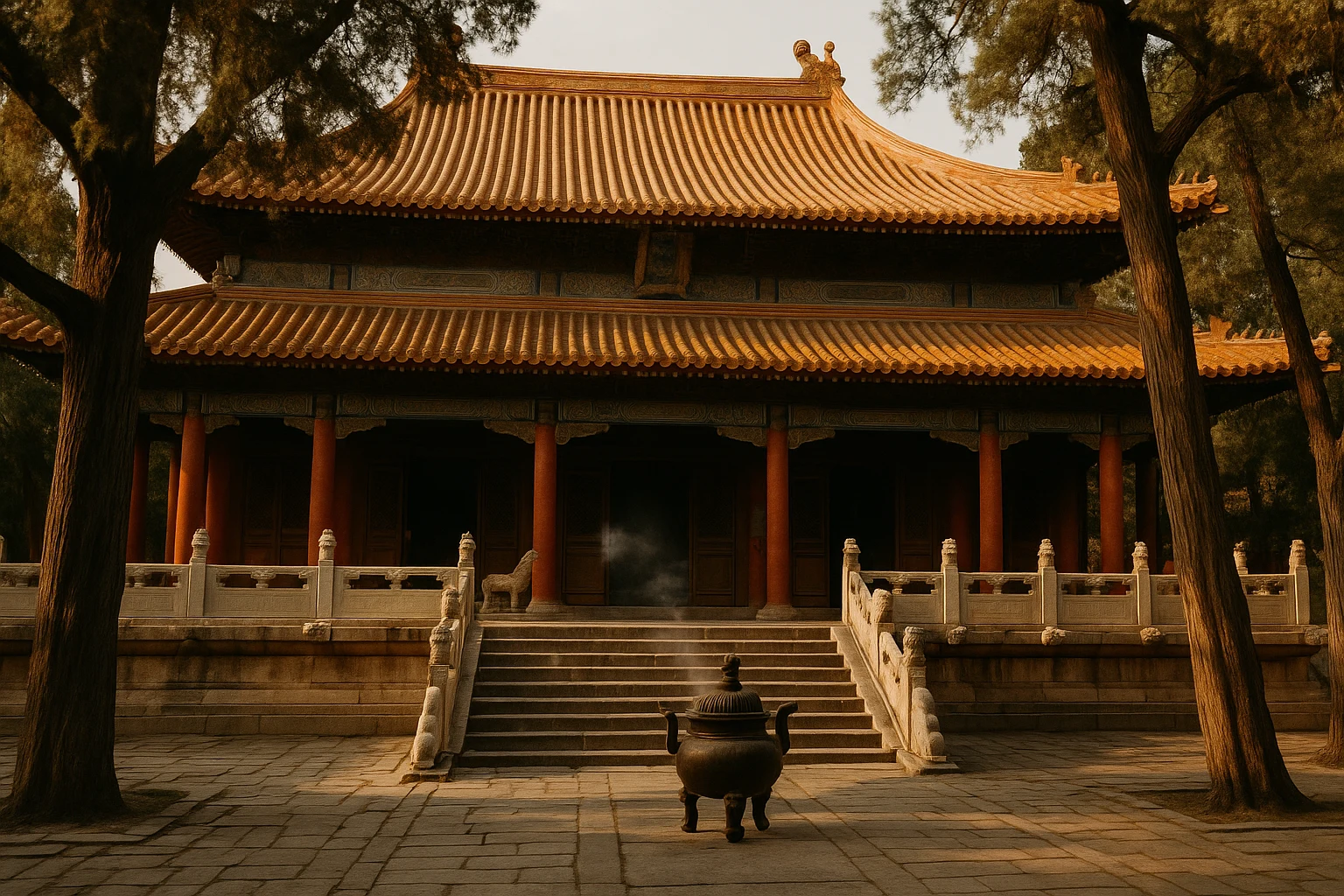
In the heart of Qufu, a mid-sized city in China’s Shandong Province, stands one of the most quietly overwhelming places in Asia. The Temple of Confucius — known in Chinese as Kong Miao — spreads across nearly 22 hectares in the center of the old city, a forest of ancient cypress trees sheltering courtyard after courtyard of red-walled pavilions, carved stone stelae, and ceremonial gates draped in imperial yellow. To walk through it is to move through 2,500 years of living tradition. China honors Confucius Temple in Qufu not merely as a historical ruin but as an active site of remembrance, scholarship, and ritual — a place where the ideas of a man born in 551 BCE have been maintained without interruption across dynasties, invasions, and revolutions. The sage himself never held significant political power during his lifetime, yet within a century of his death, rulers were making pilgrimages here to offer sacrifices at his tomb. Today the complex is a UNESCO World Heritage Site, inscribed in 1994 alongside the adjacent Kong Family Mansion and the vast Cemetery of Confucius that lies just north of the city walls. Together, these three sites — collectively called the “Three Kongs” — form the spiritual and historical center of Confucianism and one of the most significant cultural destinations in the world.
History
The Life of Confucius and the First Shrine
Confucius was born in 551 BCE in the state of Lu, in what is now Qufu. A philosopher, teacher, and political theorist, he spent much of his life traveling between states, seeking a ruler who would put his ideas about benevolent governance, filial piety, and social harmony into practice. He never found that ruler. He died in 479 BCE, reportedly in disappointment, and was buried in a grove north of the city walls — the same grove that would eventually become the world’s largest family cemetery, containing more than 100,000 graves of his descendants across 76 generations.
Within a year of his death, Confucius’s former home was converted into a small memorial hall by the Duke of Lu. Three rooms were preserved, along with some of his clothing, musical instruments, carriages, and books. This modest structure was the seed from which one of China’s most complex architectural ensembles would grow over the next two millennia.
Imperial Expansion Through the Dynasties
The Han dynasty transformed the status of Confucius from respected teacher to state religion. Emperor Gaozu visited Qufu in 195 BCE to offer sacrifices — the first emperor to do so — and successive Han rulers elevated Confucianism to the official ideology of Chinese governance. With imperial patronage came imperial investment in the temple complex. The Han expanded the original three rooms into a larger walled compound.
Subsequent dynasties continued to enlarge and reconstruct the temple according to the scale of their devotion. The Tang, Song, Jin, Yuan, Ming, and Qing dynasties all added gates, pavilions, and sacrificial halls. The temple suffered destructive fires several times — most severely in 1499, when lightning struck and burned some 120 rooms — and was each time rebuilt to an even grander standard, with imperial craftsmen dispatched to oversee the work.
By the Ming dynasty the temple had taken on roughly its current form: a symmetrical complex nearly one kilometer in length, entered from the south and progressing through nine successive courtyards before reaching the principal hall. The Qing dynasty’s Kangxi and Qianlong emperors were particularly devoted, each visiting Qufu multiple times and contributing stele inscriptions that still stand in the forest of carved tablets just inside the main gates.
The Twentieth Century and UNESCO Recognition
The twentieth century brought profound threats. During the Cultural Revolution (1966–1976) the temple was targeted by Red Guards, who destroyed some monuments, toppled stelae, and desecrated graves in the cemetery. The Kong family — direct lineal descendants of Confucius, who had held the hereditary title of Duke Yansheng for centuries — fled or were persecuted. Recovery was slow but deliberate. By the 1980s the Chinese government had reclassified the Three Kongs as national treasures, and extensive restoration work began. UNESCO inscription in 1994 cemented international recognition of the site’s outstanding universal value.
Today the Kong family lineage continues: the current generation represents the 79th and 80th direct descendants of Confucius, and the temple remains a place of active significance to the millions of people around the world who trace their intellectual and moral tradition back to the teachings preserved here.
Key Features
The Gate Sequence and Lingxing Gate
The approach to the temple is itself a carefully designed spatial experience. A series of ceremonial gates leads visitors progressively inward and northward, each transition marking a threshold into deeper sanctity. The outermost gate, Wanren Gong Qiang — meaning “the walls of ten thousand men” — faces south along Qufu’s central axis. Beyond it, the Lingxing Gate presents itself as a constellation of stone pillars topped with cloud-shaped finials. In traditional cosmology, Lingxing was a star associated with heaven’s literary talent, and naming the temple’s outer gate after it was an imperial declaration that Confucius occupied a celestial rank among human thinkers. The gate’s six pillars cast long shadows across the paved courtyard in the afternoon light, and their carved decorations have survived remarkably intact.
The Apricot Pavilion and Ancient Cypresses
Inside the middle section of the complex, a handsome octagonal pavilion stands alone in a broad courtyard shaded by enormous ancient cypress trees, some of which are more than 1,000 years old. This is the Xingtan, or Apricot Altar Pavilion, built on the spot where Confucius is said to have taught his disciples under apricot trees. The current pavilion dates to the Ming dynasty and is surrounded by a low balustrade; inside, a stone altar table supports a traditional incense burner. The cypresses that frame this courtyard are perhaps the most affecting feature of the entire complex — gnarled, darkened by centuries of weather, and thick enough that two adults cannot reach around their trunks. They create an atmosphere of extreme age that no architectural element alone could achieve.
Dacheng Hall: The Heart of the Complex
The centerpiece of the Confucius Temple is the Dacheng Hall, or Hall of Great Achievement, which sits on a broad marble terrace in the heart of the ninth and final major courtyard. It is among the largest surviving wooden structures in China. The hall rises on 28 massive columns, the front ten of which are carved in high relief with coiling dragons clutching pearls amid cloud formations — an honor normally reserved for imperial palaces. Inside, a gilded statue of Confucius presides from the back wall, flanked by his four greatest disciples: Yan Hui, Zengzi, Zisi, and Mencius. The ceiling coffering, painted in imperial red, gold, and green, was restored in the Qing period and gives the interior a richness that contrasts with the contemplative stillness of the courtyards outside. On the morning of September 28 each year, a formal memorial ceremony is held in this hall, with musicians in Han-dynasty robes performing ancient ritual music on chime bells and stone chimes.
The Forest of Stelae
Between the outer and inner sections of the complex lies one of the most remarkable open-air archives in the world: a forest of stone stelae, more than 1,000 in total, recording imperial edicts, ceremonial inscriptions, and scholarly texts associated with the temple across nearly two millennia. The oldest stelae date to the Han dynasty; the newest were added during the Qing. Many bear the calligraphy of emperors and are thus considered masterpieces in their own right. They stand in irregular rows under sheltering roof structures, their surfaces worn to varying degrees, some completely legible and others reduced to smooth ghost-faces by centuries of rubbings taken by scholars and pilgrims. The collection is encyclopedic in its scope and could occupy a specialist for weeks.
The Lu Wall and the Hidden Texts
One small but historically significant site within the compound is the Lu Wall, a reconstructed section of the original Kong family residence wall. According to tradition, when the Qin emperor ordered the burning of books in 213 BCE, Kong Fu — a 9th-generation descendant of Confucius — hid the Confucian classics inside the walls of the family home. The books were rediscovered in 154 BCE when Prince Liu Yu of Lu ordered the house demolished to expand his palace, and the texts that emerged proved crucial in the reconstruction of classical Chinese scholarship. The wall commemorated here acknowledges one of the most dramatic moments in the survival of the Confucian canon.
Getting There
Qufu is well connected to the rest of eastern China by the high-speed rail network. From Beijing South Station, G-series trains reach Qufu East Station in approximately 1 hour 40 minutes to 2 hours, with fares starting around 200 CNY (approximately US$27) for a second-class seat. Trains depart throughout the day, with the first departures before 7 AM and service continuing into the evening. From Shanghai Hongqiao Station, the journey takes roughly 3 hours with fares from around 280 CNY second class.
From Qufu East Station — which is located about 15 km outside the historic city center — taxis to the temple area cost approximately 30–40 CNY and take around 20 minutes. Public shuttle buses also operate the route for a few yuan. There is no subway system in Qufu; taxis and bicycle rickshaws are the main local transport options within the old city.
Visitors arriving from Tai’an (the gateway city for Mount Tai) can reach Qufu by local train or bus in about an hour, making a combined itinerary logical and popular.
The temple’s main entrance is on Gulou Street in the center of the old town. Combined ticket windows are located at the south gate and sell the Three Kongs package (temple, mansion, and cemetery) for approximately 150 CNY. Individual temple admission runs around 90 CNY. The complex is open daily, typically from 8 AM to 5 PM, with slightly extended hours during peak season.
When to Visit
Spring (April to May) is the most popular season for good reason. Temperatures in Qufu are mild — typically 15–25°C — the ancient cypresses are freshest, and the crowds, while present, have not yet reached the summer peak. Peach and cherry blossoms add color to the margins of the cemetery paths in early April.
Autumn (September to October) rivals spring in comfort. The heat and humidity of the Shandong summer have broken, temperatures ease into the 15–22°C range, and the foliage of the cemetery’s elm and locust trees turns gold and bronze. The most significant cultural event of the year — the International Confucius Cultural Festival and Memorial Ceremony on September 28 — takes place during this window. The ritual ceremony at Dacheng Hall, which begins before dawn and involves ancient music, costumed participants, and the offering of food and silk, is one of the most moving heritage events in China and well worth planning a visit around.
Summer (June to August) is hot and humid, with temperatures occasionally exceeding 35°C. Crowds are at their peak during the Chinese school holidays in July and August, and queues at the ticket windows can be long. If visiting in summer, arrive early and bring water.
Winter (November to March) brings cold and quiet. Temperatures can drop below freezing, the cypress groves are stark, and services in the city are reduced. However, the absence of tour groups and the austere atmosphere of the complex in winter grey can be quietly powerful, and accommodation prices are at their lowest.
| Quick Facts | |
|---|---|
| Location | Qufu, Shandong Province, China |
| Coordinates | 35.5969° N, 116.9916° E |
| UNESCO Inscription | 1994 (Three Kongs of Qufu) |
| Total Area | ~21.8 hectares (temple alone) |
| Founded | 478 BCE (first memorial hall) |
| Current Complex | Largely Ming and Qing dynasty reconstruction |
| Admission | ~90 CNY (temple only); ~150 CNY (combined Three Kongs) |
| Opening Hours | 8:00 AM – 5:00 PM daily |
| Nearest Station | Qufu East (high-speed rail) |
| Closest City | Jinan (~130 km north); Tai’an (~80 km northwest) |
| Civilisation | Chinese (Zhou through Qing dynasties) |
| Period | Spring and Autumn Period to Qing dynasty |
Frequently Asked Questions
Is the Confucius Temple in Qufu worth visiting?
Absolutely. The Confucius Temple is one of the three great ancient architectural complexes in China alongside the Forbidden City and the Mountain Resort at Chengde. Its 2,500-year history, layered courtyards, and iconic Dacheng Hall make it a profound cultural and architectural experience unlike anywhere else in the country.
How much does it cost to enter the Confucius Temple?
Admission to the Confucius Temple is approximately 90 CNY (around US$12). A combined ticket covering all three 'Kongs' — the Temple, the Kong Family Mansion, and the Cemetery of Confucius — costs around 150 CNY and is strongly recommended since the sites are closely linked and managed together.
How do I get to Qufu from Beijing?
The fastest option is the high-speed G-train from Beijing South Railway Station to Qufu East, which takes approximately 1.5 to 2 hours. Trains depart frequently throughout the day with fares from around 200 CNY (second class). From Qufu East station, taxis and shuttle buses reach the city center and temple gate in about 20 minutes.
How long should I plan to spend at the Confucius Temple?
Budget at least two to three hours for the temple alone. If you plan to visit all three Kong sites — the temple, mansion, and cemetery — allow a full day. The cemetery in particular is vast and contemplative, covering more than 200 hectares, and can easily absorb two or more hours on its own.
What is the best time of year to visit the Confucius Temple?
Spring (April to May) and autumn (September to October) offer the most comfortable temperatures and the most attractive scenery. The International Confucius Cultural Festival held annually around September 28 — the traditional anniversary of Confucius's birthday — is a remarkable time to visit, with ceremonial rites and cultural performances at the temple.
Can I visit the Confucius Temple as a day trip from Beijing?
Yes. With the high-speed rail connection, Qufu is a practical day trip from Beijing, though an overnight stay allows a more relaxed pace and the chance to visit the cemetery and mansion without rushing. Many travelers combine Qufu with a visit to Tai'an and Mount Tai, which lies about 80 km to the northwest.
Are there English-speaking guides available at the Confucius Temple?
English audio guides are available for rental at the main entrance, and licensed English-speaking guides can be hired at the site. For a richer experience, booking a private guided tour in advance through a reputable operator is recommended, especially during peak season when demand for guides is high.
Nearby Ancient Sites
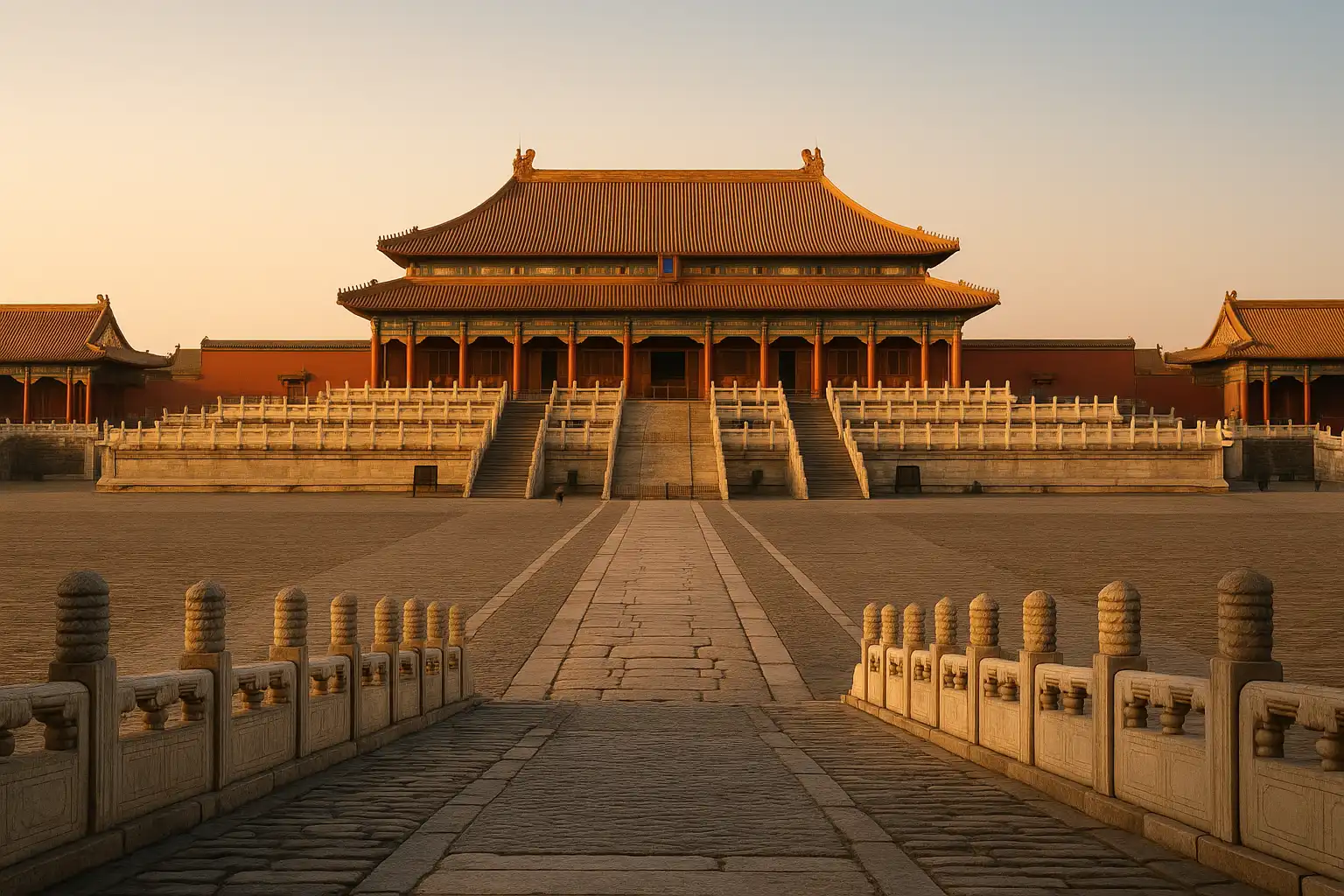
Forbidden City China Travel Guide 2026: Imperial Palace of Beijing
Chinese ImperialExplore the Forbidden City, China's imperial palace for 500 years. Discover the Hall of Supreme Harm...
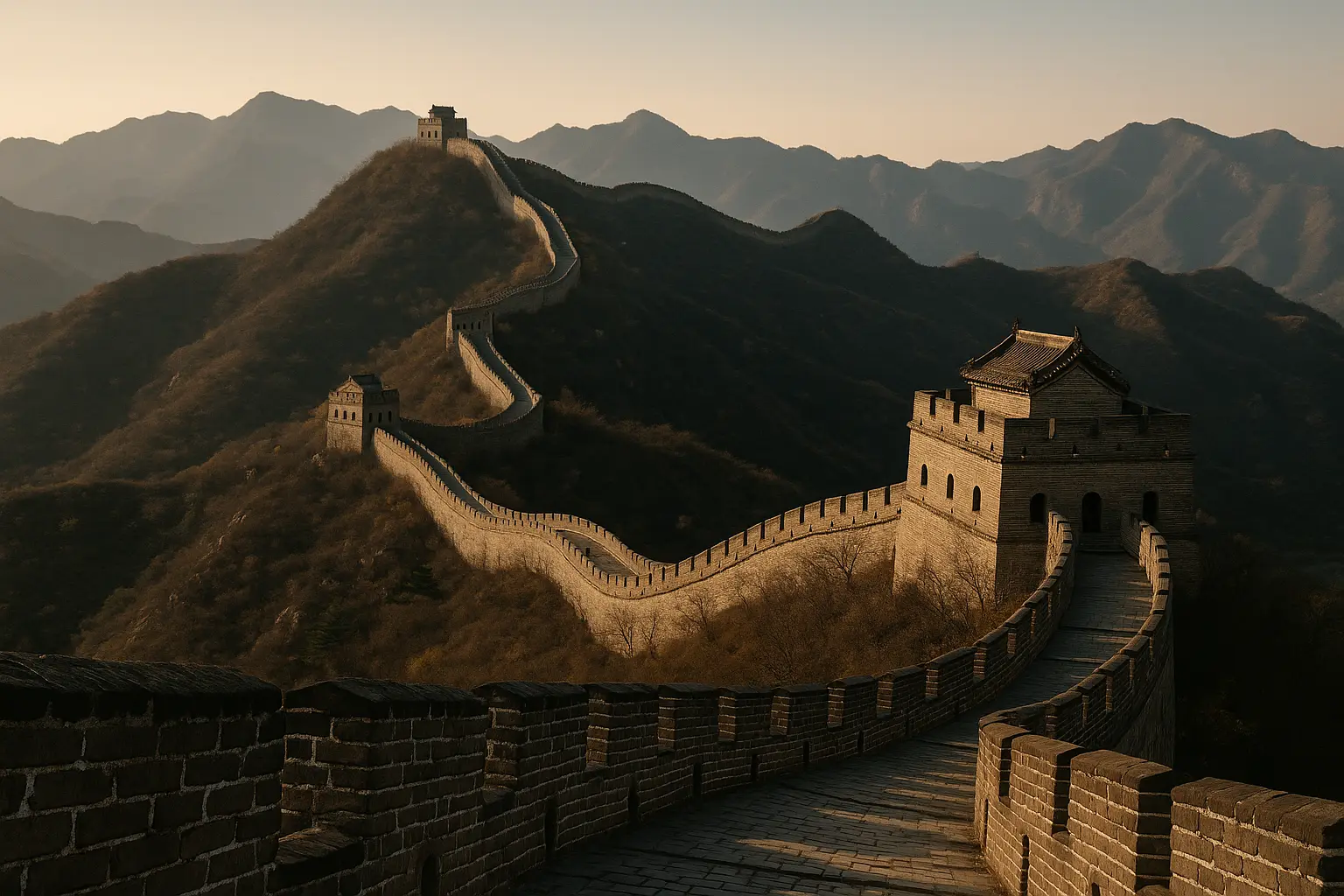
Great Wall of China Badaling Travel Guide 2026: Iconic Fortification
Chinese ImperialVisit Badaling, the most famous section of the Great Wall of China. Our guide covers tickets, cable ...
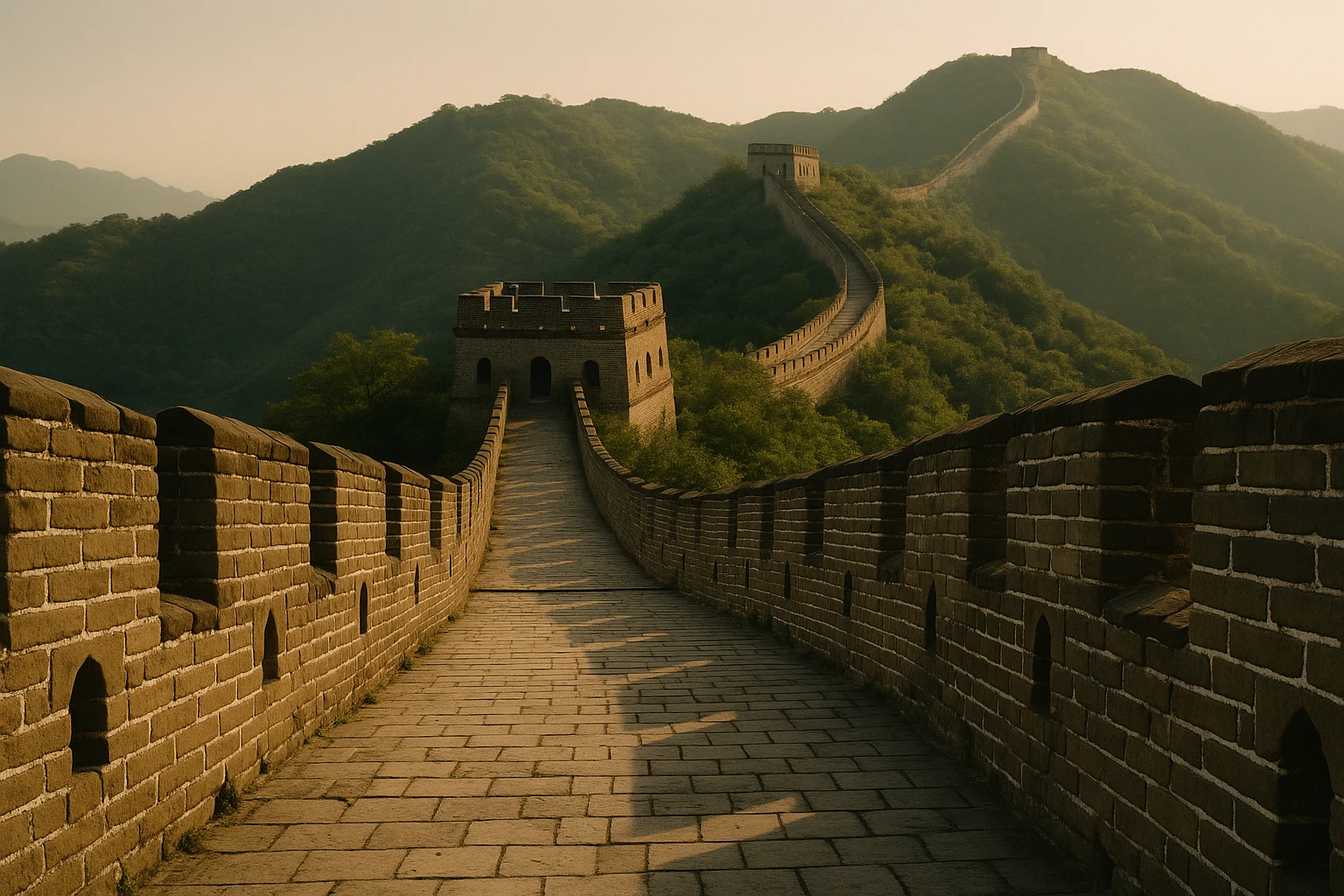
Great Wall of China (Mutianyu)
Explore Mutianyu — the Great Wall's most dramatic restored section, with 22 Ming-era watchtowers, mo...
Ming Tombs
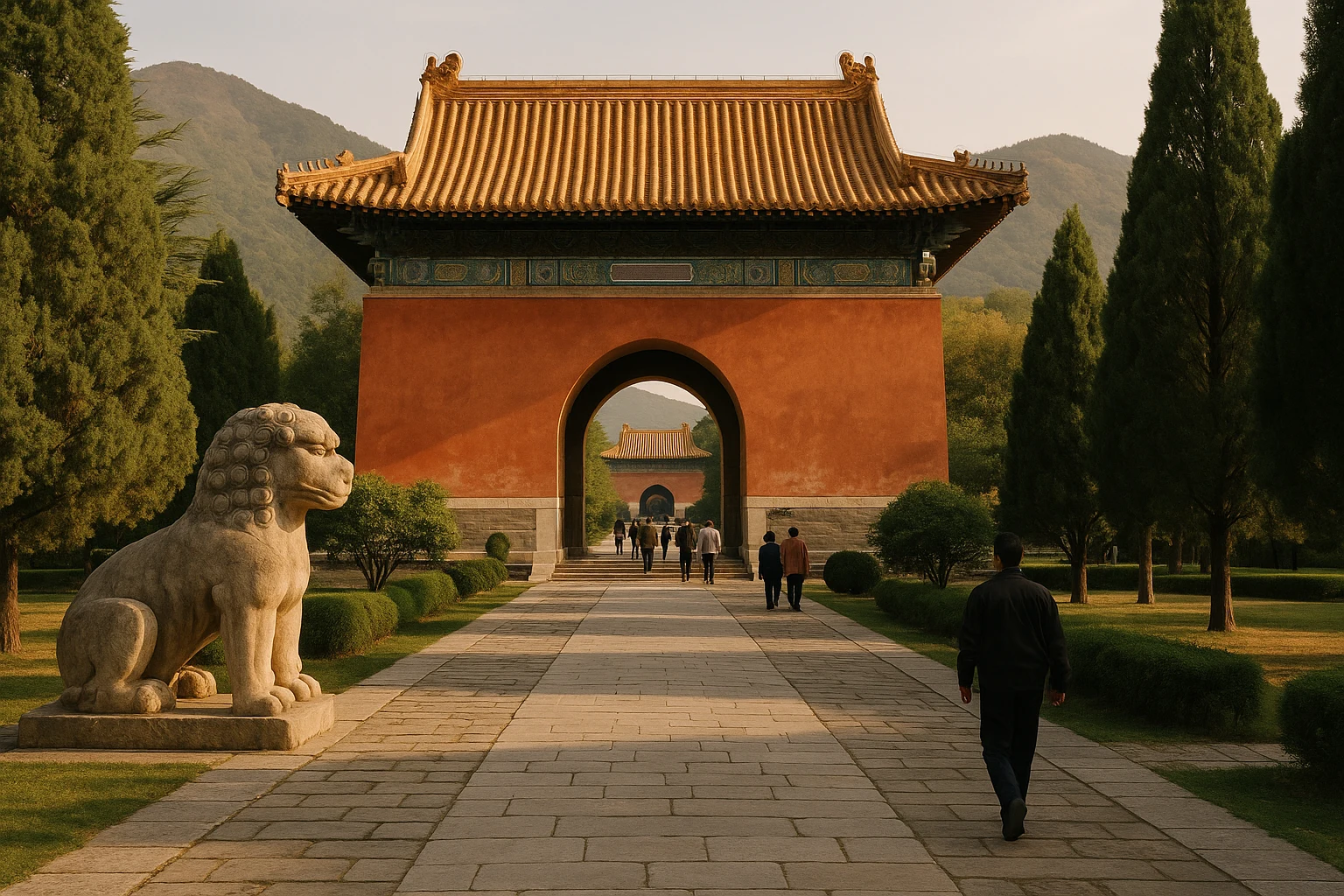
Explore the Ming Tombs near Beijing — thirteen imperial mausoleums of China's Ming dynasty, guarded ...