Quick Info
Curated Experiences
Full-Day Dazu Rock Carvings Tour from Chongqing
Private Dazu Rock Carvings Tour with Transport
Dazu Rock Carvings Guided Group Excursion
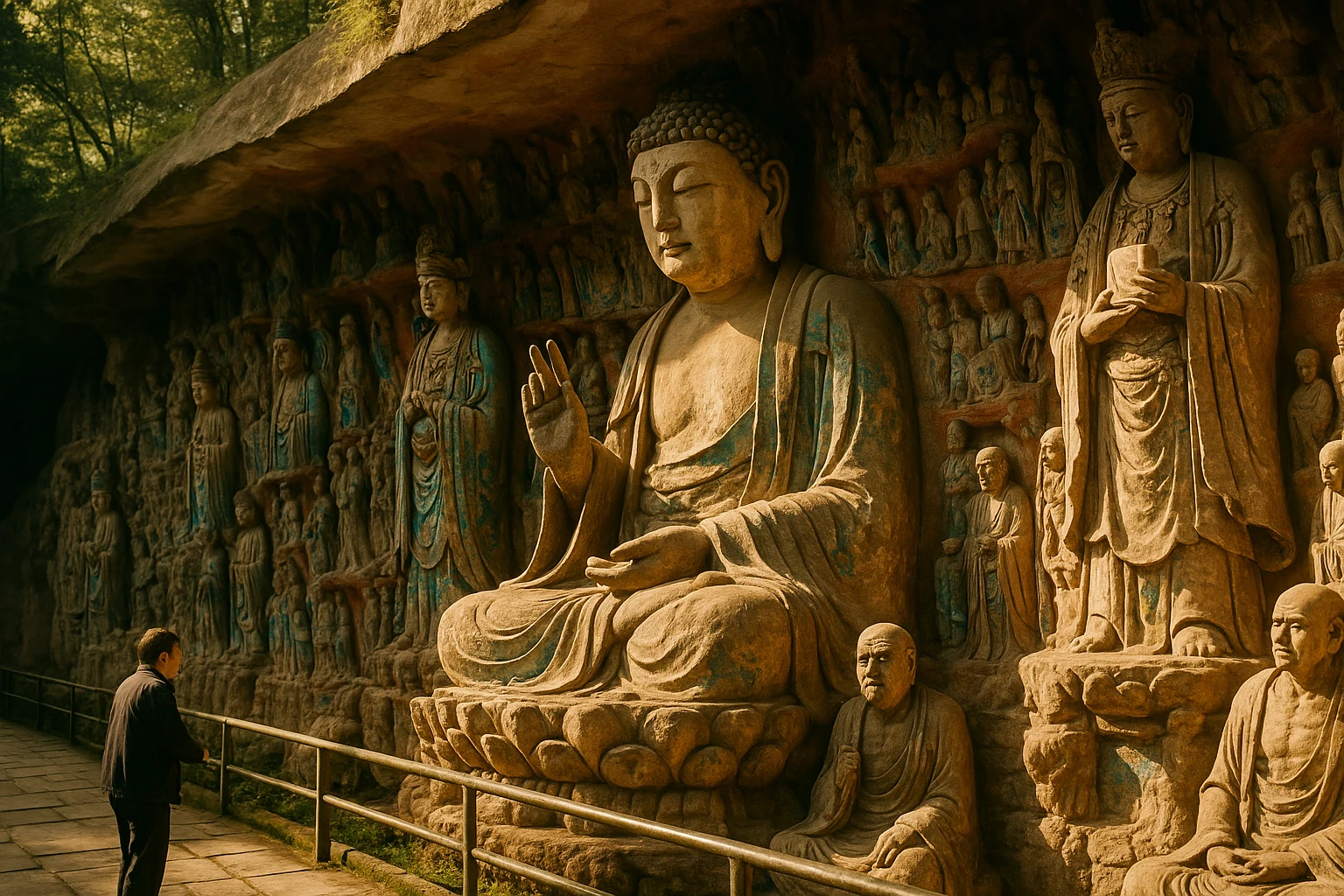
Hidden in the rolling green hills of Chongqing Municipality, roughly 160 kilometres west of the megalopolis that gives the region its name, the Dazu Rock Carvings are among the most astonishing works of religious art ever produced. Carved into the sandstone cliffs and niches of more than seventy sites scattered across Dazu District in China, these sculptures were created over six centuries spanning the Tang and Song dynasties — from roughly the 7th century through the 13th — and together they constitute a sacred landscape unlike any other on earth. The figures number more than fifty thousand, ranging from intimate devotional niches barely large enough for a single kneeling worshipper to sweeping curved gallery walls packed with hundreds of deities, guardians, sinners, sages, and mythological creatures rendered in paint and stone with startling expressiveness and technical mastery. What makes Dazu uniquely compelling is not sheer quantity alone but the extraordinary confluence of China’s three great philosophical and religious traditions — Buddhism, Taoism, and Confucianism — depicted side by side, sometimes intertwined in a single composition, reflecting the syncretic spiritual life of medieval Chinese society with a candor and sophistication that purely court or temple art rarely achieved. To stand before the great curved cliff of Baodingshan as afternoon light catches the gilded surfaces and the eyes of a ten-metre reclining Sakyamuni seem to follow you across the stone floor is to understand, without a word of explanation, why this place has drawn pilgrims for over a thousand years.
History
Origins in the Tang Dynasty
The earliest rock carvings at Dazu date to 650 CE, during the Tang dynasty, when local officials and Buddhist monks began commissioning devotional niches along the hillsides of Beishan, or North Mountain. The Tang period in China was a high-water mark for Buddhist art across East Asia, and Dazu’s earliest sculptures reflect the rounded, sensuous figural style that reached Sichuan and Chongqing from the imperial workshops of Chang’an and Luoyang. These first carvings were relatively modest in scale — individual Buddhas, bodhisattvas, and guardian kings sheltered under carved canopies — but they established the precedent of using the living rock as both material and canvas, embedding sacred imagery directly into the hillside so that the mountain itself became the temple. Inscriptions from this period record donations from merchants, farmers, and minor officials, suggesting that patronage was broadly distributed across society rather than concentrated in the hands of aristocratic or monastic elites.
The Song Dynasty Flowering
The golden age of Dazu’s rock carvings arrived with the Song dynasty, and most particularly during the 12th and 13th centuries, when a charismatic Buddhist monk named Zhao Zhifeng transformed the site at Baodingshan into one of the most ambitious religious art projects in Chinese history. Zhao spent more than seventy years, from around 1174 to 1252, coordinating the construction of a vast carved pilgrimage circuit at Baodingshan — a horseshoe-shaped valley whose inner walls he lined with continuous narrative sculptures depicting Buddhist cosmology, moral instruction, the consequences of sin, and the compassionate interventions of bodhisattvas. His project was explicitly didactic: the carvings were designed to be read and understood by illiterate peasants as readily as by learned monks, and they deploy a visual vocabulary of vivid narrative drama, expressive portraiture, and vernacular detail that still communicates with remarkable immediacy. Zhao drew on Tantric Buddhism, then increasingly popular in southwest China, but wove Confucian themes of filial piety and social harmony throughout his compositions, reflecting the intellectual synthesis that defined Song dynasty religious thought.
Later History and Rediscovery
Following the Song dynasty, Dazu passed through periods of local conflict and gradual neglect, though local communities maintained a tradition of pilgrimage to the major sites well into the 20th century. The carvings attracted the attention of Western scholars and Chinese archaeologists during the Republican period, but systematic documentation did not begin until after 1949 when the new Chinese government identified them as a priority for heritage preservation. Dazu’s remoteness in the Sichuan hills actually served the sculptures well during the Cultural Revolution of the 1960s and 1970s: while Buddhist and Confucian monuments in more accessible locations across China were defaced or destroyed, Dazu was sufficiently difficult to reach that most of its carvings survived intact. UNESCO recognition in 1999 brought international conservation expertise and funding to address the site’s primary threats — moisture infiltration, surface erosion, and the vibration from increased visitor traffic — and the carvings today are in better condition than at any point in the preceding century.
Key Features
Baodingshan: The Grand Pilgrimage Circuit
The centerpiece of any visit to Dazu is Baodingshan, the site shaped by monk Zhao Zhifeng’s extraordinary seventy-year project. The main carved area, called the Great Buddha Bay, is a U-shaped depression roughly 500 metres in perimeter whose inner walls are covered almost continuously with narrative sculptural programs up to thirty metres high. Walking the circuit is like reading a vast illustrated text — each panel flows into the next with deliberate compositional logic, guiding the viewer from depictions of hell and the consequences of moral failure through scenes of bodhisattva compassion and ultimately to images of Buddhist paradise. The most famous single composition is the colossal reclining Sakyamuni at Parinirvana, stretching more than thirty metres in length along the base of the cliff, his face serene, his disciples arranged in carved procession above him, their expressions of grief rendered with an individuality that anticipates portrait sculpture. Nearby, the Wheel of Reincarnation presents a richly detailed cosmological map held in the mouth of the demon of impermanence, its six realms of existence populated with hundreds of figures in scenes of daily life, suffering, and redemption. Throughout Baodingshan, polychrome pigments — reds, blues, greens, and gilded gold — survive in exceptional richness under the protective overhang of the cliff, giving the sculptures a vitality that purely monochromatic stone carvings cannot match.
Beishan: Elegance and Devotional Intimacy
The older Beishan site, about eight kilometres from Baodingshan, presents a different aesthetic register. Spread across a hillside containing more than 260 individual niches carved between the late Tang and late Song periods, Beishan feels less like a single conceived monument and more like an accumulated archive of devotion. Each niche was typically funded by a different patron — a merchant family, a local official, a Buddhist community — and the variety of styles, scales, and iconographic programs reflects the breadth of medieval Chongqing society. The finest Tang-dynasty carving at Beishan depicts Guanyin, the bodhisattva of compassion, in a posture of languid grace with fluid drapery that recalls the masterpieces of the Dunhuang caves. Song-dynasty niches tend to be more densely composed, filling every available surface with attendant figures, offering tables, canopies, and architectural frames carved in trompe-l’oeil stone. The cumulative effect of walking Beishan’s carved galleries is of entering an entire civilization’s inner life — its fears, hopes, theological arguments, and aesthetic aspirations all preserved in sandstone.
Nanshan, Shimenshan, and the Wider Landscape
Beyond the two main sites, Dazu’s rock carving tradition extends to Nanshan (South Mountain), where a rare concentration of Taoist carvings depicts the Three Pure Ones and a complex hierarchy of Taoist deities in stylized, hieratic compositions quite different from the warmer figural style of the Buddhist sites. Shimenshan (Stone Gate Mountain) contains a remarkable ensemble of syncretic carvings where Buddhist, Taoist, and Confucian figures appear within the same carved panels, visually enacting the philosophical synthesis that Zhao Zhifeng and his contemporaries championed as a path to social harmony and moral cultivation. Together these sites reinforce Dazu’s significance not merely as a repository of Buddhist art but as a record of how ordinary people in medieval China navigated competing spiritual systems and wove them into a coherent lived practice.
Getting There
The most convenient base for visiting Dazu Rock Carvings is Chongqing, which has excellent high-speed rail connections to the rest of China and an international airport. From Chongqing North Station, D-class intercity trains depart frequently for Dazu North Station; the journey takes 35–45 minutes and costs approximately 30–35 CNY (around USD 4–5) for a second-class seat. Trains run throughout the day from early morning until evening, making it straightforward to plan a day trip. From Dazu North Station, Bus 101 connects to the Baodingshan scenic area in roughly 25 minutes for about 3 CNY; taxis cost approximately 30–40 CNY. For Beishan, Bus 102 from the town centre covers the short distance in under 15 minutes.
Alternatively, several companies operate direct tourist coaches from Chongqing’s Chaotianmen area and major hotels to Baodingshan, typically departing around 8:00 AM and returning by early evening; these cost roughly 80–120 CNY per person including transport but not admission. Private car hire through ride-share apps or hotel concierges provides flexibility for visiting multiple sites and runs approximately 400–600 CNY for a full-day return trip. Visitors arriving by train without a guide should note that English signage within the scenic areas is limited; downloading offline Chinese maps and the key site names in Chinese characters (大足石刻 for Dazu Rock Carvings, 宝顶山 for Baodingshan) before departure is highly recommended.
When to Visit
Chongqing’s climate is famously humid and hot, earning the city its reputation as one of China’s “Three Furnaces,” and the Dazu District shares this character fully. The months from June through August bring temperatures regularly exceeding 35°C with high humidity and frequent afternoon rainstorms that can turn stone pathways slippery and reduce visibility at the carved cliff faces. While the carvings themselves do not suffer dramatically from summer rain — the overhanging cliffs provide substantial protection — visitor comfort suffers considerably, and the heat makes the extensive walking of a full site visit genuinely taxing.
Spring, from mid-March through May, is widely considered the best season. Temperatures hover between 15°C and 25°C, the surrounding hills are vivid green, and the light is soft and even — ideal for photographing the subtle relief and polychrome surfaces of the sculptures. Autumn, from September through November, offers equally pleasant conditions and the added spectacle of turning foliage on the hillsides around Baodingshan. Winter visits are possible and rewarded by dramatically reduced crowds, though fog is frequent in January and February and can limit photography.
The major Chinese national holidays — Golden Week in early October and the Spring Festival in late January or February — bring enormous domestic tourist volumes to Dazu. Queues at Baodingshan’s main viewing platform can stretch for an hour or more during peak holiday periods, and the intimacy that makes the carvings so powerful is considerably diminished in a crowd. Arriving at opening time (typically 8:00 AM) on any day of the week substantially improves the experience.
Quick Facts
| Detail | Information |
|---|---|
| Location | Dazu District, Chongqing Municipality, China |
| Coordinates | 29.6544°N, 105.7128°E |
| UNESCO Status | World Heritage Site (inscribed 1999) |
| Period | Tang and Song dynasties, 7th–13th century CE |
| Number of Figures | Over 50,000 carvings across 70+ sites |
| Main Sites | Baodingshan, Beishan, Nanshan, Shimenshan |
| Admission | ~115–130 CNY combined ticket (Baodingshan + Beishan) |
| Opening Hours | 8:00 AM – 6:00 PM (last entry 5:30 PM) |
| Nearest City | Chongqing (~160 km east) |
| Best Season | March–May and September–November |
Frequently Asked Questions
How do I get to Dazu Rock Carvings from Chongqing?
High-speed trains run from Chongqing North Station to Dazu North Station in under 40 minutes. From Dazu North Station, local buses and taxis reach Baodingshan in about 20–30 minutes. Total journey time is roughly 1–1.5 hours each way.
Is Dazu Rock Carvings a UNESCO World Heritage Site?
Yes. The Dazu Rock Carvings were inscribed on the UNESCO World Heritage List in 1999, recognized for their outstanding artistic achievement and the way they blend Buddhist, Taoist, and Confucian iconography into a single cohesive sacred landscape.
How long does it take to visit Dazu Rock Carvings?
A thorough visit to the main site at Baodingshan takes 2–3 hours. Adding the Beishan site adds another 1–2 hours. Most visitors on a day trip from Chongqing spend 4–5 hours at the carvings themselves.
What is the entrance fee for Dazu Rock Carvings?
The combined ticket for both Baodingshan and Beishan costs approximately 115–130 CNY (around USD 16–18). Prices are subject to change; check the official site or your tour operator for current rates before visiting.
Can I visit multiple rock carving sites at Dazu in one day?
Yes, though it is ambitious. Baodingshan and Beishan are the two most important sites and are both accessible on a long day trip from Chongqing. Lesser-visited sites such as Nanshan and Shimenshan require extra travel time and are better suited to an overnight stay in Dazu.
What is the best time of year to visit Dazu Rock Carvings?
March through May and September through November offer the most pleasant conditions — mild temperatures, lower humidity, and reduced rainfall compared to the sweltering and wet summer months. Avoid Chinese national holidays in late April and early October when crowds peak dramatically.
Are the carvings at Dazu well preserved?
Many carvings retain vivid original pigments and fine detail, especially those sheltered under overhanging cliffs at Baodingshan. Ongoing conservation efforts supported by UNESCO and the Chinese government have stabilized moisture infiltration and surface erosion, keeping the sculptures in remarkable condition.
Nearby Ancient Sites
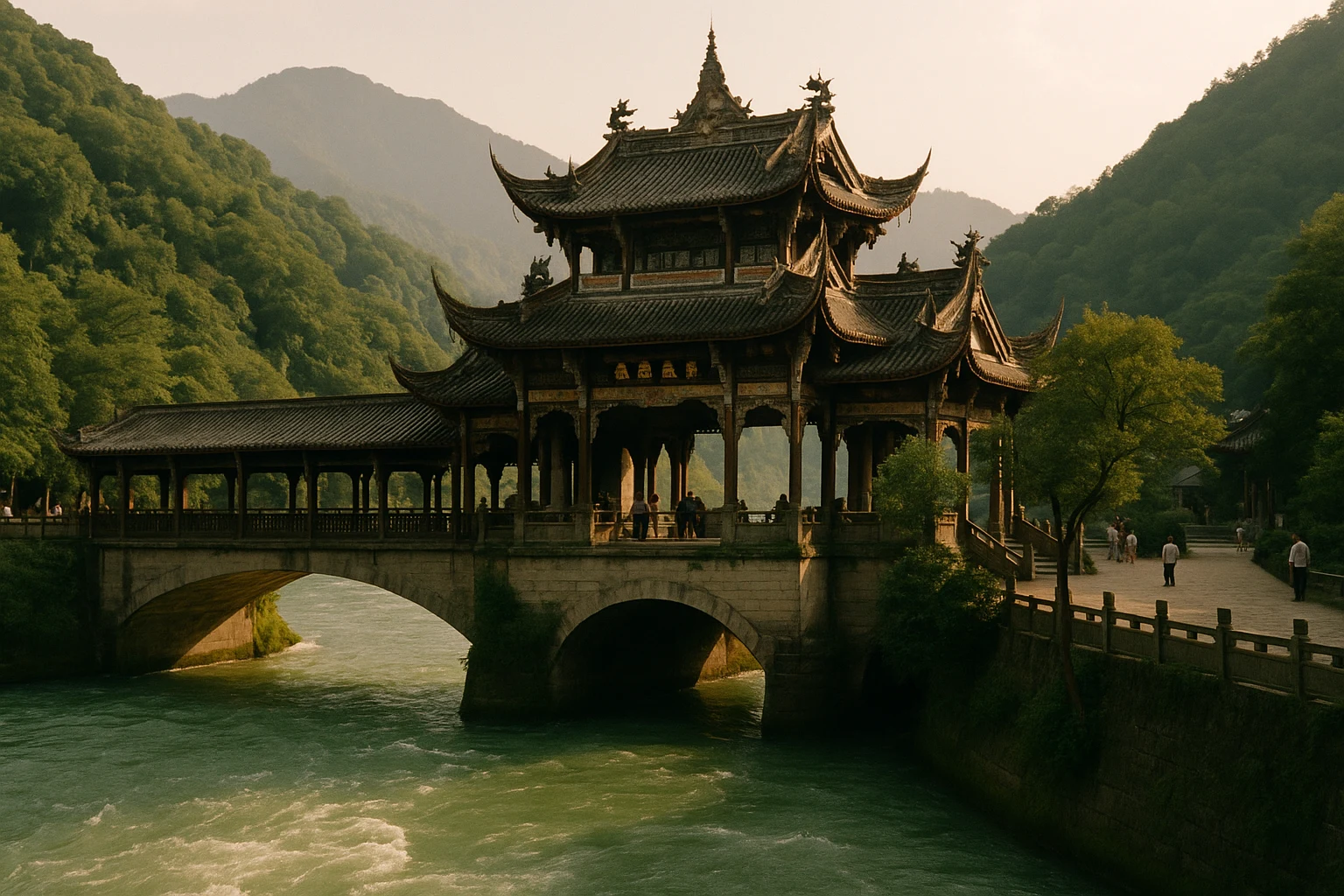
Dujiangyan Irrigation System
Explore Dujiangyan, the world's oldest functioning irrigation system, built in 256 BCE by engineer L...
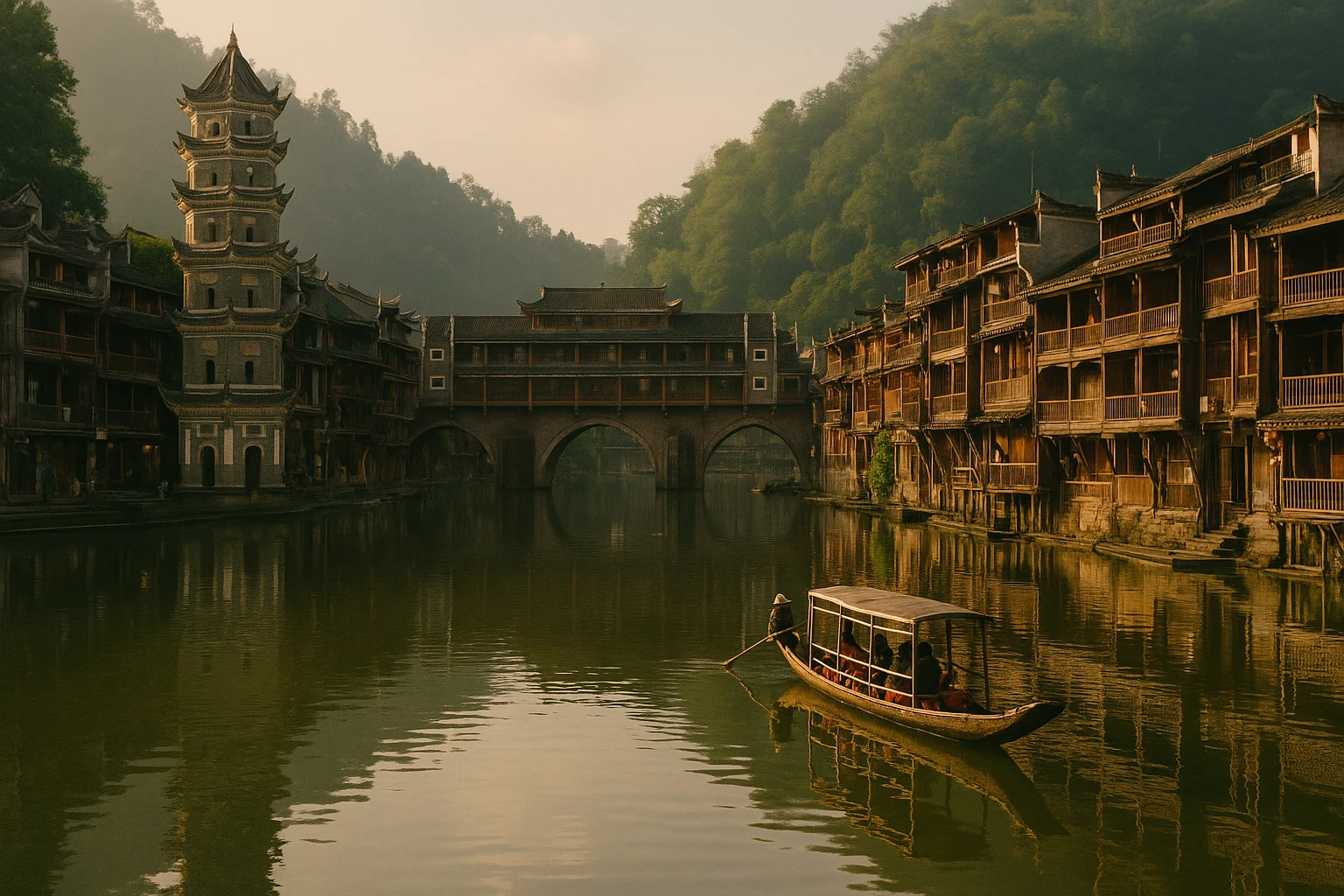
Fenghuang Ancient Town
Ming and Qing Dynasty ChinaFenghuang Ancient Town preserves Ming and Qing dynasty architecture along the Tuojiang River in west...
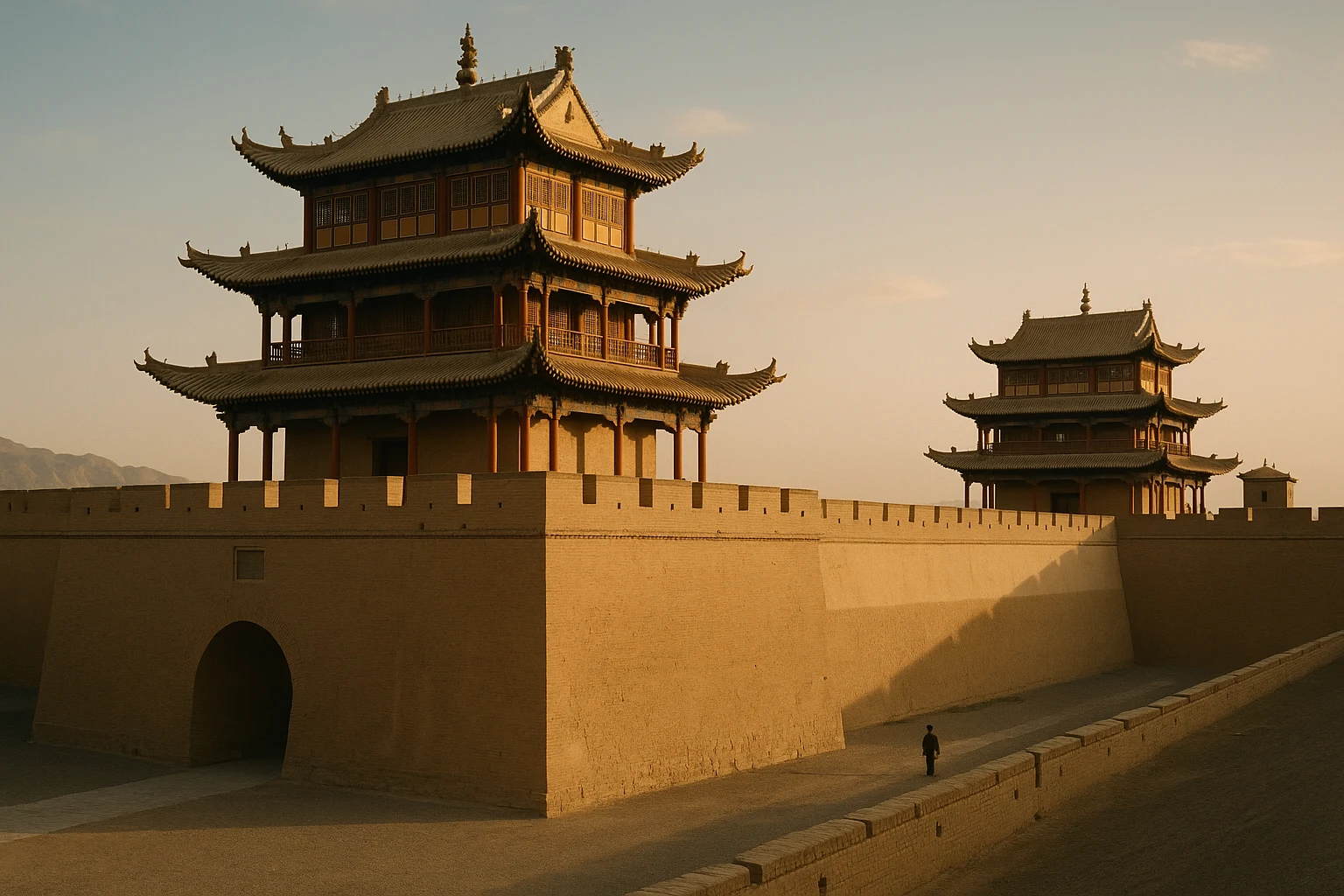
Jiayuguan Fort
Ming Dynasty ChinaJiayuguan Fort guards the western terminus of the Ming Great Wall in Gansu, China — the last strongh...