Quick Info
At a glance
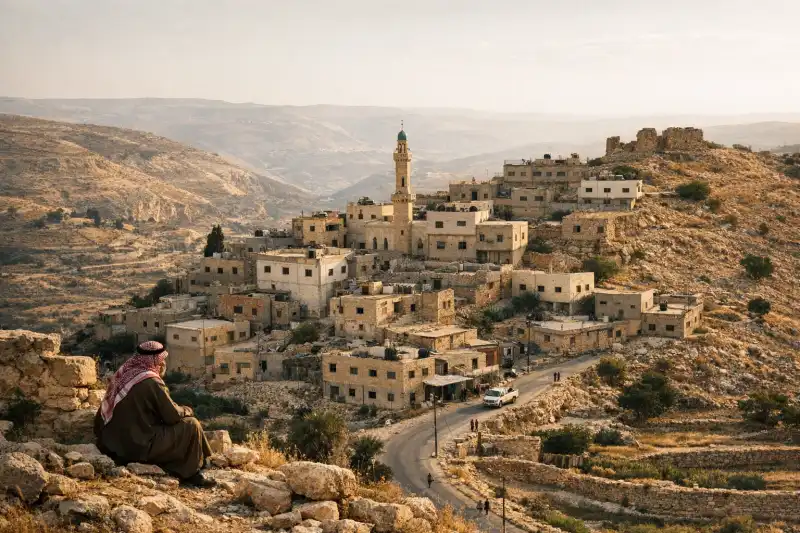
Dhiban in Jordan is not the country’s most polished archaeological stop, and that is part of its power. Rising above the surrounding plateau in Madaba Governorate, this ancient mound preserves the traces of a settlement that mattered deeply to the kingdoms and empires of the southern Levant. Winds move across open farmland, the horizon stretches toward the Dead Sea highlands, and the hill itself seems to hold layer upon layer of memory beneath its dusty surface. For travelers interested in the Bible, Iron Age politics, or the archaeology of ordinary and royal life alike, Dhiban offers a rare kind of encounter: a place where the landscape still feels close to the world of ancient Moab.
Known in antiquity as Dibon, the site is most famous as the place where the Mesha Stele was discovered in the 19th century. That inscription, commissioned by King Mesha of Moab, transformed scholarly understanding of the region and remains one of the great written records of the Iron Age Near East. Yet Dhiban is more than the location of a famous artifact. It is a long-lived settlement with evidence from multiple periods, including Bronze Age, Iron Age, Nabataean, Roman, Byzantine, and Islamic occupations. Visiting today means reading the terrain as much as the ruins: terraces, stone fragments, walls, pottery scatters, and commanding views all help explain why people returned here for centuries.
History
Bronze Age beginnings
The story of Dhiban begins long before the Moabite kingdom reached political prominence. Archaeological evidence indicates occupation in the Bronze Age, when communities across the highlands of modern Jordan established settlements that balanced agriculture, pastoralism, and regional exchange. Dhiban’s position on elevated ground was one of its great advantages. From here, inhabitants could observe movement through the surrounding countryside, cultivate nearby fields, and connect to routes that linked the Jordanian plateau to the Dead Sea basin and points farther south and north.
In this early period, the settlement was likely one among several important highland communities rather than an isolated center. Its significance came from continuity as much as scale. Sites that survived from one age to another often did so because they sat in landscapes that could support human life even during political change. Water access, arable land, defensible elevation, and transport links all made Dhiban durable.
Iron Age Dibon and the kingdom of Moab
Dhiban’s most historically resonant phase came in the Iron Age, when it emerged as ancient Dibon, a key center of the Moabite kingdom. Moab occupied the plateau east of the Dead Sea and is mentioned in biblical texts as well as inscriptions from neighboring powers. During this time, Dibon became associated with state formation, royal building, and the assertion of identity in a competitive regional environment.
The defining figure here is King Mesha, ruler of Moab in the 9th century BCE. The Mesha Stele, discovered at Dhiban in 1868, records his victories, public works, and devotion to the god Chemosh. It is among the most important inscriptions ever found in Jordan because it presents a local royal voice from the Iron Age rather than an outside imperial perspective. The inscription also intersects with the Hebrew Bible, especially in relation to the political struggles between Moab and Israel. That connection has made Dhiban a site of lasting interest to historians, epigraphers, biblical scholars, and travelers.
The Iron Age city at Dibon likely included fortifications, administrative areas, domestic quarters, and water-management features. Though the visible remains today are fragmentary, excavations have revealed enough to show that this was not a minor village. It was a place of organized labor, political symbolism, and strategic ambition.
Under larger empires
After the Iron Age kingdoms were absorbed into wider imperial systems, Dhiban continued to be inhabited. The Assyrian and Babylonian expansions reshaped the region, and later Persian control created new political frameworks. Like many ancient settlements, Dhiban adapted rather than disappeared outright. Its fortunes may have risen and fallen depending on shifting trade patterns and administrative priorities, but the continuity of occupation suggests that the site retained local value.
In the Hellenistic and Nabataean periods, the broader region saw increasing commercial integration. Dhiban was not Petra, nor did it become a monumental showpiece, but it remained part of an inhabited landscape connected to roads, markets, and agricultural production. This layered continuity is one reason archaeologists find the site so informative: it helps trace change over long durations rather than through a single dramatic phase.
Roman, Byzantine, and Islamic eras
Under Roman and then Byzantine influence, settlements across central Jordan were drawn into new networks of taxation, religion, and urban development. Dhiban continued as an occupied place, and architectural remains from these eras indicate practical adaptation rather than complete reinvention. Churches, domestic buildings, reused masonry, and surface ceramics all point to a community participating in the rhythms of late antique life.
The Islamic periods added another chapter. As in many Levantine sites, older stones were repurposed, building lines shifted, and the mound remained useful because the landscape around it remained productive. Archaeological work has identified evidence from Umayyad and later occupations, underscoring that Dhiban’s significance extends far beyond the Mesha Stele alone.
Rediscovery and archaeology
Modern scholarly attention intensified in the 19th century with the discovery of the Mesha Stele. Although the original monument is no longer at the site, its connection to Dhiban brought international notice. Since then, archaeological surveys and excavations have sought to reconstruct the mound’s occupational history. Work by Jordanian and international teams has clarified the site’s complexity, revealing a settlement with deep chronological layers rather than a single-period ruin.
Today, Dhiban remains a destination best appreciated by travelers who enjoy reading places carefully. It is not a fully monumentalized park, but that makes it closer to the working reality of archaeology in Jordan: a historic mound still embedded in living landscapes, carrying evidence of kingdoms, farmers, builders, and pilgrims across thousands of years.
Key Features
What makes Dhiban memorable is not one standing temple or one perfectly preserved gate, but the way the whole mound communicates age and strategic purpose. As you approach, the first thing you notice is the elevated position. The hill rises with quiet authority above the surrounding terrain, making clear why ancient communities selected it. Even before you look for walls or architectural fragments, the site’s topography explains its appeal. The views outward are wide, and the relationship between settlement and agricultural land is immediately legible.
The archaeological mound itself is the central feature. Walking across it, visitors encounter exposed stonework, low wall lines, and areas where excavation has revealed the underlying structure of different occupation levels. These remains can appear modest at first glance, especially if you are expecting the soaring columns of a Roman city, but they reward patient attention. Dhiban is a site of layers. A stretch of masonry may belong to one period, while the stones beside it may have been reused in another. The ground is full of subtle clues: pottery fragments, changes in soil color, terrace edges, and building alignments.
Another key feature is the site’s historical association with the Mesha Stele. Although the stele is no longer here, the place where it was found gives Dhiban an importance out of proportion to its visible remains. Standing on the mound, it is easy to imagine the world in which a Moabite king commissioned an inscription celebrating military success, divine favor, and civic construction. The stele turned Dhiban into one of the foundational places for understanding Moabite history, language, and political identity. For many visitors, this intellectual significance becomes one of the site’s strongest attractions.
The surrounding landscape is also part of the experience. Dhiban does not sit in isolation; it is embedded in the rolling plateau country of central Jordan. Seasonal light changes the atmosphere dramatically. In spring, green fields can soften the hill’s harsh lines. In summer, the terrain becomes more austere, emphasizing the endurance required to build and maintain a settlement here. This environmental setting helps travelers appreciate ancient life in practical terms: access to water, management of fields, and movement along highland routes mattered just as much as royal ideology.
Look, too, for signs of long continuity. Dhiban’s remains come from multiple eras, and that makes the site feel more like a palimpsest than a frozen city. Roman and Byzantine traces mingle with earlier foundations; later occupation overlays older plans. For archaeologically minded visitors, this is one of Dhiban’s great strengths. It demonstrates how settlements survive by adaptation. Few communities remain important for the same reason in every era, yet Dhiban kept attracting people because its position remained useful.
Finally, there is the sense of quiet. Compared with Jordan’s headline destinations, Dhiban is often calm and lightly visited. That low-key atmosphere can be a major advantage. You are more likely to hear the wind than a tour bus, more likely to think about the shape of the hill than to follow a marked one-way path. Travelers who value reflection, landscape, and historical imagination often find Dhiban especially rewarding for exactly this reason.
Getting There
Dhiban is most easily reached by road from Amman or Madaba. From Amman, the drive typically takes around 1 to 1.5 hours depending on traffic and your exact starting point. A private taxi from Amman usually costs about 35 to 60 Jordanian dinars for a round trip with waiting time, though negotiated rates vary by season and driver. From Madaba, the journey is shorter and generally cheaper, often around 20 to 35 dinars by taxi for a return excursion.
Self-driving is the most convenient option. Jordan’s road network in this part of the country is generally straightforward, and many travelers combine Dhiban with other sites in central Jordan, such as Madaba, Mount Nebo, or Bethany Beyond the Jordan. If you rent a car in Amman, daily rental prices often begin around 25 to 40 dinars before fuel and insurance. This gives you flexibility, especially because Dhiban is best visited at your own pace.
Public transport is possible but less predictable. Service taxis and local minibuses sometimes run between Amman, Madaba, and towns in the region, but schedules can be irregular and may not line up well for same-day sightseeing. If you attempt the trip by public transport, budget only a few dinars for each leg, but expect longer travel times and possible waits.
Organized day tours focused on biblical or heritage sites in central Jordan occasionally include stops nearby, though Dhiban itself is less commonly featured than Madaba or Mount Nebo. For travelers who want context without logistical hassle, hiring a local driver-guide from Amman or Madaba is often the best compromise.
When to Visit
The best time to visit Dhiban is spring, roughly from March to May, when temperatures are moderate and the surrounding countryside is often at its most attractive. In these months, daytime conditions are comfortable for walking the mound, and the greener landscape helps reveal the relationship between the ancient site and the agricultural plateau around it. Spring is also one of the best seasons for photography, with softer light and clearer atmospheric conditions.
Autumn, especially October and November, is another strong option. The weather is usually warm without the harsher extremes of midsummer, and you can explore more comfortably in the middle of the day. If you are combining Dhiban with longer drives through central Jordan, autumn makes for an especially pleasant itinerary.
Summer visits are possible, but you should plan carefully. From June through August, midday heat can be intense, and shade at the site is limited. If visiting in summer, aim for early morning or late afternoon, carry plenty of water, and wear a hat and sunscreen. The drier atmosphere can make the site feel more severe, though some travelers appreciate that stark highland mood.
Winter brings cooler air and occasional rain. On clear days, winter can actually be excellent for sightseeing, especially if you prefer fewer visitors and crisp visibility. However, winds on the exposed mound can be chilly, and the ground may be slippery after rain. Whatever the season, Dhiban is best experienced when you allow time not only to walk the site but also to absorb the wider landscape that gave it life.
| Quick Facts | Details |
|---|---|
| Location | Dhiban, Madaba Governorate, Jordan |
| Ancient Name | Dibon |
| Best Known For | Discovery site of the Mesha Stele |
| Main Historical Association | Kingdom of Moab |
| Time Needed | 1–2 hours |
| Nearest Major Base | Amman |
| Nearby Travel Hub | Madaba |
| Best Seasons | Spring and autumn |
| Terrain | Archaeological mound on a highland plateau |
| Ideal For | Archaeology enthusiasts, biblical history travelers, independent explorers |
Dhiban is the kind of destination that grows in significance the longer you spend with it. It does not overwhelm with monumental spectacle; instead, it offers something subtler and in many ways more durable. Here, the ancient world is carried in topography, in fragments of masonry, in inscriptions remembered even when the object itself has gone elsewhere, and in the continued habit of people living and farming around an old tell. For travelers who want to move beyond the best-known circuits of Jordan, Dhiban provides a direct encounter with one of the region’s foundational landscapes.
Its importance lies in both history and method. Historically, it anchors the story of Moab and preserves the memory of King Mesha’s assertion of power. Archaeologically, it teaches visitors how layered settlements work: every period leaves traces, but rarely in neat isolation. You come to Dhiban not just to see ruins, but to understand why a place matters across centuries. That makes it one of Jordan’s most rewarding sites for thoughtful travelers, especially those willing to look closely, imagine carefully, and let the hill speak in its own understated way.
Guided tours: worth it?
Most travelers can visit Dhiban independently. Compare a tour only if you want a tighter history-focused visit, easier logistics, or a guide who can answer questions on the spot.
Best for
- Short visits where a planned route saves time
When to go self-guided
Go independently if you prefer setting your own pace, reading as you go, and checking official hours or ticket rules directly before you arrive.
What I’d avoid
Skip paid tours that bundle unrelated stops you do not actually want. The best option should either save meaningful planning time or add historical context you would miss on your own.
Madaba and Mount Nebo day tours
Useful when: you want to compare guided formats before deciding
Jordan biblical sites tours
Useful when: you want to compare guided formats before deciding
Amman to Madaba private tours
Useful when: you want flexible timing or a private guide
Some tour links are affiliate links, which may earn Ancient Travel a small commission at no extra cost to you. I try to surface options that make practical sense for the site—not just anything bookable.
Frequently Asked Questions
Where is Dhiban located?
Dhiban is in central Jordan in Madaba Governorate, south of Amman and east of the Dead Sea.
Why is Dhiban historically important?
Dhiban is widely identified with ancient Dibon, a major Moabite center associated with the Mesha Stele, one of the most important inscriptions from the Iron Age Levant.
Can you see the Mesha Stele at Dhiban?
No. The original Mesha Stele was removed in the 19th century and is now in the Louvre Museum in Paris, though Dhiban remains the site where it was discovered.
How much time should I spend at Dhiban?
Most visitors spend one to two hours exploring the mound and surrounding ruins, though archaeology enthusiasts may want longer.
Is Dhiban easy to visit independently?
Yes. Dhiban is usually reached by car or taxi from Amman or Madaba, and an independent visit is straightforward with basic planning.
What should I bring when visiting Dhiban?
Bring water, sun protection, sturdy walking shoes, and cash for transport or local purchases, as facilities may be limited.
Nearby Ancient Sites
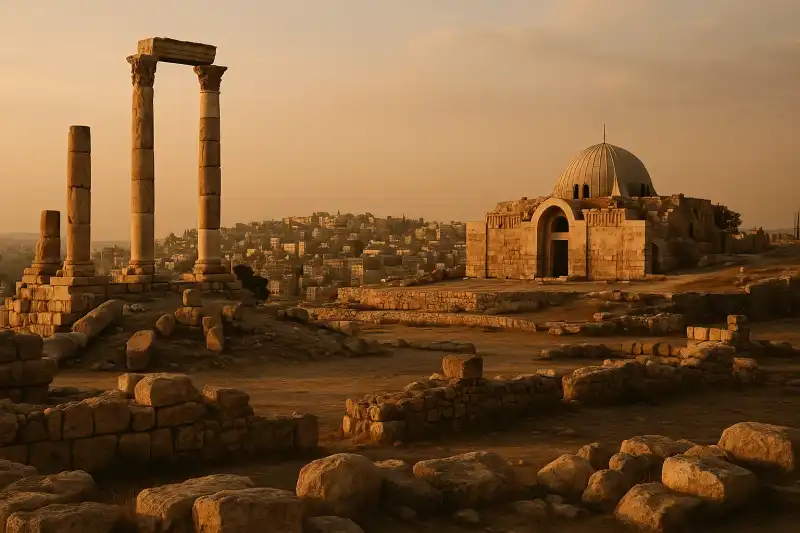
Amman Citadel Jordan Guide 2026: Temple of Hercules & Ancient Rabbah
Ammonite-Roman-UmayyadExplore Jordan's ancient citadel overlooking modern Amman. Discover the Temple of Hercules, Umayyad ...
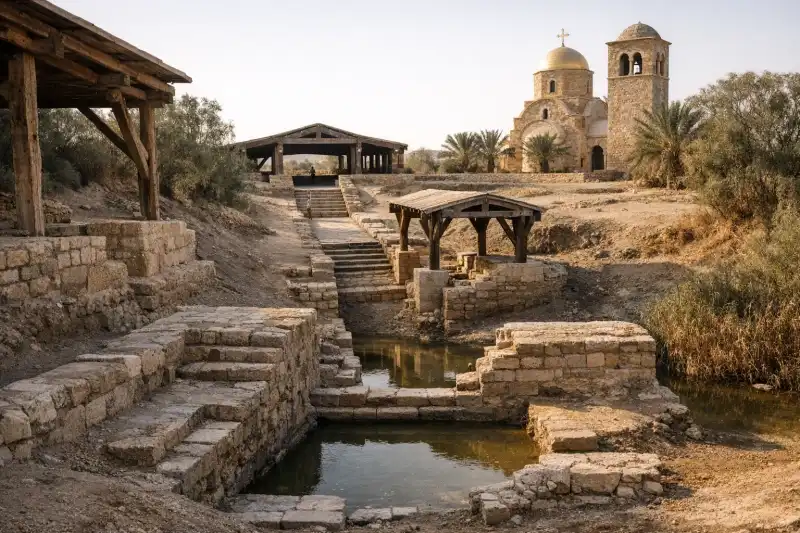
Bethany Beyond the Jordan
Bethany Beyond the Jordan in Jordan is an archaeological and religiously significant site believed t...
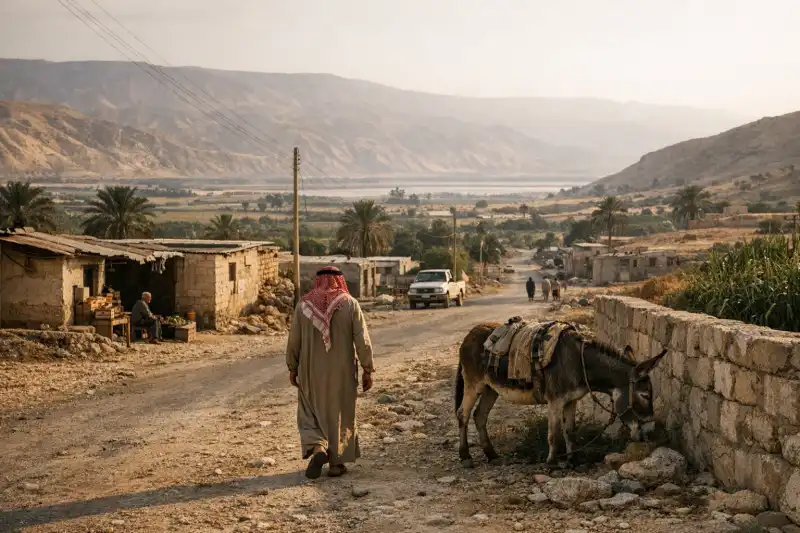
Deir Alla
Canaanite, Israelite-era, and regional Levantine culturesExplore Deir Alla in Jordan, an important Jordan Valley archaeological mound linked to Bronze and Ir...