Quick Info
Curated Experiences
Dublin Castle and Historic Core Walking Tour
Private Dublin Castle and Viking Dublin Experience
Dublin Castle, Chester Beatty, and Cathedral Quarter Tour
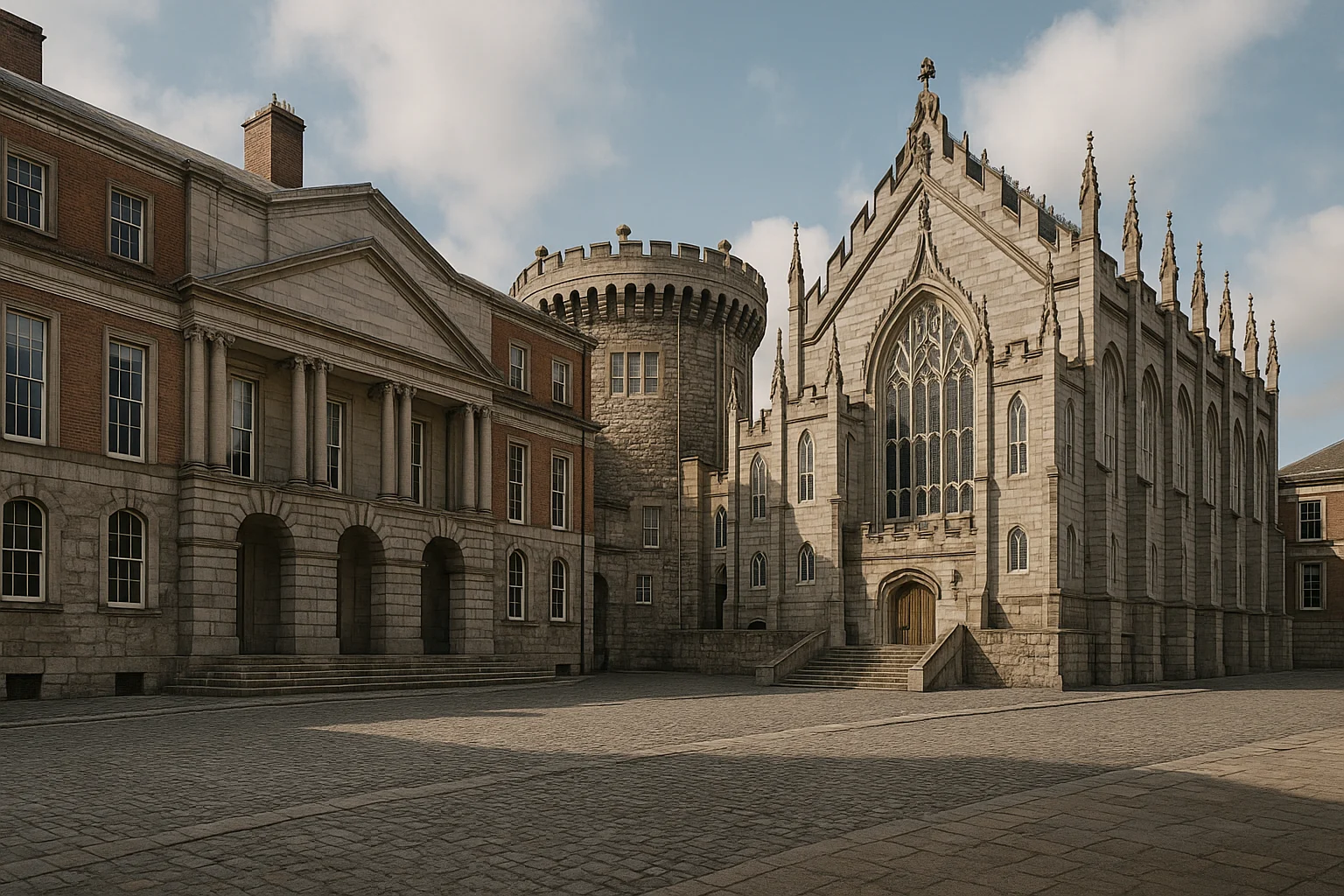
Dublin Castle does not look like a castle. That is the first thing you notice and the most important thing to understand. Where you expect battlements and arrow slits, you find Georgian state rooms and a cobblestone courtyard that could pass for a government ministry — which is precisely what it was for seven centuries. The medieval fortress is still here, buried beneath and behind the later layers, but you have to look for it. The Viking-age defensive bank, the 13th-century Record Tower, the excavated remains of the Poddle River gateway: these fragments are the real castle, and they reward visitors willing to dig beneath the 18th-century surface.
For travelers trying to understand Dublin beyond the pub streets and the postcard shots, Dublin Castle is one of the most efficient starting points in the city. Within a single compound you can trace the arc from Viking settlement to Norman fortress to British administrative headquarters to the seat of the modern Irish state. That compression of eight centuries into one walkable site is what makes it worth your time.
The location is central, the adjacent attractions are strong, and the visit slots naturally into a morning or afternoon that can extend into the surrounding Cathedral Quarter without any transit.
Historical Context
The story of Dublin Castle begins with water. The castle site sits at the confluence of the River Liffey and the now-buried River Poddle, a junction that had been strategically significant since the Viking era. The Norse established a fortified settlement (the “black pool” or dubh linn that gave Dublin its name) in this area, and when the Anglo-Normans consolidated control after 1169, they recognized the same geographical advantage.
King John of England ordered the construction of a castle here in 1204, instructing his justiciar to build a fortress “with good ditches and strong walls” to serve as the seat of English royal authority in Ireland. The original castle was roughly rectangular, with circular corner towers and a central gatehouse. The Record Tower, still standing on the southeast corner of the Upper Yard, is the most substantial surviving element of this 13th-century fortress and the oldest standing structure on the site.
For the next five centuries, Dublin Castle served as the administrative heart of English and later British rule in Ireland. The Lord Deputy and later the Lord Lieutenant governed from here, courts convened here, and state records were stored here. The castle’s character shifted gradually from military fortress to administrative complex, and a catastrophic fire in 1684 destroyed much of the medieval structure. The rebuilding campaign that followed produced the Georgian and neoclassical interiors that dominate the site today — the State Apartments, the grand staircase, and the ornate ceremonial rooms that visiting dignitaries would have entered.
The handover of Dublin Castle from British to Irish Free State authority on January 16, 1922, was one of the most symbolically charged moments in modern Irish history. Michael Collins arrived to accept the castle from the last British Lord Lieutenant, and the transfer marked the effective end of centuries of English administrative control from this compound. Today, the castle serves as a venue for state receptions, presidential inaugurations, and EU events, while the heritage sections are open to the public.
The archaeological dimension adds a further layer. Excavations in the 1980s and 1990s uncovered the remains of the Viking-age defensive bank and the medieval Poddle gateway, providing physical evidence of the settlement that predated the Norman castle. These remains are now accessible as part of the visitor route.
The castle also carries potent cultural significance as a symbol of colonial power and its end. For centuries, “The Castle” was shorthand in Irish political discourse for British authority. The phrase “Castle Catholic” described Irish Catholics who cooperated with the administration. When Michael Collins received the keys in 1922, his reported remark to the departing Lord Lieutenant — “You’re seven minutes late” — captured an entire nation’s relationship with the building in four words.
What to See
State Apartments
The State Apartments are the centerpiece of most visits. These rooms — including St. Patrick’s Hall, the Throne Room, the Drawing Room, and the State Corridor — were designed to project British administrative authority and have been maintained and restored to reflect their ceremonial function. St. Patrick’s Hall, with its painted ceiling depicting key moments in Irish and Anglo-Irish history, is the most impressive single room. The apartments are accessed by guided tour or self-guided visit depending on the day, and state functions occasionally restrict access. Check availability in advance.
The Undercroft (Viking and Medieval Excavations)
Below the current buildings, the excavated undercroft reveals sections of the original Viking-age defensive bank, the foundations of the medieval Powder Tower, and the arched gateway where the River Poddle once entered the castle moat. This is the physical link between the ceremonial castle above and the older fortified settlement beneath. The undercroft is dimly lit and atmospheric, and the interpretive panels do a strong job of explaining what you are seeing. For anyone interested in how Dublin’s layers stack up over a millennium, this is the most rewarding single section of the visit.
Chapel Royal
The Gothic Revival Chapel Royal (now the Church of the Most Holy Trinity) was completed in 1814 and represents one of the finest ecclesiastical interiors in Dublin. The exterior is decorated with over 90 carved heads depicting historical figures, while the interior features fan-vaulted ceilings, stained glass, and carved oak galleries. Access to the interior varies by day and event schedule, but the exterior detailing is worth close inspection regardless. The chapel’s stylistic contrast with the Georgian state rooms next door captures the architectural range of the compound.
Record Tower
The cylindrical Record Tower at the southeast corner of the Upper Yard is the most substantial surviving piece of the 13th-century castle. Its walls are roughly 16 feet thick at the base, and the battlemented parapet was added in the 19th century to give it a more “medieval” appearance. The tower housed state records for centuries and now forms part of the Garda (police) Museum. Its presence anchors the site visually and historically — proof that the Norman fortress still exists beneath the Georgian surface.
Castle Gardens and Dubh Linn Garden
The garden on the castle’s south side occupies the site of the original “black pool” that gave Dublin its name. It is a small, well-maintained green space with a distinctive serpentine pattern set into the lawn that references a Celtic design. The garden provides a useful orientation stop and a quiet contrast to the enclosed courtyards.
Timing and Seasons
Dublin Castle is a city-center attraction, so seasonal weather matters less than timing within the day. The best strategy is to visit on weekday mornings, arriving shortly after the 9:45 AM opening time, when the State Apartments are quietest and guided tour groups have not yet congregated. Weekends and public holidays are busier. Summer months (June through August) see the highest overall traffic, with temperatures around 59-68°F (15-20°C). Spring and autumn, at 48-58°F (9-14°C), are comfortable for walking the courtyards and surrounding streets.
State functions periodically close the State Apartments without much advance notice. Checking the Dublin Castle website on the morning of your visit is a worthwhile habit. The undercroft and gardens typically remain accessible even when state rooms are closed.
Winter visits work well — the site is almost entirely indoor-accessible, and the lower tourist traffic makes for more contemplative room-by-room viewing. Winter temperatures in Dublin average 38-46°F (3-8°C).
Tickets, Logistics, and Getting There
Self-guided admission to the State Apartments and undercroft is approximately $9 (EUR 8) for adults, with discounts for students, seniors, and children. Guided tours are available for a slightly higher fee and run at regular intervals. The Chester Beatty Library, located within the castle grounds, is free and open to all visitors — a world-class collection of manuscripts, prints, and rare books that should not be missed.
Dublin Castle sits in the heart of Dublin’s city center, a 5-minute walk from Temple Bar and a 10-minute walk from Trinity College. It is accessible by all Dublin Bus routes that serve Dame Street, and the Luas Green Line stops at St. Stephen’s Green, roughly 10 minutes’ walk away. No car is needed; in fact, driving to Dublin Castle is actively discouraged due to limited parking and congested city-center streets.
The site is open daily from approximately 9:45 AM to 5:15 PM, with last admission around 4:30 PM. Hours may vary for state events.
Practical Tips
- Check the Dublin Castle website or call ahead on the morning of your visit to confirm State Apartment access. State events close the rooms without guaranteed advance notice.
- Start with the undercroft if the tour schedule allows. Understanding the Viking and medieval layers first makes the Georgian state rooms above more interesting, not less.
- The Chester Beatty Library is free, world-class, and on the castle grounds. Budget at least 30 to 45 minutes for it. Missing it is one of the most common visitor mistakes.
- Dress in comfortable layers. The State Apartments are heated; the courtyards and undercroft are not. Transitions are abrupt.
- Photography is permitted in most areas. The undercroft and Chapel Royal exterior produce the most distinctive images.
- The castle grounds and surrounding streets are flat and fully paved, making this one of the most accessible heritage sites in Ireland for visitors with mobility concerns.
Suggested Itinerary
Arrive at opening time (9:45 AM) and proceed to the State Apartments, either self-guided or on the first guided tour (45 minutes to 1 hour). After the apartments, descend to the undercroft and Viking-medieval excavations (20 to 30 minutes). Exit into the courtyard and walk to the Chapel Royal exterior and Record Tower (15 minutes). Cross to the Dubh Linn Garden for orientation and photographs (10 minutes).
From the castle, walk to the Chester Beatty Library (free, on the grounds) and spend 30 to 45 minutes with the manuscript and rare-book collections. If continuing, Christ Church Cathedral and St. Patrick’s Cathedral are both within a 10-minute walk, extending the visit into a half-day Cathedral Quarter heritage loop.
Total Dublin Castle time: 1.5 to 2.5 hours. Total with Chester Beatty and cathedral extensions: 3 to 4 hours.
Nearby Sites
Trim Castle in County Meath shows large-scale Anglo-Norman military architecture in a way that Dublin Castle, with its Georgian overlay, no longer can. The contrast between Dublin’s administrative evolution and Trim’s raw fortress is one of the most instructive pairings on an Ireland itinerary. Trim is roughly 50 minutes northwest by car.
Glendalough adds the early medieval monastic dimension that Dublin Castle’s timeline skips over. The glacial valley in County Wicklow, with its round tower and ruined churches, represents a radically different chapter of Irish history. Glendalough is about 1.5 hours south of Dublin by car.
Rock of Cashel provides the comparison between urban administrative power (Dublin) and hilltop ecclesiastical authority (Cashel). Together, the two sites illuminate how different kinds of institutions used architecture to project control in medieval and early modern Ireland. Cashel is roughly 2.5 hours southwest.
Within Dublin, Christ Church Cathedral (5-minute walk) and Kilmainham Gaol (20-minute drive or bus ride) both extend the city’s political and architectural narrative in directions that complement a Dublin Castle visit.
Discover More Ancient Wonders
- Trim Castle — Ireland’s largest Anglo-Norman fortress in County Meath
- Glendalough — Early medieval monastic settlement in the Wicklow Mountains
- Rock of Cashel — Hilltop cathedral complex in County Tipperary
- Kilmainham Gaol — 18th-century prison and Irish independence landmark
- Our complete guide to Irish castles and heritage sites
Final Take
Dublin Castle is worth your time because it compresses eight centuries of Irish urban and political history into one compact compound. You will not find a single-era “perfect ruin” here. You will find something more useful: a layered complex that shows how Dublin changed, who held power, and how architecture kept adapting to serve new masters. The Viking bank beneath the Georgian ballroom, the Norman tower beside the neoclassical courtyard, the state rooms where British lords governed and Irish presidents now host dignitaries — these juxtapositions are the point.
For travelers building an understanding of Ireland that goes beyond the countryside, Dublin Castle is the place to start. It tells the story of the city itself, in stone and plaster and excavated earth, and it does so within walking distance of everything else Dublin has to offer.
Quick Facts
| Attribute | Details |
|---|---|
| Location | Dublin city center, Ireland |
| Country | Ireland |
| Region | Dublin |
| Civilization | Medieval and Early Modern Ireland |
| Historical Period | 13th century CE — present |
| Established | 1204 CE |
| Admission | ~$9 (EUR 8) self-guided; guided tours slightly more |
| Opening Hours | 9:45 AM — 5:15 PM daily |
| Time Needed | 1.5-2.5 hours (castle); 3-4 hours with Chester Beatty |
| Coordinates | 53.3429, -6.2674 |
Frequently Asked Questions
How long do you need at Dublin Castle?
Most travelers spend 1.5 to 2.5 hours. That covers the State Apartments, Chapel Royal exterior, and the Viking-medieval excavation area.
Is Dublin Castle worth visiting if you only have one day in Dublin?
Yes. It gives you one of the clearest overviews of Dublin's political history in a compact, central site near other major attractions.
Can you visit Dublin Castle without a guided tour?
Yes. Self-guided admission is available for core sections, while some areas may have timed or guided access depending on state events.
Nearby Ancient Sites
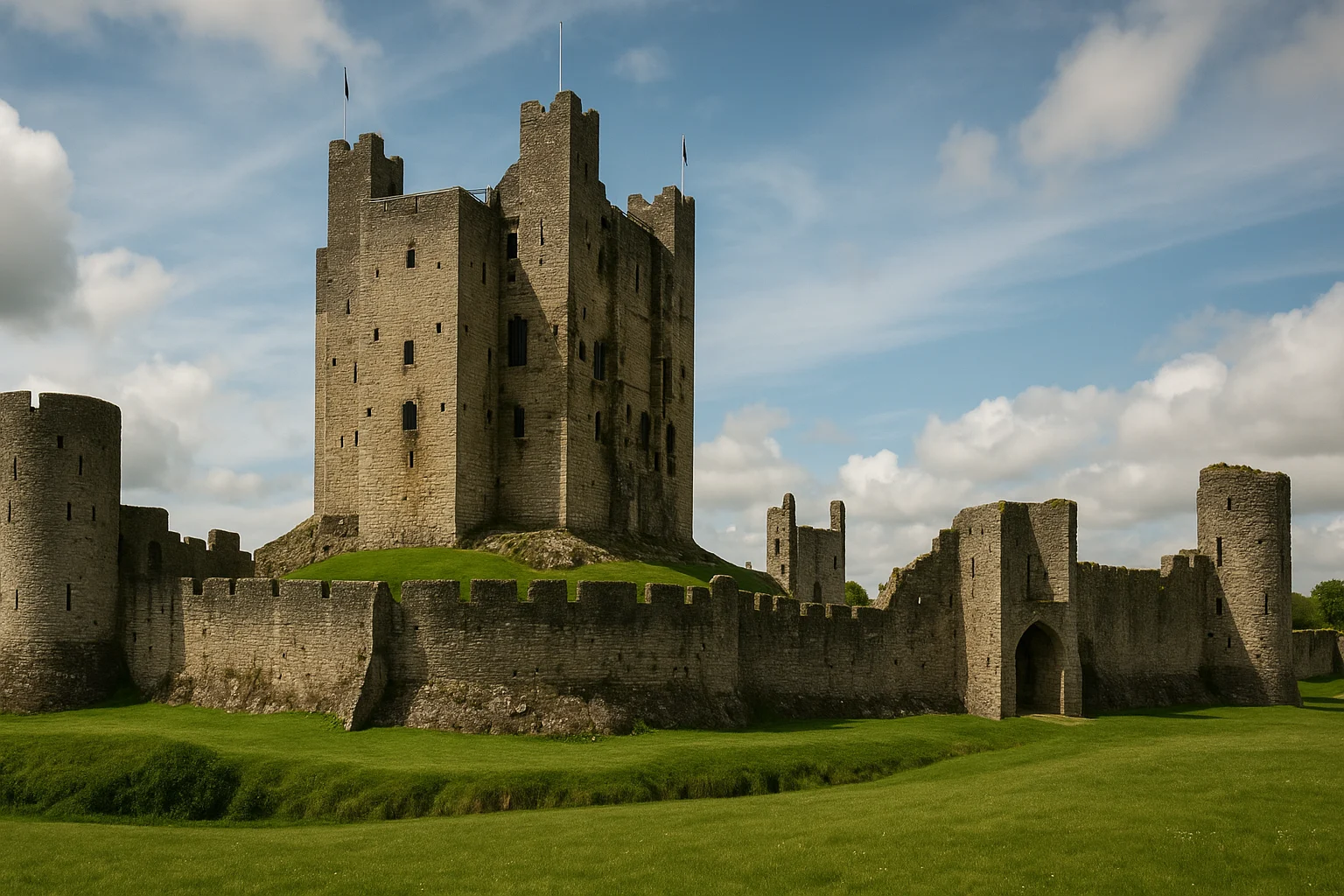
Trim Castle Travel Guide 2026: Norman Keep, Curtain Walls, and County Meath Plan
Anglo-Norman IrelandPlan a first visit to Trim Castle with practical timing, keep-tour logistics, and clear context for ...
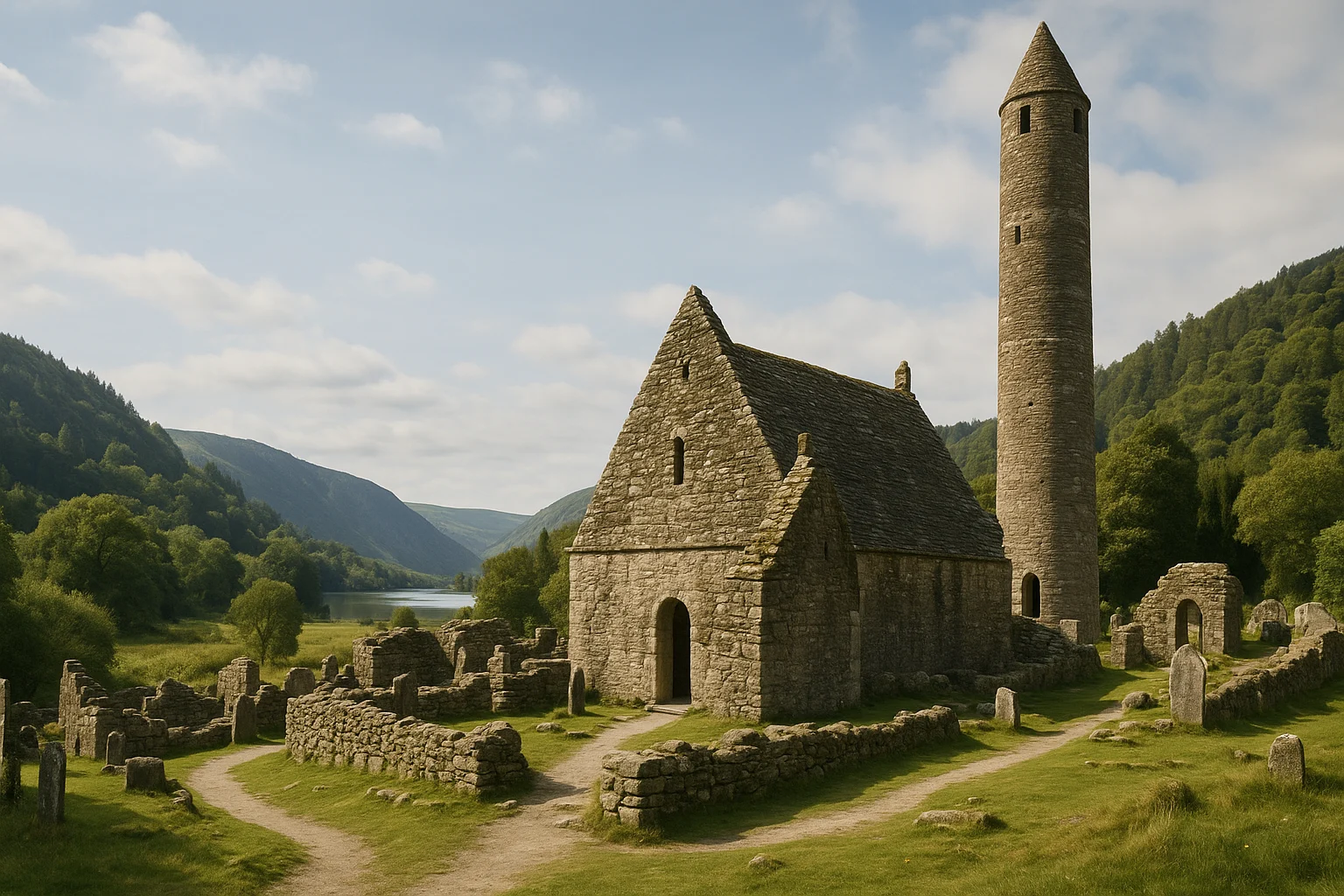
Glendalough Travel Guide 2026: Monastic Ruins, Lakes, and Wicklow Day-Trip Plan
Early Medieval IrelandPlan a clear first visit to Glendalough with route advice, monastic-site context, and practical timi...
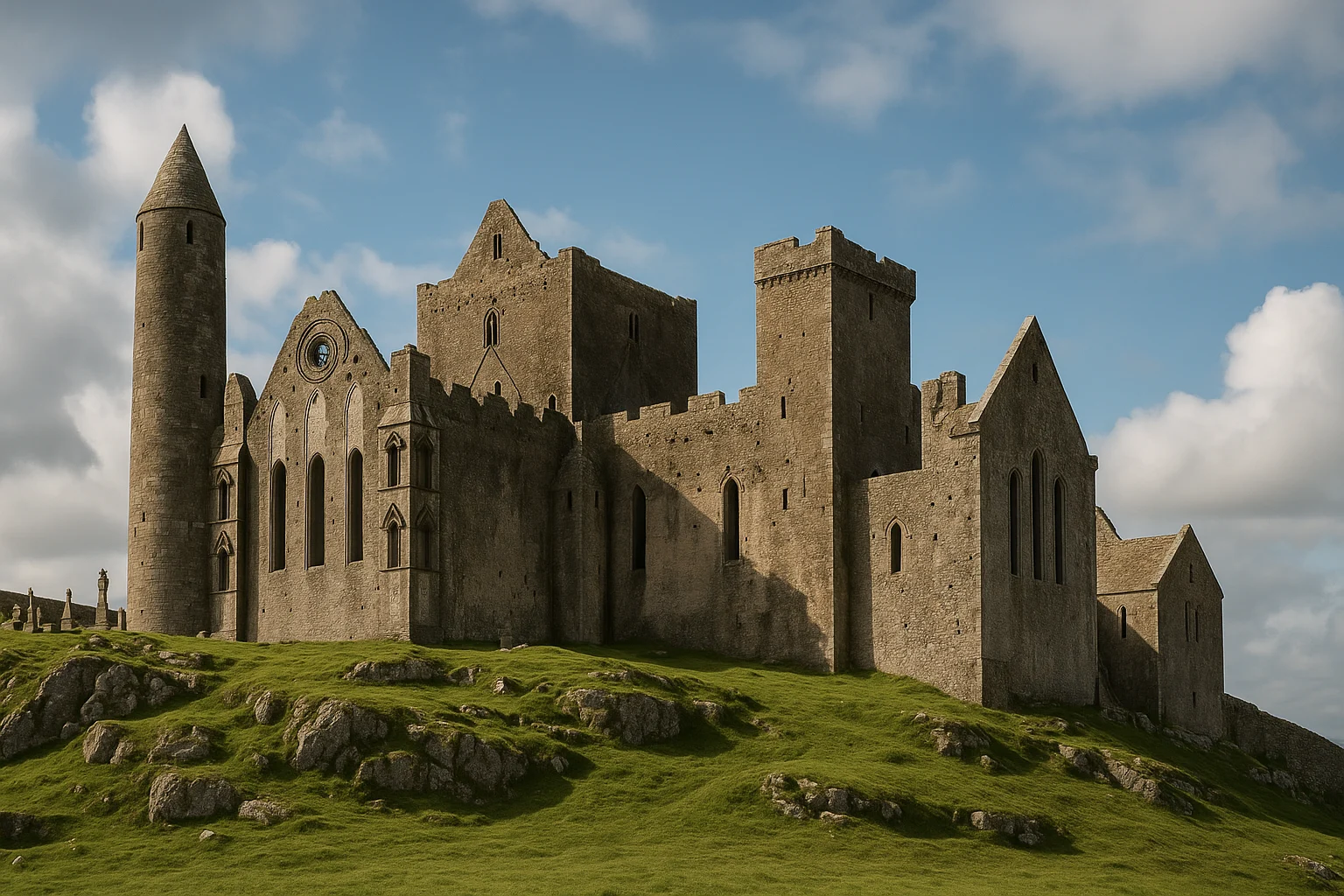
Rock of Cashel Travel Guide 2026: Cathedral Hill Timing, Access, and County Tipperary Plan
Medieval IrelandPlan your first visit to the Rock of Cashel with practical timing, hilltop route priorities, and eas...